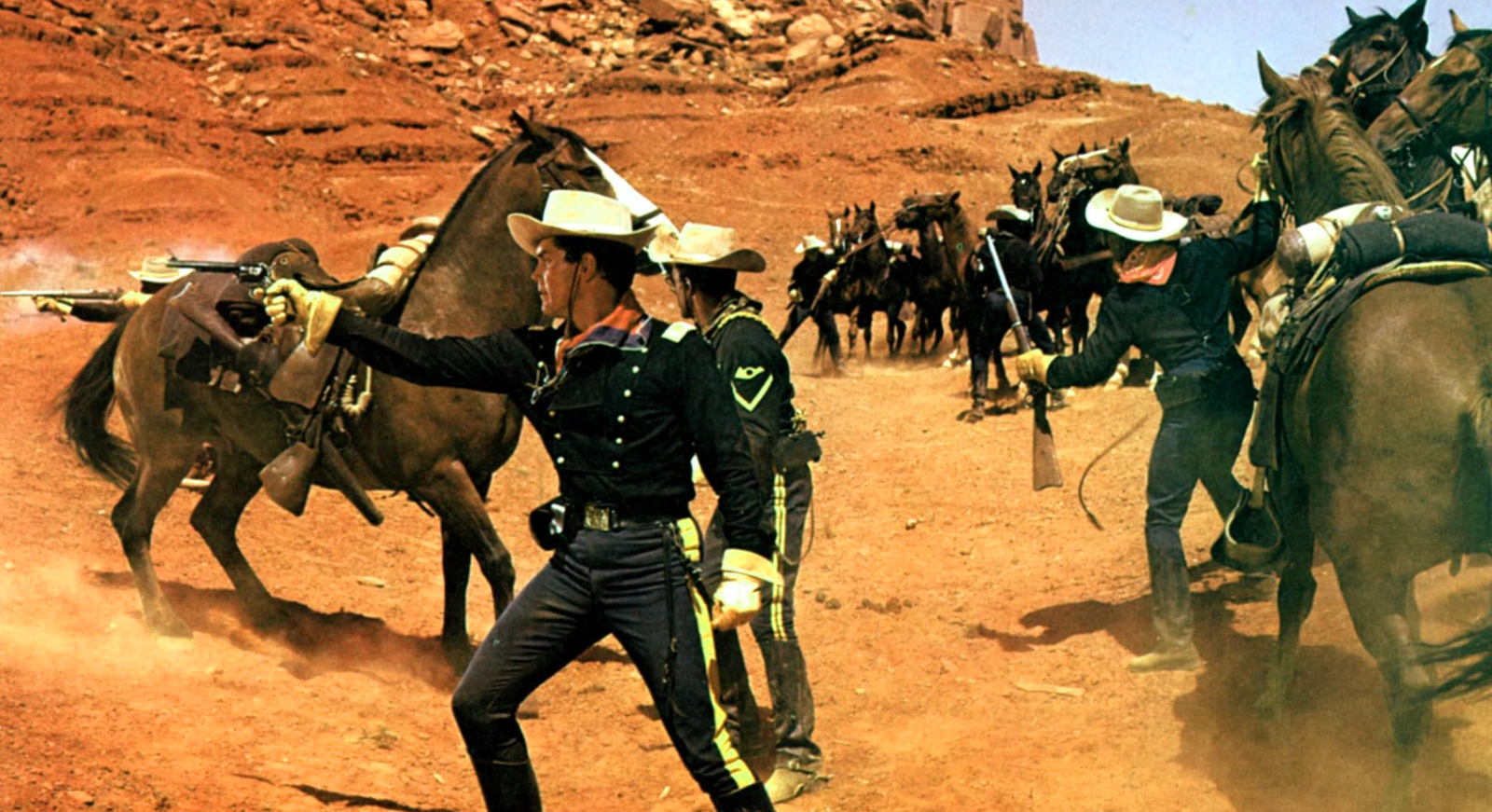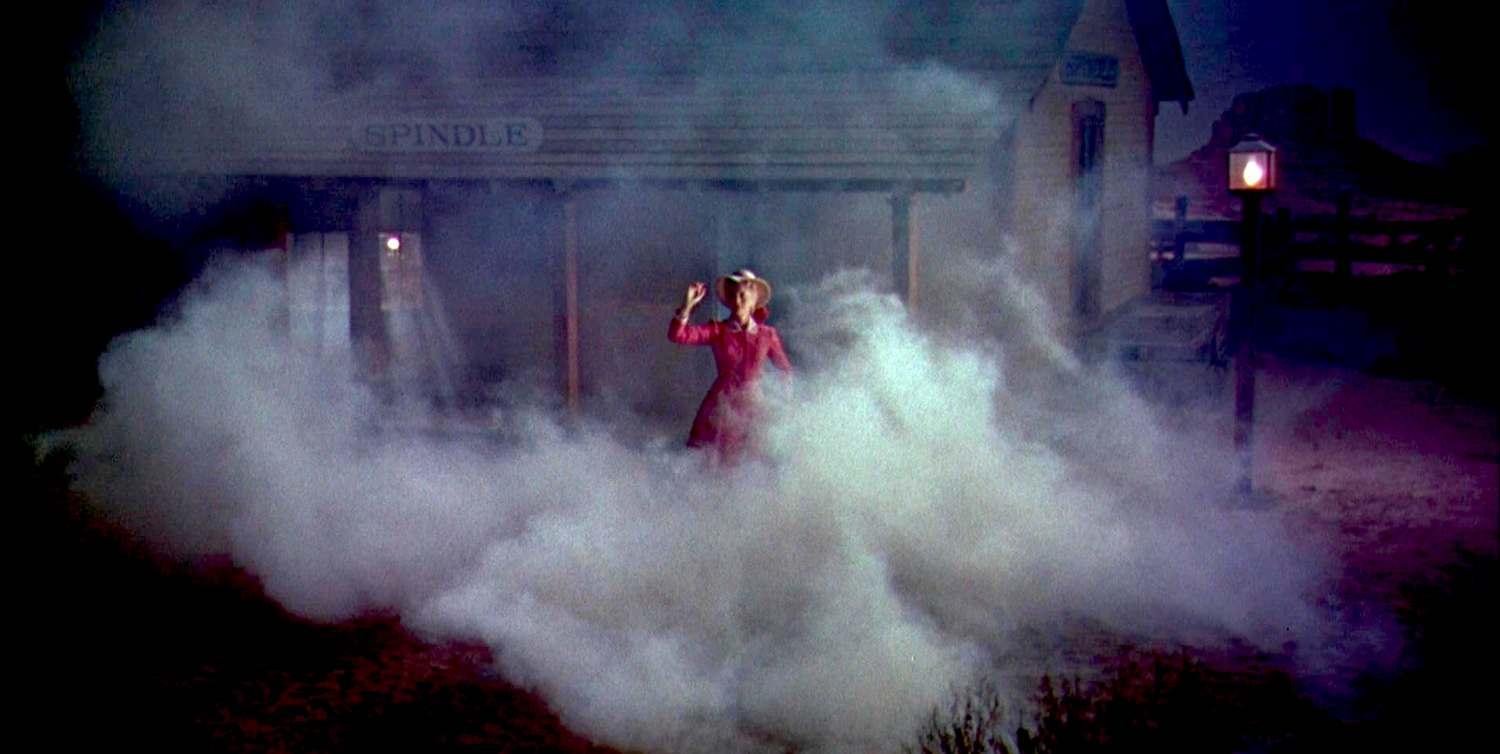
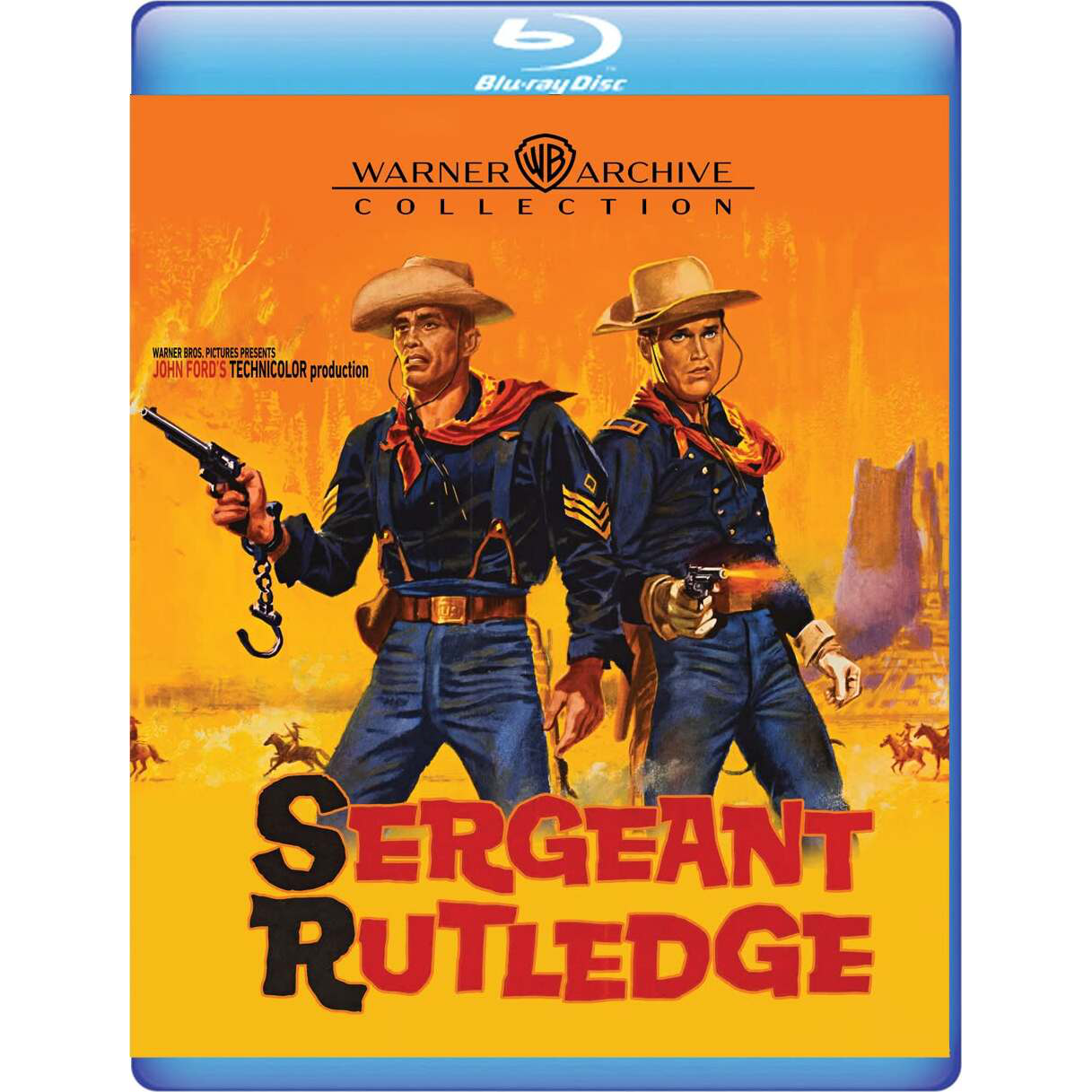

 By now the term ‘Buffalo Soldier’ is fairly well known, but in 1959 the existence of an all-black cavalry in the U.S. Army wasn’t taught in schools. During the Indian Wars, four all-black cavalry units played a major role in ‘developing the Western frontier.’ One view is that the Army created an opportunity for newly emancipated freedmen. The expansionist United States found themselves in a win-win situation: using black men to fight red men made the Winning of the West less painful on white casualties.
Director John Ford was never a radical, but his politics consistently sided with underdogs. The subject could be Irish rebels, lynch mob victims or dispossessed Oakies. Ford wasn’t happy with some of the projects offered by the genuinely liberal Fox mogul Darryl Zanuck, that placed social consciousness front and center. The director backed out of one film about a black woman passing for white, which was finished by Elia Kazan.
Ford’s didn’t show much interest in special pleading for minorities, but his later westerns made a big effort to balance the scale on Native American history. His masterpiece The Searchers depicts the tragedy of white vs red hatred on the frontier. But it must be noted that the conflict is presented as inevitable, and that the racism of sympathetic characters (Vera Miles’ young heroine, even) would find approval from white supremacists in the audience. Ford made a more explicitly pro-Indian argument in his cynical Two Rode Together, and then went all-out with Cheyenne Autumn, a downbeat epic of racial injustice on the frontier, perpetrated by the U.S. government through its military. The show compares an army stockade for unrooted Indians with a Nazi concentration camp.
Taking as its subject an African-American soldier, Sergeant Rutledge seems to have had multiple PR goals. It’s a liberal Civil Rights movie (Hollywood style) that also reflects on the desegregation of the U.S. Armed Forces. Truman made that policy change in 1948, but it was implemented only slowly.
Does Sergeant Rutledge celebrate black Americans, or is it more Tokenism?
Most film reference books will make a statement to the effect of, “Sergeant Rutledge marked an important step in the evolution of racial consciousness in Ford’s films, as it is his only film to feature an African-American protagonist.” The show is indeed an ode to the Buffalo Soldier and a clear pitch for racial equality. Unfortunately, besides being a rather stilted courtroom drama, Sergeant Rutledge has little to say about American blacks, on the frontier or elsewhere. It instead seems to be recommending the Army as a proper place for black men to find a ‘home’ in society.
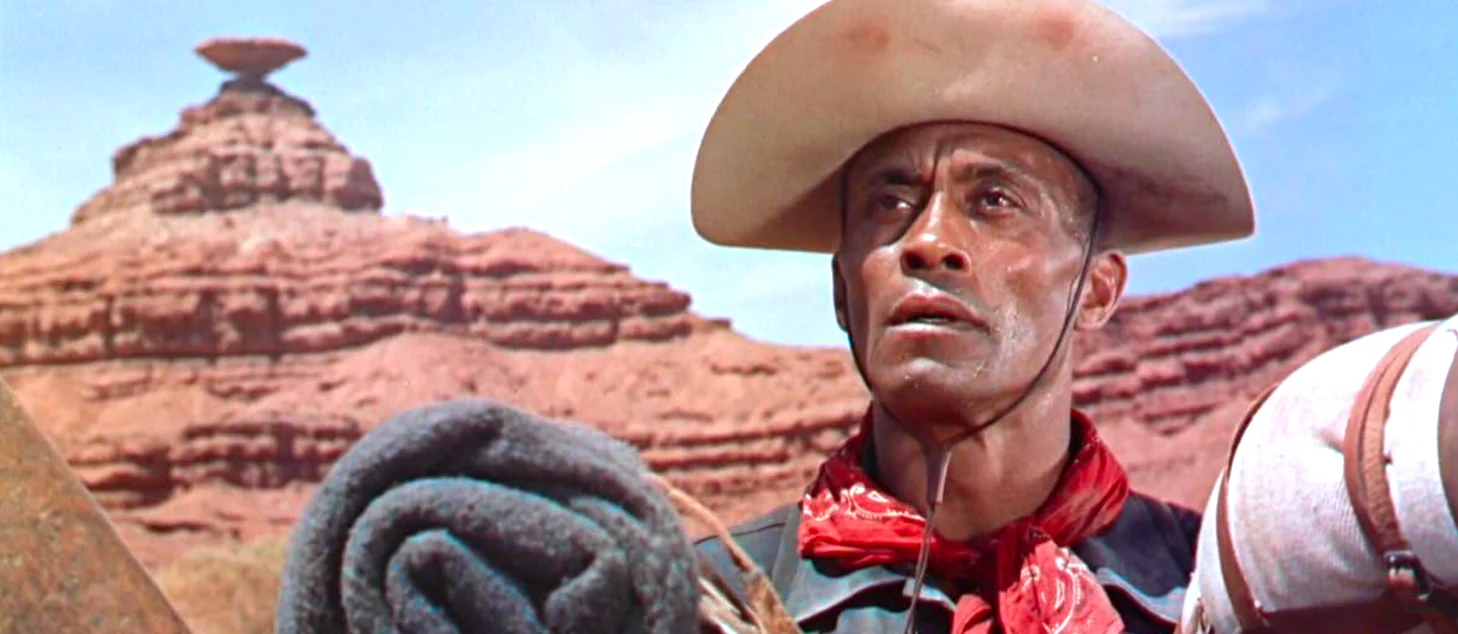
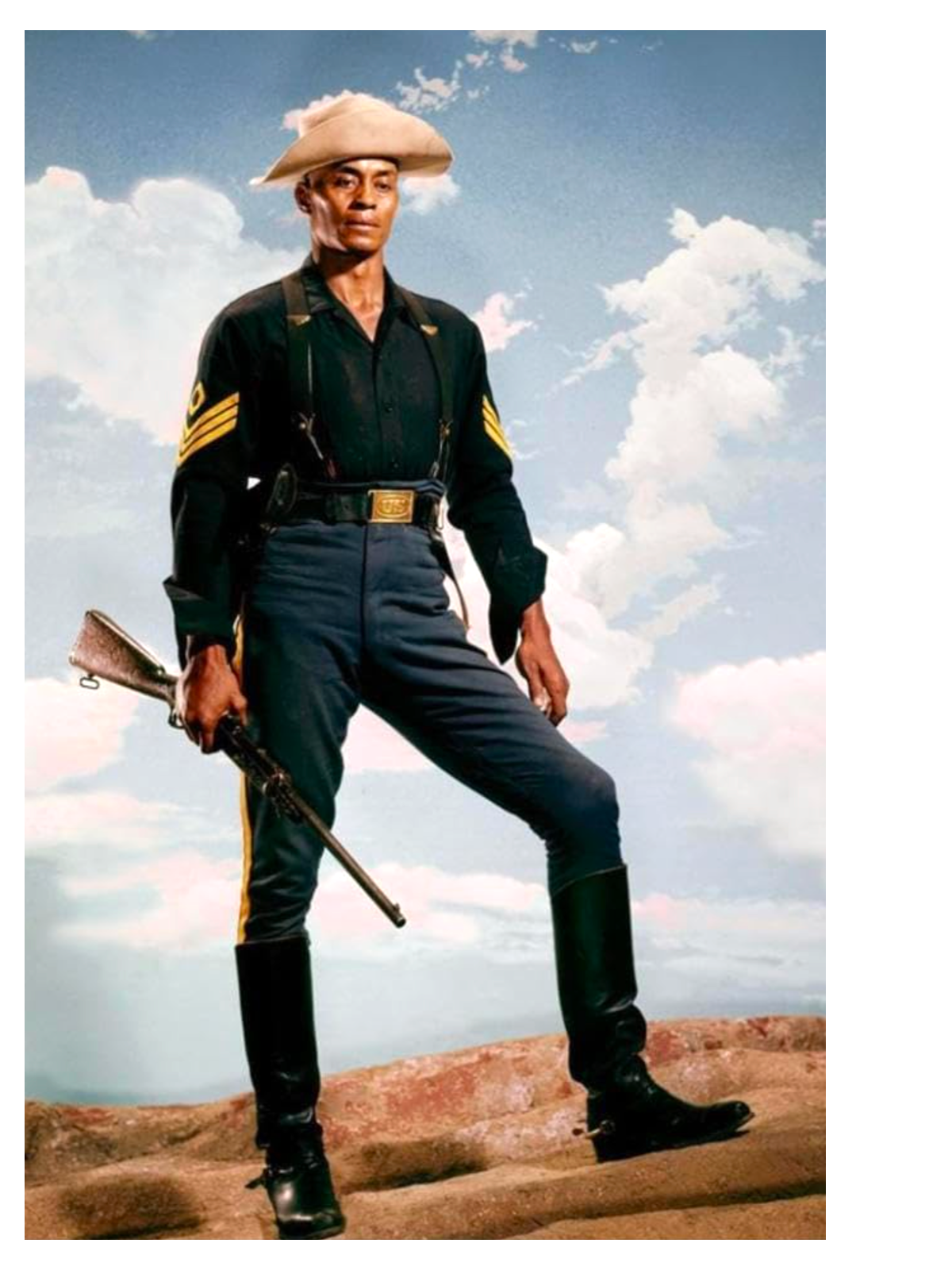
Producer and writer Willis Goldbeck credited director John Ford with much of the screenplay’s construction, including the courtroom setting. Ford’s one decision to applaud is the casting of Woody Strode, an actor with a strong physical presence. Does the timing make it possible for Ford to have learned of Mr. Strode’s superhuman cinematic presence on the set of the megaproduction Spartacus? The quality of the movie aside, it feels great to see this worthy actor stand so proudly at the center of this drama. Woody Strode joins the major black stars Sidney Poitier and Harry Belafonte, albeit without top star billing.
The adaptation of James Warner Bellah’s book tries to be a frontier Rashomon. Instead of conflicting trial testimony, we get irritatingly incomplete, prejudiced testimony. As expected, there is little evidence against our accused black soldier, making the racism in the courtroom obvious. But the pro-Army screenplay does not question military justice or depict the extremes of racial hatred found in the ranks.
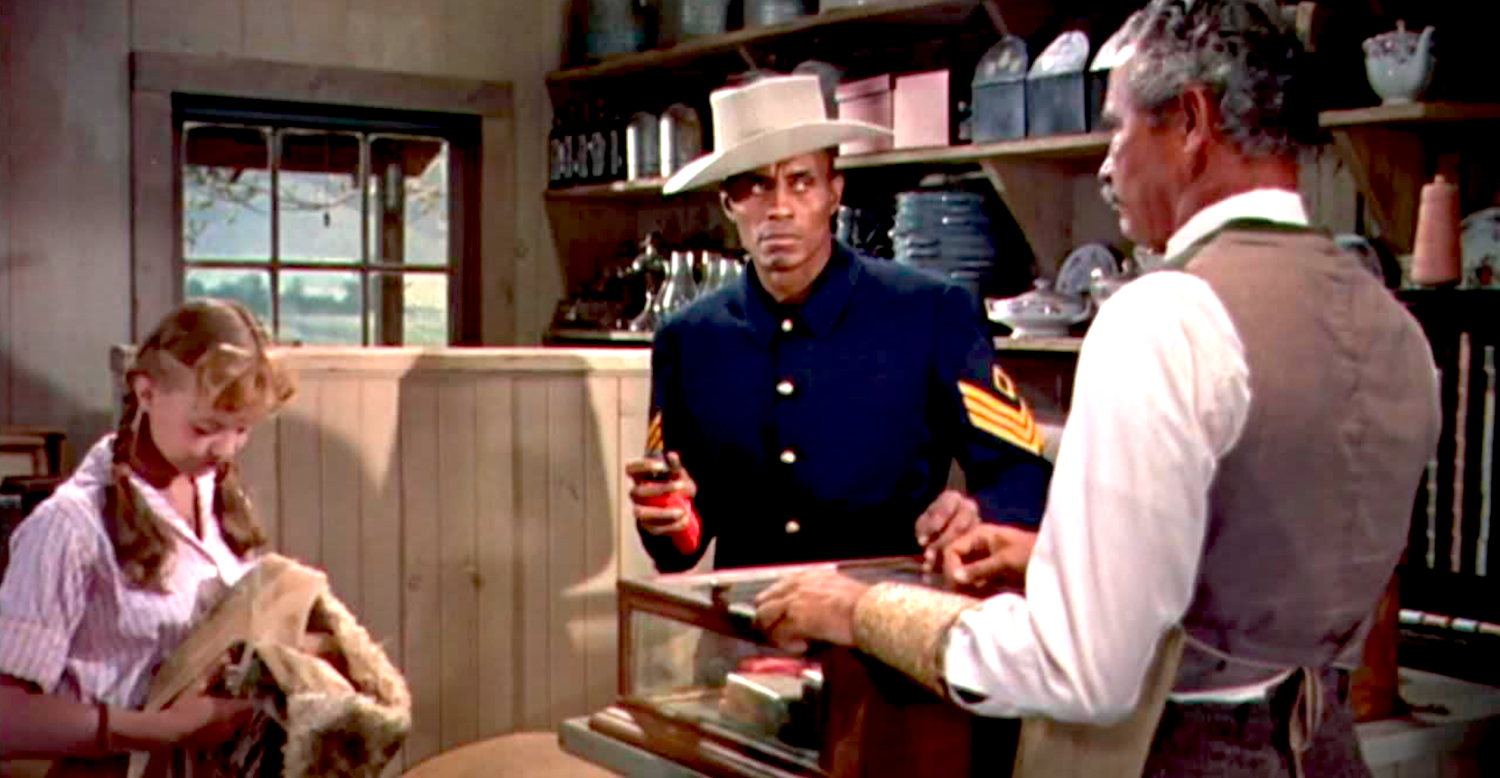
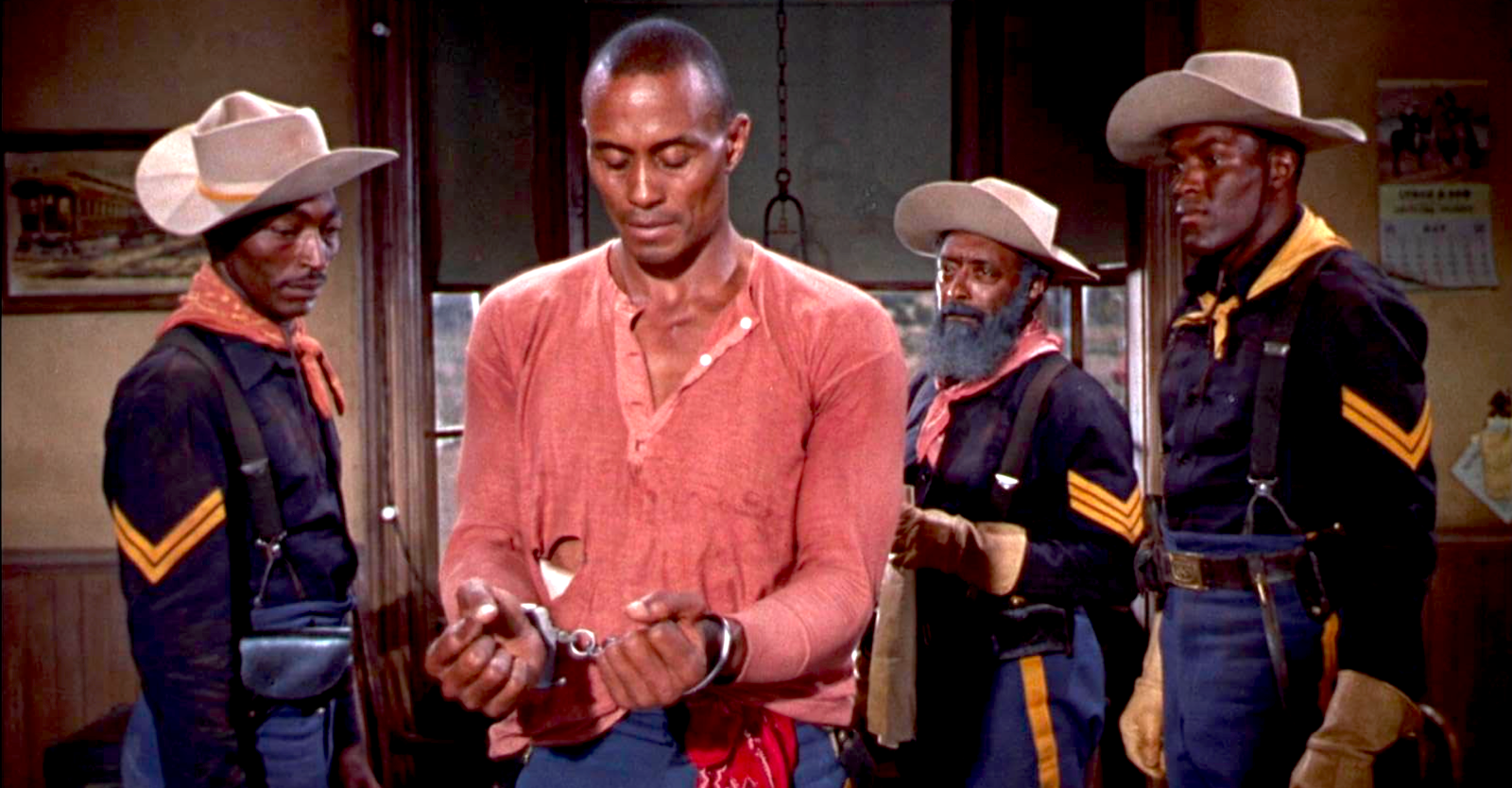
Sgt. Braxton Rutledge (Woody Strode) is on trial for his life for the rape and murder of Lucy Dabney (Toby Michaels of Corman’s Little Shop of Horrors) and the murder of her father, the fort commander. Prosecuting attorney Shattuck (Carleton Young) uses race as prima facie evidence that Rutledge is a filthy killer. Shattuck steers the testimony of witness-after-the-fact Mary Beecher (Constance Towers) to suggest that Rutledge menaced her as well. But young defense officer Tom Cantrell (Jeffrey Hunter) shows that Rutledge is both innocent and a hero, despite his refusal to stand up for himself.
Sergeant Rutledge is a noble mess. Ford wants to confer equality on Braxton Rutledge and uses all of his cavalry-epic grace notes to do so. Woody Strode rides tall in the saddle. He always stands erect and proud. He poses nobly against Monument Valley’s scenic backdrops, which has to count as the ultimate Ford compliment. In its way, the film does all it can for the image of the black cowboy hero. Here in a mainstream Hollywood picture, the most laudable hero figure is a tall, chiseled black superhero. Hollywood once created an entire industry of program westerns to give little boys (white boys) western matinees to cheer heroes with whom they could identify. Did Sergeant Rutledge do the same for black kids?
The new liberalism only goes so far. Ford salutes the Buffalo Soldiers, but reverses gears in his position regarding Native Americans. These are the old-fashioned bogeymen that hide in the dark, yet charge directly into cavalry fire to be shot dead by the score. Liberal revisionists can make the cynical claim that white supremacists would enjoy seeing one oppressed minority being used to suppress another oppressed minority.
What price dignified silence?
Yes, part of the drama is that Braxton Rutledge is too loyal to the Army, to properly defend himself. The maxim that a Silent. and Loyal Black is a Good Black is NOT a positive statement. It makes us think of John Wayne’s The Alamo, made the same year. Wayne’s idea of a racial compliment is that Jim Bowie (Richard Widmark) is blessed with a ‘good’ slave, the simple-minded kind that loves his master and is more loyal than a dog. His name is Jethro and he refuses to leave Bowie’s side. How many people are aware that Bowie’s valet is played without billing by the accomplished composer and songwriter Jester Hairston?
The really apt point of comparison for Braxton Rutledge is Juano Hernandez’s character Lucas Beauchamp in Clarence Brown’s Intruder in the Dust, the superior 1949 lynching movie from a book by William Faulkner. The falsely accused Beauchamp refuses to be a noble martyr. He remains silent, but for another reason: he knows too well that a black man speaking out is a sure incitement for a lynch mob. By contrast, Strode’s Sergeant Rutlege turns ‘proudly passive,’ offering himself as a loyalist to the U.S. Army. In both cases white do-gooders do most of the defending. But Lucas Beauchamp declines to offer his thanks. He condedes nothing to racist white society.
In Intruder in the Dust the implication is that that whites must Do the Right Thing not only to save an innocent black, but to redeem themselves. The movie Sergeant Rutledge quietly assumes that positive elements in military justice will protect an innocent soldier, of any color.
Actor Juano Hernandez has a role in Sergeant Rutledge as well. He’s another Buffalo Soldier who mostly watches as Rutledge plays the noble martyr. We really wish that Hernandez’s Sgt. Skidmore could take Braxton aside for a stern lecture.
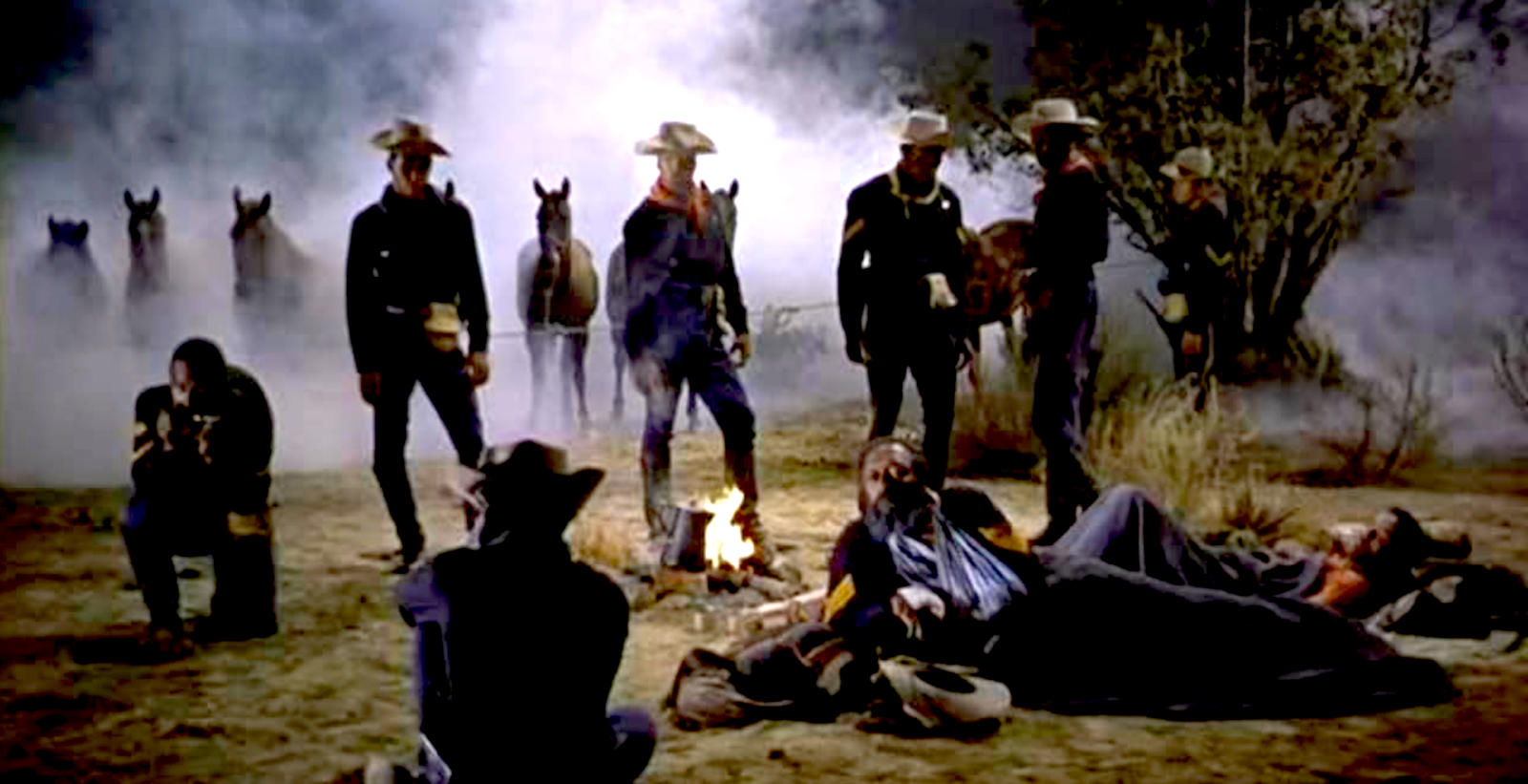
Unfortunately, the script for Sergeant Rutledge is no gem. Rutledge is on trial for a double murder and rape, but the mechanics of the courtroom drama do not convince. Most of the testimony plumbs the mostly irrelevant post-crime tale of a midnight standoff at a rail stop and an Indian chase through the desert. It’s also keyed to exposing facts that should already be in evidence … Rutledge didn’t rape Mary Beecher; he’s a fine soldier, etc.
Braxton Rutledge feels remote. Ford makes him virtuous but does not know how to humanize him — everything Braxton says and does relates to his identity as a faultless black man. We end up thinking that the only reason Rutledge doesn’t proclaim his innocence is to delay the ‘surprise’ that somebody else is guilty.
(Spoiler)
The court is itself put on trial, although the Army officers turn out to be ‘okay’ when they exonerate Rutledge. Thus Rutledge is a credit to the cavalry and vice versa. The one element in the film that still stands tall is Woody Strode’s iron-willed sergeant … when he does speak out, he never begs or asks for mercy.
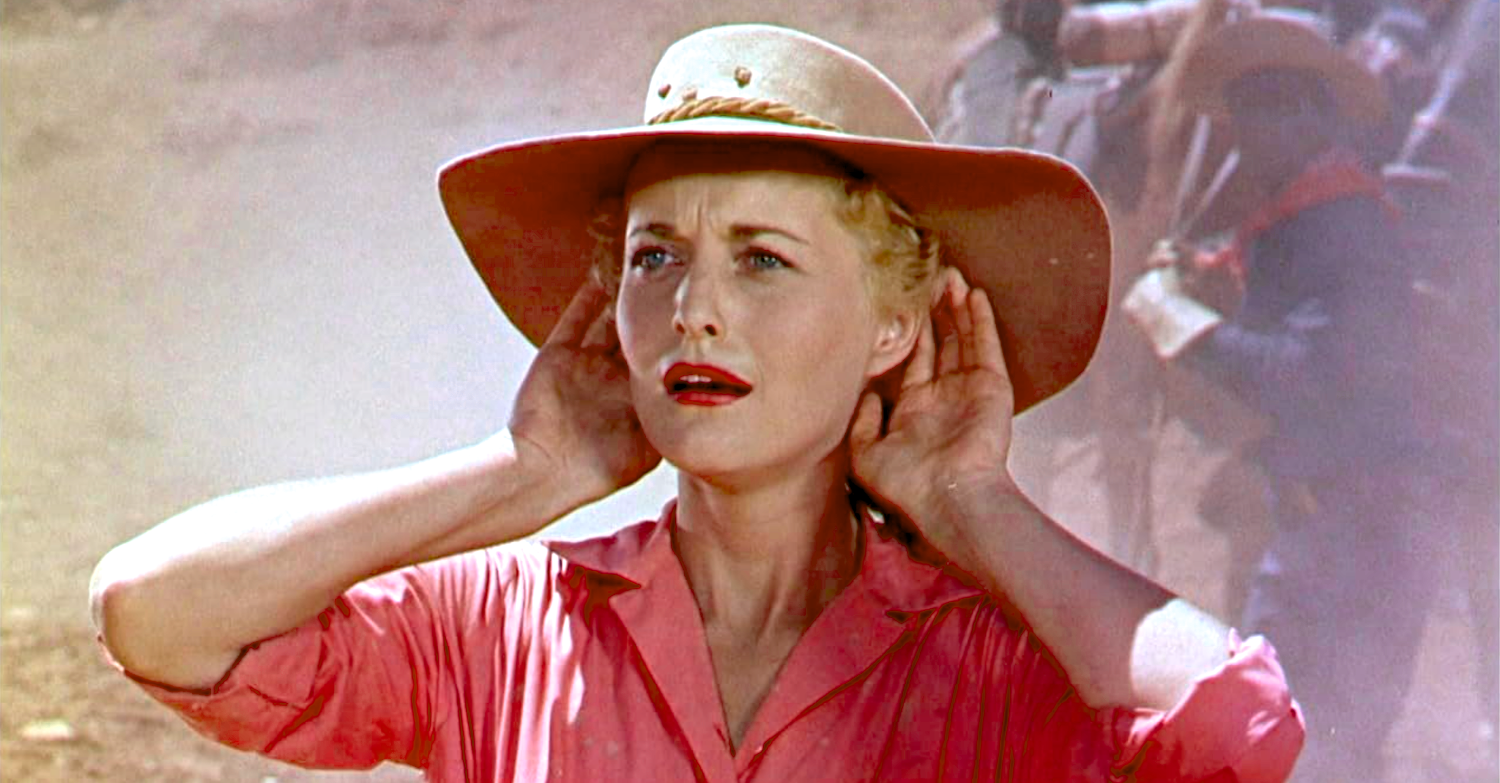
Director Ford seemingly wants to undercut the courtroom drama with light comedy, depicting the trial as an amusing charade. The military judges play poker and drink whiskey during breaks. The subject keeps returning to the fact that the main judge, Col. Otis Fosgate (Willis Bouchey) helped burn Atlanta and stole knick-knack souvenirs to bring home to the missus. Fosgate has a rough time controlling a line of officer’s wives that heckle him, as if he were a baseball umpire. His wife Cordelia (Billie Burke) is a ditsy old biddie, but neither she nor anyone else expresses any direct racist sentiments. In fact, the whites we see seem far too respectful of the black soldiers, historically speaking.
To Ford, the blacks can be given no higher compliment than being allowed to serve (enlisted only) as Indian fighters. The Army is their home too, you see, although they don’t seem to be allowed to have families. Perhaps Ford saw this as another kind of recruiting tool, as were so many military-themed ’50s films. Jeffrey Hunter goes back to his red-lipped Constance Towers, while Sgt. Rutledge retakes his place at the front of his troops, riding in circles in Monument Valley to serve as a warning to those renegade red men. T’was ever thus.
Sergeant Rutledge is handsomely directed, in the John Ford classic style that plants the camera in one place and moves it only when needed. Transitions to flashback testimony use very modern hard cuts, something that Sam Peckinpah was prevented from doing a full decade later. A major narrative error occurs in Constance Towers’ ‘testimony’ flashback. It contains an involved dialogue scene that takes place after she leaves the room!
News flash … Woody Strode had a stellar sports career. Looking for black troopers to ride with him, the producers hired Olympic star and pro football player Rafer Johnson and two UCLA football stars, Marv Luster and Gene Gaines. Western fans might want to peel their eyes for a certain Mexican actor doing stunts on the film: we know Martin Arteaga from his wonderful performance 15 years later in Richard Brooks’ Bite the Bullet. Arteaga is the character who must literally bite a bullet, to cap a broken tooth.