
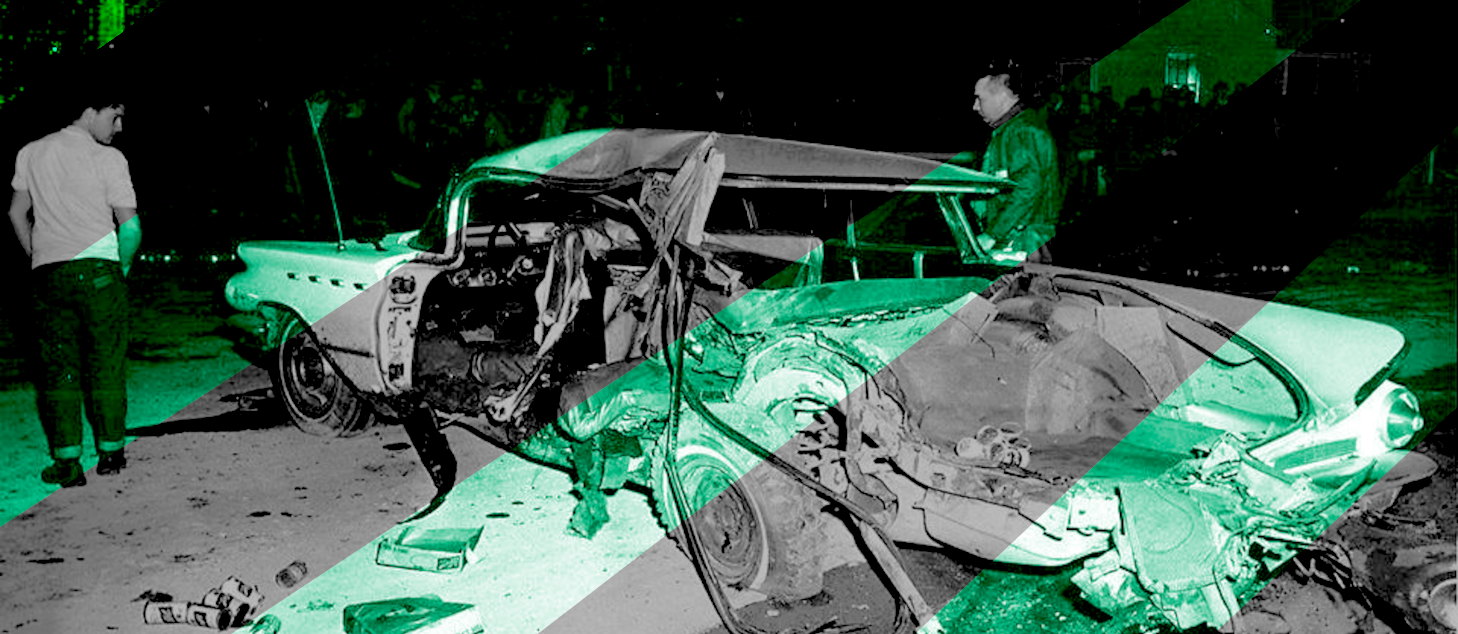
Hell’s Highway The True Story of Highway Safety Films
Two decades later, this daring documentary is still the only authoritative reportage on a near-taboo subject: the gross and gory graphic auto accident movies once shown to high schoolers with the idea of scaring them into driving more safely. Filmmaker Bret Wood has reconstructed and partly revised the docu, which tells the full story of the Ohio-based company that made them. It’s the whole, strange story, presented in a non-exploitative way. Included are several full ‘driving safety’ films, and excerpts of others.
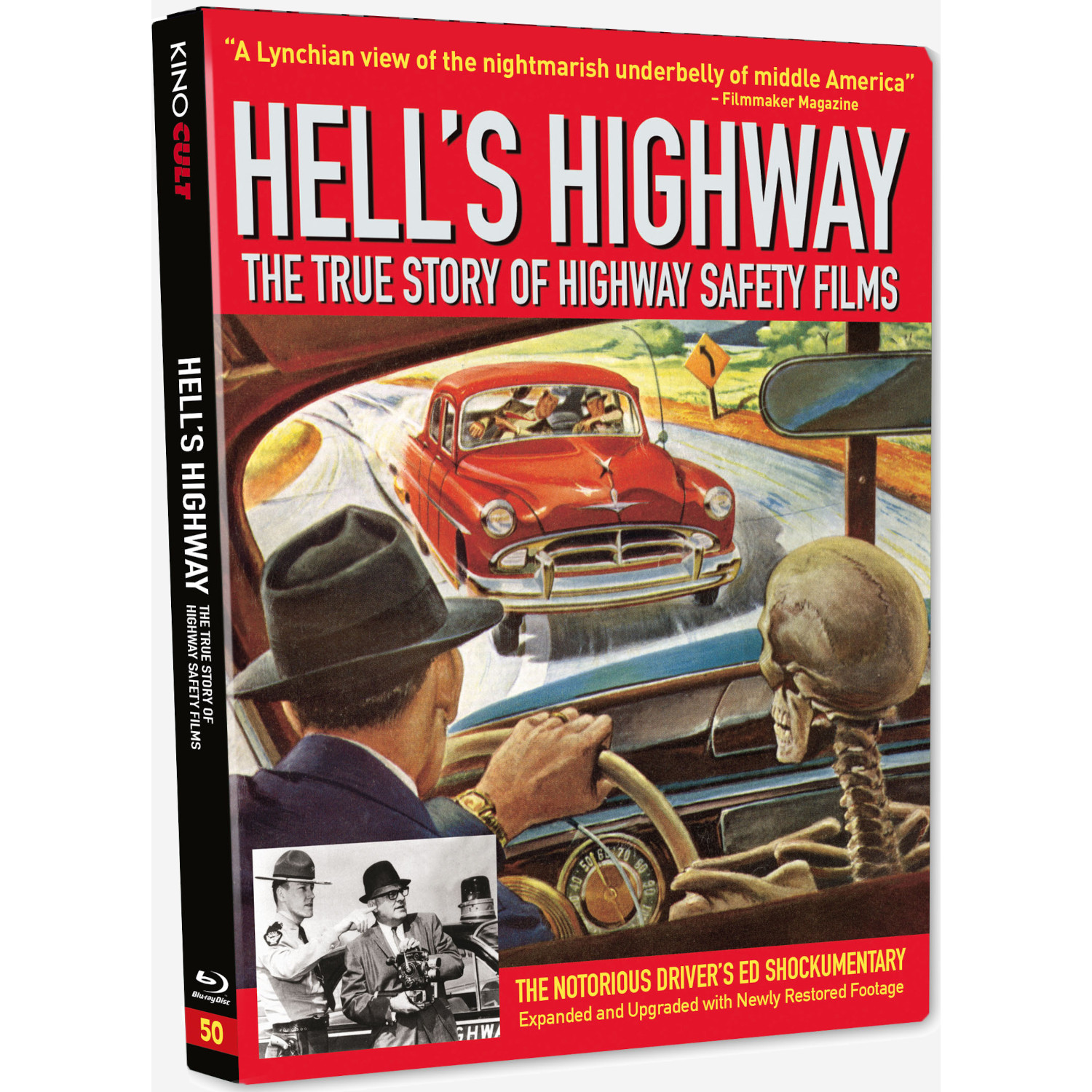
Hell’s Highway The True Story of Highway Safety Films
Blu-ray
Kino Cult
2003 / Color + B&W / 1:37 Academy / 92 min. / Street Date September 8, 2026 / Available from Kino Lorber / 39.95
Starring: John F. Butler, Earle J. Deems, Rick Prelinger, Mike Vraney.
Cinematography: Steve Anderson
Produced by Felicia Feaster, Tommy Gibbons, Bret Wood
Written, Directed and Edited by Bret Wood

Hell’s Highway, The True Story of Highway Safety Films is a thoughtful, watchable and worthwhile feature documentary about a genre of ‘instructional’ films of the 1950s, ’60s and ’70s, the notorious gore films that showed real auto fatalities close-up in blood-drenched horror.
The documentary raises the controversial issue of using scare tactics as a psychological tool for behavior modification. It doesn’t editorialize or advocate, but simply lets the makers of the films speak for themselves. The films stepped right over the taboo line that fictional films never crossed. Many people, given a choice, wouldn’t watch George Franju’s movie The Blood of Beasts, a slice of brutal truth about the normal operation of a slaughterhouse. These safety films depict real pain, mutilation, and gruesome death visiting ordinary people. They were endorsed by police authorities and force-screened to millions of American high schoolers.
The documentary approaches its sensational subject without itself becoming sleazy. It’s a serious work that shows the extreme end of the educational films examined in the short subject collection Driver’s Ed., The Educational Archives.
driving safely.
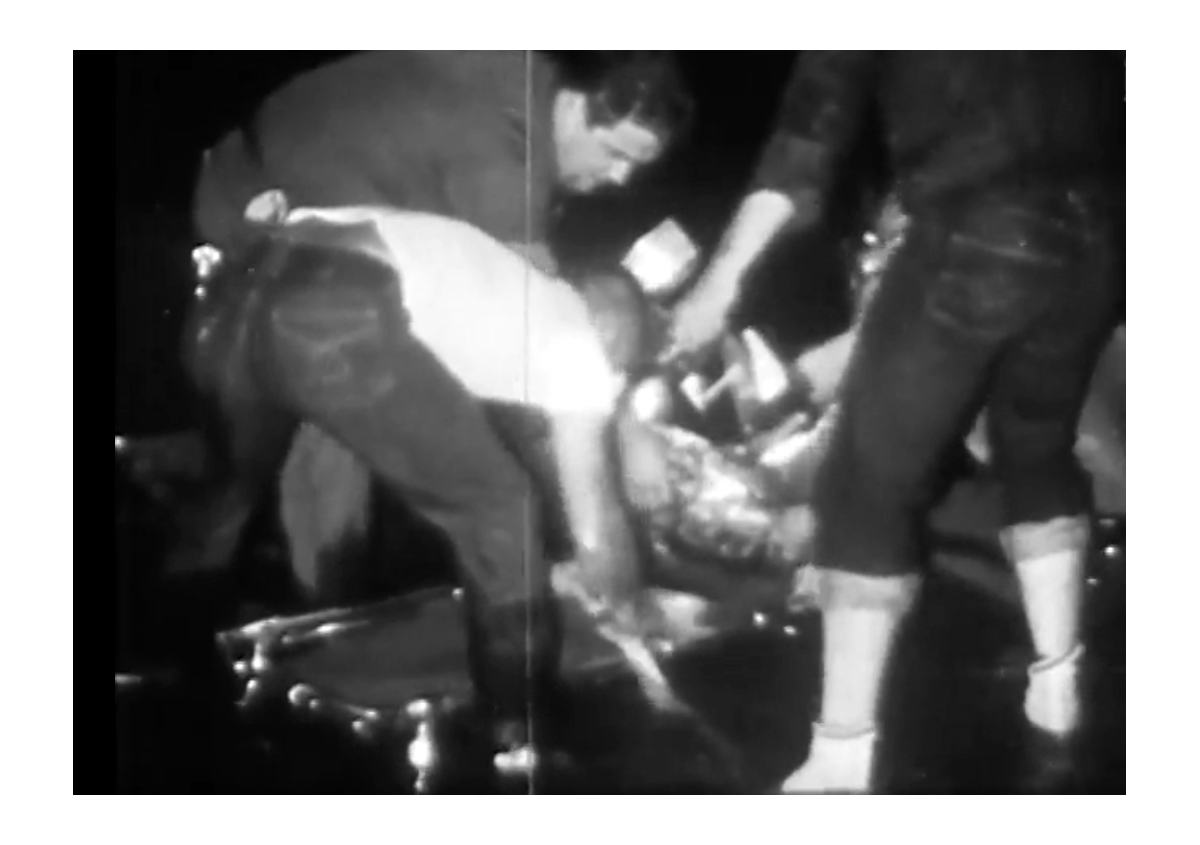
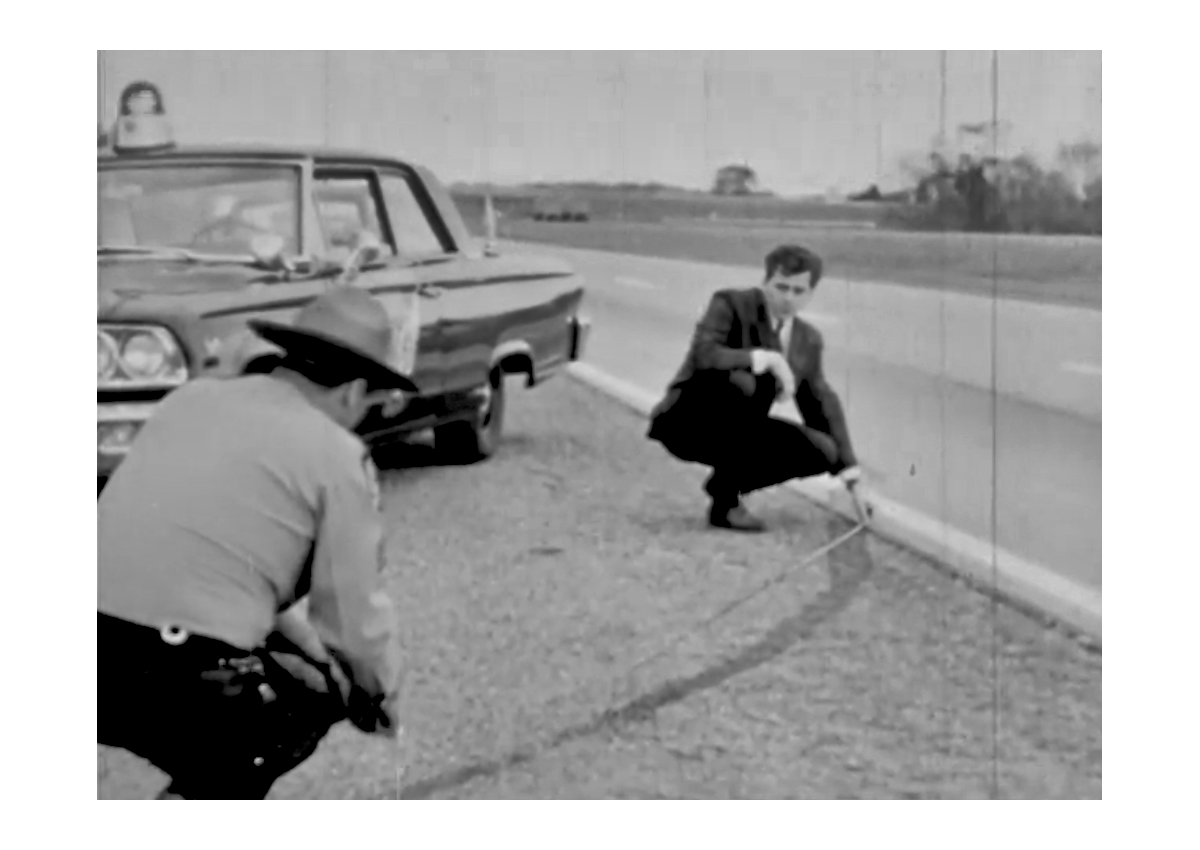
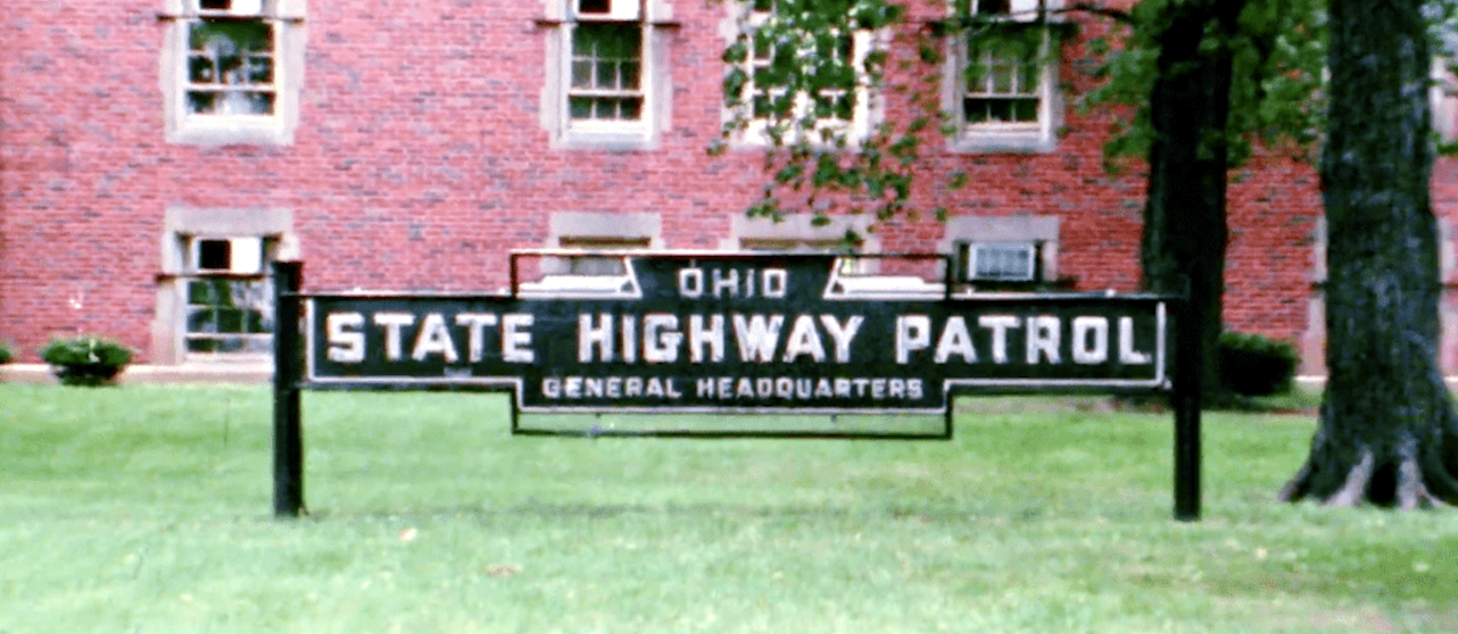
The docu charts the history of The Highway Safety Foundation, which began as a local effort in Ohio. Richard D. Wayman thought the public was too sheltered from the reality of traumatic car accidents, and also wanted to champion the cause of the Highway Patrolmen who had to deal with the consequences. Official cooperation was obtained, first to organize still photographers, and then 16mm color movies.
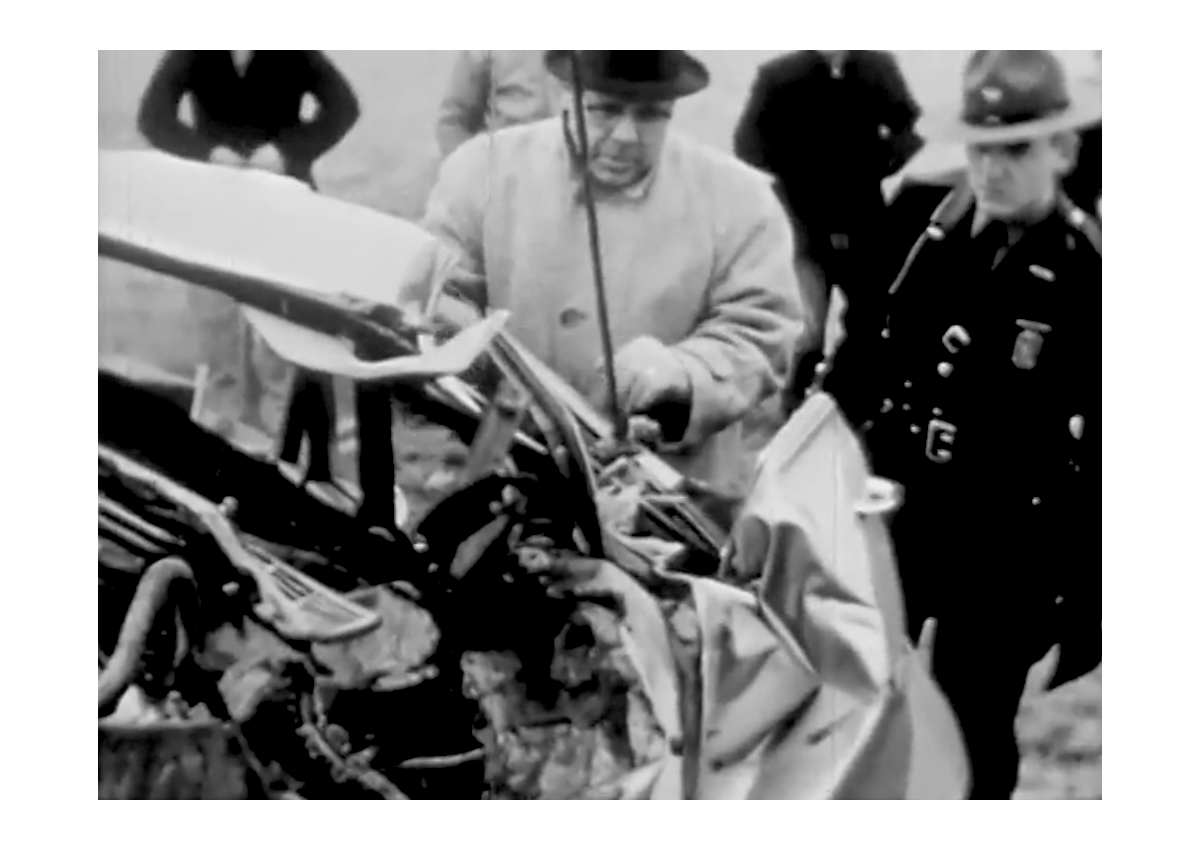
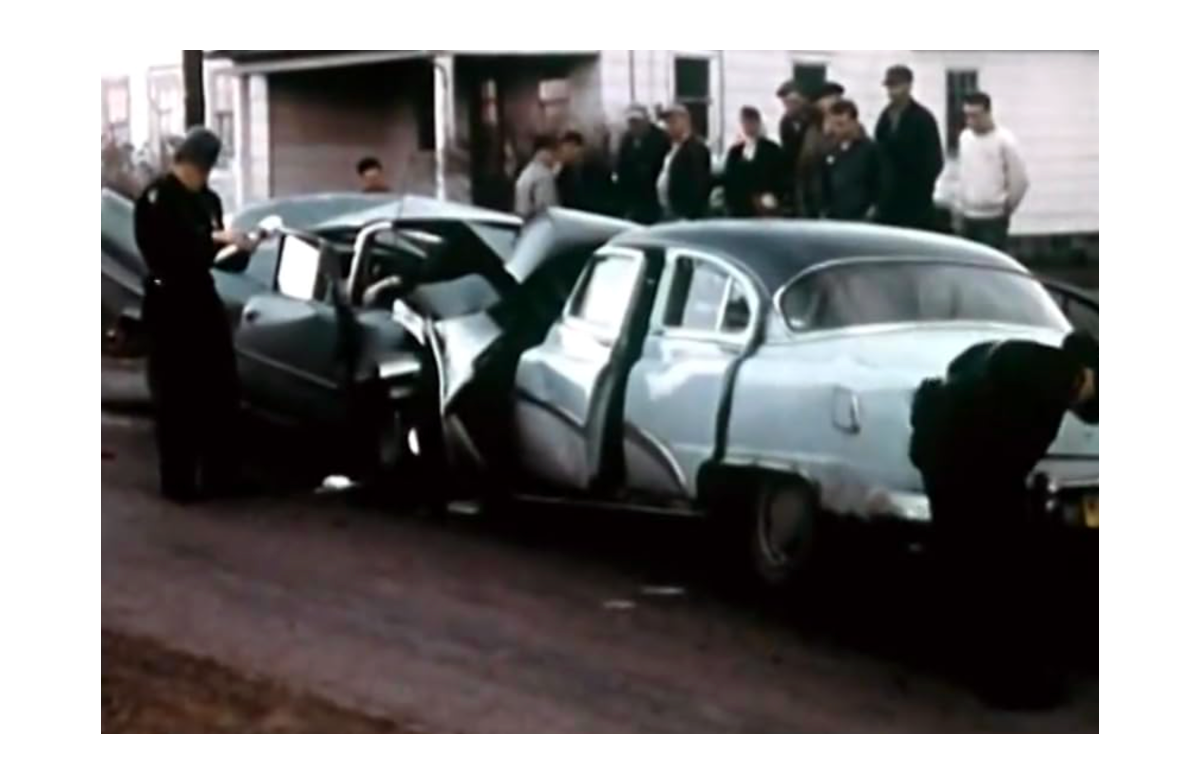
The resulting short subjects range from twenty to thirty minutes in length. The films’ key content is ghastly wreck footage shot before the living or dead victims could be removed from the vehicles. The cinematography is primitive yet effective; sober voiceovers spell out the traffic violations that led to ferocious scenes of mayhem. The twisted wrecks are wrapped around trees and poles. The passengers have been flung through windshields, mangled or burned alive.
Hell’s Highway features interviews with filmmakers Earle J. Deems and John R. Domer, along with policeman John Butler. Their testimony centers on Wayman of the Highway Safety Foundation, which until the 1970s had a monopoly on this kind of film. They state their case for the scare film as an honest way of confronting people with the result of drunken driving, speeding and simple inattention. All claim that the difficult-to-watch films had beneficial effects.
We also get hindsight opinions from a qualified collector historian, Rick Prelinger. He made a name for himself in the 1980s with his groundbreaking Voyager/Criterion laser disc compilations he called Ephemeral Films. Prelinger identifies highway safety films as an outgrowth of short subjects produced by the insurance companies underwriting heavy industry. The workplace safety films often had an underlying motive: to shift responsibility for injuries in unsafe factories from the bosses back to the employees themselves.
Wayman’s highway safety films must have been incredibly traumatic in complacent 1959, when such ugly things weren’t fit subject matter. They films use ominous music to good effect. There are obviously no actors, and the clumsiness of staged events only adds to the queasy vibe. Often worse than the in-your-face close-ups of shredded flesh and charred limbs are the audio snippets recorded at the scene. Men scream in pain, and one old lady shrieks like a banshee. It’s all there, including accidents where the body count climbs as wrecks are turned over … adults, children, babies. Hell’s Highway presents these taboo images just as they were in the original films. Unpleasant as they are, they’re a truthful record and therefore don’t carry an exploitative charge. We’re instead amazed by the stamina and kindness of the rescuers. Lawmen appear to be assisted by passing motorists.
Prelinger and contributing interviewee Mike Vraney reach no conclusive answers for the question of whether or not these films were an effective deterrent to bad driving. Prelinger argues that the films co-opted the conservative establishment view that teen dating is itself a prime cause of traffic accidents. This attitude is shown in Last Date, one of the included extra short subjects. Some of the voiceovers imply that the real guilt lies with the crime of being young and unsupervised, un-chaperoned.
Wayman and his scare documentarians were sincere do-gooders. The movies are tough to watch but not demeaning. Gore-hound film fans will find something different than they expect. Our only objection is the films’ insistence that every one of the accidents we see is the result of gross negligence. We also believe that breaking traffic laws is potentially murderous (by callous indifference) but the narrators rack up tragic mistakes as equally guilty.
The films talk about our well-engineered highways (very true) but also tout the cars of 1960, which were nowhere near as safe as they could be. Ralph Nader proved that the auto industry resisted safety improvements for decades. It wasn’t until the middle 1960s that our family began using seat belts. We see one Corvair ripped in two in a crash. My father got rid of his Corvair. when he discovered it was so rear-heavy, it would spin out in any hit-the-pedal locked-brake situation. With their passenger-conscious construction and the simple addition of safety belts, most modern cars are far safer.
Few others made this kind of film, as full police cooperation was obviously required. One competitor utilized red paint to touch-up still photos of corpses deemed insufficiently disturbing. In the 1970s, safety films began to make use of the industry’s new safety research, and their scientific test footage using crash dummies. [ Unsolicited personal note: I was taught to edit Mattel toy commercials by Pat Shields, the ‘auteur’ of the very effective non-gore safety short Safety Belt For Susie. ]
move to diversify.
The Highway Safety Foundation had already tried to branch out into other unorthodox subject matter. It lost its way, eventually
succumbing to financial disaster in a badly planned Telethon. The documentary leaves the highway for a few minutes to cover the company’s digression into films warning about homosexuals criminals. The police help the HSF set up a camera in a public restroom frequented by homosexual men. Hell’s Highway veers into different extreme content with a few seconds of surveillance footage showing off-topic snippets of real sex activity in the restroom.
The resulting footage ended up showing in local homes, where some of the participants were recognized. The activity opened a hornet’s nest of trouble for the company when the newspapers charged them with making porno films. One interviewee attests that exactly that did happen, separately from the company. The real crime would seem to be an invasion of privacy. The cops and a private company coto surveilled citizens with films that were then shown on an exclusive home screening circuit. Somebody ought to have gone to jail for that one.
Only a little less offensive is a section on the company’s foray into anti- Child Molesting films. Their key film clumsily dramatizes the kidnap and murder of two girls and ends with graphic photos of their bloodied corpses. We’re told that the film was screened for six-year-olds in a school situation. Two of these children, now adults, are on camera to testify to having been severely traumatized.
Few were worried about the rights of gays back at that time. Was the car crash fatality footage also a gross invasion of privacy? The idea that being a car crash victim entitles others to film and exhibit one’s dead body touches an ethical nerve. The concept of being displayed after death to suit somebody else’s agenda feels very wrong on multiple levels. We wonder about the feelings of the relatives of the corpses we see — many of the bodies are very recognizable. This grisly death stuff is a personal matter.

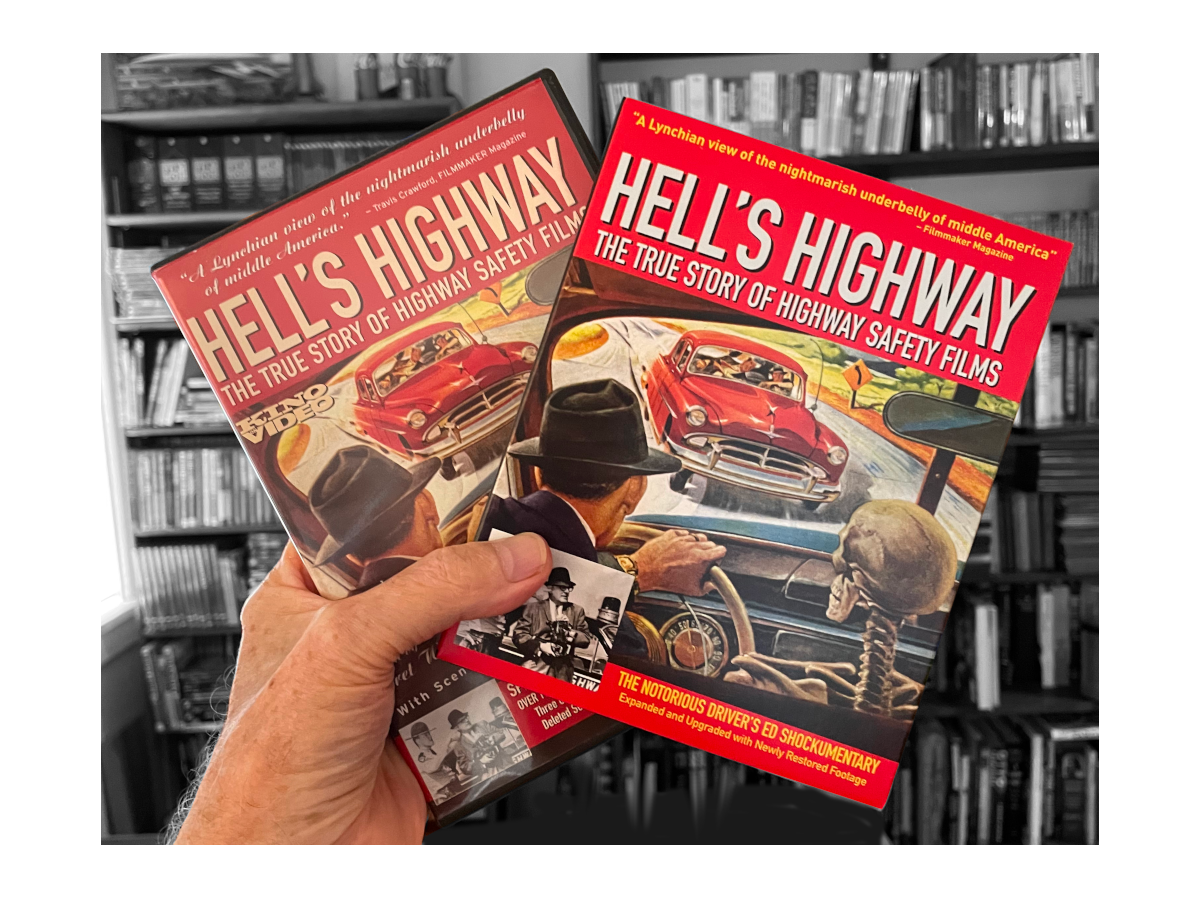
Kino Cult’s Blu-ray of Hell’s Highway is an excellent remaster / revision of Brett Wood’s ‘unique’ 2003 documentary. Mr. Wood’s commentary explains that updating the show for an HD presentation enabled the re-scanning of all his original 16mm interviews as well as the source films themselves. Some had become available in better quality, and for some held by the State of Ohio, the original 16mm positive A&B printing rolls were discovered. Some re-editing has been done and a new music soundtrack replaces the vintage needle-drop cues heard on the originals. The original Standard-def 2003 version has not been destroyed; it is included as an extra on the second Blu-ray disc.
The new disc does carry removable subtitles on the main feature, which the 2003 DVD did not have
Although the video quality varies the show’s overall image clarity is much improved. Frankly, some of the crash pictures become less disturbing when can be seen more clearly. Our imaginations don’t fill-in additional gory details.
[ Our thoughts step out of review mode: after a quarter-century of mayhem of every kind caught on cell phone cameras and surveillance videos, is Hell’s Highway now less shocking. Graphic carnage has become the norm in entertainment. The fake corpses on N.C.I.S. morgue tables are now so common, you’d think directors would ‘invent’ the novelty of don’t-show-it-all discretion. ]
Director Wood is right — the new cut and mix make Hell’s Highway seem more humane, and less likely to be seen as exploitation.
Wood’s commentary describes the technical challenges in the recovery of better sources for his revision. It’s the kind of shop talk that we like. He also talks more about the men he interviewed and the moral issues involved.
The extras are spread across two Blu-ray discs. Disc one has the new revision and the Wood commentary, plus four original uncut Safety Films. A couple are remastered with images that look brand new. Options to Live is about the Highway Safety Foundation itself, but comes off as something of a highlights round-up reel.
We are a bit bothered by one show, that found matches for the cars and the victims to stage fake ‘prologues’ leading into the gore footage. The highway patrolman / narrator asserts that the accident is the fault of the driver of the death car, and then makes offensive character judgments on some of the dead passengers. Going out for a drive ‘just for fun,’ is BAD.
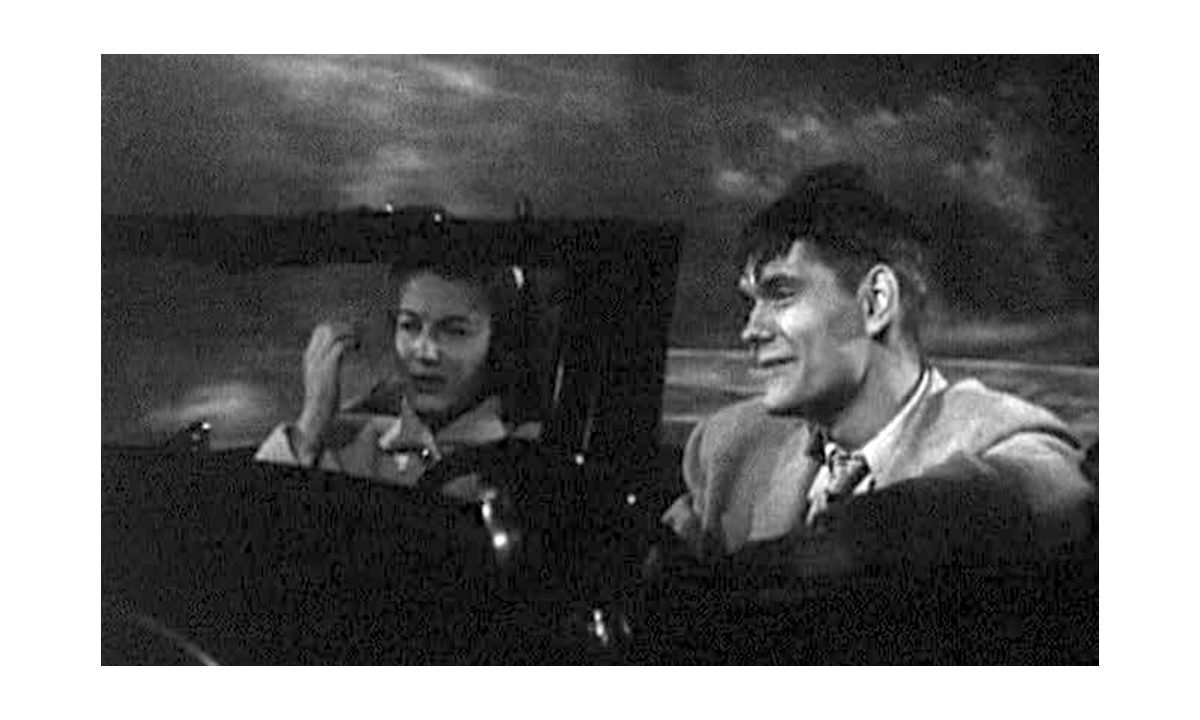
Disc 2 carries the 2003 version of the show in SD. It still looks very good. The extra short subject on this disc are even more contentious. Last Date is the epic ‘mutilation after the prom’ saga from 1950, starring a gangly young Dick York. Joan Taylor and Sally Hughes both look drop-dead gorgeous. The scan is good enough to read street signs, which show where one scene was filmed here in Los Angeles. Another film uses the disgusting fake ‘paint extra blood on still photos’ technique mentioned above.
Go Sober and Safe is a lengthy lecture showing tests that prove how drinks impair one’s driving. The Shoplifter shows the Safety film folks making a film that retailers wouldn’t want shown widely — it’s a learning course on how to boost merchandise from stores.
The Child Molester is the shock-effect picture that feels the need to sledgehammer the audience with images of children in traumatic circumstances. It ends with actual photos of the real-life little girls that were murdered, as they were found. We see that it was directed by Herbert J. Leder … who went straight to a tasteless horror film about a Nazi mad doctor, The Frozen Dead.
This new release repeats a couple of incidentals from the old DVD, like a reel of interview excerpts. It does not have as many short subjects, and it does not repeat the first and most famous highway safety film Signal 30. Bret Wood explains that the available materials were no longer good enough to re-scan.
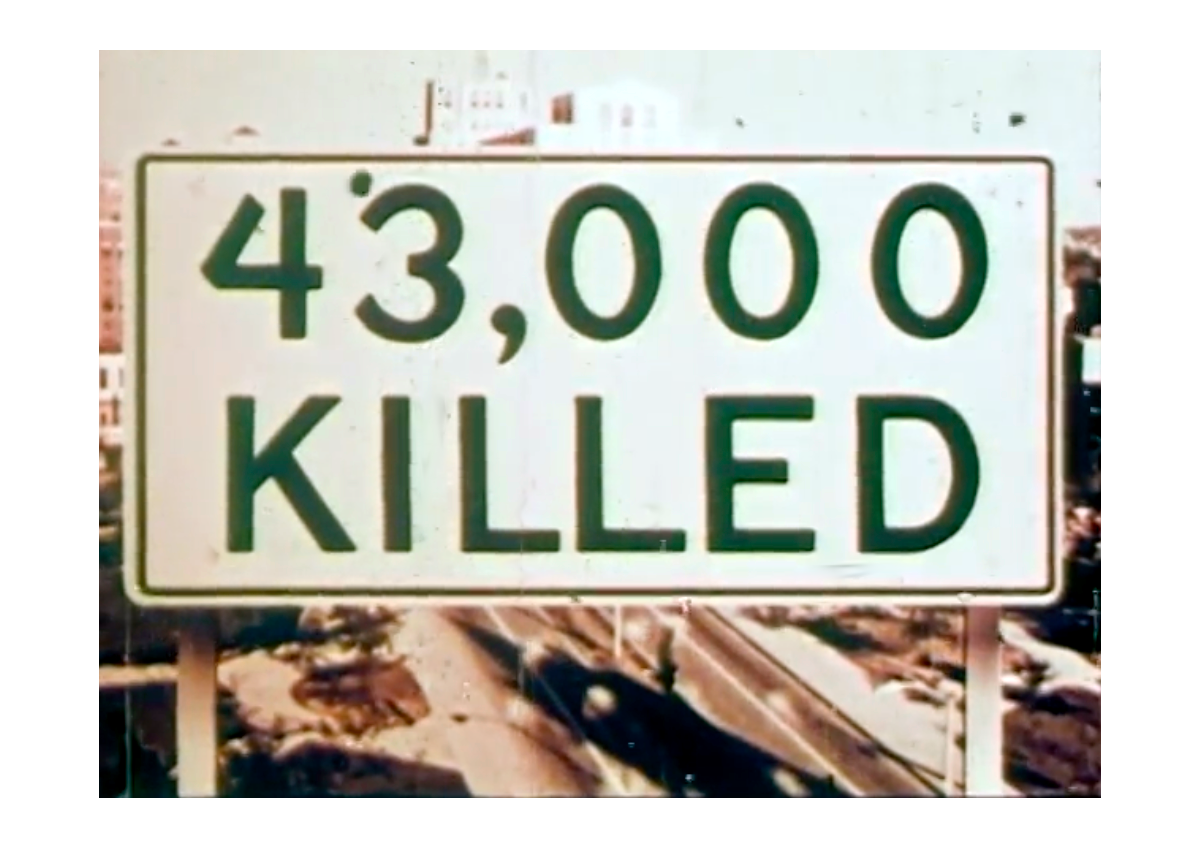
I was of the generation subjected to these films in high school, in addition to equally questionable movies that exaggerated the effects of smoking marijuana. I saw only one hardcore gore film, which ended with a staged shot with a corpse that seemed a pretty ghoulish misuse of someone’s dead body.
At age 17, the film played like a blanket punishment dished out by unfeeling, disapproving adults. We teens were marched into an auditorium without a choice and lectured to as if we were already guilty of something. The teen girls cringed and wilted at the horrors. The ones I knew were incredibly responsible drivers. A tough crowd at the back of the auditorium snickered at the gore and mocked the whole attempt to scare them.
I sided with the hoods on one count: the ‘scared straight’ approach was brutal … and I don’t think it worked. Those kids truly traumatized might freeze at the wheel and not avoid a crash. The hooligans clearly felt empowered with a new cause to rebel against. It certainly didn’t affect my easily-distracted driving habits. Only fast reflexes kept me from killing myself behind the wheel.
Reviewed by Glenn Erickson

Hell’s Highway
Blu-ray rates:
Movie: Excellent
Video: Very Good and plenty rough
Sound: Very Good
Supplements:
Audio commentary by Bret Wood
New Restorations of Three Driver’s Ed Films: Mechanized Death, Wheels of Tragedy and Highways of Agony
The Complete 2003 Pre-Restoration Version
Bonus Classroom Scare Films: The Child Molester (1964), Death on the Highway (1959), Go, Sober and Safe (1966), The Last Date (1950), Options to Live (1979), The Shoplifter (1964), and Teenicide (1950)
Trailers
Deleted Scenes.
Deaf and Hearing-impaired Friendly? YES; Subtitles: English (feature only)
Packaging: Two Blu-rays in Keep case
Reviewed: September 6, 2026
(7585hell)
Visit CineSavant’s Main Column Page
Glenn Erickson answers most reader mail: cinesavant@gmail.com

Text © Copyright 2026 Glenn Erickson
About Glenn Erickson

Glenn Erickson left a small town for UCLA film school, where his spooky student movie about a haunted window landed him a job on the CLOSE ENCOUNTERS effects crew. He’s a writer and a film editor experienced in features, TV commercials, Cannon movie trailers, special montages and disc docus. But he’s most proud of finding the lost ending for a famous film noir, that few people knew was missing. Glenn is grateful for Trailers From Hell’s generous offer of a guest reviewing haven for CineSavant.
This is a staggering. important film.