
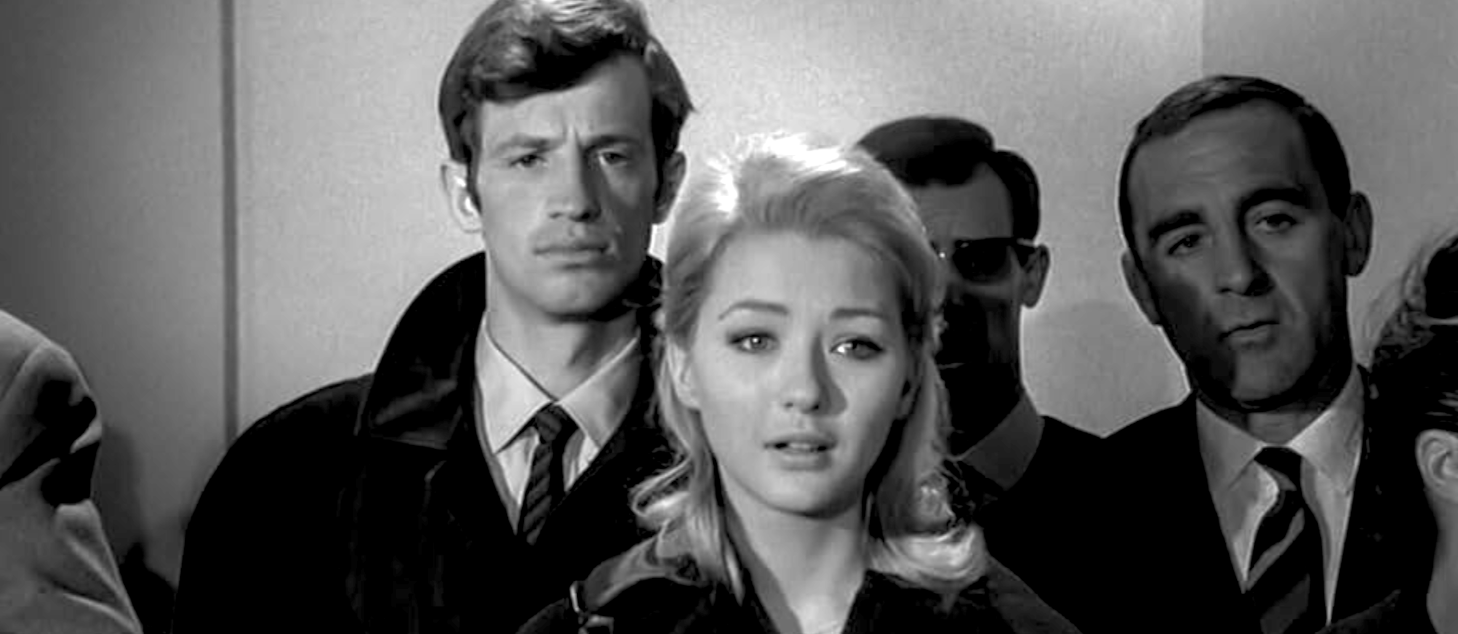
A Man Named Rocca
This early starring feature for Jean-Paul Belmondo co-stars him with Christine Kaufmann in an episodic crime tale. One friend tries to spring another from prison, while contending with gangsters on his home turf. It’s uneven but has many excellent scenes, especially a midsection filmed in le taule. Also starring Michel Constantine and Béatrice Altariba, and presented in a flawless new restoration.

A Man Named Rocca
Blu-ray
KL Studio Classics
1961 / B&W / 1:66 widescreen / 106 min. / Un nommé La Rocca, Man Named Rocca / Street Date July 14, 2026 / available through Kino Lorber / 29.95
Starring: Jean-Paul Belmondo, Christine Kaufmann, Pierre Vaneck, Béatrice Altariba, Mario David, Henri Virlojeux, Jean Gras, Michel Constantin, Jean-Pierre Darras, Pedro Serano, Nico, Monique Hennessey.
Cinematography: Ghislain Cloquet
Camera Operatorr: Pierre Lhomme
Assistant Art Director: Jacques Mély
Film Editor: Denise de Casabianca
Music Composer: Claude Normand
From the book L’excommunié by José Giovanni
Adaptation by Jean Becker dialogue by José Giovanni
Produced by Adry De Carbuccia, Roland Girard
Directed by Jean Becker
 The French New Wave made stars of a number of new directors, but not that many performers. The most prominent may have been Jean-Paul Belmondo, who was suddenly established as an international figure. The energetic actor appeared in 12 pictures in 1960-61, leaving no good opportunity untouched. Belmondo worked for Claude Sautet, Peter Brook, Henri Decoin, Alberto Lattuada, Vittorio De Sica, Mauro Bolognini, Jean-Luc Godard and Jean-Pierre Melville.
In 1961 Belmondo took a break from big names to perform for first-timer Jean Becker, the son of the Golden Age director Jacques Becker, of Casque d’or and Touchez pas au grisbi. Becker the elder had passed away shortly before the release of his last picture, the searing prison break drama Le Trou. The critical acclaim for that picture matched Robert Bresson’s classic Un condamné à mort s’est échappé from three years before.
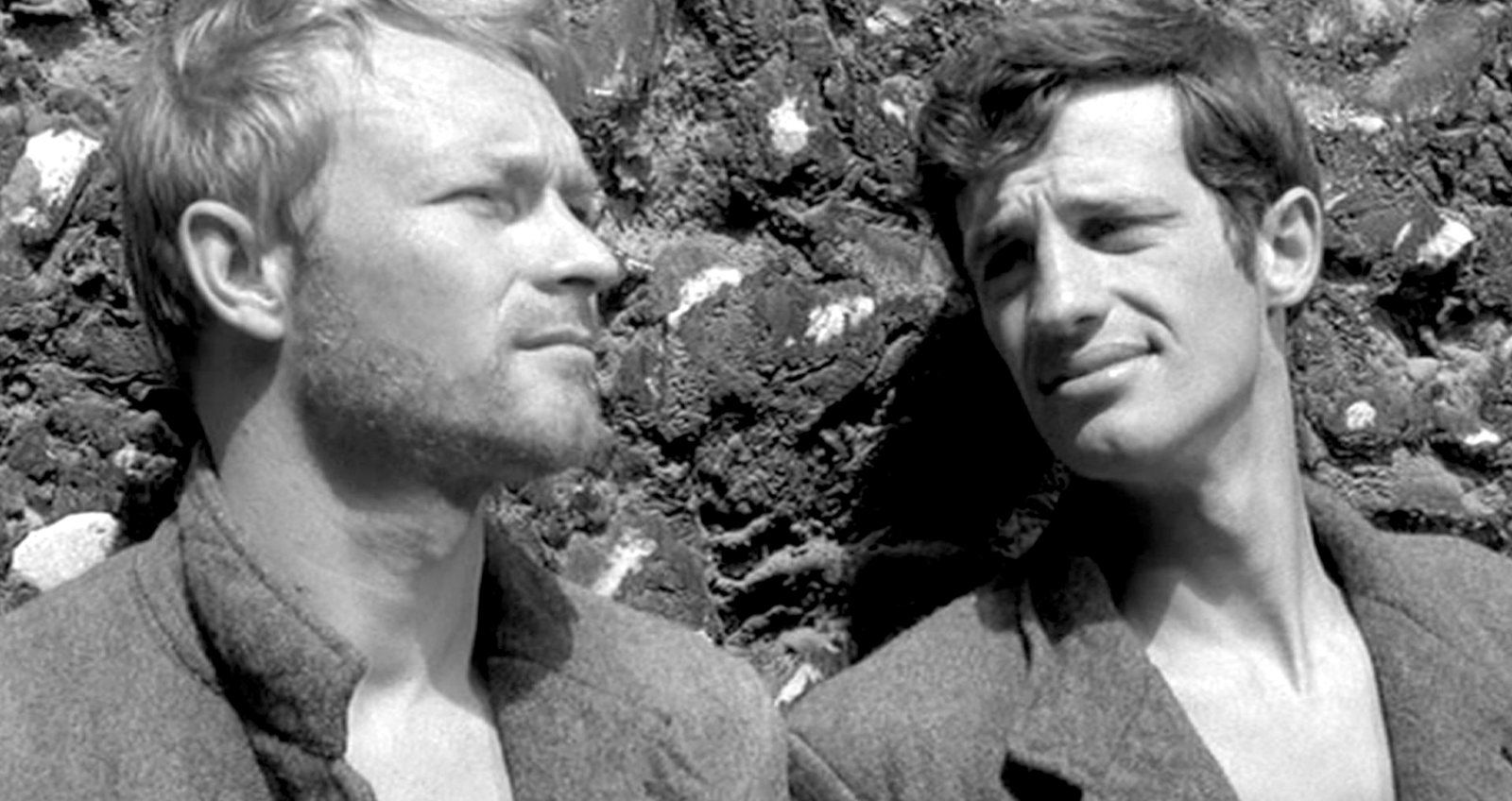
Le Trou was the first novel of the controversial writer José Giovanni, a criminal who had served 11 years for his part in three robbery-murders at the end of the war. Besides having a lifetime of experience with criminals, Giovanni must have been very charismatic, for he became a close collaborator with Jacques Becker, then Sautet and finally Melville. Giovanni wrote the book and much of the screenplay for Jean Becker’s Un nommé La Rocca, aka A Man Named Rocca. Jean-Paul Belmondo ended up appearing in quite a few films derived from works by Giovanni.
A Man Named Rocca is a curious gangster tale that feels like two or three movies glued together. Jean Becker appears to have included a great deal of the source book without fleshing out details or characters. We think we might be in an adapted ‘New Wave’ mode until we realize that the fractured continuity is less a style than a storytelling choie. We soon figure out who is who, but at least ten characters are introduced, given considerable on-screen time and then just dropped.

José Giovanni’s story gives us a hero who doesn’t sweat the details; the first half of the picture is a fairly breezy bit of gangland drama. Roberto La Rocca (Belmondo) is pulled from a rest in the country by his Spanish-speaking best buddy Migli (Pedro Serano). La Rocca’s friend Xavier Adé (Peter Vaneck) is facing a long prison term, having been framed for murder by Villanova (Nico), his partner in the gambling business. La Rocca assures the sweet, innocent Geneviève Adé (Christine Kaufmann) that he’ll free her brother. He beds Villanova’s mistress Maud (Béatrice Altariba of Eyes without a Face) and then takes over Villanova’s role at the the gambling parlor. All goes smoothly enough, until a thug (Michel Constantine) and his gang of Yankee deserters move in on every business in the neighborhood.
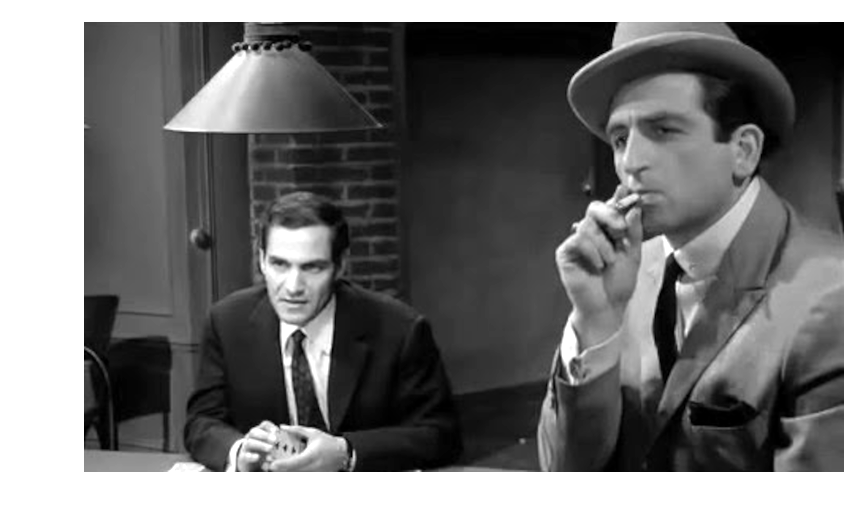
La Rocca joins Adé in prison, where they eventually get their sentences reduced by volunteering to help the army defuse and clear mines along the French coastline. A wrap-up passage sees La Rocca, Pierre and Geneviève together two years later, trying to raise money to purchase a farm.
A Man Named Rocca has a good novelistic feel, despite lurching from one tone to another. The petty squabbles and gangland killings up front introduce a number of interesting characters. But we miss them when they are dropped, especially the sexy Maud and the dandified club employee ‘Charlot l’élégant’ (Mario David).
The sets are good, but Ghislain Cloquet’s BW photography isn’t particularly atmospheric in the gambling interiors. Jean Becker’s blocking and action direction is uneven. The imposing actor Michel Constantin had made a big impression in Le Trou; but his crew of supposed U.S. army deserters are not very convincing. Good sidebar issues add interest: an outside criminal claiming ownership in the club, and the 4 AM disposal of a corpse. But they take up time without advancing the story. (Also, the corpse they dispose of looks really really alive in the trunk of that car…)
The prison sequence plays much better, likely through the input of José Giovanni. The group lockup and the solitary cells are completely convincing. When the two men end up defusing bombs together, events have a book-like feel, that avoids easy suspense tricks. But still, there’s the feeling of a conventional story not being told. Geneviève brings a package for her brother, which we naturally think might be part of an escape plan. The storyline ignores its own details and steers in new but less exciting directions.
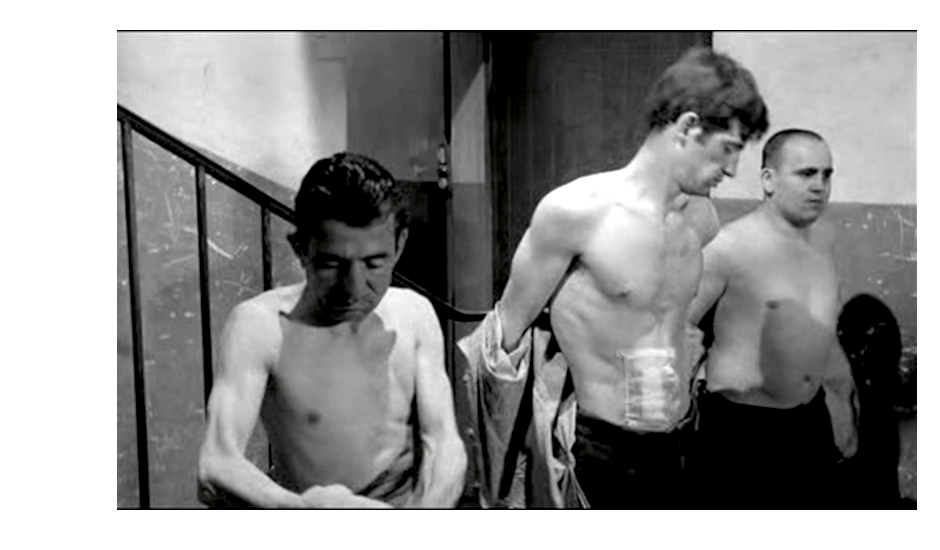
The final post-prison sequence works emotionally, yet conflicts with what we know. Our two friends and the sister are suddenly going to become farmers? Pierre Adé doesn’t bother to tell La Rocca that he’s pulling off a robbery that would obviously trigger an immediate blowback. True, this kind of random illogic happens in real life and can play well in a book. We’re still wondering why Roberto La Rocca never expressed a major romantic interest in Geneviève. We also miss Maud, whose thoughtless abandonment also doesn’t reflect well on Roberto.
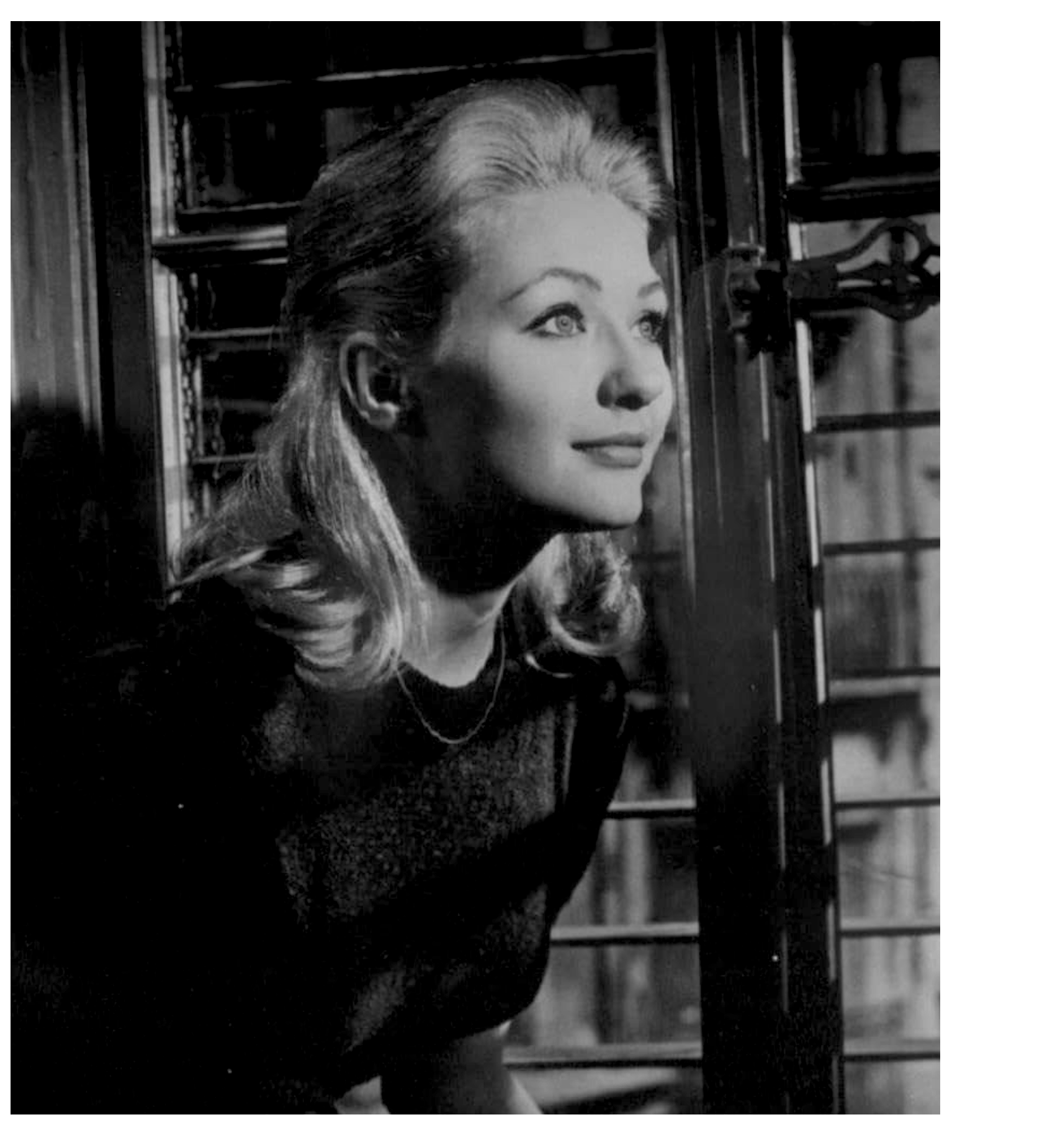
The vitality of the New Wave didn’t change the way movie business was conducted. Seventeen year-old Christine Kaufmann is the picture of delicate innocence, yet she had 25 pictures under her belt. Her agent surely saw starring opposite the rising star Jean-Paul Belmondo as a big career boost. Kaufmann had already played opposite Steve Reeves, Cornel Wilde and Kirk Douglas, and would soon run away with star Tony Curtis before reaching legal age.
We found A Man Named Rocca of high interest. Jean-Paul Belmondo is at his youthful, charismatic best and Christine Kaufmann and Michel Constantin are very good. The show is also an excellent showing by actor Pierre Vanek, who we only know from his major part in René Clément’s Is Paris Burning? Vanek was Jean Becker’s brother-in-law.
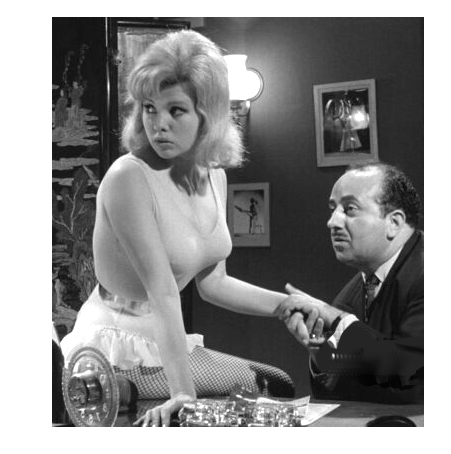
Also briefly present is Monique Hennessey, a showgirl given showcases in several French crime films at this time. She has a couple of lines here, but the whole point seems to be just to watch her walk out of the frame.
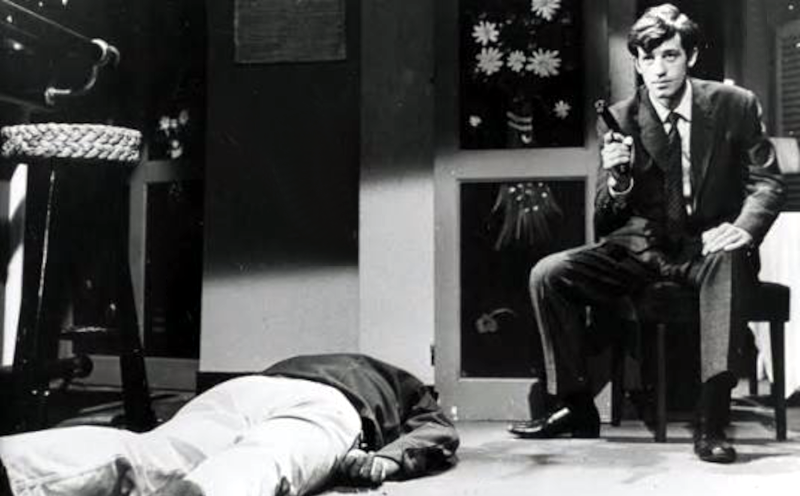
Kino Lorber has also just released La Scoumone, a remake of the same story written and directed by José Giovanni himself. We’ll try to review it … Jean-Paul Belmondo plays the same character under a different name, Michel Constantin takes the Xavier role, and Claudia Cardinale plays the sister. The is set earlier period. It reportedly re-uses the sets of and imitates the mod trimmings of the big Belmondo/Alain Delon hit Borsalino.
José Giovanni ought to be much more controversial — during the German occupation of France, many of the collaborators that worked for the Gestapo were already criminals. Giovanni’s record as an exploiter of the occupation wasn’t revealed until much later in his career. The charges that originally sent him to prison are eye-opening.
Some of Giovanni’s movies drop big hints of his wartime activities. The main criminals of Touchez pas au Grisbi keep Nazi machine guns stashed in their houses and haven’t forgotten how to terrorize victims through torture.


The KL Studio Classics Blu-ray of A Man Named Rocca is yet another handsomely remastered French thriller, taken from a 4K restoration contracted by StudioCanal in 2021. Ghislain Cloquet’s cinematography is good throughout, but more interesting in the ‘real’ locations of the prison and the beach.
Claude Normand’s score makes a good use of the guitar. Editor Denise de Casabianca was an assistant on Jules Dassin’s Rififi and moved on to edit Jacques Rivette’s New Wave landmark Paris Belongs to Us and Robert Enrico’s classic short film An Occurrence at Owl Creek Bridge.
Kino includes a lively audio commentary with writer Max Allan Collins and podcaster Heath Holland. They give a the film a good and fair going-over, touting its positive aspects and sharing our occasional head-scratching over some storytelling choices.
The movie does not appear to have been given a release in the United States when new.
Reviewed by Glenn Erickson

A Man Named Rocca
Blu-ray rates:
Movie: Good
Video: Excellent
Sound: Excellent
Supplements:
Audio commentary with Max Allan Collins and Heath Holland.
Deaf and Hearing-impaired Friendly? YES; Subtitles: English (feature only)
Packaging: One Blu-ray in Keep case
Reviewed: July 23, 2026
(7553rocc)
Visit CineSavant’s Main Column Page
Glenn Erickson answers most reader mail: cinesavant@gmail.com

Text © Copyright 2026 Glenn Erickson
About Glenn Erickson

Glenn Erickson left a small town for UCLA film school, where his spooky student movie about a haunted window landed him a job on the CLOSE ENCOUNTERS effects crew. He’s a writer and a film editor experienced in features, TV commercials, Cannon movie trailers, special montages and disc docus. But he’s most proud of finding the lost ending for a famous film noir, that few people knew was missing. Glenn is grateful for Trailers From Hell’s generous offer of a guest reviewing haven for CineSavant.
An example of my era: I learned of Jean-Paul Belmondo from Donovan’s song “Sunny South Kensington” when my mom bought a collection of Donovan’s songs.