

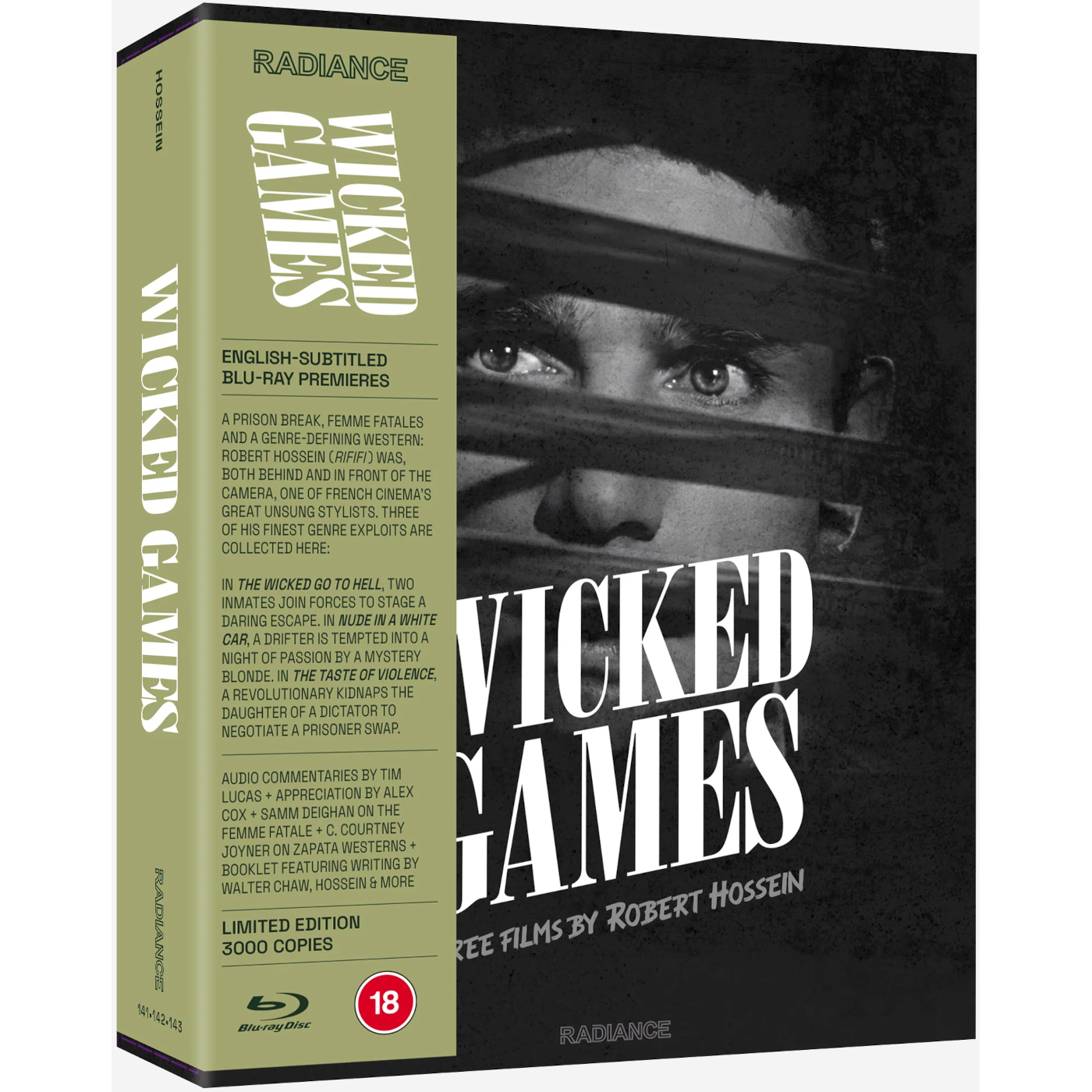

The DVD years gave film fanatics new access to European horror pictures, and the last ten years have seen a welcome flood of international cinema on Blu-ray — including pictures that played only briefly in big cities, if they came here at all. Another page reports that Radiance Films has been releasing Blu-rays since 2022. It it seems longer than that, when we look at their output of highly-desired foreign pictures in excellent quality, from all genres.
The latest can’t-believe-this-is-available disc set i`s a trio of features by an actor-director not given a lot of attention. Wicked Games – Three Films By Robert Hossein gives us his first film as director, one of his most respected thrillers, and an unusual western that plays like politically-oriented Italo films that wouldn’t arrive for another five years. Two of the films also feature Hossein’s actress wife and collaborator, the very talented Marina Vlady.
Fans of Euro Noir will want to check out the first two crime pictures. Censor-inhibited Hollywood films could only dance around the edgy pulp ethos that in these thrillers all but oozes from the screen.
The films’ English language export titles can confuse some viewers.
The original French Les salauds vont en enfer, literally “The Bastards Go to Hell” became The Wicked Go to Hell.
The original French Toi… le venin, literally “You… the Poison” became the exploitable Nude in a White Car.
The original French Le goût de la violence, literally “A Taste for Violence” became The Taste of Violence.
Most Americans that know of Robert Hossein think of him mostly as a villain in memorable French pictures, especially crime films like Jules Dassin’s Rififi and Henri Verneuil’s The Burglars. We learn here that he was a prolific creative in several fields. He seems a bit like America’s John Cassavetes, except that Hossein’s core artistic outlet was directing and acting in stage plays, in between his constant film roles and the 25 pictures he directed.
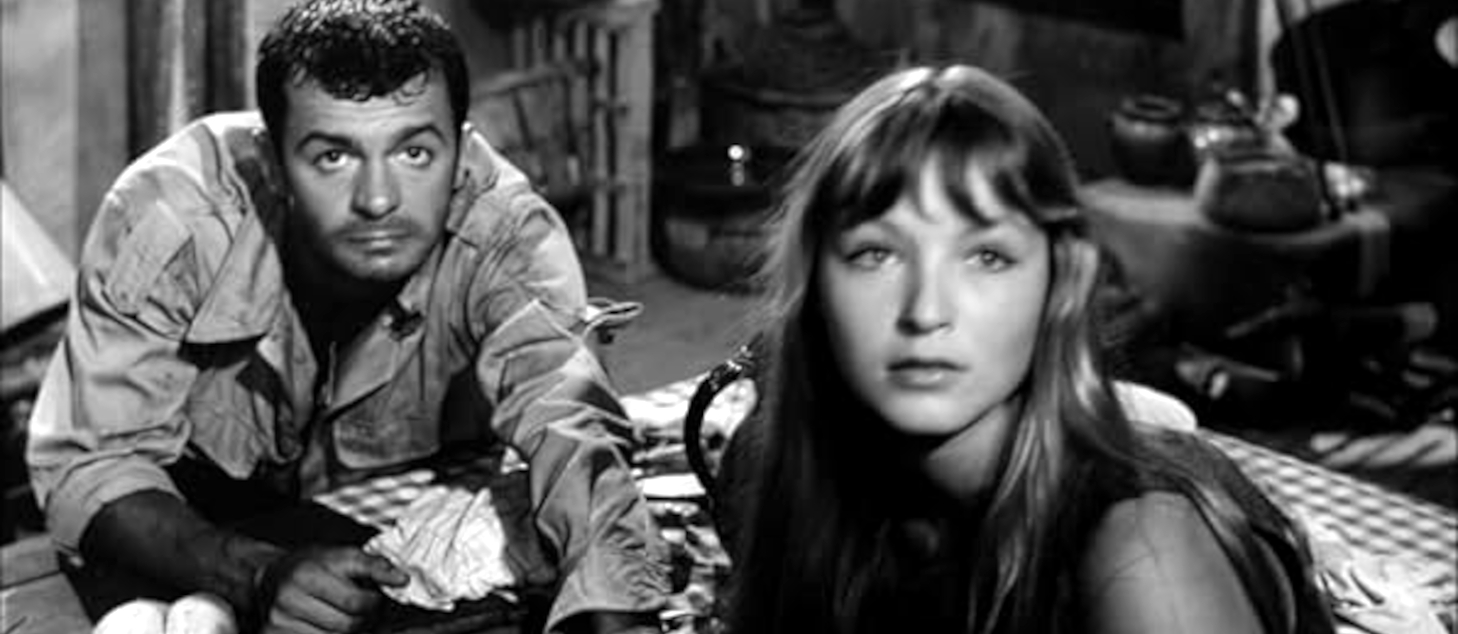
The Wicked Go to Hell
1955 – 1962 / B&W / 1:37 / 93 min.
Starring: Marina Vlady, Henri Vidal, Serge Reggiani, Jacques Duby, Robert Dalban, Robert Hossein, Lucien Raimbourg, Charles Blavette, Guy Kerner, Marthe Mercadier.
Cinematography: Michel Kelber
Production Designer: Serge Piménoff
Film Editor: Charles Bretoneiche
Composer: André Hossein
Adaptation by Robert Hossein, René Wheeler, scenario & dialogue by Wheeler from a play by Frédéric Dard
Produced by Jules Borkon
Directed by Robert Hossein
The first two films in the set are from books by Frédéric Dard, an incredibly prolific author. This first picture is also Robert Hossein’s first directing credit. An eccentric prison break story, it begins as a tight narrative; along the way it sidesteps some of our expectations for ‘what happens next’ in a crime film. The title The Wicked Go to Hell isn’t the best fit for this well-acted picture — better might be ‘the wicked lose all sense of priorities.’
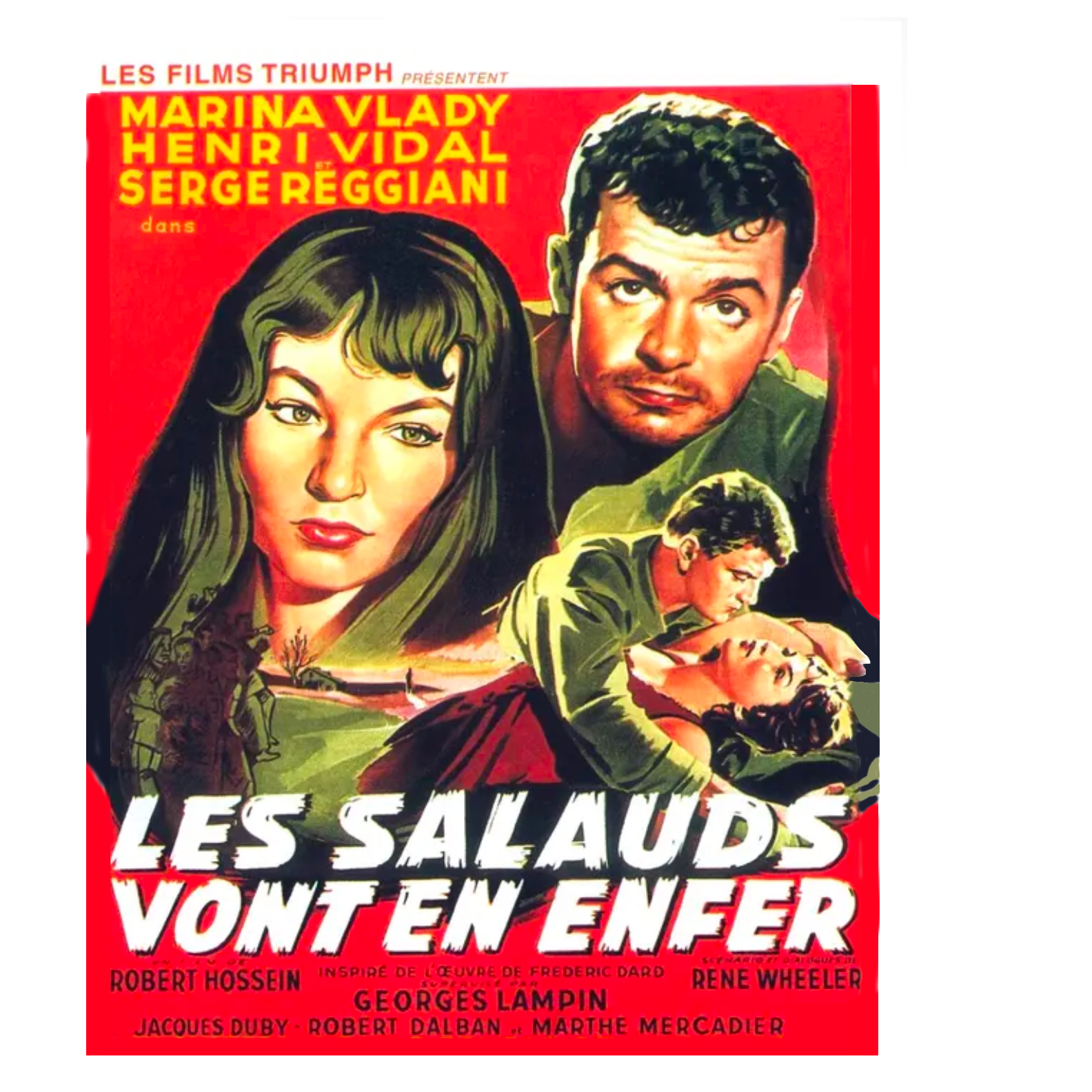
One thief-murderer has just been guillotined. He had two confederates, also incarcerated, who are suspected of ratting him out. Cell block big shot Fred (Robert Hossein) torments the surviving partners Macquart and Rudel (Henri Vidal & Serge Reggiani), trying to get one of them to confess. Fred also torments Georges, a ‘pansy’ inmate (Jacques Duby), for the entertainment of the cell block.
Resisting Fred’s beatings, Macquart and Rudel use a prison funeral to pull off a daring mid-day escape. They wound several guards and leave Fred to take part of the blame; Rudel is hurt as well. They ditch a stolen car in the country and walk across a desolate beach area before finding shelter in a remote shack where live an artist (Guy Kerner) and his nonconformist girlfriend, Eva (Marina Vlady). Eva accepts the pair’s initial violence and passively protects them while Rudel Heals. Both men get ideas about Eva, not realizing that she’s not as helpless as she looks.
The uniting factor in this odd thriller is cruelty. Inured to casual sadism, our criminal protagonists have no qualms about shooting guards and murdering innocents that impede their escape. It’s the earliest film we’ve seen that acknowledges sex cruelty as part of the prison experience — the inmates force Georges to do a striptease like a woman. The irony is Georges is not gay, but a stage performer with a good act. He stole money in an effort to please the predatory Germaine (Marthe Mercadier), who visits just to inform him of her divorce.
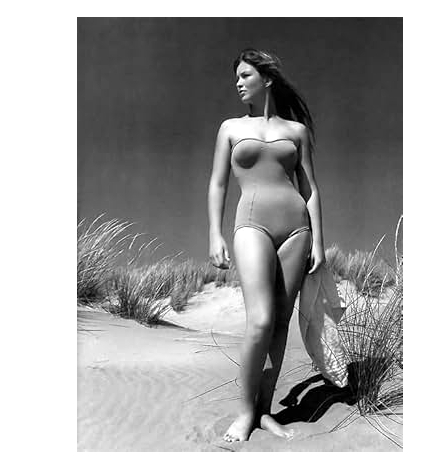
The star of the show is Marina Vlady, a beauty who remains convincingly relaxed even when a murder takes place right in front of her eyes. Actor Serge Reggiani hit it big the year before and took this role only after the first actor cast broke his leg. His Rudel makes a cautious approach to Eva, while Macquart comes on with a boorish sense of entitlement. Actor Henri Vidal had not yet been typed as a villain; he’d played a muscular hero in the costume picture Fabiola, and was the heroic doctor in René Clément’s superlative thriller Les maudits.
As now seems typical of films by Robert Hossein, Wicked does not go in an expected direction — instead of resolving with a police action, it wraps up almost like a fairy tale, or a twisted morality play. The helpless aren’t as helpless as they seem, and honor among thieves pays of in more cruel irony.
Like all three titles in the set, The Wicked Go to Hell is a pristine 2K restoration by Gaumont. All three pictures carry audio commentaries by Tim Lucas, who knocks us over with full bios and interesting creative connections to other films and filmmakers. For Wicked we also get a Lucas Balbo featurette about Hossein’s production, with a couple of video clips from Hossein and director Jean Rollin thrown in for good measure. And Howard S. Berger’s stock is rising for disc reportage — he handles a fairly lengthy overview of Robert Hossein’s career.
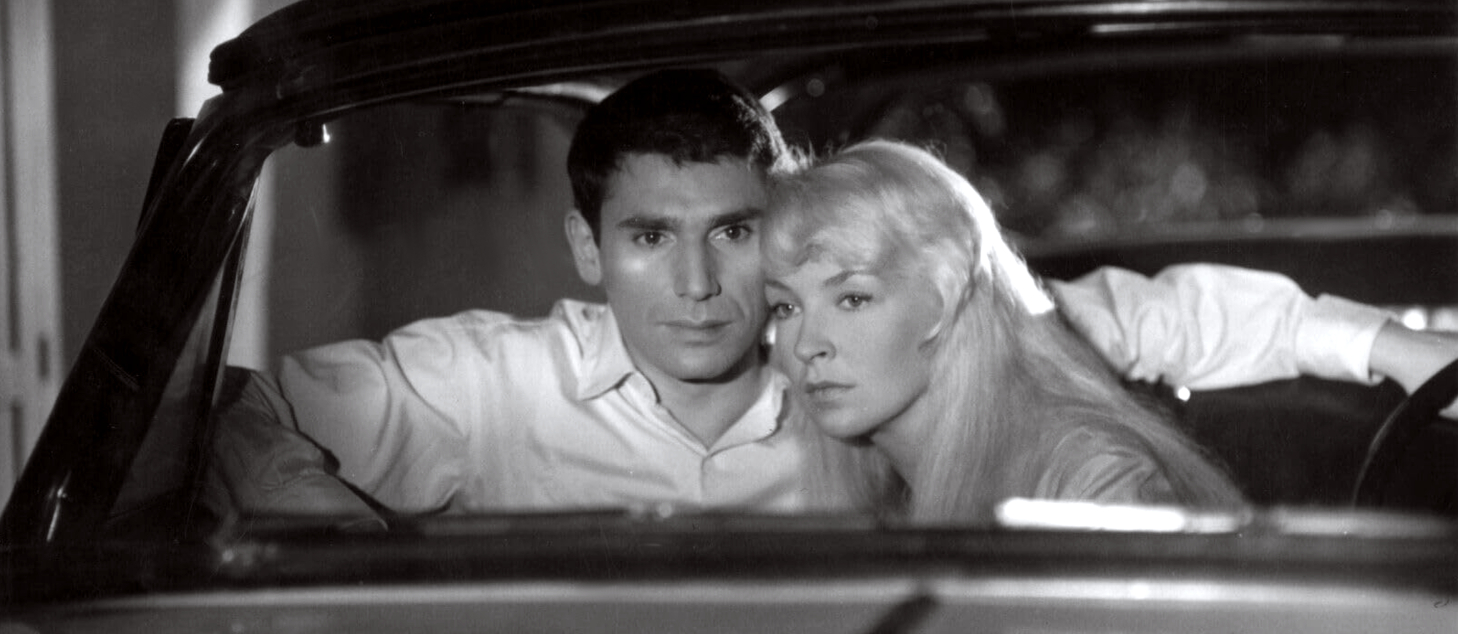
Nude in a White Car
1955 / B&W / 1:37 Academy / 93 min.
Starring: Robert Hossein, Marina Vlady, Odile Versois, Héléna Manson, Henri Crémieux, Henri Arius, Charles Blavette, Lucien Callamand.
Cinematography: Robert Juillard
Production Designer: Jean André
Costume Design: Pierre Balmain, Jacques Heim
Film Editor: Gilbert Natot
Composer: André Hossein
Adaptation and dialogue by Robert Hossein, Daniel Hortis from the novel C’est toi le venin… by Frédéric Dard
Produced by Jules Borkon
Directed by Robert Hossein
The first two thrillers were produced by Jules Borkon. Their ‘eccentric’ nature perhaps explains why Borkon rolled the dice with director Georges Franju a little later, with the all-time top horror drama Eyes Without a Face.
All three films would have found disapproval from the Hollywood Production Code office, not to mention the local censors and the Catholic Legion of Decency. This is the only one of the three that would likely be subjected to censor cuts, for in a couple of brief shots the export title does not exaggerate. Nude in a White Car received an ‘X’ in England, and at perhaps a booking in New York; it’s exactly the kind of adventurous European film that Blu-ray delivers best.
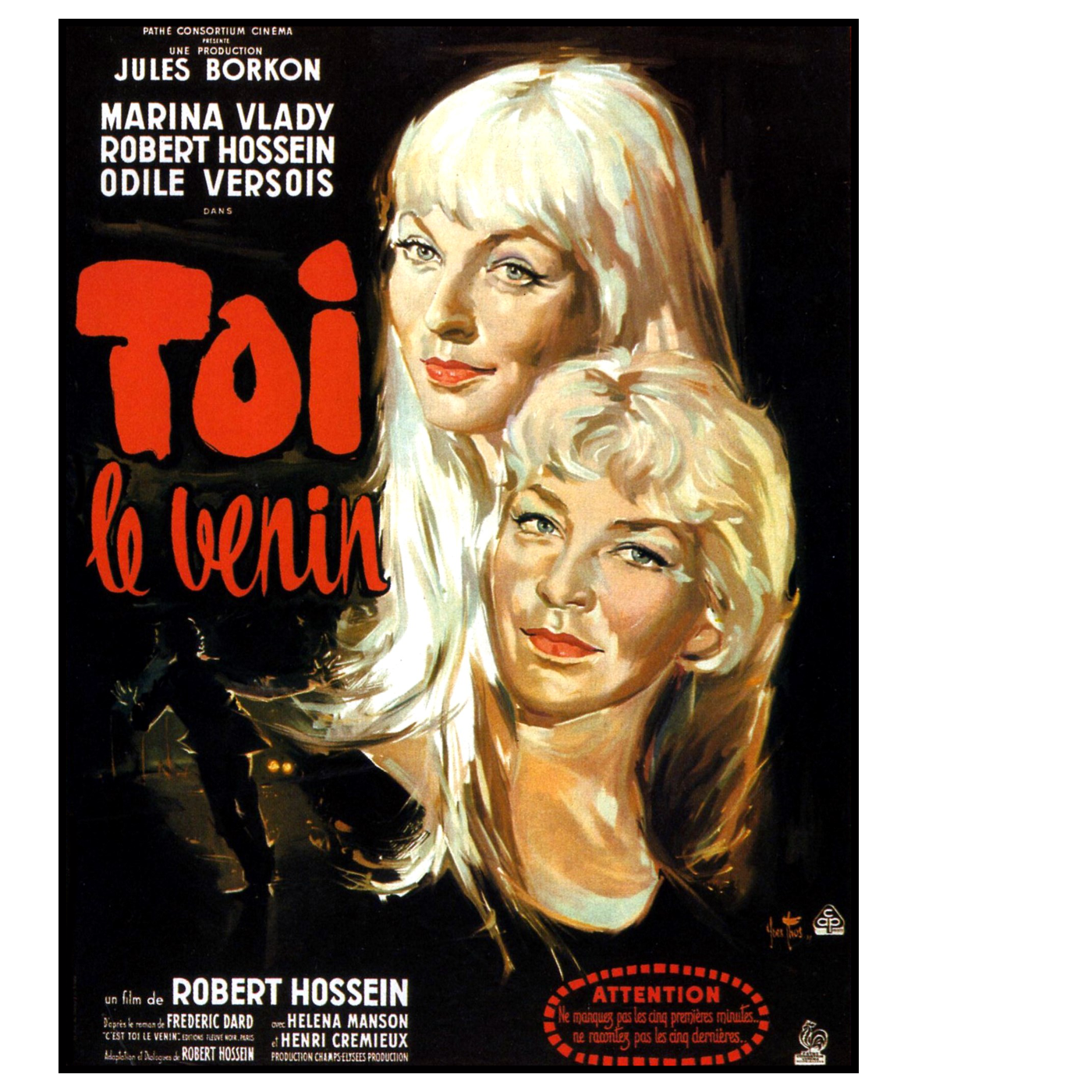
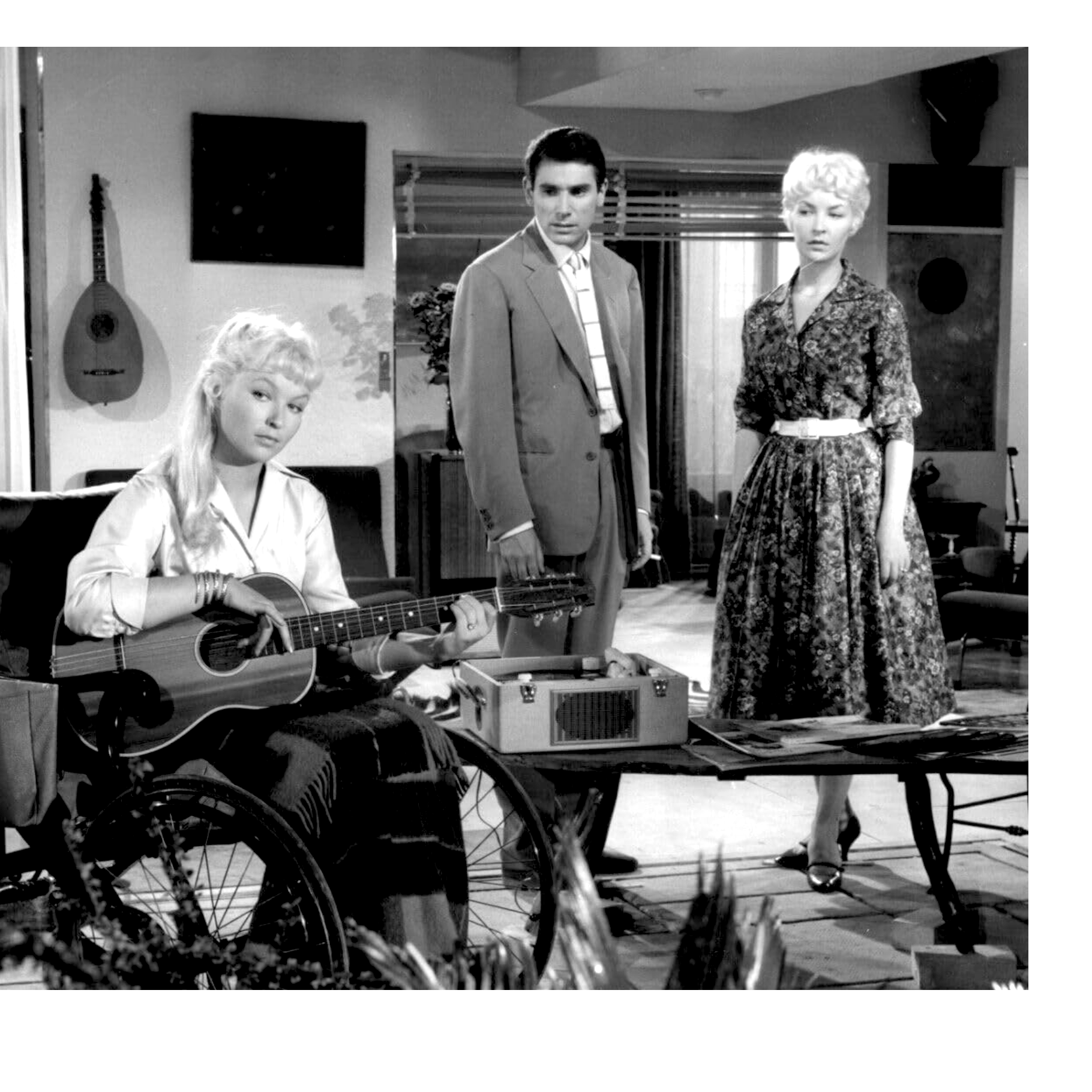
From another Frédéric Dard story comes an intense psychodrama about one man and two women in a plush house in Nice. The situation is weird — borderline sordid — but it plays a lot better than the similar film by René Clément. In Joy House, Alain Delon is the wolf in a henhouse with both Lola Albright and Jane Fonda. Hossein’s show start out with the kind of situation written up in the worst paperback junk. Unemployed minor TV performer Pierre Menda (Robert Hossein) is walking a road near a casino after blowing what money he had. A mystery woman picks him up in a Cadillac, and then reveals herself to be naked under a mink. She has sex with him right in the front seat, and then tries to run him over. Pierre doesn’t get a look at her face (?).
When Pierre tracks the car down to an exclusive mansion, he finds there two sisters who fit the bill of the mystery woman in the car. But Eva Lecain (Maria Vlady) is a polio victim in a wheelchair. She doesn’t drive, which leaves her sister and caretaker Hélène (Odile Versois) as Pierre’s likely mystery nympho-hit & run driver. In short time both women seem to want to be attached to Pierre. He moves in, with the idea that they need the company (?). They also think he should serve as the manager of a record store they are opening.
The storyline and relationships walk a narrow tightwalk of credibility. Pierre at first assumes that Hélène is the dangerous sister, but events cause him to believe that Eva may be a clever psycho, hiding the fact that she can walk again. Confronted with evidence that Eva has been roving at night, Hélène resists Pierre’s accusations. Eva seems so innocent and sheltered; Hélène is sincere and affectionate. Eva is also not happy when it becomes clear that she’s lost the race to claim Pierre as her man. The conflict naturally steers toward some nasty revelations. But will they be the ones we expect?

Even if it’s all but unknown here, this is one of the more celebrated Robert Hossein pictures, as well as a cinematic high point for the Hossein – Vlady creative collaboration. The dramatic relationships convince even as we raise an eyebrow at the basic premise. Hossein’s direction is so good that we don’t take the oversexed opening as evidence of exploitation overreach — all three characterizations appeal.
The disc extras detail more internal connections. Odile Versois and Marina Vlady are real-life sisters, whose original last name was Poliakoff; Hossein’s music composer on all three pictures was his father, André Hossein. The music segues on The Wicked Go to Hell seem overstated, but père Hossein’s jazz tunes are a good fit for the time and place of this picture. A 45rpm record is worked into the mystery angle.
Could Nude in a White Car have been an influence on some English language murder tales post- Psycho? More than one Jimmy Sangster Hammer film picks the South of France for murder mysteries involving crazy people; Susan Strasberg in Seth Holt’s Taste of Fear springs to mind. Even more to the point is Robert Aldrich and Lukas Heller’s What Ever Happened to Baby Jane?, that has a truly similar plot-premise — two sisters, one crippled and the other crazy, with a wild twist that overturns our assumptions about what the heck is really going on.
Nude in a White Car has a slight edge on the Aldrich movie, which generates a mechanical suspense that isn’t as gripping the second time through. The suspense in Hossein’s remains psychologically ambiguous all the way through, making us want to re-view to find telling clues we might have missed.
The extras for Nude in a White Car include a delightful interview with actress Marina Vlady. We’re floored by how good she looks, even though the interview is eleven years old. It reminds us that we ought to be surprised when whe learn that someone from one of these pictures is still with us. Odile Versois passed away in 1980. Robert Hossein died in 2020 at age 93, reportedly an early casualty of COVID-19. Marina Vlady ends her interview with the happy statement that her films have endowed her with a kind of immortality. We hope she’s doing well.
Also present is a video essay by Samm Deighan on French Femme Fatales. It begins with yet another explanation of film noir, but is soon taking us on a tour of some of the feistiest, most vivid and most lethal characters in French film history. My personal favorite is the vengeance-seeking Maria Casarès in Robert Bresson’s chilling Les Dames du Bois de Boulogne.

The Taste of Violence
1955 – 1962 / B&W / 2:35 widescreen / 86 min.
Starring: Robert Hossein, Giovanna Ralli, Mario Adorf, Hans H. Neubert, Madeleine Robinson, Dany Jacquet.
Cinematography: Jacques Robin
Production Designer: Jean Mandaroux
Costume Design: Madeleine Charlot
Film Editor: Borys Lewin
Composer: André Hossein
Screenplay by Louis Martin, Claude Desailly, Walter Ulbrich dialogue by Robert Hossein, Jules Roy
Produced by Henry Deutschmeister, Arno Hauke, Jean Le Duc, Alain Poiré, Roger Sallard
Directed by Robert Hossein
It’s great that Robert Hossein’s ‘escargot western’ The Taste of Violence receives such a strong send-off through Gaumont and Radiance. If distributed by the worthy but now defunct ‘Wild East’ label, it might have ended its days on a DVD for Spaghetti western connoisseurs.
Several European countries regularly made movies reproducing Hollywood’s vision of the American West; before Italy went hog wild with the subgenre, the most enthusiastic Eurowesterns came from Germany — both sides of the Berlin Wall. This show doesn’t seem to have been released in the U.S., something that becomes quickly understandable. It’s about revolutionaries in ‘an unnamed Central American country’ that is obviously Mexico; the landscape and the costumes look identical to those seen in standard Mexican revolution pictures. Hollywood’s 1953 Blowing Wild begins with a sequence of bandits right out of Treasure of the Sierra Madre — with a big text disclaimer saying that it’s anyplace but Mexico. Cold War politics?
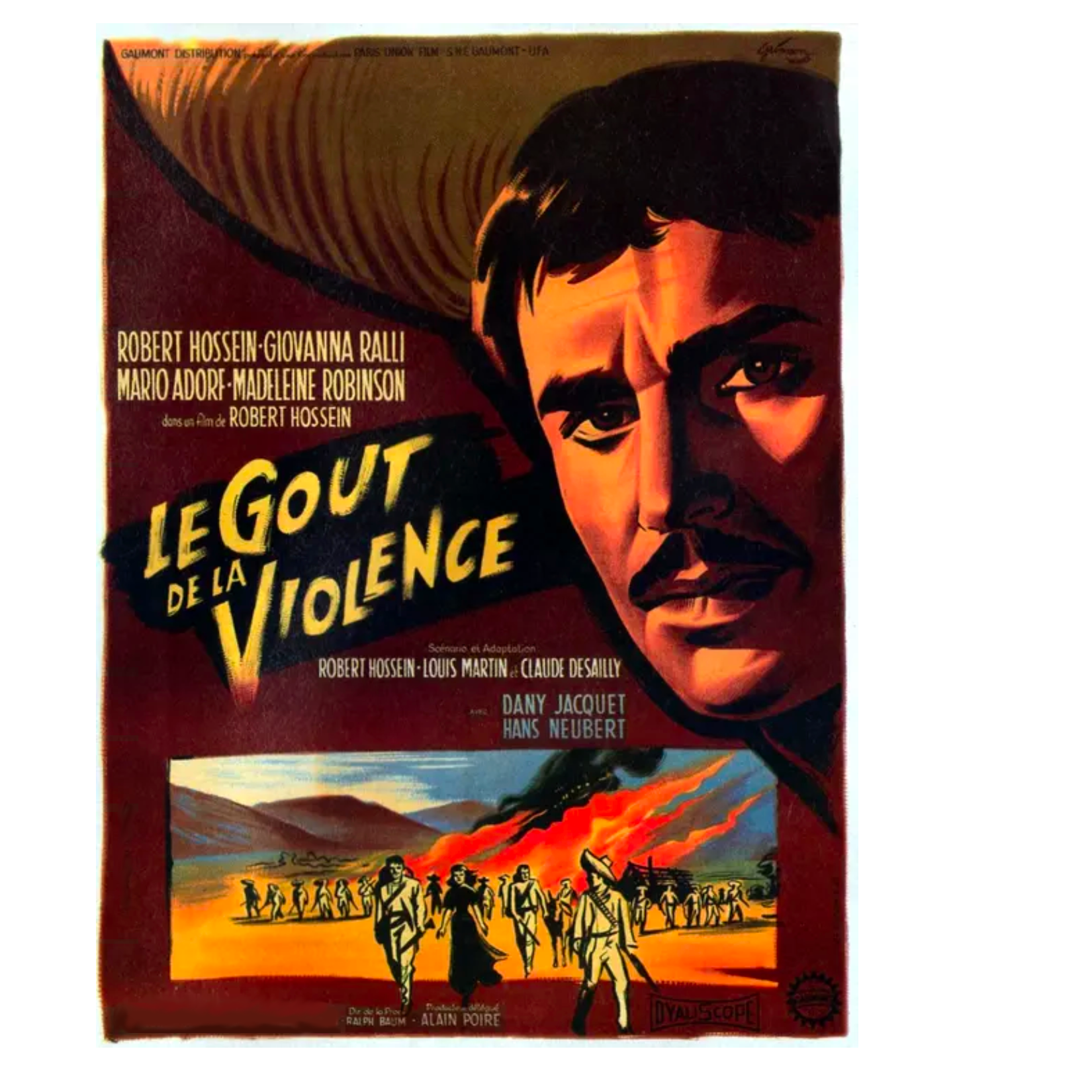
Politically speaking, Taste of Violence is not at all leftist. Just like Sergio Leone’s Giù la testa, the big message hammered home is that revolution is mostly awful. If one fails it only brings about mass death and suffering. Those that succeed immediately become corrupted. Robert Hossein’s picture goes from one massacre to the next without ‘fun’ action scenes to keep the popcorn popping for Saturday matinees. It is even less of an escapist romp than Leone’s sobering epic.
Both Alex Cox and C. Courtney Joyner are quick to tell us that Hossein’s film fronts politics that wouldn’t become ‘normal content’ until the leftist, ‘committed’ Italo Westerns that began in 1967. Those pictures frequently indicted capitalists for corrupting the struggle for political justice, etc.. Not only is Hossein’s picture down on rebellion, its eventual message-making leans strongly toward art-film abstraction.
The show was filmed in Yugoslavia, in locations that could be Mexican, or South American, anyplace but a verdant Central American state. A rebel brigade under commander Perez (Robert Hossein) captures a government train, slaughters the troops on board, and holds their passenger Maria Larangana (Giovanna Ralli) for ransom. She’s the daughter of the President, and Perez is under orders to safeguard her so she can be exchanged for a large number of captured revolutionaries slated for execution.
Perez sends his troops to join the main army, and takes off cross-country with his prisoner and just a couple aides. They encounter difficulty when the government’s reward motivates poor peasants to try to seize Maria. Perez stops one attempt by lighting a cornfield ablaze. Then Perez’s confederates begin to waver in their commitment. The beautiful and unflappable Maria reminds young Chico (Hans H. Neubert) of the Madonna; he’s too easily manipulated by Chamaco (Mario Adorf), a realist who sees their chance of success as nil. Chamaco tries to sell Perez on the idea of turning Maria over for the reward, splitting the loot and forgetting the Revolution entirely.

Once again, Hossein and his screenwriters do exactly the opposite of expectations. We only see the aftermath of battles and massacres, some of which are as striking as scenes in Giù la testa. Chamaco is correct in that Perez’s idea of taking Maria anywhere looks bound to fail, what with government patrols on their heels. The only way they can make one escape is by threatening to shoot her, which is of course a suicide move.
There is no good news in this ‘Zapata Western’: the trek’s luck goes from bad to worse, darkening our outlook. It’s a cold vision. Perez and Maria must tell one old lady that her rebel son has died. We soon abandon our optimism for ANY positive outcome for this revolution business. The final part of the story is an unbroken string of horrors. The film feels like a precursor to more recent movies about Central American Death Politics, John Sayles’ Men with Guns and Ken Loach’s Carla’s Song.
The show instead takes a turn into semi-abstract imagery. The dialogue becomes minimal as Maria and Perez find themselves in a town center lined with dozens of hanged rebels. Their visit to Perez’s home finds him not able to even talk to his own fiancée. Maria and Perez simply stare at the horizon; the show’s disjointed sequences are blended with long dissolves. Their relationship breaks up as well — Perez loses his purpose, and with it his identity. The movie grinds to a dismal finish.

We’d never expect this negative statement to come from any mainstream picture, from any country, in 1961. It’s certainly a good lesson about commitment to a lost cause — seeing everyone you trust obliterated is not ‘romantic.’ We admire some of the filmmaking — Hossein makes good use of music that sounds like folk songs. But the characters remain genre-thin, and soulful staring only goes so far. Hossein’s western is the most ambitious but the least successful movie in the set.
The entire cast of course speaks in French. Robert Hossein acquits himself well as a Latino, wearing gunbelts and bandoleros over peasant clothes. Giovanna Ralli says very little, keeping our deeper involvement at arm’s length. We aren’t bothered by the fact that our Central Americans are played by a Frenchman, an Italian, and a Swiss-German. Mario Adorf is four years beyond his stunning breakthrough in Robert Siodmak’s The Devil Strikes at Night and four years befor his excellent turn as a Mexican soldier in Sam Peckinpah’s Major Dundee. He looked so enormous in Siodmak’s serial killer film, we wonder if that production cast unusually short actors to play opposite him.
The Taste of Violence is given a video introduction by Alex Cox, and a title-dropping video roundup of political westerns by C. Courtney Joyner. Each title also carries an original trailer; the one for this western is an artsy series of dissolves of every memorable image in the film, skipping only the Spartacus– like view of a cobblestoned street lined with hanging corpses. The trailer makes the show look insufferably artsy — the movie is much more interesting, despite the lack of conventional action scenes.
I will definitely be checking this out.
Nude in a White Car is impressive and captures the noir aesthetic. I haven’t watched the other two films yet.