


The Bible was once big business in Hollywood, and a number of widescreen hits of the 1950s were costume epics based on the Bible, or historical pictures with a religious theme. Cecil B. DeMille was noted for making ‘Christian’ spectacles that contrasted sinful excess with pious pronouncements and heavenly choirs.
The Miracle had been in the works since the early 1940s, first at Warner Bros.. The tastefully produced The Song of Bernadette was about an actual historical event commemorated by a shrine. The Miracle is an invented story. Although promoted as ‘Max Reinhardt’s Celebrated Drama,’ its source is a wordless play from 1911, an elaborate ‘spectacle pantomime’ by Karl Vollmöller, itself an adaptation of a story from the 12th century. Vollmöller worked with Reinhardt to produce the play for the stage. He later wrote the screenplay for the Von Sternberg classic The Blue Angel.
The big star of The Miracle is Carroll Baker, who may have thought it a good idea to take a break from her salacious ‘Baby Doll‘ image. The studio was still stinging with the Church’s condemnation of that 1956 picture. The leading man is future 007 actor Roger Moore. He was already WB contractee, working in their TV division.
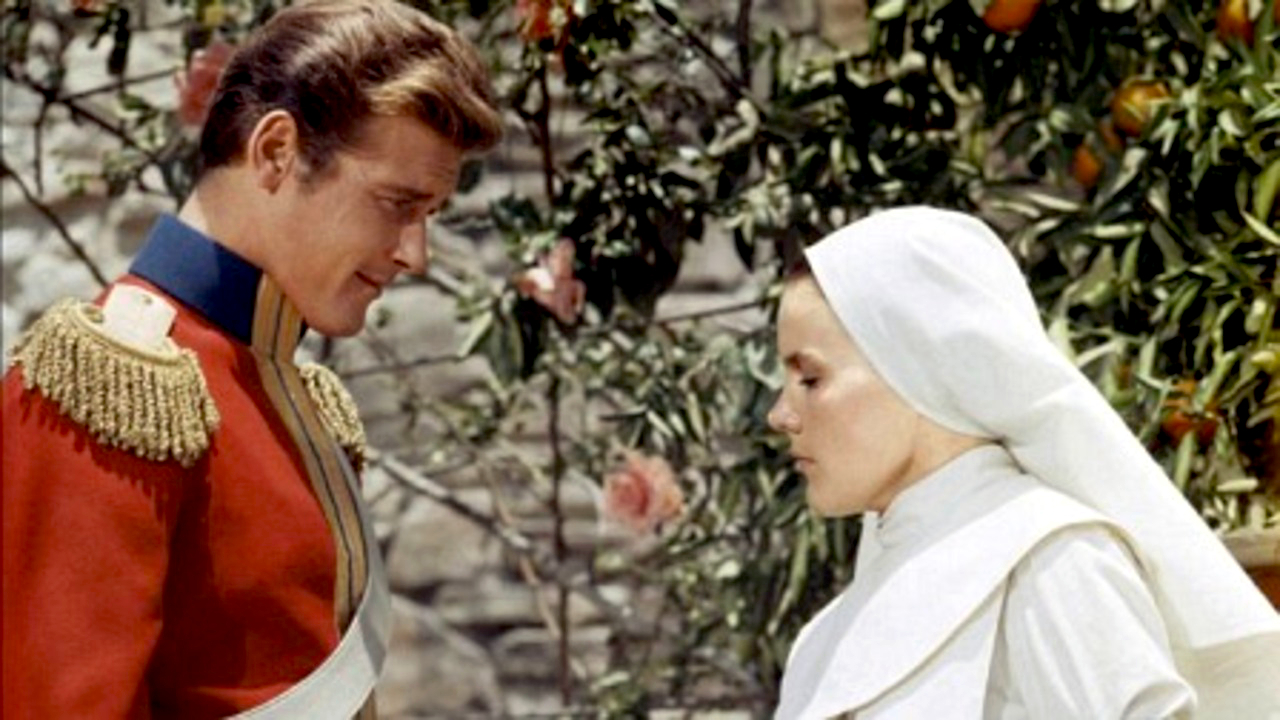
A grand saga of faith and morality, The Miracle weaves a spritual story around Catholic iconography. The orphan Teresa is a postulant at a convent in Miraflores in the time of the Napoleonic war in Spain. She’s disobedient and always in trouble, yet devoted to the convent’s statue of the Blessed Virgin, which is said to be a source of goodness for the community. When the fighting comes to Miraflores, Teresa meets the English Captain Michael Stuart (Roger Moore), and helps to care for him when he is wounded. He asks for her hand in marriage; she turns him down, but then leaves the convent in search of him.
Wrongly informed that Michael has been killed, she joins a group of gypsies and becomes a romantic problem for the brothers Carlitos and Guido (Carlos Rivas of The King and I & Vittorio Gassman of Il sorpasso). She earns the ire of their impulsive mother La Roca (Katina Paxinou of For Whom the Bell Tolls). More violence ensues with the French occupiers, and a double tragedy in the gypsy camp makes Teresa a fugitive.
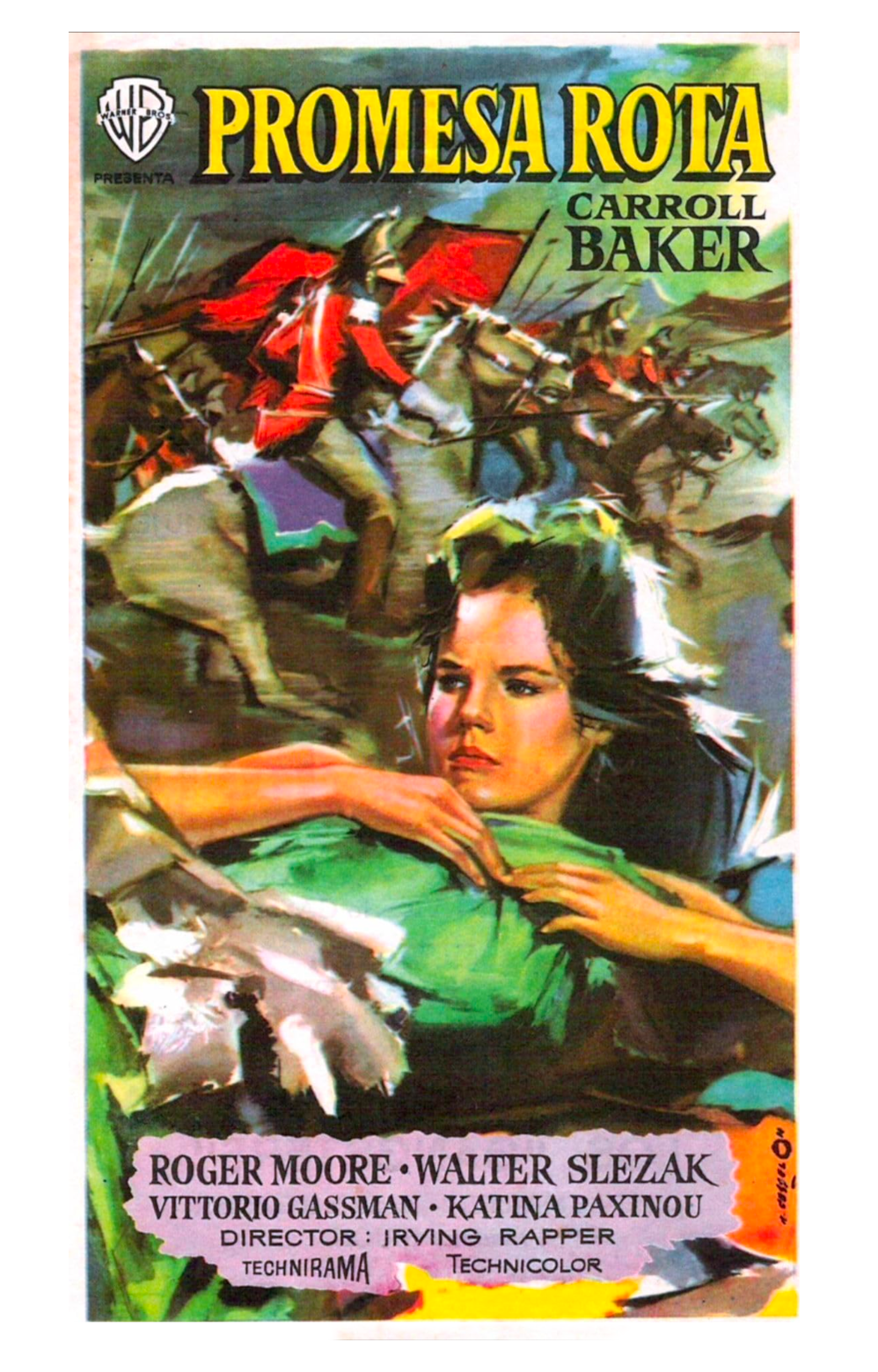
Thus begins a four-year Odyssey for Teresa. She collects admirers but commits to none. Her one steady companion is Flaco, a sentimental thief. She is introduced to performing in cabarets by the matador Córdoba (Gustavo Rojo of The Valley of Gwangi) and then promoted in big concert halls by the aristocratic Casimir (Dennis King of Between Two Worlds). A bad break for Córdoba in the bullring convinces Teresa that she’s poison for any many who loves her. Teresa eventually finds that Michael is alive, but turns down his proposals in the belief that she carries a curse and will bring him bad luck. She also learns that the statue of the Blessed Virgin back at the convent has disappeared, and that the region is suffering a terrible drought. Her travels take her back to Miraflores.
The ‘miracle’ of the story is that nobody in the convent has missed Teresa. The statue has come to life and taken Teresa’s place. When she returns, the statue takes its proper place again, rain pours from the sky and Miraflores is made whole once more.
The 1959 movie version of The Miracle puts a peculiar spin on the Hollywood Bible genre. Teresa is meant for heaven. When she is in torment, the sky darkens with thunder and lightning indicating Spiritual Forces in conflict. The Blessed Virgin holds Teresa’s place in the convent, and is also established as being on the side of the English in the war. The good English officer saves little children, and bad French occupiers execute gypsies. Death is fated for three men that wish to possess Teresa: she is meant to the convent untarnished.
Teresa is unaware of the ‘disappearing statue’ miracle, but we see it happen. In some stage and film adaptations, the Teresa / Virgin swap isn’t discovered until the end. It can probably be assumed that the Mother Superior gave the replacement Teresa fewer demerits for deportment.
Critics were not kind to The Miracle, and it didn’t get a break at the box office, either. Warners released it at the same time as William Wyler’s gigantic Biblical epic Ben-Hur, and a few months after Fred Zinnemann’s acclaimed serious drama The Nun’s Story. Compared to them The Miracle looks like a budget production. Its Spanish exteriors were filmed in the San Fernando Valley, in the Santa Susana Pass area that later became prime “Manson Country.” The rocky acreage had been used in many westerns; combined with the off-the-rack costumes, the familiar terrain makes gives the show the look of a TV movie, with a few more extras than usual.
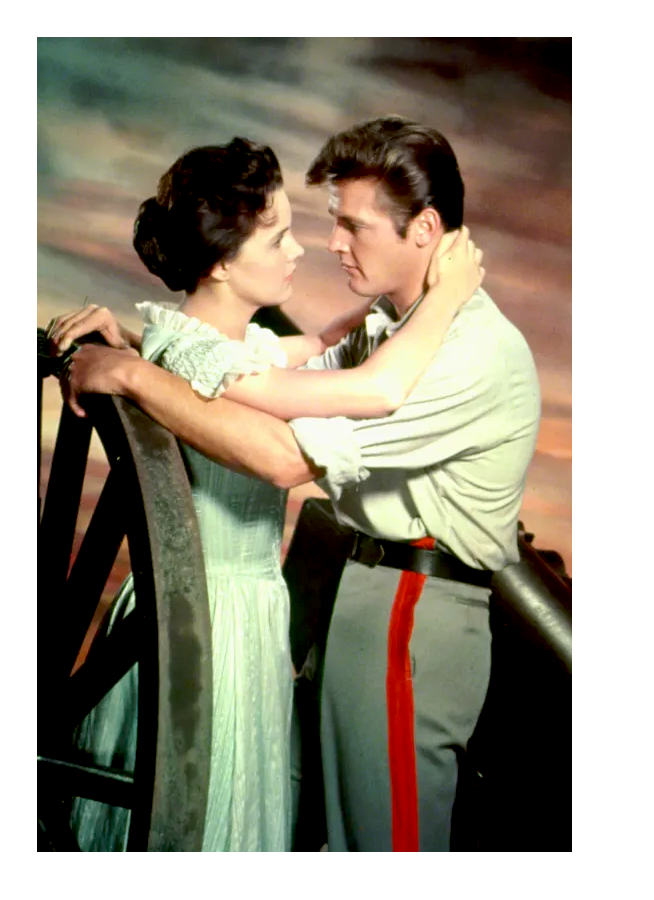
Although his fine cameramen lend the show some good nighttime lighting, director Irving Rapper plays everything as a flat pageant. Carroll Baker does what she can to maintain a consistent emotional commitment. The rigid narrative makes Teresa renounce her faith, but she never becomes a fallen woman. She’s a star on the stage, with her singing dubbed in Spanish by another voice. Teresa doesn’t give herself to her men because she believes she carries a curse — admirers tend to be shot or gored in the bullring.
Roger Moore was never particularly expressive, but he always looked great, and he knew how to make this kind of theatrical pageant play. We can understand why the original play was produced as an non-speaking pantomime. The dialogue here tends toward raw exposition and emotional declarations. Teresa’s ‘personal’ relationship with the statue of The Virgin includes heart-to-heart talks, where she suggests that the English need divine help.
The story does no favors for the film’s supporting cast. The great Katina Paxinou won an Oscar for For Whom the Bell Tolls but no major movie roles followed; getting into The Miracle was a bad choice. Hollywood didn’t know what to do with Vittorio Gassman; he came to the U.S. with a brief marriage to Shelley Winters, but didn’t click in leading roles. The Uruguayan actor Gustavo Rojo had been a child star; the closest he came to breaking into Hollywood was a featured role in a Glenn Ford-Debbie Reynolds comedy.
The mystical content of The Miracle is tasteful, but not particularly memorable. The direction leans heavily on those barnstorming Gothic effects. The wind howls when Teresa and Michael kiss, and the camera pans from their embrace to a row of trees bowing in the wind (an okay live-action trick). Does the editor hard-cut to the next scene, because a dissolve suggested that the couple were having sex right there in the wind? The thunder returns when Teresa decides to leave the convent … and more thunder, lightning, and bursts of Elmer Bernstein’s music score herald a shot of the statue stepping down from its pedestal. *
Connecting the dots makes us think that Teresa’s non-religious urges trigger a Godly torment, that drives her out of the convent. As soon as she leaves, she’s almost raped by one of those nasty French soldiers.
The screenplay was credited to Frank Butler, a conservative who wrote good movies for Leo McCarey and John Farrow. Butler was getting on in years and wanted help from his son Hugo Butler, who had been blacklisted for years and was still living in Mexico. Hugo was too high-profile to dare return to the U.S.. His likewise blacklisted screenwriter wife Jean Rouverol Butler took the job instead. In the interview book Tender Comrades, Ms. Rouverol explained that it was she who satisfied the Catholic censors, by changing Teresa from a Nun First Class to a novice beginner, whose ‘promise’ to the Virgin was less binding. Frank Butler receives sole credit for the screenplay.
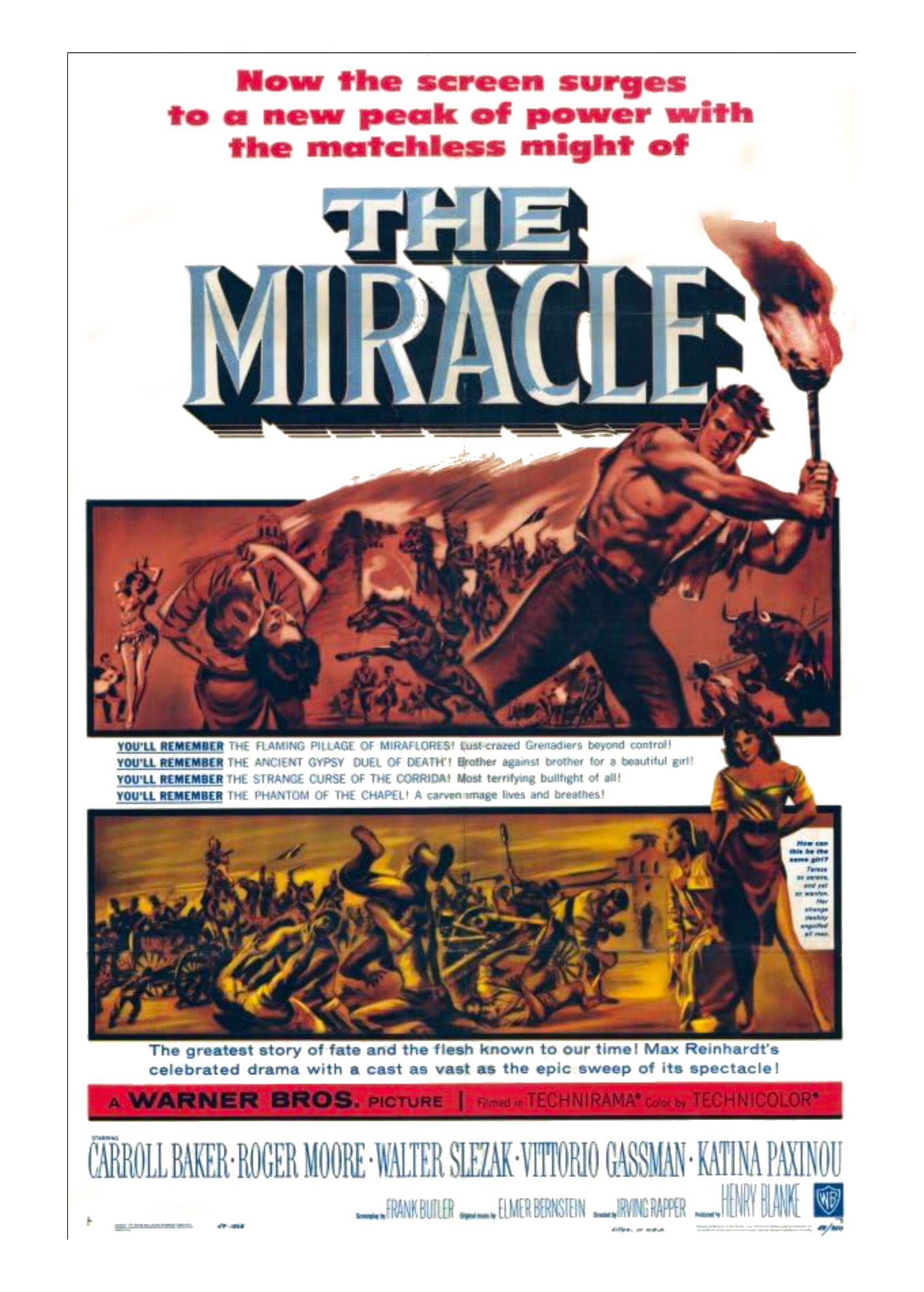
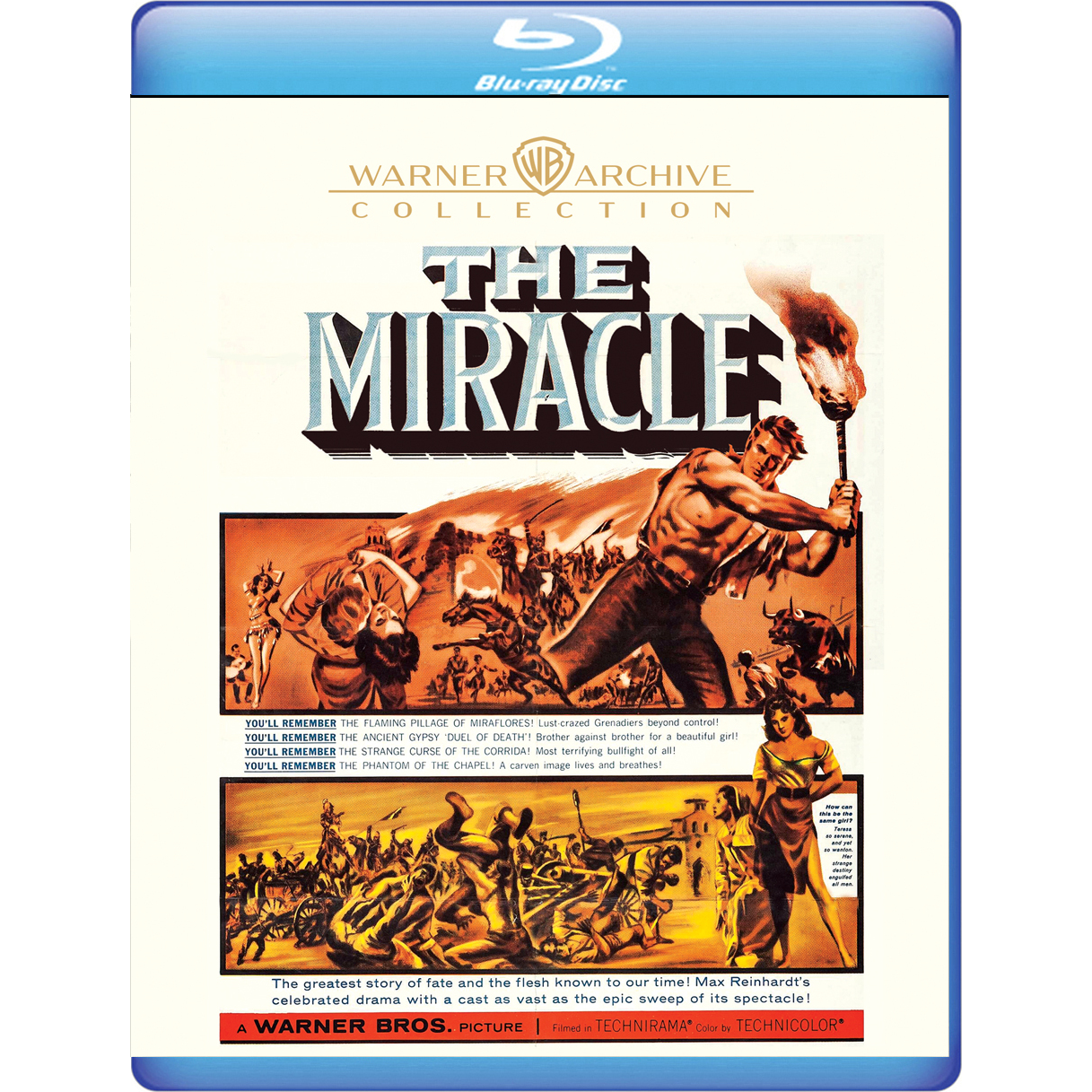
Warners’ original posters downplay the cast, and all but bury the film’s religious theme. In place of The Blessed Virgin, we get Roger moore swinging a torch in a battle; his chest looks like that of Steve Reeves. The main tagline is rather epic-generic:
“Now the screen surges to a new peak of power with the matchless might of The Miracle!”The sub-tagline (and the trailer) assume that the audience have heard of the vintage stage presentation.
“The greatest story of fate and the flesh known to our time! Max Reinhardt’s celebrated drama with a cast as vast as the epic sweep of its spectacle!”The only females on the poster look like an exotic dancer and a streetwalker. Except for the exaggerated image of Roger Moore, none of the stars are depicted. Instead, we’re given more ‘menu items’ of thrills to be found in the movie:
“You’ll Remember:
THE FLAMING PILLAGE OF MIRAFLORES!
Lust-crazed Grenadiers beyond control!
THE ANCIENT GYPSY DUEL OF DEATH!
Brother against brother for a beautiful girl!
THE STRANGE CURSE OF THE CORRIDA!
Most terrifying bullfight of all!
THE PHANTOM OF THE CHAPEL!
A carven image lives and breathes!
That last ‘you’ll remember’ list item reduces the film’s sacred symbol to the proportions of a movie monster. The movie is halfway tasteful, depending on how one feels about depictions of icons of faith.
Some of the reviews used The Miracle for target practice, but it reportedly made money. I haven’t personally run into anyone who mentioned having seen it, but a Blu-ray revival is welcome. A Bible-oriented movie wanted even more by collectors is the same year’s The Big Fisherman, a giant 70mm film that has all but disappeared. It was partly financed by Disney; it may be in the Public Domain.


a few of us projectionists from the 1950 who are still alive have been hoping to get hold of a blu-ray for years. remembered well, a bit studio bound. because of the bloody delramas used on projection was difficult to keep in focus. heat from arc lamp used to make the mirrors pop so had to keep refocusing
Hi Dave. For everyone’s information, Dave is a veteran U.K. Projectionist (a few careers ago) who knew everything about exhibition in the U.K. Down to memories of specific films. A great guy!
I saw a pan/scan version on TV decades ago and thought it was a hoot. I’d love to see it widescreen. The plot derives from a Medieval legend which is breathlessly retold in Bunuel’s “The Milky Way.” Kurt Atterberg’s wonderful Suite #3 was written for a stage version. I’ll second your request for “The Big Fisherman” — the film will probably prove to be a disappointment, but one doesn’t want any of the wide-screen epics of that era to disappear completely, as this one seems to have done.
I rate this film more highly than you do.
I’d very much like to know whose singing voice was used. At one moment it occurred to me that Universal should have offered screenplays like this to Deanna Durbin when she made it clear that would quit the business rather than continue with the kind of roles she had been playing. Her voice would have been ideal for this film.
The best religious movie of all time remains Monty Python’s Life of Brian. It was actually from that movie that I learned the word Jehovah.
As for Carroll Baker, she later spent a few years in Italy where she starred in a number of exploitation flicks. She’s one of the few surviving people from old Hollywood.