
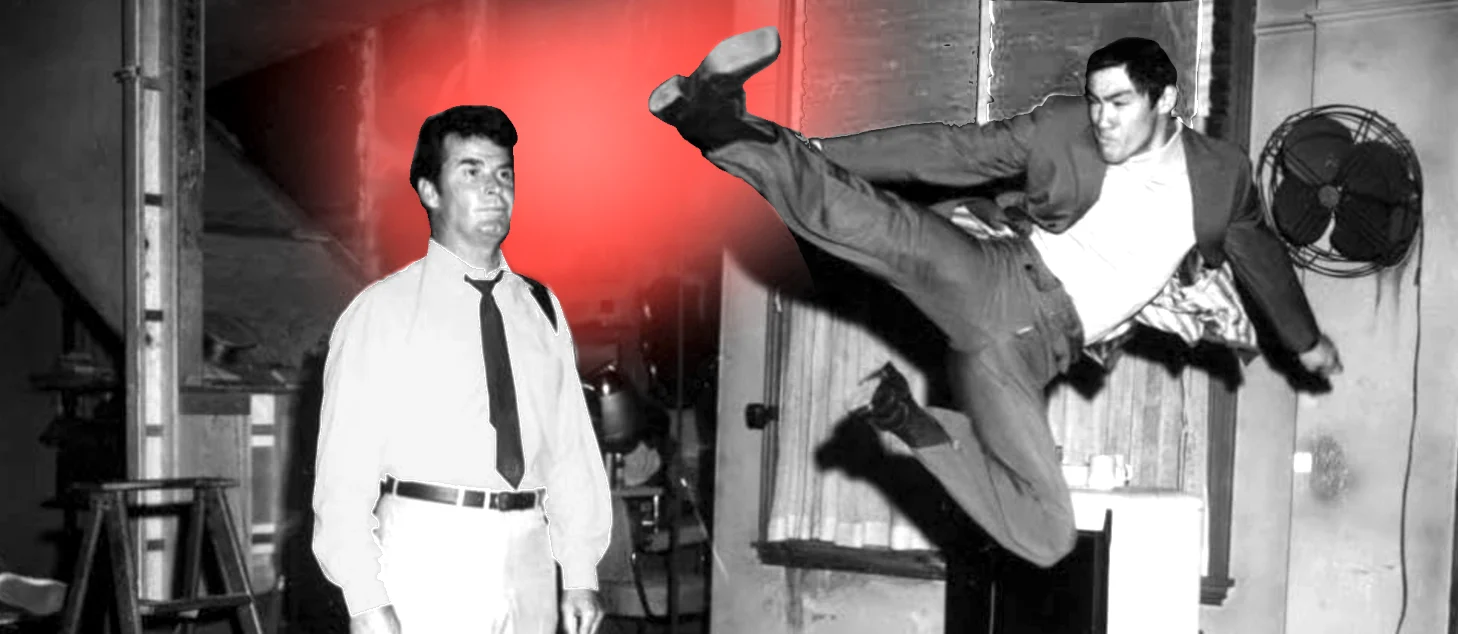
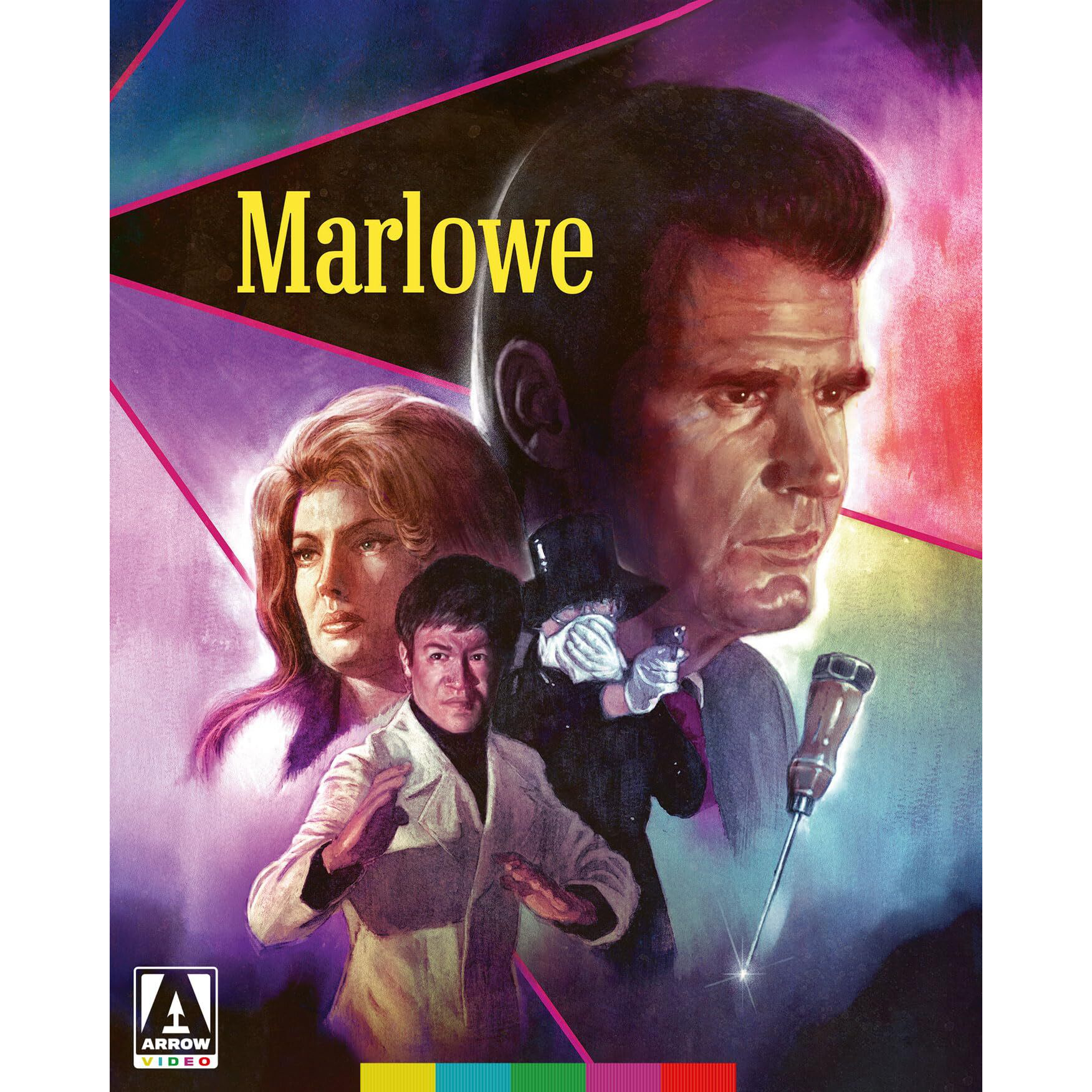

Not classic noir, not Neo-noir … the James Garner detective thriller Marlowe kind of got left in limbo by critics that still felt the actor belonged on TV. After several years in movies that didn’t make him a front-rank star, Garner took on the role of Philip Marlowe, following in the shoes of Dick Powell, Humphrey Bogart and Robert Montgomery. We think he does fine and that the movie works, even if a newer generation might just see Garner’s Marlowe as a variation on his long-running TV character Jim Rockford.
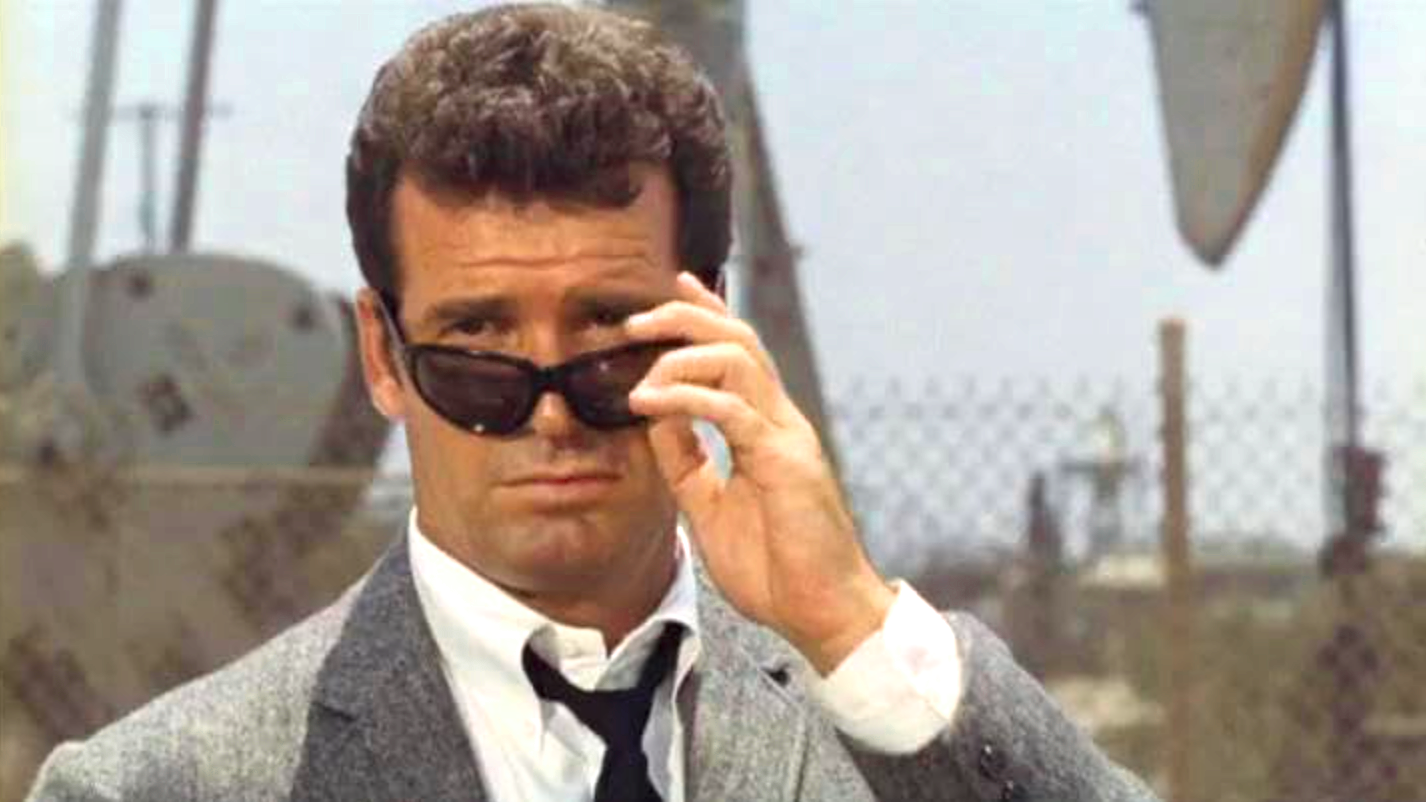
As pointed out by essayist Priscilla page, 1960s movie spies elbowed old-fashioned detective tales from the big screen. But the early ’70s brought a surfeit of retro-sleuths soon pigeonholed as revisionist — either updating classic fiction to the present day, or playing games with jokey self-awareness. I don’t remember any becoming runaway hits, but most are entertaining: Elliot Gould in The Long Goodbye, Warren Oates in Chandler, Albert Finney in Gumshoe. The fun of reviving Chandler’s Marlowe finally disappeared with two features starring a miscast, very bored-looking Robert Mitchum.
Marlowe was the first big-screen job for the prolific TV director Paul Bogart, who also directed James Garner in a TV series called Nichols and the rather daring costume comedy about slavery, The Skin Game.
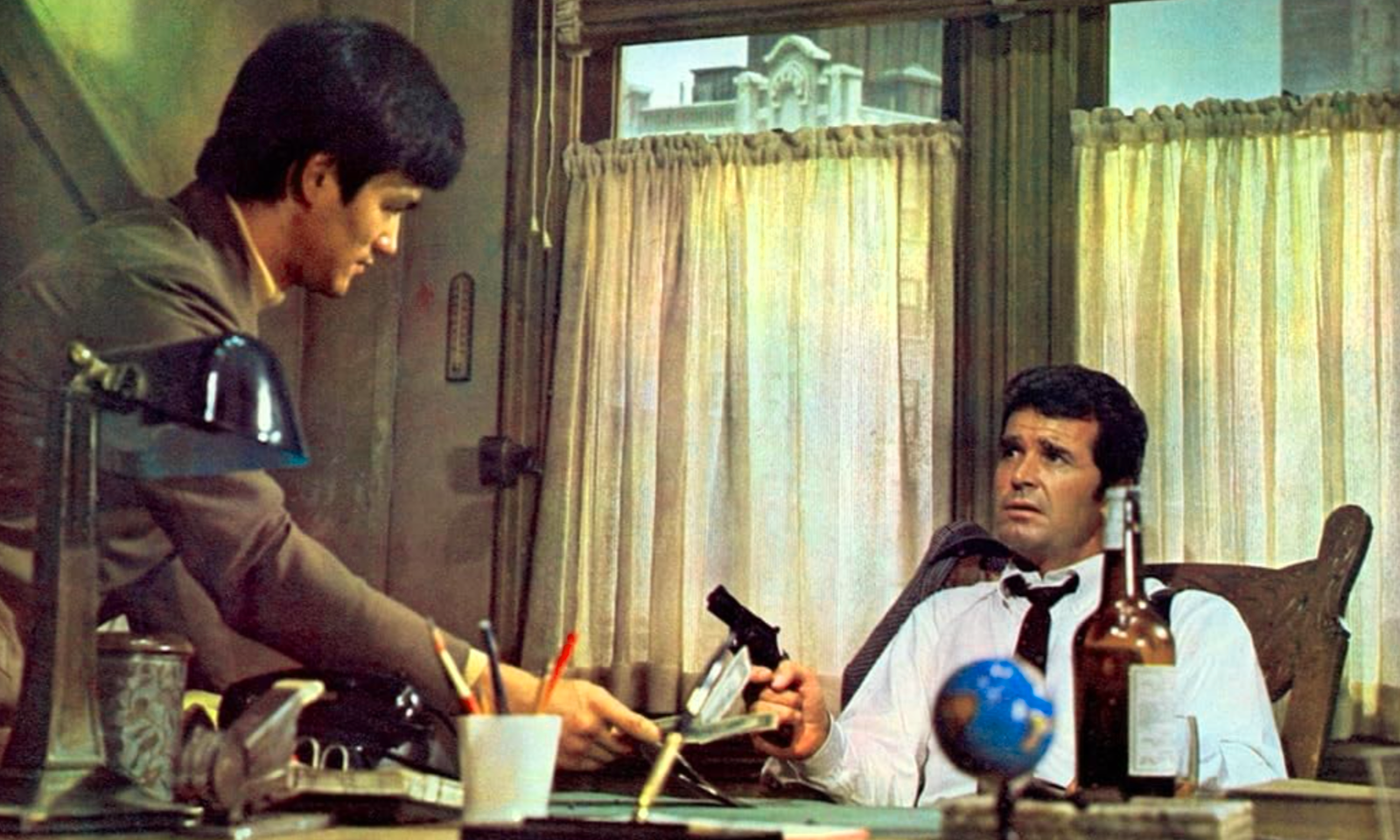
Marlowe can shine for what it is: an unostentatious Chandler adaptation with good performances and good dialogue. The smart patter comes courtesy of Stirling Silliphant, who follows the form of the gumshoe epic without resorting to hardboiled extremes. With enough years between us and his Jim Rockford character, James Garner makes a capable Philip Marlowe, even if he’s perhaps a bit too good-looking and rugged for the part. Although he looks perfectly capable of dropping any of the goons he comes up against, he remains a passive sleuth.
Raymond Chandler’s book The Little Sister was published in 1949. Stirling Silliphant’s adaptation sticks fairly close to the original storyline. It retains most of the key names, and the relationship of three key players, two sisters and a brother.
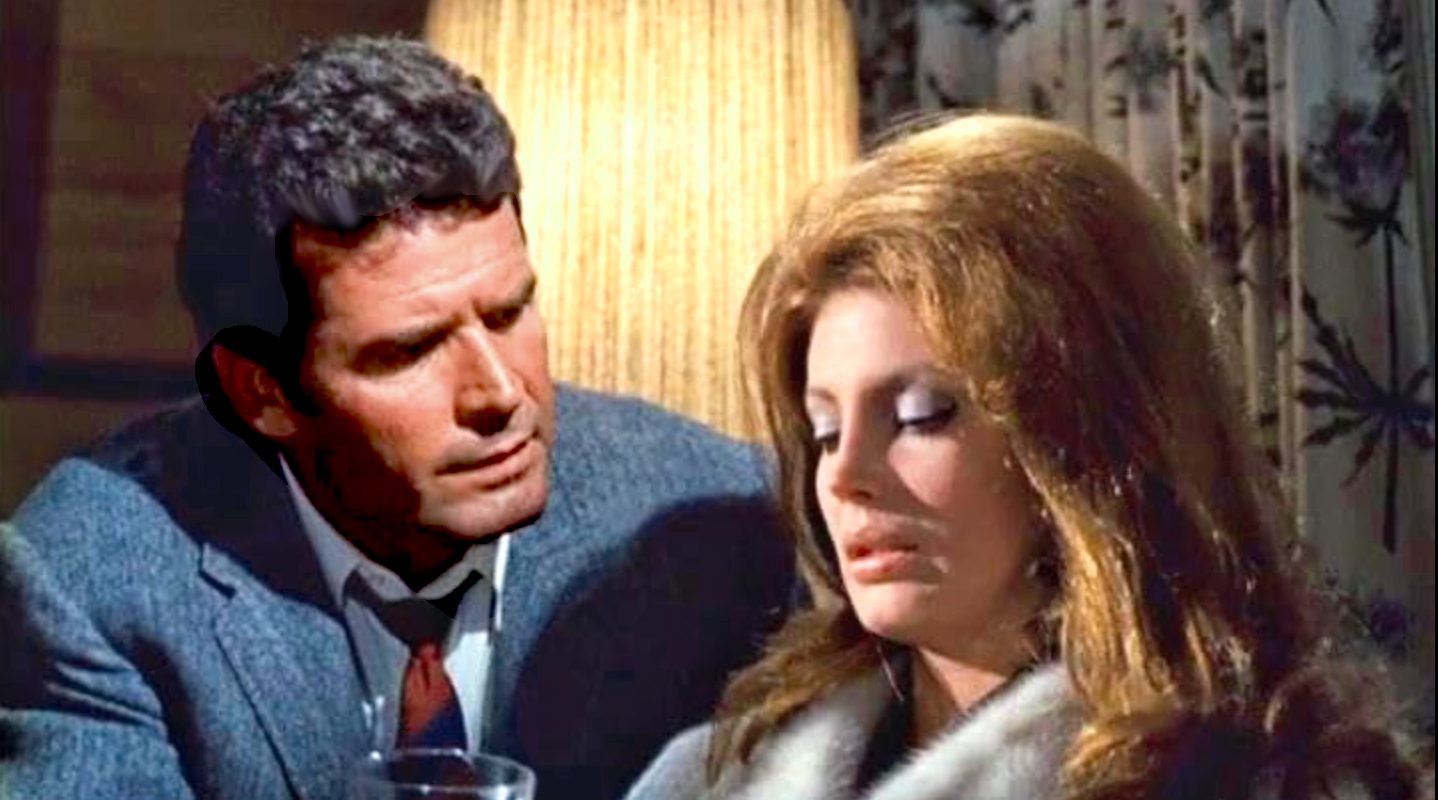
Erratic, naïve Kansas girl Orfamay Quest (Sharon Farrell) hires Philip Marlowe (Garner) to find her runaway brother Orrin (Roger Newman). Marlowe returns Orfamay’s retainer when he discovers that Orrin is behind a dirty pictures blackmail scheme against movie star Mavis Wald (Gayle Hunnicutt), Orfamay’s estranged older sister. People involved with Orrin are turning up dead with ice picks stuck in their necks — a lazy hotel manager and a sleazy con-man surely in on the blackmail (Jackie Coogan). The unpredictable, transparently dishonest Orfamay foolishly thinks she can bribe Marlowe with sex … what’s a Chandler tale without a twisted sister in it somewhere?
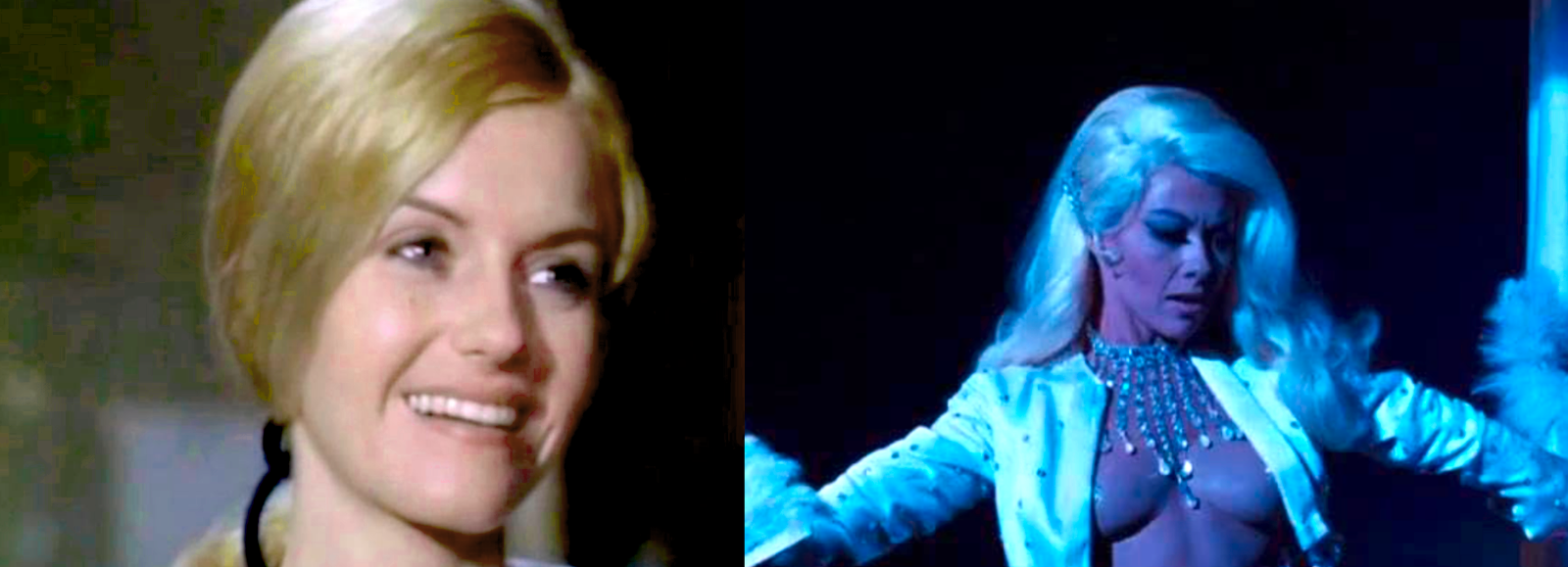
Next to nymphomaniacs, Chandler tales also require a corrupt doctor or two. Related to Orrin Quest’s disappearance is the research psychologist Dr. Vincent Lagardie (Paul Stevens of the 3-D The Mask). Is the unseen Orrin Quest hiding out at Lagardie’s clinic?
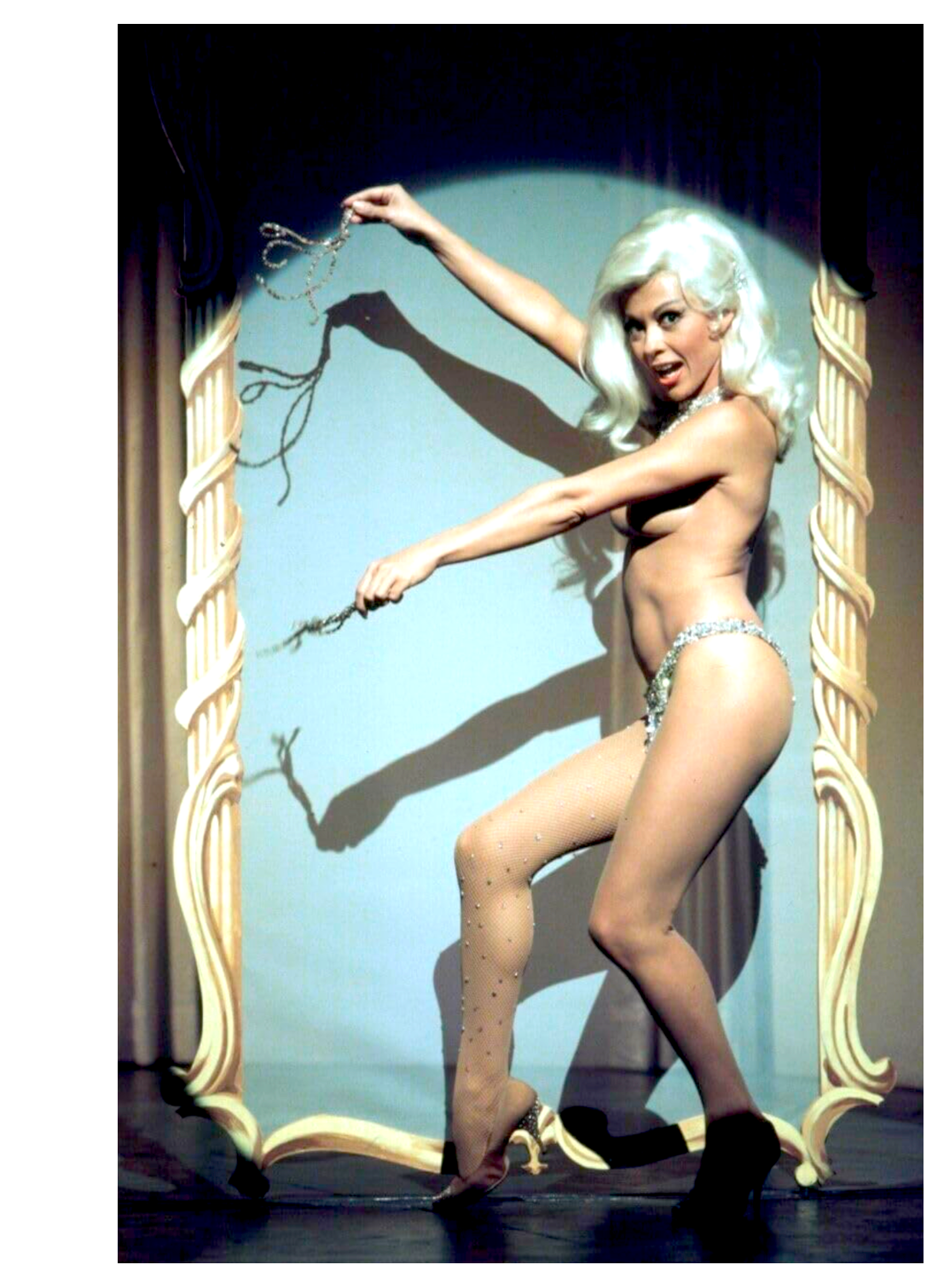
The ice picks make Marlowe think of Sonny Steelgrave, a mob killer transplanted from back East (H.M. Wynant), and sure enough, he’s the man in the photos with Mavis. Steelgrave makes the first move by sending kung-fu tough guy Winslow Wong (Bruce Lee) to buy Marlowe off, or kill him. Also protective of Mavis is her friend (and striptease artiste) Dolores Gonzáles (Rita Moreno). She warms up to Philip right away: “How come Mavis gets all the goodies?”
Marlowe hides most of what he knows from Police Lieutenant Christy French (Carroll O’Connor), who trusts him even though he’s been at two murder scenes. Philip also contacts Mavis Wald’s swanky talent agent Mr. Crowell (William Daniels) and gets himself hired to keep the photos from harming the star’s wholesome image. But who really needs protection, and from whom?
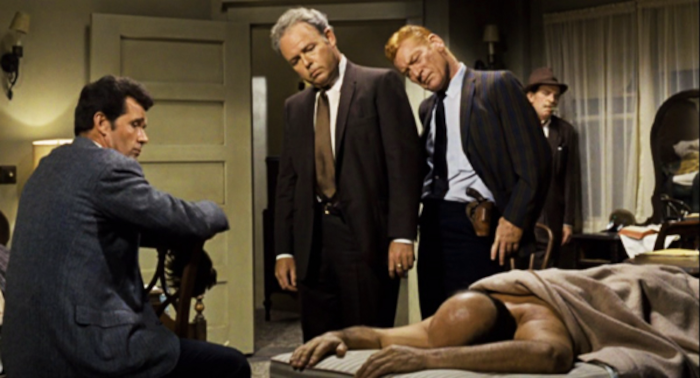
Marlowe gets off to a bad start by decorating the doorstep of a Venice flop house with some unconvincing extras as hippies. To Raymond Chandler, Santa Monica and Venice were the ‘Bay Cities.’ Today’s residents know that all that low-rent beach real estate has since been grossly overdeveloped. The days of oil pumps, genuine Venice bohemians and free parking has long passed.
The typically twisty Chandler plot forces Marlowe to deal with at least eight characters that refuse to tell him the truth. People blackmail each other and go crazy in their sex obsessions, and more end up in mincemeat. The critics are right in that Garner’s Marlowe, a fan of old movies, should have seen a number of Chandler’s clichés coming. Thugs beat him up, perhaps just out of habit. Philip’s apartment and office are thoroughly trashed, right on cue. And any reader of detective fiction knows to never, never enter a doctor’s private clinic alone. You’ll invariably be tricked into taking some hallucinogenic drug. I should think that the police, friends or no friends, would not look kindly on Marlowe’s habit of being on-site at every ice pick killing. He’s a regular dead body magnet.
To the filmmaker’s credit, the film does not attempt to turn Marlowe’s drug experience into a psychedelic light show. Doing an update of the expressionistic nightmare in the classic Murder, My Sweet would likely have resulted in some awful tie-dye light show montage.
The credit for blending the performances belongs to director Bogart. Gayle Hunnicutt is properly aloof as the compromised Mavis Wald, if not particularly sympathetic. In another movie Mavis would become the main love interest, but Philip Marlowe is the kind of detective who ends up alone when ‘the end’ rolls up. Corrine Camacho earns our respect as Marlowe’s girlfriend Julie but she’s not given enough scenes. She isn’t even a story thread, just a single date and an overnight stay.
Tasked with making sense of the vulgar, treacherous Orfamay Quest, Sharon Farrell ( The Reivers) pulls the film’s biggest, broadest tantrum. She makes Orfamay both funny and engaging, and someone who needs a good spanking. It is fall-down funny to see her ejected from Marlowe’s apartment wailing and sobbing: “Kansas is that way.”
“The streets are paved with forgotten husbands!”
The standout actress personality is of course Rita Moreno, who played in relatively few movies but almost always made a solid connection with the audience. Her Dolores is by turns provocative and intelligent without giving away her character’s key role. Moreno performs one of the classiest striptease dances of any star performer in American films, really heating up the final scene. The movie received an “M” (later PG) rating, which seems a bit off — the scene says ‘nudity in a sexual context’ to us. Older television prints may have trimmed a shot or two from the show-stopping performance. Frankly, Ms. Moreno is such a classy talent, Dolores’s strip moves come across as performance art.
Raymond Chandler populated his mysteries with grotesques, perverts and sadists, yet this film’s supporting characters are unusually sympathetic. The oily Jackie Coogan, with a clue taped to his toupee is just a lowlife chiseler trying to get along. The cops are all nice guys, more often than not giving Philip Marlowe the benefit of the doubt. The police Sgt. played by tough guy Kenneth Tobey is particularly likable, as seen when the emotion-charged Carroll O’Connor ends an argument by accidentally socking him in the jaw, instead of Marlowe. It plays perfectly.
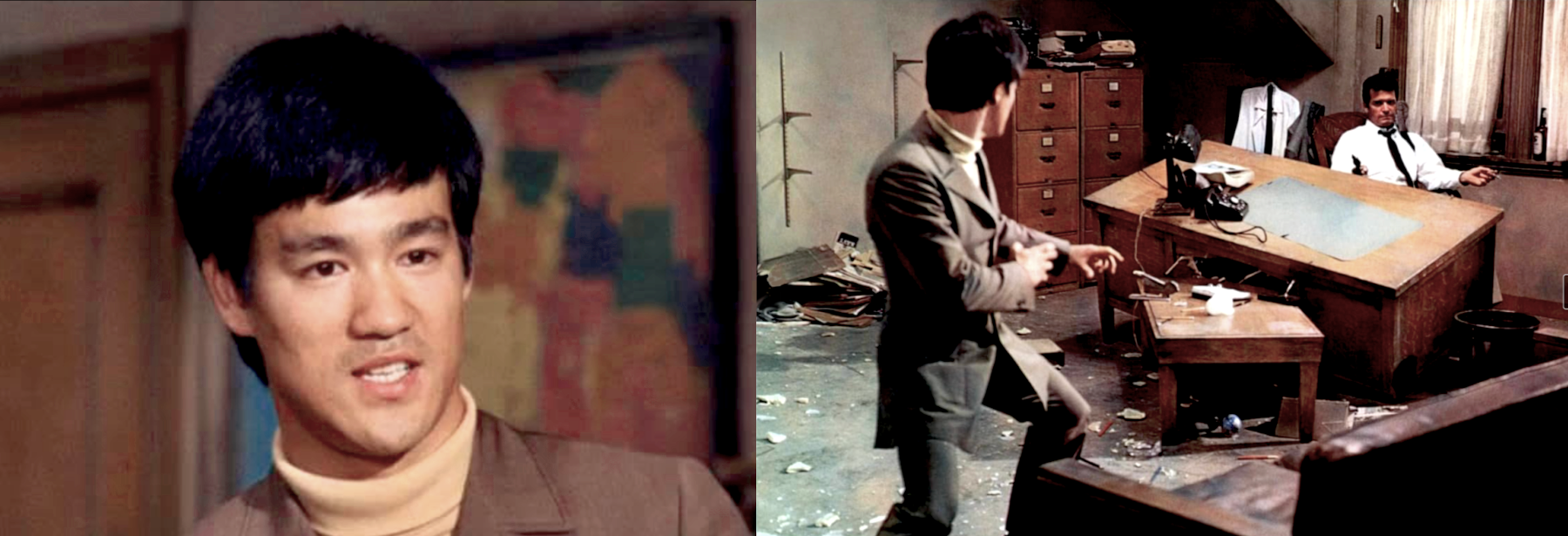
“Winslow Wong, that is I.”
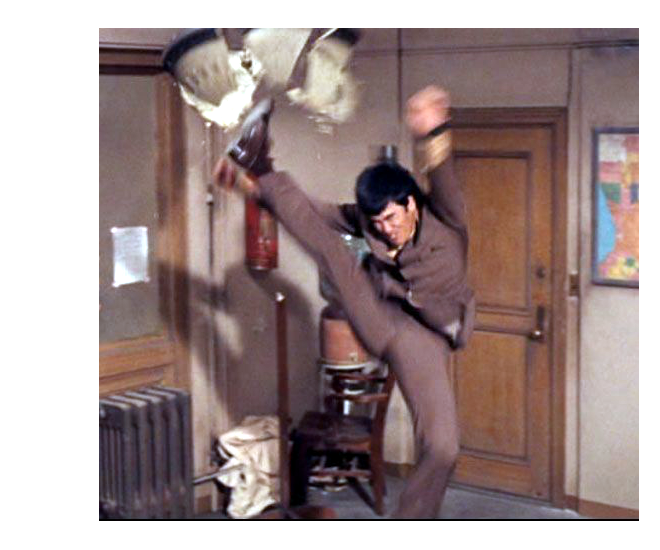
Some fan-worshippers of the late lamented Bruce Lee took offense at his depiction as a mean-spirited egotist in the superb Once Upon a Time in Hollywood. After becoming ‘Mr. Kung-fu coach to the stars’ and making a splash as Kato on TV’s otherwise fairly forgettable The Green Hornet TV show, Lee landed a chance to show off his talent for the big screen in Marlowe. His Winslow Wong tries to intimidate Marlowe by destroying his office with karate kicks. It sounds good, but the martial arts superstar has only two scenes and is made the butt of a joke. Marlowe puts him off balance by taunting him as gay. The high kicks are impressive but the necessary direction makes Lee’s fighting technique seem silly: ‘jump around a lot, but never hit Garner.’ Winslow exits the picture in a stunt that’s neither convincing nor well blocked — the movie treats his appearance as comic relief, a slightly sadistic side joke. Even so, this is probably the best bit of acting in Bruce Lee’s brief Hollywood career.
Incidentally, Marlowe’s office neighbor Chuck is a fussy beauty college instructor (Christopher Cary), but the guy is flagged as ‘not gay’ — when Marlowe compliments his black leather pants, Chuck says that they drive the chicks wild. Was this in reaction to Blake Edwards’ crude and insensitive TV-upgrade-to-theatrical Gunn, with its unpleasant characterization of a transvestite as a psycho pervert? It’s frankly what we’d expect from writer William Peter Blatty. I suppose the vindication for Hollywood hairdressers is Warren Beatty in Shampoo.
William H. Daniels’ cinematography makes the women look attractive (even Hunnicutt in her ‘big hair’ hairdos) and does a good job lighting some of the interior sets with the fake backdrops. Director Bogart tends to stay in close on the action, a criticism sometimes leveled at TV directors — although some scenes do play out in masters as opposed to cutting coverage.
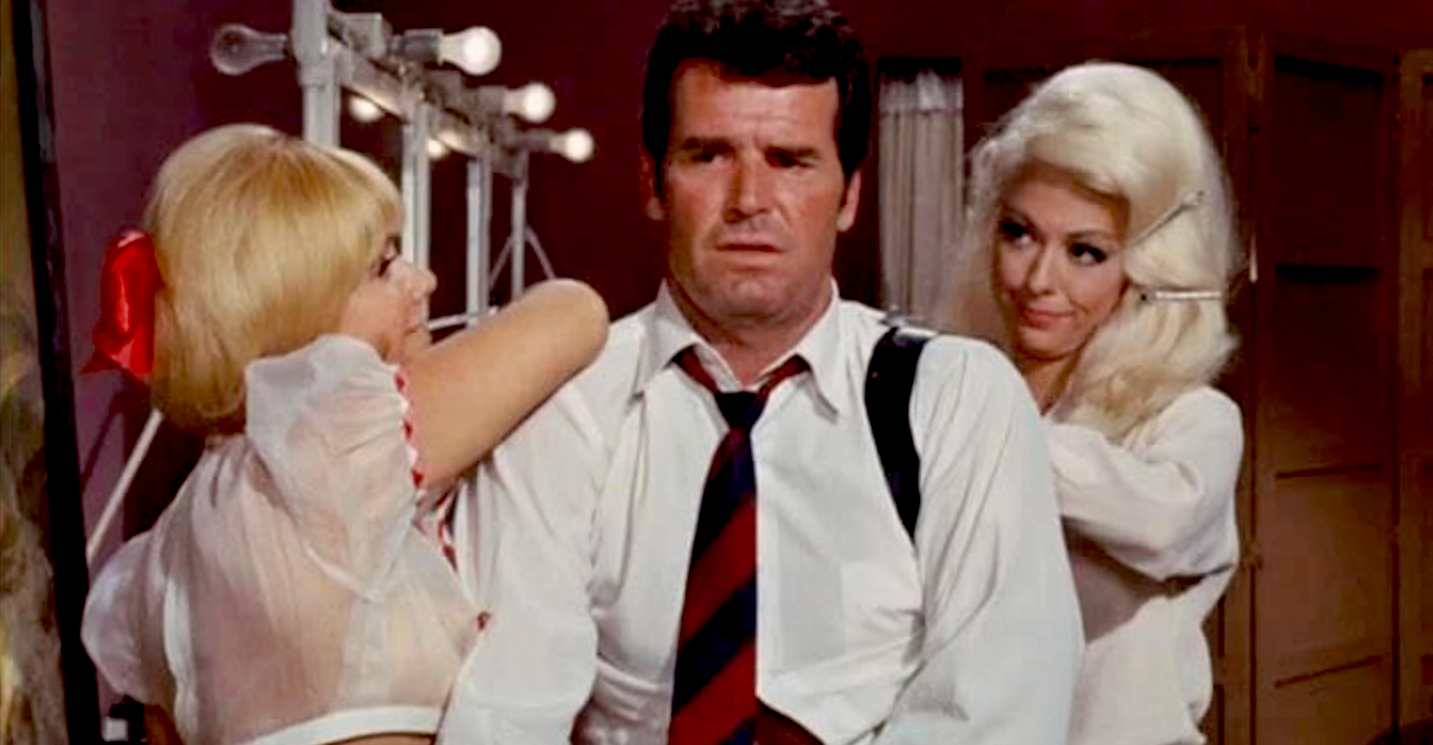
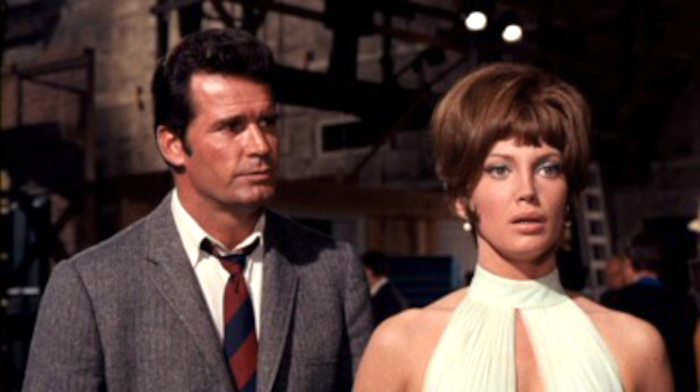
On the street Marlowe wanders all over Los Angeles, but we don’t get to see a lot of local flavor. Essayist Page tells us that MGM’s editorial tyrant Margaret Booth performed a purging of ‘unnecessary scenes’ such as Marlowe’s initial drive-up to the Venice flophouse … just the kind of material that would have given the movie more atmosphere and context. When in need of a building to represent a large talent agency, the cost-cutting production uses the main MGM office building. We do get a glimpse of the actual Sunset Strip when Marlowe picks up his beat-up convertible; he obviously spends a lot of time in cars, but we only see a couple of trips with William Daniels and Rita Moreno, and partly with rear-projection. The yellow XKE is the 1969 equivalent of a 1949 Lincoln Continental, just to establish Mavis Wald’s credentials as a hot & wild movie star.
We’ve always found Marlowe to be an unpretentious and entertaining detective mystery. It was produced under the original title The Little Sister but we get the feeling that MGM changed it in fear that only mystery fans would understand what kind of movie was in the offing. 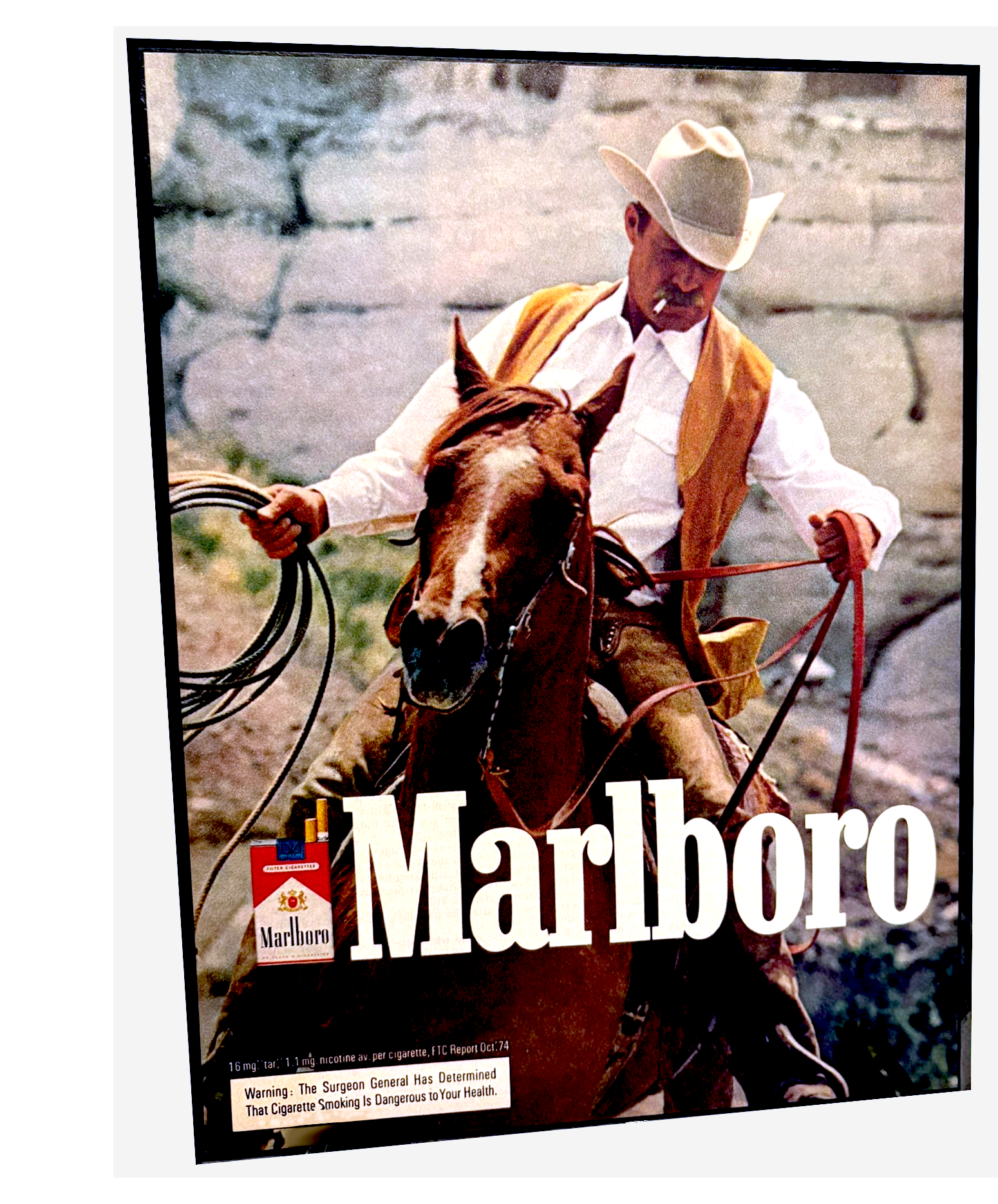 The ad campaign may give a clue to the studio’s lack of faith in detective fiction as a whole: the wit-challenged tag line “Welcome to Marlowe Country!” admits that there’s so little interest in Raymond Chandler that the show can be sold with a reference to Marlboro cigarettes … with the same font used in the tobacco ads. →
We’re not sure that this show received full distribution in 1969 — I don’t remember it being given a big send-off or playing much out in the sticks. All this good picture needed to find an audience off was a distributor that didn’t give up before it started.
It seems like Silliphant was a friend of Bruce Lee’s. I didn’t remember there being a “Sonny Steelgrave” character in this film. I guess that’s where the TV series “Wiseguy” got the name from.
I’ve no problem saying I have a man-crush on Garner. He’s deeply underrated.
He hated making it, but his Euro-western ‘A Man Called Sledge’ (semi-directed by Vic Morrow) deserves more love.
He hated making it, but Jim’s Euro-western ‘A Man Called Sledge’ (semi-directed by Vic Morrow) deserves more love.
I think it got about as much push as most MGM releases did in those days. I saw it in a theater in Morgantown, WV. Chandler’s novel was reissued by Pocket Books as a movie tie-in. Chandler once said he envisioned Cary Grant as Marlowe, so if he was serious, Garner was truer casting than Bogart or Mitchum.
I saw this several times theatrically upon its initial release, loved it then and happy to retire my DVD. One of my favorite entertaining films. Now for Warner Brother’s Hotel with Rod Taylor?
Excellent words on “Marlowe,” but I was knocked-down and astonished by your somehow referring to Robert Mitchum’s performance in the same role as “miscast.” Whatever you think of Mitchum, or of his soulful waltz as the character in “Farewell, My Lovely,” I’ve never before heard anyone say that the part didn’t, at the very least, fit his screen persona perfectly! Give his Marlowe another chance, Glenn. You’ll thank me later…
I think some people thought Mitchum was miscast because he was too old for the role and seemed to sleepwalk his way through the film.
Thanks for your response. And I see what you’re saying, although I don’t really get it. Screenwriter Hapton Fancher once said that he loved Mitchum in the role because his Marlowe seemed to suffer from both a hangover and insomnia! And it’s that pained, world-weariness that I find so appealing. As for Mitchum’s age, the fact that he’s trudging to the end of the road feels like the very epitome of fatalistic film noir, which the screenplay addresses in in its’ very first line of dialogue! At 57, Mitchum, isn’t even the oldest actor to play Marlowe. James Caan was the exact same age when he played the role. And Liam Neison put on the gumshoes recently at the age of 70!
I just view the character as being in his late 30’s for better or worse, but I’m not sure how old he was supposed to be.
I agree with you. Mitchum was a bit old but that was covered by his voice-over at the very beginning. In every other way, he was superb.