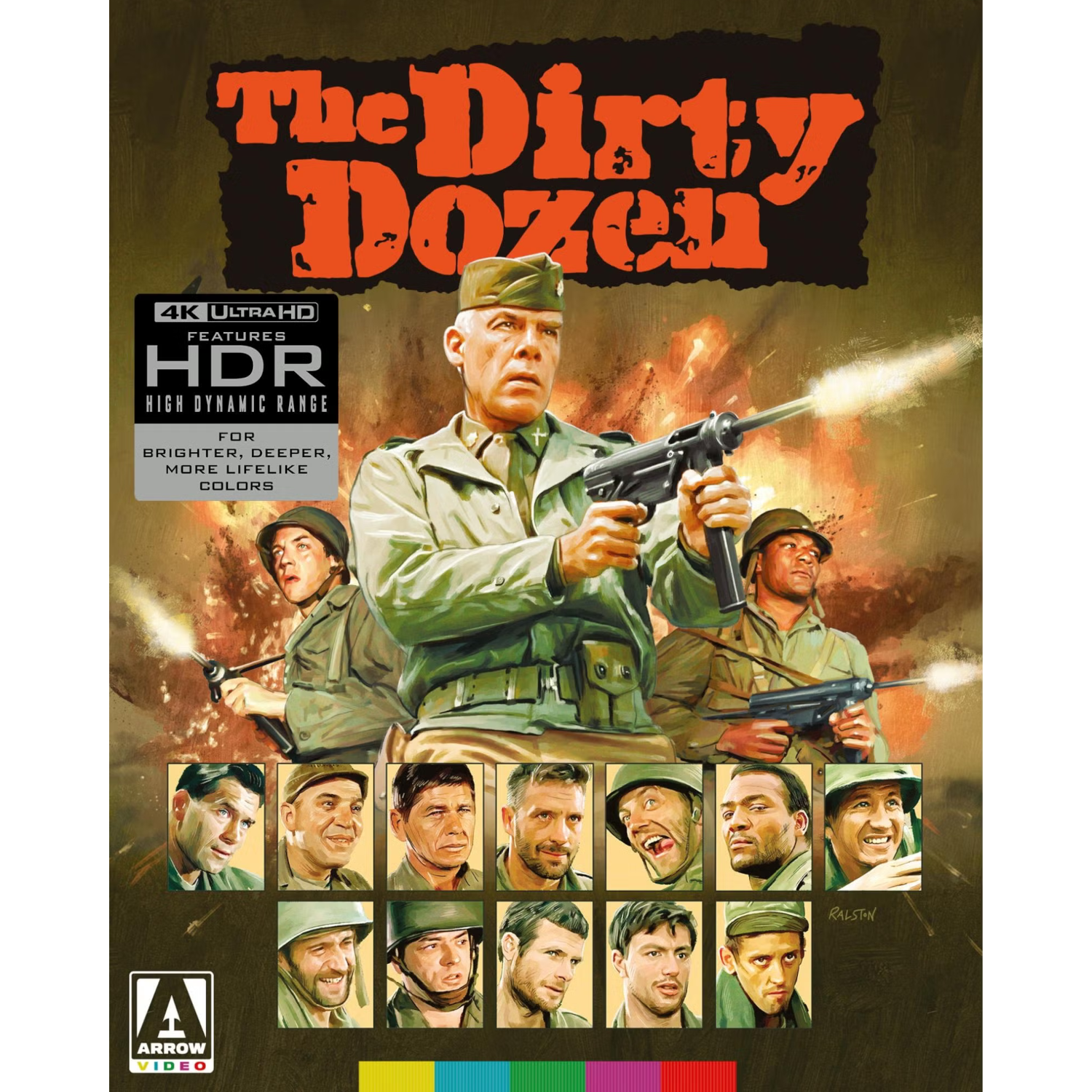

 Robert Aldrich had a highly voltile directing career. He became a darling of the French film critics that would launch the New Wave, but Bad blood with the head of Columbia Pictures ‘motivated’ him to seek work in England and Italy. He bounced back on the Hollywood scene with What Ever Happened to Baby Jane? and three films later hit the jackpot with The Dirty Dozen. That brutal escapist war action film landed in the year of Bonnie and Clyde and Point Blank — the year mainstream America upped the ante on graphic violence.
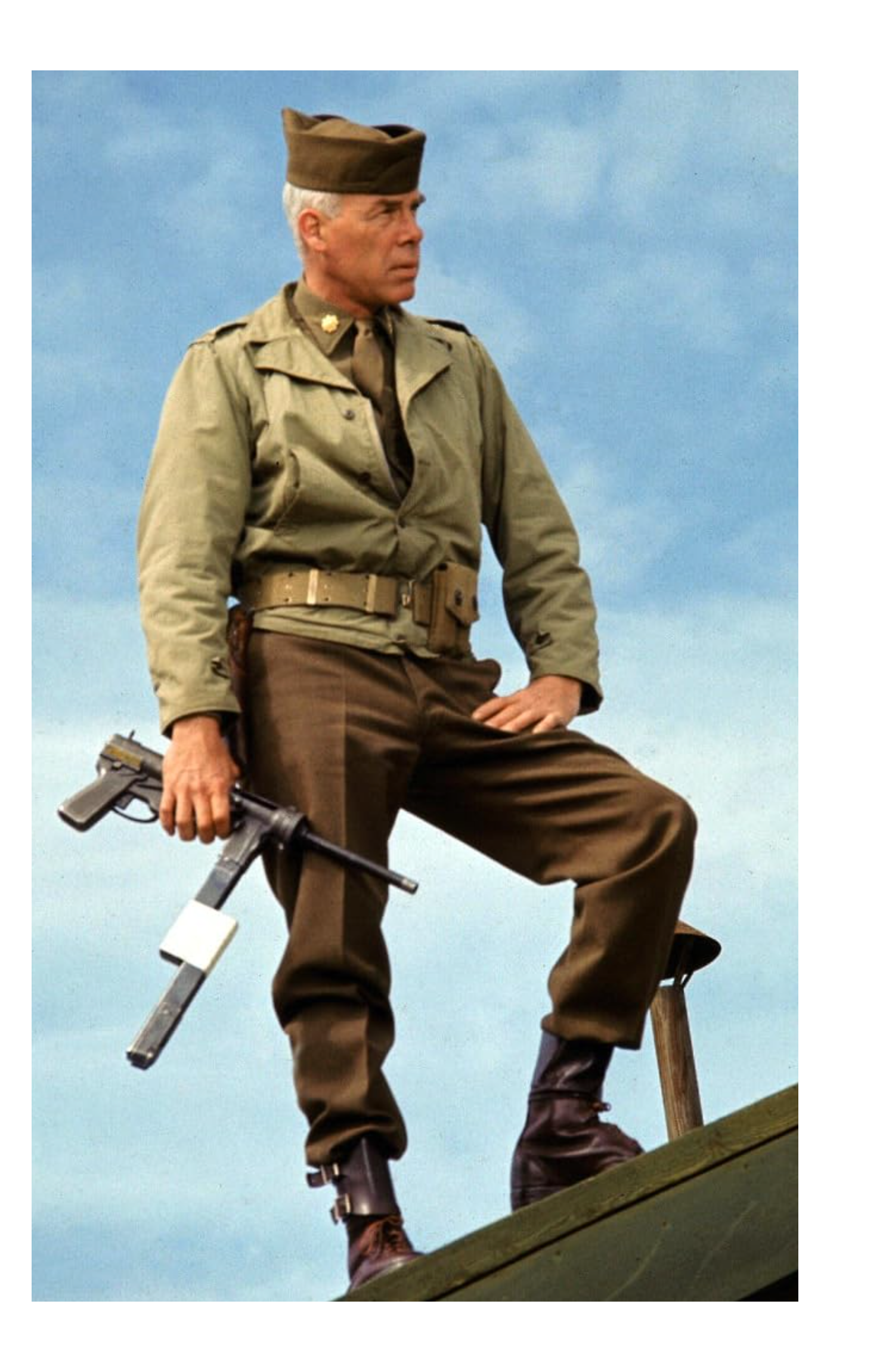
The all-male The Dirty Dozen plays like a no-holds-barred football match. With man’s-man director Aldrich coaching, it is like a football game, with well-chosen starter players drafted for the first lineup. Aldrich brings out the best of this pack of contrasting talent, using the imposing Lee Marvin to set the standard for ‘bruiser cool.’ With 145 minutes of screen time to divvy up there’s room to give major roles to a score of supporting players, although a few are given much less screen time.
The Dirty Dozen is now a Memorial Day TV perennial trotted out for long-weekend testosterone cable TV marathons — it’s so telling that we ‘honor’ veterans with escapist war adventures. Robert Aldrich claimed that he intended a savage indictment of the brutality of war, when the final product is rousing entertainment that likely served as an enlistment booster.
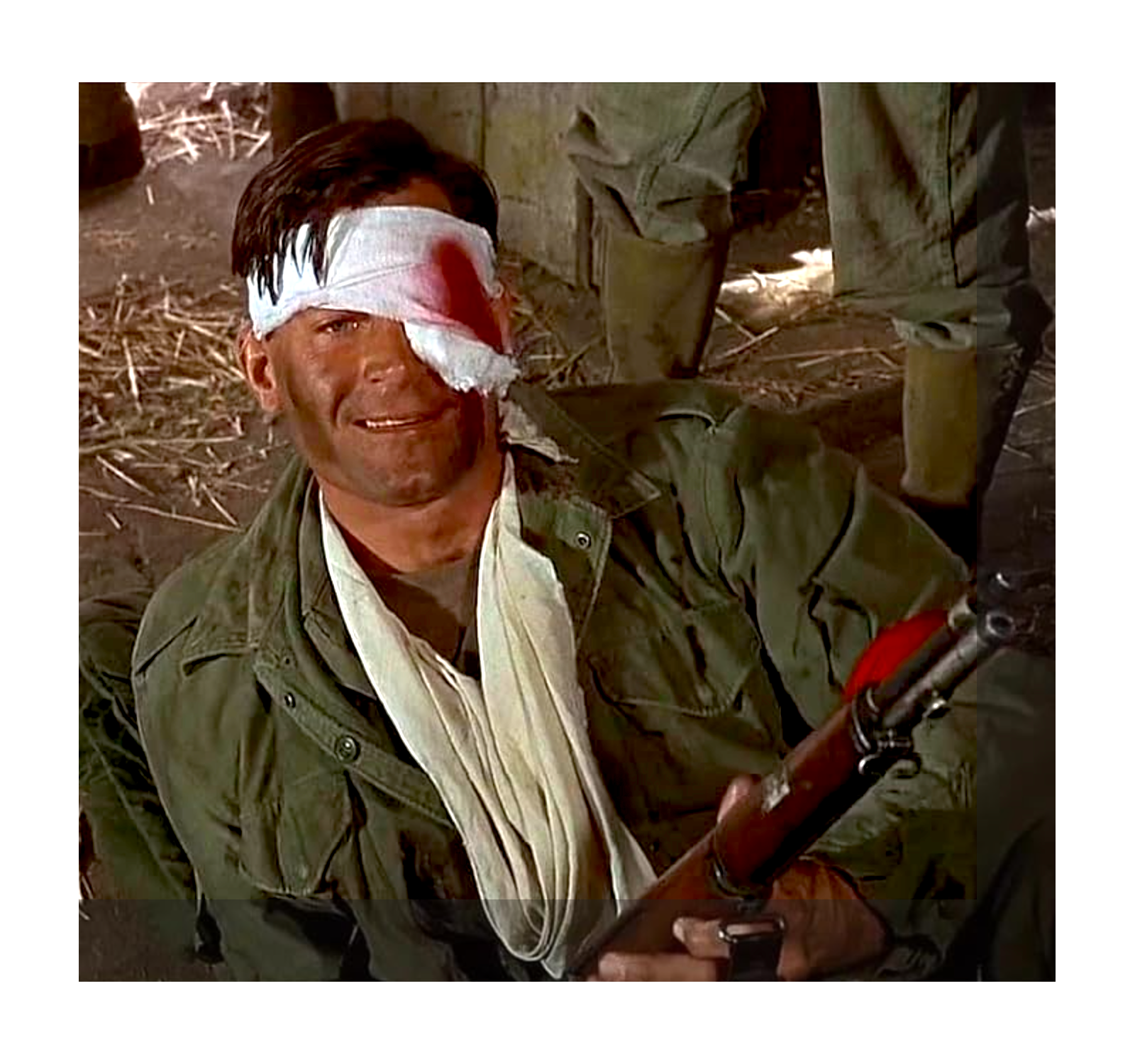
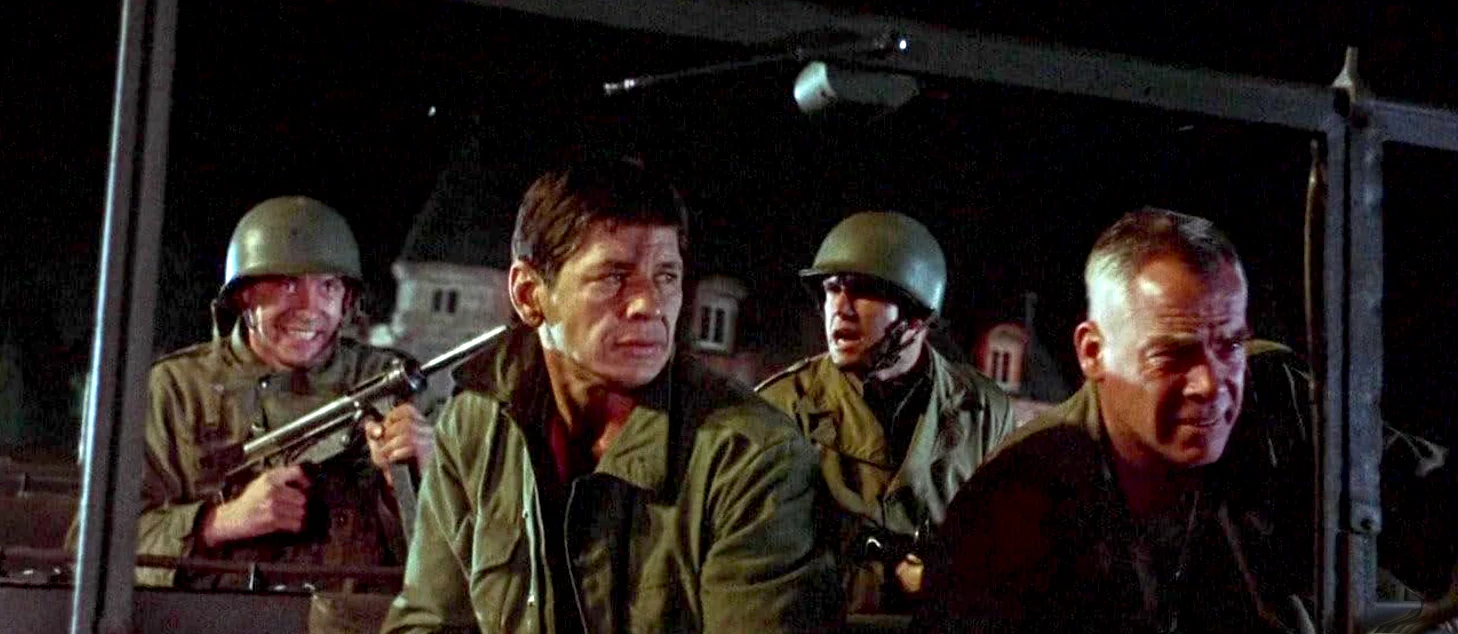
Is it an assignment, or a punishment? Major General Worden (Ernest Borgnine) assigns Major John Reisman (Lee Marvin) to train twelve convicted army prisoners for a special raid set for the eve of D-Day. Most of his candidates await a date with the hangman: surly mafioso Victor Franko (John Cassavetes), stubborn 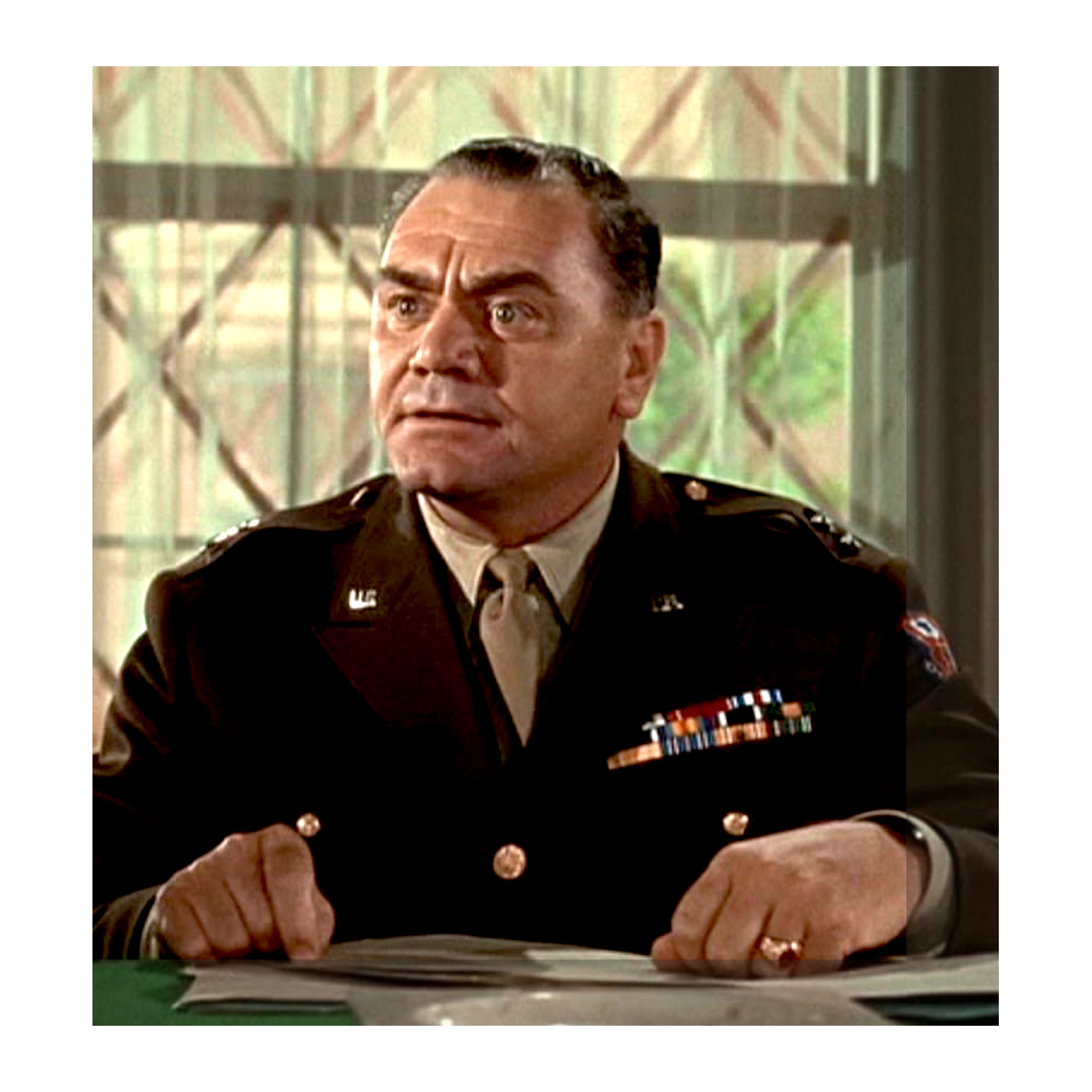
Wladislaw (Charles Bronson), murderously simple Samson Posey (Clint Walker), borderline imbecilic Vernon Pinkley (Donald Sutherland), insubordinately proud Robert Jefferson (Jim Brown) and religiously maniacal Archer Maggot (Telly Savalas). With the help of Sgt Bowren (Richard Jaeckel) and Cpt Stuart Kinder (Ralph Meeker), Reisman maintains a semblance of order and gives his men the spirit of a fighting unit. To prove their mettle, his ‘Dirty Dozen’ are pitted against the troops of martinet Col Everett Dasher Breed (Robert Ryan). Success means that they will escape the hangman … so they can parachute into France on a murder mission from which few will return.
Yes, it comes from a previously published novel, but The Dirty Dozen is structured like football. Starting with almost a half-hour of introductions and interviews with the inmate-soldier aspirants, there is recruiting, training, R&R, a ‘pre-season’ trial match and then the final competition. The Big Game follows a master playbook (“Three: The Major’s men are on a spree!”); the gridiron action is capped by a broken-field star-player run. The injured make a raucous exit to the sports hospital to recover.
Robert Aldrich had been a director for about fifteen years. He had tried almost everything … women’s pictures, epics and genre pictures with an angry political attitude. Although his pictures were always noticed, his two biggest hits previous were that freaky horror movie Baby Jane and a cynical/violent buddy-buddy western, Vera Cruz. The movie that best displayed Aldrich’s real strengths, The Flight of the Phoenix, had been rejected by audiences just before. Its pessimism was as gritty as the classic Wages of Fear, even without a similar political bent. ‘Hey, darling, let’s go see that movie where James Stewart shoots a camel!’
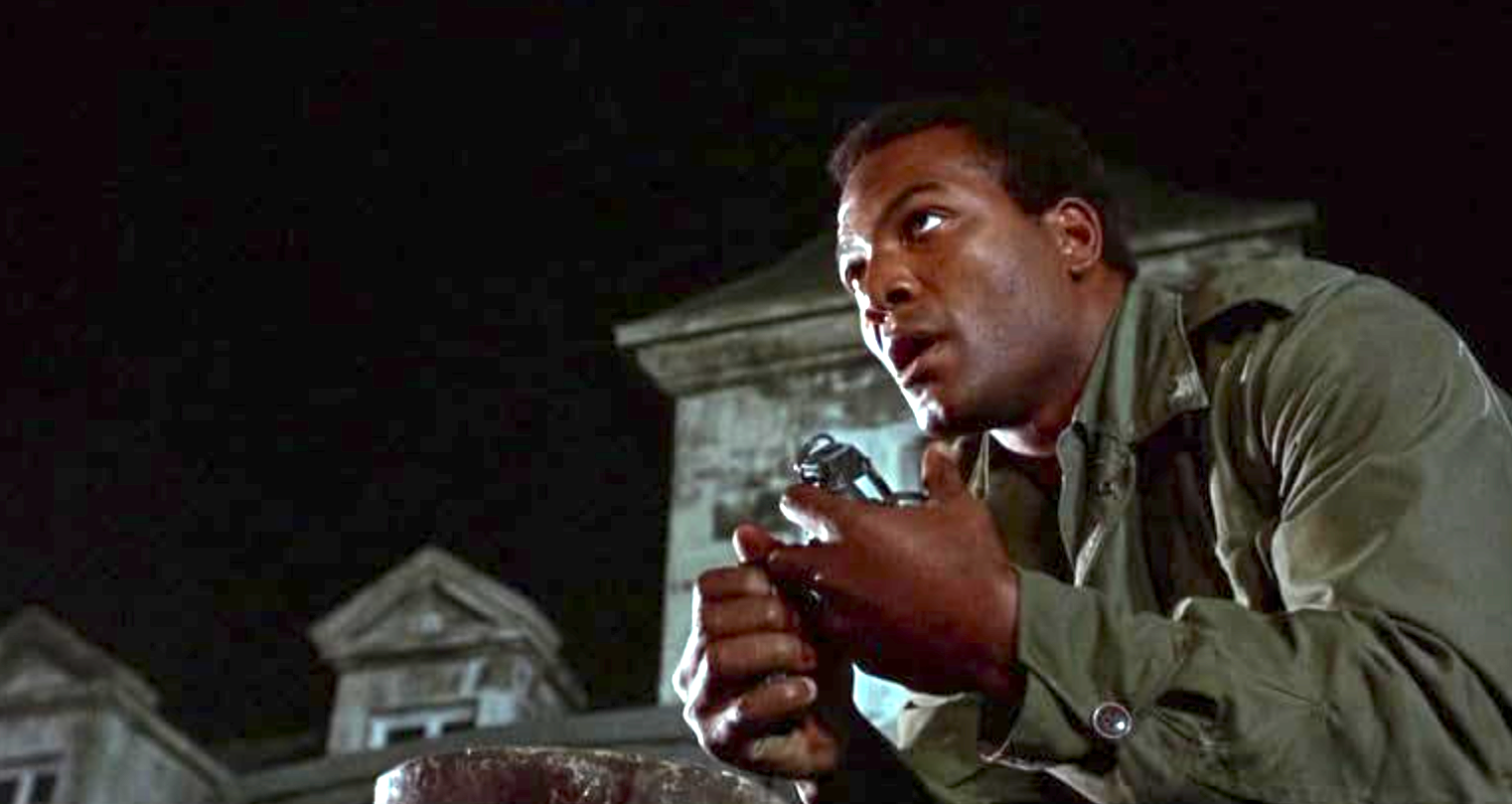
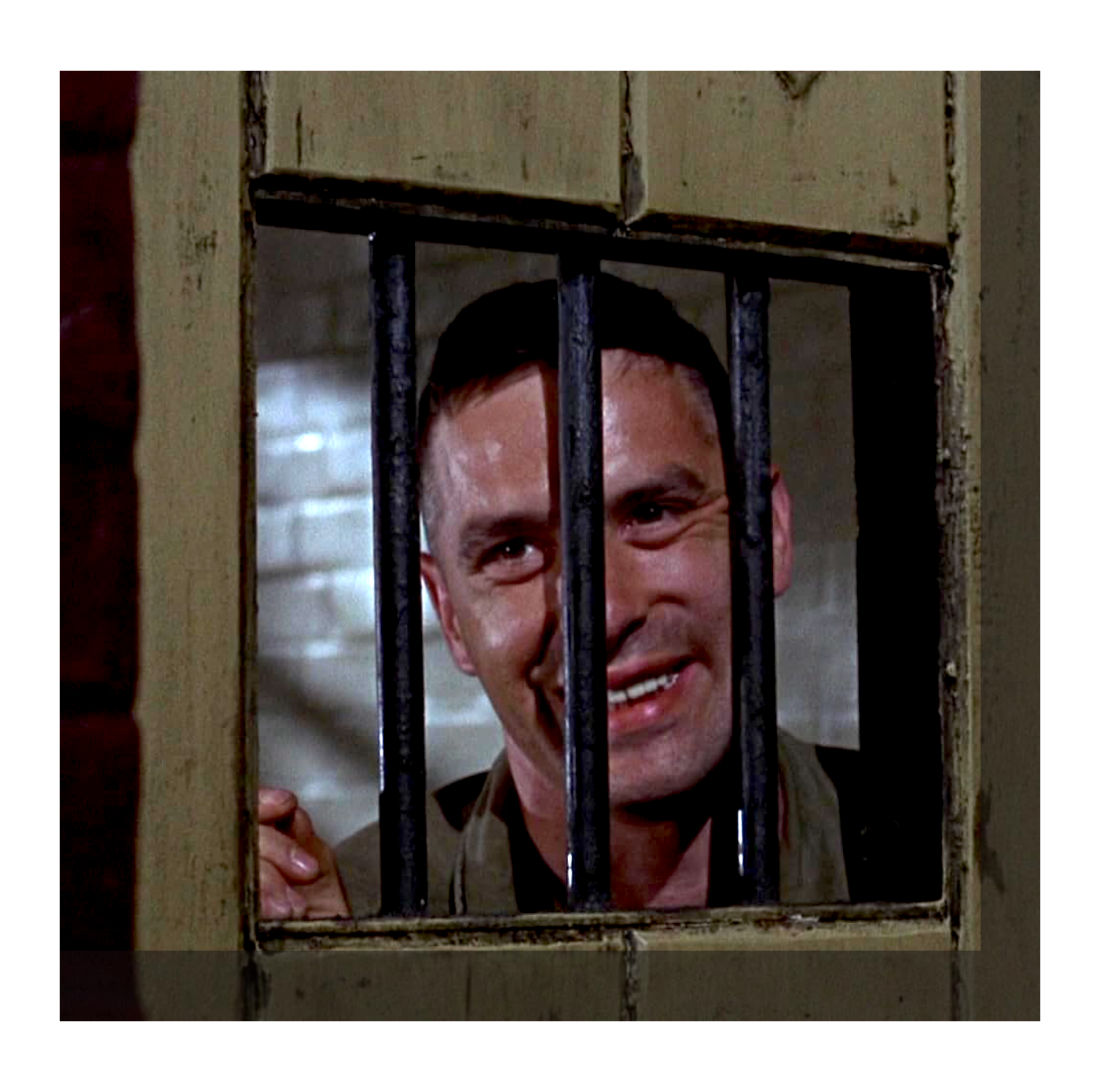
A gallery of thugs arrayed like comic strip characters.
The Dirty Dozen is a feel-good action movie seasoned with mid-sixties themes. Jim Brown’s unapologetic black soldier represented Black Power plain and simple: his only crime was defending himself against racists that wanted to castrate him. Screw the ‘Southern box office’: this was the first time that Hollywood allowed an aggressive black actor to be a full-on macho hero. Cue the cheers from the untapped crossover audience weary of watching Sidney Poitier and Harry Belafonte turn the other cheek.
The other unspoken issue is Vietnam. The war had not gone away after just a few months. TV newsfilm countered the official story of a clean and noble conflict. The Dirty Dozen’s main message pushed the idea that War is murder and killing on a giant scale, even a just war.
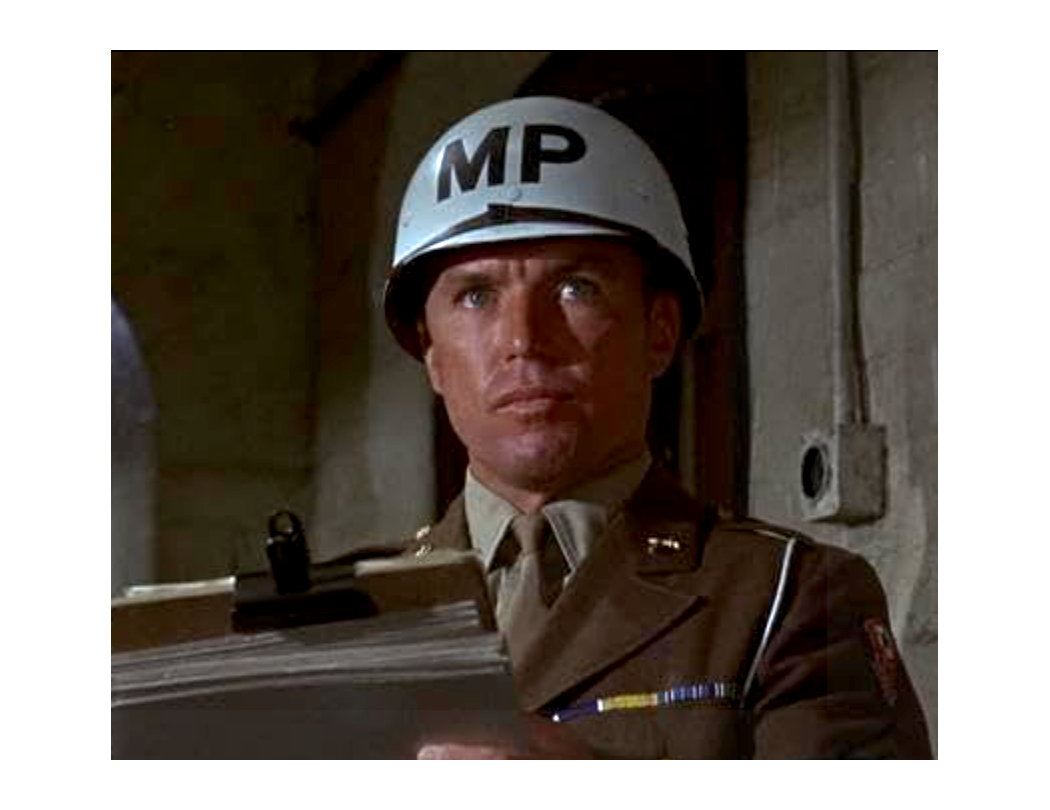
Mass killing as audience wish fulfillment.
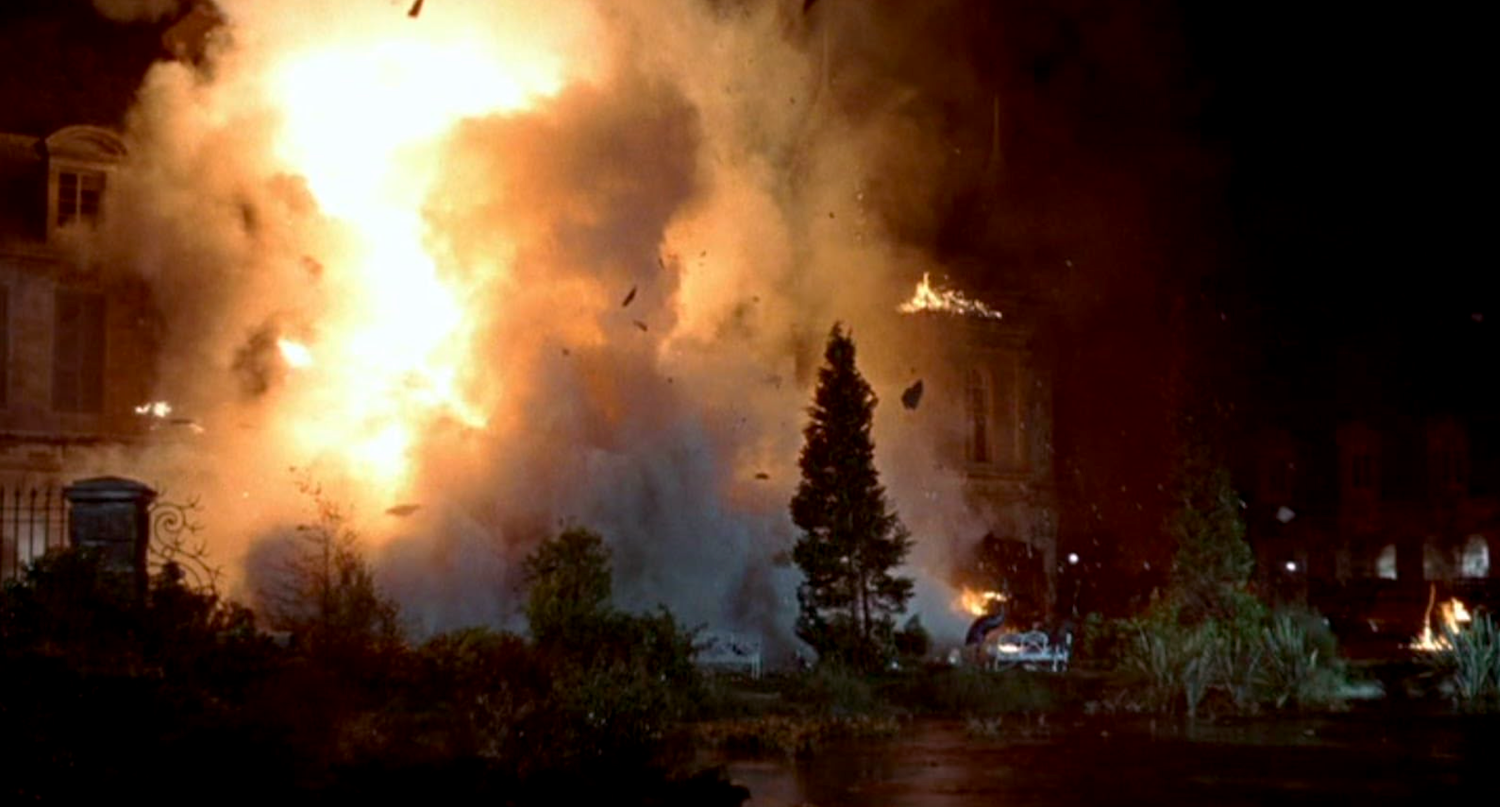
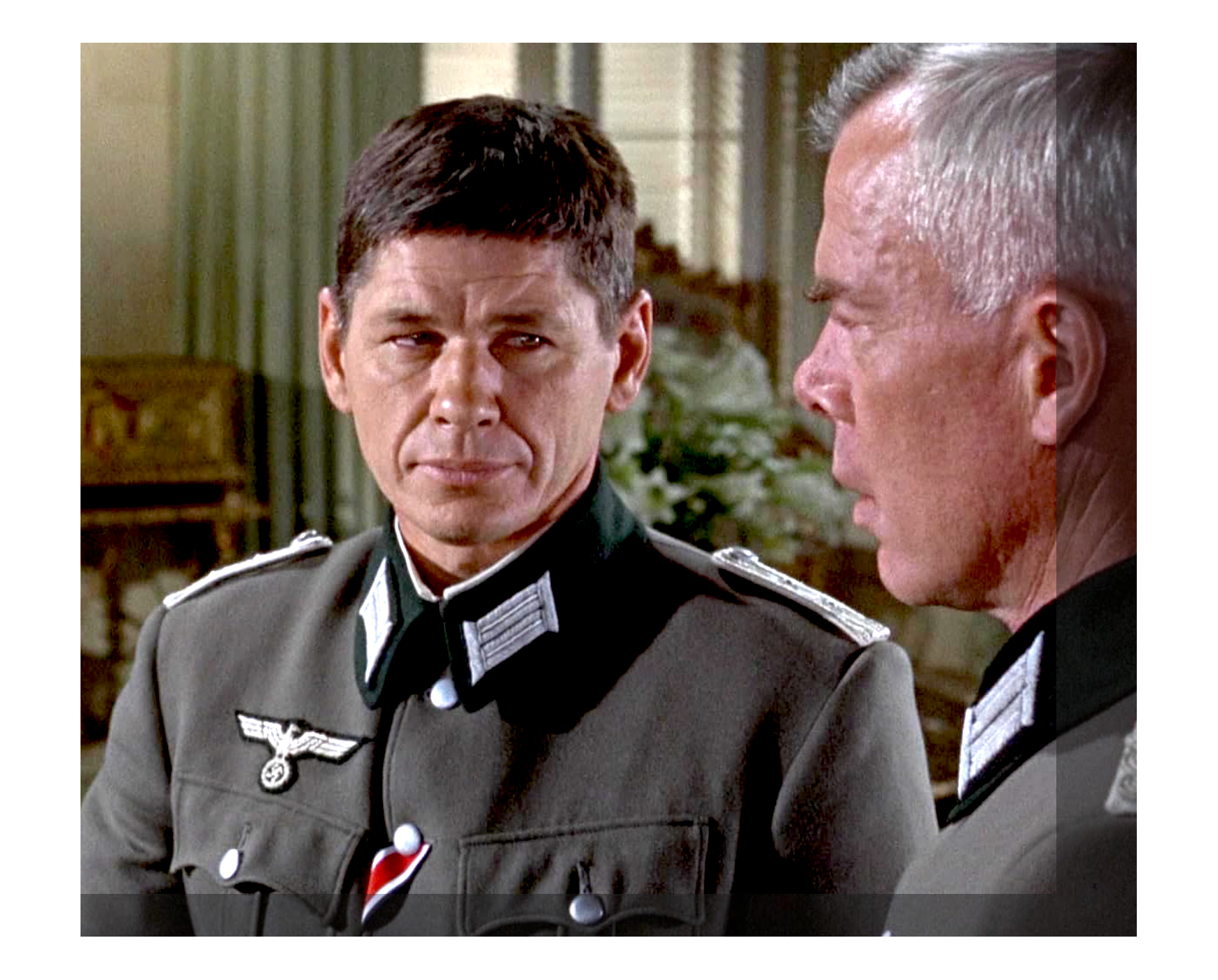
Major Reisman’s raid is a pitiless murder mission. Thirty enemy victims are trapped in a chateau dungeon and incinerated with gasoline and grenades. Women are not spared. The bloody assault generates an adrenaline glee, a proto-Tarantino revenge fantasy — we get to Hit Back at a lot of Nazi uniforms, all at once. The 1967 reaction was complex: when Jim Brown’s commando smiles with satisfaction while pouring on the fuel, the black audience is given the sadistic vicarious thrill of getting back at the Worst of Whitey.
Thirteen years earlier, just as the Civil Rights movement was heating up, black actor Archie Savage performed a noted supporting role in Aldrich’s Vera Cruz. The script has Savage’s mercenary become a martyr, betrayed and gunned down by his own leader. Jim Brown’s Robert Jefferson character is having none of that ….
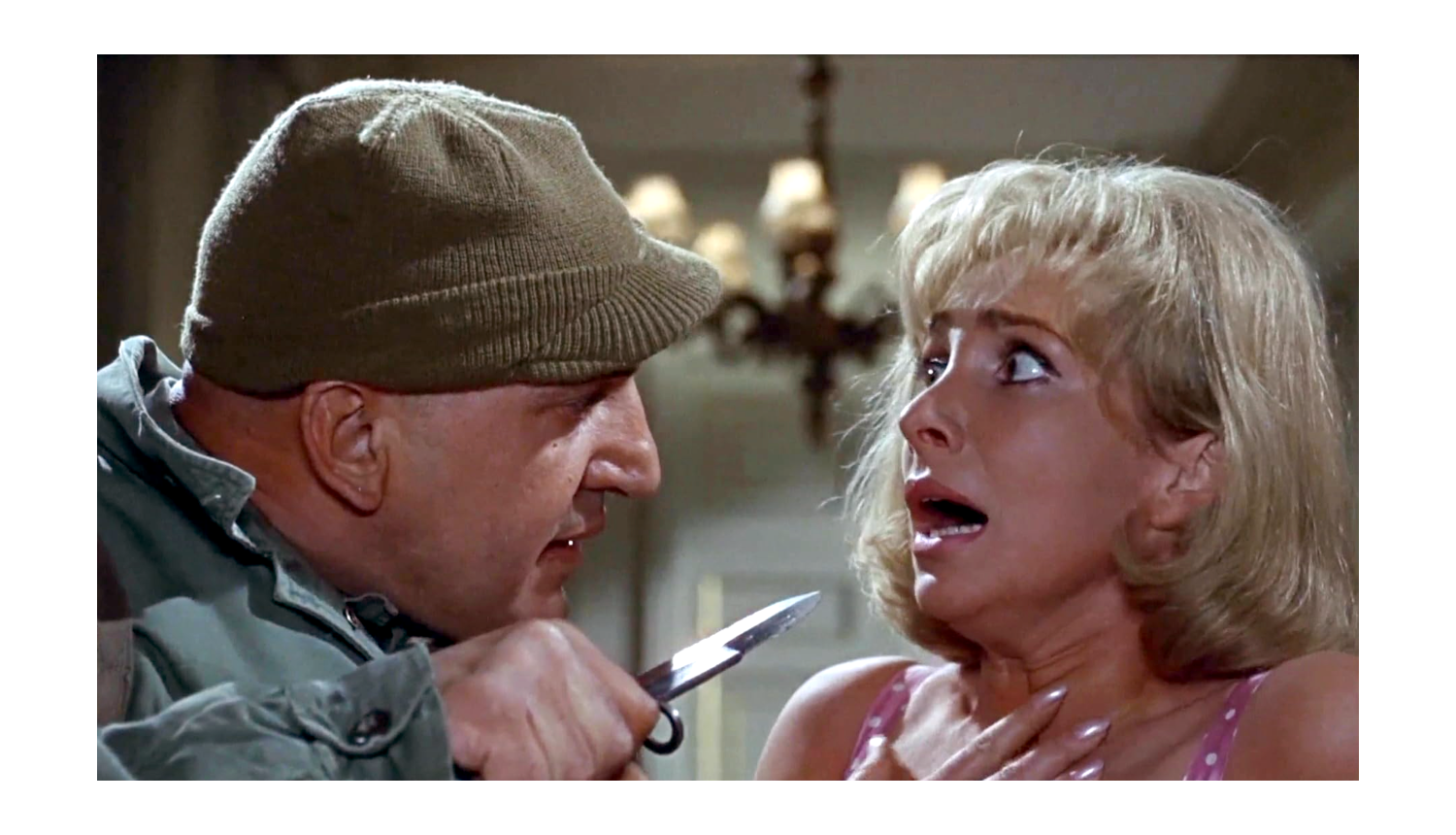
Telly Savalas’ Archer Maggot is a degenerate murderer of women, and his contribution is to shift the raid into graphic psycho killer territory. Maggot teases a German woman and then gleefully stabs her to death. Our reaction has an unpleasant twist. Does the victim deserve to die because she’s the consort of an enemy officer? For all we know, the grindhouse crowds might have yelled for Savalas to ‘kill the bitch.’ The rest of us are wondering just how sadistic the film will become. How much violent escapist ‘fun’ do we want?
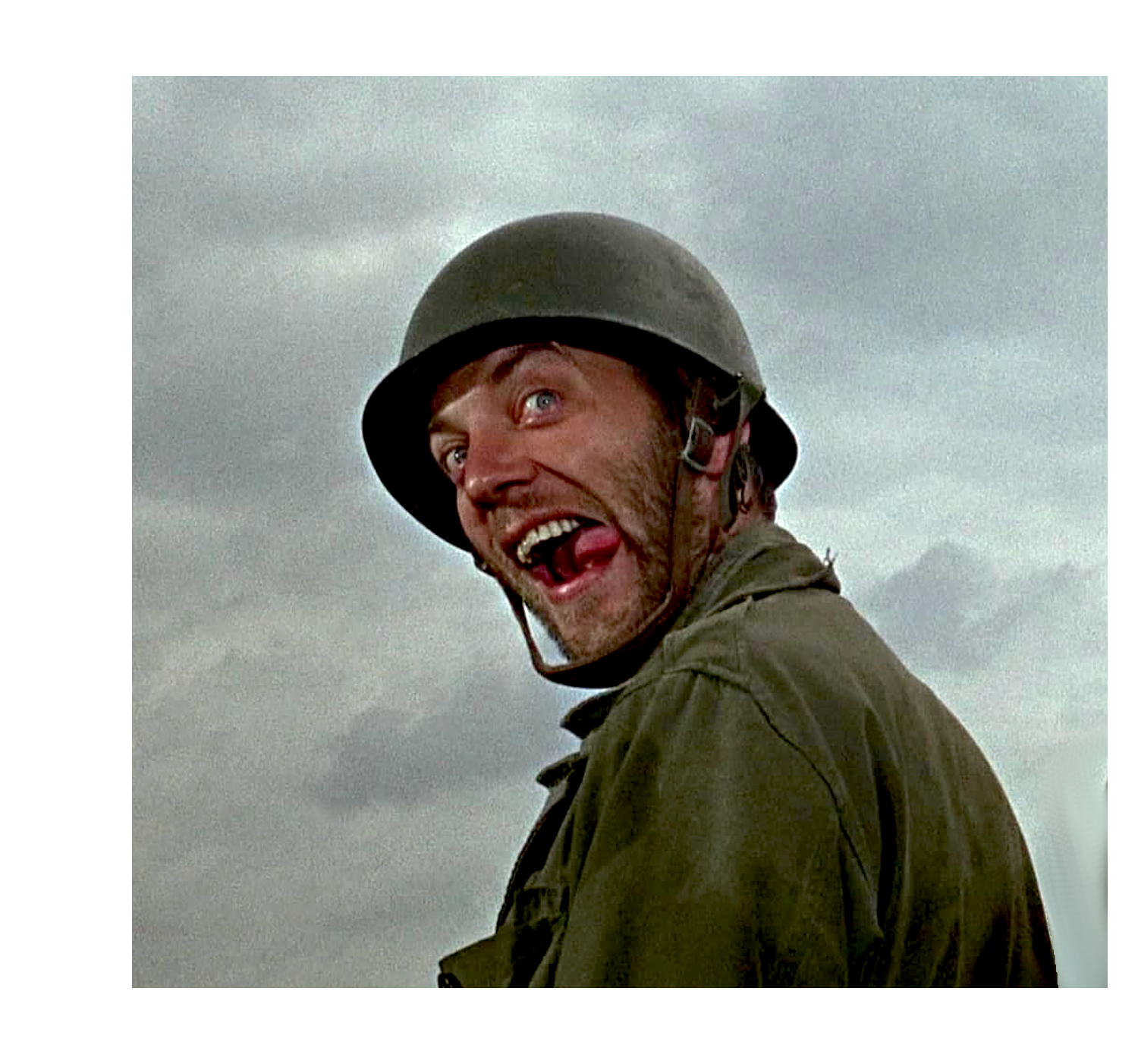
If one wished to put together a big-scale ensemble movie like The Dirty Dozen today, there would always be a top star ready to take the macho male Reisman part. Marvin’s brand is of insolent cool is ideal. When we hear of John Wayne being asked, we can’t help but think that the offer was made to him, just to obtain a turn-down for publicity use.
But these days the movie would have to exceptional. No modern actor with a star name wants to be an ‘also fought’ in another star’s ensemble cast. There is no longer the resource of affordable supporting actors (Telly Savalas) and TV stars (Clint Walker) that can bring ‘known qualities’ to their roles. The smart casting gives us TV names along with stars that haven’t quite made the top tier, like the unhappy Charles Bronson. Then Aldrich pulls in some wild cards for variety. Singer Trini Lopez was being saved for a standout scene, but had to quit the movie. That’s why his character is eliminated early. We understand that actor Donald Sutherland, then with only a couple of pictures to his hame, was just meant to be another ‘also fought’ until everybody saw how good he was making funny faces. Clint Walker balked at doing the ‘imitation general’ scene, so Sutherland ran with he opportunity and won an instant career upgrade. It was a cinematic battlefield promotion.
John Cassavetes is the film’s acting standout and its Oscar nominee. He’s a great example of a volatile actor that we think might give the director grief. The opposite was true … Cassavetes’ real interest was getting $ cash together to make his own movies. He gave Aldrich everything he wanted. Aldrich was sufficiently tough to keep the grouchy, competitive Charles Bronson in line. The joke was that the director’s ‘tough diplomacy’ had tamed Joan Crawford and Bette Davis, a much harder nut to crack than these eager-to-please actors.
Aldrich fills other roles with pros from his previous movies — Ralph Meeker, Richard Jaeckel, Ernest Borgnine. Sadly, the great Robert Ryan is required only to sneer and scowl as a ‘regular Army clown’ cliché. We wonder what happened for the talented Cassavetes discovery Ben (Benito) Carruthers to not be given even a minor showcase moment. Carruthers never received his big break despite appearing in a bushel of good or at least eccentric pictures: Shadows, Lilith, Goldstein, A High Wind in Jamaica.
The Dirty Dozen’s producers got good value for their money. With no special sets needed for the first two-thirds of the movie, the big expenditure was the giant chateau for the bombastic last act. This movie was the first non-anamorphic feature to be enlarged to 70mm. It won an Oscar for best sound effects, perhaps because the 70mm format enabled the mixing of an impressive stereophonic soundtrack. That said, we tire somewhat of the identical, incessant grease gun noises in the final battle… they start to sound like sewing machines.