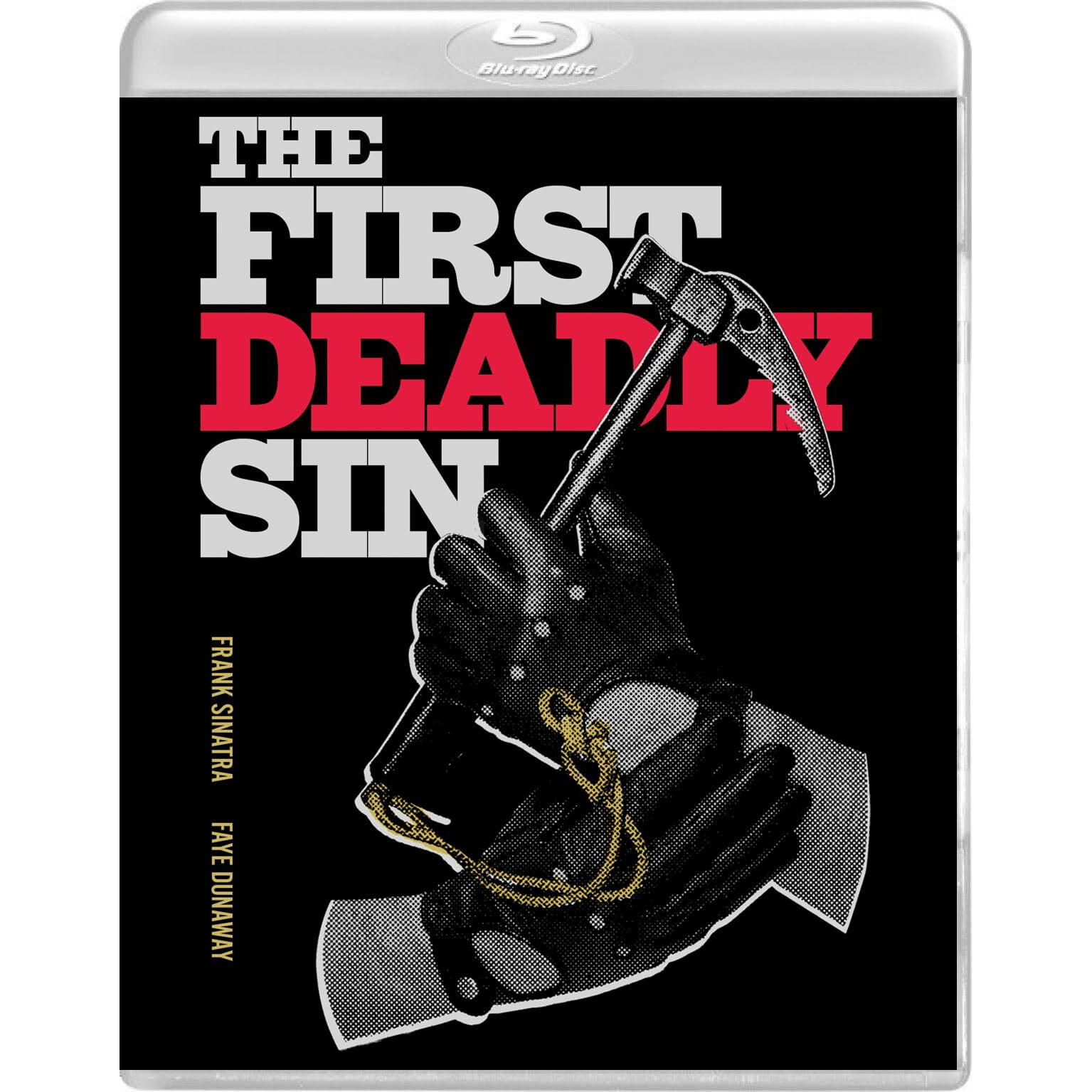

 Frank Sinatra took an extended break from acting after 1970’s Dirty Dingus Magee, doing a TV movie but returning to the big screen in a starring role just once more, a decade later. The First Deadly Sin is a low key crime drama more or less ten years before its time. Serial killers didn’t become ubiquitous entertainment fare until 1991’s The Silence of the Lambs, even though the breakthrough film along those lines was 1968’s The Boston Strangler. It shared some of the cynical, ‘modern violence is too much for us’ attitude of Sinatra’s own The Detective, also made in 1968. In that movie, Sinatra’s police detective is a regulation aggressive hard-charger who doesn’t mind breaking the rules. Sinatra, we are told, was also an early choice to play Dirty Harry.
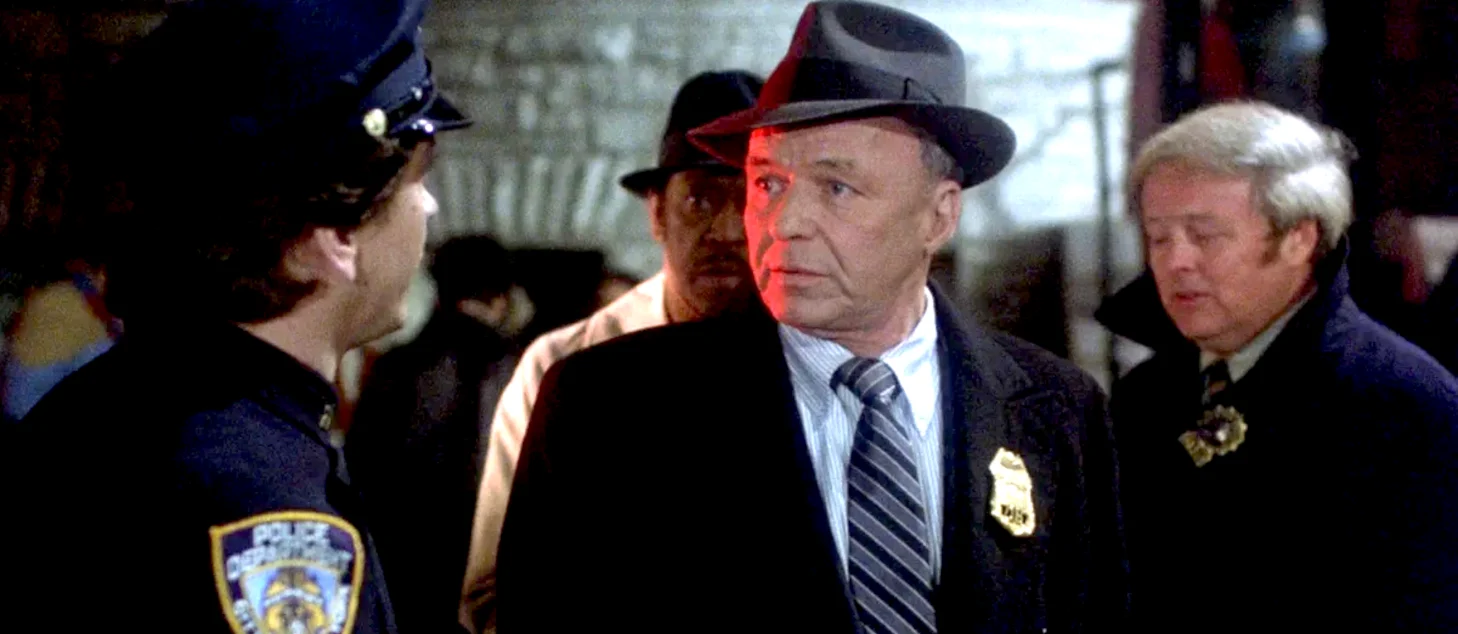
But ten years make a difference. Sinatra’s inspector Edward Delaney has mellowed out and is nearing retirement. He’s no longer the kind of guy to throw his weight around. Despite serious problems at home, he presses forward on a grim case out of pure professional curiosity — and a humanistic streak that pushes him to keep trying to help people.
Author Lawrence Sanders had a first hit with his crime novel The Anderson Tapes, which almost immediately became a movie starring Sean Connery. A minor character in that book is one Captain Delaney, the New York cop who directs the counterattack on a gang of thieves that take over an entire Manhattan highrise. In the movie, Delaney is played by Ralph Meeker. Sanders centered on the Delaney character for his next series of crime stories. The First Deadly Sin was followed by three more books in the same pattern, The Second Deadly Sin and so forth.
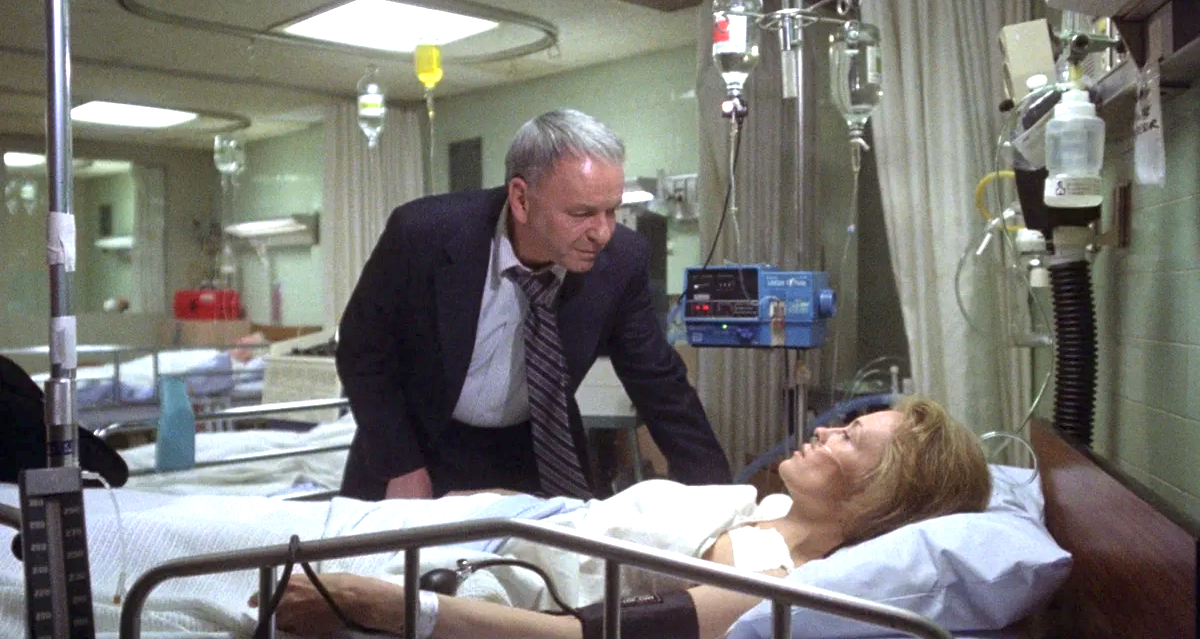
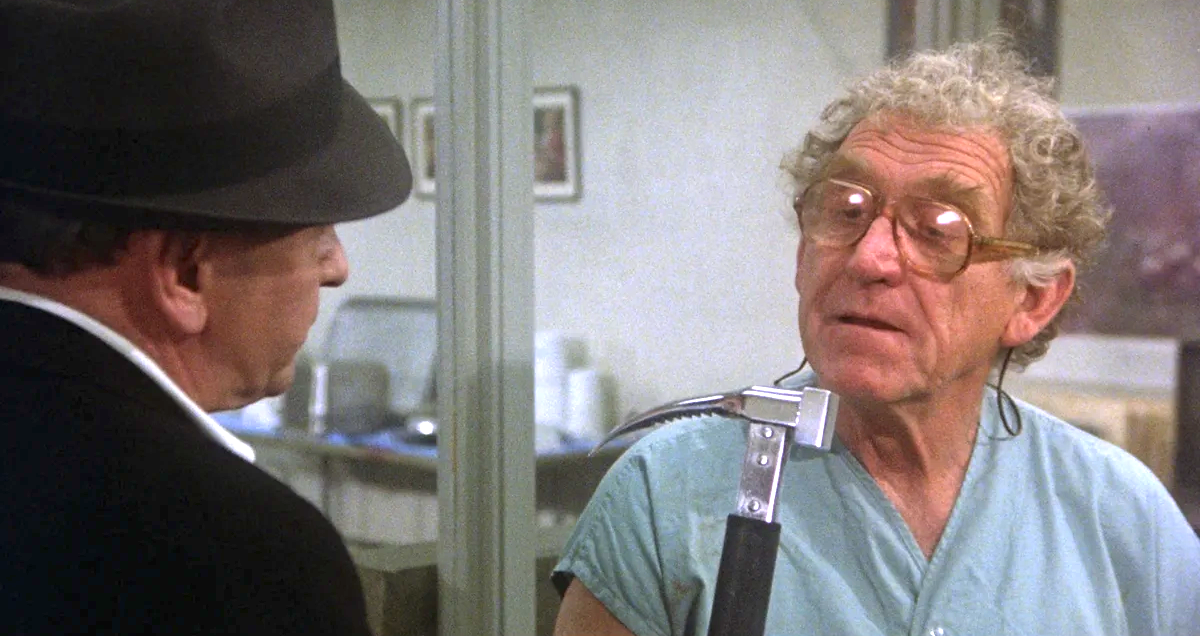
Only one ‘Deadly Sin’ novel made the jump to film. We’re told that Mann Rubin’s adaptation eliminates much of the lighter material in Lawrence Sander’s source book. Old-school cop Edward Delaney (Sinatra) has seen it all. His pending retirement is no cause for cheer because his beloved wife Barbara (Faye Dunaway) is undergoing setbacks in her recovery from an operation. At the same time, Ed intuits a connection between several strange killings. By asking his coroner friend Dr. Ferguson (James Whitmore) to do extra autopsies, he determines that the victims all received a sharp blow to the head, apparently from an odd kind of weapon that left an unusual rounded hole in their skulls.
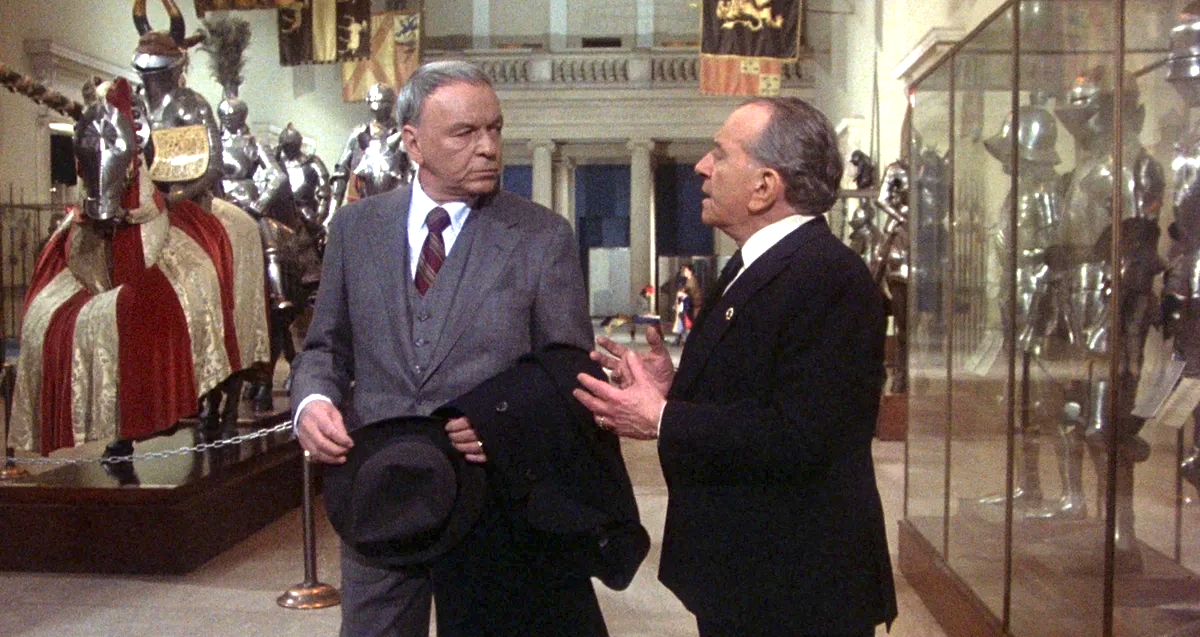
The precinct’s new supervisor Captain Broughton (Anthony Zerbe) is only interested in making a show of reforms. He reprimands Delaney for spending time on cases that happened in other precincts. He tells him to do nothing and let the retirement clock run out. Delaney instead ignores orders and continues to work the case with Dr. Ferguson. He also solicits help from murder widow Monica Gilbert (Brenda Vaccaro), and Christopher Langley (Martin Gabel), a museum expert on ancient weaponry. Both volunteer to help Delaney cross-reference files. Langley just wants to be useful, and begins a careful investigation into every possible tool or weapon that could could have left the unusual wound.
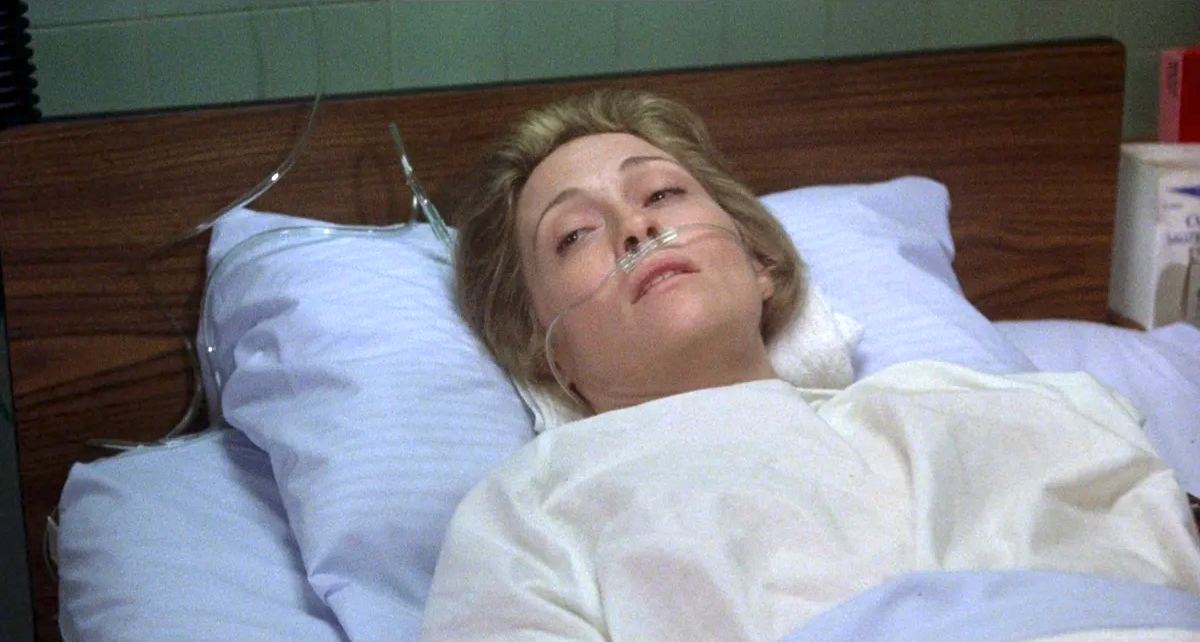
Delaney’s team eventually locates a suspect, a wealthy executive (David Dukes) with too much clout for Delaney to quietly get a search warrant. So Edward bribes a doorman (Joe Spinell) to sneak into the executive’s penthouse apartment. Why is the ethical and rule-conscious Delaney acting so rashly? His wife Barbara’s health is getting worse from an infection that the attending doctor Bernardi (George Coe) can’t seem to stop. Ed keeps visiting her in the hospital. She looks terrible but strains to cheer him up.
Frank Sinatra softens his bossy and belligerent reputation as the ‘Chairman of the Board’ in this emotionally sensitive crime tale. Instead of barging through situations, Sinatra’s Ed Delaney quietly absorbs abuse from superiors. He puts up with bureaucratic BS from all sides, including his cranky old pal the coroner. Delaney asks nicely for things and for the most part doesn’t squawk when people get testy, not even young punks in the department that swing their authority around. The result is that we care intensely for Delaney. After so many films in which Sinatra seems to be acting for a lark, or not happy to be acting at all, he once again applies himself in the service of a story. It’s pleasant to see him play his actual age, offering natural behaviors without an aggressive attitude.
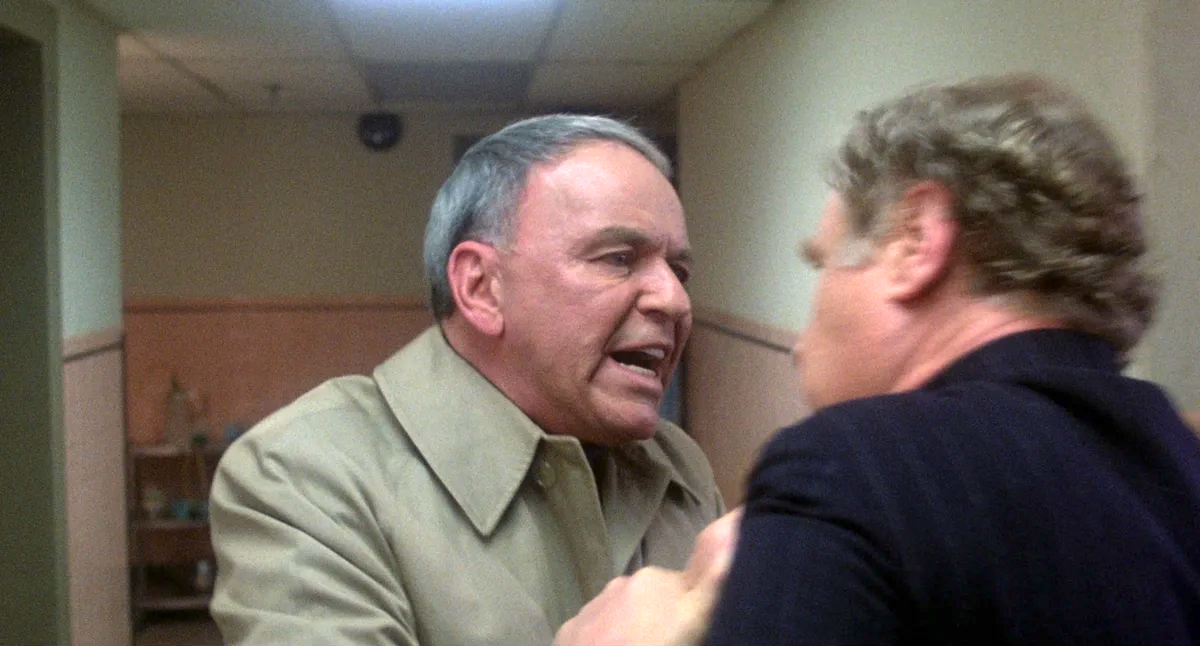
The scenes with Faye Dunaway are handled especially well, without pushing the sentiment or telegraphing whether or not her Mrs. Delaney will recover. Ed loses his cool only when he thinks Dr. Bernardi hasn’t been attending her properly. It’s the film’s only awkward scene. Sinatra’s acting doesn’t convince. His Delaney almost becomes violent with Dr. Bernardi, which goes against his character as established.
More consistent is Delaney’s warm relationship with his volunteer investigators. Brenda Vaccaro often played caustic women spouting smart-aleck dialogue; she’d end up doing exactly that for Dunaway in the ill-fated movie Supergirl. Here she is afforded some dignity as a woman grateful that Delaney is looking for her husband’s murderer.
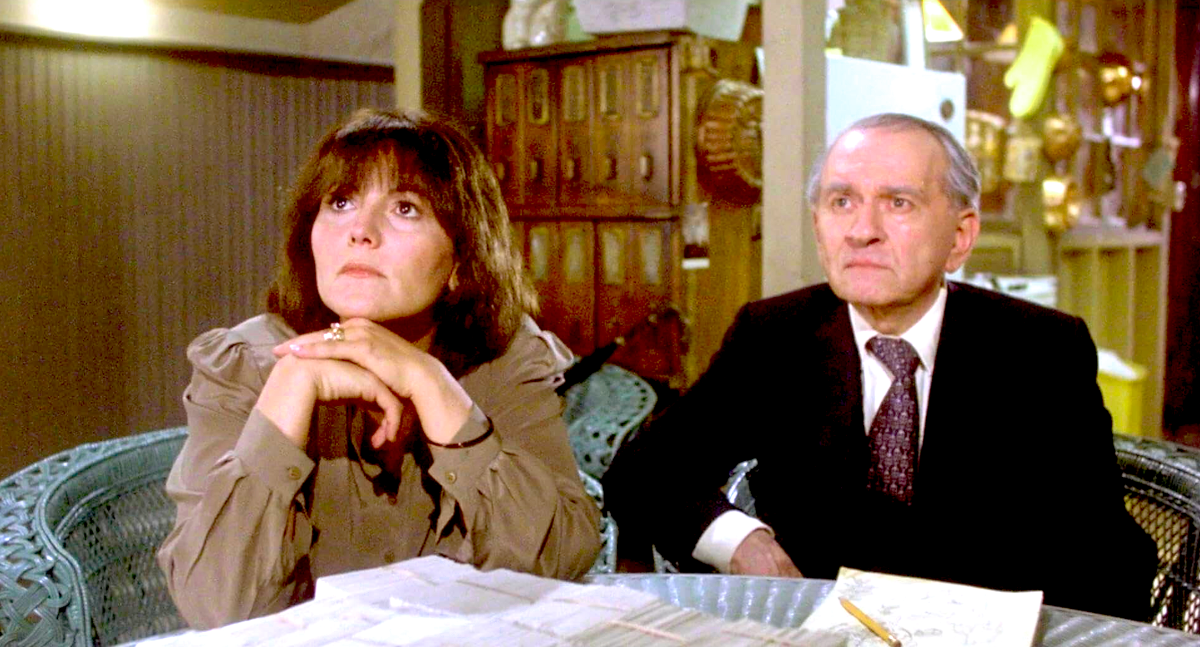
According to the AFI, star and executive producer Sinatra ended the show on a familiar note. Either bored or pressed for time, he left the shoot early rather than film a final ‘closure’ scene with Brenda Vaccaro. Thus Vaccaro’s widow Gilbert may have left the film without performing her full intended character arc.
In the average crime film, elderly professors are often tapped to provide comic relief. The First Deadly Sin lets veteran actor Martin Gabel sketch another aging character trying to do something meaningful with his skills. Gabel’s Professor Langley fusses over various kinds of hammers and axes that might be the murder weapon, and Ed Delaney never patronizes him. Film fans may know Gabel from Hitchcock’s Marnie, but he was also a producer, and as a one-shot film director is credited with the unusual literary-themed thriller The Lost Moment. Gabel and Sinatra share a fun scene with a sporting goods wholesaler, played by the great character actor Robert Weil The Taking of Pelham One Two Three. New York in 1980 may have been a social disaster, but this movie inspires faith in its citizens.
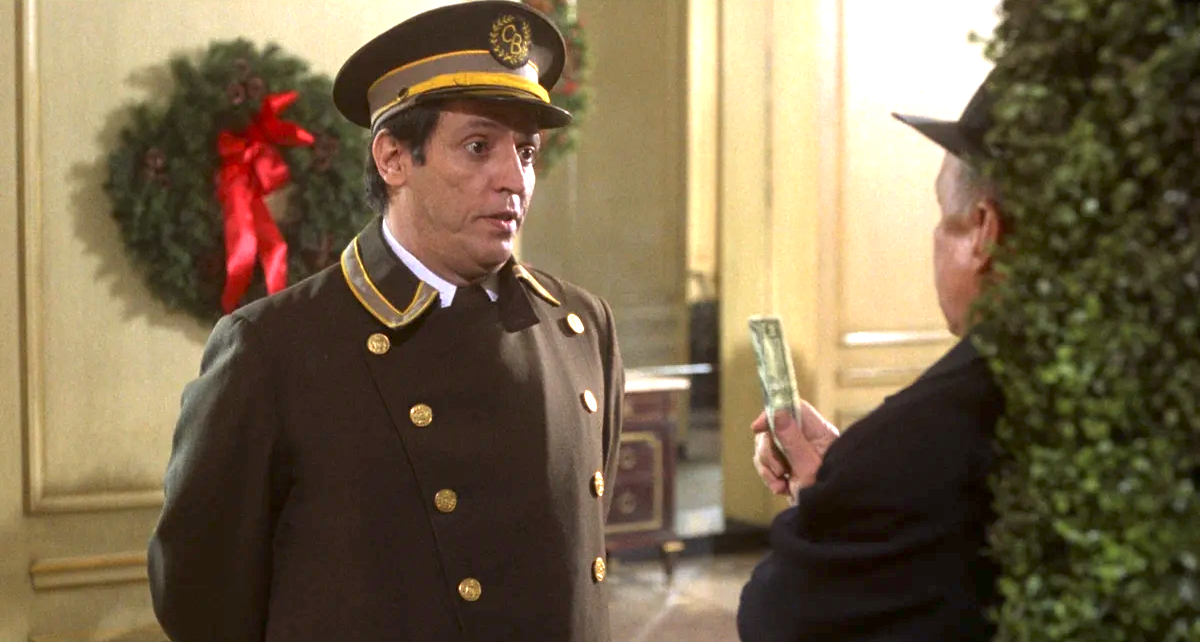
A good reminder of the gritty 1970s is Delaney’s interaction with an apartment doorman who takes a bribe to allow the detective to sneak into an apartment on the sly. The doorman is played by none other than Joe Spinell, who was pretty much the icon for ’70s sleaze in the Big Apple. Spinnell’s doorman has found an honorable job, but is not above working a profitable angle.
The serial murder theme is handled in a fairly interesting way. Director Hutton uses slick imagery when observing the killer in his swank apartment, with visuals that remind a bit of Italian slasher pix. The wealthy psychotic has screwy personal delusions that lead him to compulsively kill random people. He has made frequent address changes over the years to avoid detection — as if aware that New York police precincts do not share their information. Ed’s volunteer researchers identify the suspect by comparing files, but the police bureaucracy doesn’t let Delaney do anything about it. So Delaney solves it in his own way. It’s too specific and un-shaded a case for a debate about police morality, but for this show the ending is entirely satisfactory.
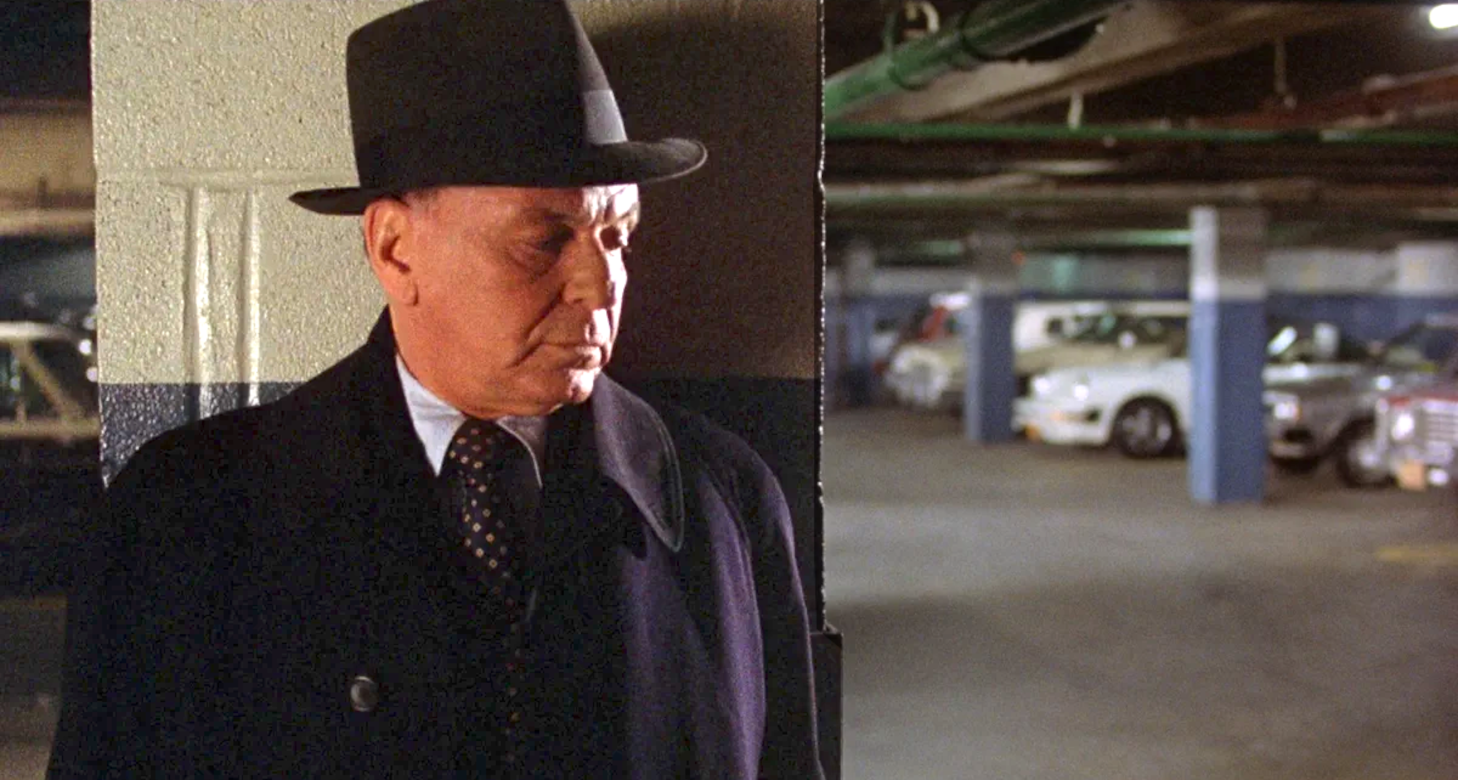
Receiving little credit for this very nicely shot feature is director Brian G. Hutton, who is better known for his big-scale war adventures Where Eagles Dare and Kelly’s Heroes. Hutton and Sinatra seem to be on the same page entirely. Working in real locations, Hutton keeps the interest up; the killer is made mysterious through those nicely stylized visuals of the artwork and slick décor in his tony apartment.
Brian Hutton wasn’t the first choice to direct the show: The AFI reports that Roman Polanski had been signed as director, but was quickly dropped when he was charged with statuatory rape. Was Polanski really interested in doing this show, or was he running for cover? We wonder why the subject matter would interest him. A good movie project heals all wounds, but Polanski had experienced serious disputes with both Frank Sinatra and Faye Dunaway in the past.