
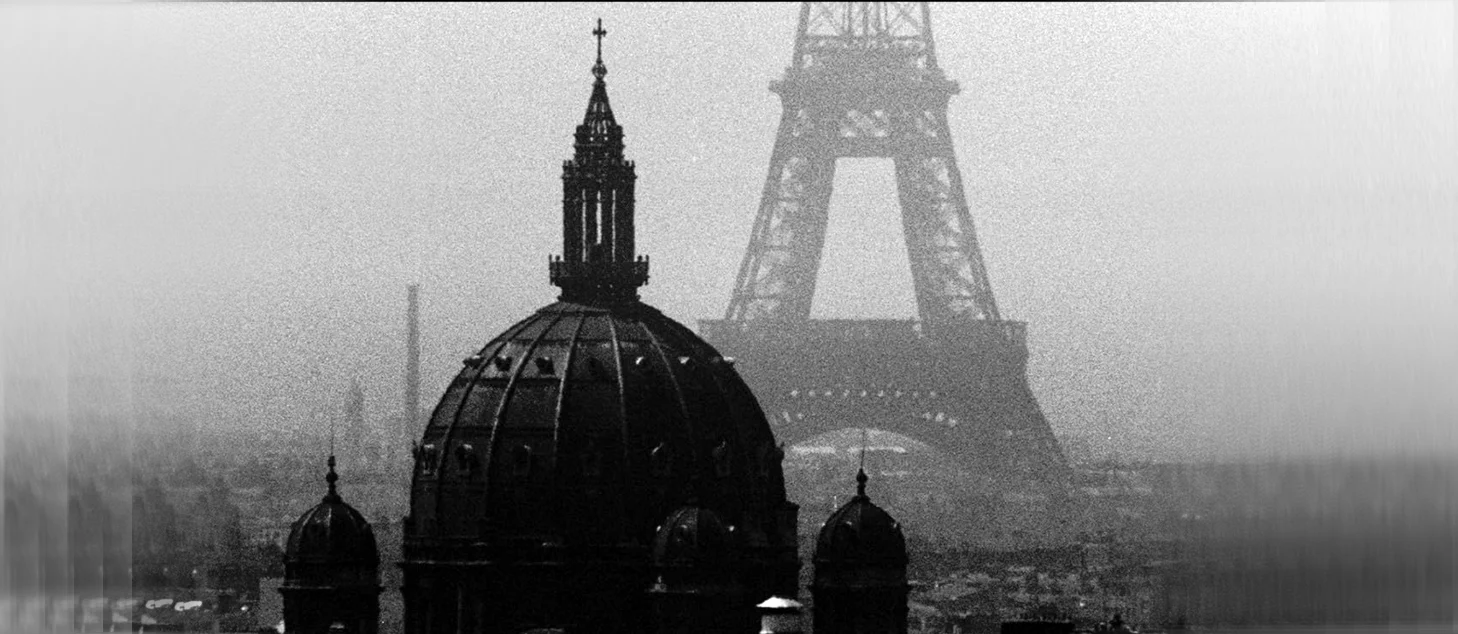

Welcome to the concept of Direct Cinema
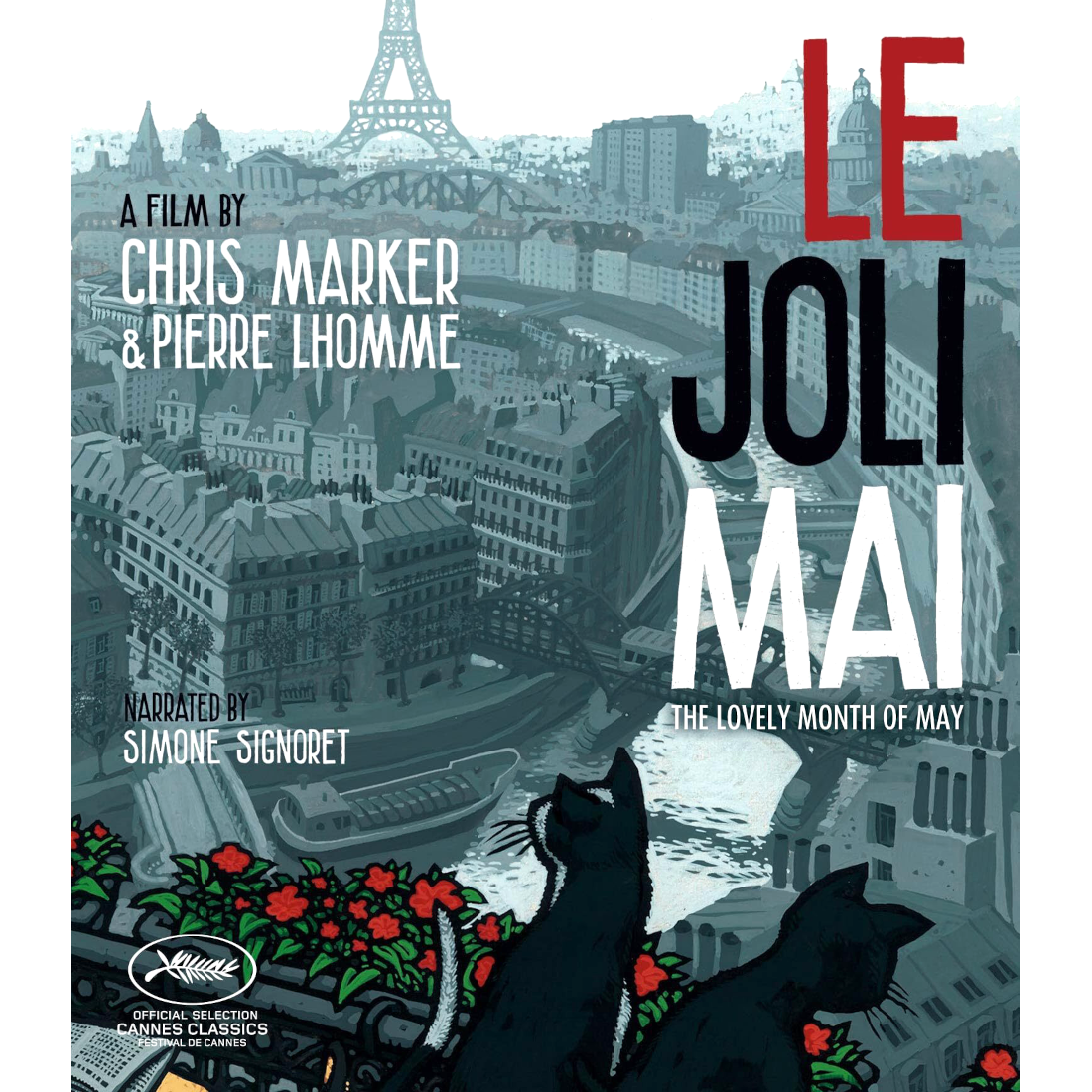
Are you crazy about Paris? Or about 20th-century French history? Filmmaker Chris Marker’s free-form snapshot documentary may appeal. The first thing you should ask yourself is, do you want to spend the month of May, 1962 in Paris? Taking a cue from Jean Rouche’s experiment Chronicle of a Summer, Marker set out to use new theories of documentary filmmaking for his portrait of Parisian life at a particular point in history, Le joli mai (The Lovely Month of May). Before the experiments of 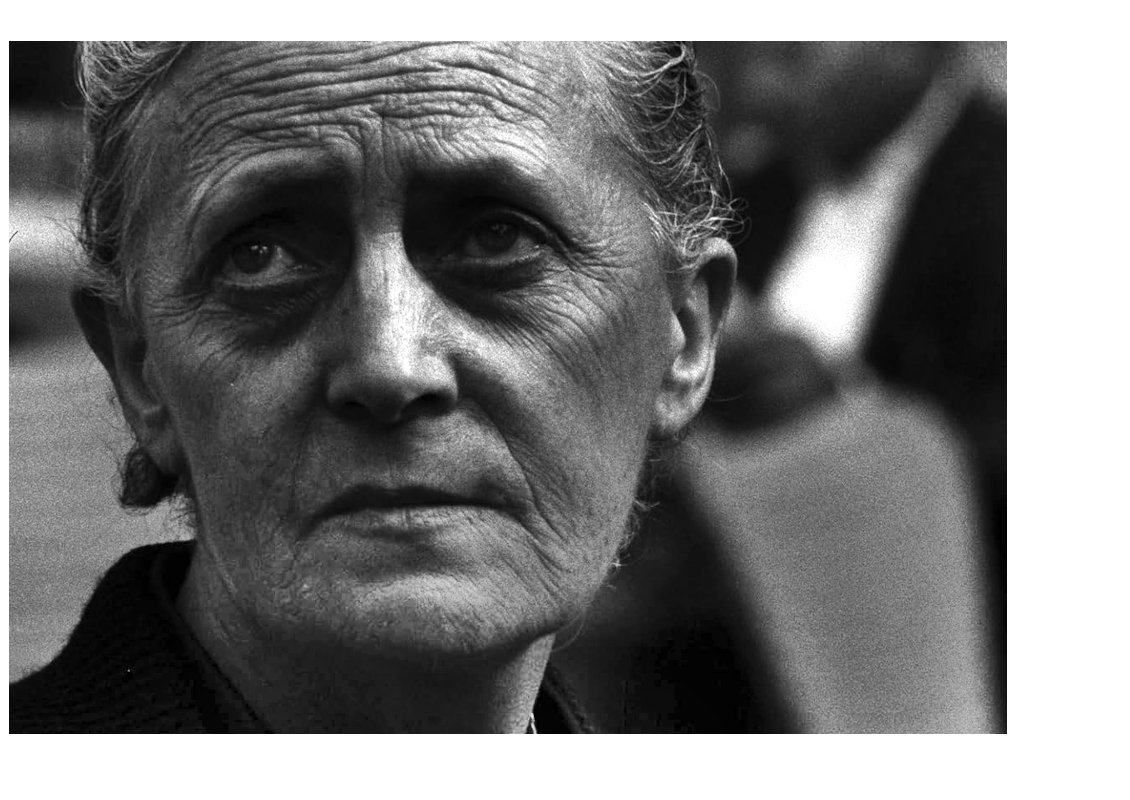 American filmmakers and Frenchmen like Rouche, most documentaries had been rigidly scripted and filmed, almost like narrative dramas.
The theorists avoided the imposition of an author’s point of view, through guided interviews and manipulative editing. The idea was to aim a camera at real things and people and allow them to be themselves.
The term “cinema vérité” was eventually coined to describe these kinds of movies, even though the presence of a camera almost always distorts the subject being filmed. Chris Marker preferred the term ‘Direct Cinema,’ which doesn’t claim that an absolute truth is being recorded. Direct Cinema also describes the method of filming. New lightweight 16mm film cameras were synchronized to an audio recorder through a hard-wire connection. With his soundman at his side, cameraman Pierre Lhomme was essentially a one-man film unit, grabbing his shots on the fly and making the most of visual opportunities. For this reason the fair-minded Chris Marker insisted upon a sharing the director credit.

Chris Marker made other progressive documentaries as well as the conceptual Sci-fi masterpiece La jetée. There is nothing tentative or fuzzy about Le joli mai, which grabs and holds our attention throughout. For Francophiles, it’s an opportunity to visit a marvelous Paris of the past, one that by and large no longer exists.
Are you Happy?
Part one of the film is entitled Prayer on the Eiffel Tower. Marker keeps things simple, at first asking Parisians on the street their opinions about happiness. A poetic opening narration explains that with the end of the Algerian War, France is finally at peace. Just the same, civil unrest hit the streets of Paris just as Le joli mai’s cameras were rolling: a putsch to topple the De Gaulle government was attempted by a right-wing military group called the OAS. Marker’s cameras record the complaints of a crowd supporting the rebel officers and insurrectionists … diehards threatening violence. We are shown news film of a celebration in which De Gaulle appears in public — the historical moment dramatized in the (recommended) Fred Zinnemann thriller The Day of the Jackal.

Most of the French citizens interviewed claim not to be engaged with the civil conflict, affairs of state or historical events. An amusing clothier complains about having to work hard with his boss and wife both complaining. A poor mother with nine grimy children expresses her joy to be moving from a two-room slum to a larger subsidized apartment. A mechanic proudly shows off the oil paintings he creates in his spare time. A pair of errand boys at the stock exchange ↑ seem to have no ambition beyond making enough money to have a car and go on dates. A black student from Dahomey ↓ and a young Algerian talk about the racism they’ve encountered in their adopted city. The Algerian says he was wrongfully imprisoned and beaten by the DST (Domestic Intelligence Agency). But neither immigrant plans to return to where they were born.

When asked about ‘happiness,’ the interviewees mostly talk about small improvements to their lives. Many of their wishes are consumer-oriented. A man smiles to think how wonderful it would be to have a television. We then see a family in a shantytown happily watching Earth vs the Flying Saucers on their little B&W set.
The interviews are most refreshing when the people placed before the camera are unguarded, and trying to answer honestly. They do not affect telegenic personalities. One or two Parisians are a little intimidated or self-conscious, but most on view have strong personalities that strike us as authentic.

The top charmers are a pair of young marrieds just 21 years old. ↑ He’s a soldier wearing the beret of a paratrooper. She giggles and beams. Both are caught up in the happiness of their relationship, which at the moment is their whole world. But Marker’s gentle questions make us wonder how long this bubble will last: they aren’t thinking about anything outside themselves and the future is a blur. They dismiss questions about politics. Yet the young husband is leaving in ten days, to serve in Algeria during the withdrawal period that would take several months.
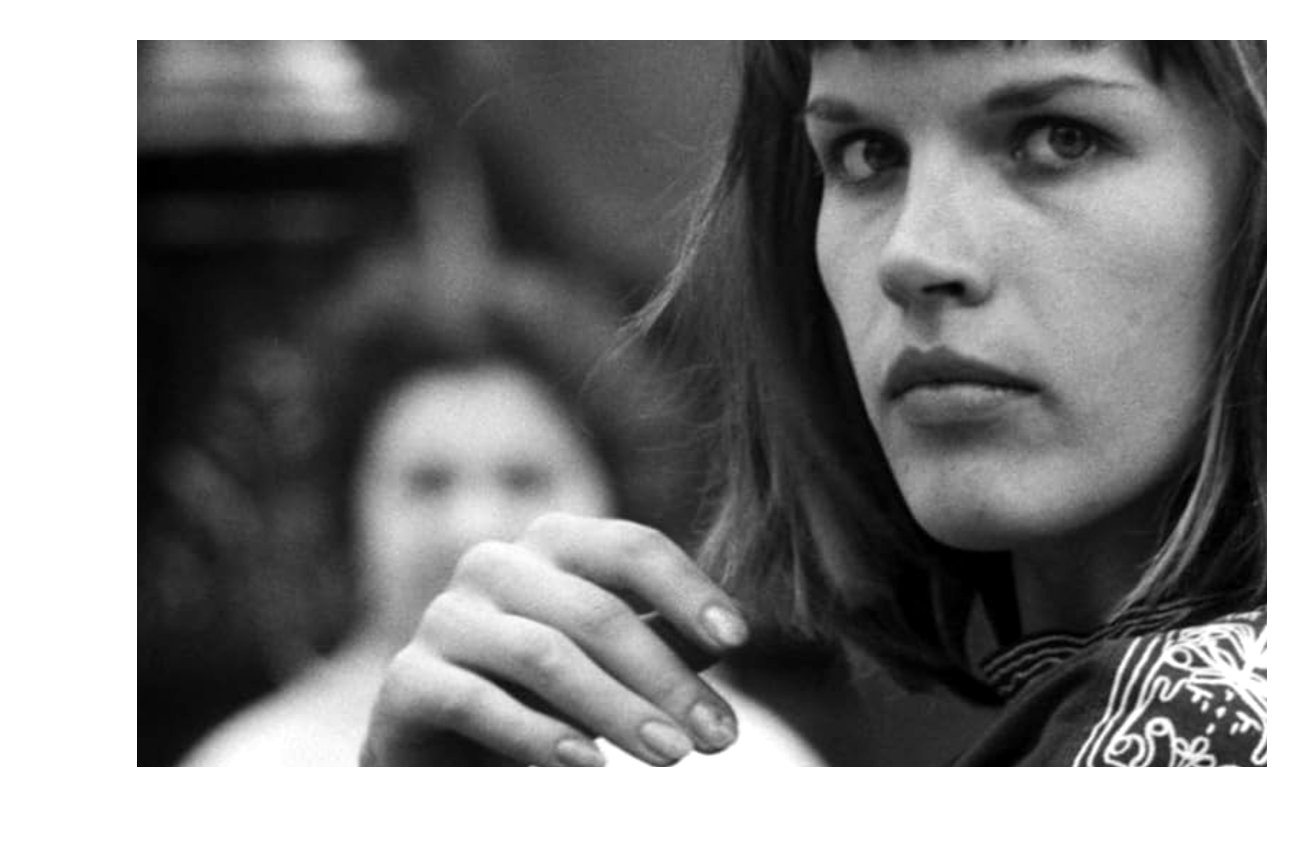
The second part of the film is entitled The Return of Fantomas. The focus changes from ‘happiness’ to asking Parisians what worries them. We see men practicing at a pistol range and the funerals of Communists killed in street battles. We hear references to Francis Jeanson, a philosopher-intellectual who gathered funds to support Algerian independence. We also see a group of supporters for Raoul Salan, the founder of the OAS, then under arrest for treason. Is the spirit of the pulp-fiction anarchist Fantomas rising again?
Marker and Lhomme take their camera into sidewalk disputes about widespread service strikes. A woman supporting the strikers is told to go to Russia, but other Parisians side with the workers. One woman doesn’t realize that the filmmakers are independent, and accuses them of being “radio whores to the government.” Barroom philosophers voice their interpretations of the political scene. An ex-priest explains that he left the priesthood to become a Communist activist, so he could do something real to support his fellows. The episode with the Algerian worker is followed by footage showing other Algerians doing menial work that French workers won’t: ‘The lowest proletariat in a colonizing country always has a sub-proletariat from the colonized country.’

Chris Marker loves cats.
The tone of Le joli mai is not dark. The show has an intermission, with a beautiful song by Yves Montand, presumably to be played over a closed theater curtain. Does that qualify Le joli mai as a Road Show picture? Michel Legrand’s music is optimistic, and often jazzy. The camera contrasts the city’s impersonal new architecture with the beautiful, historically significant buildings of the old Paris. Along the way Marker pointedly makes room to film the cats he encounters — Marker loves cats!
We see nightclub patrons dancing enthusiastically to The Twist. Some are shown learning a line dance called The Madison — the one Anna Karina performs in Godard’s Bande à part. In addition to his cats, Marker shows a woman caressing her pet Owl. The little bird seems more than happy to have its head and cheeks rubbed!
The finish brings more narration-poetry, some of it read over beautiful time-lapse pictures of Paris streets and the Arc de Triomphe. The narrator asks why Parisians on the street look so worried, and contemplates the thoughts of convicts in the great city’s prisons. As if we had stepped into a time machine, we’ve gained an idea of what it might be like to be in Paris in May ’62. Le joli mai is an engrossing ‘city portrait.’ Its cameras glimpse a couple of distant landmarks but stay clear of the obvious tourist destinations. Can the show be fairly described as a New Wave refinement of the Russian and German silent ‘City Symphony’ classics? We wish that Marker and Lhomme could have revisited their interviewees twenty years later, to find out what became of them.


