
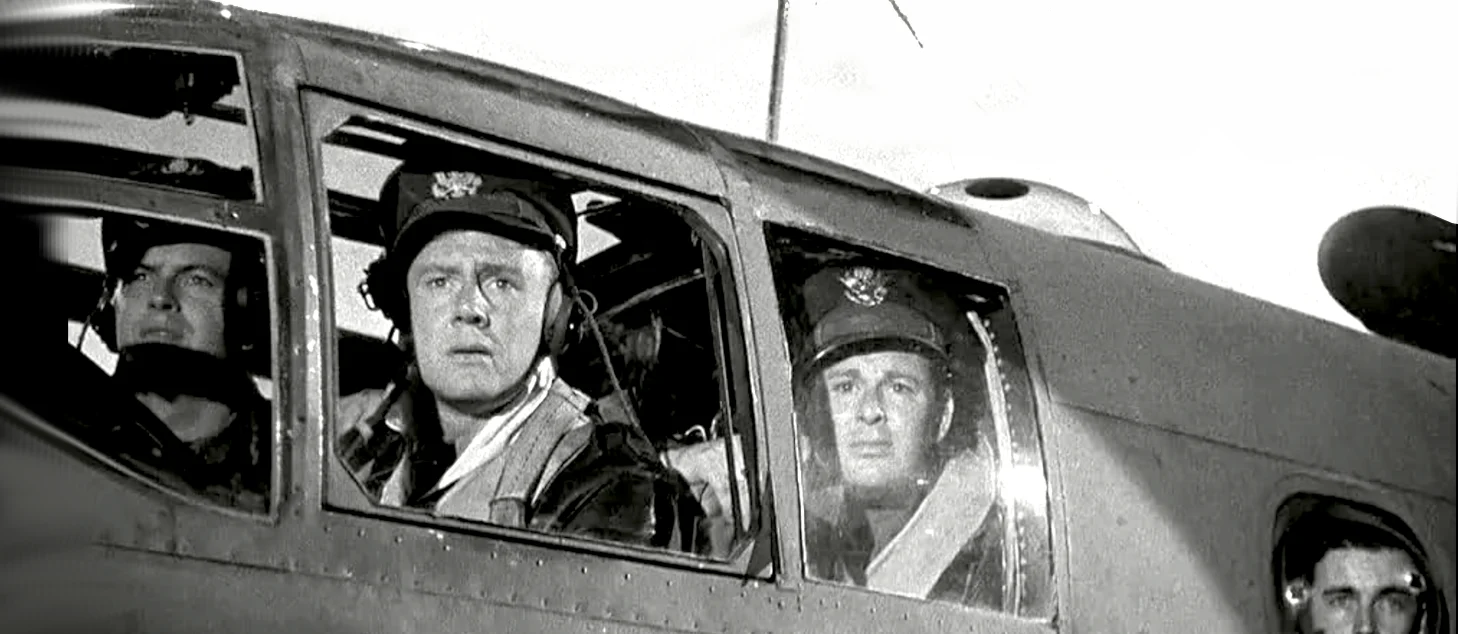


Hollywood played a significant role in the WW2 war effort, becoming the cheerleading section for our armed forces as well as a moral conscience about the higher values of patriotic service. Some war pictures date poorly. A few John Wayne films make combat in the Pacific look like extra chapters in a Republic action serial, only with bigger production values. Howard Hawks’ 1943 Air Force begins as a good portrait of a B-17 crew en route to Hawaii but concludes with an exaggerated battle that seemingly sinks the entire Japanese Navy. Many films voiced war hatred against the enemy, in particular, the verbal tirades in Gung Ho! and Objective: Burma. We expect to hear the word Japs, but in those films it is spit out with venom, like an obscenity.
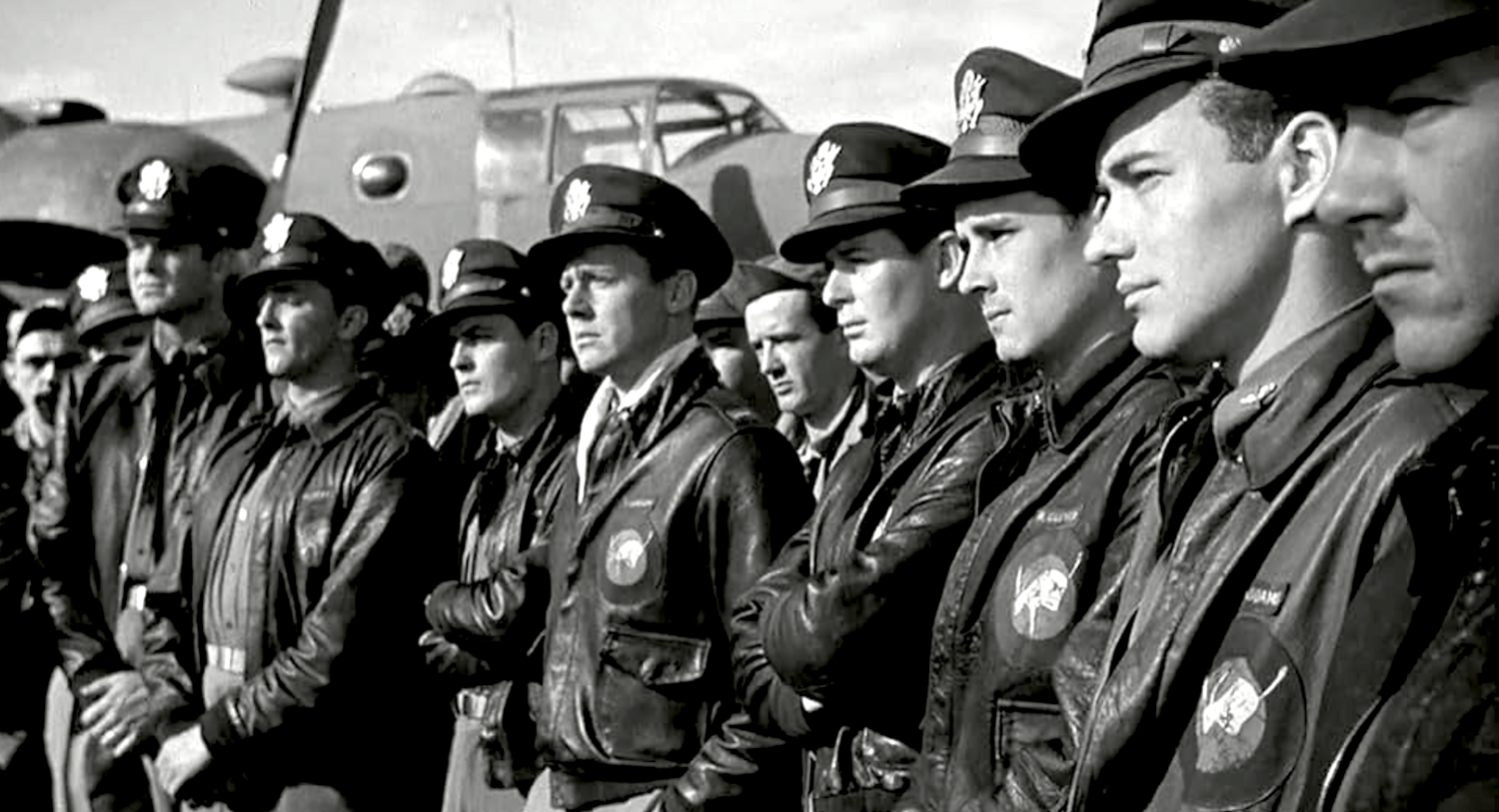
Much more sensible than Air Force yet still wearing its wartime concerns and prejudices on its sleeve, Thirty Seconds over Tokyo is one of the best remembered war epics. The script is the work of the soon to be blacklisted Dalton Trumbo, whose only subversive notions are occasional suggestions that idealistic GIs want their sacrifice to bring about a better future. As they prepare for a possible suicide mission, the flyers played by Van Johnson (in perhaps his best role) and newcomer Robert Mitchum express the hope that their kids will grow up free of war’s chaos.
Then again, the idealism has its limits. When Mitchum turns wistful, he stares out at the ocean and says, “I don’t hate Japs. I don’t like ’em, but I don’t hate ’em — yet.” 1944 America is far from ready to forgive and forget.
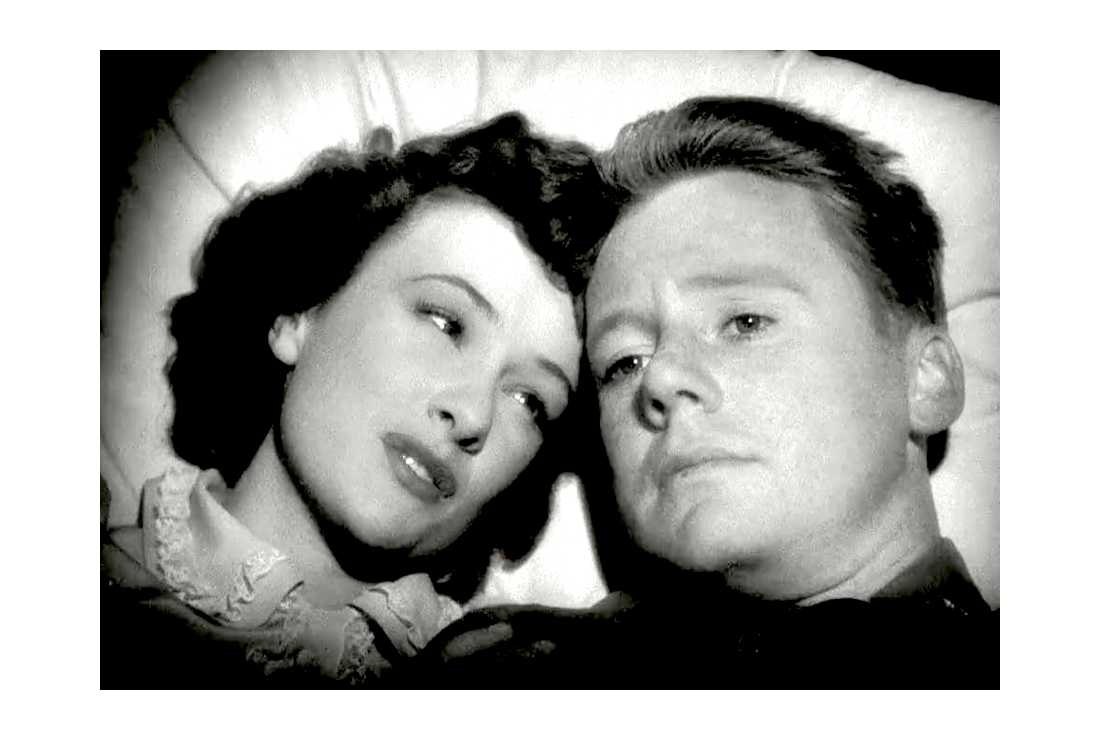
Only a few months after the debacle at Pearl Harbor, Lt. Ted Lawson (Van Johnson) is one of many hotshot Army Air Corps pilots that volunteer for a secret mission under Colonel James Doolittle (Spencer Tracy). Ted trains at a secret Florida base and does not drop out even after he learns his wife Ellen (Phyllis Thaxter) is pregnant. Once the aircraft carrier Hornet puts out to sea with their B-25 bomber planes on board, the fliers are told that they are to take part in a daring mission to bomb Tokyo.
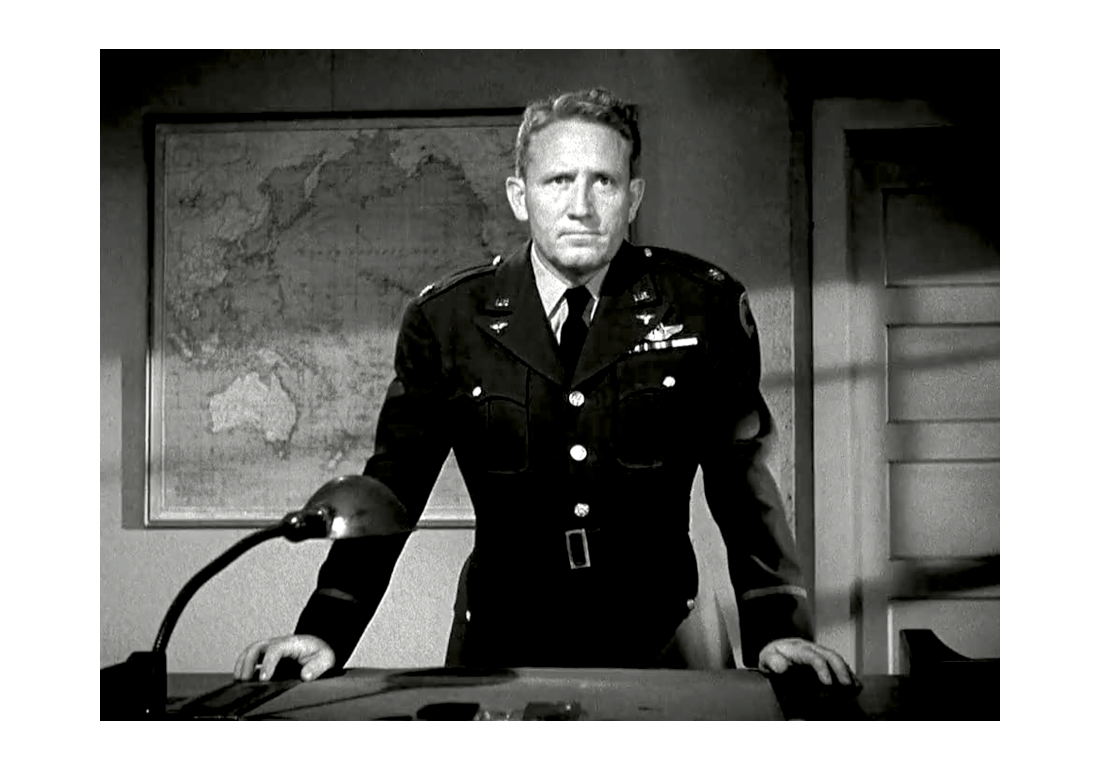
Thirty Seconds Over Tokyo is the wartime equivalent of a caper film, a raid planned and carried out in secret by determined specialists. As in a caper, the mission goes wrong almost from the start, forcing our resourceful airmen to improvise literally ‘on the fly.’ Spencer Tracy’s tough-guy Jimmy Doolittle stands before his men and announces that anybody averse to bombing civilians will be excused without dishonor. But who would do such a thing? A flyer scrubbed for a simple technicality is crestfallen not to be allowed to take part in the raid. Our ‘hero’ lies to his superiors about the questionable condition of his airplane, fearful that he’ll be scrubbed too.
That communal determination is now a source of great nostalgia, for a world based on values worth risking one’s life for. An alternate read is that the screenplay overstates Doolittle’s concerns about bombing civilians for the benefit of audience sensibilities. In 1942 the Army Air Corps had neither the planes nor the opportunity to really hit Japan. When we could, our forces didn’t think twice about burning entire cities to the ground.
The famous raid is glamorized yet fairly accurate, especially when compared to the ‘morale’ falsehoods floated in pictures like Air Force and even Wake Island. Only a few issues are stretched. We wonder if the flyers’ wives would be allowed to follow them from camp to camp for such a secret mission, a question that reading the source book would surely clear up. I remember my parents asking where Mrs. Lawson got the ration stamps she used to drive all the way to Florida … but an online check says that gas rationing didn’t begin until May of ’42.
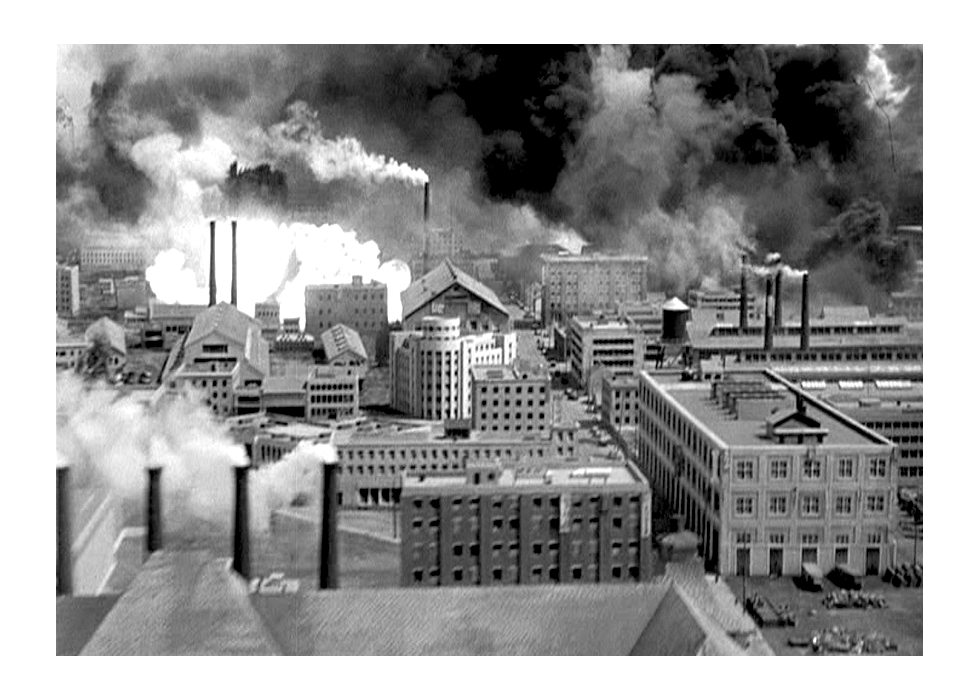
The raid is treated as a significant blow against Japan — nowhere is it acknowledged as a morale-booster to stave off American despair in a year the top brass knew would be mainly a bunch of bad headlines. Sixteen light B-25 bombers carry only a few tons of bombs, and the actual damage done proved only that we could strike mainland Japan. Thirty Seconds Over Tokyo shows single bombs blowing entire factories sky high and lighting half a city on fire. That exaggeration shows that the film/Army strategists felt that American war films still needed to be morale boosters, even in 1944 with the war finally going in our favor. Gotta keep that war production on track.
To its credit, the movie avoids the outright hokum of many other films made during the war. The pilots do not repel fantasy attacks by Zero fighters. When they reach China, Ted Lawson doesn’t find a beautiful Eurasian princess in need of passionate rescue. They make a miserable crash landing, and several of his crewmembers suffer serious injures, including Lawson himself.
Air Force big cheese Hap Arnold and raid leader Jimmy Doolittle were advisors on the film, which makes it all the more pleasing that the fliers are shown as cocky individuals and not representatives of a ‘perfect’ Army Air Corps. Yes, we see plenty of glad-handing between the services, to demonstrate that the Army and Navy are all buddies where it counts. It’s also interesting that our hero Ted distracts himself from the danger of his mission with a little bit of dishonesty, to offset his gambling losses against the Navy. He smuggles cartons of cigarettes in his bomber. We now compare that to an event in The Right Stuff, in which astronaut Gus Grissom ‘screws the pooch’ when he gets caught with his pockets full of souvenir toys after his Mercury mission.
Our modern Army, interviewing Lawson after the war, would link his concentration on smuggling with his failure to report his plane’s mechanical issues, even though his entire crew would be scrubbed from the mission. No way would he have done that. Flying officers didn’t do things that might even suggest they didn’t want to go through with an assignment. Doolittle’s unit should have independently cleared each aircraft.
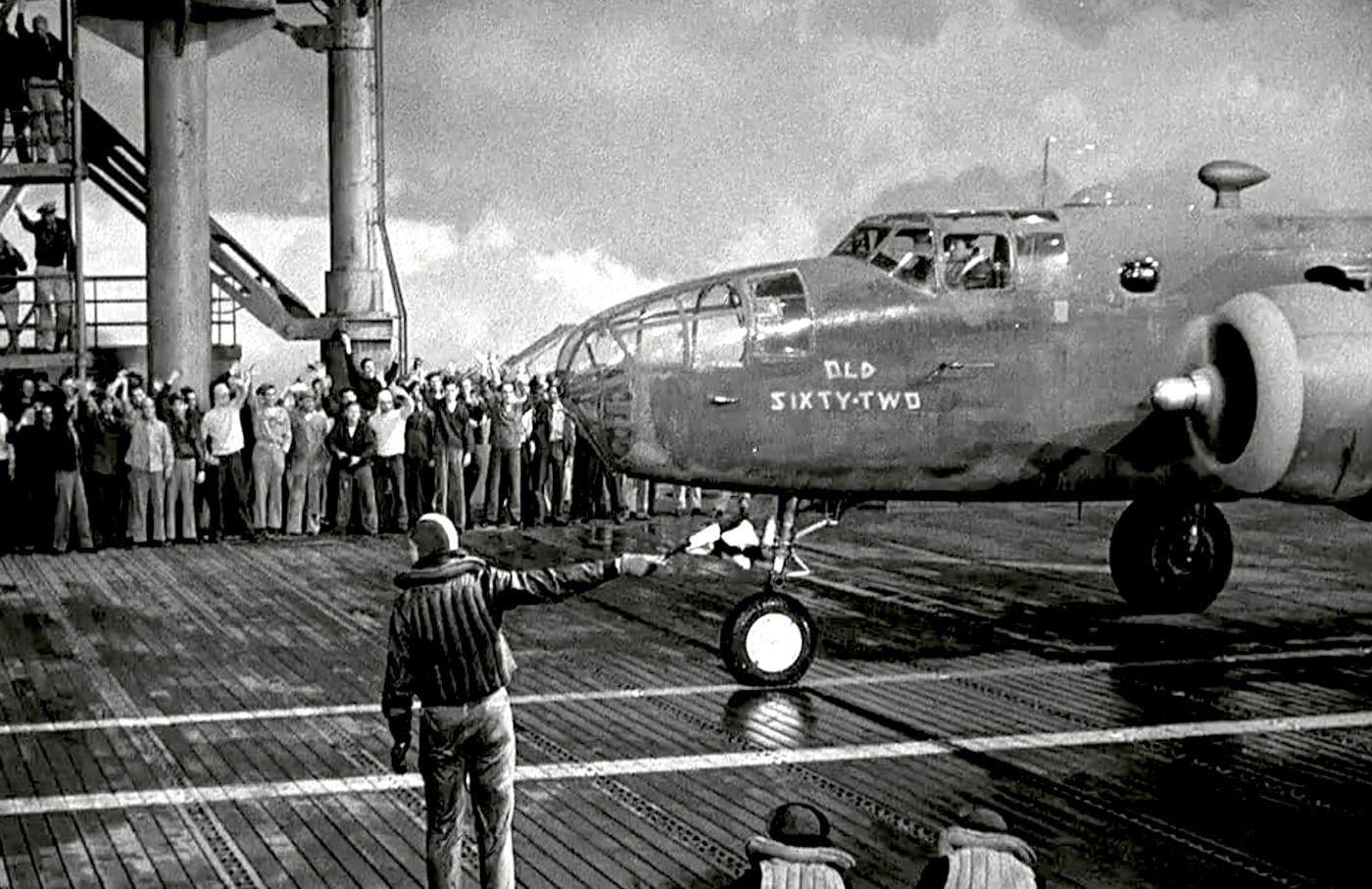
The raid consisted of only 16 aircraft.
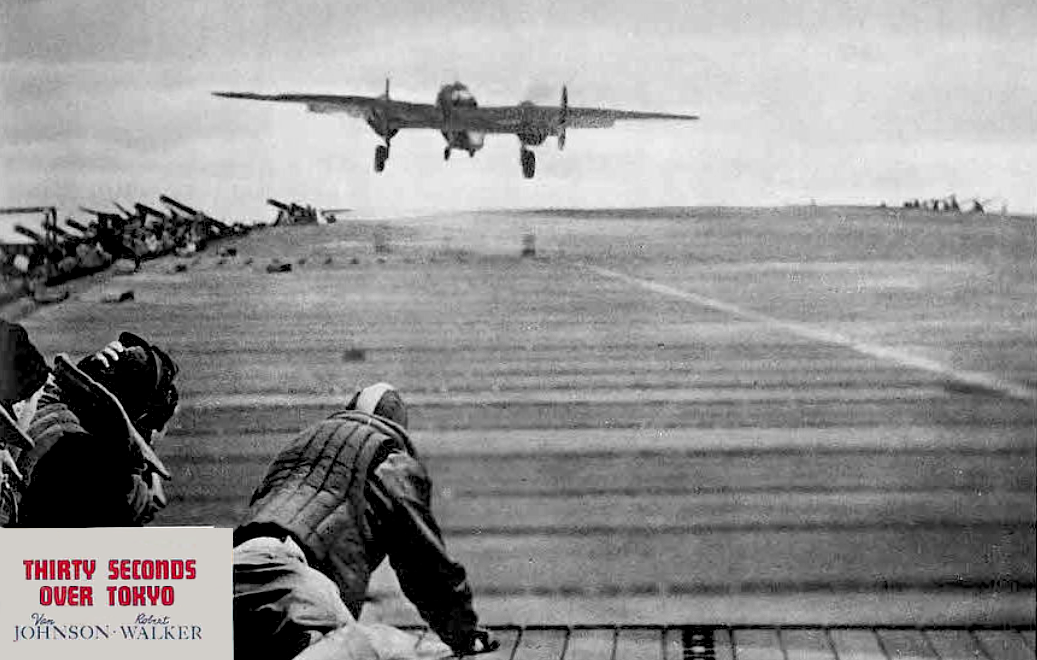
The aircraft carrier Hornet is triple-booked with airplanes and personnel. The film captures the close quarters below decks. The fliers nervously pace the flight deck, wondering if it’s really long enough to take off from. It is jammed with planes never designed for carrier takeoff. How many planes will actually get aloft?
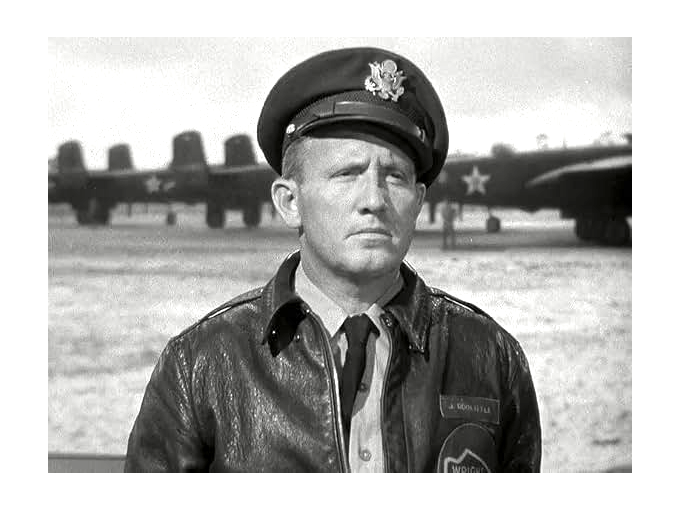
Spencer Tracy’s contribution is limited to a few scenes. He comes on as the ultimate commander, asking the impossible; the real Dolittle’s preparatory speeches couldn’t possibly have been this inspirational. But the message is clear as in few war films: this is a man we will follow and obey, no matter what.
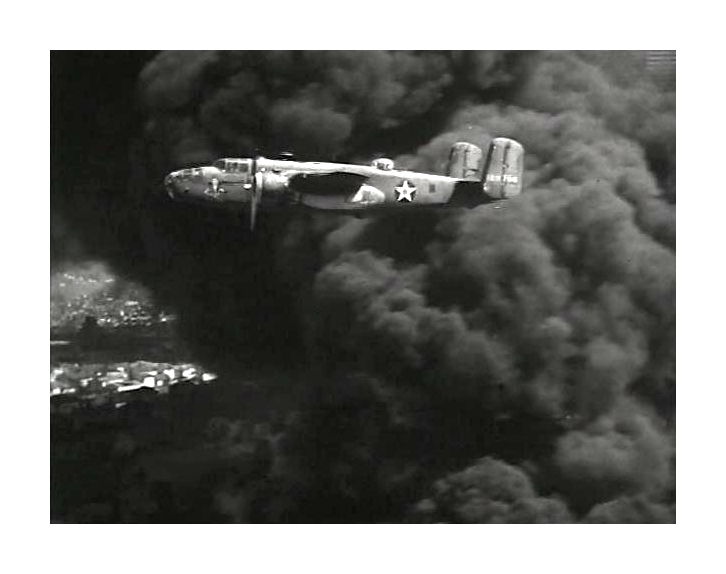
Tokyo’s best timed moment plays off the early detection of the Hornet by a Japanese craft. Pilot Larson and a cigarette clerk are caught off-guard by gunfire, an alarm, and the order to launch all planes. The big raid has begun, a full day before schedule. They stare at each other in disbelief before bolting to their battle stations. The takeoff is the film’s best illusion. The planes launch one after another as the deck pitches up and down. We’ve already seen actual aircraft performing the short-hop takeoffs, so we might not notice the substitution of miniatures and rear projection. The blocking and editing sell the realism. *
Nobody was surprised when Thirty Seconds Over Tokyo won the Oscar for Best Special Effects. The raid was the most elaborate effects sequence since MGM’s San Francisco, and so convincing that audiences thought they were looking at real planes and exploding factories. Some enormous Tokyo-scape miniatures are only seen for a second or two. To film P.O.V. shots of the planes approaching Tokyo, big banners with Japanese writing were erected on harbor buildings in Oakland, California. In some earlier shots of the planes crossing unfamiliar territory, we see mountains near the ‘Needles’ on the Colorado River.
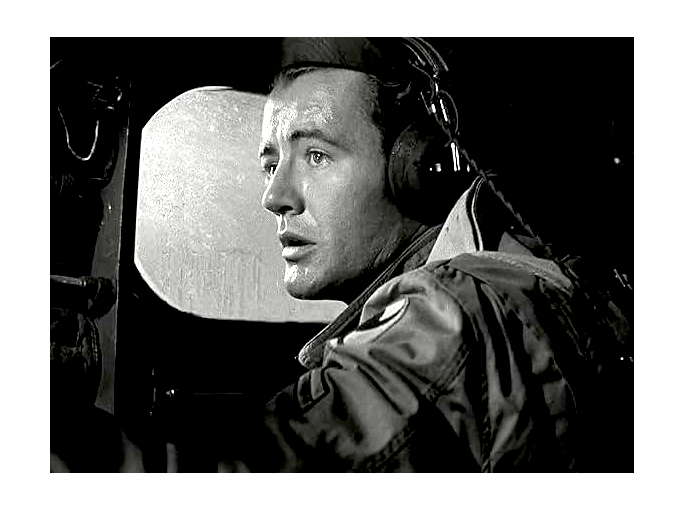
The movie is handsomely cast, with Van Johnson again representing America’s best. After tiny parts in MGM’s The Human Comedy and Cry ‘Havoc’, Robert Mitchum makes a solid impression as a straight-talking westerner, the dependable buddy anybody would want on their side. Crinkly-eyed Phyllis Thaxter is the slightly glamorized dream wife, the kind every GI wanted to settle down with, after a few weeks with Rita Hayworth, of course. Thaxter’s blonde gal friend is Jacqueline White, who later starred in Richard Fleischer’s superb film noir The Narrow Margin. Featured player Robert Walker is the plane’s inexperienced crew member, and the film features fine appearances by scores of Hollywood leading men, seemingly everybody not presently serving in uniform.
The movie is also fairly honest about the ordeal faced by the raiders in occupied China. Of 64 fliers forced to parachute in the dark, 8 were captured by the Japanese and three were executed in a show trial, as ‘war criminals.’ That episode became harsh anti-‘Jap’ propaganda in the Fox movie The Purple Heart, in which Dana Andrews goes to his second unjust execution in just two years. The film uses the chaotic aftermath as an opportunity to laud our Chinese allies. If history reports truthfully, any mention of the Dolittle Raid ought to mention the awful price paid by the Chinese in a mass-murder reprisal conducted by the occupying Japanese, the Zhejiang-Jiangxi campaign.
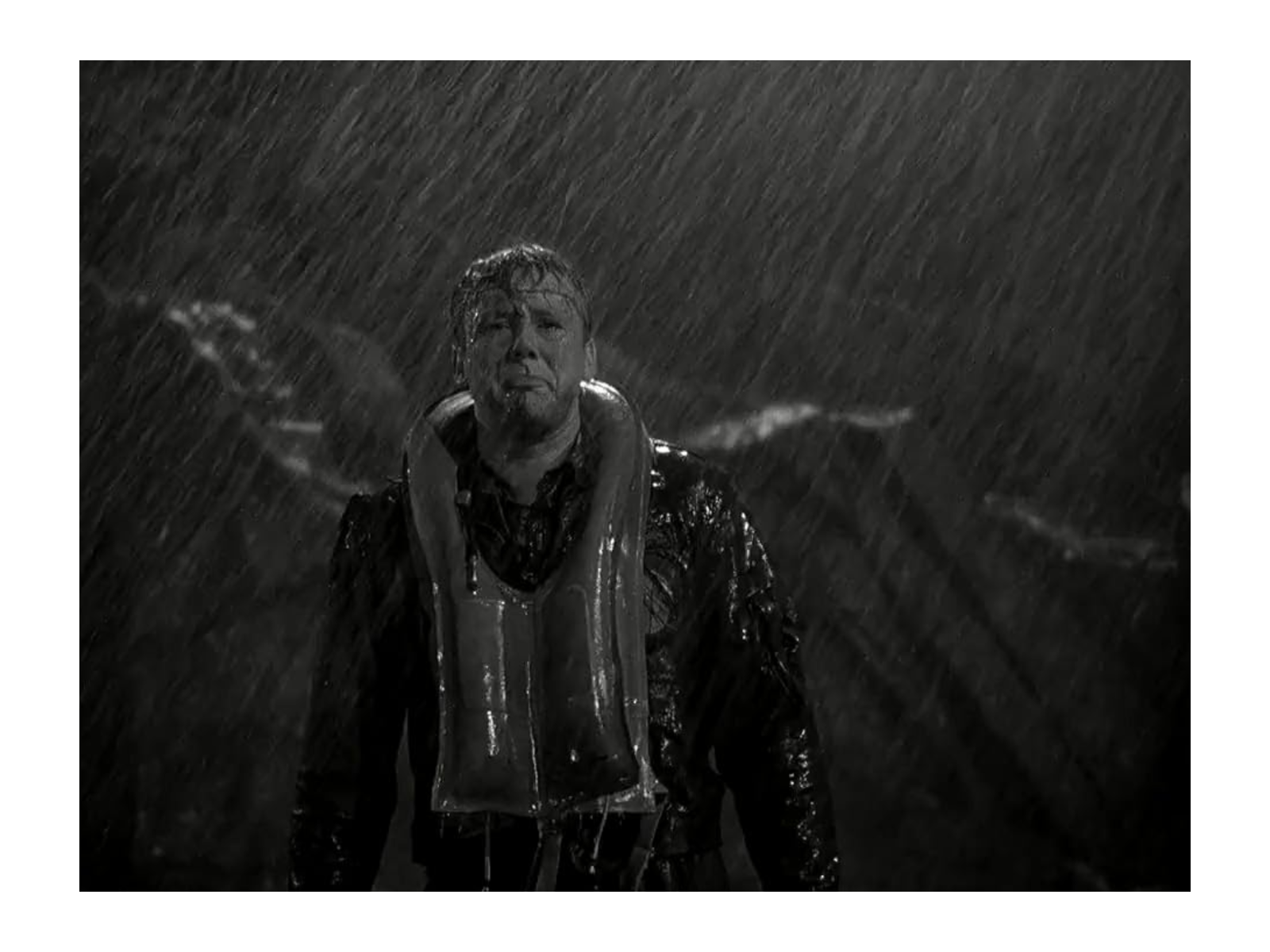
The injuries sustained by Lt. Lawson are the focus of the film’s final act … how will Ted tell his wife? When Lawson becomes delirious during an operation, we see a wickedly creepy flashback of him talking on the phone as a large tree is sawed down in the background. Thirty Seconds is one war movie that doesn’t skip over the unpleasant realities of warfare.
Part of our nostalgia for Thirty Seconds Over Tokyo stems from our awareness of how low war thrillers have sunk in the intervening years. The awful 1999 movie Pearl Harbor turns the epic sneak attack into a feel-good video game experience. For an upbeat finish, it concludes with a falsified recreation of the Dolittle Raid. When our righteously vengeful Americans land in China, they Kick Ass against the Japanese. My whole attitude to Pearl Harbor is that I was happy my father didn’t live to see it.
In any case, a good, strong picture.
A fine film, but are any comments acceptable?