

A Summer Place
Look at She, she’s Sandra Dee! 1959’s most sexed-up soap drama came with beautiful actors, Technicolor scenery and a music tune that the radio wouldn’t stop playing. In a ‘Place’ not too far from Peyton, is it always summer? The sordid fun includes frigidity, class snobbery, divorce, alcoholism, teen sex drive, teen sex angst, teen sex panic and music that commanded teens to grab a beach blanket and find someplace secluded. Sandra Dee became America’s teenaged doll and Troy Donohue was more than a flash in the pan; the advertising tried to make it all seem as salacious as possible. Gosh, what do Good Kids really get up to on summer vacations?

A Summer Place
Blu-ray
Warner Archive Collection
1959 / Color / 1:85 widescreen / 130 min. / Street Date October 14, 2025 / Available at Amazon / 24.99
Starring: Richard Egan, Dorothy McGuire, Sandra Dee, Arthur Kennedy, Troy Donahue, Constance Ford, Beulah Bondi, Richard Deacon, Bonnie Franklin, Everett Glass, Lewis Marin, Roberta Shore, Arthur Space,
Cinematography: Harry Stradling Sr.
Art Director: Leo H. Kuter
Costumes: Howard Shoup
Film Editor: Owen Marks
Music Composer: Max Steiner
Written by Delmer Daves from the novel by Sloan Wilson
Produced and Directed by Delmer Daves
 Fast and efficient, good with actors and cooperative with the front office, writer-director Delmer Daves was for decades a strong utility talent at Warner Bros.. He began screenwriting right when sound came in, with major credits on the musical Dames and the gangster classic The Petrified Forest. Daves broke through as a director during the war, writing and directing dramas, films noir and adventually westerns. He had a good nose for trends and a good story sense for what would capture the public’s interest. His commercial concoction Broken Arrow shoehorned liberal sympathy into a western mold, but his 3:10 to Yuma and The Hanging Tree are at the top of the list of ‘adult’ western dramas.
After The Hanging Tree Daves switched gears to write, produce and direct a quintet of soapy youth dramas, an idea that may have sprouted from the success of Mark Robson’s Peyton Place … taking advantage of loosening Production Code guidelines to ‘sex up’ what was formerly prim and proper. The tease was just enough to attract mainstream audience interest.
Author Sloan Wilson’s 2nd best-seller after his The Man in the Gray Flannel Suit was A Summer Place, the story of an upscale romantic shuffle in New England. Years after a pre-war romance ended over class differences, its now-married lovers rekindle their relationship, creating an adulterous scandal. Their teenaged children respond to the turmoil in the older generation by falling in love. Times have changed, and attitudes about sex have as well.

The 1959 film adaptation added a veneer of opulent living, seashore scenery and a lush music score by Max Steiner that became a hit instrumental single for Percy Faith. The instantly-recognizable tune was one of the biggest ‘make out’ songs of its era, becoming an anthem for no-boundaries summer romances, and outlasting the movie in popularity. The movie features a surprise pregnancy, but has anybody calculated the number of 1960 babies inspired by Steiner’s music and Sandra Dee’s eyes?
Two former sweethearts have teenaged children but very unhappy marriages. Sylvia (Dorothy McGuire) ended up marrying Bart Hunter (Arthur Kennedy), who squandered his inherited fortune. To make ends meet he has turned the family’s seaside mansion on Maine’s Pine Island into an inn for summer tenants. Now an alcoholic, Bart has let the house fall into disrepair along with his marriage to Sylvia. Their son Johnny (Troy Donahue) helps out but is discouraged by his father’s cynical attitude.
Wealthy businessman Ken Jorgenson (Richard Egan) was once a penniless lifeguard at the Hunter mansion and has returned there for the summer season. His wife Helen (Constance Ford) has him charter a yacht to make an impressive entrance. The status-conscious and wholly frigid Helen seeks to punish Ken for trying to be rekindle their romance, and to make him more miserable reserves special abuse for Molly (Sandra Dee), their virginal 16 year-old daughter. Curious Molly liked the ‘kissing lessons’ she had with a boy back home; Helen is doing everything she can to keep Molly away from the filth of sex in thought or deed.

With this pot of passion on the burner, the Hunter Inn soon heats up. Bart is humiliated by his reversal of fortunes; Helen thinks the Inn a cesspool of depravity where Johnny will prey on Molly and Ken will stray with Sylvia. Naturally, Bart’s grousing and Helen’s bigotry will cause both things to come about. Unpleasant witnesses to the dramatics are the Inn’s caretaker Todd (Martin Eric) and a summer guest, Mrs. Hamble (Beulah Bondi).

A Summer Place hit movie screens in November of 1959 (what, no summer release?) and became one of the next year’s biggest hits. A perfect publicity storm was fueled by the popularity of 17 year-old Sandra Dee, who had gotten a big launch in Vincente Minnelli’s squaresville comedy The Reluctant Debutante. 1959 was a big year for Dee, what with prime roles in both Gidget and Dougas Sirk’s Imitation of Life.
Dee had a winning image for a time when America still wanted teens to be clean-cut and sheltered. Tuesday Weld was sharp and intelligent and seemed more experienced than her years. Sandra Dee was soft and agreeable and still a kid. Her look certainly appealed: a perfect peaches ‘n’ cream complexion under blonde hair. She was a teenaged Lana Turner, minus the tight sweater and glowing with innocence.
Although her career pretty much plateau’ed soon after, Ms. Dee became a culture icon, to be immortalized in the lyrics of Grease. One of the best on-target references in American Graffiti comes when we learn that Candy Clark’s teen character models herself after Sandra Dee.
Sloan Wilson’s book covers three decades of soapy dramatics. Delmer Daves’ adaption compresses it into just a few short years, taking the characters through two divorces and putting the kids into college, where their frustrated desires lead to the same consequence already exploited by Hollywood in Unwed Mother and Blue Denim. Those films regarded a surprise baby as an ‘unthinkable’ event comparable to an Atom attack, but A Summer Place downplays the catastrophic impact. Pregnancy is just something that happens when personal angst and social pressures take over, you know? Molly and John have enjoyed multiple chaste walks on the seaside cliffs and deserted beaches, backgrounded by the encouraging string of Max Steiner’s music. Poor suffering children, it’s the only peace they’ve known. The movie makes the lousy excuse that modern pressure makes good kids Do It, mainly because nobody wanted to admit that Doing It is on most every teen’s mind, good or bad.
Of course, the real stretch is believing for a minute that the Kewpie Doll couple Molly and John are at all prepared to be parents. Are Sylvia and Ken going to be doing a lot of babysitting, or is this reviewer-grandfather just betraying his own bias?
The narrative compression in Daves’ adaptation makes sex seem the only issue in these people’s lives. The villain spouses Helen and Bart are given a stack of unpleasant, unlovable qualities. Bart is a bitter jerk clinging to a lost ideal of social superiority, while the rabid anti-sex harpy Helen would make a good wife for Josef Goebbels. Dorothy McGuire and Richard Egan’s ultra-reasonable, ultra-patient couple still seem a tad laid back in their millionaire comforts. They must work overtime to deserve to rekindle their ‘perfect’ romance. Ken didn’t come back to Pine Island by mistake: he wanted to see if his teenage romance with Sylvia still had sparks. On the very first night they’re already talking about leaving their spouses.
[A John Waters remake of Summer Place could have had Ken stepping off the yacht, only to find that 18 years has transformed Sylvia into a 200-pound lush…]
Delmer Daves’ writing reputation was built decades earlier. His script for A Summer Place is efficient but artless, its rough edges rounded with sensitive psychological lectures for the audience. Ken Jorgenson spouts off against his wife’s obnoxious prudery as if he’d just discovered it, 20 years into their marriage. Helen practically foams at the mouth as she imagines her daughter’s ‘kissing and mauling’ at the hands of the impossibly clean-cut Troy Donahue.
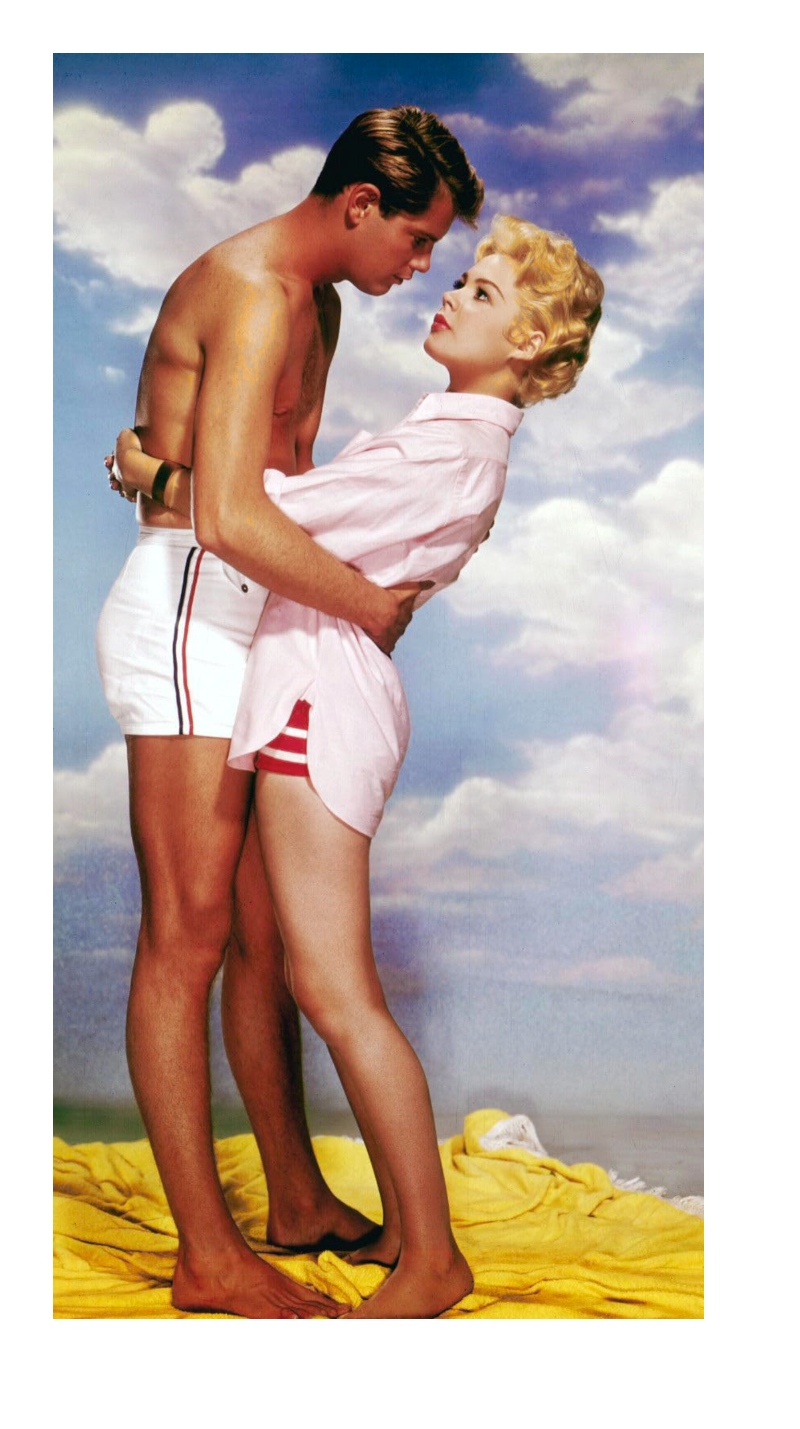
Parts of the show are now unintentionally funny. Director Daves allows Arthur Kennedy to grossly overact the alcoholic snob Bart, while the normally benign Beulah Bondi hangs around torturing poor Dorothy McGuire with obnoxious advice. The dysfunction in the Jorgenson family is introduced right at the outset, with Ken and Helen arguing, and Molly’s bras and girdles being thrown out the porthole of their luxury yacht. Real classy, real subtle. It’s a big movie by a big studio in Technicolor, so it has to be in good taste, right? Wasn’t Delmer Daves’ previous picture the beloved, tasteful Leo McCarey remake An Affair to Remember?
Everything awkward and overcooked about the film fades whenever Troy Donahue and Sandra Dee take a stroll on the Maine shoreline — actually Carmel, California — to the smooth melody of Max Steiner’s ‘summer love’ romance theme. John and Molly kiss immediately. When these two exchange ‘the look,’ A Summer Place grabbed the attention of every petting-age person in the audience.
1959 was still the era of issues like, ‘how far should a good girl go?’ Unprotected hearts were mowed down just as cruelly as in any other era, but the psychology of the late ’50s applied all kinds of mottos to define Good Girl behavior. In America’s robust Middle Class, the most horrible fate imaginable seemed to be being branded as a Bad Girl. Unlucky girls that got into trouble soon learned how cruel the Double Standard could be.
A reasonable argument can be made that A Summer Place is actually less responsible than its sleazy cousins down in the exploitation trenches of Allied Artists and A.I.P.. Delmer Daves’ glamorized fantasy eliminates any trace of the harsh economic realities that unwed mothers must face. Molly Jorgenson is delivered to a private island in a chartered yacht. Her father is so wealthy that we never even hear him mention work; his home is a Frank Lloyd Wright dream fortress perched on a dazzling beach. Ken accuses Helen of prejudice for not wanting to live near unpleasant minorities, and then sets himself up in a millionaire’s roost far removed from the madding crowd.
Helen’s tyranny is so overstated that A Summer Place could easily become a story of justified murder. When we first meet Molly she’s rebelling against wearing the rigid underwear chosen by her perverse mother to ‘de-sex’ her. On the other hand, Molly is allowed to wear adult makeup that sets off her doe eyes and porcelain complexion; the real Helen Jorgenson would never allow this (and Molly would surely be just as cute). We instead get dozens of drop-dead soft focus close-ups of Sandra Dee guaranteed to make any 12 year-old demand a full Max Factor makeover.

A Summer Place surely encourages any kid feeling the weight of parental pressure to conclude that it’s all the fault of rotten Mom and Dad. The example of the ‘bad’ adults (boozer snob, one frigid witch) is used to excuse John and Molly from any wrongdoing. When John gets angry and Molly starts pouting, they even reject their ‘Good’ parents, demanding that the world recognize their ‘right to love.’ Life is really rough in that designer oceanfront house.
A Summer Place indulges John and Molly’s illusion of isolation. “We’re all alone,” Molly whispers, even though they can always flee to the understanding and forgiving Ken and Sylvia. The extreme of their suffering is being forced to sell Molly’s mink coat so they can elope and get married. Scenes in which Molly sees a doctor and John pawns the coat were filmed but dropped; in the average teens-get-preggers saga they would be key content.
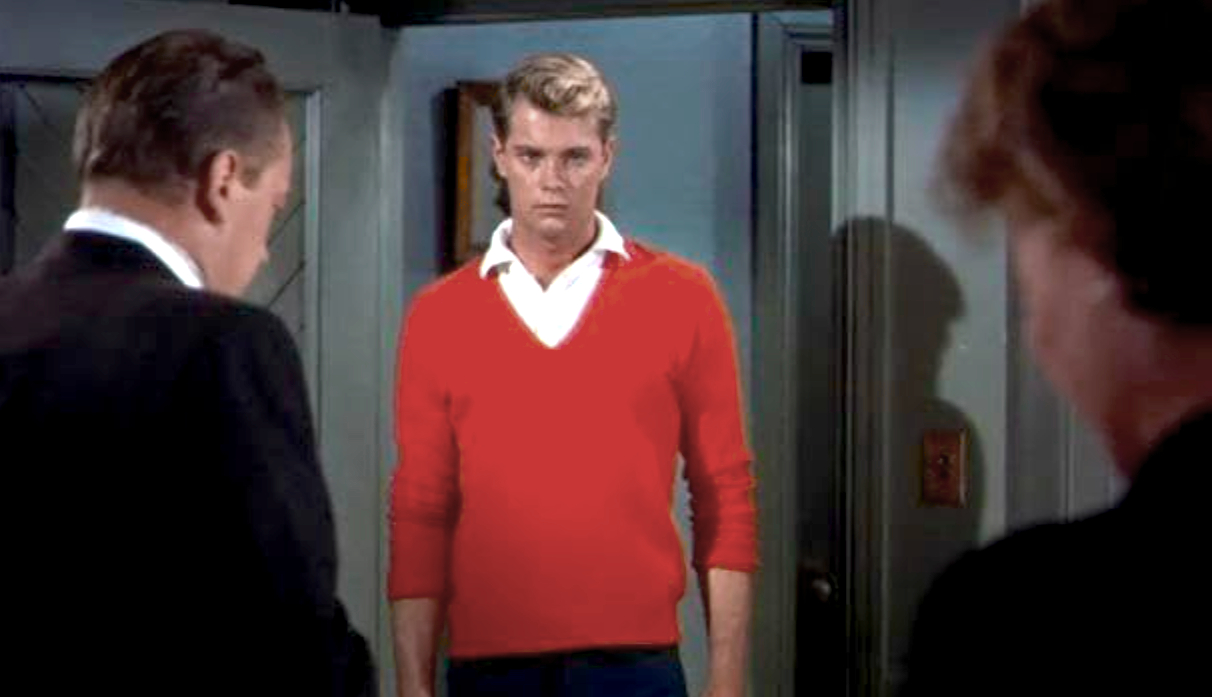
Blue Denim ends with the depressing news that the teens will keep the baby and leave school. The boy take a job in a gas station. Nothing so shabby happens in A Summer Place, which spares its young lovers any unglamorous consequences. We last see John and Molly inheriting the fixer-upper family mansion. They forget about college educations and become proud owners of a bed & breakfast stopover for the exclusive set. Our recommendation is that they fire the handyman Todd right away … he’s the rat who finked on them in the first place.
When Molly’s father and John’s mother become husband and wife, A Summer Place takes on a weird quasi-incestuous feel. That added emotional confusion makes the ‘perfect’ Molly and John seem all the more attractive … and dangerous as role models. In this show, ‘getting in trouble’ guarantees true love, lots of attention and a quick ticket to the best things in life. The average unwed mother doesn’t have it quite so cushy.
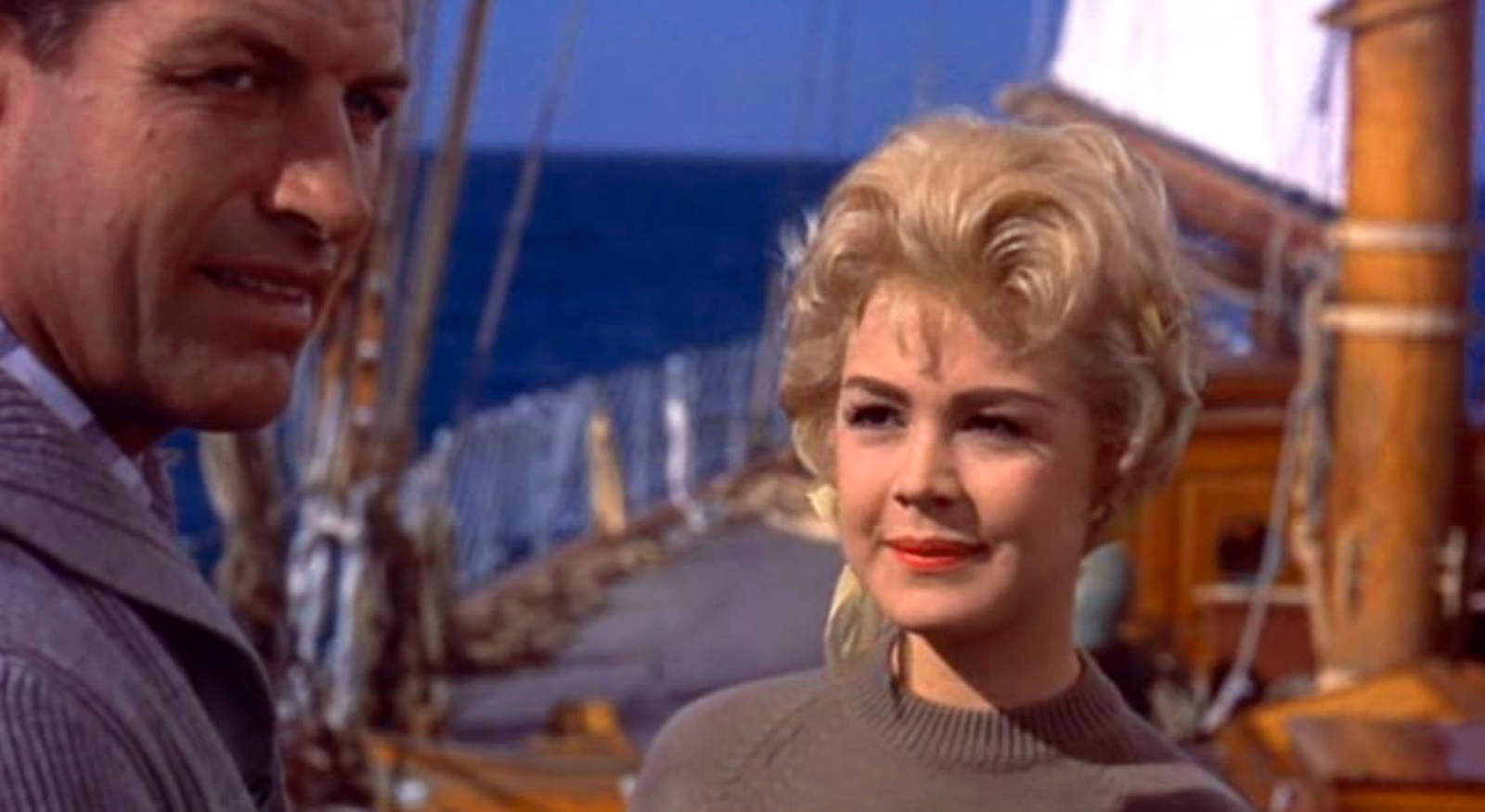
Director Daves drenches A Summer Place in pretty scenery, handsome crane shots and beautiful close-ups. Sandra Dee, in 1959 parlance, is truly dreamy. Dee and the underrated Richard Egan have the most appealing characters. Egan looks radiantly happy to be reunited with his daughter while McGuire remains in the background. Poor Constance Ford is stuck playing the Wicked Witch of the West. Troy Donahue made a big splash in this picture, so Delmer Daves gambled on his starring potential in a trio of subsequent romantic soaps, giving the inexpressive actor top billing. In just two years’ time, Parrish, Susan Slade and Rome Adventure did nothing for the careers of Donohue’s co-stars, worthy actresses Connie Stevens, Diane McBain and Suzanne Pleshette.
After all that those complaints we need to remember that A Summer Place is an entertaining and lively hit, with attractive stars, beautiful scenery and of course the memorable music. It isn’t exactly mainstream fare for 2025 audiences, although we would hope that nobody tags it as a camp classic. Delmer Daves’ bad-taste nadir came later … with the ‘dramatic thrill’ of a baby set on fire.


The Warner Archive Collection Blu-ray of A Summer Place is a bright and colorful remaster, in full widescreen, of this vintage hit from a time when postwar affluence had given teen- and college-aged kids had front position in American culture. It and the lighter comedy Where the Boys Are are really about a generation of kids having a ball spending their parents’ hard-earned money. Have you looked at a calendar recently? These films appeal to the movie fan demographic that have already been drawing Social Security for several years.
The WAC’s HD encoding of A Summer Place looks good but is not as sharp as it might be, and not just in the many close-ups that shoot Sandra Dee through the equivalent of a fog filter. It’s as if her agent had a contractual veto over every film image he deemed not ready for the cover of a glamorous fashion magazine. Carmel-by-the-Sea looks splendid. The audio track flatters Max Steiner’s famed music score, with the main theme that transcended its original context.
The only extras are a cartoon and a trailer that sells the film as Peyton Place with a much more permissive attitude. I mean, the word ‘Place’ in both titles can’t be a coincidence, can it?
We’d like to learn more about the show. The AFI says that it was filmed at Monterey and Pebble Beach as well. Delmer Daves apparently wrote A Summer Place for star Natalie Wood, who turned it down. Although the critical reactions were mixed, the AFI sums up with a quote from the LA Mirror, which described Daves’ movie as being “so preoccupied with sex, you would think it has just been invented.”
Reviewed by Glenn Erickson

A Summer Place
Blu-ray rates:
Movie: Good despite our complaints
Video: Good +
Sound: Excellent
Supplements:
Cartoon A Witch’s Tangled Hare
Trailer.
Deaf and Hearing-impaired Friendly? YES; Subtitles: English (feature only)
Packaging: One Blu-ray in Keep case
Reviewed: November 30, 2025
(7430summ)
Visit CineSavant’s Main Column Page
Glenn Erickson answers most reader mail: cinesavant@gmail.com

Text © Copyright 2025 Glenn Erickson
About Glenn Erickson

Glenn Erickson left a small town for UCLA film school, where his spooky student movie about a haunted window landed him a job on the CLOSE ENCOUNTERS effects crew. He’s a writer and a film editor experienced in features, TV commercials, Cannon movie trailers, special montages and disc docus. But he’s most proud of finding the lost ending for a famous film noir, that few people knew was missing. Glenn is grateful for Trailers From Hell’s generous offer of a guest reviewing haven for CineSavant.
Wasn’t this the movie that was playing when Mickey Roarke pulled the popcorn trick on his cool blonde date in “Diner”?
Well, the film as a whole might not be a “camp classic” but the scene involving Helen, Molly, and an unfortunate Christmas tree surely is.
https://www.youtube.com/watch?v=iI5Dbnd3D4c
When I watched the movie, I interpreted it as a sort of stepping stone to The Graduate. One can see just how screwed-up the drunken, spiteful parents are. Is it any wonder that the youngsters want out of that whole world?
Overall, Sandra Dee deserves more credit as an actress. She’s seen as a lesser actress simply because she never got cast in something like One Flew Over the Cuckoo’s Nest. When you read her life story, it’s one of the most tragic ever; it’s as if everything conspired against her. Personally I think that there needs to be a documentary about her, and also a biopic, and maybe even a Broadway musical.
Getting the scoring gig on this film was a godsend to Max Steiner. His career had taken a nosedive during the 50’s despite him being under contract to WB throughout the decade. There had been some major successes-THE SEARCHERS, THE CAINE MUTINY (free-lance at Columbia) and YOUNG MAN WITH A HORN, but soundtracks were now also big money for studios and for favored composers as score albums and hit singles of themes were dominating, and WB had bestowed most favored nation status on Dimitri Tiomkin, whose HIGH NOON theme had become almost part of folklore during the 50’s. He now was getting the big WB scores-LAND OF THE PHAROAHS, THE HIGH AND THE MIGHTY, GIANT, RIO BRAVO and because of the HIGH NOON phenomenon, he was able to get record deals with labels for his scores and selections from them, which meant major royalties on an annual basis. Steiner had been fighting both ASCAP and the studios for composers to get more than just a flat fee for a score and here was Tiomkin pretty much proving him right, although it must have galled him that someone else was doing so. He pretty much got the SUMMER PLACE assignment due to a friendship with Delmar Daves, for whom he scored THE HANGING TREE, who felt that Steiner could give the film the warmth that a more contemporary composer like Leonard Rosenmann (also enjoying success at WB around this time). The success of the film combined with the phenom that the main theme became (more than 30 covers with 7 million copies sold with 3 million being the Percy Faith recording) meant that for the last decade of his life, Max Steiner was finally financially solvent, after so many financial and personal setbacks.