
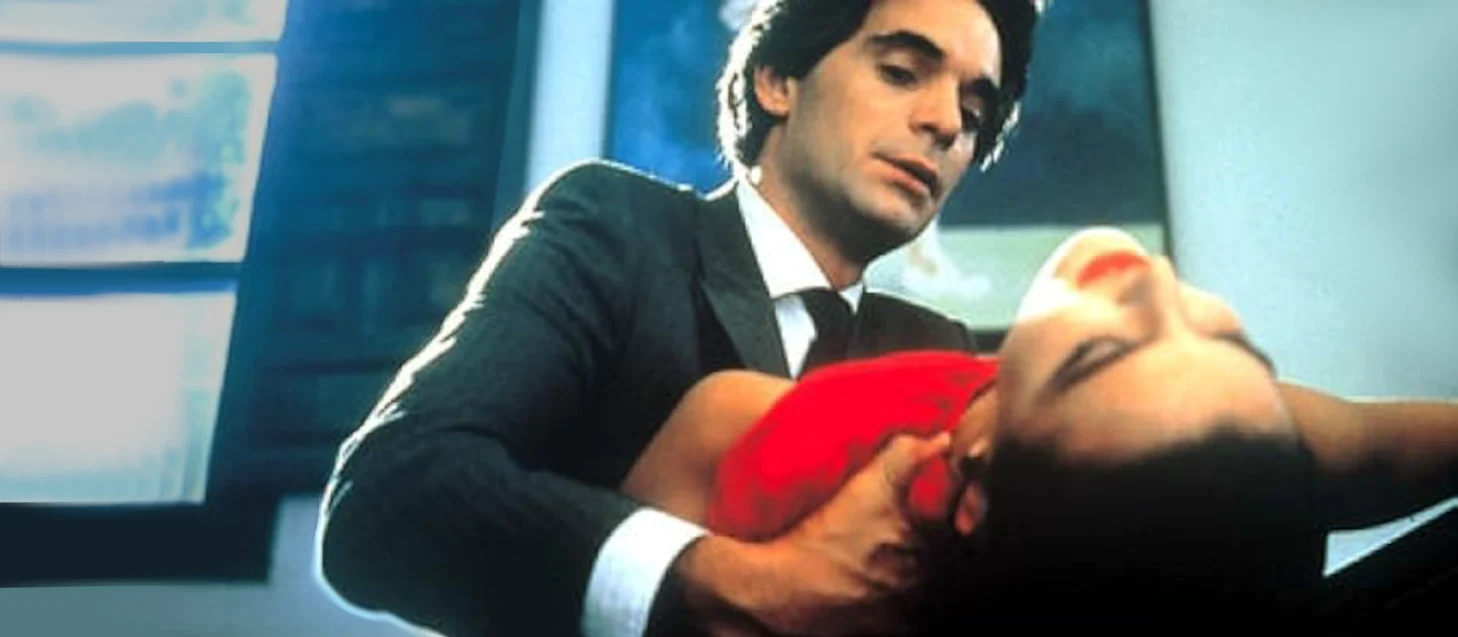
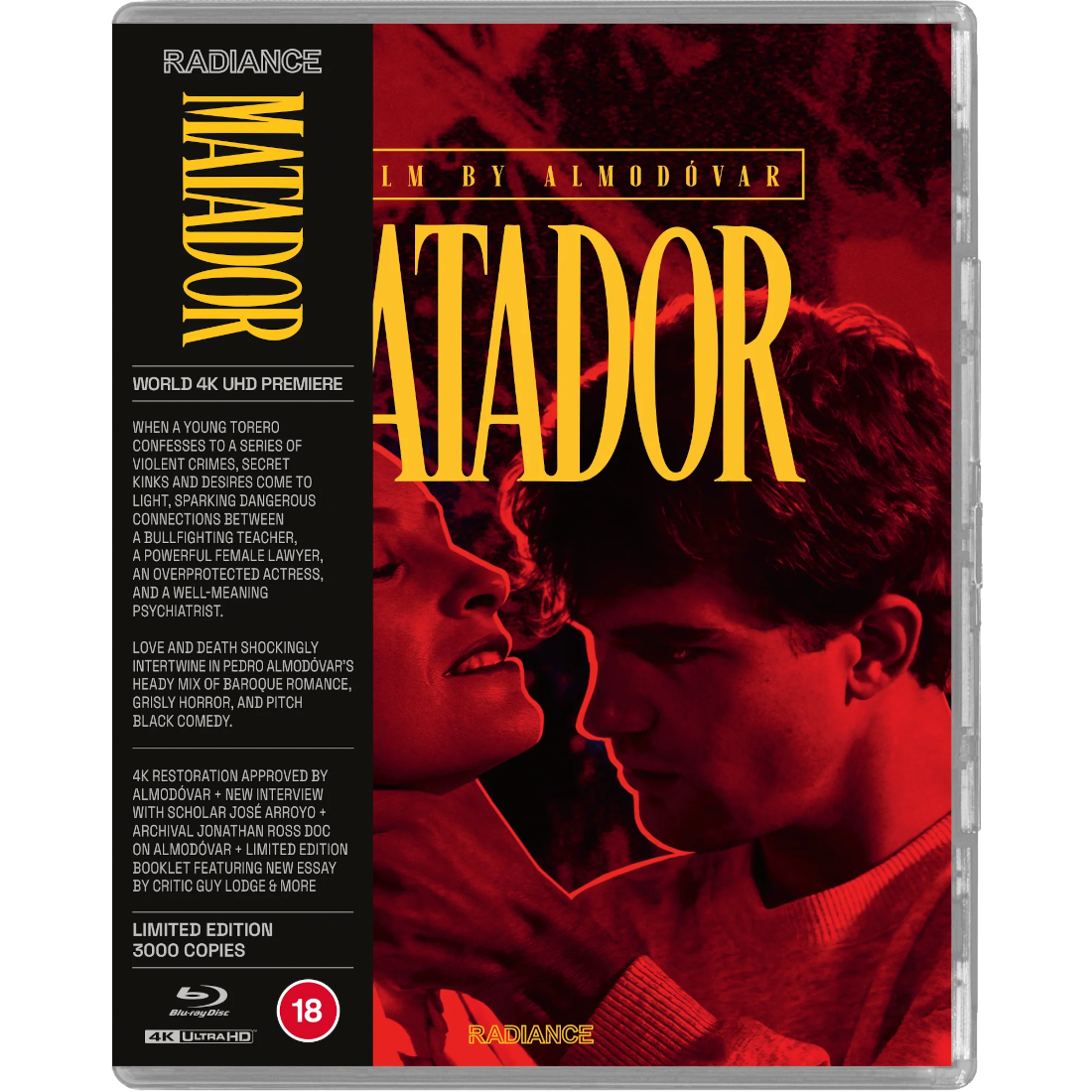

Matador was released out of sequence in the United States, after Pedro Almodóvar’s subsequent film Law of Desire. We understand right away — Matador’s first scenes likely revolted mainstream distributors. Yes, America’s big first exposure to the Spanish director was with Women on the Verge of a Nervous Breakdown, a romantic comedy positioned 50% in Doris Day territory. Several of Almodóvar’s later pictures (All About My Mother, Volver) dropped the extreme shocks to embrace a more compassionate, humanist viewpoint … but Don Pedro was always ready to throw something outrageous into the mix.
This guitar movie kills fascists.
Visual essayist José Arroyo says that Matador is the crossover film leading away from Almodóvar’s crude & vulgar earlier pictures. The director’s insistence on crude shocks and taboo subjects were an expression of artistic, social and sexual freedom in a country that had been isolated from world culture for 36 years. We just reviewed Luis Buñuel’s Viridiana, a daring cinematic affront to fascist oppression. Almodóvar’s early films, rough as they may be, gave notice that Spain would never go back, that artistic expression was now free.
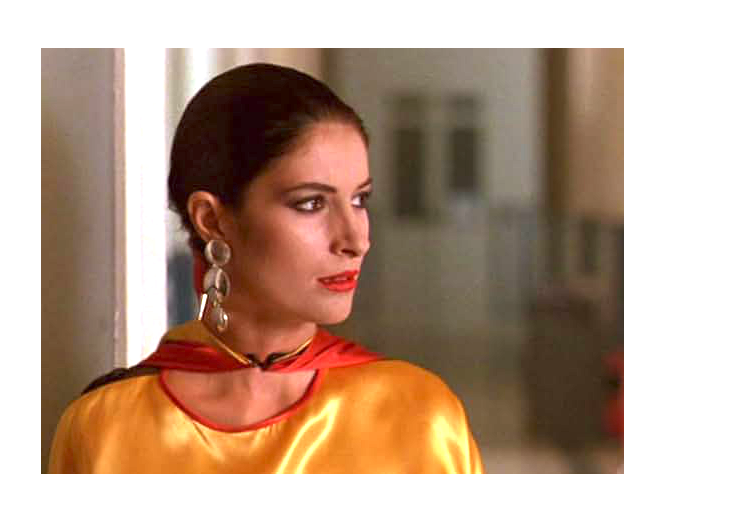
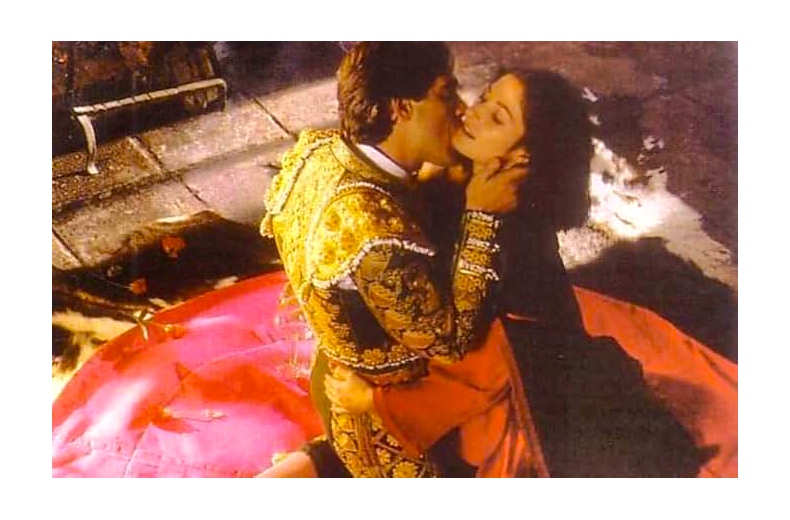
Matador is the last Almodóvar film before he became his own producer, with his company El Deseo S.A.. Unlike the earlier pictures, it looks sensational, with brilliant cinematography and ‘flamenco chic’ designs. The settings and costumes are stunning. People are really well-dressed in this movie — the leading lady Assumpta Serna wears beautiful coats.
An erotic thriller that’s honestly erotic?
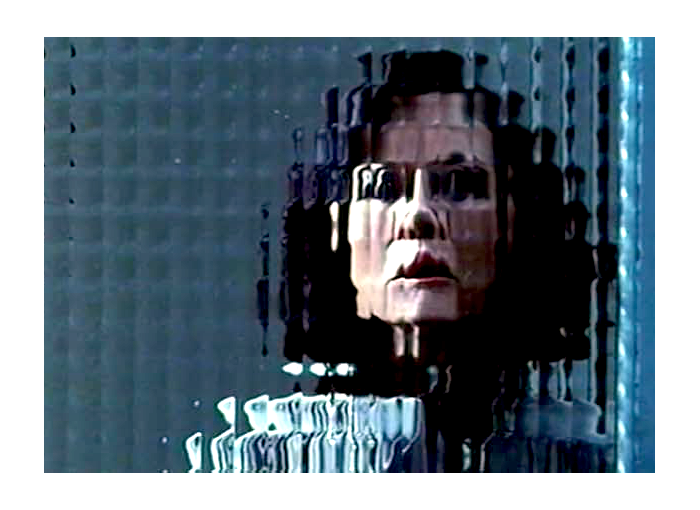
The ‘taboo’ sexual material is not much stronger than what we now see on cable TV, but it has a ferocity that could give your Aunt Minnie a heart attack. The violence is limited to a few extreme clips from a pair of horror movies, especially ugly because they’re filmed off a TV screen. * Why are we being subjected to these scenes? It soon becomes evident that Pedro Almodóvar’s outrageous tale has a lot to say about the horror film genre.
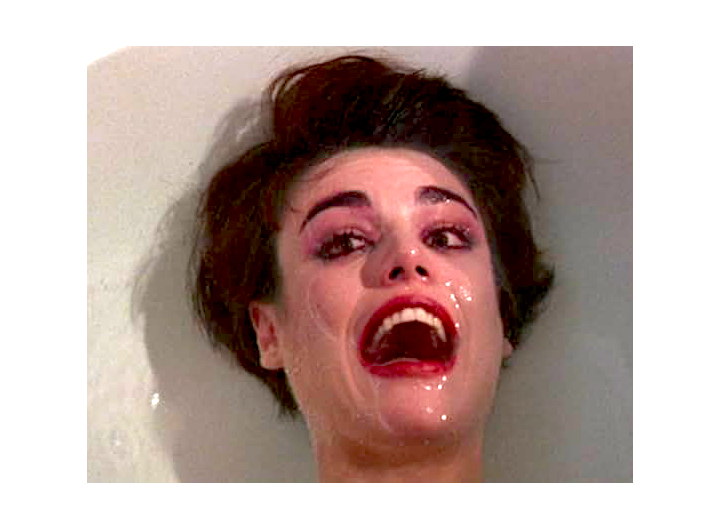
Those degraded clips included our first exposure to Mario Bava’s Blood and Black Lace — the hypnotic images of Claude Dantes being murdered in a bathtub. Their effect is powerful even when presented in such poor quality.
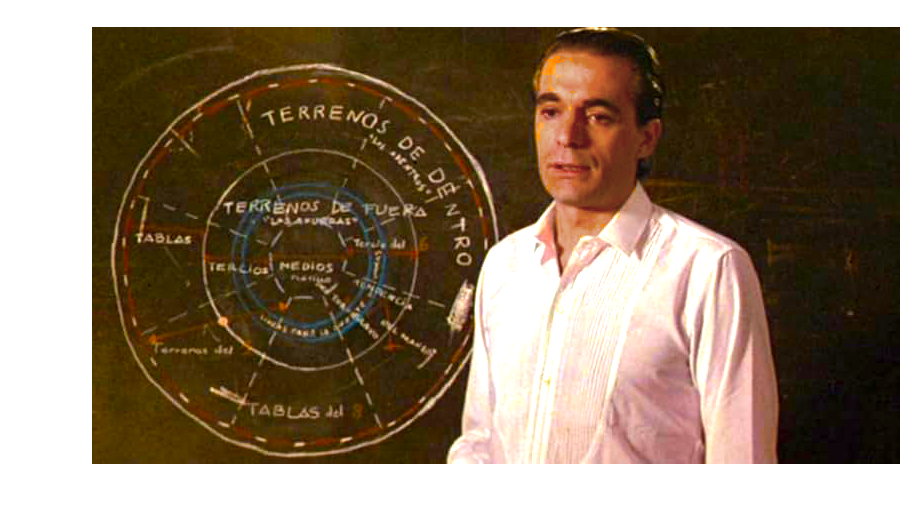
A spate of killings in Madrid doesn’t add up because the perpetrators are are so atypical. Two young women have disappeared and are presumed dead, and two young men are found stabbed to death in a diabolically precise manner. Events hover around Diego Montes (Nacho Martinez), a famous toreador who was forced to retire after being gored in the ring. Diego now walks with a limp, and runs a school for matadors at his private garden estate. Bullfighting has attracted the disturbed young student Ángel Giménez (Antonio Banderas), who is repressed by the religious demands of his mother Berta (Julieta Serrano) and unsure 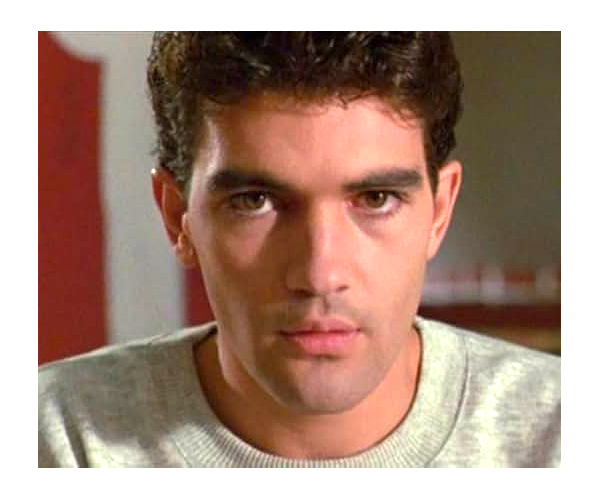 of his own sexuality. Ángel is so determined to free himself from his mother’s control, that he tries to rape the maestro’s girlfriend, fashion model Eva Soler (Eva Cobo). When nobody will press charges, Ángel falsely confesses to the killings of the missing women. Eva is upset when the news reveals the rape attempt, but is devastated when Diego Montes shifts his affections to another woman.
The other is María Cardenal (Assumpta Serna) a sharp criminal attorney who dresses just as well as Eva. Marí defends Ángel, even though he’s confessed ‘everything’ and wants to be punished. She soon gravitates toward Diego, and the pair find out they were made for each other. She is obsessed with his career in the bullring, and they share a delirious love of death and killing.
Matador practically abounds with amour fou fanatics of one kind or another. In this heightened genre space there are few ordinary, ‘normal’ people. A key film clip tells the tale, just as does a clip from Nicholas Ray’s Johnny Guitar in Women on the Verge of a Nervous Breakdown. María and Diego get a look at the conclusion of King Vidor’s Duel in the Sun, the annihilating demise of the amour fou westerners played by Jennifer Jones and Gregory Peck.
Most of the extreme violence is up front but some strong content figures later in the picture, in sex scenes both real and imagined (or viewed via clairvoyance?). Ángel eventually reveals that he sometimes gets extra-sensory visions, and a flower seller (Bibiana Fernández) reads palms, and also seems to know the future: ‘Qué será, será.’ At one point Ángel is visited by visions of violent deaths, which may be generated by his own imagination. Their only relevance is to depict his ‘idea storm’ of disturbed thoughts. And a solar eclipse is brought in at the finale, to heighten the lovers’ / killers’ final orgasm.

A major side benefit is Almodóvar’s stable of acting talent, that would be featured in Women on the Verge of a Nervous Breakdown. Antonio Banderas was already established in Pedro’s stock company. Julieta Serrano’s intolerant mother is a nice diversion from her mad housewife in Women on the Verge. Carmen Maura was with Almodóvar almost from the beginning. Here she plays  Ángel’s psychologist Julia, whose attentions stray beyond professional limits. The sprightly Chus Lampreve gets to look great here; she’s the opinionated & fashionable mother of Eva, the fashion model.
Eva Cobo’s Eva Soler may be the film’s one mentally-balanced character. She just wants to keep her boyfriend. Ms. Cobo may be familiar to fans of Jackie Chan — they were an item for a while, and she starred opposite him in the Hong Kong super-thriller Armour of God 2: Operation Condor.
Eusebio Poncela’s cop is given a weird twist. He also has a limp, which he says is ‘psychological.’ When observing Diego’s student matators, the cop’s binocular view focuses on butts and crotches for five or six shots in a row! Pedro Almodóvar himself takes a role as a fashion designer in a crowded backstage scene. In yet another example of the film’s weirdness, a drugged-out model barfs on another model’s dress — and Almodóvar’s boss says ‘what a great idea, don’t wash it off!’

Pedro Almodóvar somehow keeps this delirious narrative on track. His cast is supremely attractive. Nacho Martinez’s ex-matador hides his own storm of disturbed psychology. Assumpta Serna’s María is on her own surreal quest of mad crimes. Both seem to be in search of an ultimate orgasm, which for them folds sex and death into a single stimulant. The motivational focus here is bullfighting … is Almodóvar commenting on something in the Spanish culture that he finds fundamentally, ritually psychotic?
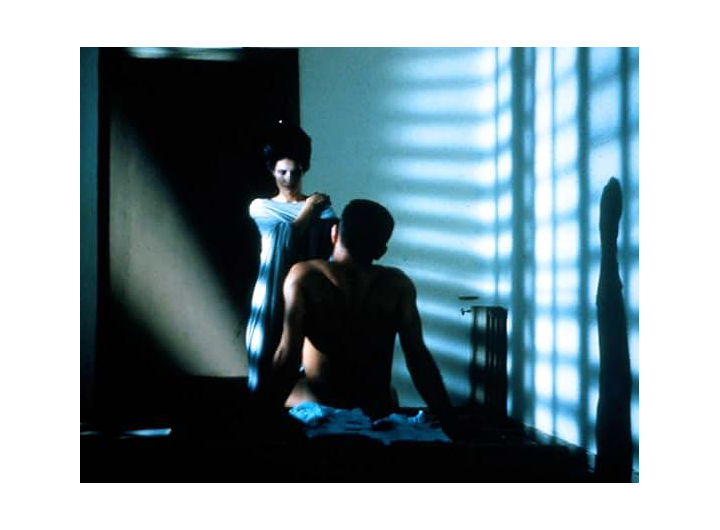
Matador’s giddy collection of extreme characters seems arranged to critique the present (1986) evolutionary state of the horror genre. It does more than analyze exploitative gialli slashers, with their invites to share in the sadism of their black-gloved serial killers. Almodóvar’s slick, glossy images equal the obsessive visuals of Dario Argento. Pedro states the orgasmic sadism in the very first scene, where a killer masturbates, no make that furiously masturbates, to a TV displaying the brutal slaughter of beautiful women. ‘El deseo sexual’ — or the attempt to avoid it — is at the basis of the human personality.
Few movies really had much to say about transgressive film horror. Matador’s play with the genre seems to be telling us that we all have personal reservoirs of sick desires of one kind or another, whether we admit it or not. Do we agree? I personally can’t think about that right now. I need to do something about the bodies in the freezer in case we have a power outage.
Umbrella is scheduled to release their discs of “Matador” in May. The bonus items are different from Radiance’s, including a feature with the great Stephen Thrower. I hope you’ll review the Umbrella discs with a comparison between the two releases. Right now, I’m torn between which one to purchase.