

We can’t help it — every viewing of a Luis Buñuel movie yields new discoveries. We can’t think of another director who so nimbly communicated touchy human problems — mostly human contradictions — so well in cinematic terms.
Talk about setting film history aflame — after fleeing Franco’s Spain and taking twenty years to rebuild a new career in commercial moviemaking, Luis Buñuel got a revenge of sorts with his provocative Viridiana. Invited back from exile, the director delivered a movie guaranteed to be banned. The Spanish establishment didn’t tolerate slights against The Church, and this tale of the degradation of a devout nun sent them through the roof. Banned in Spain, the film was not screened there until 1977, after the demise of Generalissimo Franco.
The irony is that Viridiana is not conventionally exploitative. Buñuel presents a few provocative images, but the film’s power lies in its blunt challenge to audience expectations. It demolishes sentimental illusions — the goodness of the poor, the worth of charity, the idealism of human nature. It’s an honest expression of the relationship between Christian ideals and the real world, at least as Buñuel sees them.

A few excellent remasters of Buñuel pictures have surfaced in the Blu-ray era, but too many of his earlier movies are difficult to see in any home video form. Fine Blu-rays have surfaced of Don Luis’s La fièvre monte à El Pao and La Mort en ce jardin, but where is a good copy of the beautifully-titled Cela s’appelle l’aurore, starring the radiant Lucia Bosè? Criterion released its earlier DVD of Viridiana almost exactly twenty years ago. We were glad to have it then, even though the available film source wasn’t as good-looking as one would want.
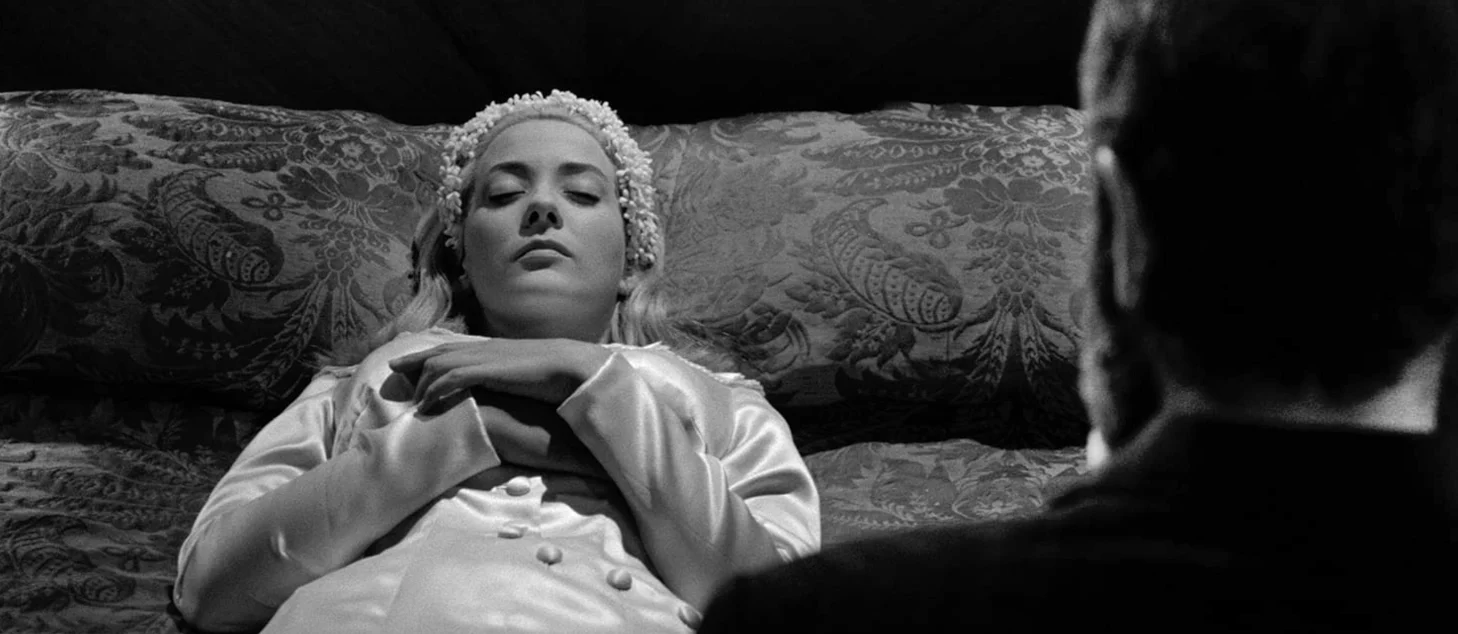
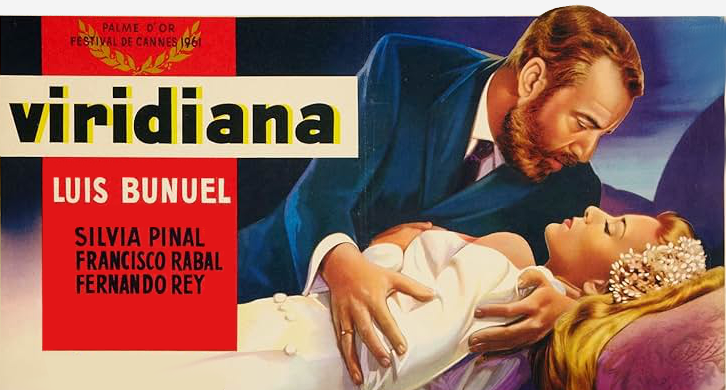
In 1961 Spain was doing its best to attract lucrative film productions. Buñuel’s ‘homecoming’ movie goes out of its way to present the country as isolated and out of step with the rest of Europe. Before taking her final vows, convent novitiate Viridiana (Silvia Pinal) visits her Uncle and benefactor Don Jaime (Fernando Rey), even though she’d rather not. He turns out to be an eccentric who conducts an unhealthy worship of his dead wife. Inexperienced and incautious, Viridiana accedes to her uncle’s ‘innocent’ request that she dress up in her aunt’s wedding gown. When she turns down his proposal of marriage, Don Jaime opts for the next best ritual: he drugs Viridiana, and carries her to the ‘bridal bed.’
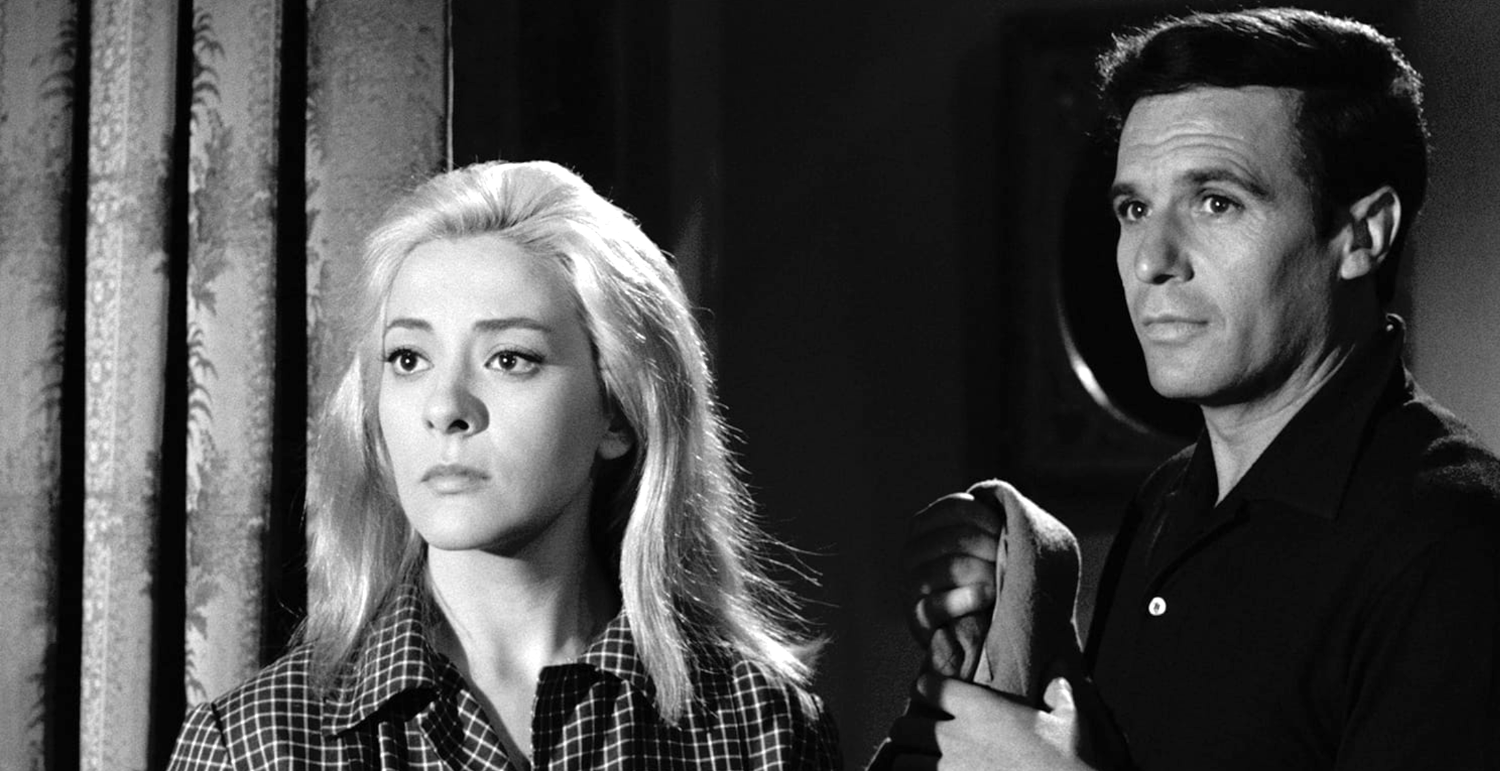
The episode ends in horror and tragedy. Although Don Jaime stopped himself before committing a physical rape, Viridiana considers herself compromised. She drops her plan of taking her vows and stays to manage Don Jaime’s properties. She’s joined by her cousin Jorge (Francisco Rabal), Don Jaime’s illegitimate son. Jorge is a pragmatic realist and sets about modernizing the house. Viridiana is determined to devote herself to charity. She collects a retinue of homeless beggars and vagrants under her roof. Most are only too happy to play ‘worthy poor’ and humor her good intentions. Jorge criticizes this effort to help the poor, which goes disastrously wrong on the first night that Jorge and Viridiana leave her beneficiaries in charge of the house, without supervision. The finale carries a wickedly ironic charge, a cruel but funny commitment to the absurd logic of events.
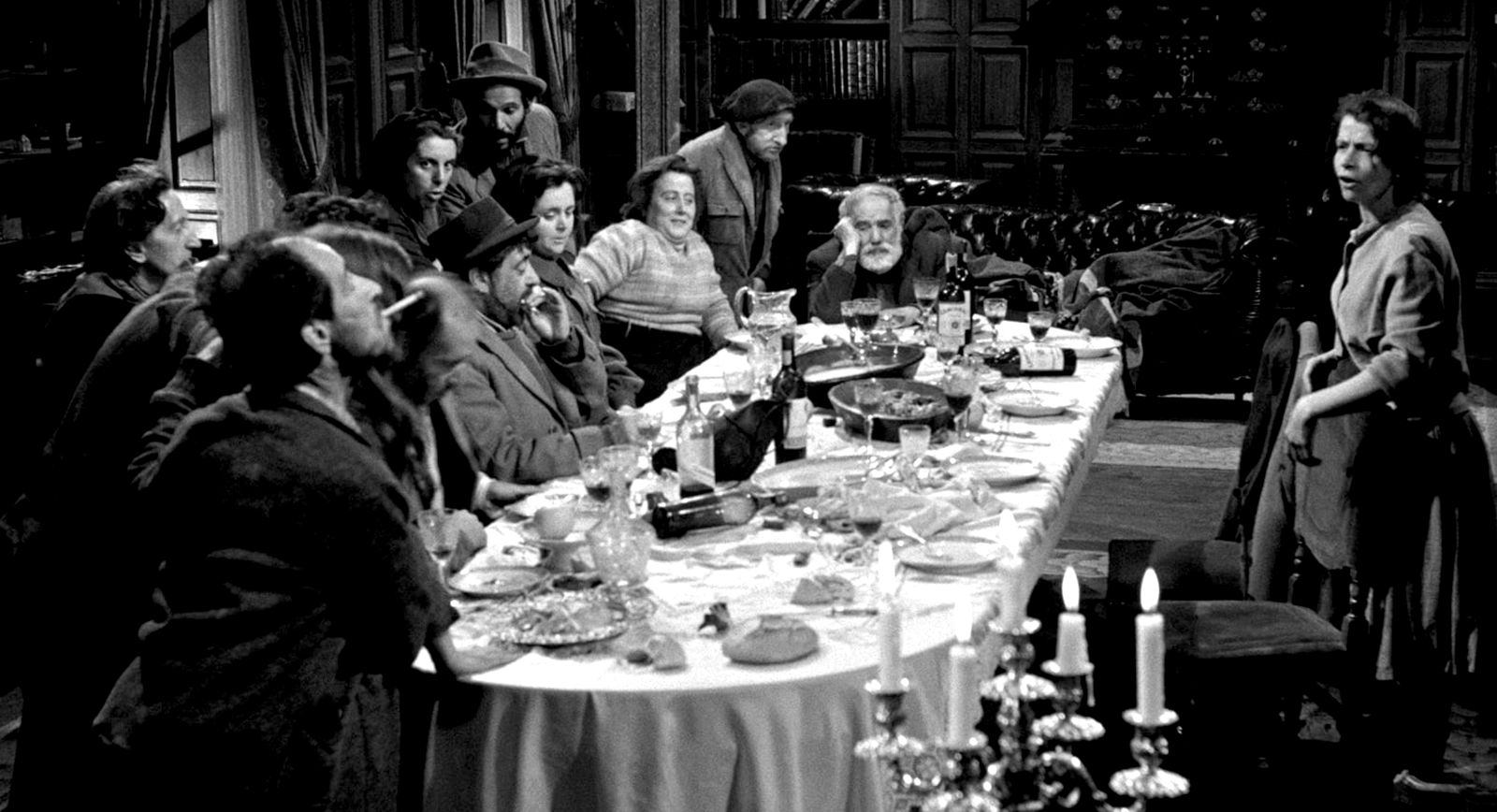
Luis Buñuel claimed to be an atheist, yet his films are the work of an artist whose psyche is ingrained with Catholic dogma. His work is often described as heartless and cold, by viewers that expect sentimental validation for their personal beliefs. Buñuel is in no way a moral scold or a mere satirist. His ironies are never in service of cheap jokes. He doesn’t judge his characters or subject them to formulaic sermons. The drunken, beggars that wreck Jorge and Viridiana’s dining room are simply behaving as anyone would expect them to. Being poor and downtrodden doesn’t bestow noble qualities on people.
The film is visually rich. It abounds with objects bearing magical, surreal qualities. At one point we see a small crucifix that doubles as a hidden flick-knife, an unpleasant item reportedly common in Spain. We are surprised to see that Viridiana carries a bag containing what could serve as a kit for a crucifixion — a hammer, nails, a crown of thorns. At the convent, she behaved as if fearful of the real world. Is she as obsessed as her Uncle?
Buñuel makes an uncomfortable running gag out of a child’s jump-rope. Don Jaime gives it to the maid’s daughter, perhaps so he can watch her legs while she jumps. The rope is later connected to the mortal sin of suicide. Much later, one of the filthy beggars uses the jump-rope as a belt to hold his pants up. An object loaded with symbolic significance devolves by stages into something non-threatening.
Syliva Pinal’s performance is carefully nuanced. Viridiana’s desire to form a little community of peace and goodness is thwarted by the beggars that abuse her kindness. Her efforts to ‘do good Christian works’ are treated as foolish in a guilty world where anybody lacking a selfish motivation is a threat. Jorge thinks himself a good man, yet he takes advantage of the maid Ramona as casually as he accepts the exit of his former mistress. His seduction of Ramona is represented by a cat pouncing on a rat. We assume that Jorge will be even more interested in bedding Viridiana. The fact that they are first cousins doesn’t trouble him at all.
Fernando Rey would soon become Spain’s most exported movie star. Francisco Rabal is handsome and rugged as Jorge, kind of a Spanish alternative to the Italian Raf Vallone. Rabal had already starred in the classic Nazarín, another fine Buñuel film that’s AWOL on U.S. home video. Americans that know of Rabal may connect him with William Friedkin’s Sorceror, where he is 25 years older and more gaunt and lizard-like. * Jorge may be a chauvinist, but wants to ‘improve things’ just as does his cousin. They’re compared in one of Buñuel’s most impressive montages. Viridiana’s praying beggars, static and pious, are inter-cut with quick cuts of Jorge’s men mixing concrete, breaking down old walls and building new ones. One side is spiritual and the other materialistic.
Luis Buñuel counters Viridiana’s saintly charity campaign with a wickedly keen parable. She sees a poor little dog tied to a donkey cart. When the cart is in motion the dog must run or be dragged to death. Seeing that Viridiana is distressed about this, Jorge makes a show of buying and adopting the dog. In just a few seconds, another cart comes along with another tethered dog they don’t see. To add irony to irony, after Jorge has freed his new little dog, it still wants to go back to its previous abusive owner.
Do isolated ‘good acts’ make a real difference in a cosmos of indifference? We have no illusions about Jorge’s intentions, as his gesture is obviously part of a long game of seduction. The concept of Charity has rough edges, even with a virtuous Christian like Viridiana. Is her motive pure, or is she trying to expiate a guilt, or to simply feel better about herself?
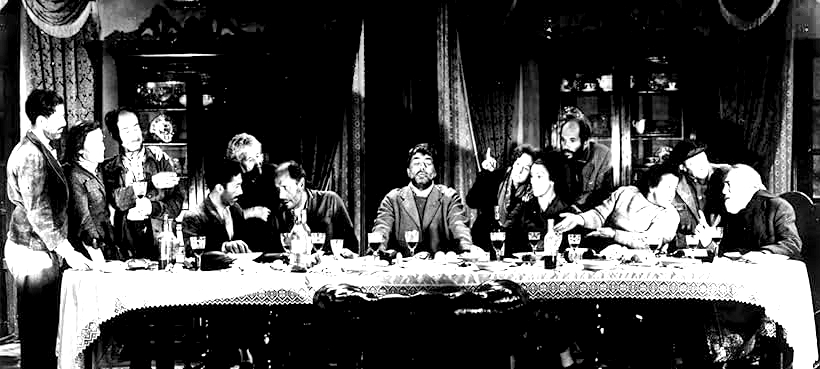
In the end Viridiana indeed earns its blasphemous reputation. The out-of-control beggars’ feast is a display of the unwashed and unworthy at their vulgar worst. The director impishly recreates the famous painting of The Last Supper as the centerpiece of an orgy. The night turns into a destructive, predatory nightmare; Viridiana is again threatened with a direct sexual assault. Buñuel presents a strange kind of moral stalemate … or defeat? In Don Luis’s view, Hell is a card game and American Rock ‘n Roll is undiluted Horror … a device he would repeat in Simon of the Desert to literally represent Hell.
Back in 1961 large areas of human experience — our bodies, our religions, our politics — were considered out of bounds for free filmic examination. Conservative audiences were not prepared for Buñuel’s impish games with Catholic symbols and values. Don Jaime is a borderline necrophile; because his possible victim is a nun-to-be, many viewers of 1961 would take offense, not just Catholics. Never mind that nobody objected to 1958’s mainstream romance Vertigo, which presented an identical relationship of a man bullying a woman to help him recreate his sexual ideal. For that matter, Viridiana may have been a direct inspiration for Riccardo Freda’s gothic thriller The Horrible Dr. Hichcock, which makes its necrophilia explicit. All three thrillers feature male possessiveness run amuck, but Buñuel’s film encompasses a complete personal philosophy.

1 comment