

Killers of the Flower Moon — 4K
Martin Scorsese’s epic (and epic length!) adaptation of David Grann’s eye-opening novel is great filmmaking with impressive performances from Leonardo DiCaprio and Robert De Niro and a marvelous showcase for Lily Gladstone, who provides the heart within a heartless tangle of utterly loathsome villains. It’s a true story, unsensationalized yet carrying an unspoken message — moral degeneracy would seem a founding principle of the human species. Come learn the awful truth about ‘Indian politics’ — such as a law that classified Native tribespeople as ‘incompetents’ in need of white guardians.

Killers of the Flower Moon
4K Ultra HD + Blu-ray
The Criterion Collection 1302
2023 / Color / 2:39 widescreen / 206 min. / available through The Criterion Collection / Street Date March 24, 2026 / 39.95
Starring: Leonardo DiCaprio, Robert De Niro, Lily Gladstone, Jesse Plemons, John Lithgow, Brendan Fraser, Cara Jade Myers, Jillian Dion, Jason Isbell, William Belleau, Scott Shepherd, Ty Mitchell, Barry Corbin.
Cinematography: Rodrigo Prieto
Production Designer: Jack Fisk
Art Directors: Michael Diner, Matthew Gatlin, Meghan McClure, Landon Lott, Spencer Davison
Film Editor: Thelma Schoonmaker
Costume Design: Jacqueline West
Music Composer: Robbie Robertson
Screenplay by Eric Roth, Martin Scorsese from the book by David Grann
Executive Producers John Atwood, Marianne Bower, Leonardo DiCaprio, Lisa Frechette, Niels Juul, Shea Kammer, Adam Somner, Rick Yorn
Produced by Daniel Lupi, Dan Friedkin, Bradley Thomas, Martin Scorsese
Directed by Martin Scorsese
 Few realize that the story of the Osage Murders has seen the big screen before, in a major Hollywood film. 1959’s The FBI Story stars James Stewart in a glamorized account of the federal agency. A 20-minute segment sees Stewart’s dauntless agent solving a series of nasty killings in Ute City, Oklahoma, arresting a white banker and his nephew for murdering rich Indians to quietly appropriate an estate. The four murders solved do not account for the supposed rash of killing that justified sending a team of undercover agents. The segment spends little time with its Native American characters. It opens with a humorous montage showing childish ‘Injuns’ wasting their newfound wealth on idiotic purchases, accompanied by ‘amused’ music cues from Max Steiner.
An actual historical name or two are used, but the emphasis is on FBI skills, not the facts. There is no mass murder involved, no wide conspiracy involving crooked doctors, no ingrained racism that makes it easy for dozens of suspicious deaths to go uninvestigated. Stewart’s family man makes George Bailey- like speeches. It’s a hard life for his wife, having to live in such a ‘God-forsaken place’ as rural Oklahoma.
The enormity of the Osage crimes comes out in the true account Killers of the Flower Moon, a major corrective to American history that conservatives would call ‘negative, unconstructive.’ Plainly put, the show rightly undercuts the American fairy tale of racial equality and social justice, in a way that can’t be dismissed as Woke. Discrimination in our country is no different than than anywhere else in the world — in practical terms, access to human rights can be limited by one’s economic standing, religion, ethnicity or race. That James Stewart movie shows the FBI apparently ending discrimination against Oklahoma Indians, case closed. Killers of the Flower Moon cries foul, loud and clear. It dramatizes the full depth of historic events that never made the history books, like the Tulsa Race Massacre, a lawless outrage that happened in the same state, concurrent to the Osage Murders.
Author and New Yorker staff writer David Grann had a number one hit with The Lost City of Z, which in 2016 was adapted as a film. His next book became Martin Scorsese’s creative focus, after his 2019 gangland tale The Irishman. Flower Moon had the misfortune of being released when the film industry was supposed to have recovered from the COVID epidemic. But Americans instead abandoned theater-going for movies delivered by streaming. Scorsese’s film received a whopping 10 Academy Award nominations, but took home nothing. The big winner that year was Oppenheimer.
Killers of the Flower Moon takes its time to lay out the full chronology of the heinous crimes in Osage County, using the same public records researched by David Grann. Not long after the end of the 1919 Flu epidemic, great riches come to Osage Tribal land with the full exploitation of oil discovered years before. Many Osage people are now extremely wealthy, as the ‘Headrights’ (collective mineral rights) are distributed to individual families of Osage blood. Some tribespeople don’t know what to do with all the money. Some consume cars and luxuries; many hire servants. Local merchants exploit the wealth with separate, higher pricing for Osage customers.
The first Osage tribeswoman we meet identifies herself as an ‘incompetent,’ a term that the movie doesn’t fully explain. It turns out that the majority of Osage tribespeople, even many of the richest, were subject to a 1921 federal law that limited their rights based solely on race:
“An ‘incompetent’ Osage Indian was a legal designation imposed by the U.S. government in the early 20th century which deemed certain members of the Osage Nation incapable of managing their own financial affairs, despite their immense wealth from oil royalties. This designation was primarily based on blood quantum (the amount of Native ancestry), with those having no white ancestry often automatically deemed ‘incompetent” and assigned a white legal guardian.’
The FBI Story overlooked this ‘detail.’ It mentioned but didn’t show a mixed marriage — as late as 1959, the Production Code enforced a racist ideal that indulged Southern censors seeking to ban any depiction of ‘miscegenation.’
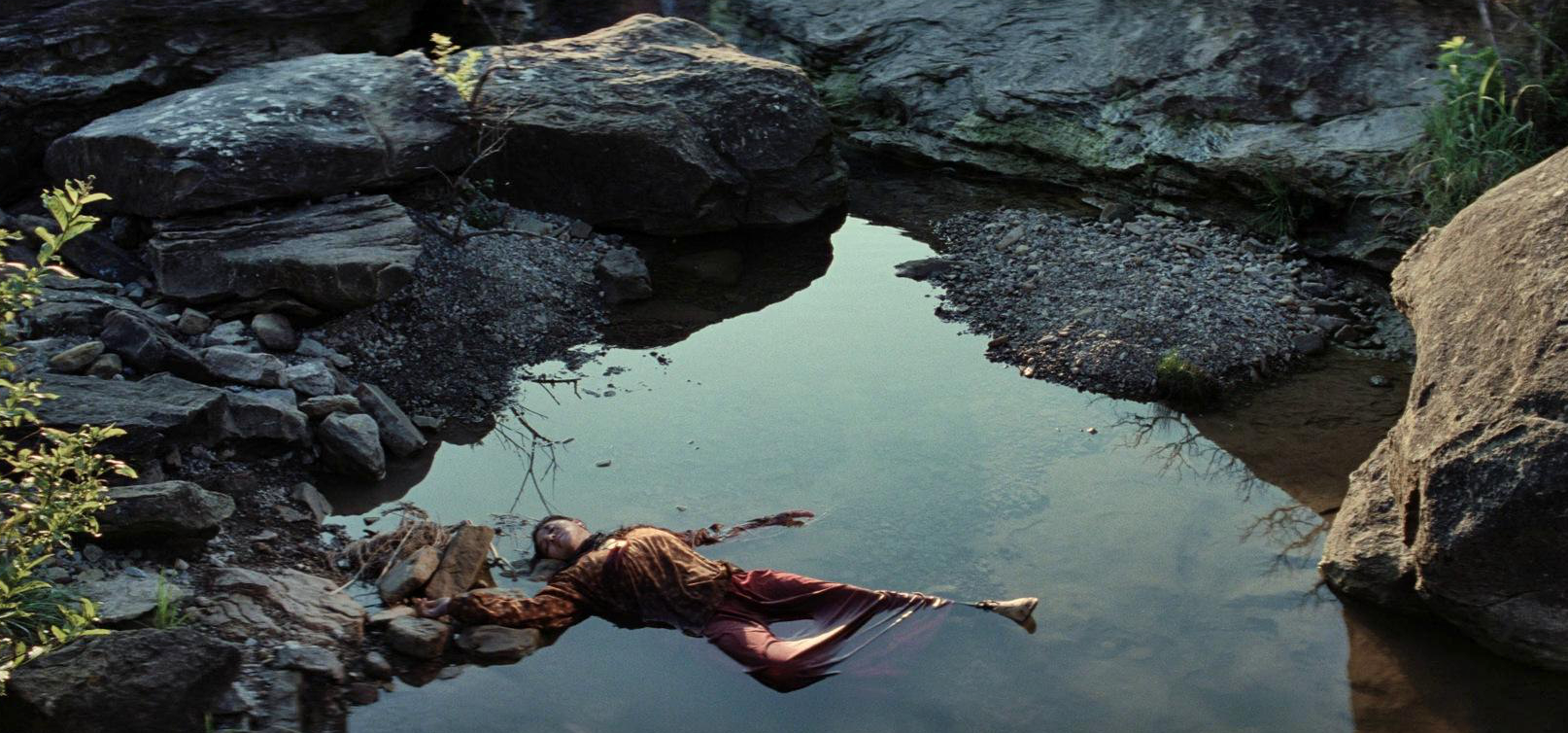
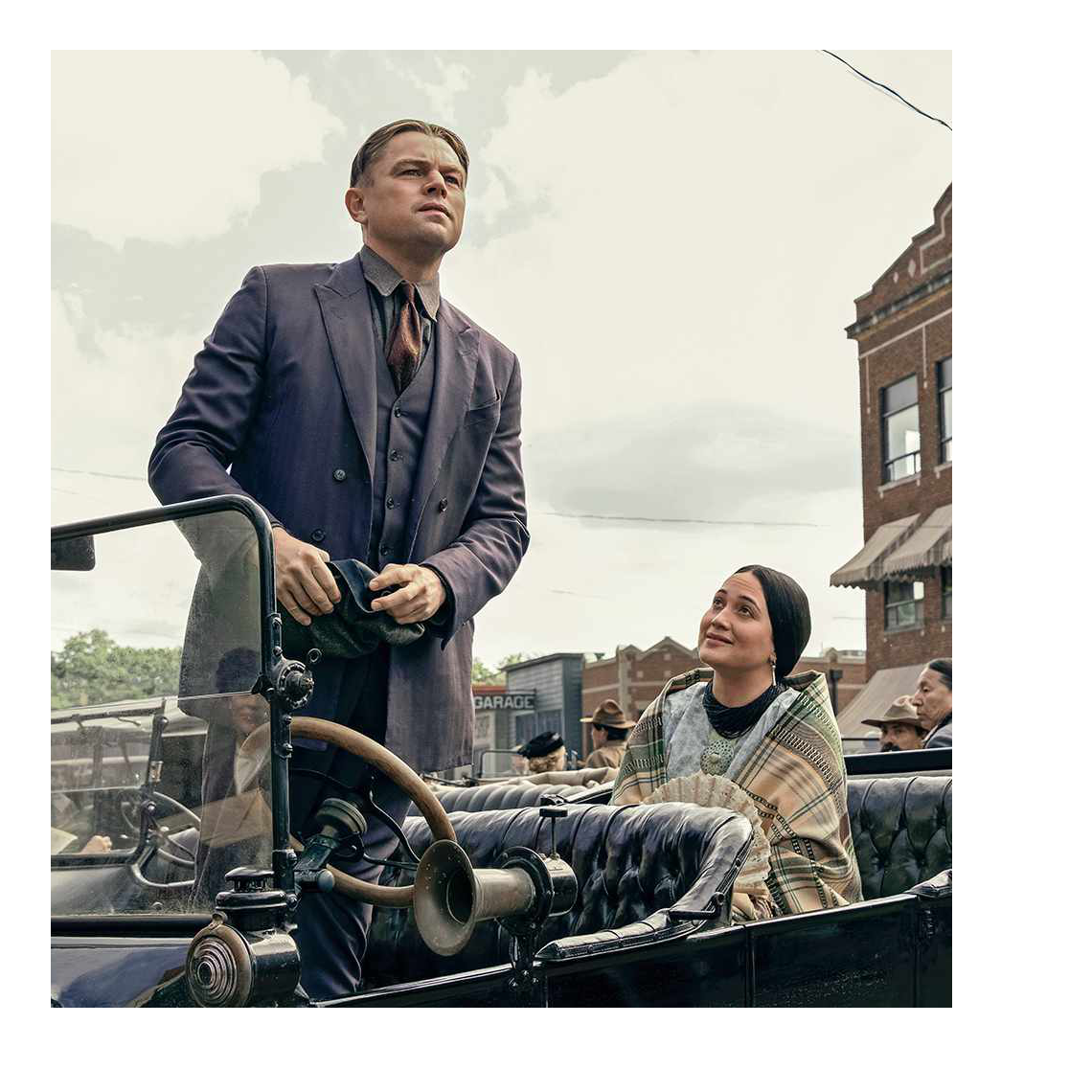
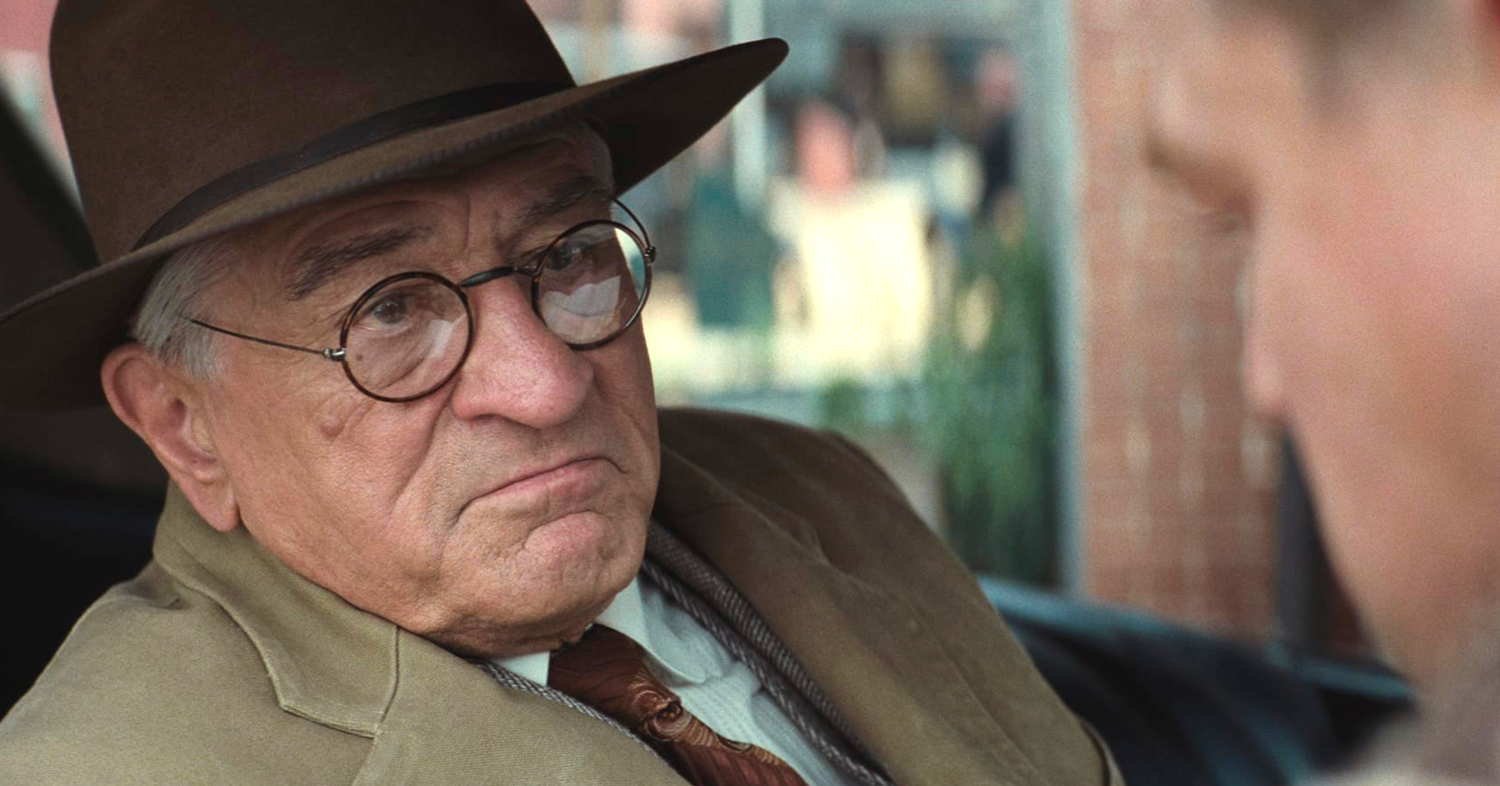
A number of Osage have already been murdered as the story begins. A blind man could see what’s going on. Many Osage women are marrying young white men, creating a group of dutiful husbands that don’t have to work, and spend their time in the pool halls in town. A few are after-dark criminals, robbing the newly-rich Indians to fund their gambling habit. Seeking an easy job, war veteran Ernest Burkhardt (Leonardo DiCaprio) returns to the town of Fairfax, where his uncle William ‘King’ Hale (Robert De Niro) is a wealthy businessman, respected as a philanthropic friend of the Osage.
Hale’s scheme becomes clear early on. Without ever saying so directly, greedy old King Hale is trying to steal oil Headrights by arranging the marriage of his younger relatives to Osage women. The target is the Kyle family. Ernest’s brother Byron (Scott Shepherd) is already married to one of the Kyle sisters, and King is overjoyed when Ernest begins a romance with Mollie Kyle (Lily Gladstone), the most sensible sister. King uses various means to eliminate heirs to the Kyle Headrights — isolated murders, faked suicides, and slow sicknesses brought on by ‘medicines’ dispensed by a pair of murderous doctors. The genocide of the Red Man continues, on a smaller scale.
The beautifully-crafted Killers of the Flower Moon doesn’t simplify the sordid details. Ernest is an ethics-challenged fool who accepts the absurdity of things in Osage (Indians being so rich). He never questions why his intrusive, imperious Uncle King blathers on about doing good things for the Osage, while encouraging the marriages. Ernest is sweet on Mollie, but he loves money more. Not having to hold down a job is icing on the cake.
Uncle King sees the path ahead. Mollie’s sisters and mother ‘have to go.’ One of the sisters is an unstable troublemaker who sleeps around; she’ll be easy to get rid of. Another sister is married, so the husband will have to be dealt with as well. It’s like something out of Richard III – King Hale grumbles each time a Kyle family heir-child is born … he wants all of the oil Headrights under Burkhart control.
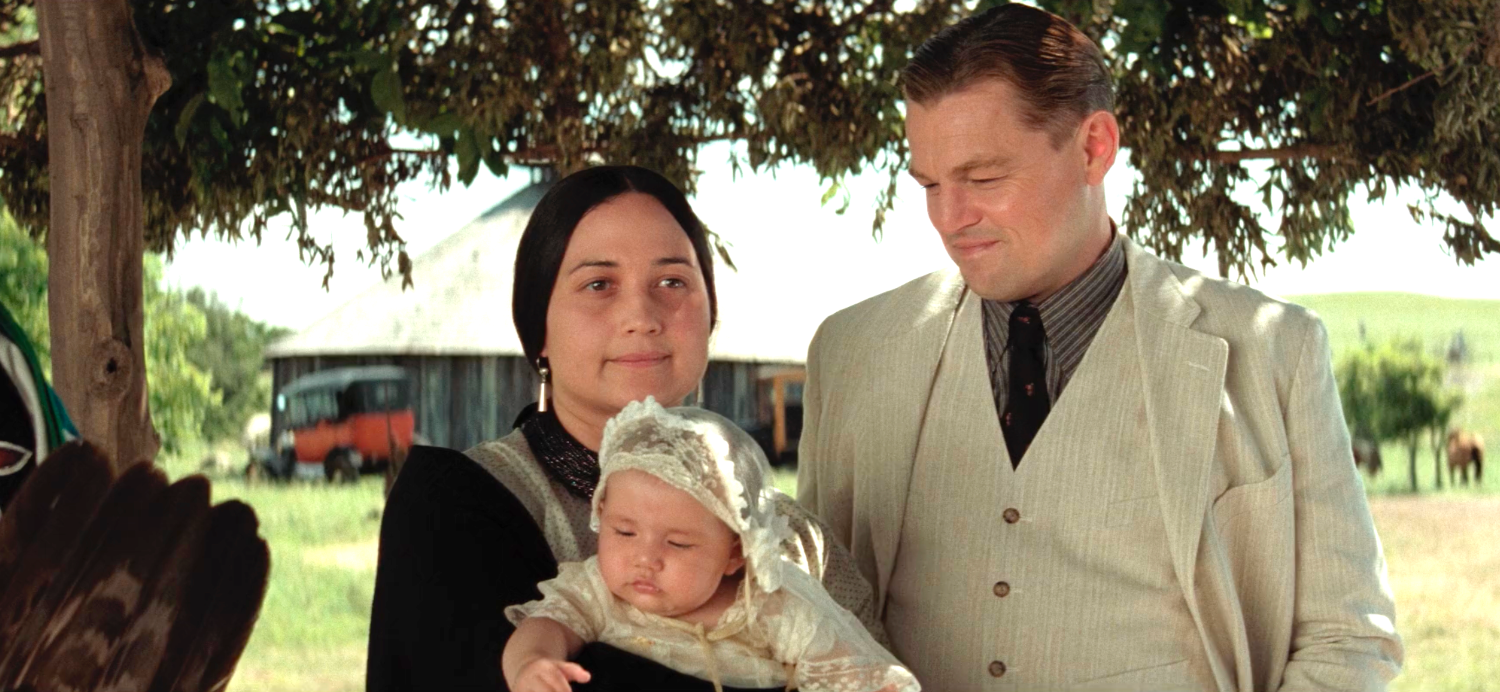
Leonardo DiCaprio works hard to make the detestable Ernest believable. The thoughtless, softheaded jerk simply assumes that Uncle King has his best interest at heart, and goes with the flow even when Mollie is in danger. He has feelings for Mollie but no real commitment to anything. DiCaprio shows us a man maneuvered into a life of deception and murder so total, he’s incapable of taking responsibility for his own actions. Several women and children get sick, and then sicker. Mollie is a diabetic, so her chosen demise is related to that new wonder drug Insulin.
Robert De Niro’s characterization is remarkable as well — he wields a midwestern accent and cadence that makes me feel like I’m listening to old relations. Evil knows no bounds in Martin Scorsese movies, but we easily believe that King Hales are all around us — men without a scrap of decency in their hearts. The Burkhart philosophy of mercy ends up arguing that killing all those Indians is justified because, you know, their time is over anyway. King Hale’s justifications are transparently self-serving. When he needs some extra cash, he resorts to common, shameless insurance fraud.

The big news from Flower Moon is actress Lily Gladstone, whose performance would have kept us watching even if the movie were bad. Mollie Kyle/Burkhart is intelligent and insightful, but is just gullible enough to believe that her husband is sweet and sincere. She endures what might be years of drug-induced sickness, feeling that something is wrong yet not being able to nail it down. It’s quite an achievement to keep the character going for such a long show — we never become impatient with Mollie.
The film’s creative team depict a time when the Osage tribespeople still followed their religion, naming their children in traditional ceremonies. All that culture is already in danger of being lost through assimilation, and the intermarriages are hastening the process. But even the suspicious tribal elders don’t see their ‘friend’ King Hale for what he is. The self-important man puts up reward money for the murders he’s arranged.
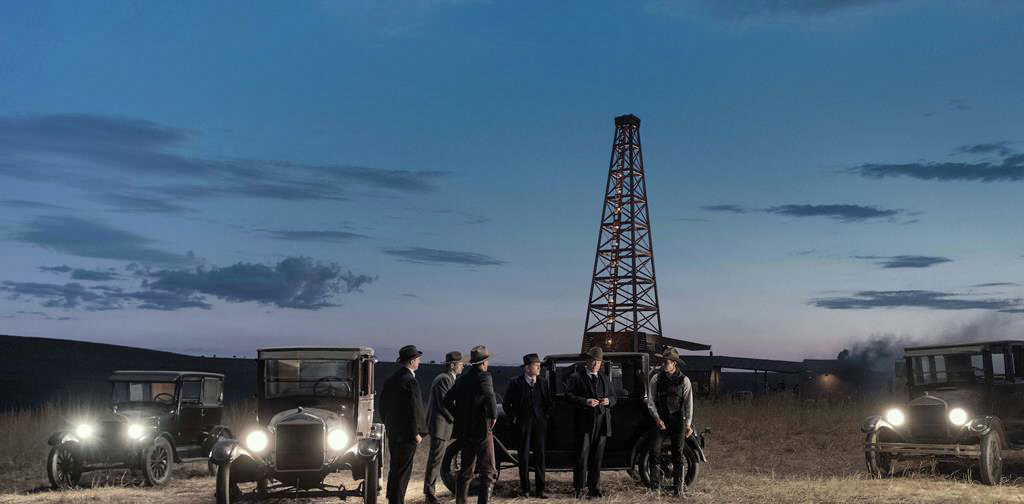
The production is absolutely convincing. Osage County and the town of Fairfax are rendered in detail. The plain western street houses multiple automobile showrooms, and the undertaker sells caskets and funerals with shameful markups. Ernest enters on a train, like one of the opportunist scum in Heaven’s Gate; the bravura aerial (matte?) shot of the train pulling into the station recalls Sergio Leone’s Once Upon a Time in The West. The great Jack Fisk was the Production Designer; everything we see goes far beyond the normal standard for authenticity. The local whites mostly mind their own business. Who questions established white authority? Who would believe that doctors would murder patients? Yet the old whites comment openly on which ‘cross-breed’ children can pass for white, and which are unfortunate savages.
Scorsese finds room for some special visuals. Mollie’s mother experiences transcendental, symbolic visions, as with an hallucination of an owl. The coming of oil to Osage is heralded with a semi-fantastic vision of riches spouting from the earth. A telephoto view of a farm burning at night turns into an appropriately hellish, abstract fire-scape.

Mollie Burkhart’s trip to petition Washington reached the right ears, for her group got the attention of Grover Cleveland, who assigned the new ‘Bureau of Information’ to investigate the rash of Osage murders. But we doubt that little was done about the conditions that encouraged the systematic murder of Native Americans for profit. The requirement that Osage tribespeople be answerable to white legal guardians was in force until 1936.
At 206 minutes Flower Moon does end up feeling a little distended. Once the police action is finished (kudos to Jesse Plemons as the main investigator, an ex- Texas Ranger), watching Ernest waffle back and forth feels like an anti-climax. He even believes he can keep up his lies with Mollie. The capper to the show is a stylistic gear-change to a fancy radio program in a broadcast studio, where the over-dramatized performers act out ‘future resolution exposition’ normally communicated in text cards. Scorsese himself delivers the final lines. After the film’s well-managed storytelling, sidestepping the usual pitfalls of liberal outrage, we resent this radio show gimmick. Maybe Scorsese really didn’t want to superimpose text paragraphs over his last aerial shot of a giant Indian drum dance.

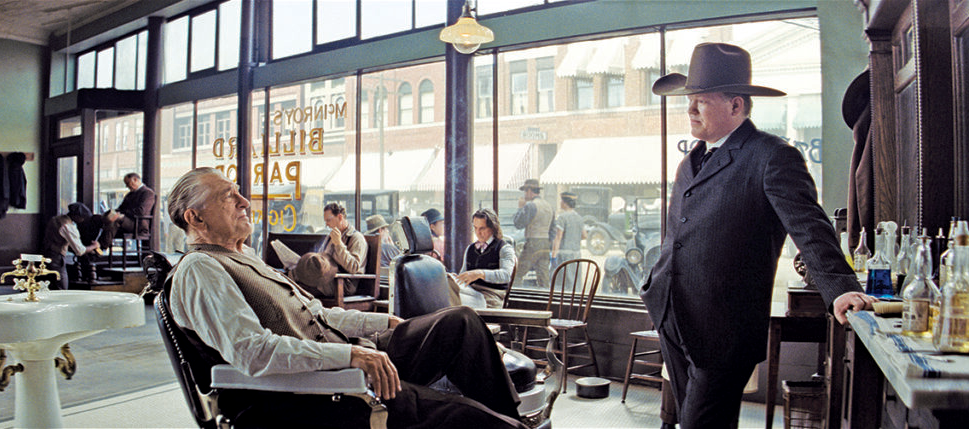
The Criterion Collection’s 4K Ultra HD + Blu-ray of Killers of the Flower Moon is a 4K digital master approved by director Martin Scorsese, with a Dolby Atmos soundtrack. As with other 4K releases from Criterion, we’re given one 4K disc with the feature, and two Blu-rays with the film and special features.
In the years that online streaming has become the prime delivery system for movie entertainment, we haven’t seen many of its big shows released on video disc. This Apple Studios production began as a theatrical release, but it may not have come out on disc if Martin Scorsese weren’t involved. It’s been more than two years, and I don’t think the movie has seen a previous Region A Blu-ray release (I’m ready to be corrected on that).
The image is immaculate and the audio overwhelming. The pleasant mix contains a multitude of music cues, especially blues numbers from the late Robbie Robertson.
With a movie this lengthy the extras end up on that third Blu-ray disc. They’re expansive and detailed, with a lot of key personnel involved. The Native American aspect of the show gets a lot of attention, as can be seen by the list below. We admittedly rushed to see what Lily Gladstone was like out of costume and out of character — although she’s been working in film for quite a few years already.
Reviewed by Glenn Erickson

Killers of the Flower Moon
4K Ultra HD + Blu-ray rates:
Movie: Excellent
Video: Excellent
Sound: Excellent
Supplements:
Making-of documentary with Scorsese, Thelma Schoonmaker, Leonardo DiCaprio, Lily Gladstone, author David Grann, Osage Nation Principal Chief Geoffrey Standing Bear, Osage cultural consultant John Williams, and others
Featurette on the film’s final shot “WahZhaZhe”: A Song for the Osage with Scorsese, Chief Standing Bear, and six members of the Osage Nation
Excerpted archival interview with director of photography Rodrigo Prieto
Excerpts from the 2023 Cannes Film Festival press conference featuring Scorsese, DiCaprio, Gladstone, Chief Standing Bear, and actor Robert De Niro
Short program on Noah Kemohah’s cover art
Trailer
English subtitles for the deaf and hard of hearing and English descriptive audio
36-page insert pamphlet with writing by Vinson Cunningham and Adam Piron.
Deaf and Hearing-impaired Friendly? YES; Subtitles: English (feature only)
Packaging: One 4K Ultra HD disc and one Blu-ray in folding card and plastic holder in card sleeve
Reviewed: March 15, 2026
(7482moon)
Visit CineSavant’s Main Column Page
Glenn Erickson answers most reader mail: cinesavant@gmail.com

Text © Copyright 2026 Glenn Erickson
About Glenn Erickson

Glenn Erickson left a small town for UCLA film school, where his spooky student movie about a haunted window landed him a job on the CLOSE ENCOUNTERS effects crew. He’s a writer and a film editor experienced in features, TV commercials, Cannon movie trailers, special montages and disc docus. But he’s most proud of finding the lost ending for a famous film noir, that few people knew was missing. Glenn is grateful for Trailers From Hell’s generous offer of a guest reviewing haven for CineSavant.
Thanks very much Glenn for another thorough review. I admit to not yet having seen the movie or read the book. The online copy of the movie’s shooting script does mention Hoover and the Bureau of Investigation.
Besides The FBI Story, and closer to the Killers’ events, is 1940’s Boom Town, reviewed by you in June 2006 and well worth re-reading. It has (especially for the survivors) a few cringey scenes in 1920’s Oklahoma. At one point Clark Gable brags, “The old indian I leased the land from gave a powwow dance last night, and they all took a bath in it.”
In a later scene, Spencer Tracy to an Osage driver in his convertible with a goat on the back seat, “Nice car you got here.” Osage (can’t find actor listed in the credits), “You betchum. Got three more, same kind. Red, yellow, green. Sometime one run out of gas.”
This was a tiresome bore. Come on Marty, make one under two hours
Between the Osage Murders and the Tulsa Massacre, I don’t know what was the most despicable event in Oklahoma’s history.
Oh, there’s no end of competition in other places. I hereby claim not to be anti-American, in that the same infamy holds true in most countries, all through history. But yeah, those are two real winners. Thanks!
Correction-the president that Mollie spoke to was Calvin Coolidge, not Grover Cleveland (who had not only been out of office since 1897 but died in 1908).
Thank you Jeffry. I’m finding new ways to make mistakes.