

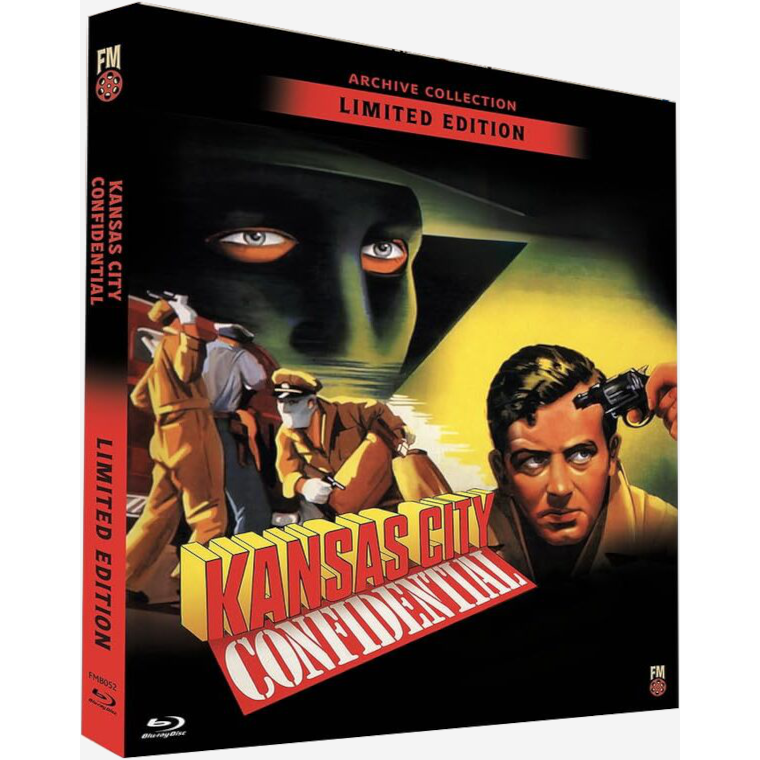

The great Phil Karlson worked in the film industry for twenty years before gaining traction on a solid directing career. At the minors he made every kind of action drama, and came into his own with a 1950s string of films noir that put him in the same rank as Joseph H. Lewis. Producers Edward Small and Lewis J. Rachmil were the producers on his breakthrough films, and his first film Scandal Sheet benefitted from a story by Samuel Fuller. His first two pictures also featured star John Payne, making a conversion from leading man in musicals to noir tough-guy, just as had Dick Powell a few years before.
Kansas City Confidential is an almost perfect noir thriller, a clever and compact caper that uses a crew of now-iconic actors — Neville Brand, Lee Van Cleef, Jack Elam — to suggest a seedy underworld that the censors wouldn’t allow to be depicted directly. These criminals talk differently than ‘normal’ people, placing us in the familiar Pulp environment later explored by Quentin Tarantino. The crime caper in Tarantino’s first feature uses Kansas City Confidential as a narrative foundation. The ambience is a bit like the novels of Jim Thompson, adjusted to make room for an ethical character and an outcome where not everybody gets turned into mincemeat. Boy gets girl and father reconciles with daughter.
The film’s title is misleading, as Kansas City Confidential is not a big city corruption story. After the opening, in fact, the movie changes its locale completely.
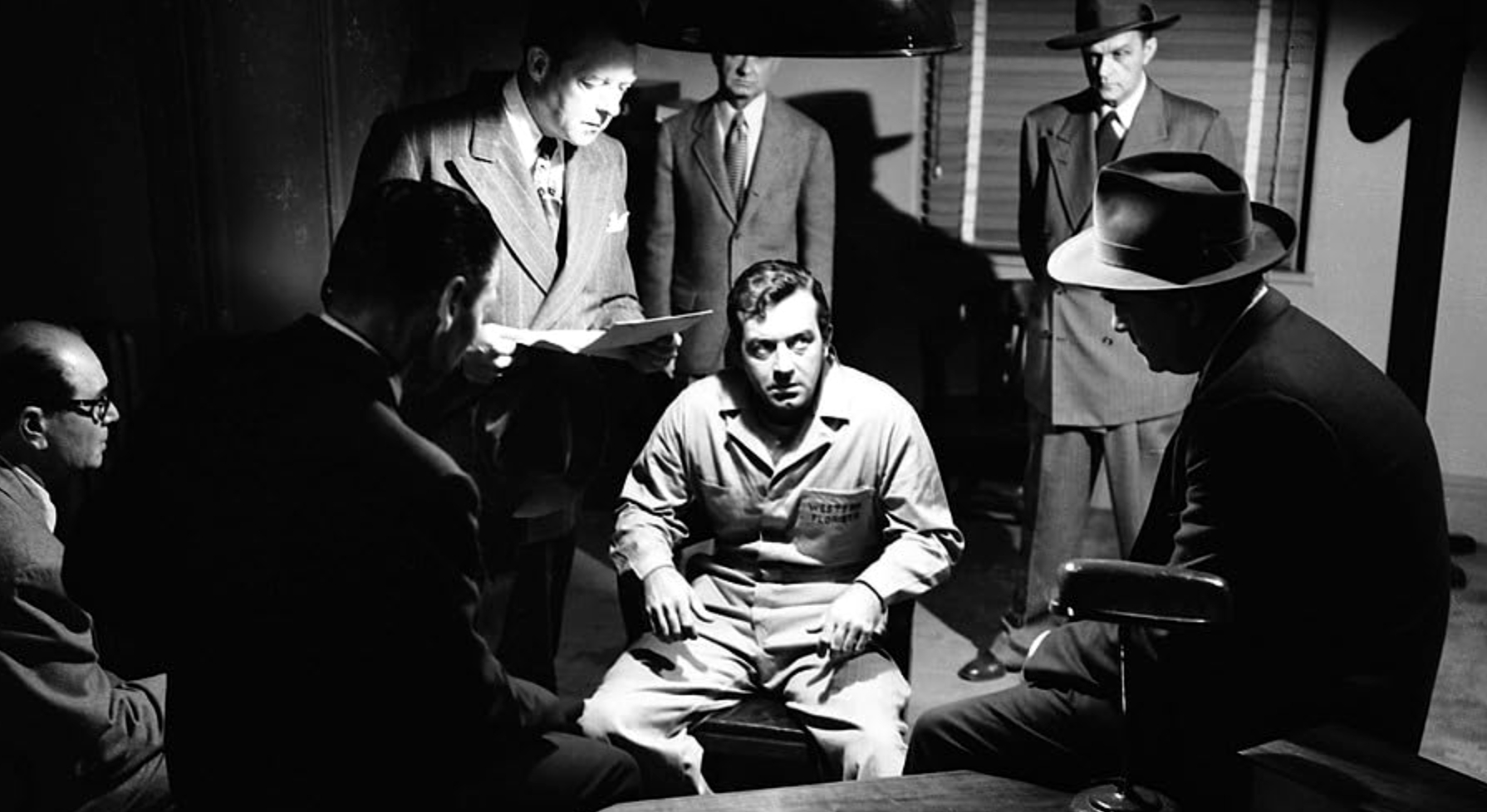
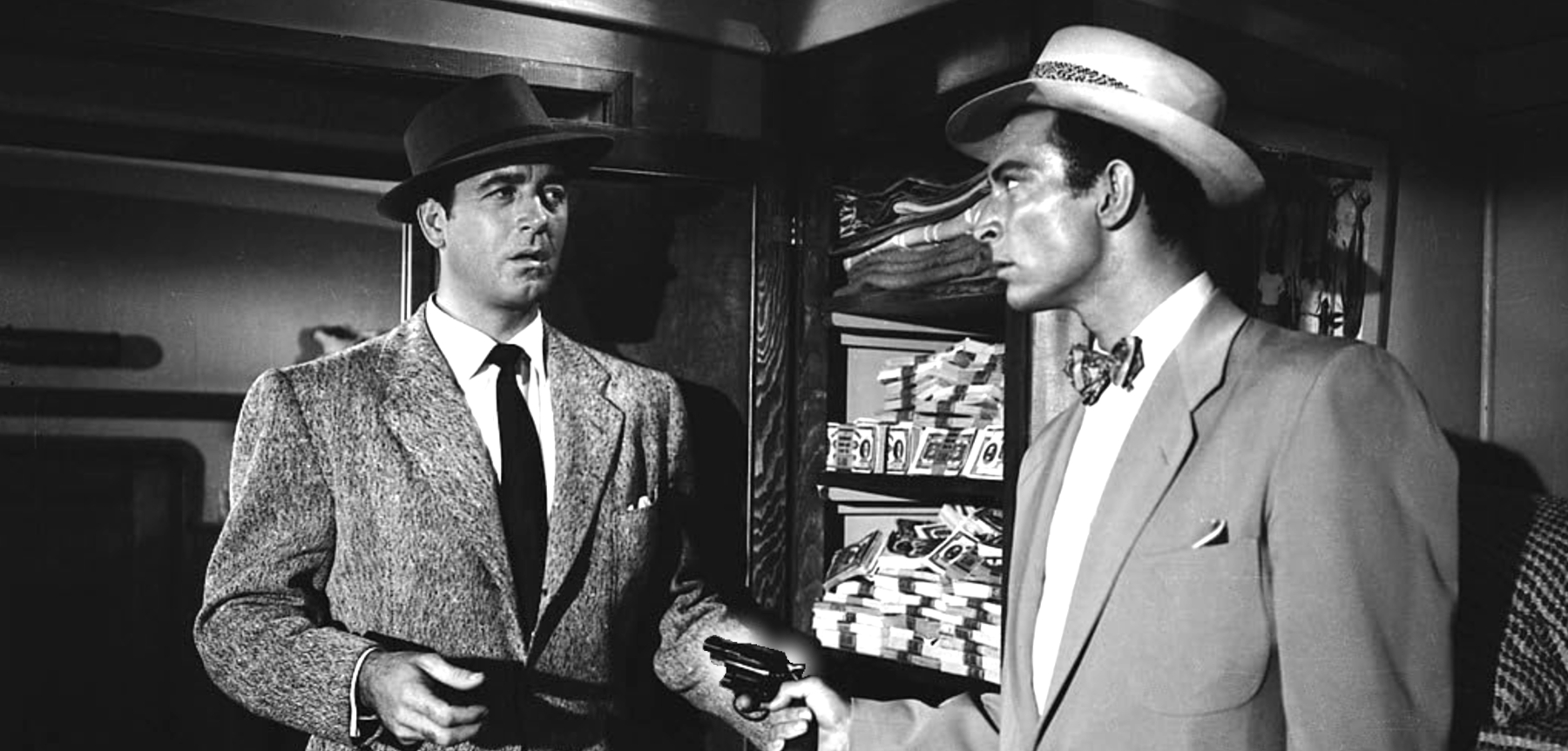
Down-on-his-luck ex- G.I. Joe Rolfe (John Payne) has already served some prison time. He is delivering flowers in a truck when he becomes the inadvertent patsy of bank robbers. They steal 1.2 million dollars in broad daylight in a similar flower truck, leaving the clueless Joe to be arrested and given the third degree for two days straight. When the cops finally realize Joe is innocent, he scours his underworld connections to trace the real crooks. He tracks thief Pete Harris (Jack Elam) to Tijuana, Mexico, where he blends in and learns more details about the bank job. As it turns out, Harris is one of three robbers who don’t even know who their partners are, because they wore masks and used code names.
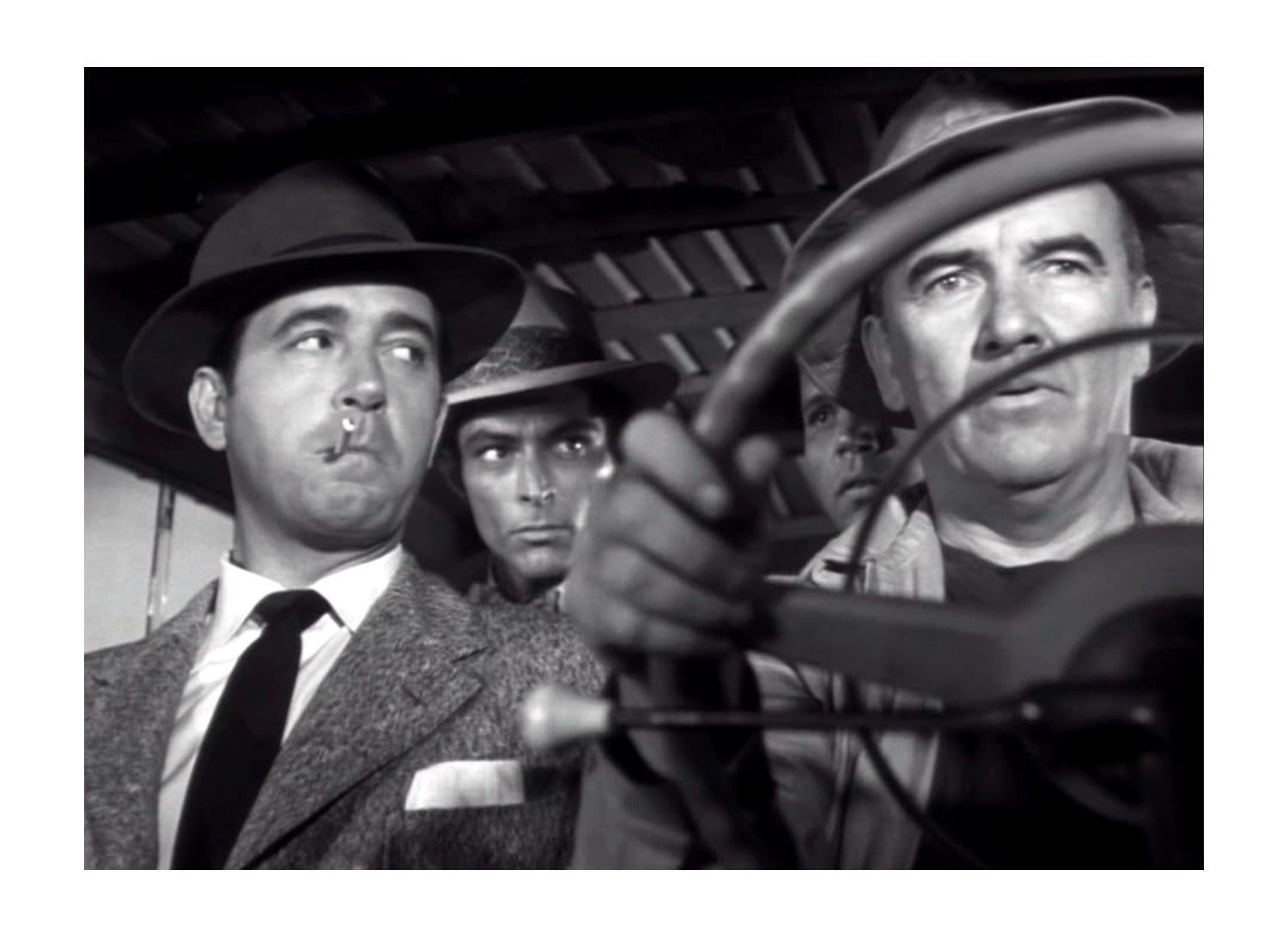
The unknown leader of the gang has summoned the thieves to Mexico for the big payoff. Joe takes Pete’s place at the thieves’ rendezvous in the seaside village of Borrados. There he finds additional gang members Boyd Kane and Tony Romano (Neville Brand & Lee Van Cleef) — and also meets attractive American Helen Foster (Coleen Gray). Her father Tim (Preston Foster) is a retired cop, who warns Helen her against her new boyfriend. When will ‘Mr. Big’ arrive to split the loot? And when do the double-crosses begin?
After the brisk street scenes of the heist sequence, Kansas City Confidential is filmed on a patchwork of sets, including minimalist dark rooms for Joe Rolfe’s grilling by the cops, that establishes him as a bitter tough guy. To serve as a Mexican resort like the one seen in His Kind of Woman, interior sets are combined with a Beverly Hills pool, the same one seen later in Kiss Me Deadly.
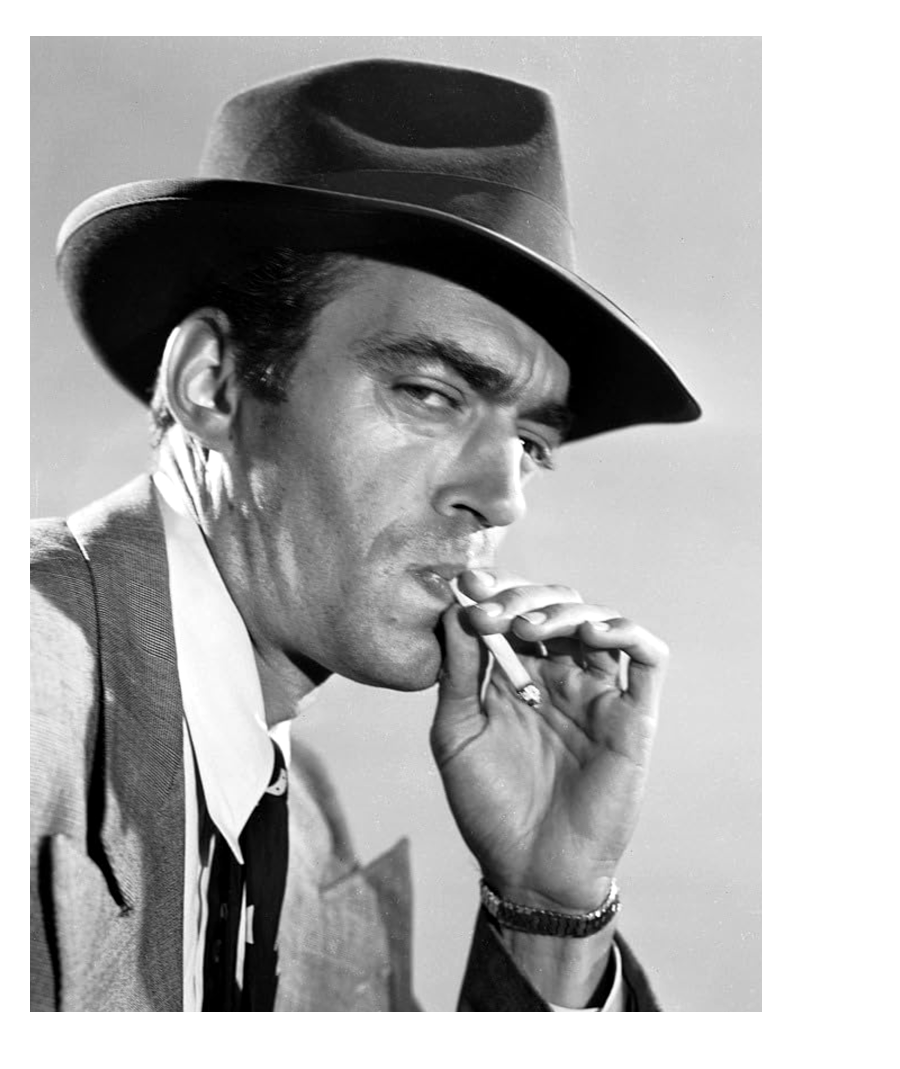
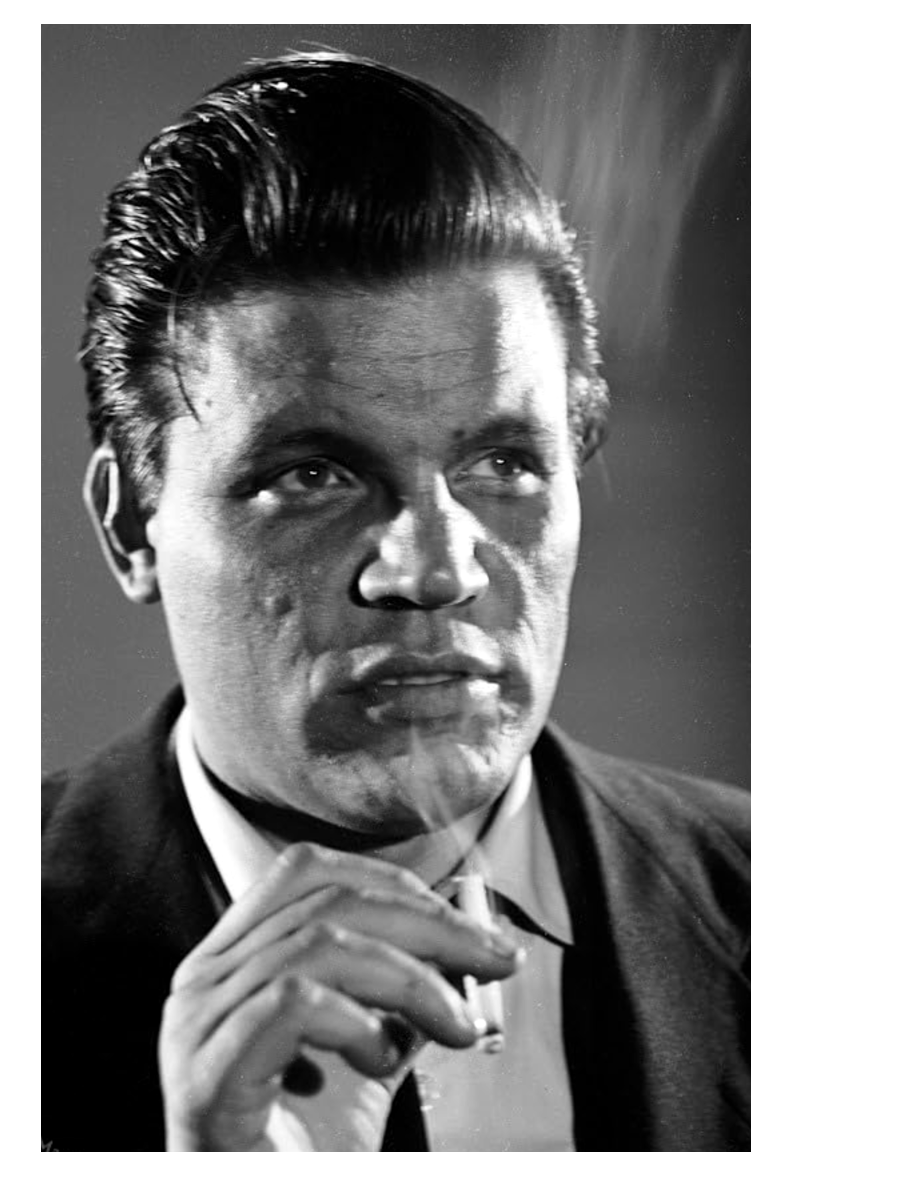
Phil Karlson copes with his limited resources by concentrating on his characters’ interesting faces. Already established as second-string baddies in westerns, Jack Elam (← ), Lee Van Cleef and Neville Brand all have strong roles as shifty crooks. Elam’s neurotic loser is nervous and strung-out. It’s the first film that fully exploits his lazy eye in full close-up. Van Cleef’s oily and boastful lothario likes to hang out with pretty Mexican hostess Teresa (Dona Drake of Another Part of the Forest). Neville Brand’s gravel-voiced thug is tough but dependable. He’s the most sympathetic of the three crooks, all of whom know that the operation’s ‘Mr. Big’ holds all the cards. The ‘no identities’ scheme prevents some of the usual double crosses from taking place.
This Mr. Big is the most ethical criminal mastermind in film noir. He has the money from the bank holdup, and none of his colleagues could trace him if he wanted to keep the loot. When they show up Borrados, they don’t even know each other. That allows Joe to infiltrate the gang, posing as Pete Harris. The filmmakers present the strange masks and code names business very carefully. Any mistakes, and this smart noir would resemble a goofy Republic serial.

John Payne spent the earlier part of his career as a cheerful leading man, opposite actresses like Betty Grable or Alice Faye (Week-End in Havana). His most memorable previous part was opposite Maureen O’Hara in the Christmas perennial Miracle on 34th Street. He never quite made it to front-rank star status, but excelled as bitter tough guys in noir roles.
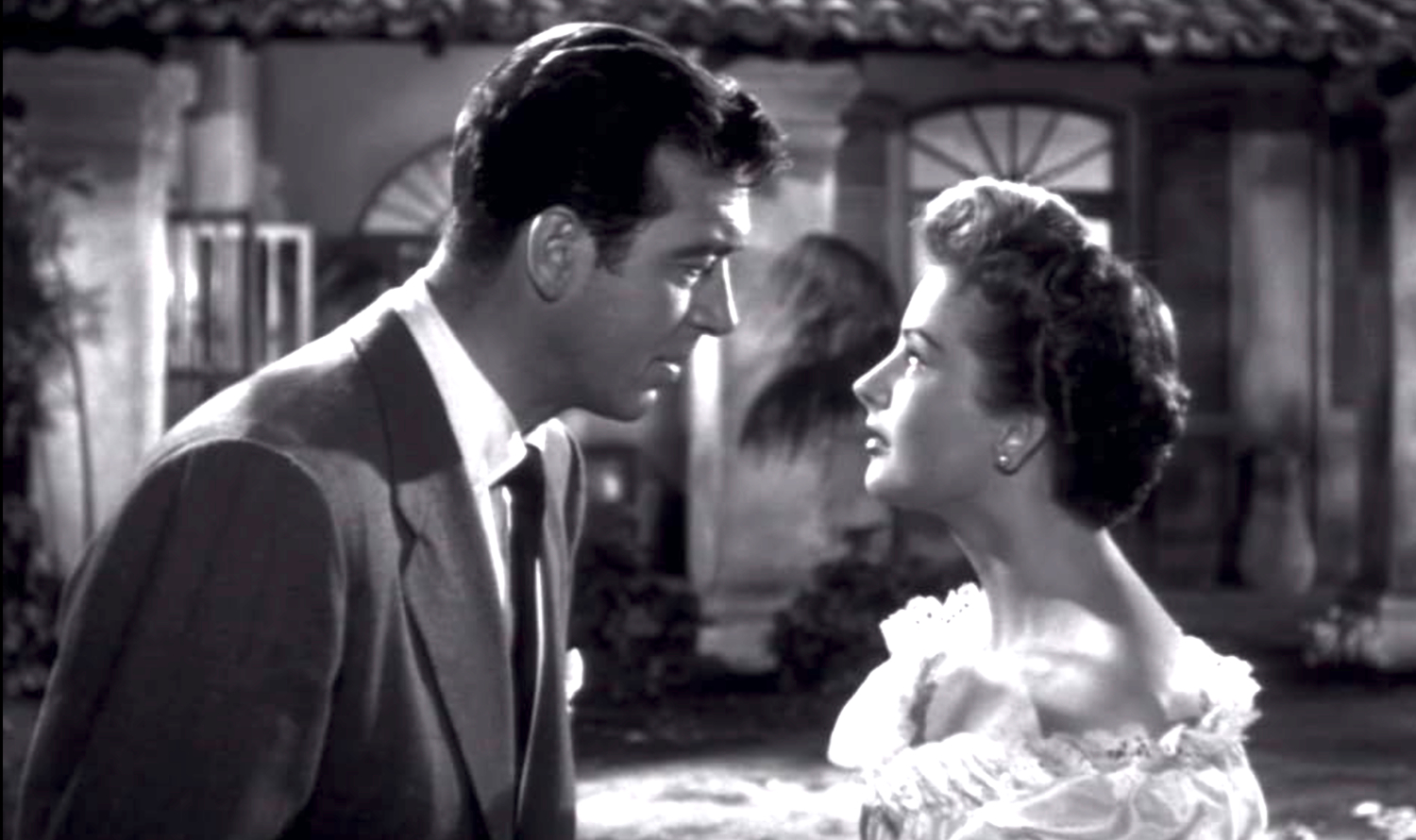
Phil Karlson always managed interesting leading ladies. Coleen Gray (→) adds another great noir performance to her list: clueless wives and girlfriends in Henry Hathaway’s Kiss of Death and Stanley Kubrick’s The Killing, and more complicated, morally conflicted characters in Edmund Goulding’s Nightmare Alley and George Sherman’s The Sleeping City.
The lack of credibility is not a problem.
A fast-paced story and engaging characters keep us from faulting odd issues in the storyline. We never question why the three crooks would enter a robbery scheme without knowing who their confederates are, with no way of preventing ‘Mr. Big’ from disappearing with the loot. To a lesser degree, you’d think that they would have seen Joe Rolfe’s face in the Kansas City newspapers. The suspenseful plot balances these unstable elements, never keeping crime film fans waiting for a good slugfest or more choice pulp fiction dialogue: “You been giving me the fisheye all night.” “That was a sucker move, burning down your boss.”
Kansas City Confidential is useful in defining the difference between a straight caper thriller and one inflected with the noir style. Straight crime pictures support the Status Quo, and patiently wait for the foolish thieves to trip up and be caught. Karlson’s picture undercuts the presumption of fairness in the legal system. Joe Rolfe is a hero of Iwo Jima on the outs because of a couple of bad breaks as a gambler. The police presume he’s guilty and torture him. When evidence surfaces to exonerate Joe, the Assistant D.A. must intervene to keep the cops from beating a confession out of him anyway.
Spolier this Paragraph: Our hero bears a tarnished halo, while another main character is a dirty cop. Even Helen’s father Tim was ‘forcibly retired’ by politicians back in Kansas City, and is determined to beat the system from the other side of the badge. Preston Foster’s Tim is placed in a gray area. It is interesting that he’s a devoted father, a sentimental equation that doesn’t completely add up. He’s dramatically effective, but nowhere near as compelling as some other dirty cops in noir. The best is probably Ed Begley’s angry disgraced policeman in the much less sentimental Odds Against Tomorrow.
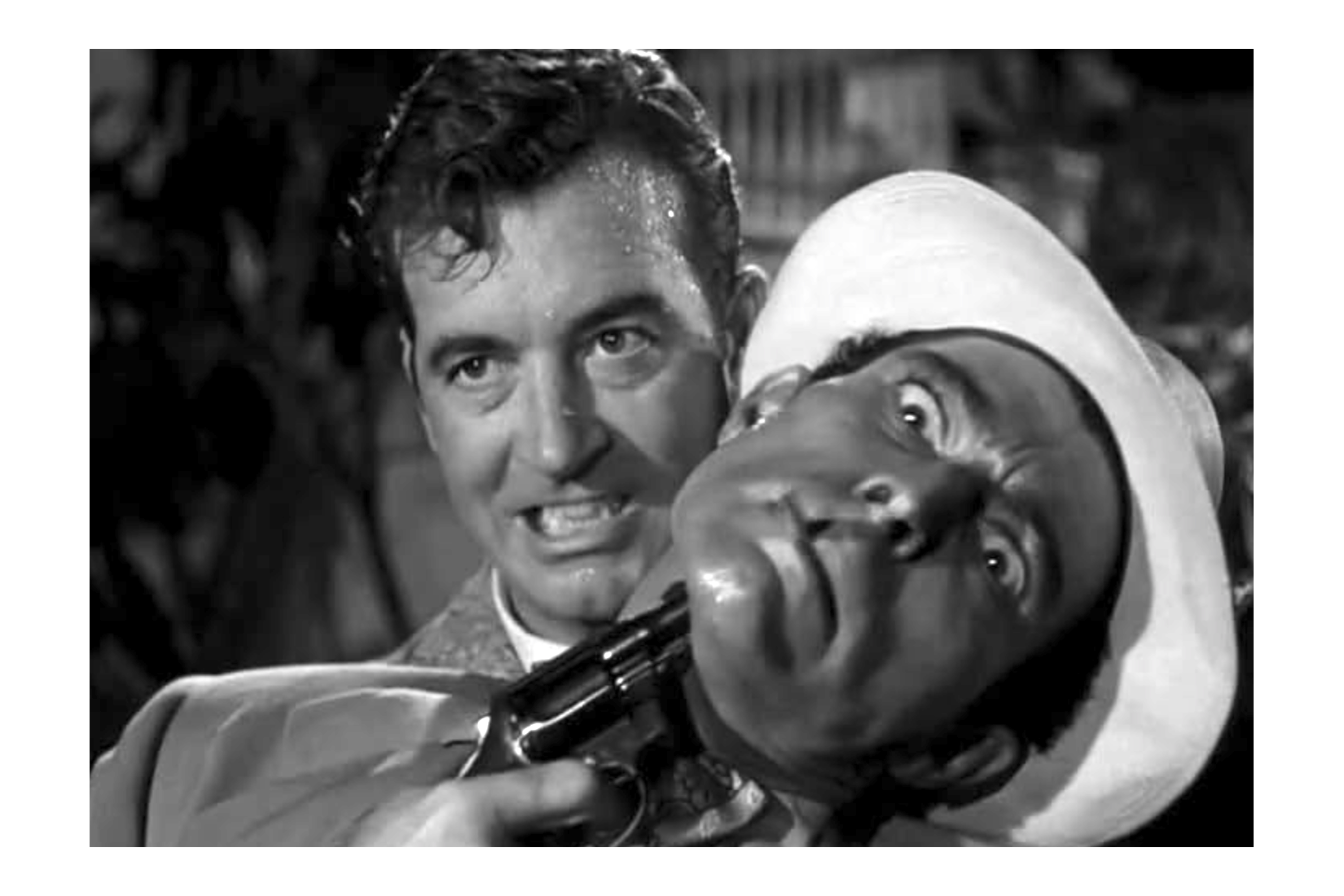
We stick fairly close to Joe Rolfe on his adventures down in Mexico. He goes undercover knowing next to nothing. The other two bandits might kill him when they find out the truth, and there’s no telling who Mr. Big might be. We, the audience already know that the situation is even more complicated. Joe’s hopes for exoneration are slim at best: the fact that he’s mingling with the heisters could convince the cops that he was part of the bank robbery. Unlike standard crime stories, Kansas City Confidential has a strange ambivalence toward its doomed characters. Even the hero is morally compromised.
Film noir critics might think that Phil Karlson picked up the slack when Anthony Mann departed the style, for several years working mostly in westerns. Mann favored violent moments that some critics felt were overly sadistic. Karlson also metes out the tough stuff in brief doses, not quite as graphic but always impactful. His subsequent noir thrillers 99 River Street and Tight Spot rely on bursts of jarring violence. His The Phenix City Story goes further than even Anthony Mann might dare, with its merciless mob killings that victimize innocent women and children.
The MGM DVD looked superb. I recently watched an HD encode on Kanopy free, it looked better!
If you’re into indie movies & documentaries I highly recommend signing to Kanopy thru your local library.
Thanks for the heads up. Gotta love public libraries, ours has a fantastic World Cinema disc collection.
Reservoir Dogs seems inspired by the climax of Ringo Lam’s City on Fire
By no means a gem, but Karlson’s 1970 ‘Hornets’ Nest’, with Rock Hudson, is a ripping yarn with a Morricone score, to boot!
Right on.