

Hand it to England’s Ealing Studios to turn their attention to the lowly horror film at a time when British censorship had all but blacklisted the genre. Under the guise of 5 ‘elegant, refined’ ghost stories, Ealing made a fresh start with the public’s perception of what a horror film could be.
No monsters, no drooling maniacs, no mad doctors obsessed with inhuman experiments. Just quiet, sedate chills. The general starting point is the cliché of a cozy salon gathering for tea and cookies or crumpets or what have you. But the scares are genuine. The half-dozen prime Ealing talents behind Dead of Night express qualities not found in movies about Devil Bats, Tana Leaves or gorilla brain transplants. No doubt James Whale, Alfred Hitchcock and Val Lewton recognized this show as The Real Deal, with chills of a higher, more delicate caliber.
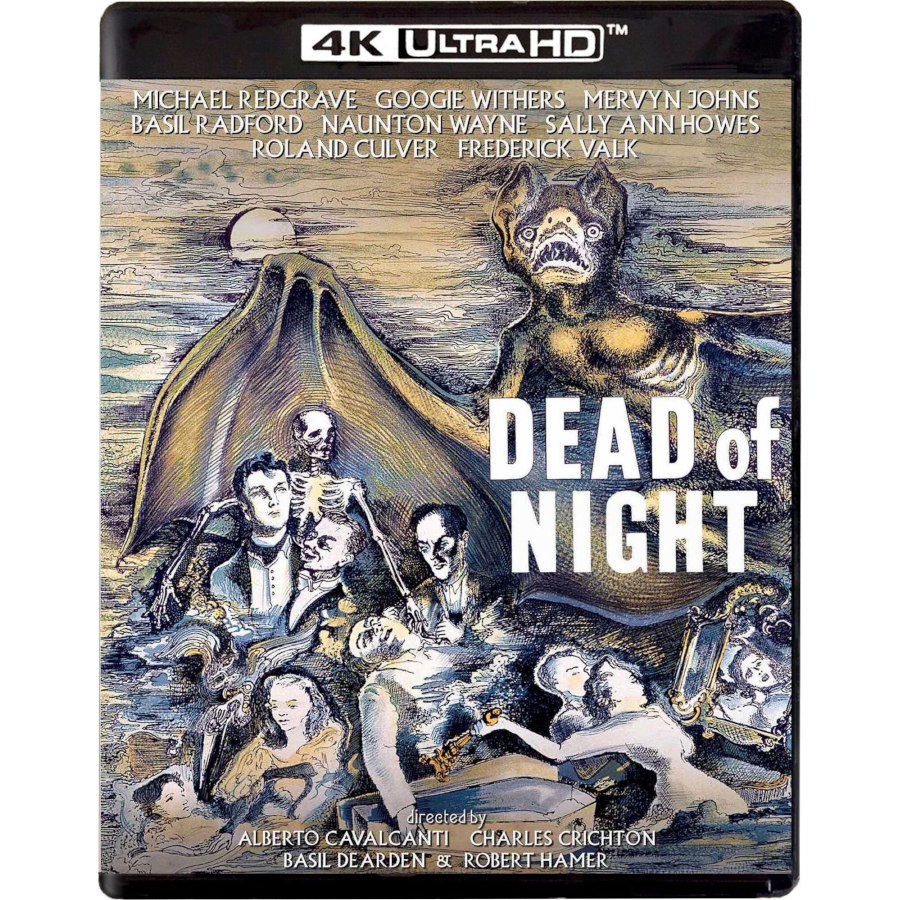
Fate pulled a fast one on us last October; just as we reviewed a foreign UK Ultra HD disc of this horror classic, it was confirmed that a U.S. 4K would be here shortly. Less than 60 days later, we have Kino’s Dead of Night in our haunted little hands. It’s clearly the same encoding, but it’s more U.S. friendly: the accompanying Blu-ray is playable in U.S. Region A disc players. This new disc can’t match StudioCanal’s bounty of fine extras, but neither is it bare-bones. It ports over the fine Tim Lucas commentary from Kino’s earlier Blu-ray.
We’ve adapted our earlier review, making an attempt to pare it down to the essentials. Collectors that don’t need to be told who Cavalcanti is can skip down to the evaluation section, to find out if Kino’s new release is what it ought to be. And you know that CineSavant wouldn’t steer you wrong. I wouldn’t do that.

“Wouldn’t I ?!!”
They say that England loves its ghost stories. The omnibus horror fantasy was not a new invention, but Dead of Night creates a superb ‘wraparound’ narrative for five stories told at an innocuous gathering at a rural house. The filmmakers were compelled to include a comedy sequence, but it does no harm … the spell cast by this movie grows stronger as night falls, and nightmares come true.
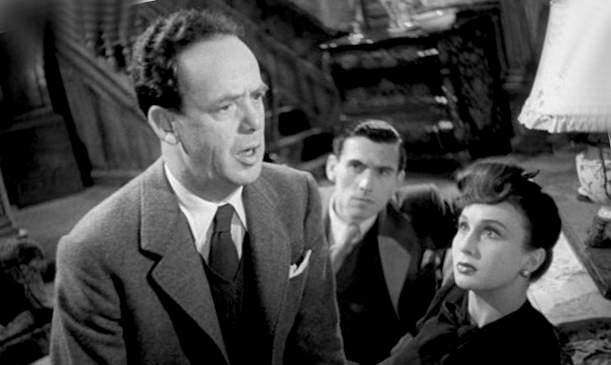
Dead of Night plays games with the viewer right from its very first shot. Architect Walter Craig (Mervyn Johns) shows up at the country cottage of potential client Eliot Foley (Roland Culver) only to experience a major case of deja vu: he’s convinced that the house, the people in it, and the words they speak are all part of a recurring dream he’s been having. The other houseguests encourage (or humor) him with uncanny tales from their own experience. The friendly visiting psychiatrist Dr. van Straaten (Frederick Valk) insists that the paranormal is an illusion. But little bits of Walter Craig’s ‘predictions’ keep coming true …
Almost any book on classic horror films will yield an admiring analysis of Dead of Night. Our favorite appreciation is in Ivan Butler’s The Horror Film … in a movie about dreams, Butler uses cinematic logic to isolate one shot that he says proves that Walter Craig’s nightmare is about to become real.
Where do half-remembered dreams go?
Walter Craig can’t decide if he’s a pawn of an immutable fate, or if he is experiencing an uncontrollable dream. Eliot Foley’s houseguests laugh off Craig’s first predictions as coincidences. But the accumulation of alignments soon convinces all present that there’s something to the little man’s story.
(almost all a spoiler from here forward, so, sorry … )
Foley’s houseguests try to lighten the mood with humorous good cheer, creating a warm atmosphere as several stories are told, either to give Craig courage, or to tease the skeptical Dr. van Straaten.
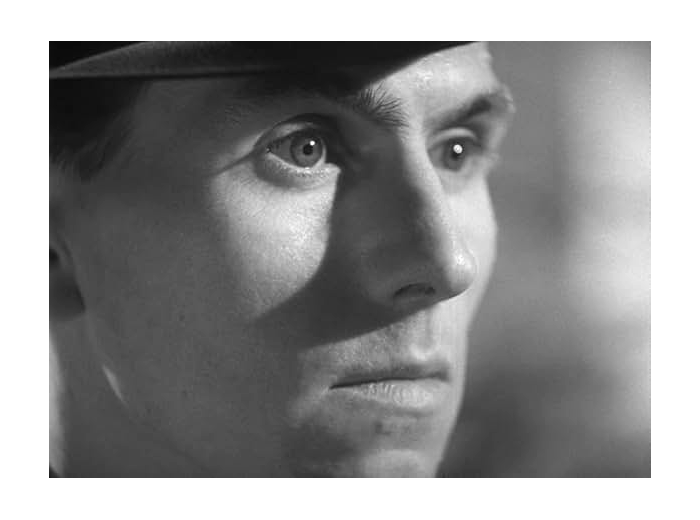
The Hearse Driver by Basil Dearden. The ‘uncanny happening’ experienced by a race car driver (Anthony Baird) is neatly paced, with a precise use of music, the ticking of a clock, and silence. The episode communicates a sense of time-space disorientation we have all experienced. Have you ever awakened from an afternoon nap, thinking for a second that it is the next morning? The episode also provides an eerily sinister moment for the unique filmic personality Miles Malleson, who would become a droll ‘mascot’ supporting player in scores of future horror pictures.
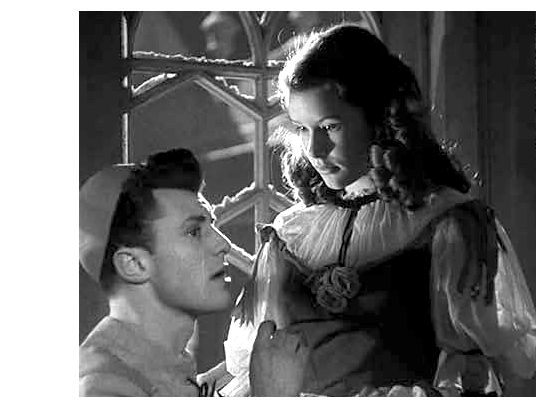
The Christmas Party by Alberto Cavalcanti. The second story dramatizes is the kind of irrational, unprovable occurrence that was presented every week on the old TV show One Step Beyond. The leading guest at a children’s party is a teenaged Sally Ann Howes, 23 years before her starring role in the kiddie show Chitty Chitty Bang Bang. Miss Howes and several other teens act younger than their ages, playing a game of hide & seek in a mansion full of creepy old rooms. The ‘Gothic’ setting provides some good atmosphere for a tame surprise. The actress’s contribution is better felt in the wraparound story.
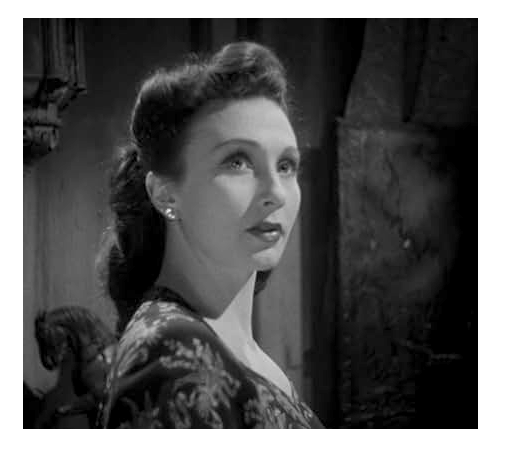
The Haunted Mirror by Robert Hamer. The second-best episode is a perfectly realized tale of possession involving a diabolical artifact. Preparing for her upcoming wedding, Googie Withers (Night and the City) finds her fiancée (Ralph Michael) falling under the influence of an hallucination, a strange old room intermittently seen in an antique mirror. Precise editing makes all the difference, subjectively engaging us with that weird vision. Composer Georges Auric’s crashing chords raise hackles all by themselves. Discerning direction chooses when to reveal bits of the ‘haunted room’ as Michael sees them. How can a simple mirror be so disturbing?
That room in the mirror is only seen in brief cuts. It is slightly different each time it appears. Is there someone sleeping in the bed, just out of our view? Michael’s initial ability to ‘shake off’ the illusion is a key dreamlike detail. But when he loses his grip on reality our sense of security vanishes too. The conclusion is great cinema, with shock cuts that reveal new information both to us and the terrified Ms. Withers.

The Golfer’s Story by Charles Crichton. We don’t know if adding a comedy segment was imposed from without or a choice by the filmmakers to give audiences a break from the scares. Out-and-out horror pictures had been all but banned in England around 1936. The censors were very down on supernatural horror — although that doesn’t explain the welcome given the many horror-adjacent thrillers of Todd Slaughter.
Written by none other than H.G. Wells, this silly spoof of obsessed golfers stars the popular duo of Basil Radford and Naunton Wayne (The Lady Vanishes, Night Train to Munich). It’s an okay skit but not much more. The comedy may not be first-rate, but it serves its purpose. The interruption of the dark mood puts us off-guard, ready to be jolted again.
The Sally Ann Howes segment and the Golf tale were dropped from many theatrical prints, and might not have been in the general release version initially shown in America. The U.S. release is indeed listed here and there as being a full 26 minutes shorter!
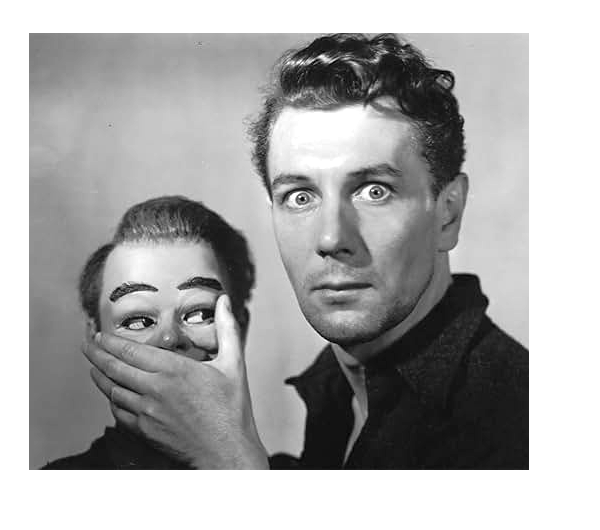
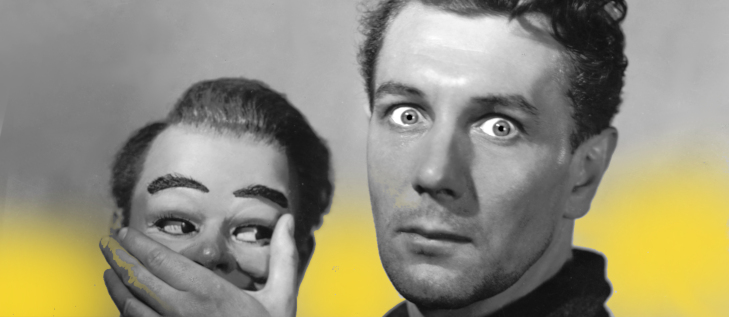
The Ventriloquist’s Dummy by Alberto Cavalcanti. Dead of Night’s high reputation rests on the achievement of the final story. The tale of Hugo the diabolical ventriloquist’s dummy shows actor Michael Redgrave giving one of the 3 or 4 best horror performances of all time. The segment rivets the attention no matter how many times one sees the picture. Redgrave’s reactions and detailed facial movements only become more fascinating. The story is told by Frederick Valk’s psychologist, a skeptic who finally admits that he too has witnessed eerie events that he cannot explain.
Is this a kind of thematic plagiarism, once removed?
Here’s where things become critically strange. Many writers have pointed out the similarities of the ventriloquism episode to Alfred Hitchcock’s Psycho, made fifteen years later. In each, a living person is psychologically possessed by something not alive: a murdered mother, an inanimate dummy. By dividing his personality, each madman has allowed a dark ‘Other’ to take command of his personality. The stage show dummy of Maxwell Frèe (Michael Redgrave) is so well performed that some characters pretend that it is alive. That aligns with the confusion in Psycho, when people argue whether there is or isn’t an elderly Mrs. Bates up in the old house. Does she really exist?
Other details are too close to be coincidental. Both stories have a ‘psychiatrist’ finale in which asylum guards carefully bring significant objects (the dummy Hugo, a blanket) into a padded cell. Anthony Perkins’ Norman Bates and Redgrave’s Maxwell Frèe are both reduced to mute catatonic states. Each offers a smug, demented grin of self-congratulation for carrying out a successful deception … everybody is fooled. Nearly identical dialogue crops up as well: “I didn’t get the story from Norman, I got it from his Mother.”
Hitchcock and the segment director Alberto Cavalcanti each end with a tricky optical superimposition — the subliminal skull-face that hovers over Anthony Perkins, and Michael Redgrave’s ‘ghost eyes’ that blend subtly over the next scene.
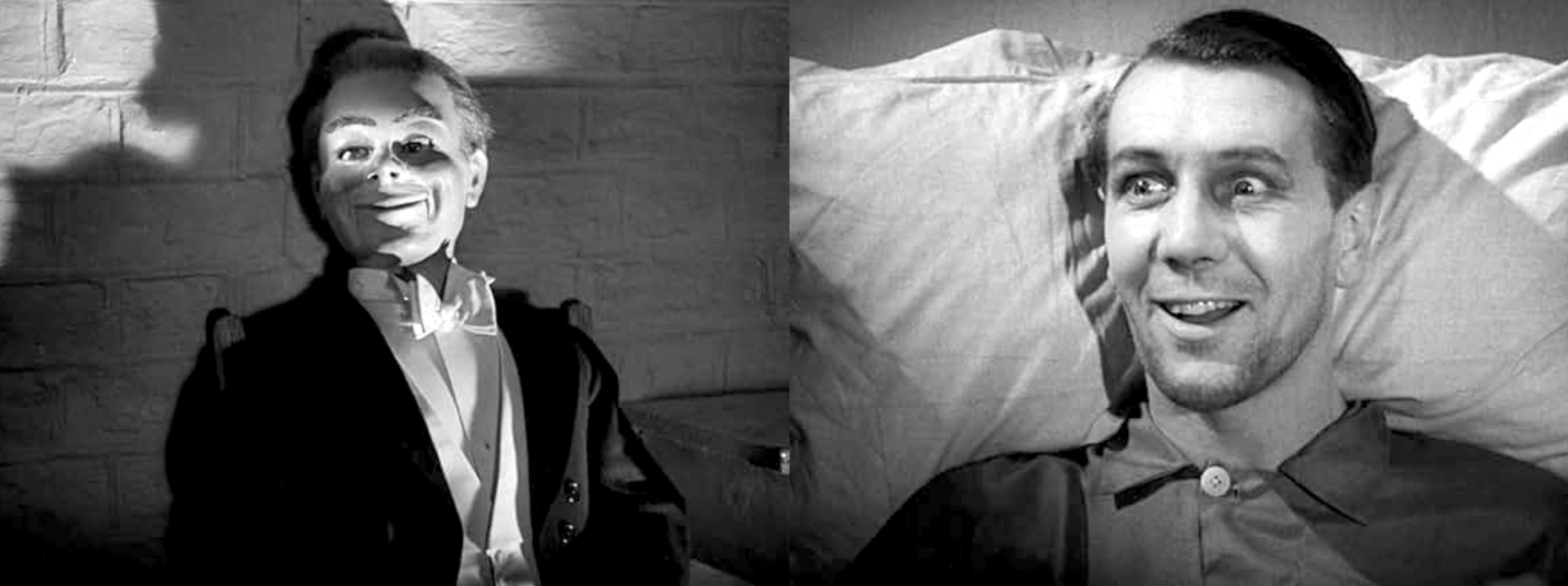
How can all of these alignments be coincidental? Hitchcock may or may not have been inspired by a Val Lewton movie for another scene in Psycho, but we wouldn’t call that plagiarism. But Psycho directly transposes the episode from the Ealing film, substituting the very Hitchcockian element of the ‘lethal mother’ for Hugo the Dummy.
Most ventriloquists’ dummies before Dead of Night were considered cute and harmless, but the sarcastic Hugo is no Charlie McCarthy. Redgrave’s ‘insane’ facial tics could be a ‘residual’ effect from the facial control he has perfected for his stage act. With fellow ventriloquist Sylvester Kee (Hartley Power) on hand to endorse Frèe’s genius, we don’t know what to think. But we agree that the disturbing situations and images are brilliantly organized. It’s a terrifying character study.
Dead of Night’s four directors bring a range of styles. Basil Dearden handles the framing story, and the race-car driver story. Robert Hamer’s mirror story is more rigid and controlled. Charles Crichton’s golf tale adopts a deadpan level of absurdity. Brazilian Alberto Cavalcanti’s Sally Ann Howes segment is lively, and his Hugo episode is a masterpiece. It might be more illuminating to find out which cameraman filmed each episode … and CineSavant correspondent Sergio Angelini provided the answer. *
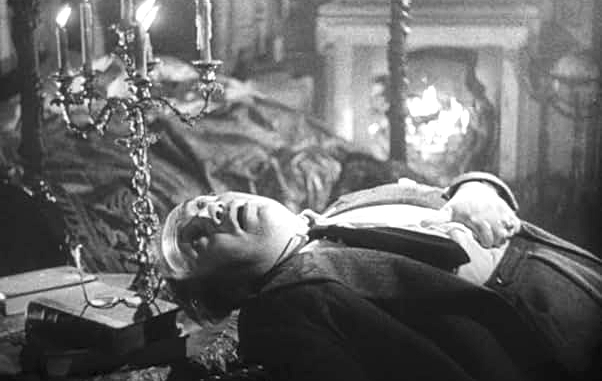
The overthrow of Reality.
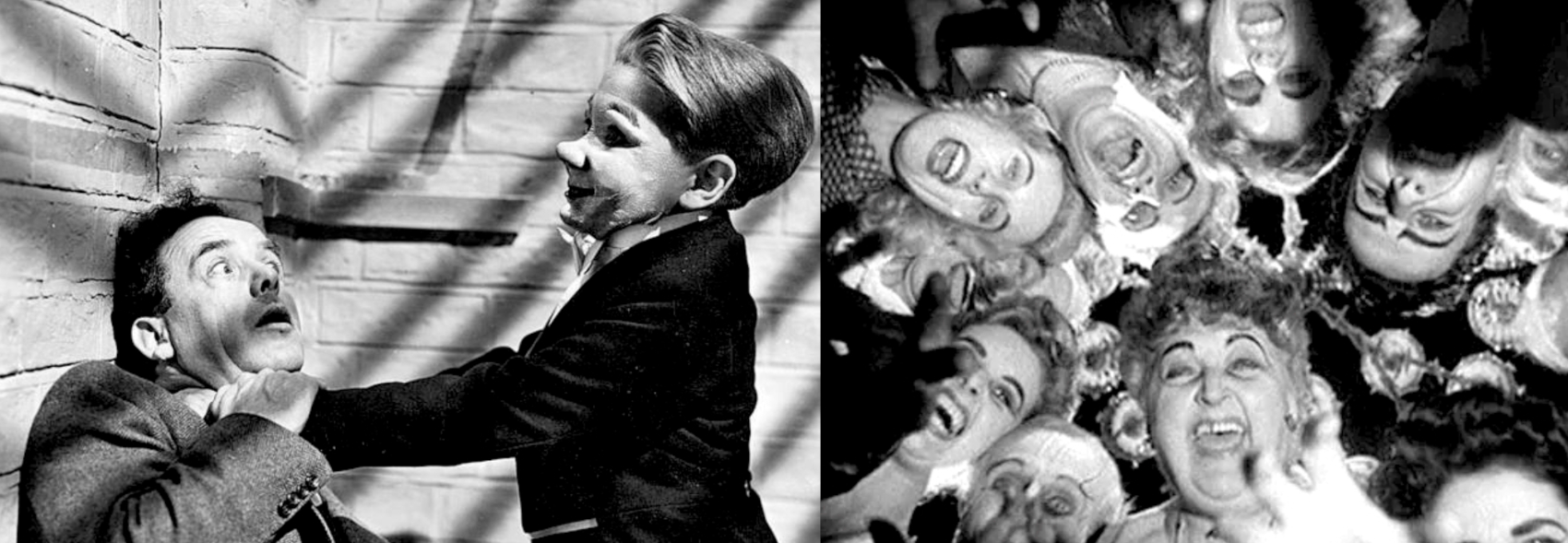
With the Maxwell Frèe tale resolved, the movie returns once more to the framing story of Walter Craig. As darkness falls, the storytelling ‘cinematically mutates.’ Most of the characters make a quiet exit. The interior lighting becomes darker than in any of the other stories. With a violent act, all logic dissolves into a whirlpool of nightmare images, a fever-dream of distortion and derangement.
The much-applauded windup combines classic German Expressionist visuals with wild editing, so the impact here is breathtaking — Caligari leaps into the postwar era. The screen is assaulted by a sudden parade of characters from the earlier ‘unrelated’ tales. All conspire to torment Craig, like phantoms in a nightmare. Viewers unaffected up to this point often begin to flip out. In my theater screenings, the finale was met with big reactions of surprise and shock. We will bet that this scene was Orson Welles’ inspiration for the finale of his The Lady from Shanghai.
(Ultimate Spoiler, seriously.)
We know that audiences generally resent stories that turn out ‘all to be a dream.’ Dead of Night successfully transcends that dream structure gimmick with a twist that’s truly mind-bending. At the finale, the movie’s action effectively reboots: the creepy Georges Auric title music is heard again, this time over a repeat of Craig’s arrival at Foley’s farm. The benign becomes menacing. Is the movie we saw just a dream, and now it’s happening for real, for the first time? Or is Craig a prisoner of an eternally-repeating circle of Hell?
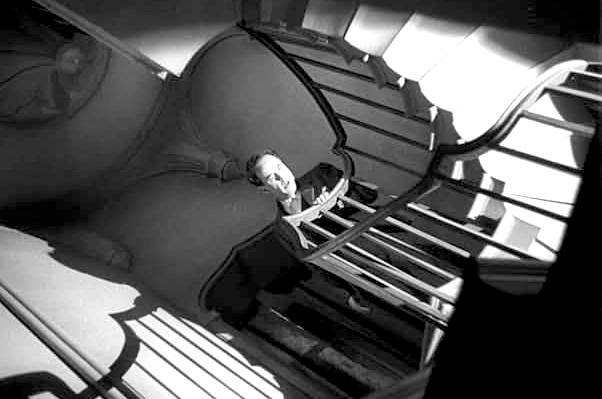
Who expects a Luis Borges-like time-space enigma to appear just as ‘The End’ fades up on the screen? Our experience of watching Dead of Night is identical to that of poor Walter Craig. He too becomes a passive audience for some ghost stories. We are pulled in just as he is, only we are enjoying ourselves.
Not too many pick up on the little super-clue on which hinges all the events of the story: Craig’s coin toss. That bit at home, before his trip to the haunted farm, may be the only piece of ‘reality’ that we can be certain of. If the coin would only once come up tails instead of heads … maybe the spell would be broken. Dead of Night gives us a nightmare, that might conceivably have an exit.

An excellent review. I look forward to the KL regular Blu-ray release in mid January 2026!