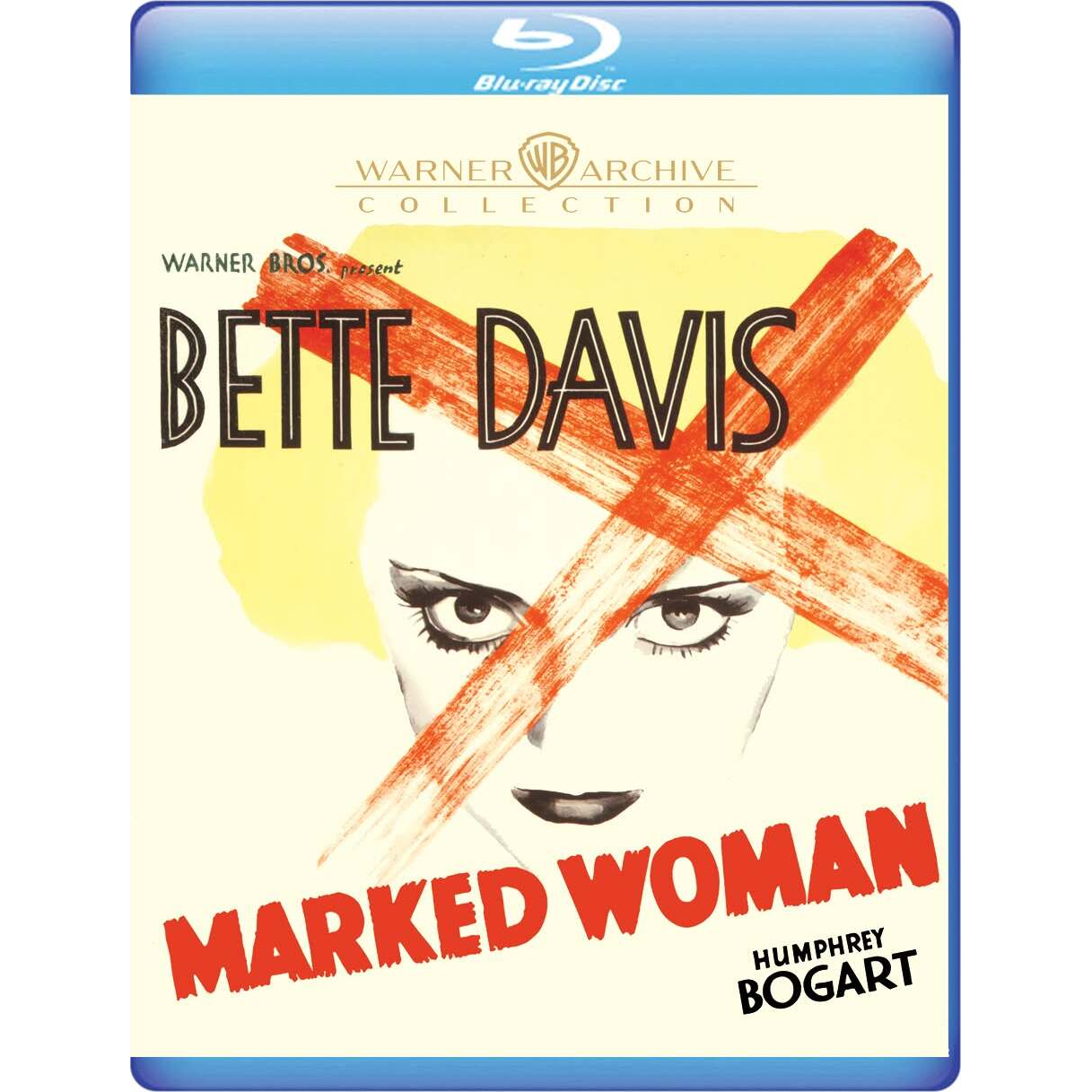

 A history-making lawsuit by Olivia de Havilland eventually put an end to Hollywood’s exploitative contract system, wherein refusal to take a certain part would result in a suspension, with more time added to the contract. Who could oppose Melanie Hamilton, the purest of the pure. It is less well-known that Bette Davis tried the same thing a few years before, in an English court. She lost the suit but not her job; Warners started giving her meatier parts to play, as in this gangland tale. William Wyler’s superb Jezebel then made Bette the queen of the studio.
The enforcement of the Production Code effectively banned gangster pictures, but various dodges allowed gangland-adjacent stories to squeak through. Demoted from star status, crooks became hissable supporting players in shows championing the workings of law enforcement. It didn’t seem to matter that James Cagney in ‘G’ Men behaved more like a gangster than a government agent.
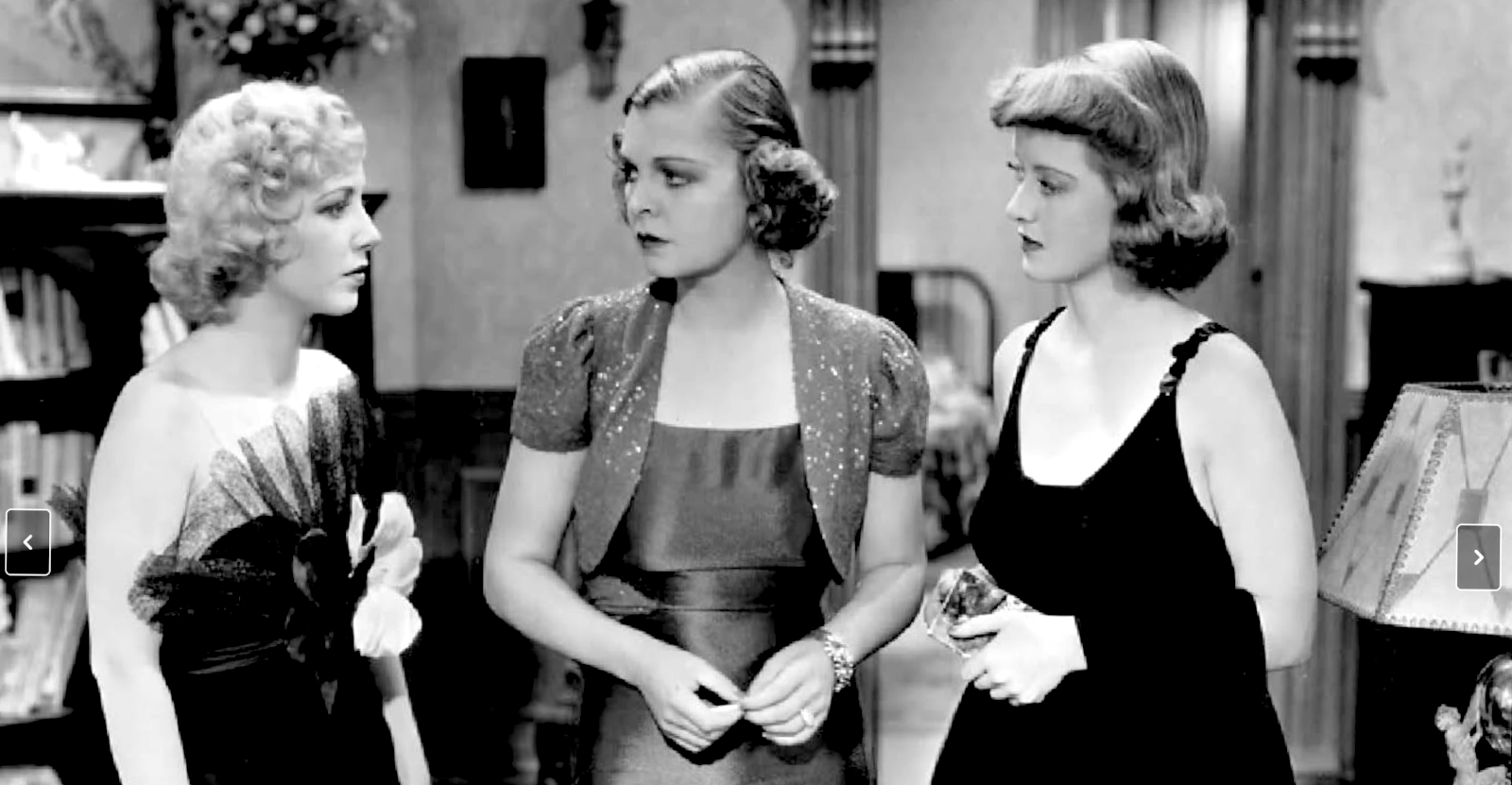
The idea of women threatened by mobsters came directly from the headlines. The notorious Lucky Luciano spent the early ’30s building up a network that turned warring gangs into a profitable syndicate. In gangland lore, Luciano was the one who ordered the hit on the loose cannon Dutch Schultz, who refused to stop targeting law enforcement officials like special prosecutor Thomas E. Dewey. Dewey eventually nailed Luciano on racketeering and prostitution charges; it is said that his assistant Eunice Carter, a black woman attorney (!!), was the one to convince Luciano’s prostitutes to testify against him.
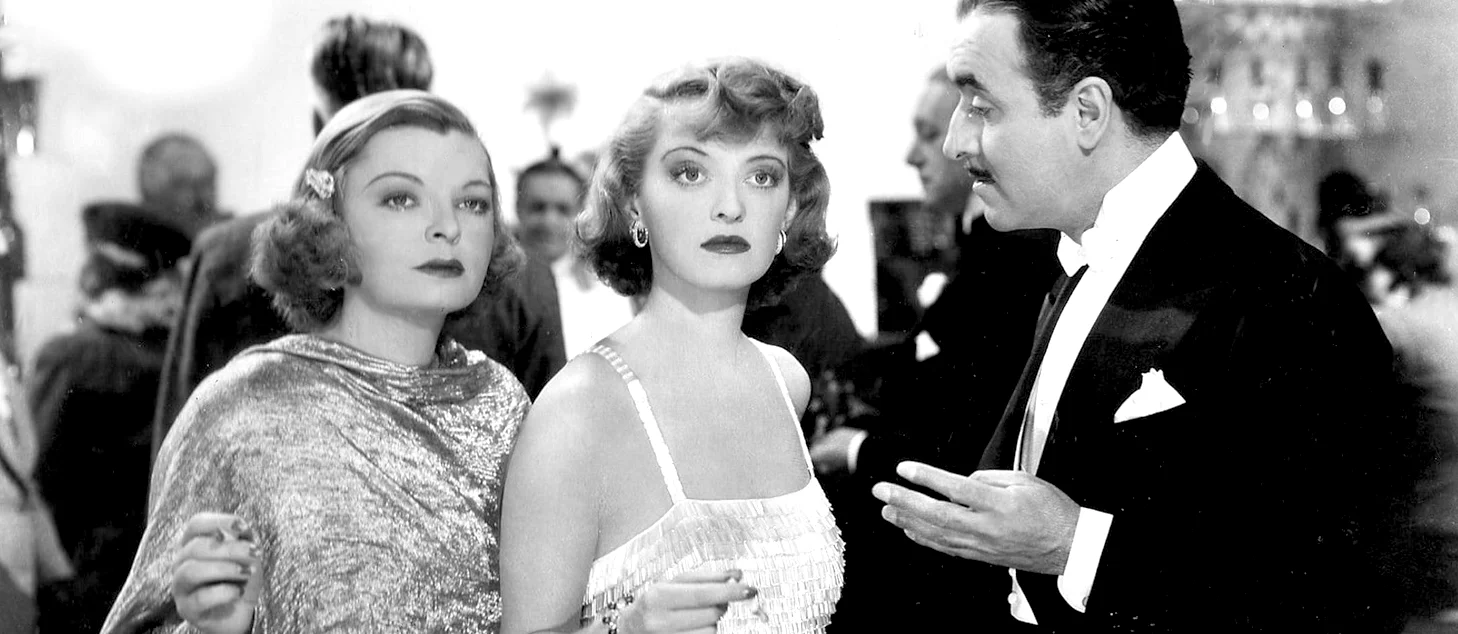
To get around the hypocrisy of the Production Code, Marked Woman must invent a kindergarten-safe fantasy. Prostitution couldn’t be depicted directly on screen, so these shady ladies are nightclub hostesses, whose main job is to get customers to spend on overpriced liquor, and then to lose their money in the nightclub’s gaming room. No patrons take the girls upstairs, and when Bette Davis leaves the club with a patron, he’s only driving her home. Just the same, the evil racketeer & club owner pressures Davis’s coterie of hostesess with open threats?
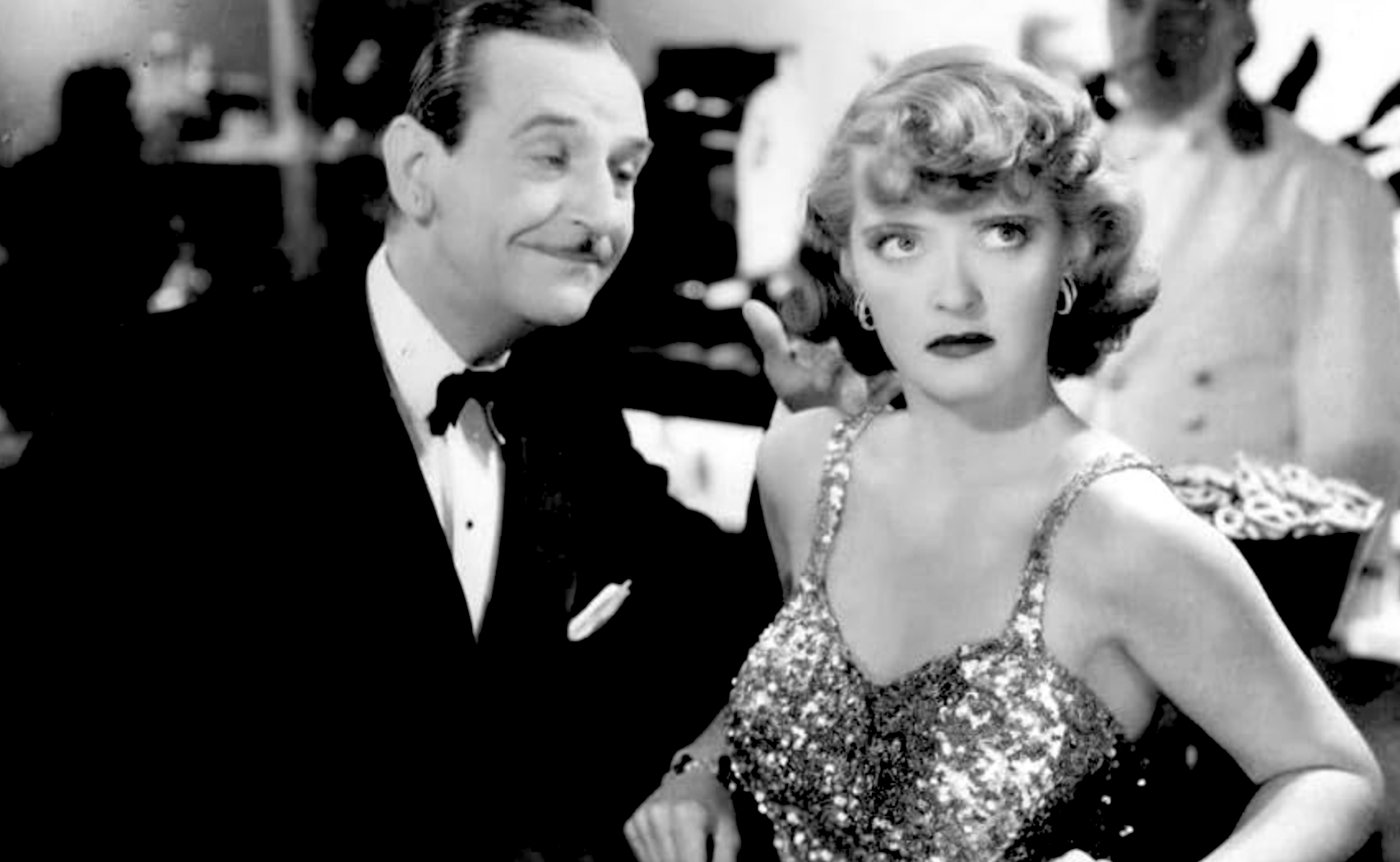
American moviegoers knew the game that was being played: adult themes could not be openly depicted, even if the narrative dodges kept movies in an infantilized state. The character played by Bette Davis behaves in a guilty manner, not because she’s a fallen women, but because she’s accepted a life working for a racketeer who routinely orders crimes … and the occasional ‘disappearance’ of a troublemaking club hostess.
Just the same, Marked Woman is prime gangland drama under the Warners brand. We get no tommy guns or touring cars crashing into storefronts, but it was considered fairly strong stuff by the screen values of 1937. Warners may have been the grittiest of the 1930s studios but it certainly couldn’t tell the real tale of Luciano’s citywide prostitution ring. Davis has a good role in a movie that could easily be part of a Gangster collection.
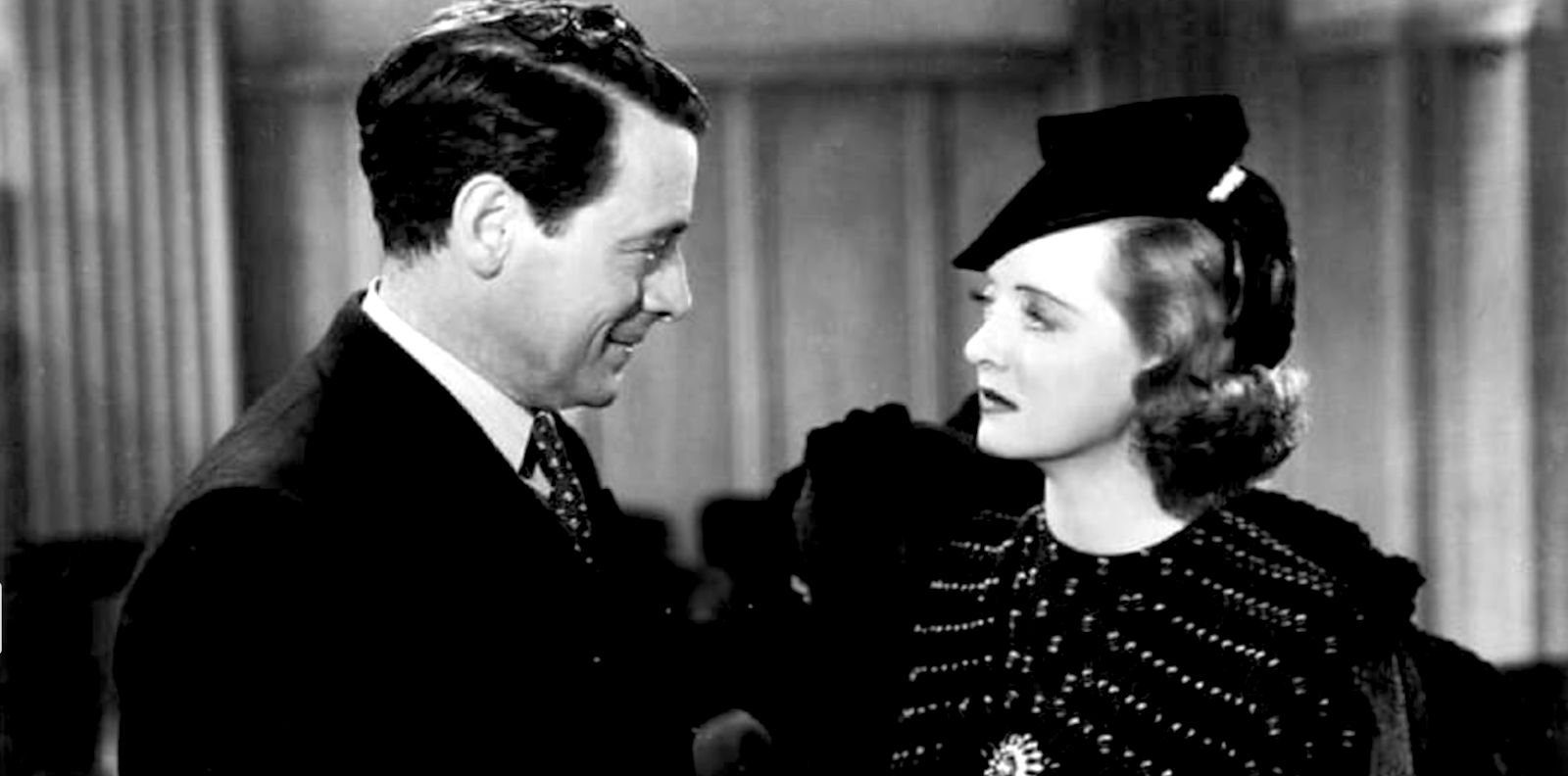
Racketeer Johnny Vanning (Eduardo Cianelli) sews up the New York clip-joint trade by acquiring the ‘Club Intimé.’ An uneducated lowbrow, he has the club’s name changed to ‘Club Intimate.’ After renovations the club’s ‘hostesses’ return to duty, encouraging suckers to spend on champagne and lose their bankrolls in the casino hidden in the back room. Mary Dwight Strauber (Davis) rooms with a number of hostesses who go along with the new deal, despite knowing of Vanning’s occasional killings. When Mary’s innocent college-girl sister Betty (Jane Bryan) shows up, the protective Mary has her roommates pretend to be hardworking fashion models. Who work only at night?
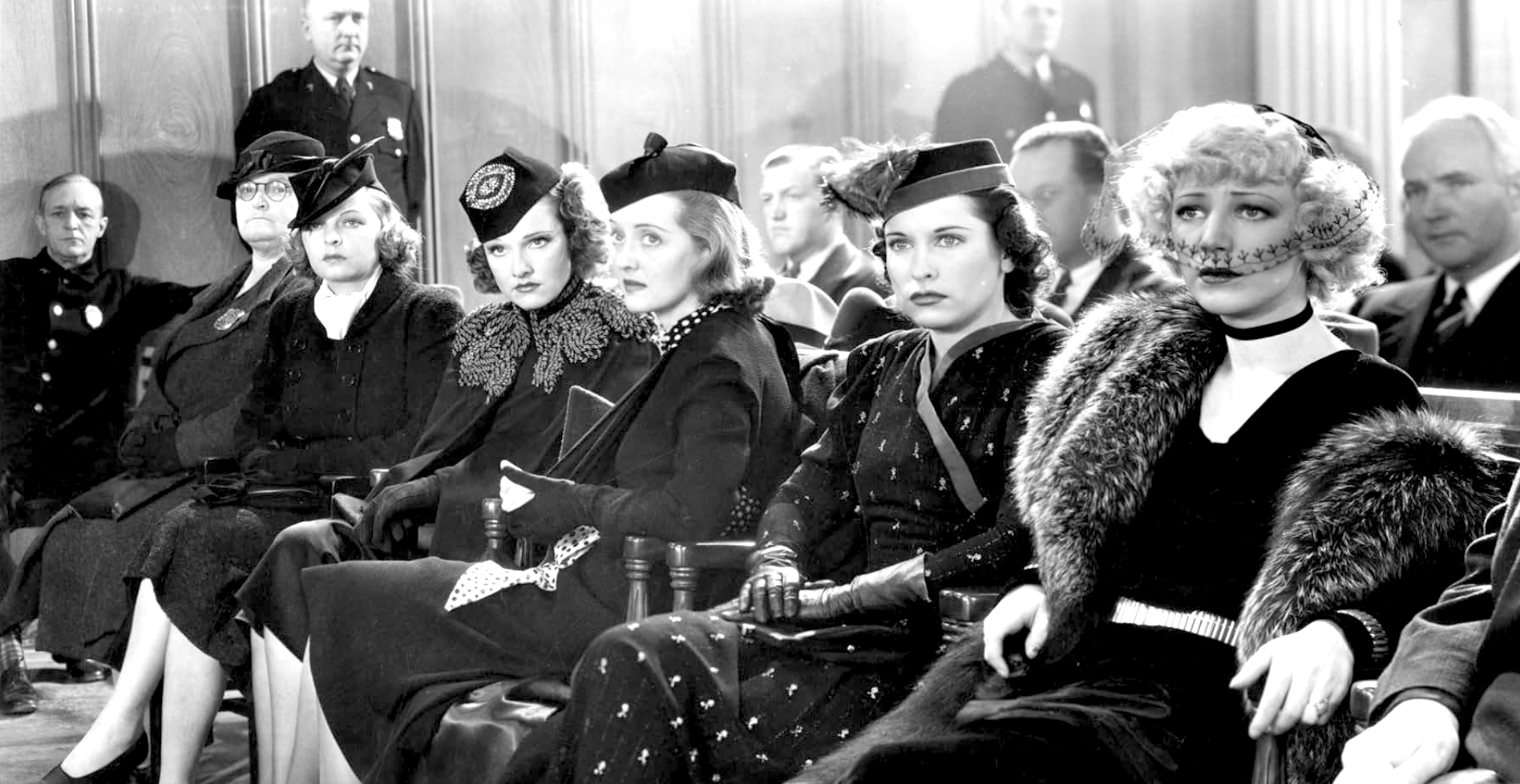
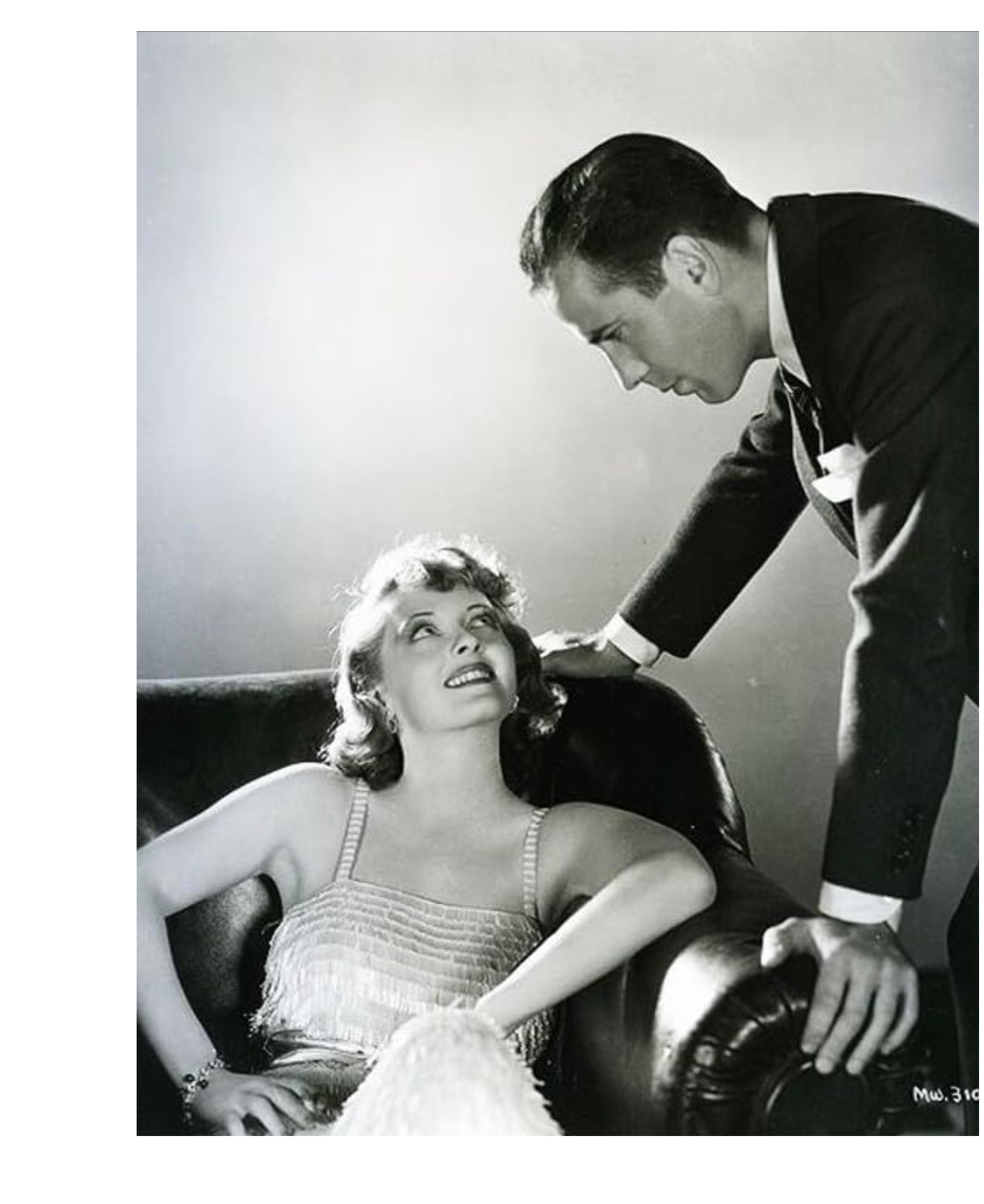
Cops investigating Vanning’s latest murder find a connection to Mary and pull in all the hostesses for a line-up. That includes Betty, who suffers a major shock. Disillusioned, she accompanies the least responsible hostess Emmy Lou (Isabel Jewell) to one of Vanning’s parties, and immediately gets in over her head. Mary has avoided the pleas of assistant D.A. David Graham (Humphrey Bogart) to help the law, going so far as to flummox a Vanning trial with bad testimony. Now she’s back at Graham’s office, begging him to help find her missing sister.
Marked Woman is an interesting spin on the Gangster genre, cleaned up for the censors, of course. The hostesses are apparently tempted to misbehave with the club patrons only after hours, and only when they’re as stupid as Isabel Jewell’s dumbbell Emmy Lou. Given the generic non-Italian name Johnny Vanning, Italian Eduardo Ciannelli also affects an unidentifiable European accent, just so nobody gets the idea that any ethnic particular immigrant nationality is being defamed.
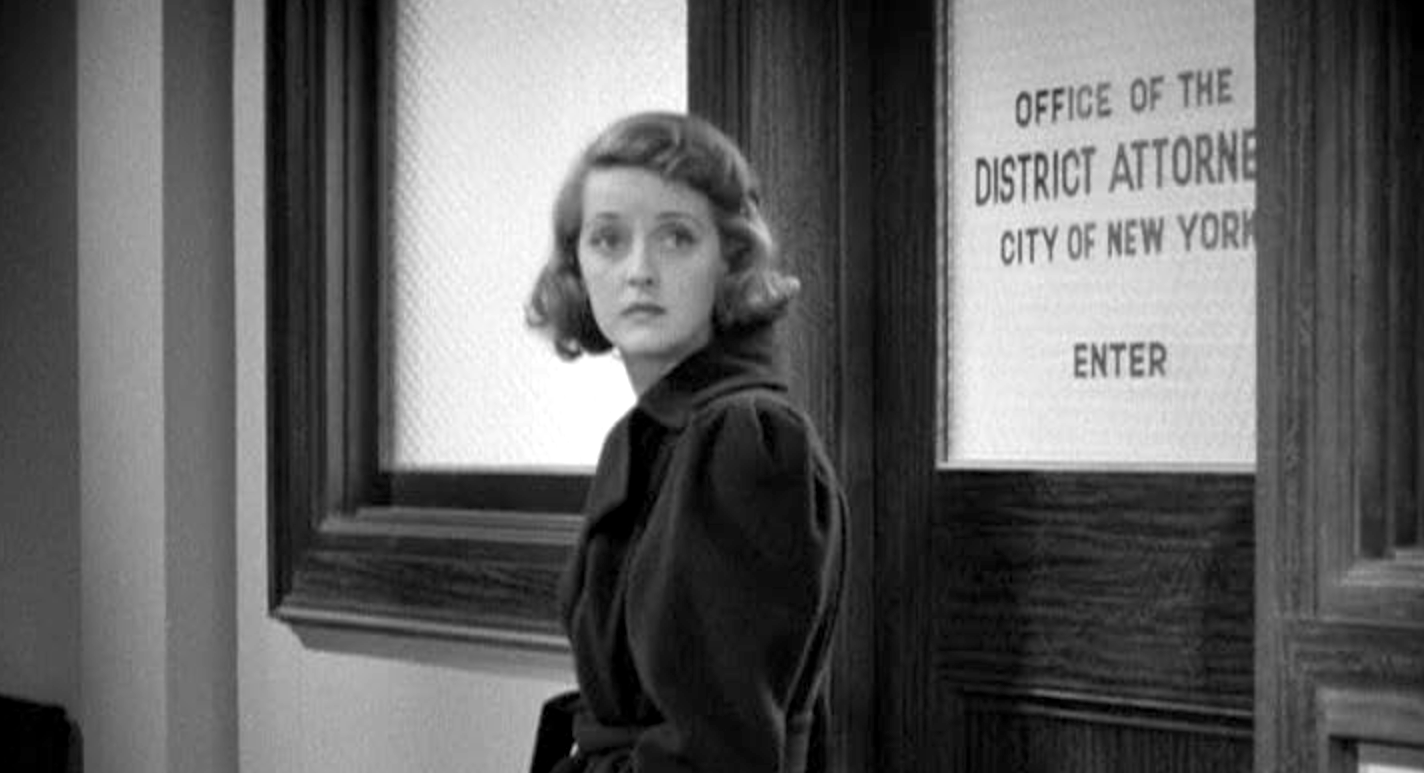
Bogart’s investigator is working for a D.A. clearly meant to echo the famous Thomas E. Dewey, but acts more like a social worker than a racket buster. It’s a workaday role for Bogie, who would have to wait three years more for his big break. Davis’ hostess is impressively glamorous for a tough girl in a tough racket. Mary has brains yet accepts the general hypocrisy: other club girls have ‘ended up in the river’ just for talking too much about Vanning’s operation.
Abem Finkel and Robert Rosson’s script solves the censor problem by centering the criminal threat on the young, unspoiled Betty Dwight, as opposed to a disposable floozy, as in Fritz Lang’s much later The Big Heat. The hypocrisy of the Code does mirror that of society at large: a decent girl victimimzed by the mob more disturbing than the killing of some dame already tainted with sin.
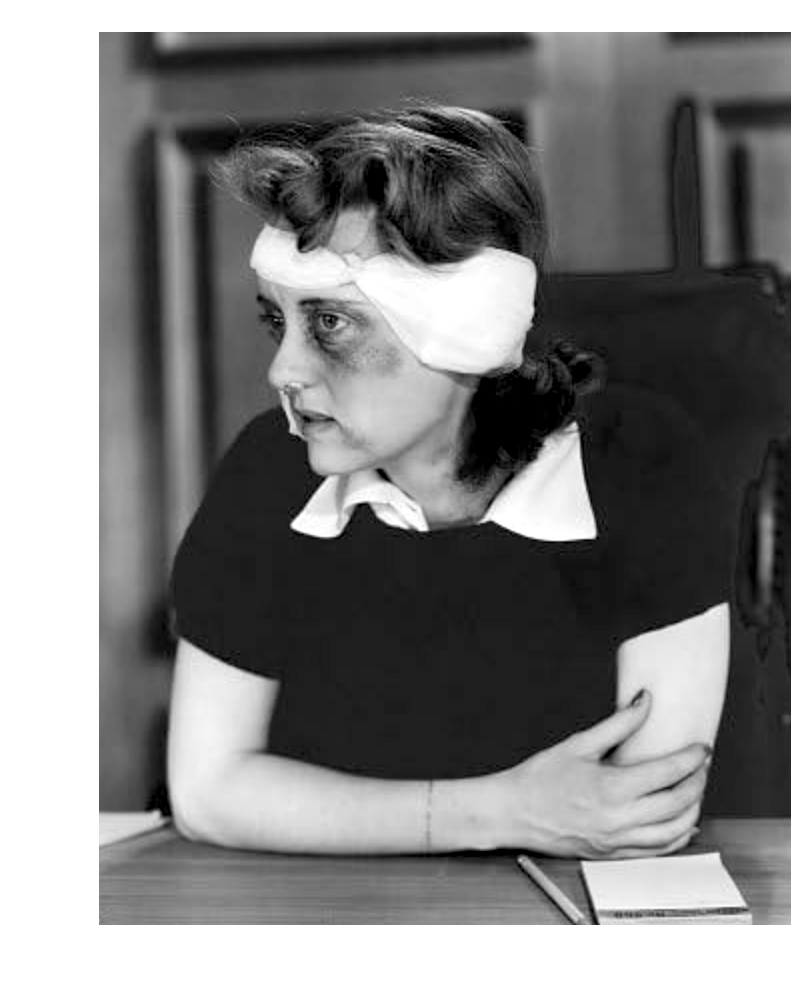
Being as this is a 1937 picture about crime, nothing truly grimy or sordid is depicted. When Mary’s pal Gabby (Lola Lane) sings for the club patrons, you’d think that Vanning’s nightclub is the classiest joint in town. The filmmakers aren’t allowed to show anything. All murders, rough-ups and savage beatings happen off-camera. We’re locked out of the room when poor Mary Dwight is beaten and mutilated. She does show up in a hospital bed, convincingly bashed and bruised. We are told that Ms. Davis insisted on the ugly makeup. Coming back from her lawsuit kefluffle, she needed Marked Woman to be a big hit, and that something attention-getting would be a big help.
Sadists need not despair: to see a hood really beat up a helpless female, watch slimeball Richard Kiley literally clean house with Jean Peters in Sam Fuller’s Pickup on South Street. There’s no camera trickery, I guarantee that you’ll flinch.
Having purjured herself in a murder trial, Mary Dwight is technically a Bad Woman, and therefore receives a scar as punishment for her sins. The surviving girlfriends exit arm and arm into the fog, the forgotten women of crime. In real life they’d be better off changing their names and hair color, and finding new jobs somewhere out of town … like Venezuela.
Bette Davis is attractive, but not in the same way as a great many above-average Hollywood beauties. Insecure star Joan Crawford, once she had the power, made certain that her looks wouldn’t be outshined by any other female in the cast. Ms. Davis’s girlfriends are allowed to be pretty in different ways. Isabel Jewell almost always looks whiney and frumpy. Mayo Methot (who has no scenes with her future husband Bogie) no longer looks like an ingénue. The others (Lola Lane, Rosalind Marquis, Jane Bryan) are dazzlers even when trying to look ordinary. Most Warners movies of the 30s maintained some level of glamour, and this story takes place in a nightclub. George Barnes’ beautiful cinematography doesn’t exactly reach for a naturalistic effects.
Eduardo Cianelli and his thugs are suitably menacing, especially with their worst crimes kept off-camera. Cianelli underplays beautifully; perhaps his billing is relatively low to convince the Code Office that a gangster character wasn’t being billboarded. Thug Ben Welden convinces as the killer who (off screen) slices up Mary Dwight. It is almost the only kind of role Welden played; we remember him playing ineffectual goons in a fistful of old Superman TV episodes. He had a great look of surprise when George Reeves bent his gun in half.
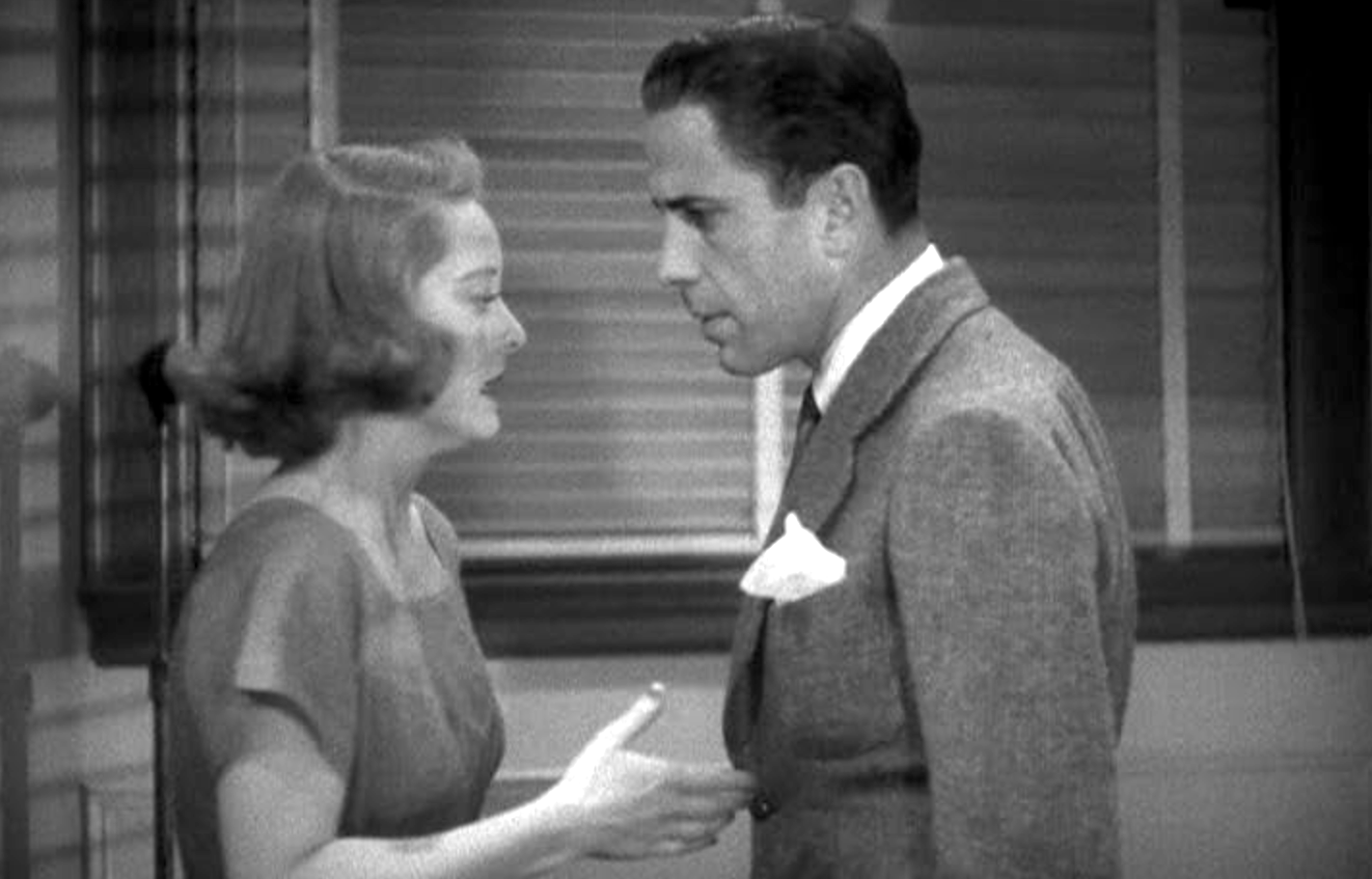
Movies under the Production Code imagined a universe that kept things like prostitution off in the margins. In the 1940 remake of Waterloo Bridge, Vivien Leigh is not a showgirl, but a ballerina … the status of her morals is addressed only in vague dialogue hints. In Man Hunt, Joan Bennett’s London beauty lives in a slum and dresses like a streetwalker. Yet she’s supposed to be pure and innocent … we see a sewing machine in her little room, to explain how she makes a living.
Numerous pre-Code movies depicted women as being randomly promiscuous, if not ‘on the job.’ The Code-mandated ‘club hostess’ fantasy was still being pushed in 1950, with Jules Dassin’s London-set noir Night and the City. Gene Tierney lives a respectable life at home, but sings for foolish club patrons to help her bosses separate foolish patrons from their money. It’s amusingly mild, considering that near-pornographic depiction of Soho vices in the original novel by Gerald Kersh.