
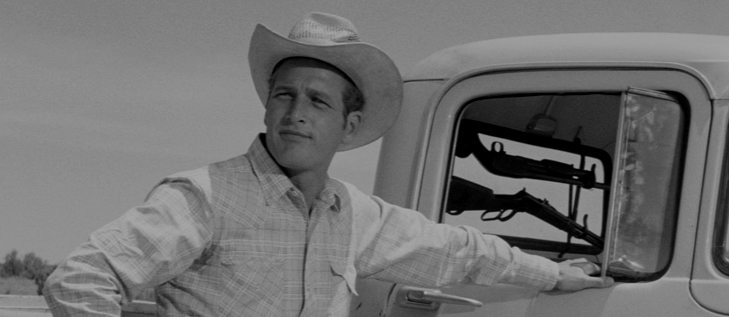
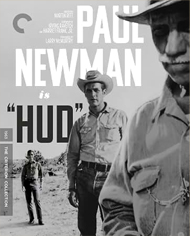

Much of the glamour of Western movies lies in their lack of glamour. Often filmed in black and white against some of America’s most desolate landscapes, horse operas have traditionally made their dramatic points with barren but beautiful visuals. Thanks to Paul Newman’s profile and James Wong Howe’s cinematography, the western achieved its beau ideal in Martin Ritt’s Hud.
The screenplay, by Irving Ravetch and Harriet Frank Jr., is based on Larry McMurtry’s Horseman, Pass By. The novel was a trim, spare evisceration of a small town rat, a ladies man in a tiny Texas burg made up of awkward teenagers, old men, and husbands who always seem to be out of town on business. The film was shot near Amarillo in the tiny burg of Claude, Texas throughout the spring of 1962 all while the production was being subjected to a crazy quilt of title changes: Wildest of the Thousand, Hud Bannon, The Winner, and Hud Bannon Against the World.
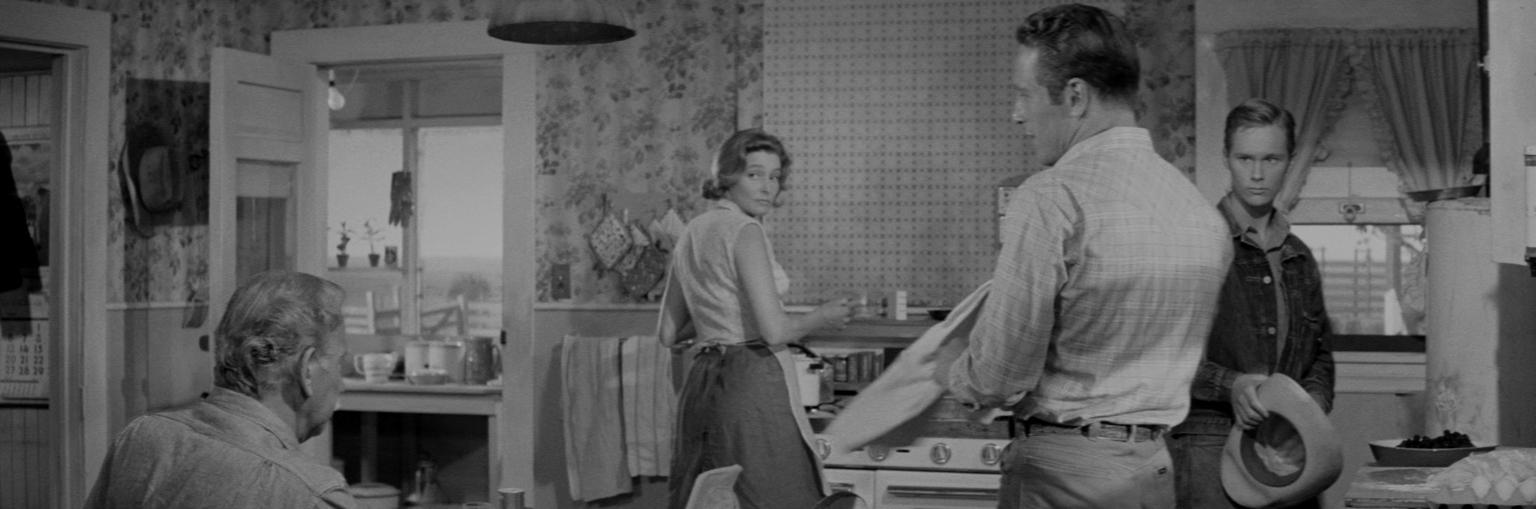
For Hud that world is paradise, a smorgasbord of easy pickins. The lanky rake’s impulses are nothing if not basic and his empty conscience is at the heart of this modern day western; the old values—charity and compassion, faith and family—are in the rear view mirror while the landscape itself has been corrupted; the austere grandeur of the big skies and flatlands is dominated by telephone poles and pink Cadillacs. It’s Hud’s world warns Ritt, and we’re swirling down the drain with him.
Hud lives in the family ranch house with his young nephew Lon (Brandon de Wilde), very close to idolizing his skirt-chasing uncle. At the head of the table is Hud’s father Homer, played by Melvyn Douglas. Homer loathes his son with a biblical fury, not least of which is Hud’s drunken complicity in his older brother’s death in a car accident: “You live just for yourself and that makes you not fit to live with.” The home is spacious but it still feels too close for comfort. The household is a parody of the nuclear family with the maid Alma serving as an ersatz mother. As Alma, Patricia Neal is approaching forty yet still has enough of the come-hither in her laconic manner to catch Lon’s eye while driving Hud to distraction.
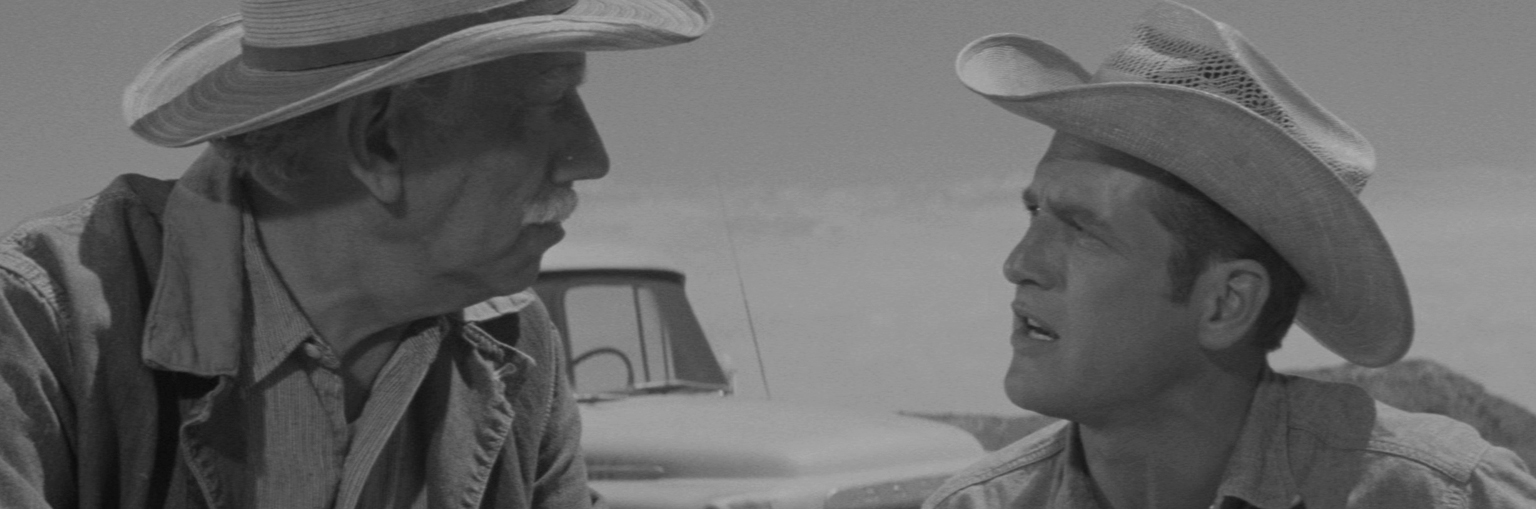
The red-hot anger between Hud and Homer manifests itself in the form of a plague: an outbreak of hoof and mouth disease is ravaging the cattle and the avaricious Hud wants to sell the herd before other ranchers discover the disease. Homer insists the health commission be warned. Lon is beginning to see both men in a new light and this already tragically farcical family unit begins to crumble into the Texas dirt.
Ritt was one of the great actor’s directors with Edge of the City, The Spy Who Came in from the Cold, Sounder, and Norma Ray, each superb in their own way and each as different as Singin’ in the Rain and Salò. He was drawn to distinctive actors with equally memorable faces, those who spent much of their career in supporting roles like Whit Bissell who plays the no-nonsense vet, and sci-fi fan favorite Yvette Vickers who makes a surprise cameo in a restaurant scene on Hud’s arm (her husband is one of those out-of-town businessmen). A burly build suited Ritt’s time as a football player in college but his passion for social justice won out and he went to work with the Roosevelt administration’s New Deal Works Progress Administration. Though Ritt made just three westerns (each with Newman, Hud, Hombre, and The Outrage), the plain-spoken, bare-boned form of that genre was a lasting trademark.
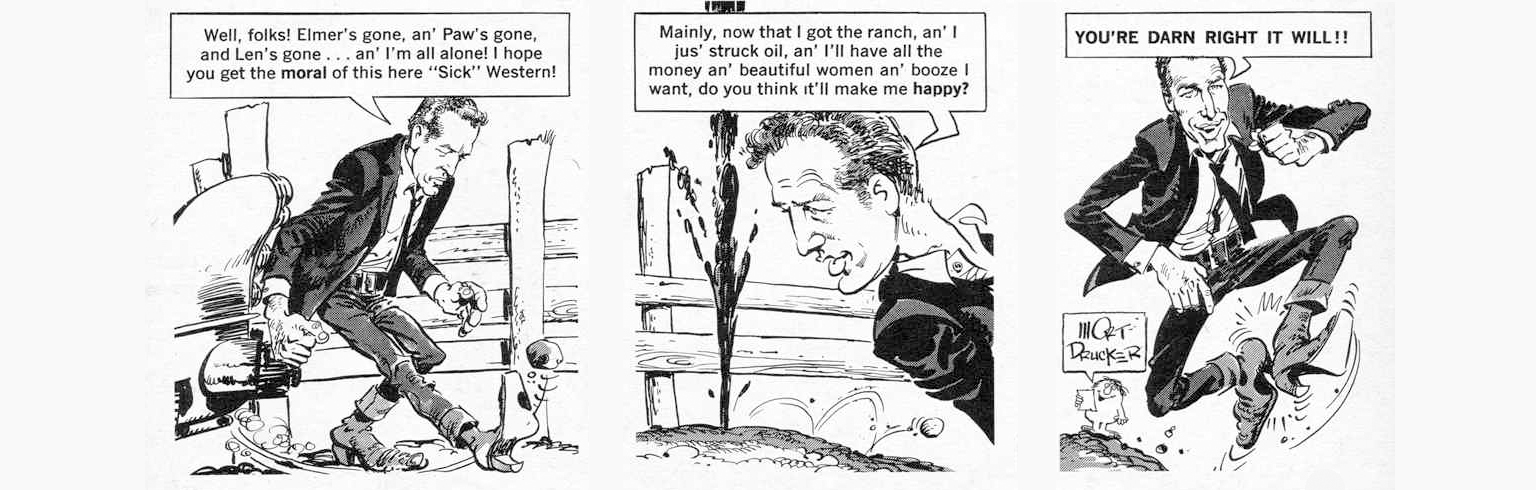
Ritts’ uncompromising finale (a remorseless Hud slams the kitchen door in the face of the audience—he seems to be giving us all the kiss-off) jolted ticket buyers, putting an unforgettable period on the film’s scathing story. It inspired Mad Magazine to satirize the film in one of their more on-point parodies, “Hood,” the “Sick Western Movie” (written by Larry Siegel and illustrated by Mort Drucker). In their own Mad way those artists put their finger on an unexpected reaction to Ritt’s closing whammy—there were more than a few in the audience who identified with Hud.
Photographer Howe created his own legend with a resume as diverse as Ritt’s; The Thin Man, Yankee Doodle Dandy, Seconds, and perhaps his finest moment, Sweet Smell of Success. Criterion has devoted a long-form featurette to Howe on their fine new Blu ray release with a 4K image that does full justice to the great cameraman’s work (don’t expect the lustrous black and white of 1941’s Out of the Fog, the seminal noir he shot for Anatole Litvak, Hud is often in high contrast with that baked in the sun look). Each extra is handled with care including an interview with Sally Field reflecting on her time with Martin Ritt, an audio excerpt from a 1974 American Film Institute seminar with Ritt, and a 1993 Actor’s Studio episode with the incomparable Paul Newman.
I found these people unpleasant and uninteresting, but the film is well done. Not to be seen twice.
I have already watched my 4K three times.
I found your comment clueless and ignorant, but your trolling is well done.
Didn’t you pass away in 2021?
I thought you died in 2021?
In any case, Larry McMurtry passed away in 2021.
That’s what I think, too.
This would make such a great double bill with “The Last Picture Show”.
Regal Cinema showed “The Last Picture Show” last night, and “Hud” tonight!
I guess I’ve never gotten into this kind of comment posting because I’m me, and everybody else can be themselves, or anonymous, or more than one person. Fair comment, Barry.