

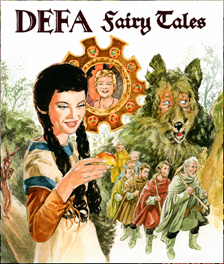
 Jean Cocteau’s Beauty and the Beast (1946) and Roberto Rodríguez’s Little Red Riding Hood (1960) have nothing in common except the hirsute nature of their leading “men.” Though most rational adults would embrace Cocteau’s postwar classic and shun the bizarrely amateurish Riding Hood, a five-year old can find something of value in both, understanding them in a way an adult cannot, not unlike Mrs. Darling who needed a brush with the supernatural to remember what she’d lost.
Likewise, the fables contained in Deaf Crocodile’s new Blu ray set, DEFA Fairy Tales, may be useless to grown-ups but still valuable to a youngster who might have an intuitive attachment to these formative stories. In The Uses of Enchantment, Bruno Bettelheim described that primal connection as “Life divined from the inside.”
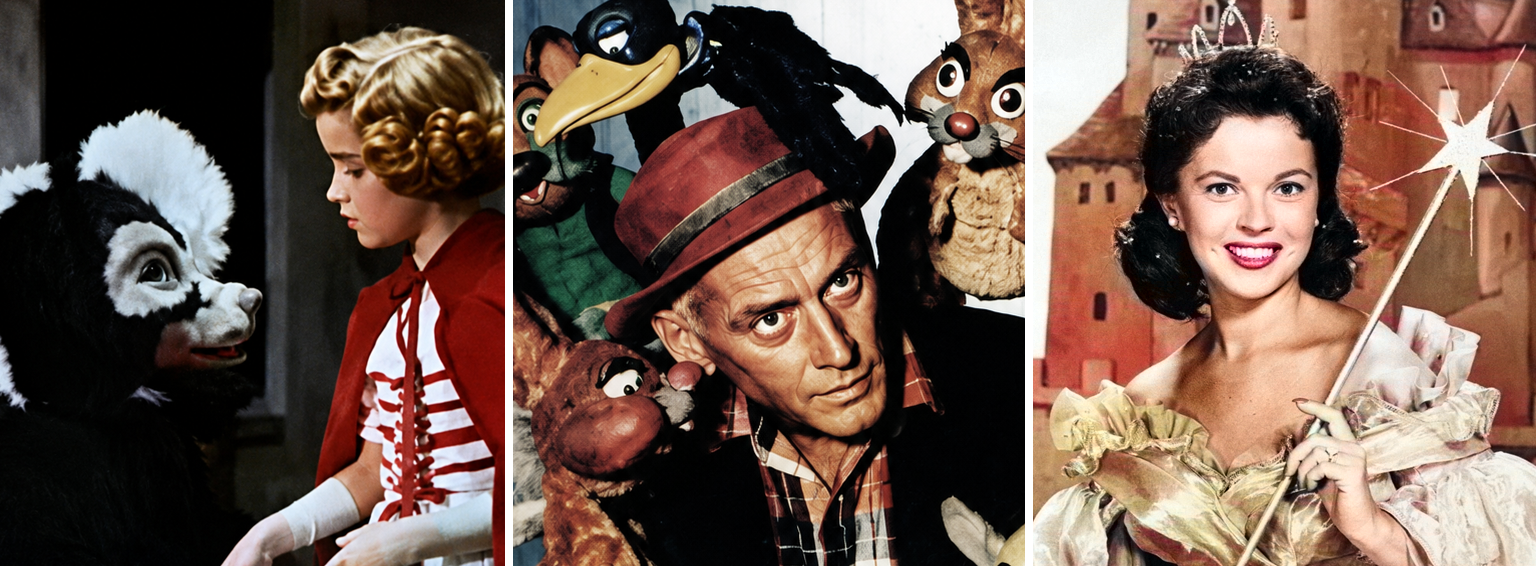
DEFA (Deutsche Film-Aktiengesellschaft) was the first film production company in post-World War II Germany. Known for films extolling socialist realism, it’s no small irony that the company may be best remembered for their fantasies. Deaf Crocodile’s release presents material dating back to an era when fairy tales were big-footing Saturday matinees and living rooms across America; they cost relatively little to produce and were sure to attract families—before the nuclear family was atomized. Saturating the market were threadbare Mexican films (Little Red Riding Hood vs. the Monsters), ABC’s 1958 TV special, Art Carney Meets Peter and the Wolf (with Bil Baird’s puppets), and NBC’s weekly Shirley Temple’s Storybook, starring the then relatively mature actress (she was 33 when the show stopped production). Still, compared to the films included on the DEFA set, those low budget bedtime stories resembled The Wizard of Oz.
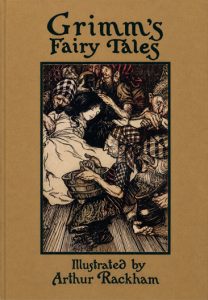
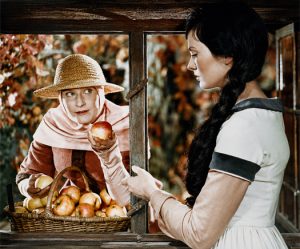 Snow White, Little Red Riding Hood—do we need to relate the plots? We do not. Thanks to the Brothers Grimm, Disney, Little Golden Books, and even K. Gordon Murray, the stories are part of our DNA. Grimm’s Snow White, first published in its best-known form in 1854, and Little Red Riding Hood, first recorded in French by Charles Perrault in 1697, and revised in the 19th-century by the Brothers Grimm, are simple stories rife with bottomless Freudian complexities. But Germany’s Snow White (Schneewittchen), produced in 1961 and directed by Gottfried Kolditz, and Little Red Riding Hood (Rotkäppchen), released in 1962 and directed by Götz Friedrich, are the opposite of magical. Though Friedrich’s film flirts with the more macabre aspects of the original story (they cut open the still living wolf so that Red Riding Hood and her grandmother may exit his stomach), Kolditz’s handles Snow White’s origin story with kid gloves, shying away (as did Americanized versions) from the sadistic execution of the evil stepmother who was forced to wear a pair of red-hot iron slippers and dance till she dies.
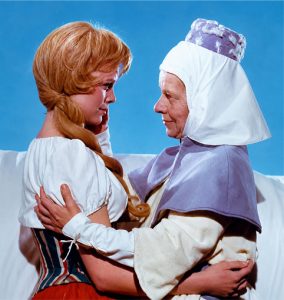 Generally obscure to the American audience is Mother Hulda (Frau Holle) from 1963 and also directed by Kolditz. The story first appeared in Grimm’s Children’s and Household Tales in 1812. It’s a gloss on Cinderella in which two daughters, one spoiled and lazy, the other kind and industrious, visit a quasi-fairy godmother called Frau Holle who lives down a well (rent being what it is above ground). The sets are particularly barren (it looks like it’s taking place on a high school gymnasium’s stage)—and the repetitive nature of the story and unrelenting whimsey make this a slog even at a mere 58 minutes.
Those three short features have a kind of poverty-stricken surrealism that could only appeal to masochists with a lot of time on their hands, but DEFA’s set begins to live up to its promise with the final two offerings.
Directed by Egon Schlegel, The Devil’s Three Golden Hairs (Wer reißt denn gleich vor’m Teufel aus) from 1977 is more satire than folktale with our hero traveling to the underworld to steal three golden hairs from the Devil’s head. It’s just as cut-rate as the rest of this lot but it features a vision of hell that suggests a halloween episode of Pee Wee’s Playhouse, a piece of absurdist vaudeville that must be seen to be disbelieved.
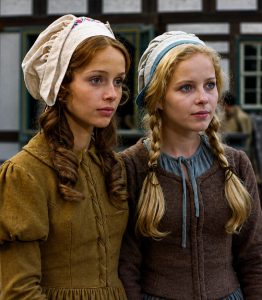 The set’s one genuinely engaging fairy tale was released near the dawn of the 80s with Siegfried Hartmann’s Snow White and Rose Red (Schneeweißchen und Rosenrot) from 1979. The leading ladies—Julie Juristová as Snow White, and Katrin Martin as Rose-Red—share the same guileless appeal: they seem newly plucked from the cabbage patch. The duo plays their parts with an easy grace and utter seriousness, and they’re resourceful too as they take on a demented, shapeshifting dwarf determined to guard his diamond mine.
Deaf Crocodile has gone the distance with these films, spreading the short films over four discs which helps make even the most compromised entry richly colorful and relatively sharp. They’ve also added historical context and useful commentaries that, in most cases, are more interesting than the film themselves. Those extras include:
A new interview with comics artist and film historian Stephen R. Bissette. New commentaries from film historians Michael Brooke, Samm Deighan, Shelagh Rowan-Legg and Anne Golden. Another highlight is a new visual essay by film historian Evan Chester, Socialist Fantasies, the Bros. Grimm and DEFA Studios: Fairytale Filmmaking in East Germany.
The slipcase boasts an extravagant 80-page illustrated book with essays from film scholars Qinna Shen, Rolf Giesen, Walter Chaw, and Alexandra Heller-Nicholas. You can read all about it on Deaf Crocodile’s site.
These sound very much like the bizarre Herschell Gordon Lewis/Barry Mahon attempts at “kiddie” fare.