
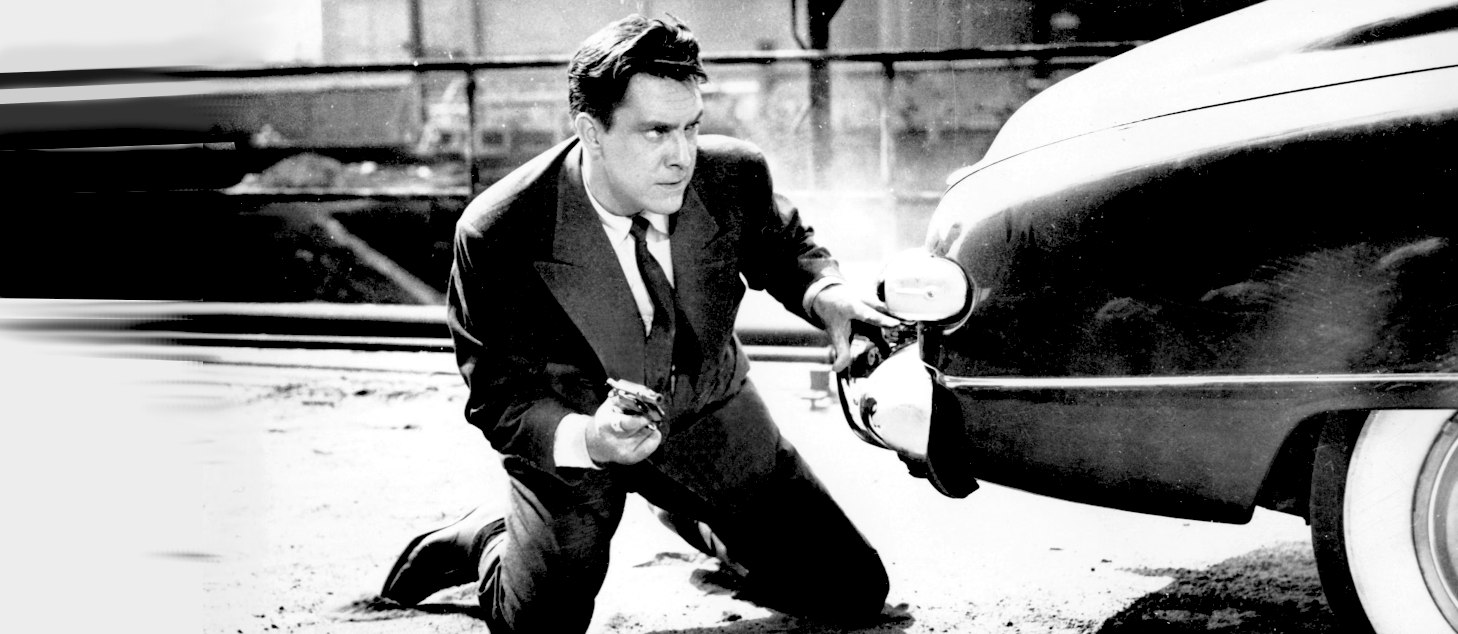
D.O.A. + Borderline
VCI showcases a pair of independently produced films noir, one a decent programmer and the other one of the best of its kind. Borderline puts Fred MacMurray and Claire Trevor in the middle of drug smugglers led by (who else?) crooked Raymond Burr; D.O.A. drops Edmond O’Brien into a nightmare, when he finds he’s been poisoned and has little time to find out who did him in and why.

D.O.A. + Borderline
Blu-ray
VCI / MVD
1949-1950 / B&W / 1:37 Academy / 83 + 88 min. / Street Date May 26, 2026 / Available from Amazon / 24.95
Starring: Edmond O’Brien, Pamela Britton, Luther Adler, Beverly Garland, Lynn Baggett, Neville Brand, Laurette Luez; Fred MacMurray, Claire Trevor, Raymond Burr, Morris Ankrum, Roy Roberts, Gregg Martell, Chris-Pin Martin.
Cinematography: Ernest Laszlo; Lucien Andriot
Composer: Dimitri Tiompkin; Hans J. Salter
Directed by Rudolph Maté, William A. Seiter
 The disc business has been doing well lately with digital retrofits of movies long consigned to the limbo of Public Domain status. Companies that specialize in these releases have been finding better source materials, and / or using digital tools to make vast improvements on ragged video masters.
VCI’s latest vintage film release is a double bill of mid-century films noir. One was originally released by Universal-International and features two star performances. If it is indeed Public Domain, perhaps its copyright wasn’t renewed by a clerical error — that even happened with an MGM musical. The second attraction is a genuine classic, a real audience-pleaser that we’ve wanted to review for a very long time. Also produced independently, it’s one of many gems released by United Artists that fell between the cracks. We’ve seen okay copies here and there, but nothing that stands out as greatly improved.

D.O.A.
1949 / 83 min. /
Starring: Edmond O’Brien, Pamela Britton, Luther Adler, Beverly Garland, Lynn Baggett, William Ching, Henry Hart, Neville Brand, Laurette Luez, Frank Jaquet, Lawrence Dobkin, Frank Gerstle, Frank Cady, Roy Engel, Virginia Lee, Peter Leeds, Hugh O’Brien, Jerry Paris, Philip Pine, Lynne Roberts, Ivan Triesault
Cinematography: Ernest Laszlo
Art Director: Duncan Cramer
Costume Design: Maria Donovan
Film Editor: Arthur H. Nadel
Composer: Dimitri Tiomkin
Story and screenplay written by Russell Rouse and Clarence Greene
Executive Producer Harry M. Popkin
Produced by Leo C. Popkin
Directed by Rudolph Maté
One of the more creative ideas to spring from the minds of Russell Rouse and Clarence Greene (The Well, The Thief, UFO), the hard-hitting noir D.O.A. is a fairly conventional tale of criminal smugglers, yet connects with the viewer on a much more elemental basis. Its unique story hook has been co-opted by history, as evidenced by espionage murders conducted by poison — a Russian defector in England, a North Korean traveling in Southeast Asia. Back in 1949 the public knew almost nothing of the dangers of radioactive material. The makers of D.O.A. may have been dissuaded from directly describing the source of their ‘special poison.’
D.O.A. is framed, weirdly enough, as a twisted moral allegory: a decent man just thinks of chasing other women before his planned marriage, and his entire existence turns upside-down.
Movie star Edmond O’Brien spent most of his career as a top-rank featured player. For a few years he also rated as a romantic leading man, albeit in shows that concentrated more on noir thrills. In D.O.A. he’s Frank Bigelow, an accountant in rural Banning, California, who decides to take a solo fling to San Francisco before marrying his sweetheart Paula (Pamela Britton). (spoilers aplenty follow) After carousing with some sales conventioneers, Frank puts away the idea of pursuing a smiling woman he meets in a jazz bar on the Embarcadero. The next morning he is sicker than a dog, so distressed that he seeks an immediate medical opinion. When doctors quickly confirm that he’s ingested a lethal dose of ‘luminous poisoning,’ Frank’s response is not to run back to Paula, but to find out who wanted him dead, and why.
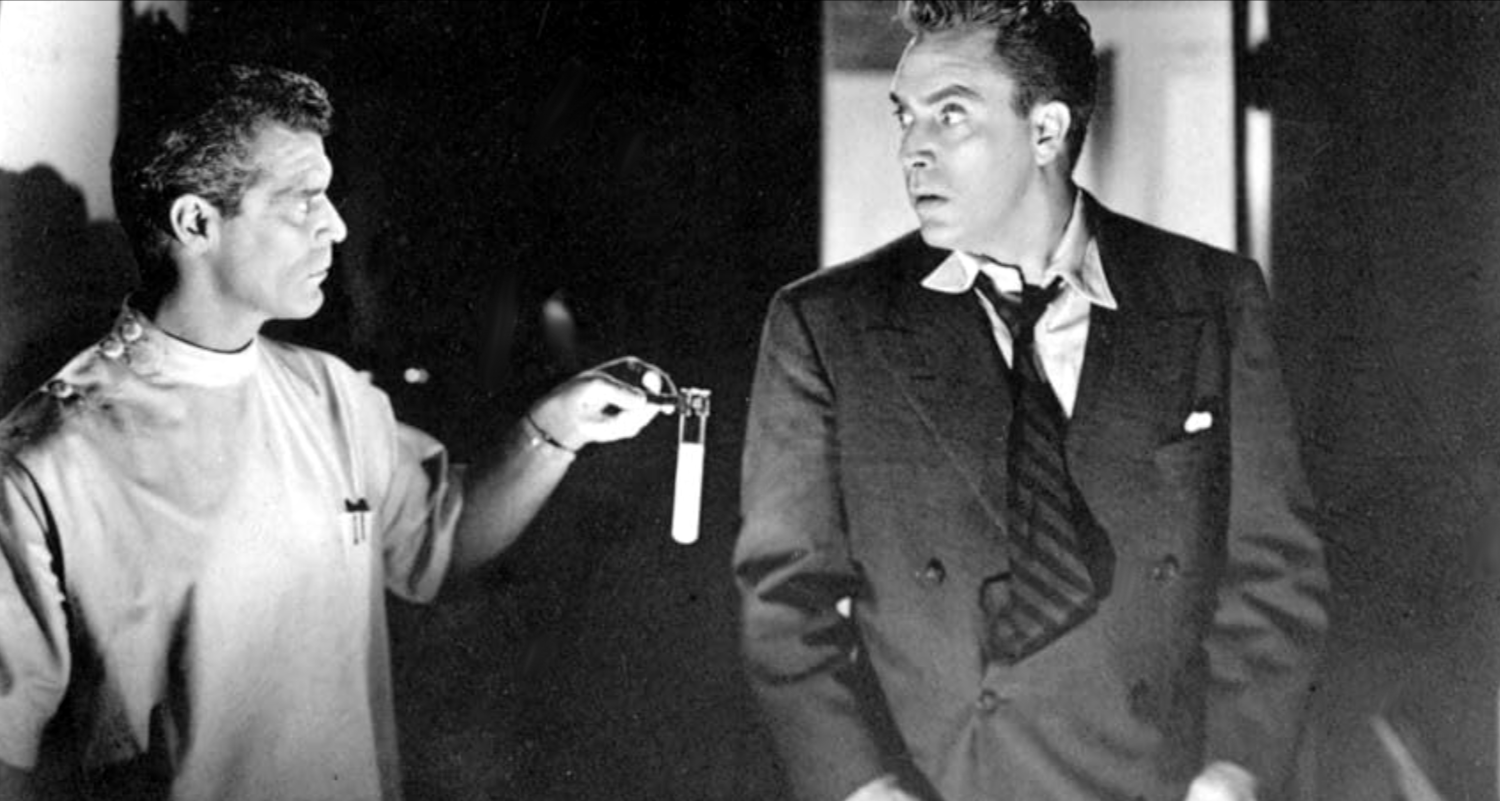
Knowing he may have only hours to live, Frank runs to Los Angeles, to track down the people behind a bill of sale he notarized. He finds that a businessman has committed suicide over what appears to be an illegal importation of the dangerous metal Iridium. The maze he must run leads through several duplicitous women, to businessman Halliday (William Ching) and finally to a genuine gangster, Majak (Luther Adler). Frank has already been shot at by a sniper, and the oily Majak calmly assigns his sadistic henchman Chester (Neville Brand) to get rid of him. In the middle of downtown Los Angeles, Frank bolts from Chester’s car and runs for his life.
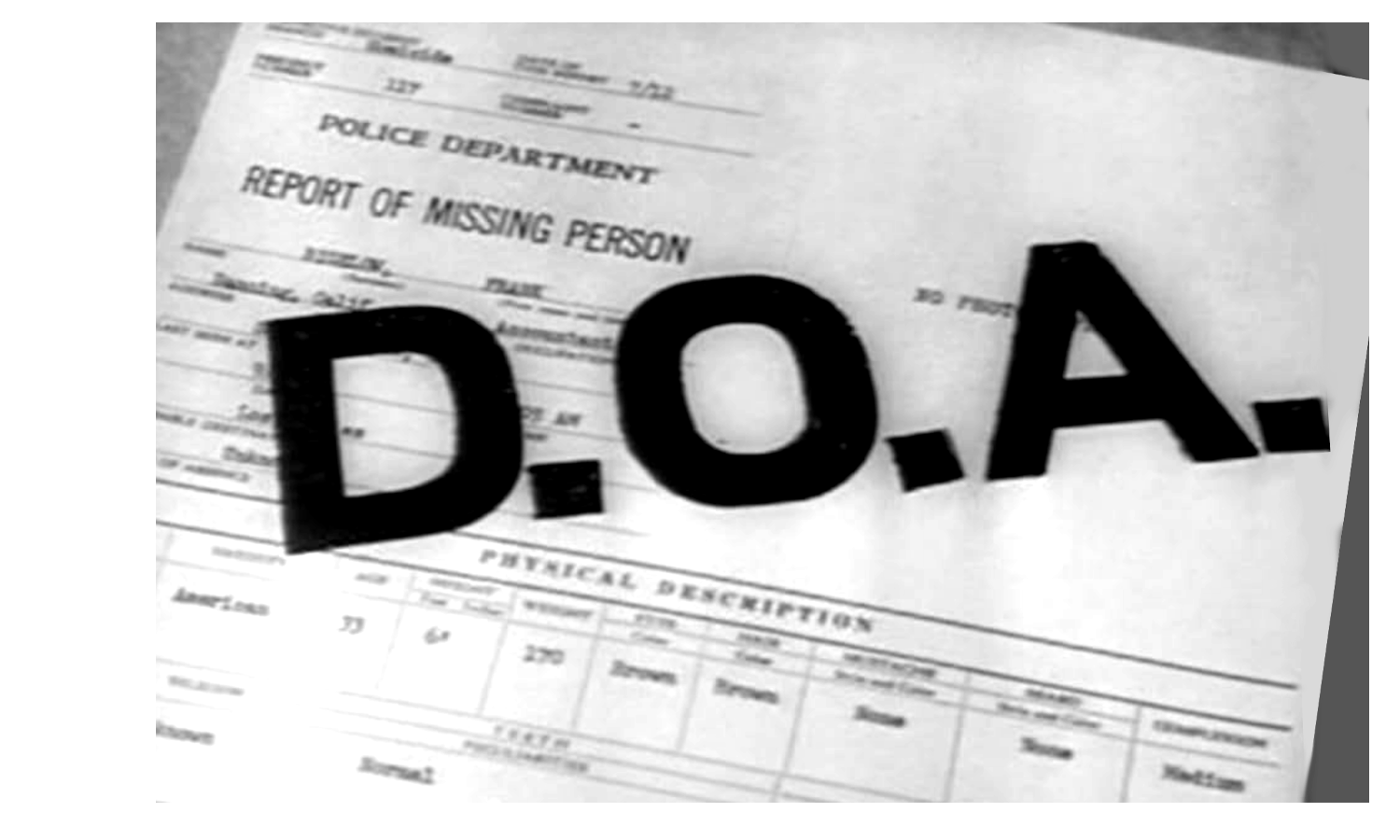
D.O.A. begins with one of the best story hooks in film history: an exhausted Frank Bigelow strides into LAPD headquarters and tells the chief of homicide that he wants to report a murder … his own. The tension doesn’t let up for the next 80 minutes. Edmond O’Brien once again proves himself capable of playing just about anything — in just a scene or two his Frank veers from thoughtless playboy to doomed and desperate, and never hits a false note. More conventional noir ‘detectives’ seek truth out of duty, a belief in justice, or sometimes just to strike out at the bad guys. Bigelow is more desperate than any of them, and has no time for delays or detours or prevarications. Nothing is more important, not even Paula. Faced with an outright obliteration, Frank simply needs to know why.
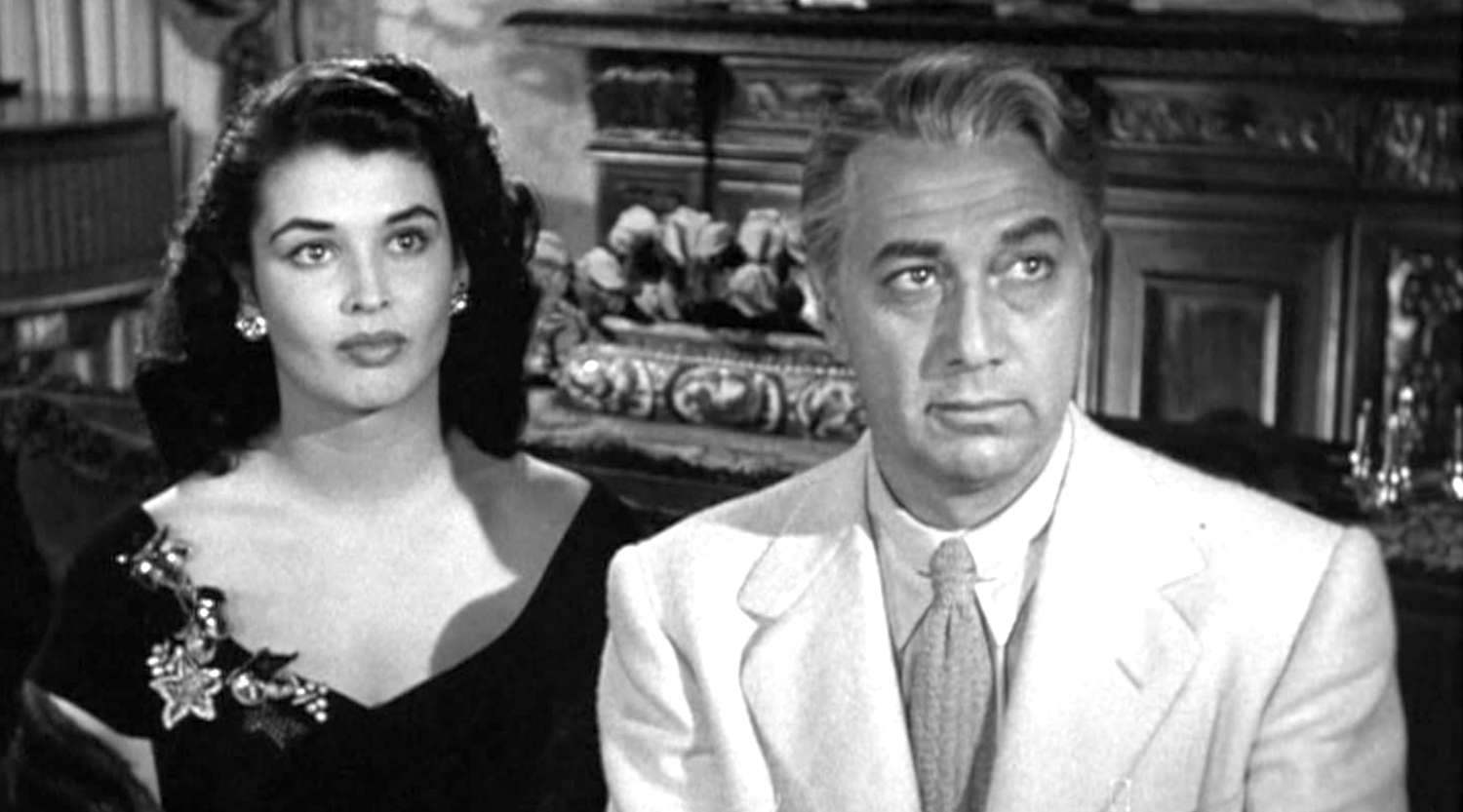
Independent producer Leo Popkin didn’t cut corners with D.O.A., which is given a substantial film shoot on the streets of San Francisco, some of it likely obtained with hidden cameras. An even more iconic location is the legendary Bradbury Building on South Broadway in Los Angeles. Executive Producer Harry Popkin owned a movie theater right across the street.
Former cinematographer and now director Rudolph Maté give D.O.A a realistic look, but also many expressionistic touches. As if reacting to the hot jazz session in Robert Siodmak’s Phantom Lady, cameraman Ernest Laszlo delivers a terrific audiovisual set piece, an intense jazz jam at The Fisherman’s Club. Also, the filmmakers seem to be as girl-crazy as the grinning Frank Bigelow. Every scene introduces at least one attractive woman, few of whom receive screen billing. Virginia Lee’s ‘Jeanie’ makes a very strong impression in a major scene with Bigelow at the Fisherman’s Club bar, yet she has no screen credit. Doing better are Beverly Garland’s suspicious secretary, a grieving young widow (Lynn Baggett), and Majak’s smoldering, sadistic girlfriend (Laurette Luez).
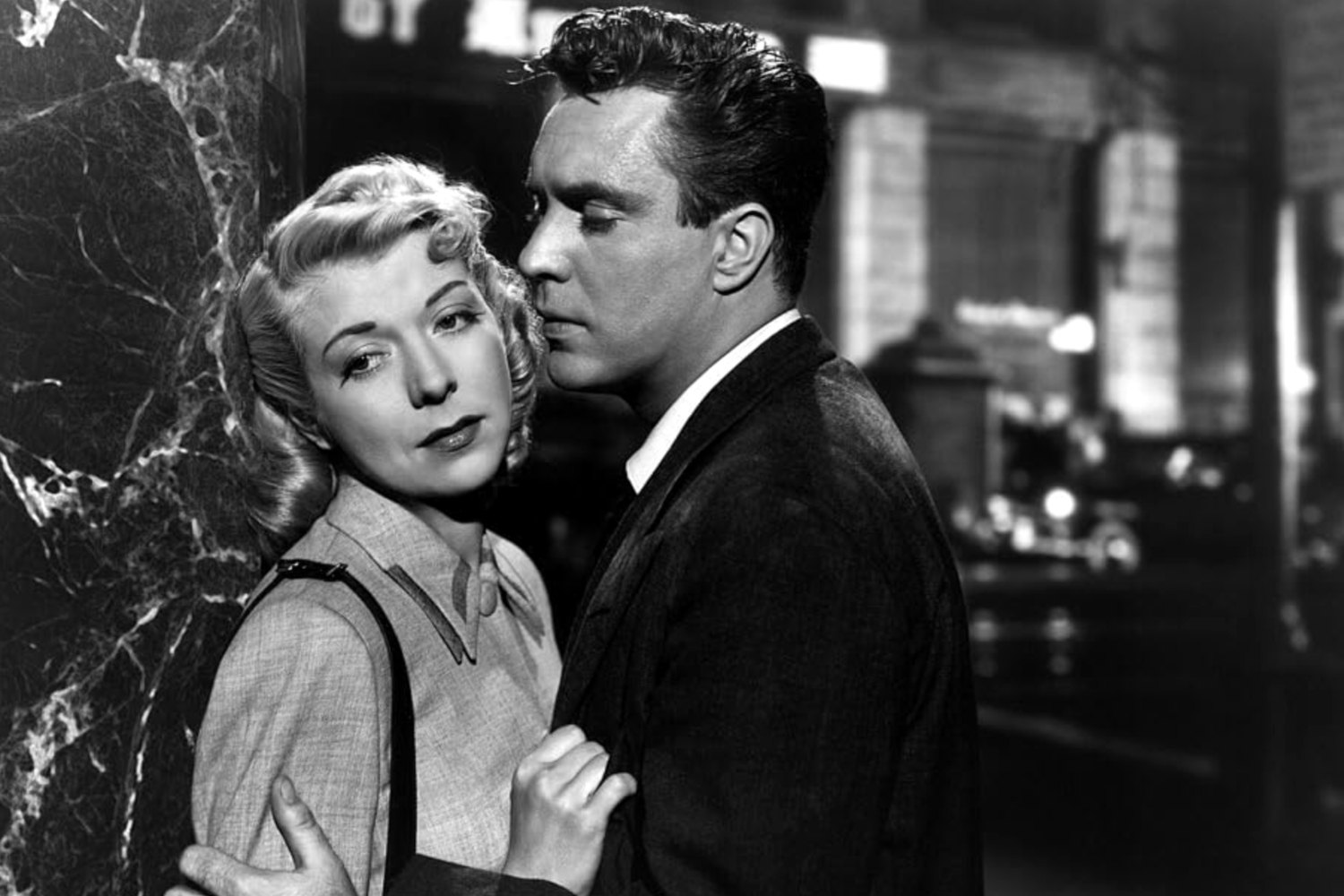
We like the film’s near-hysterical tone, but a few dissenting critics of 1950 did think Frank Bigelow’s crisis was over-hyped. The film’s musical soundtrack is almost Out of Control. The great composer Dimitri Tiomkin made his name with both grand themes and subtle melodies, but he scores D.O.A. as if it were The Fall of the Roman Empire. He begins with a stomping orchestration that matches Frank Bigelow’s footsteps as he marches forcefully into police headquarters, then on the ground floor of Los Angeles’s City Hall. Once Frank begins his delirious odyssey-investigation, the music goes nuts. Frank’s panic on San Francisco’s Market Street is a riot of music that Mickey-Mouses his every step and pause; it leaps into a classical quote when he sees lovers kissing and changes gears yet again when he helps a girl retrieve her toy ball. It’s all so on-the-nose, today’s audiences will find it comical. Dimitri Tiomkin occasionally drowned other films in exaggerated bombast, but this may be the first.
The only really annoying editorial choice, usually attributed to the producers, is the punctuation of Frank’s encounters with ‘looker’ women using loud slide whistle ‘wolf whistles.’ They grossly overstate the moment, as if Frank were a funny man in a Joe Doakes comedy short. Thankfully, the show recovers right away. We stay focused on the tense performances and high-powered suspense. Frank Bigelow is suffering an existential crisis: he can’t ignore his own mortality like the rest of us do. His demise is not some vague future event, but an imminent reality. We find him very sympathetic. He’s a post-atomic everyman, a cousin-in-anxiety to the Sci-fi saint Robert Scott Carey.
Audiences in 1949 may not have known they were watching an Atom-Age fable. Iridium is an actual rare metal similar to platinum … and isotopes of Iridium are radioactive, and potentially poisonous. Nowhere in D.O.A. is this spelled out; conspiratorially-minded types like CineSavant wonder if the U.S. government’s concerted campaign to portray All Things Nuclear as benign, had a hand in obfuscating the atomic connection.
Frank Bigelow ends up like a character in a story by Luis Borges or Ambrose Bierce. An audience of police detectives listens respectfully to Frank’s entire story. They’ve ‘seen everything’ but this takes the cake. Even the main detective (Roy Engel, amazingly not credited) listens in silence. There’s nothing to say. Everybody including Frank knows that he’s a walking corpse.
Edmond O’Brien’s biggest achievement, next to his moving ‘sorry baby’ scenes with Pamela Britton, is in making Frank Bigelow believable, running around like a madman while dying. Real-life radiation overdose victims are not usually afforded such a dignified, ‘functional’ exit.
Borderline
1950 / 88 min.
Starring: Fred MacMurray, Claire Trevor, Raymond Burr, José Torvay, Morris Ankrum, Roy Roberts, Nacho Galindo, Gregg Martell, Chris-Pin Martin, Neyle Morrow, Frank Yaconelli.
Cinematographer: Lucien Andriot
Editor: Harry Keller
Production Designer: Alfred Ybarra
Special Effects: Howard and Theodore Lydecker
Story and screenplay written by: Devery Freeman
Produced by Milton H. Bren
Directed by William A. Seiter
In the late 1940s many Hollywood actors and contract producers were looking for ways to break free of studio control and get a piece of the Big Movie Money. The independently made noir thriller Borderline is almost indistinguishable from standard Universal-International product of 1950. To produce the show, actor Fred MacMurray, director William Seiter and producer Milton Bren formed a company. Bren’s wife Claire Trevor was in on the deal as well, and all deferred their salaries in hope of a bigger payoff as producers … the back-end money. Script credit goes to writer and future producer Devery Freeman, but the AFI says that the screenwriter was actually the well-known Norman Krasna.
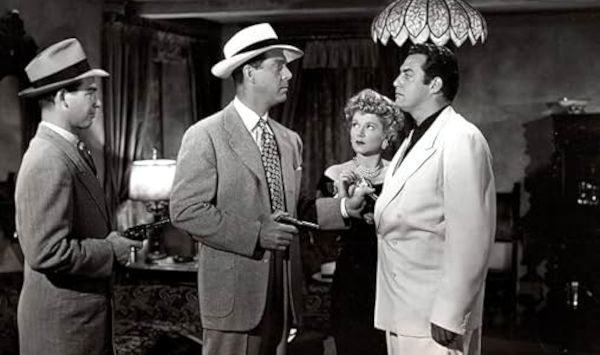
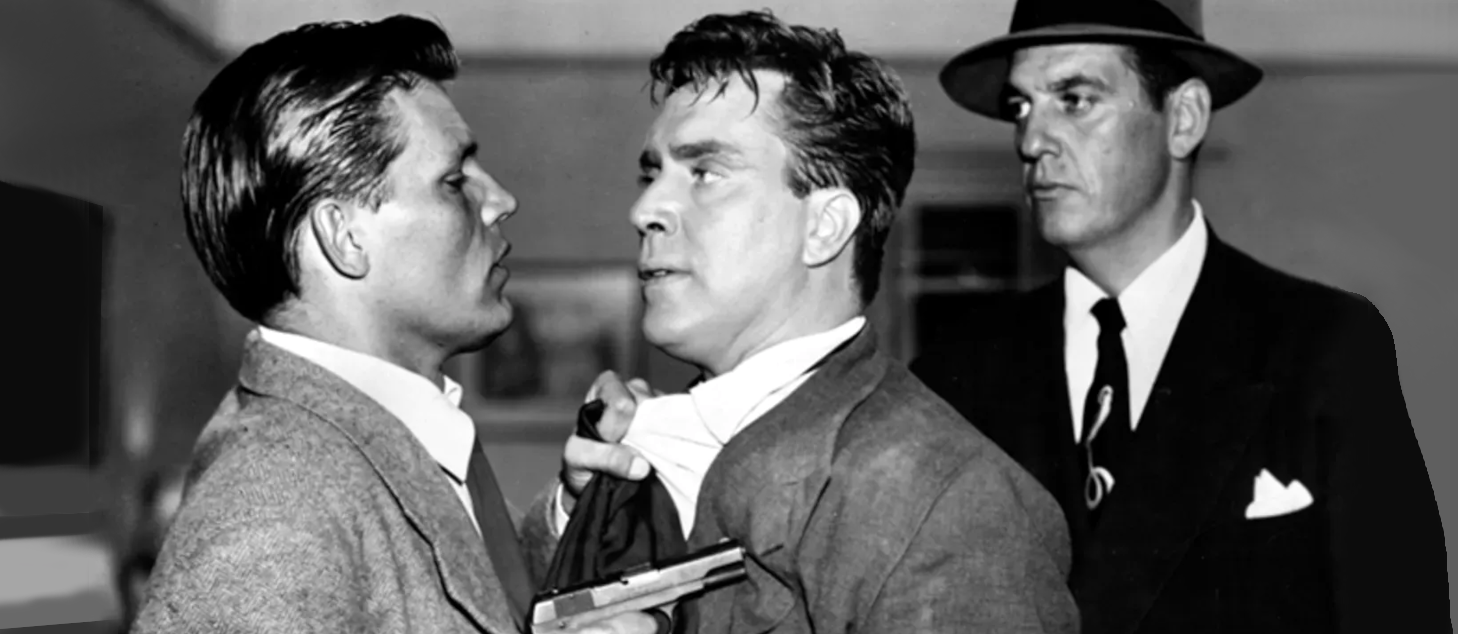
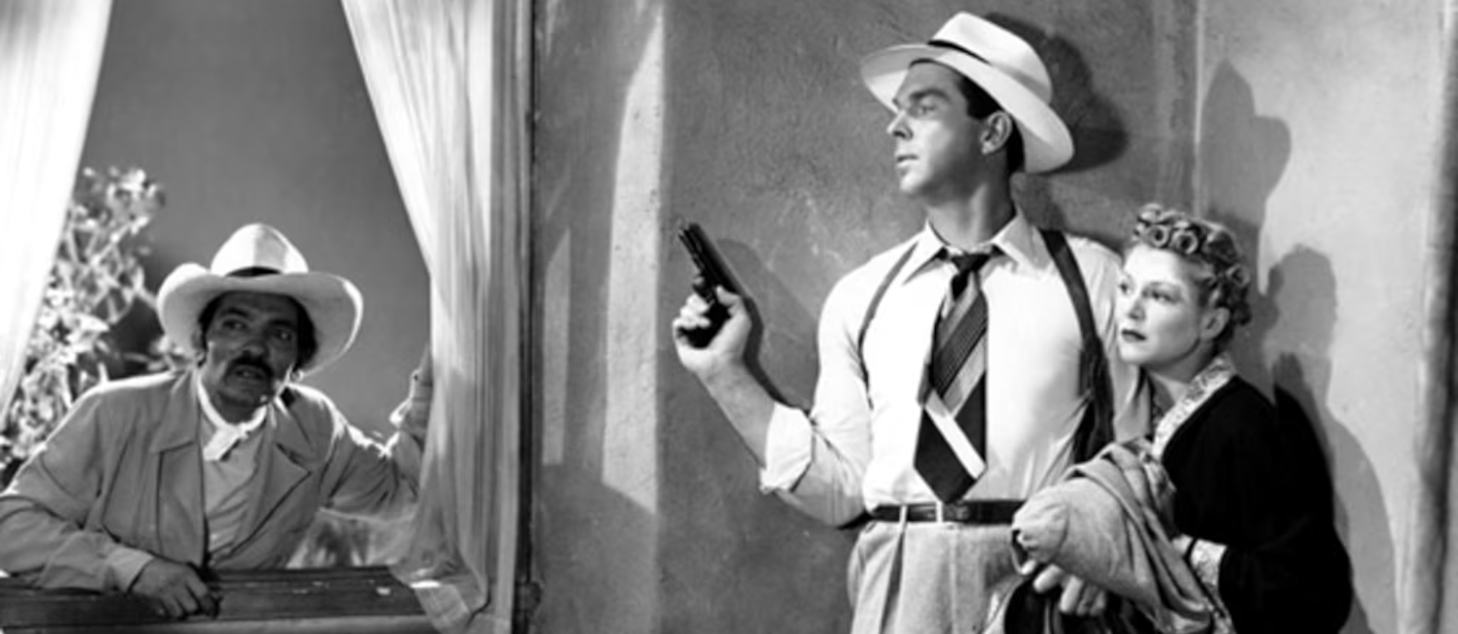
Their subject is an undercover mission to Tijuana to dismantle a drug-running operation. L.A. policewoman Madeleine Haley (Claire Trevor) relocates to a Mexican town and disguises herself as an entertainer to get close to drug kingpin Pete Richie (Raymond Burr). As ‘Gladys La Rue, she instead tangles with a Richie thug and then finds herself in more trouble with Johnny Macklin (Fred MacMurray), a shady fixer for another smuggling kingpin, Harvey Gumbin (Roy Roberts). Hiding her identity, Madeleine teams up with Macklin, posing as a honeymoon couple to aid the transport of drugs. Madeleine is attracted to Johnny yet does what she can to collect fingerprints, etc. to better identify the smugglers. Johnny initiates the same kind of stealth investigation of Madeleine.
Claire Trevor had already established a specialty playing ‘tough broads’ but her Madeleine Haley is kind of a stretch. Supposedly a former O.S.S. agent, she at first seems too innocent. She then turns on the floozie act when performing in the chorus of a cheap night club. Fred MacMurray had earned credibility as a smart-talking tough guy in the classic Double Indemnity. MacMurray’s hoodlum Johnny spends a lot of time brandishing his gun, and he even shows a somewhat sadistic side when questioning one of Raymond Burr’s thugs. Yet he still seems out of place in a white suit, dishing orders to Mexican gang members. All in all, Borderline has too many scenes in which characters hold each other at gunpoint, for lengthy discussions. Those confrontations alternate with scenes of light banter and snappy dialogue bites. The drama starts to become the noir equivalent of Dinner Theater.
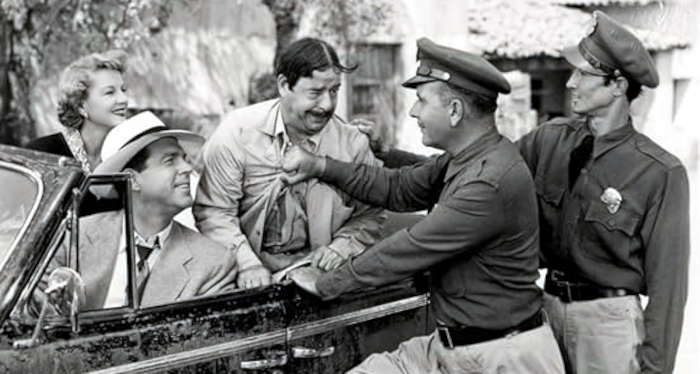
Borderline was filmed on rented stages at Republic and out on some desert roads. It disguises itself well as generic Hollywood product. Romantic possibilities are just as important as crime busting, and we bide our time waiting to see how the couple will straighten out the criminal wrinkles in their relationship. Sure enough, the story unwinds as a series of threats, kidnappings and wrong assumptions about identities. Neither Johnny nor Madeleine really know who the other is, the kind of screenwriting confection that adds a superficial gloss, and tells us that everything will be okay.
This is one of those crime thrillers that resolves legal issues with the big surprise that people we thought were crooks are really cops. The movie delivers an action scene or two and does its best to maintain credibility, and Claire Trevor is to be commended for keeping things believable. That believability is all theatrical, of course, as Borderline doesn’t take place in the same universe as a modern drug-crime film like Sicario. It’s more in tune with Don Siegel’s funnier, livelier chase & kiss romantic crime thriller The Big Steal, with Robert Mitchum and Jane Greer.
We wonder if Seiter, Bren, Trevor and MacMurray’s gamble paid off — few big stars found success as their own producers, although a sizable number got rich becoming performer-producers for 1950s television.
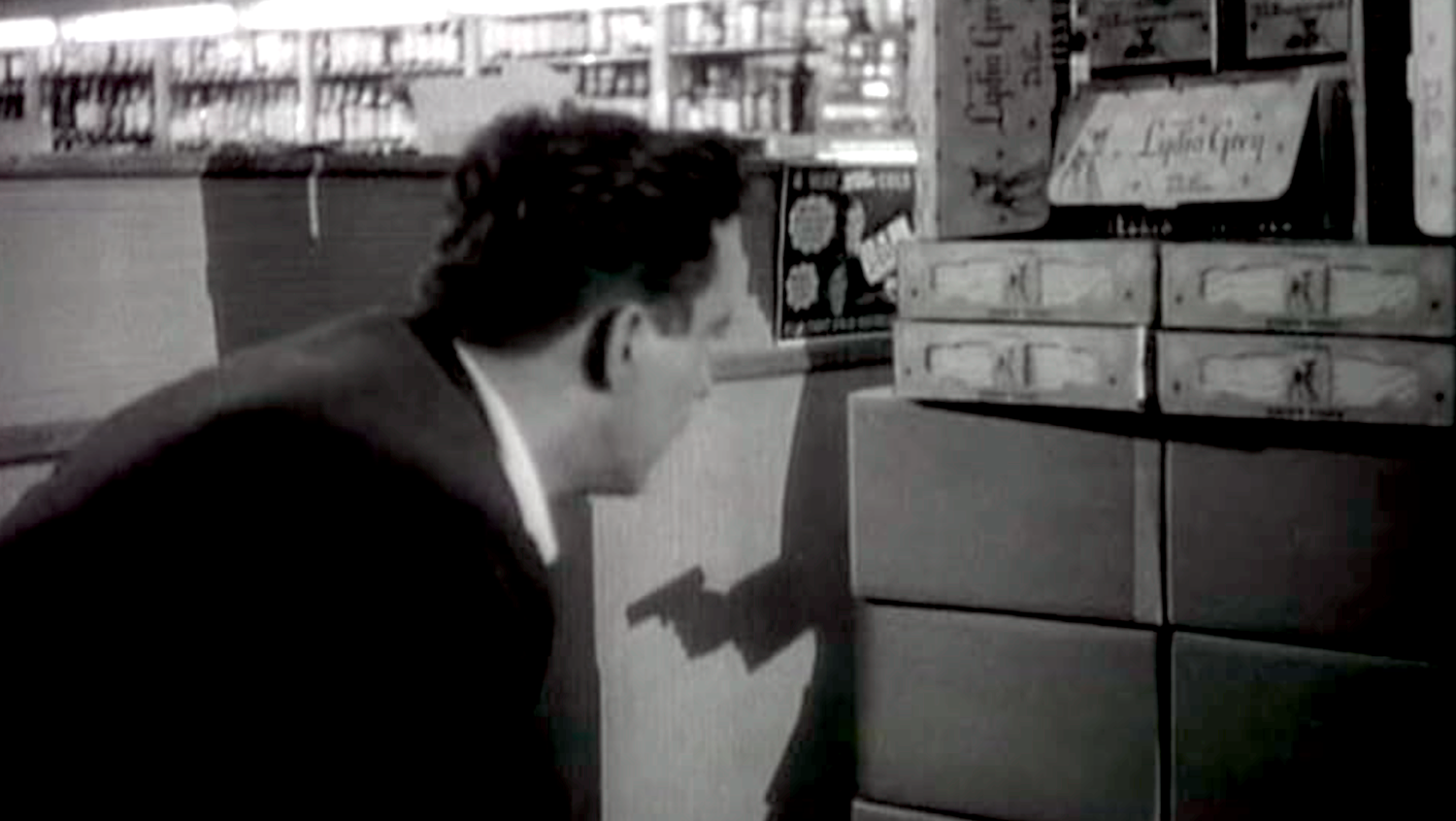
VCI’s Blu-ray of D.O.A. + Borderline comes as something of a disappointment, but one that we understand. We’ve long wished for a restored D.O.A. and hoped this would be an improvement. Digital tools have been employed but the result can’t fix the basic problems that have marred P.D. videos since the 1980s. We only noticed a couple of places where a film break may have been covered up. 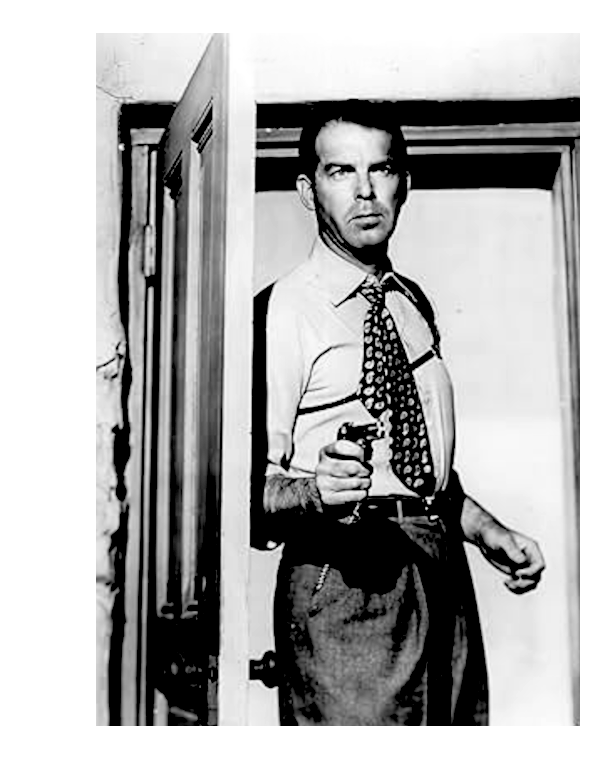 The picture overall is clearly from a duplicate generations away from the source, either from a 16mm dupe or a very contrasty 35mm. The contrast is harsh and the focus is a little soft. The soundtrack is tubby, with just enough distortion to add sibilance to some dialogue. Dimitri Tiomkin’s booming music score straightens out a bit later on, but begins on a very rough note, along with the picture. The HD master adds some stability, but the encoding can’t escape the P.D. Blues.
Yet this may be the best we’ve seen D.O.A. on disc. It’s still very watchable. The movie is so involving that I wouldn’t tell noir addicts to wait for something better. If better source elements were readily available, the Film Noir Foundation would jumped on them long ago. Did the original printing masters for the independent ‘Popkin’ films not survive? We just saw a good Film Masters disc presentation of The Second Woman, but Champagne for Caesar, The Thief and The Well have been tied up with the Wade Williams Collection for a long time. Earlier DVDs were not things of beauty.
Borderline fares much better, especially its audio track. It again is a disc for collectors, as it doesn’t ‘pop’ like Blu-rays of other Universal pictures. Yet it plays perfectly well.
VCI offers a quartet of brief featurettes that we do not recommend. They are career appreciations of the film directors and male stars, and they come with an end credit disclosure: their voiceover scripts, narration and music were generated through AI programs. The blandness shows immediately — a calm voice assures us that Rudolph Maté was born in Europe. The disclaimer suggests that the narrators may also be artificial. The images in the visual slide show appear to have been ‘optimized’ with AI tools as well.
Reviewed by Glenn Erickson

D.O.A. + Borderline
Blu-ray rates:
Movies: D.O.A. Excellent Borderline Good
Video: D.O.A. Fair Borderline Good –
Sound: D.O.A. Fair Borderline Very Good
Supplements:
AI-generated featurettes on Edmond O’Brien, Fred MacMurray, Rudolph Maté and William A. Seiter.
Deaf and Hearing-impaired Friendly? YES; Subtitles: English (feature only)
Packaging: One Blu-ray in Keep case
Reviewed: May 20, 2026
(7517doa)
Visit CineSavant’s Main Column Page
Glenn Erickson answers most reader mail: cinesavant@gmail.com

Text © Copyright 2026 Glenn Erickson
About Glenn Erickson

Glenn Erickson left a small town for UCLA film school, where his spooky student movie about a haunted window landed him a job on the CLOSE ENCOUNTERS effects crew. He’s a writer and a film editor experienced in features, TV commercials, Cannon movie trailers, special montages and disc docus. But he’s most proud of finding the lost ending for a famous film noir, that few people knew was missing. Glenn is grateful for Trailers From Hell’s generous offer of a guest reviewing haven for CineSavant.
Too bad. I will wait for better transfers.
I was eleven in 1950 when DOA was released. The crosswalks on virtually all the downtown streets were painted with this message: DOA — Ask any policeman what it means.
Wait — you’re telling me there were street teams in 1950? But it really does sound like some clever guerrilla marketing.
Very cool. John McElwee wrote two books about ballyhoo movie advertising like that, with really interesting stories.