

The coming of sound to film immediately meant musicals. The first wave of stiff operettas got old quickly, even those in 2-color Technicolor. So did stagey variety shows featuring studio talent, as was a big deal at MGM. Universal’s spectacular King of Jazz now looks pretty amazing, in a digital restoration. Warners advanced the formula with even more spectacular Busby Berkeley musicals. Paramount invested in the marvelous musical experiments of Rouben Mamoulian and Ernst Lubitsch, but also pursued their own more economical variety-type shows. Their extravaganzas blended radio talent and studio stars, with a minimal backstage storyline.
The seed Paramount Variety attraction was the pre-Code musical comedy International House, which is due on Blu-ray late in April; we’ll save our love for that picture for our review. It uses a fantasy invention that can bring in radio with pictures from anywhere in the world. The comedy gimmick was carried over for Paramount’s later post-Code The Broadcast of 1936. Features and serials exploiting fantastic TV inventions were so prevalent in the 1930s, that few are listed as Sci-fi.
The 1937 iteration of Paramount’s Big Broadcast series stuck with normal radio. The studio didn’t fob the show off on lesser talent, but assigned their accomplished director Mitchell Leisen to direct it, plus its followup The Big Broadcast of 1938. By that time Leisen was so busy, he more or less supervised the film’s direction. We’re told that director James Hogan, most known for B pictures, was his reliable on set stand-in.
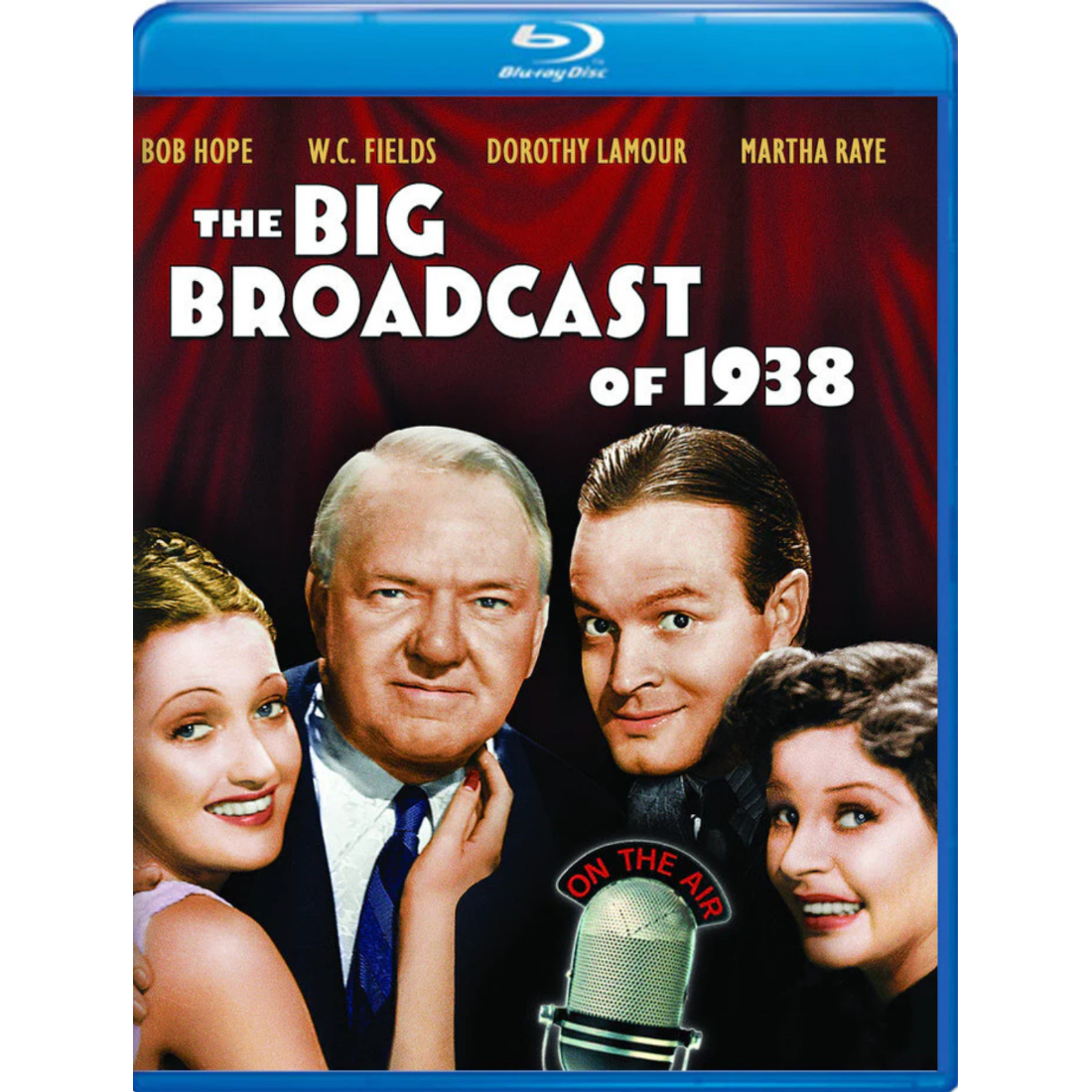
The Big Broadcast of 1930 is pegged on the participation of star W.C. Fields, who reportedly helped formulate the story. Not ‘shape’ the story, as the film remains a string of isolated performances wrapped around Fields’ comedy set-pieces and the antics of the featured co-stars. Along the way we get several catchy songs, one all-time classic Hollywood duet, a couple of amusing comedy dance numbers — and two or three dud performances barely good enough for laughs.
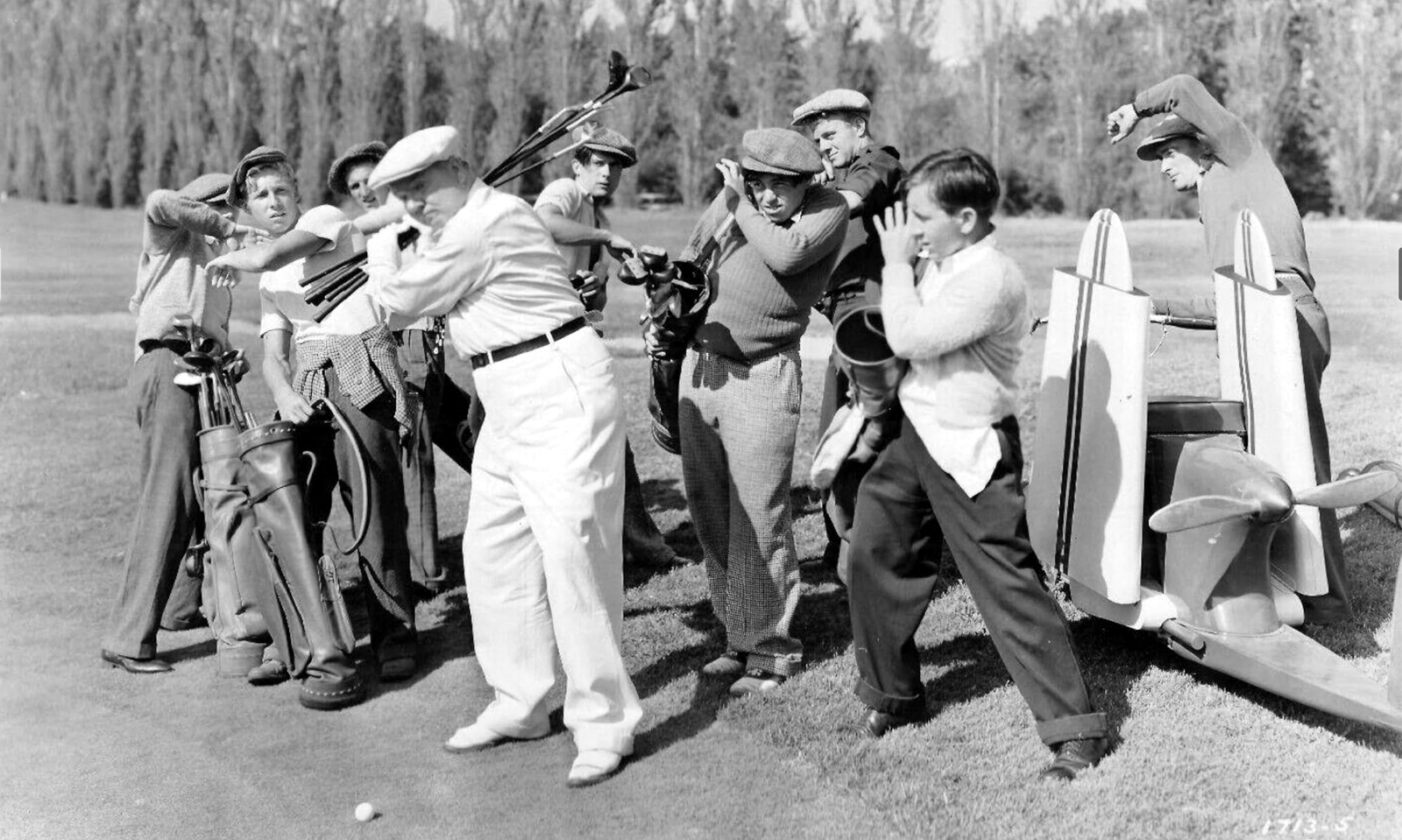
In his last Paramount picture before moving to Universal, W.C. Fields is in fine form. His antics occasionally borrow from earlier shorts, but he contributes the expected number of ad-libbed bon mots, including a ribald double entendre or two. Variety described his performance as ‘rejuvenated.’ Is that because the role was so physically active? He is rather more trim than he would appear in Uni pictures just a couple of years later.
Second-billed is the now-almost-forgotten star Martha Raye, whose comic persona is that of a bird-brained, loud-mouthed but sweet-natured ‘ugly duckling.’ Raye’s characters are associated with 1930s college hi-jink movies, a comedy sub-genre that nobody seems in a hurry to revive. She’s the campus nut who will tackle a jock to claim a boyfriend. Her big mouth makes her a bit like Joe E. Brown, with a signature howl. Hers is a bellowed “OH BOY!” Besides generating laughs, Raye’s function was to provide a non-competing contrast with the conventionally romantic leading lady.
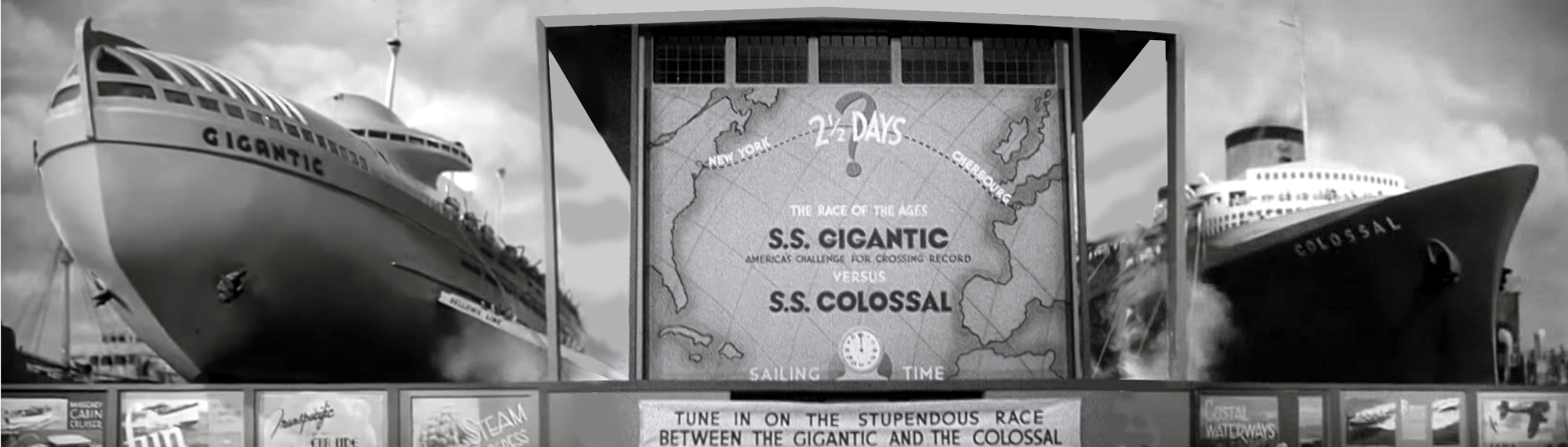
Fields has a brief double role as T. Frothinghill Bellows, the owner of the futuristic new ocean liner Gigantic, which is going to compete with the leading conventional liner Colossal in a race from New York to Cherbourg. T. Frothinghill has a sure-fire plan to win the race — he’ll dispatch his meddling, accident-prone idiot brother ‘S.B.’ to the Colossal. Calamity follows S.B. everywhere; just being on board will guarantee Colossal’s failure. Knowing Field’s games with character names, we can guess what S.B. might stand for.
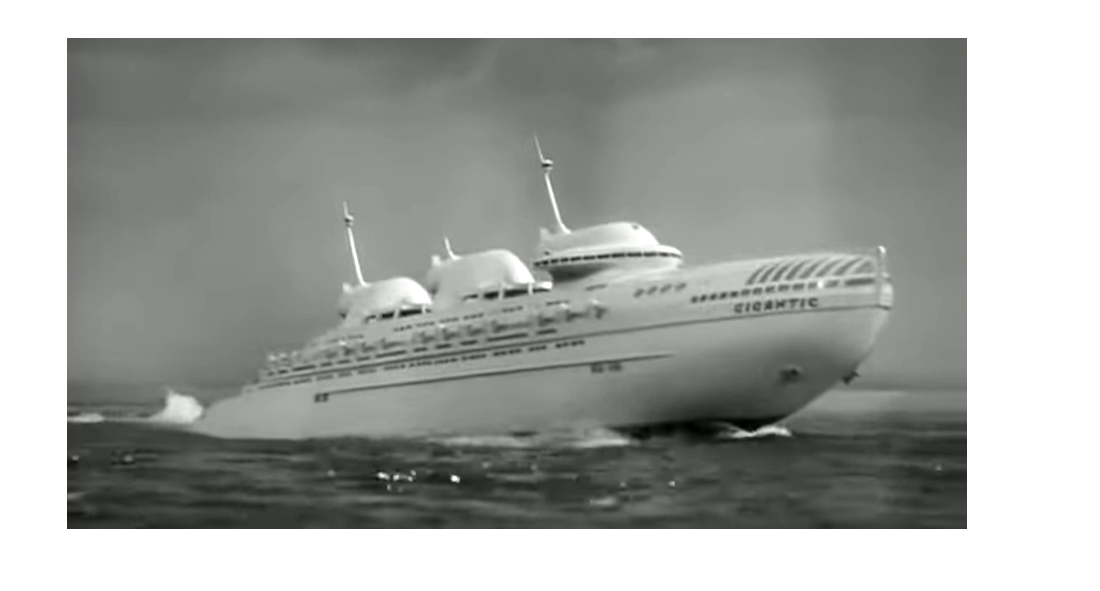
The fanciful premise calls for special visual effects that Paramount’s craftspeople pull off with aplomb. The Gigantic is an art-deco marvel that looks as if it were made of porcelain. Its polished decks would be a suitable dance floor for Astaire and Rogers. It is a futuristic fantasy craft. On its sides are rows of giant airplane propellors, that will be powered by electricity ‘broadcast’ from shore, like radio waves.
Variety praised the film’s miniatures and photographic effects as unusually realistic (especially, we think, for a frivolous comedy). The Gigantic has always detoured our thoughts on a science fiction tangent. As director Mitchell Leisen was previously an art director for Cecil B. DeMille, we wonder what he would have designed, had DeMille gone forward with his proposed 1930s version of the science fiction spectacle When Worlds Collide. What would an Art Deco spaceship Ark have looked like? Or even better, how about a B&W When Worlds Collide starring the likes of Charles Laughton, Fredric March or Claudette Colbert? *
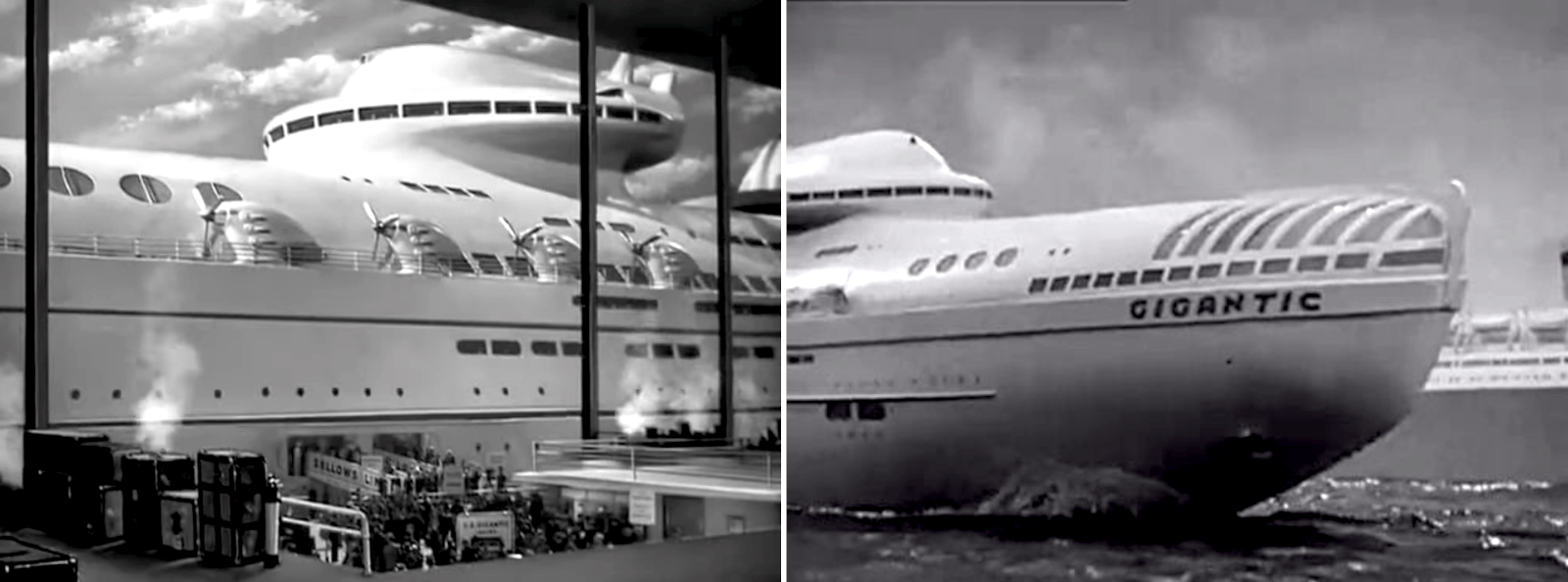
The title radio event takes place from the futuristic ocean liner Gigantic. Passengers make bets on which ship will win. The irresponsible jerk S.B. lets the ships sail while he finishes his crazy game of golf and blows up a gas station. He then flies out to sea on a winged golf cart … and lands on the wrong ship. S.B. is a sure bet to scuttle his own brother’s Gigantic in mid-Atlantic. The nincompoop takes an immediate disliking to the futuristic dynamo/radio apparatus that receives the remote power transmissions, and orders it shut down. Now the Colossal is likely to win the race.
This interferes with two romances. The radio dynamo’s inventor Bob Hayes (Leif Erickson, much younger than in Invaders from Mars) knows the race will be lost, and along with it his chance to marry the gorgeous, faithful Dorothy Wyndham (Paramount star Dorothy Lamour).

Dorothy has already saved the voyage once, by bailing out radio emcee Buzz Fielding (Bob Hope), who was jailed for non-payment of alimony for his three ex-wives. All accompany him on the voyage, in pursuit of monies owed. Fielding needs his bets on Gigantic to pay off, so Dorothy and the ex-wives take it upon themselves to distract S.B. Bellows. With the meddling S.B. out of the way, Hayes will be able to quietly restart his radio power invention.

In the middle of this mess, Gigantic picks up a shipwreck survivor, S.B.’s equally crazy daughter Martha. Her luck is so bad that just a glance causes mirrors to shatter. She clomps around the decks, doing almost as much damage as her obnoxious dad. She threatens the radio dynamo as well.
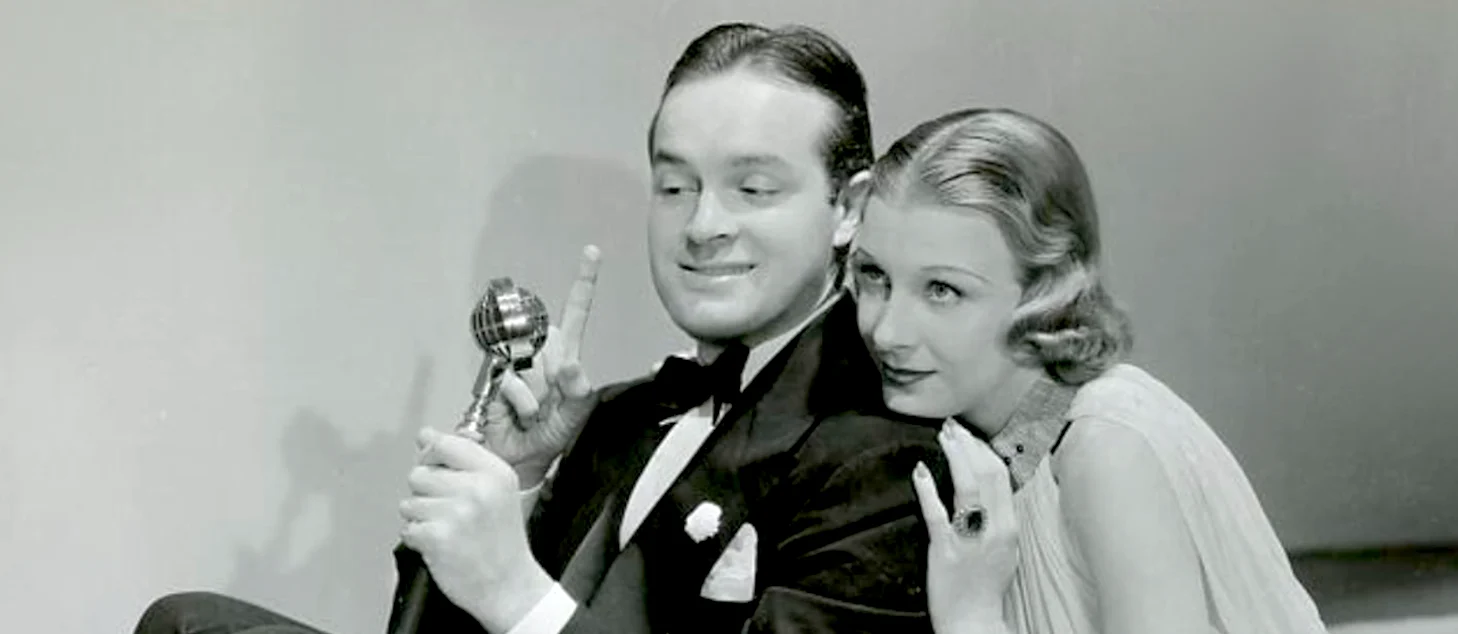
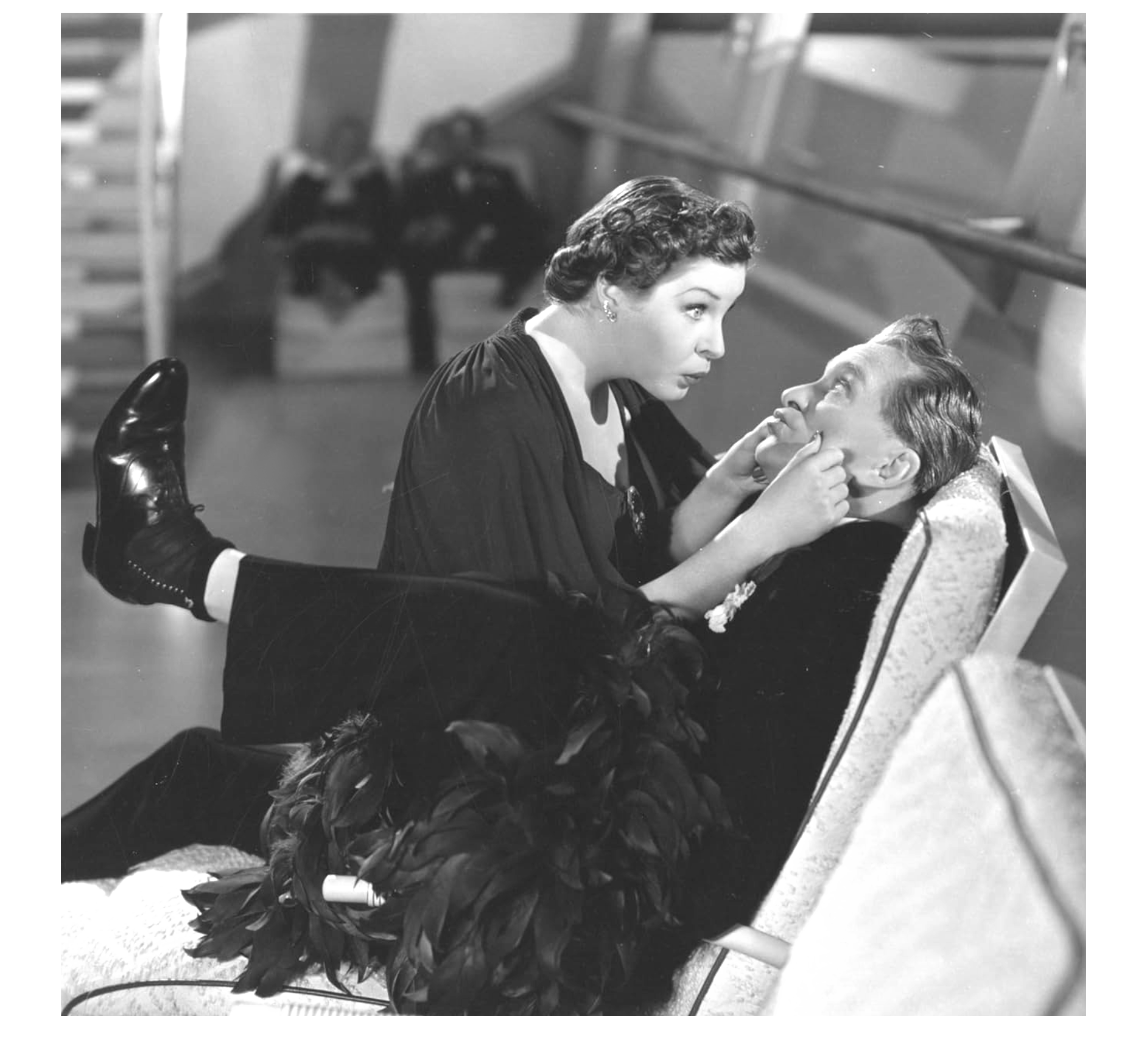
This is Bob Hope’s first feature film, and he scores top marks. Buzz Fielding is not quite the crazy coward Hope would develop for the Road pictures with Bing Crosby, but a little smoother and sentimental. Director Mitchell Leisen is responsible for the timeless song number ‘Thanks for the Memory’, for Bob Hope and co-star Shirley Ross, who plays the ex-wife with whom Buzz Fielding would like to reunite. The wistful, sweet tune became Hope’s career signature song, excerpted many times for documentaries and TV talk shows. Instead of having the pair lip-synch to playback as in a standard musical number, director Leisen filmed the number live, with a 90 piece orchestra on the set. They reportedly printed the first take.
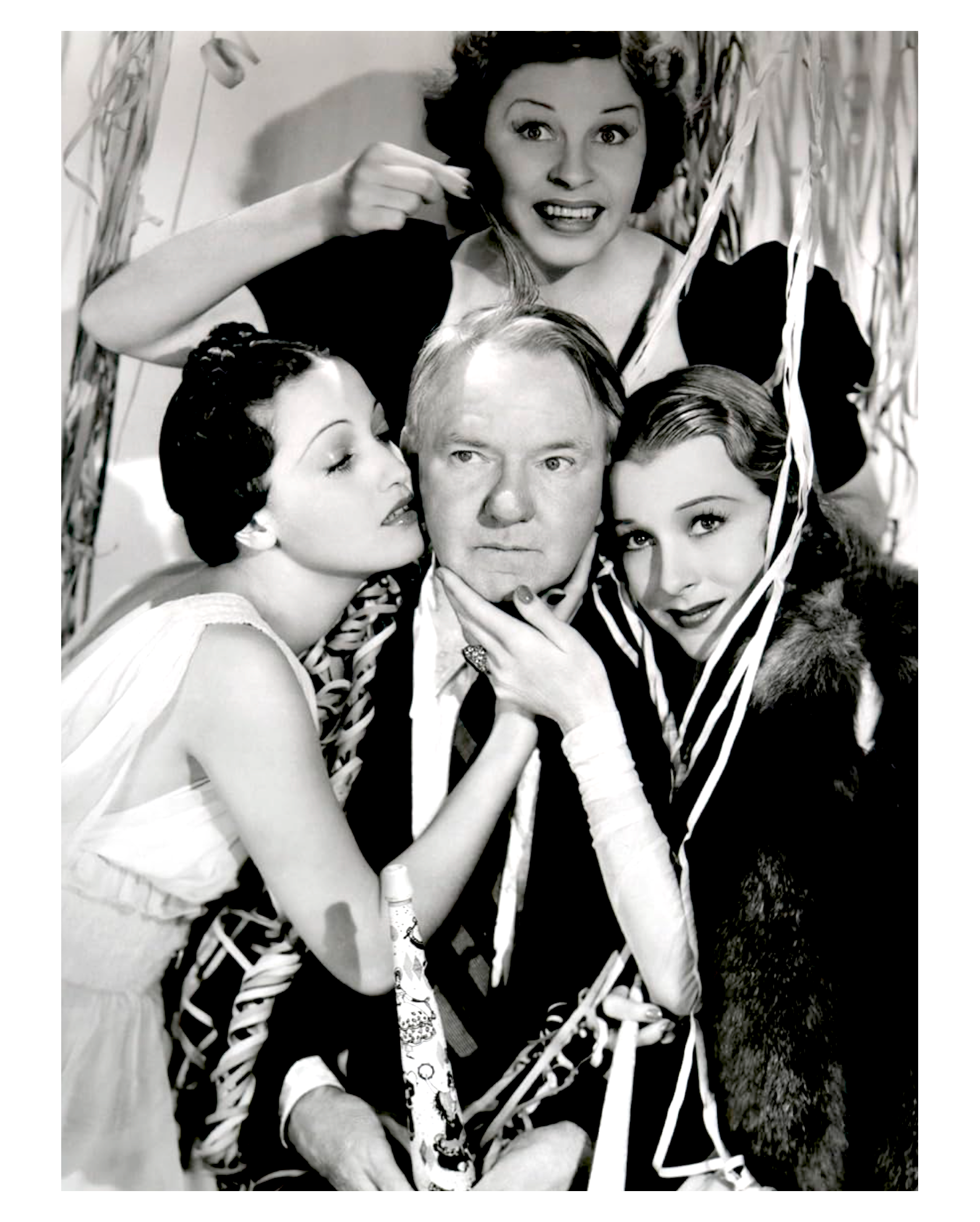
Thanks for the Memory won the Oscar for best song. Several other tunes in the show were composed by Ralph Rainger with lyrics by Leo Robin, including a raucous number for Martha Raye to dance/cavort to. The other memorable tune is ‘You Took the Words Right Out of My Heart’, which Dorothy Lamour sings to Leif Erickson. It is tailored to her appeal, and one of the film’s highlights. Bandleader Tito Guizar is also given several Rainger/Robin songs, that make less of an impression.
The Variety review was rather too impressed by ‘Brunhilde’s Battle Cry’ from Wagner’s Die Walkure. The stage aboard Gigantic holds some unlikely sets, but none as grand as the opera setting showing the famous Kirsten Flagstad waving a giant sword and shield. Were hick audiences supposed to be so intimidated by high culture, that they’d spring to their feet and applaud? Ms. Flagstad’s number was filmed separately at Paramount’s old New York studio; back in 1973 it frankly looked like some kind of joke. Like a lot of things we college punks had little use for, the famous Norwegian soprano was worthy of great respect.
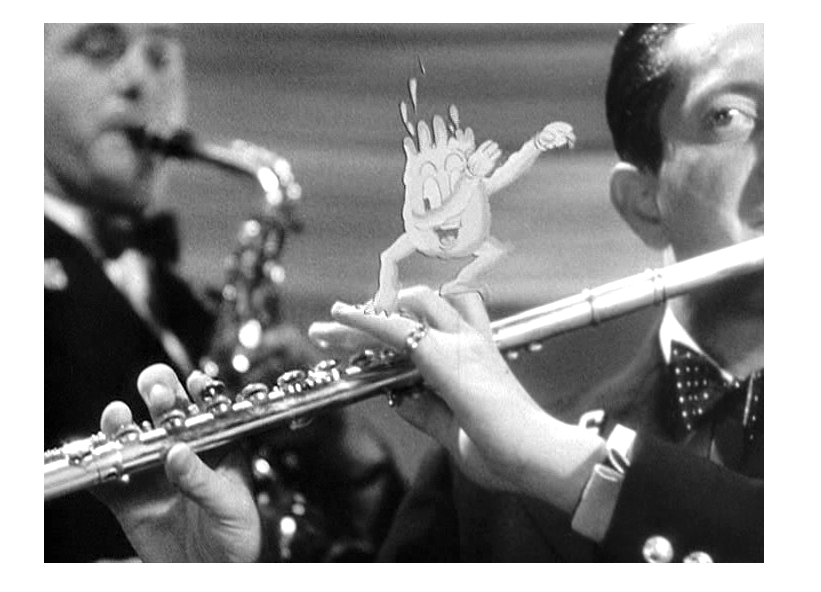
Laying a bigger egg is an animated musical sequence, one that mixes animation with live action. Warners producer Leon Schlesinger is credited, but the work was done by Robert Clampett, Chuck Jones, Robert McKimson and Irven Spence. Judging by the finished product, we’d believe that Schlesinger’s crowd didn’t care for the assignment but liked the money.
Bob Hope is 6th-billed for the first and last time. Most of his humor at the microphone is just so-so, but his timing is excellent and he pulls off a nice comedy routine with comedienne Patricia Wilder. She plays an air-head named Honey Chile, her actual nickname when working as a showgirl for Bob Hope. Wilder amuses with a monotone Southern voice that makes us think she’s on something. Wilder’s movie career didn’t develop, but she enjoyed a pretty impressive love life and ended up a genuine princess.
Comic Ben Blue pulls some funny faces, but his character is given minor duties in the storyline. Kicking around in the ship’s staff (more of a boy’s chorus) are a young Richard Denning and James Craig. W.C. Fields and Martha Raye don’t have much screen time together but their combined havoc leads to big scenes. In one dance number her Martha Bellows is repeatedly tossed into the air, the point being to make her look as awkward and un-ladylike as possible. Fields’ S.B. plays billiards in rough seas, with predictable results. In his most spectacular episode, S.B. locks himself in the bridge and takes control of the steering wheel. He races Gigantic through a maze of icebergs, like a slalom skier. The zig-zagging ocean liner is actually funny, and the outrageous special effects are very good.
All in all, Fields and Raye’s antics, Lamour’s sweet song, the freshly-minted Bob Hope’s classic scene and Leisen’s spectacular visuals make this one a keeper.
But wait ’til we get to the wild pre-Code International House.
I can’t think of any Blu-rays that I have been more disappointed in than Kino Lorber’s W.C. Fields films. I got rid of them and have been watching the UK DVD box set ever since. The Blu-rays look like they were never remastered and the clarity just makes the print look worse. Maybe this will be the first good one.
Early in his career is the time to engage with Bob Hope.
The Gigantic reminds of the (long gone) deco Seattle ferry MV Kalakala.