
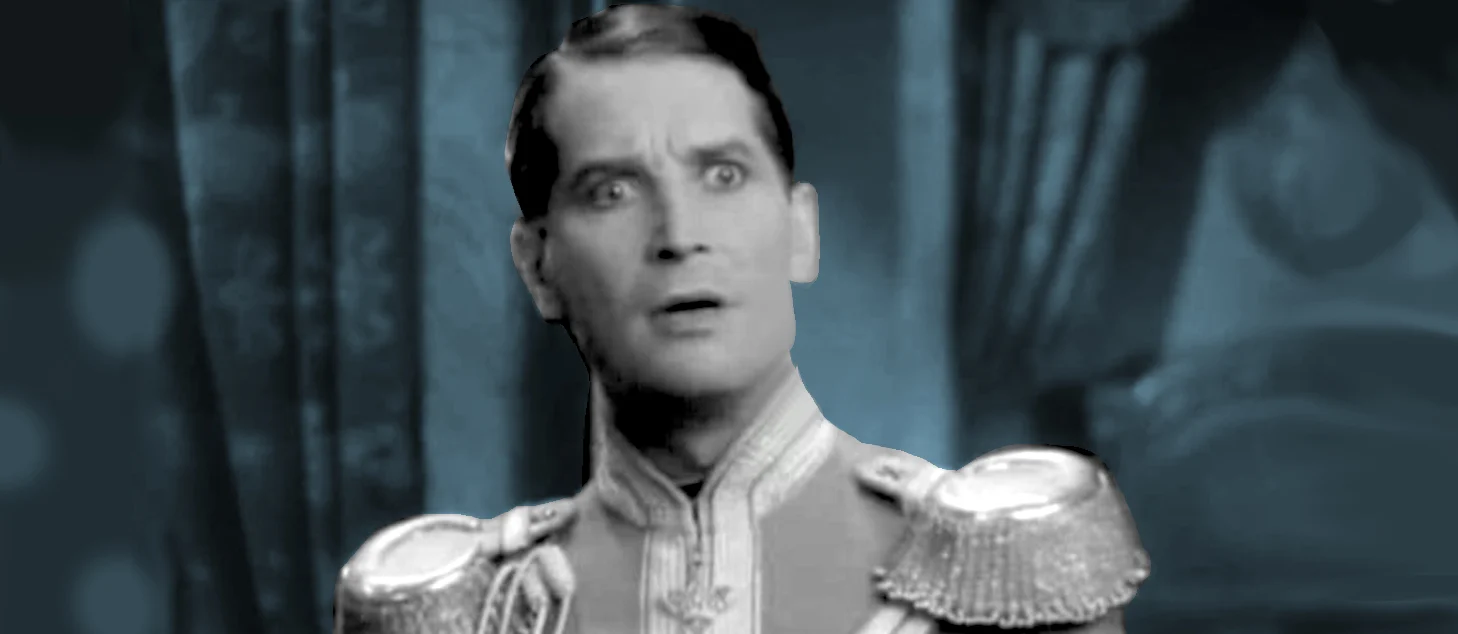

The popular ‘Eclipse’ DVD series was a secondary label for Criterion, that marketed lesser-known films by noted directors. The many sets introduced directors not previously seen in the U.S., along with film sets by big names like Samuel Fuller and Akira Kurosawa. Installment number 8 was a real winner, with four early sound musicals from the great Ernst Lubitsch. Sixteen years later, it has returned in remastered HD.
Eclipse Series 4: Lubitsch Musicals pulls together the director’s same four pictures, his first talkies. The comedies with songs introduced new ideas to the movie musical. While expensive operettas filmed shows more or less presented as on a stage, Lubitsch has his characters break out with tunes that relate to the characters and advance the story line. Sometimes the spoken dialogue rhymes. For one telling moment, star Maurice Chevalier addresses the camera directly, explaining to the American audience the ‘Frenchness’ of what they are seeing.
Lubitsch leaves behind none of his silent comedy technique; his sly visual tricks translate to sound without complications. These pre-Code wonders have a refreshingly liberated attitude toward sex. The bedroom is enshrined as an affectionate playground for adults — one of the films reserves a joyful close-up for a bed! As might be expected from films of this vintage, the stories tend toward the maxim that the male must dominate in amorous relations. But they also throw conventional morals to the wind, to the point of condoning infidelity as essentially harmless. In these glamorized, non-serious situations, we aren’t irked in the least. Chevalier smiles, shrugs his shoulders and asks, in song of course, “Wouldn’t you do it too?”
A Cuban digression.
Searching a few years ago, we came across some cute evidence of just how popular these Maurice Chevalier movies were around the world. Take a look at this synch-sound newsreel excerpt from 1930. It’s a shot of a Cuban tobacco worker talking about herself as she works. Perhaps she was tipped that the camera would be there, for she’s all dolled up in her flapper best. She happily tells the cameraman about a new movie she saw starring Maurice Chevalier, Desfile de amor …. and then something about ‘a great artist’ … and ‘his pants!’
Fans already introduced to the sly comedies of Ernst Lubitsch know what they’re getting in these pictures. Almost 100 years later, they’re still witty, sophisticated, and warm-hearted.
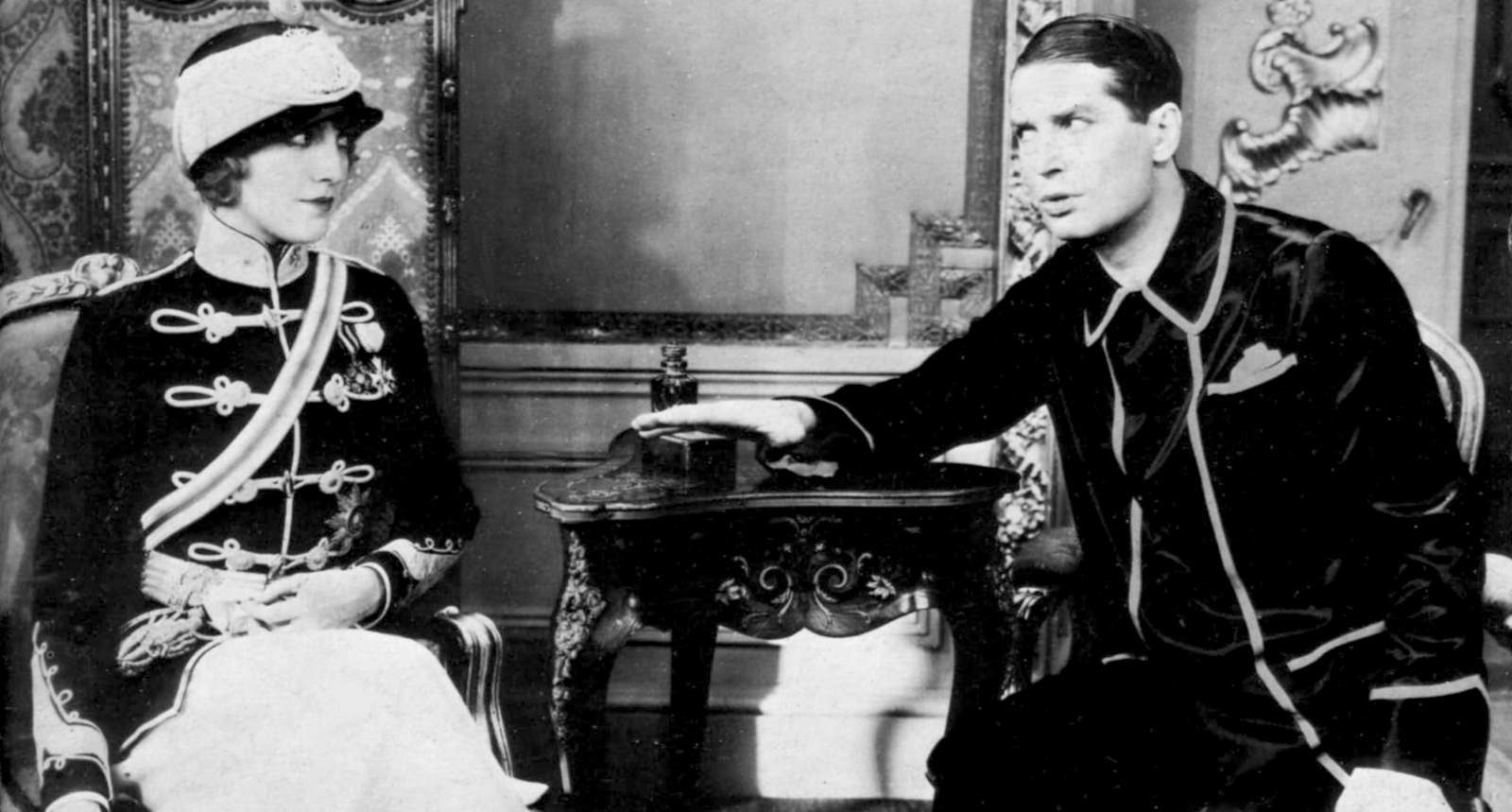
1929’s The Love Parade establishes the Lubitsch musical comedy format; the only thing that slows it down may be one or two less-memorable songs. Lubitsch paired Maurice Chevalier (in his second talkie) with Jeanette MacDonald, a fresh face and voice from Philadelphia. In the mythical country of Sylvania, Queen Louise (MacDonald) marries young Count Renard (Chevalier), a diplomat recalled from Paris for dallying in too many notorious affairs. Renard is likewise smitten, but he rebels at being relegated to the powerless position of Queen’s Consort. He withholds his presence at formal ceremonies until Louise breaks down and acknowledges his masculine rights.
Lubitsch begins in Paris with an almost wordless sequence involving a jealous husband and a mock suicide attempt. Renard retains an amused ‘French’ attitude through it all, trusting that everything will work out. Back in Sylvania, Louise is badgered by her ministers to take a husband; she worries about spinsterhood until smoothie Renard arrives for punishment and stays for a seduction. As an added treat, the royal romance is mirrored by servants Lupino Lane (a clever music hall-type performer) and Lillian Roth, whose smiling eyes have hanky-panky written all over them. Lubitsch invests this trifle with delicate comic timing, emphasizing MacDonald’s mischievous antics and Chevalier’s relaxed self-assurance. MacDonald is frequently on display wearing elaborate nightgowns and filmy undergarments, an aspect of the film that surely attracted both male and female viewers. Hays Code? What Hays Code? Although not as saucy as the later films, The Love Parade delivers a new kind of screen entertainment.
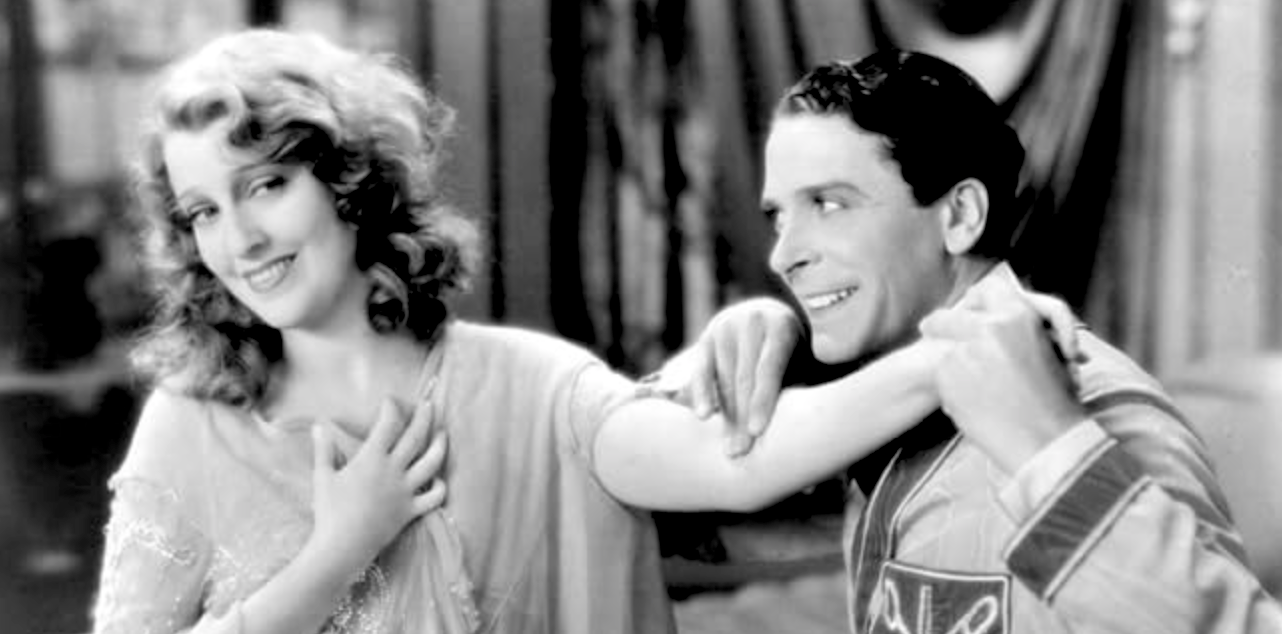
1930’s Monte Carlo must do without Chevalier. His replacement is Jack Buchanan, a refined Englishman with plenty of talent but less in the way of sex appeal. Buchanan is now known almost exclusively through his performance in Vincente Minnelli’s musical masterpiece The Band Wagon, made over twenty years later. Lubitsch compensates by giving Jeanette MacDonald more sexy business (& lingerie) and much better music. MacDonald debuts the hit song Beyond the Blue Horizon in a speeding train. We’re told that 1930 audiences marveled at the excitement generated when angles of the moving locomotive were edited in time with the melody.
The plot has Countess Helene Mara (MacDonald) bolting from the altar and fleeing to Monte Carlo, where she loses all her money at roulette yet takes a suite in an expensive hotel. Unable arrange a proper introduction with Helene, Count Rudolph Falliere (Buchanan) poses as a hairdresser to be near her, and soon replaces most of her servants. By the time the Countess’s foppish fiancé shows up, Falliere is also accompanying Helene out on the town. Helene frets that she’ll have to give up Rudy for financial reasons, until her hairdresser reveals his true identity.
A main gag is that Rudy knows nothing about hairdressing. Double-entendres abound as he finds excuses not to cut Helene’s hair. Improved songs comment on the story with earthy wit: a chorus chirps the rude lyric, “He’s a nas, he’s a nas, he’s a nasty-tempered brute!” Buchanan isn’t as charismatic as Chevalier but he is a fine comedian; he plays Lubitsch’s visual gags to the hilt. Rudolph follows Helene to the casino’s doors, claiming that if she rubs his hair, she’ll have good luck. Helene ignores him and slams the door in his face. But when he turns back to signal failure, the door opens just long enough for Helene’s hand to pop out and give Rudy’s head a pat!

The visual, verbal and sexual invention continues in 1931’s The Smiling Lieutenant, a fast-moving farce that constructs a romantic triangle by bracketing Chevalier with two new sweethearts. Viennese Lieutenant Niki Von Preyn (Chevalier) falls madly in love with Franzi (irresistible Claudette Colbert), a violinist in a popular beer garden band.
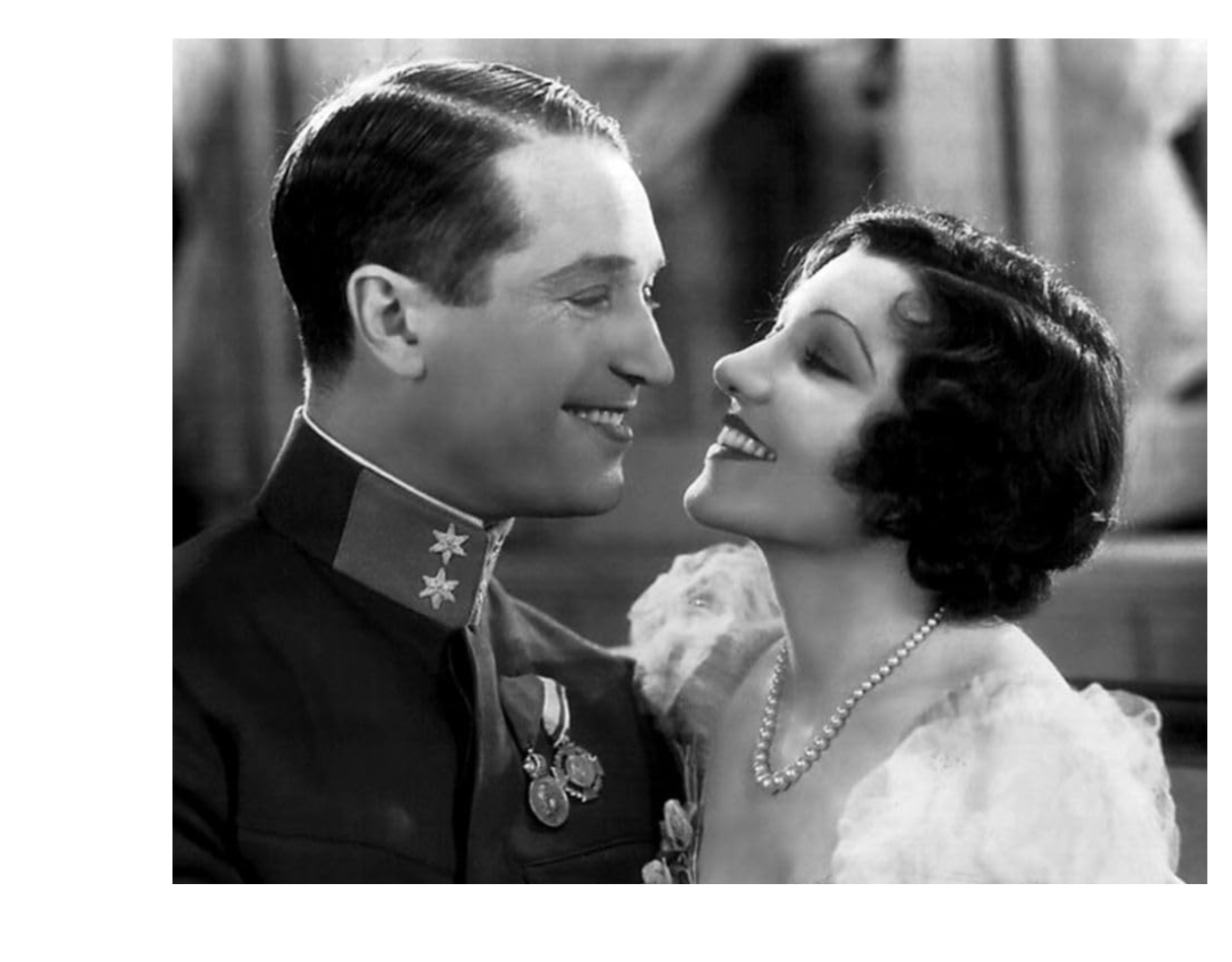
Their romance is blissful until Niki inadvertently winks and smiles at Franzi just as a carriage carrying foreign royalty passes between them. The naïve Princess Anna of Flausenthurm (Miriam Hopkins) concludes that Niki has slighted her, and her furious father demands satisfaction. Anna instead makes Niki her companion during their Viennese visit. The two countries eventually decide that Niki must marry Anna, and Franzi is crestfallen when Niki departs for his new home. In Flausenthurm castle, the new husband refuses to perform his matrimonial duty. ‘Stepping out’ on the town, he discovers that Franzi and her band have followed him to this new country. When Anna discovers this, the two women come to a surprisingly original solution to the problem.
Ms. Hopkins is genuinely amusing as the backward belle from Flausenthurm (Geshundheit!). We can tell she’s in serious need of enlightenment by her unfamiliarity with sexy underwear.
The show builds to a bittersweet ending, which it undercuts with more frivolity. We can imagine young screenwriter Billy Wilder studying this film in hopes of understanding ‘the Lubitsch touch.’ Colbert and Chevalier are inflamed with passionate abandon. There are of course no sex scenes but intentions and desires are out in the open. Three years later when the Code restrictions were enforced, the direct acknowledgement that sex existed was removed from much of Hollywood filmmaking.
The Smiling Lieutenant was Lubitsch’s first collaboration with writer Samuel Raphaelson, with whom he later made many of his most famous comedies. Anna’s stuffy papa strongly objects to her engagement to the foreign Lieutenant Niki, but quickly consents after her simple threat: if the King doesn’t say Yes, she’ll marry an American!
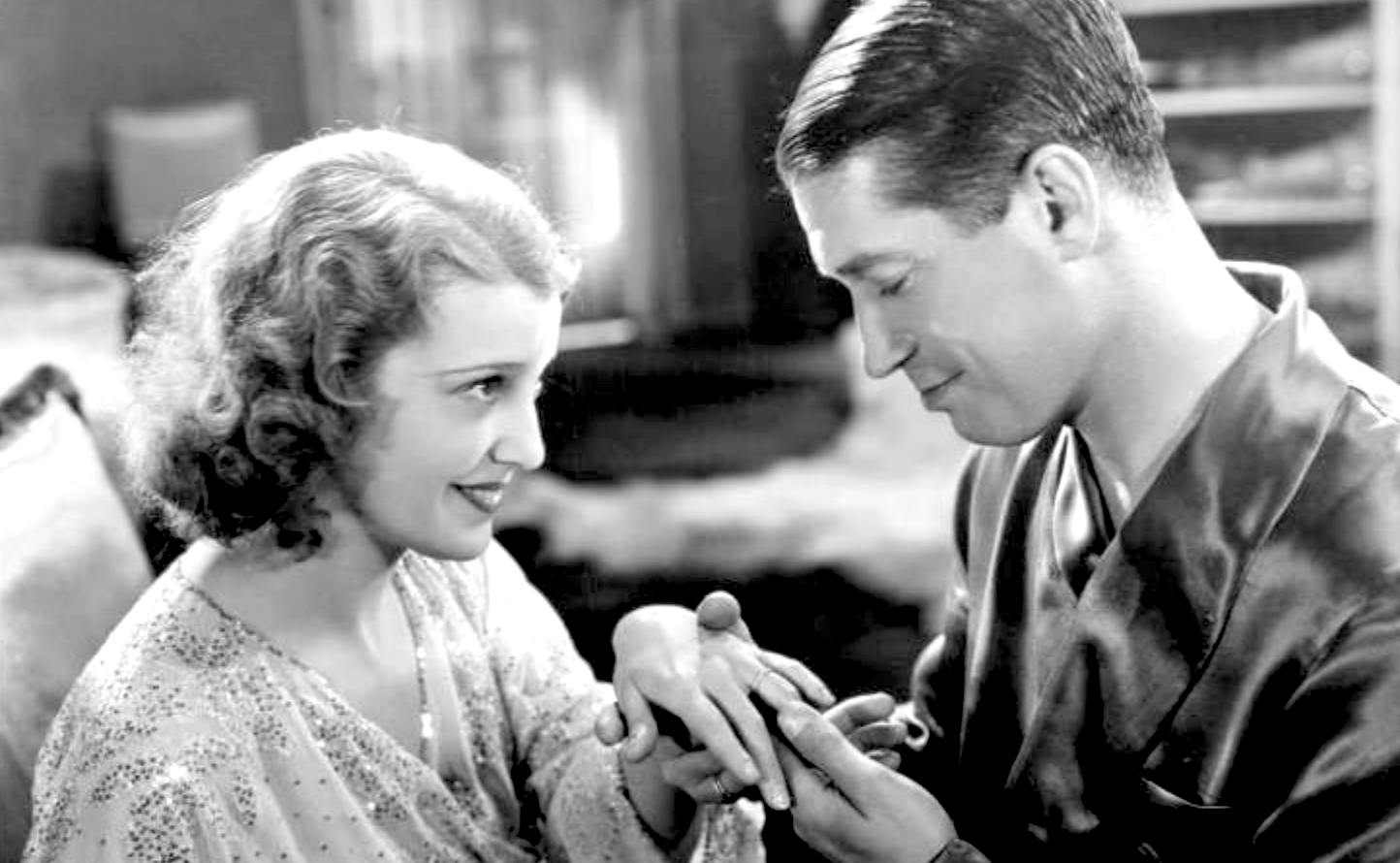
Lubitsch’s naughty musical comedies only got better with each new film. He finalizes his formula in 1932’s One Hour With You, a movie that begins with Dr. Andre Bertier and his wife Colette (Chevalier and MacDonald) happily married and in love. If it plays out like a silent sex farce, it’s because it’s a remake of Lubitsch’s own 1924 The Marriage Circle. Colette’s wicked best friend Mitzi (Genevieve Tobin) plots to seduce Andre while leading Colette to believe that another woman is responsible.
Things come to a head at a dinner party. Mitzi entices Andre to join her in the garden, and then finally to come home with her, at 2:30 in the morning. Is it a big surprise that the film has no objection to The Double Standard? The light-comedic antics toss off Andre’s flagrant infidelity as no big deal when compared to his commitment to Colette. Colette accepts and forgives Andre, yet Andre doesn’t accept Colette’s confession of a midnight kiss with his best friend, the ardent fool Adolph (Charles Ruggles).
With nothing on its mind but lovemaking, the elegant, impeccably crafted One Hour With You completes these four musical fairytales on a high note. The film is partly credited to George Cukor. Eclipse’s liner notes tell us that Lubitsch was originally set to only supervise, but stepped in and redid all of Cukor’s work when he felt that the dailies weren’t good enough. Most sources still credit Cukor as a co-director.
Can’t abide, to put it mildly, Chevalier, but most interesting piece.
Glenn. Did you happen to notice if the original exit music on ONE HOUR WITH YOU has been reinstated? It was on the Lubitsch box set released on Laserdisc along with the tinting but both vanished on Criterion’s original DVD set.
Joe, I checked — there are indeed several minutes of exit music after the credit card fade-out. They were on their game, I guess.