

In older films about historical Europe, the past is a fancy storybook where notable people have a jolly time with warfare and adventures, seeking to benefit their fellow men and basking in the knowledge that their exploits will be immortalized in print. As expected, director Stanley Kubrick goes his own way. He must have found himself in an amusing situation on Spartacus, tasked with telling a story so against his personal preferences. That three-hour civics lesson on political oppression, slavery, human dignity, etc. is immensely entertaining, but if Kubrick had his way he’d have likely removed every grandstanding lecture.
No, a Kubrick character is generally an individual who doesn’t see beyond his appointed position in a specific place and time in history. His armed robbers, soldiers, spacemen and juvenile delinquents do what comes naturally, without speeches about being part of some larger human crusade.
Kubrick spent years preparing a movie about Napoleon, amassing a huge volume of research before changing his mind. Still fired up to make his own period epic, he chose William Makepeace Thackeray’s Barry Lyndon. Kubrick buries most of the author’s satire, replacing Redmond Barry’s transparently self-condemning narration with droll, matter-of-fact voiceovers by Michael Hordern. He also adds a few slightly satirical inter-titles. Otherwise, the story is told straight. Kubrick simplifies the narrative, inventing a few characters but sticking with Thackeray’s general story outline. The greater ironies Kubrick applies do not suggest an easy moral closure. His amazingly beautiful movie seems to say,
“This is the past. Things were different, but people were pretty much as unpredictable
as they are now. Stop expecting a reinforcement of your own petty values.”
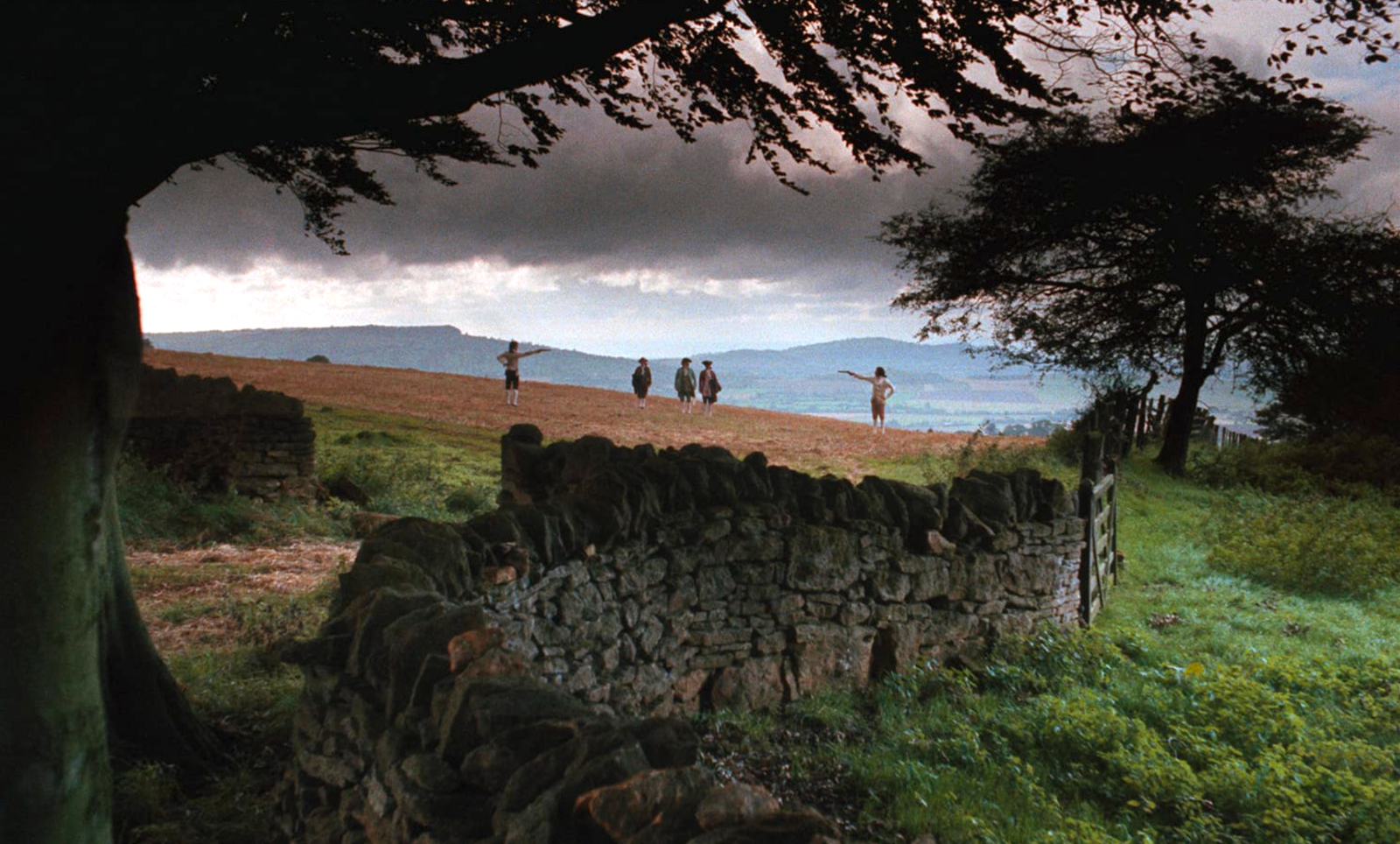
Years after the end of Hollywood’s Road Show film format, Barry Lyndon runs three hours and has an intermission. Young Irishman Redmond Barry (Ryan O’Neal) is proud, stubborn and self-centered, but he’s also strong and good-looking. In love with his cousin Nora (Gay Hamilton), he interferes with her efforts to marry the English Captain Quin (Leonard Rossiter). His own relatives — badly in need of the captain’s income — pull off a clever ruse with a duel to trick Redmond into leaving for Dublin. Robbed on the way and too ashamed to tell his mother (Marie Kean), Redmond joins the Army. His first experience in battle convinces him to desert. He steals an officer’s identity and flees to Allied Prussian territory, where his ruse is uncovered by the Prussian Captain Potzdorf (Hardy Krüger of The Flight of the Phoenix), who forces him to enlist in the far more brutal Prussian army.
Redmond’s heroics in battle earn him Potzdorf’s gratitude and trust; the Captain enlists him as a police spy for his uncle. Redmond’s first quarry is ‘The Chevalier du Balibari,’ a suspected Irish mountebank (Patrick Magee). Redmond instead double-crosses Potzdorf and teams up with Balibari. They tour Europe as gamblers, using sophisticated methods to fleece various noblemen. Under Balibari’s tutelage Redmond realizes that the only way to find security in life is to marry into money. Armed with his manners and good looks, he sets his sights on the beautiful Lady Honoria Lyndon (Marisa Berenson), whose elderly husband has a multitude of health problems.
Critics that slam Stanley Kubrick’s films as cold and remote, miss the point entirely. His stories are packed with human emotion of all kinds, it’s just that he refuses to pull the usual melodramatic strings: the music rises, the picture zooms into a close-up to catch a smile or a tear, and if needed a heavenly light gives an actor a convenient halo. Kubrick’s muted approach to satire doesn’t celebrate cynicism for easy jokes. Everybody acts in sincere earnestness. Redmond begins as callow and somewhat thickheaded, but gains some common sense by experience: Soldiering is dangerous! He also learns to be devious. His good manners and angelic face can get him most anything. Security and advancement is what Redmond wants, and he isn’t too picky about how he gets it. Life is short and brutal, so why not give it go?
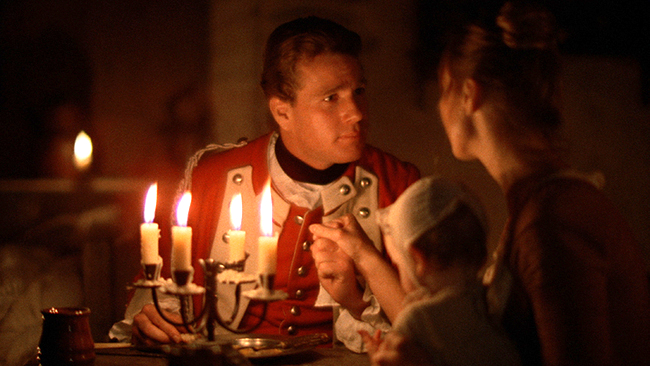
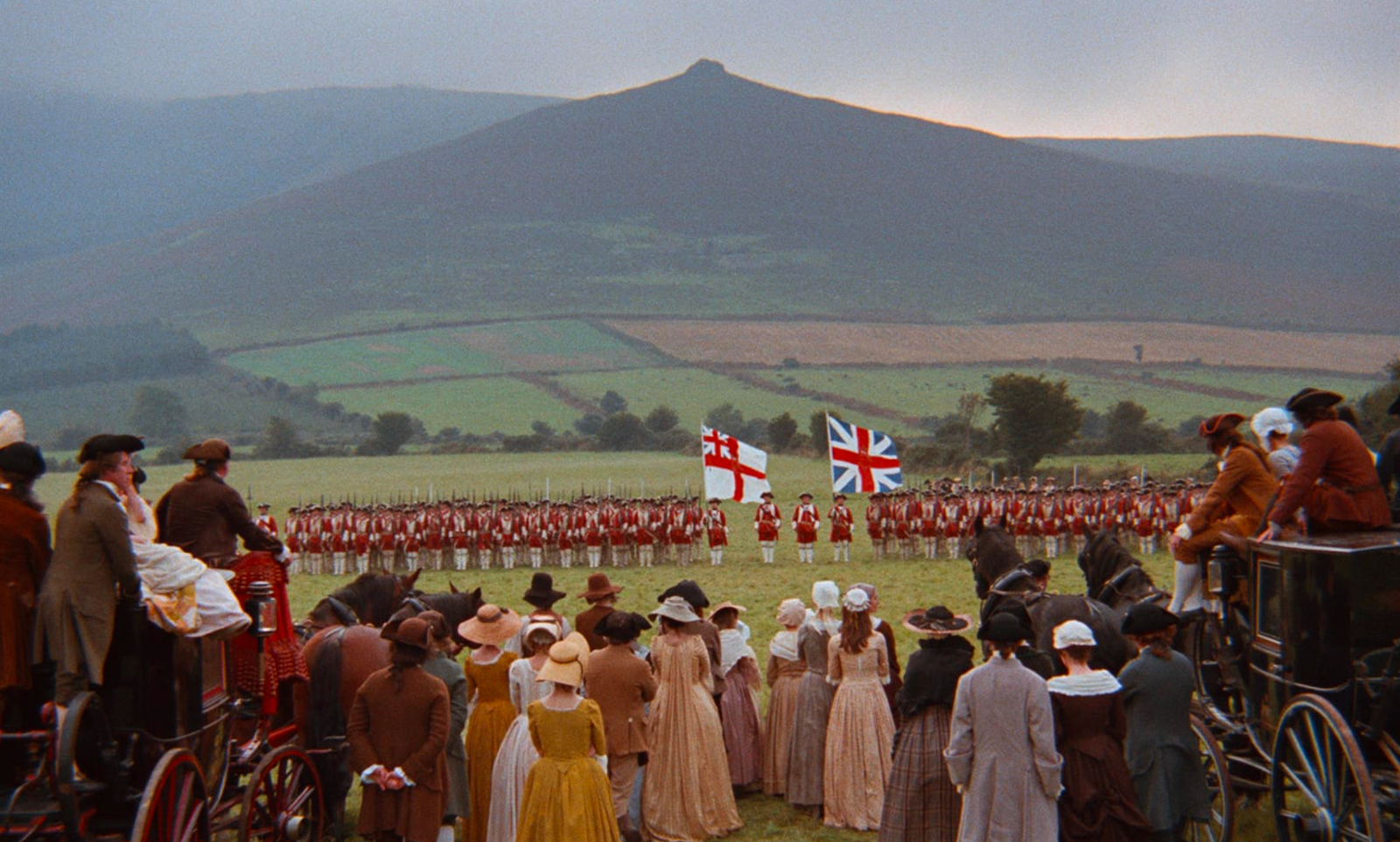
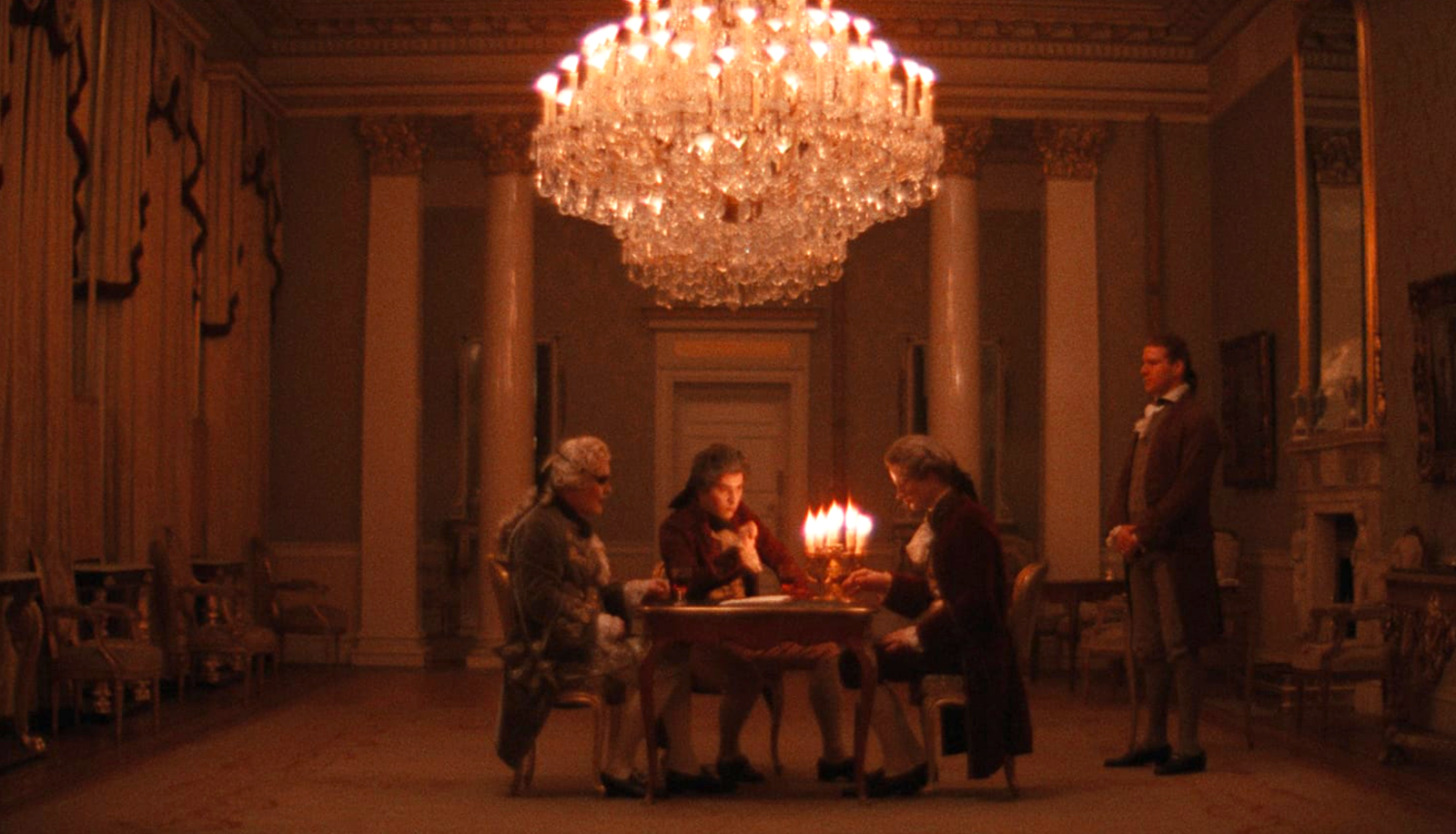
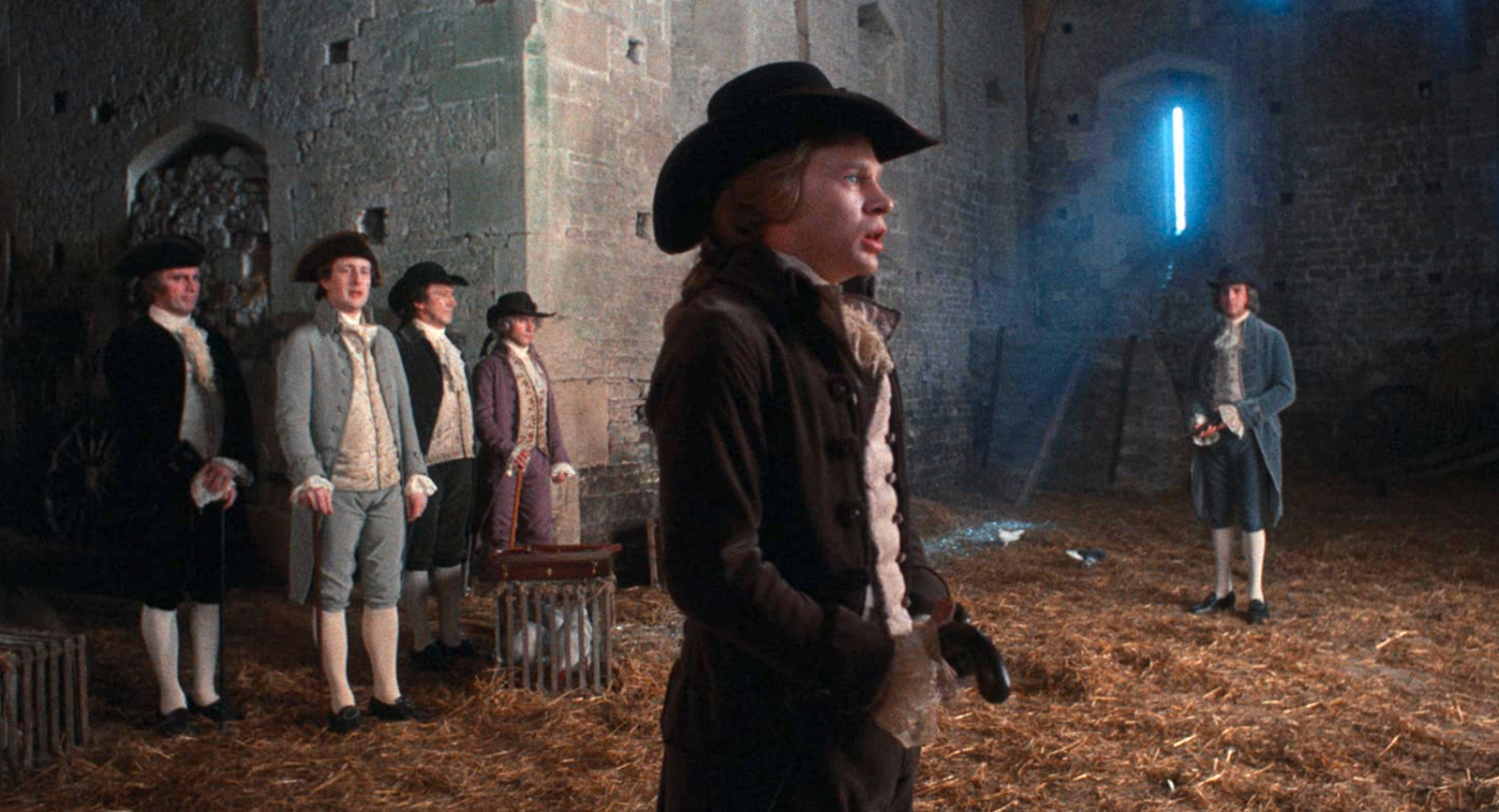
Kubrick’s visuals plunge us into the 18th century as interpreted by classical paintings. Assuming we’re not seeing special effects, Kubrick and his cameraman John Alcott made the actors wait in beautiful locations for perfect weather conditions at the perfect time of day. Establishing shots are wide views seen through longish lenses that flatten incredible scenery into images that look very much like paintings. A recurring motif will frame a person in the center of a shot, walking or riding toward us from the distance. Psychologically speaking, I’ve always felt that there’s a correlation between distance in a composition, and distance in time. The 18th century may be remote but we can go there in our imaginations.
A standard drama shows ‘important’ characters as they make crucial decisions, or explain their lofty motives to supporting characters. Nobody in Barry Lyndon steps into the rose garden like Greer Garson, to spout an author’s message at the first person that walks by. Kubrick skips all that nonsense, and instead just shows what Redmond does. The narrator fills in with the unspoken reasons for his actions. Barry’s big ‘decisions’ are often bullheaded emotional impulses. His stubborn pride causes him to challenge Captain Quin to a duel, an idiocy his relatives won’t put up with. His sudden tearful confession to the crooked cardsharp and confidence artiste Balibari is an honest gesture from one Lost Irishman to another. While it lasts, it’s a match made in bunco heaven. Redmond’s slow decline comes when he overreaches, betraying the love of his new wife and trying to buy himself a title. Entering the ‘peerage’ would apparently allow Redmond to inherit his wife’s property. He has a lousy relationship with his stepson Lord Bullington (Leon Vitali). It’s painfully clear that Redmond’s undisciplined ways will scuttle all of his bribes and entreaties.
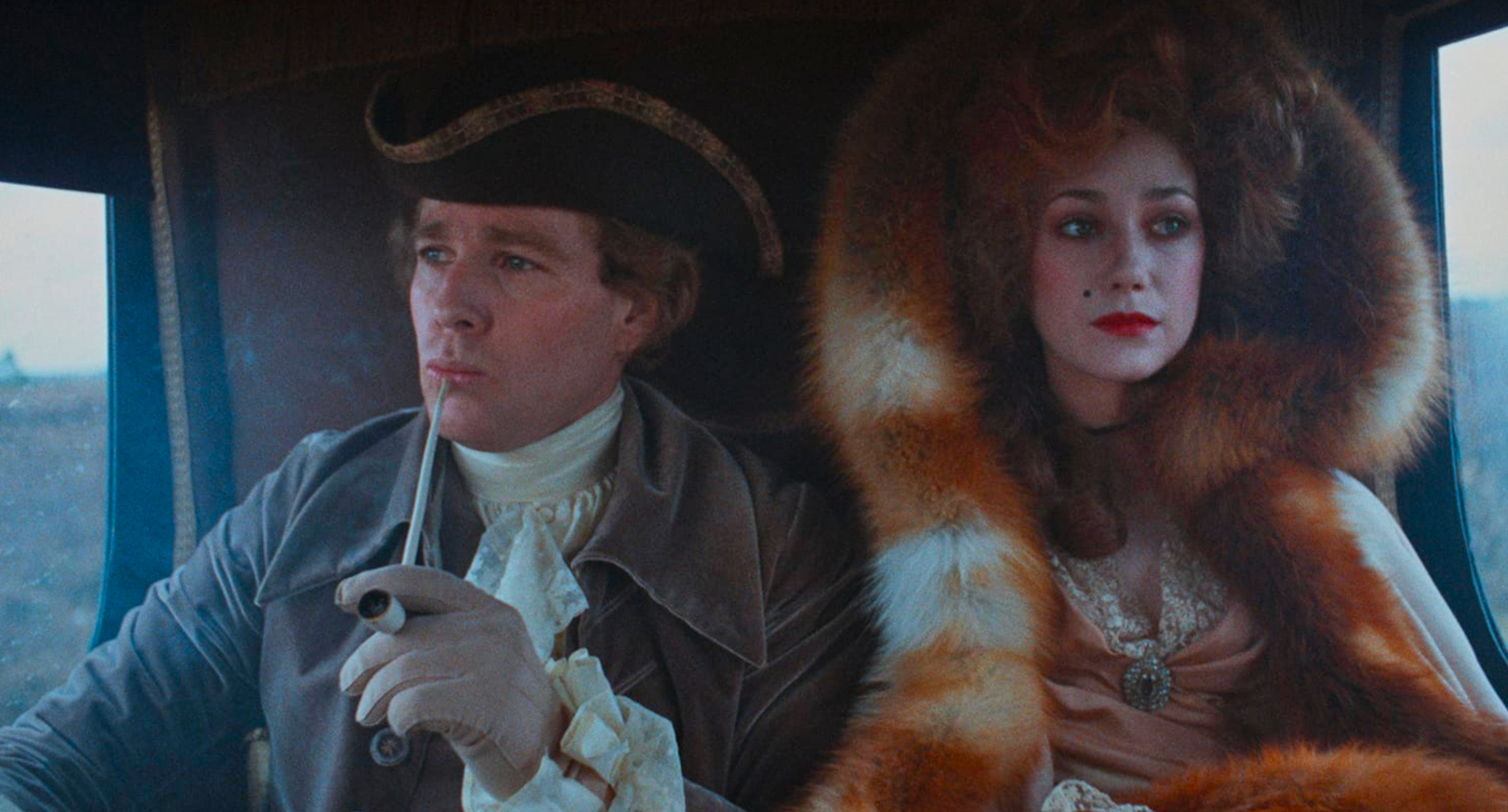
This is a rich vision of a bygone age. The large-scale battles defy modern common sense: as hiding or running would break some code of courage or chivalry, marching soldiers offer themselves as red-coated targets for lines of muskets. Redmond’s ‘learning experiences’ include a marvelous run-in with an old-fashioned highwayman (Arthur O’Sullivan), and a tearful farewell to his old friend Captain Grogan (Godfrey Quigley). In a break from war that feels borrowed from Renoir’s The Grand Illusion, Redmond lives for a while a with a German woman (Diana Koerner) whose husband is also off fighting. On his way up the social ladder, Redmond has some terrific luck, but it deserts him when he tries to become a man of secure property. After a public scandal, even his new friend Lord Wendover (André Morell) must ignore him.
Kubrick doesn’t shortchange his actors. Murray Melvin (A Taste of Honey) plays the parson and tutor for the Lyndon family. We think he’ll be used for clownish comedy, but the character turns out to be entirely ethical and worthy of respect. Only one moment seemed misjudged. Redmond steals a horse and uniform from a pair of gay English officers. Their dialogue is probably accurate for the period, yet the scene plays like a Monty Python sketch. It interrupts the carefully maintained period atmosphere.
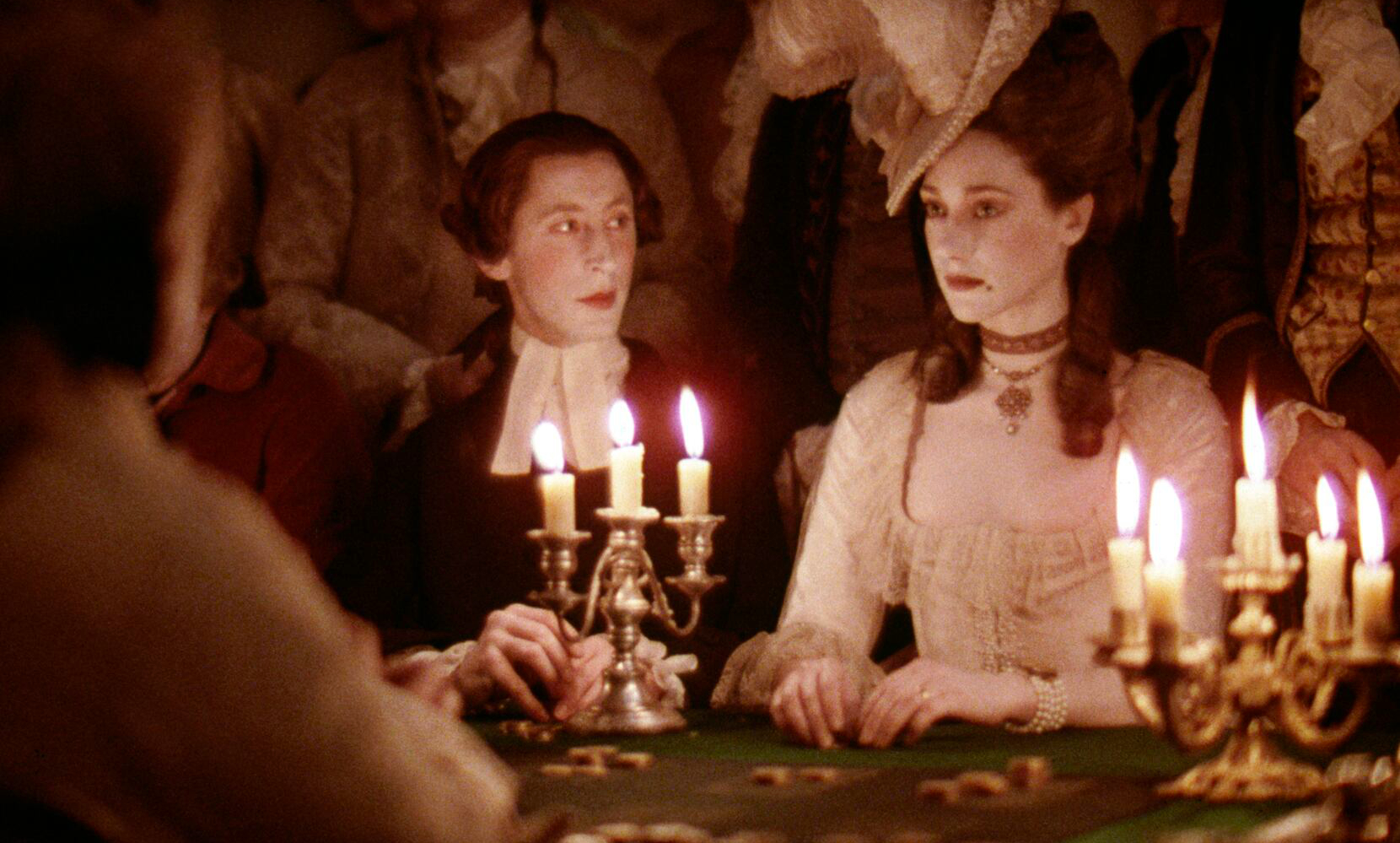
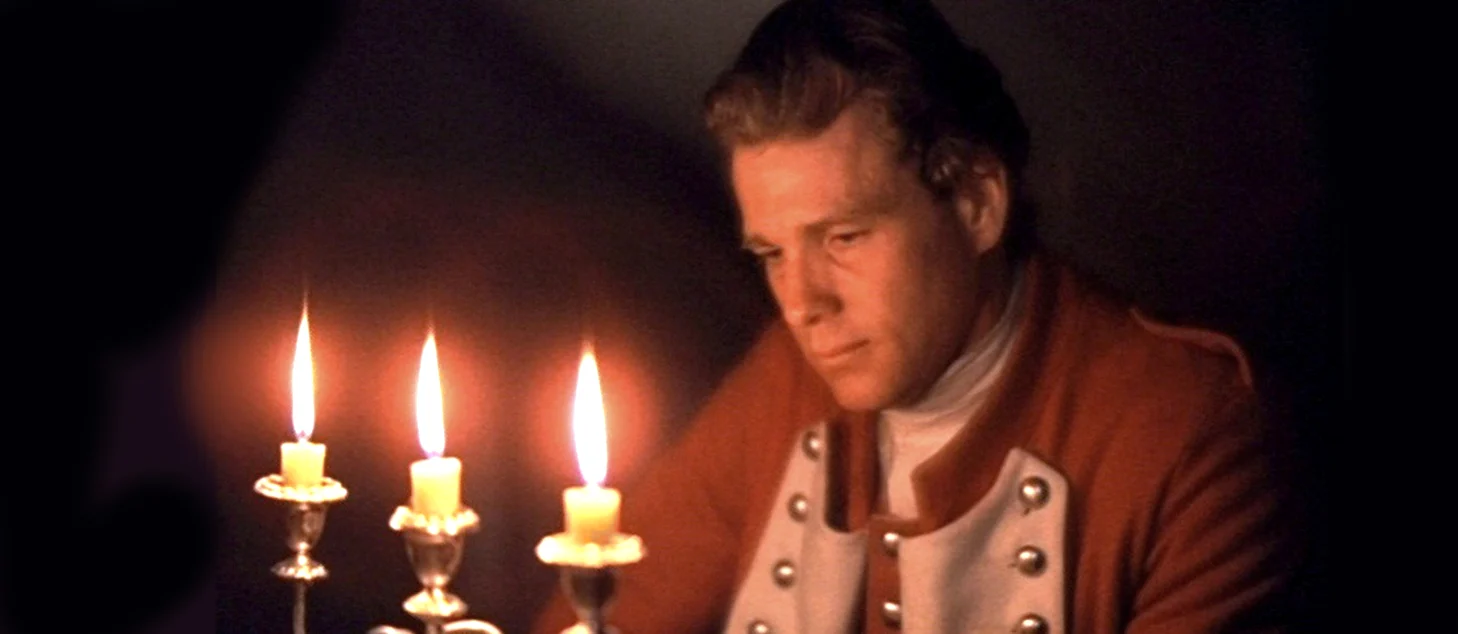
Most critics in 1975 appreciated Barry Lyndon but the one aspect that won unanimous approval is its stunning cinematography. Kubrick’s technical acumen was advanced far beyond most directors, and his special effects billing and Oscar for 2001: A Space Odyssey was entirely earned. He overcame the challenge of lighting night interiors by helping develop a lens fast enough to shoot by candlelight. Film and video today barely need lights at all, but this was big news in 1975. The soft, warm images obtained for the show are marvelous. Anybody can admire. how much they resemble classic paintings by the greats of the era. American Cinematographer routinely championed the work of name cameramen, but it could also respond with backhanded praise to artistic statements, as when the Italian cinematographer Vittorio Storaro described his work in lofty psychological terms. But there was no denying the genius demonstrated here. Kubrick’s innovations were always the talk of the Hollywood camera departments.
Seen now 42 years later, Stanley Kubrick’s Barry Lyndon seems more impressive than ever, a stylistic oasis apart from the trends of the 1970s. It’s not difficult to proclaim Kubrick a genius standing apart from average filmmaking. His pictures are distinctive and committed to excellence, and he’s much more of a humanist than he’s given credit for.
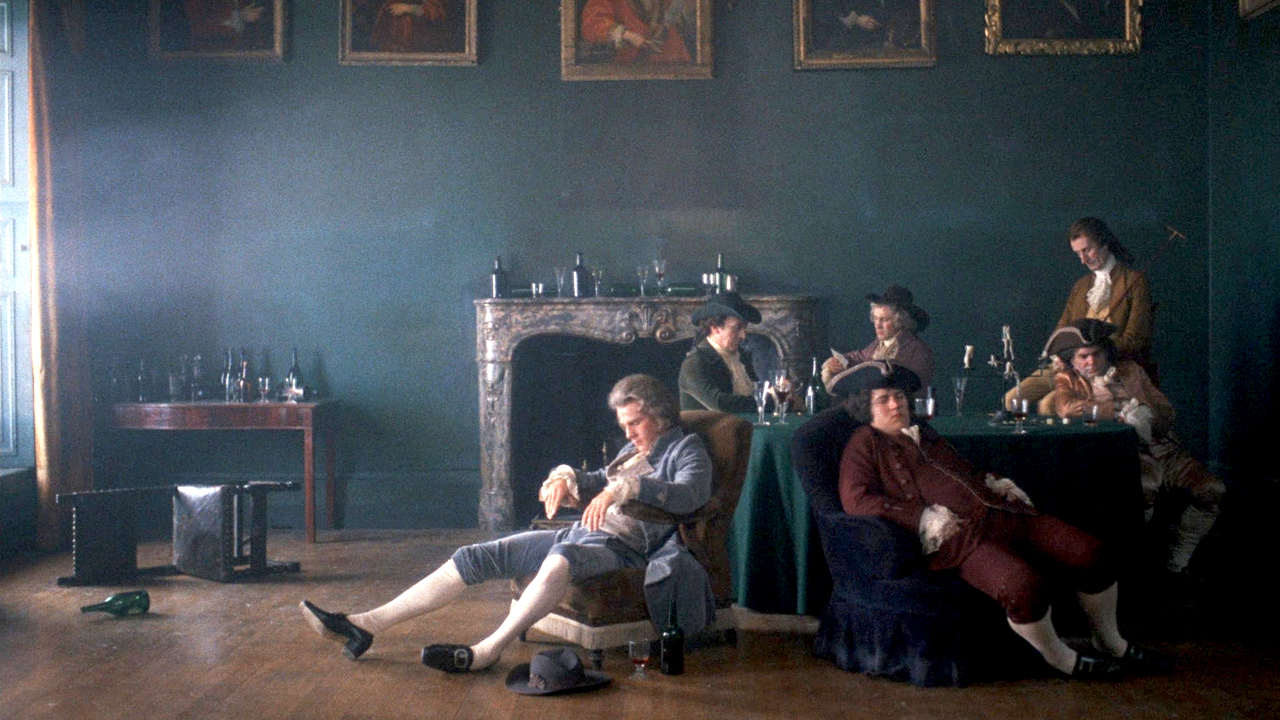
A stunning work, but I feel O’Neal was badly miscast.
I used to think that…but now I think that is a reflection on his later work.
In 1975, I thought he was too contemporary a presence. 35 years later, I rewatched it and changed my mind. O’Neal blends in pretty well.