

The Godless Girl
‘Kill the Bible!’ — according to Cecil B. DeMille, that’s the agenda of Godless atheists destroying America’s youth. His beautifully directed yet jaw-droppingly exploitative ‘meller-drammer’ condemns teenagers to a hellhole reformatory, for more defiance, escapes, and a typically spectacular DeMille crisis. That’s not counting the scene where cross-shaped ‘electrocution stigmata’ are burned into the young lovers’ hands. It’s excellent silent filmmaking, as restored by Kevin Brownlow and Photoplay Productions. Where’s the sequel, where those rascally atheists try to cancel Christmas?
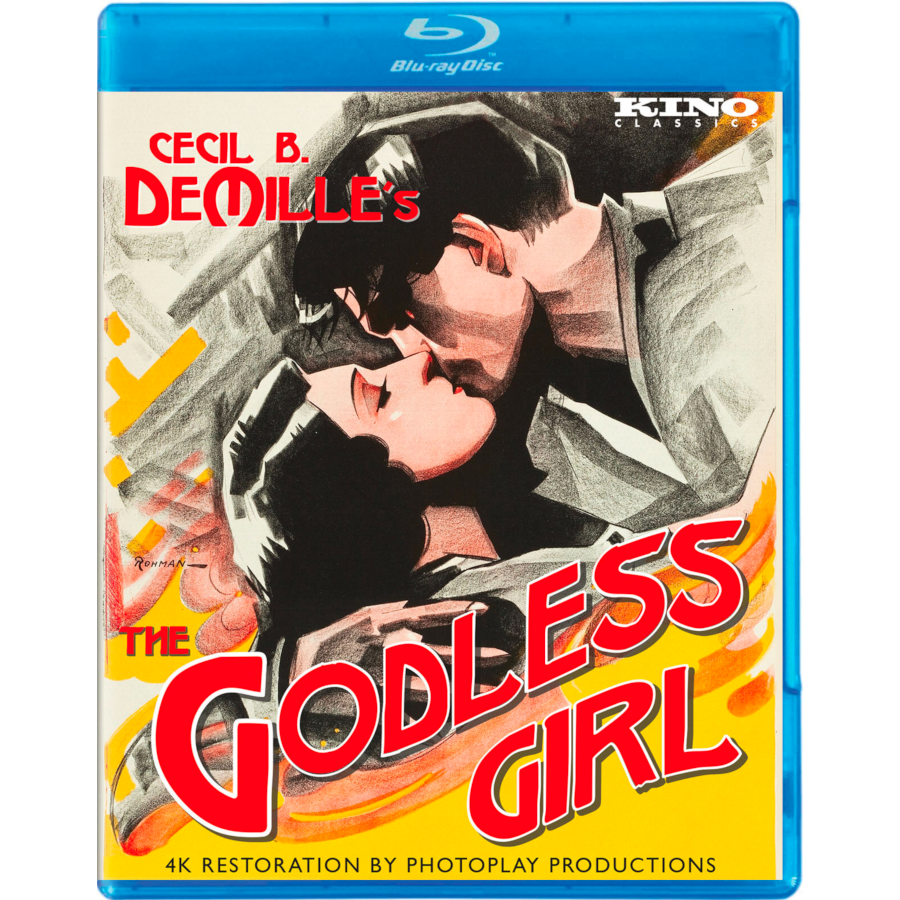
The Godless Girl
Blu-ray
Kino Classics / Photoplay
1928 / B&W w Tints / 1:33 Silent Aperture / 119 min. / The Atheist / Street Date January 13, 2026 / available through Kino Lorber / 29.95
Starring: Lina Basquette, Marie Prevost, Tom Keene, Noah Beery, Eddie Quillan, Mary Jane Irving, Clarence Burton, Richard Alexander, Kate Price, Hedwiga Reicher.
Cinematography: J. Peverell Marley
Art Director: (James) Mitchell Leisen
Costumes: Adrian
Film Editor: Anne Bauchens
Music Composer (2007): Carl Davis
Titles by Beulah Marie Dix and Jeanie Macpherson from a story by Macpherson
Produced and Directed by Cecil B. DeMille
 Silent movie presentations were a major kick in college. I looked forward to Bob Birchard’s screenings of silent Tom Mix westerns, in his perfect 16mm prints. When UCLA’s Melnitz Hall showed an original Harold Lloyd or Joseph von Sternberg silent, we pretty much watched in awe. We noticed that surviving prints from around 1927-1928 tended to look magnificent. The cameras were motor-driven by then, cranking at a clean 24 fps. Von Sternberg’s The Docks of New York looked so good, so artistic, that we forgot why anybody needed sound or color or a wide screen.

Photoplay’s restoration of the 1928 The Godless Girl falls into this category. Scanned from a perfect print deposited by the filmmaker at the George Eastman House, it looks brand-new in every respect. It’s the last silent film by Cecil B. DeMille. He was Hollywood’s greatest showman, even if his main accomplishment in the sound era was to equate grandiosity with quality. I had more than a few disputes with friend Bob (Robert S.) Birchard, as I’d never seen a DeMille picture that didn’t feel overblown. But I was not aware of Cecil B.’s acclaimed silent classics.
I still find his religious pictures to be vaguely offensive, as exploitation aimed at the church faithful. DeMille was a serious influence on Steven Spielberg. Both filmmakers knew instinctively how to attract a giant audience, with an ‘important’ film subject. But the DeMille pictures I knew as a child — The Greatest Show on Earth, The Ten Commandments — really aren’t good movies at all, just impressive feats of showmanship. (For the record, we find Union Pacific to be great fun.)
Bob convinced me that DeMille’s silent movies were as good as anybody’s, especially the light romances sometimes classified as sex comedies — Why Change Your Wife?, Male and Female. He ended up writing a book about Cecil B. DeMille, using in part research with the DeMille family.

Bob Birchard died ten years ago. His friend Anthony Slide, an equally astute, genuine film historian, is a welcome presence on this new disc. The commentary brings out a thousand fascinating facts about a movie filmed almost a hundred years in the past.
The Godless Girl marked a rough transition into talking pictures for Cecil B. DeMille. It is a classy-yet-exploitative shocker that panders to the God-fearing demographic that, in my opinion, Cecil B. DeMille considered his personal cash cow. His silent The King of Kings was his last major hit until he contracted with Paramount in 1931.
DeMille reportedly did extensive research on youth reformatories before filming The Godless Girl. The tight scripting and excellent direction give the story a brisk pace. The spirited, impish High School girl Judy Craig (Lina Basquette) is drumming up a sensation with her ‘Godless Society,’ a group that aggressively promotes atheism. Judy has recruited student helpers to call meetings, and to print a provocative publication. The principal gets wind of the atheistic threat and enters Judy’s home room, demanding that the students surrender the Godless Society flyers that have been circulating. Popular student and ‘Good Christian’ Bob Hathaway (George Duryea) is attracted to Judy but violently opposed to her Society; he organizes a ‘raid’ on its meeting, in a top-floor rented hall. In the ensuing riot, a young girl (Mary Jane Irving) falls to her death in a stairwell.
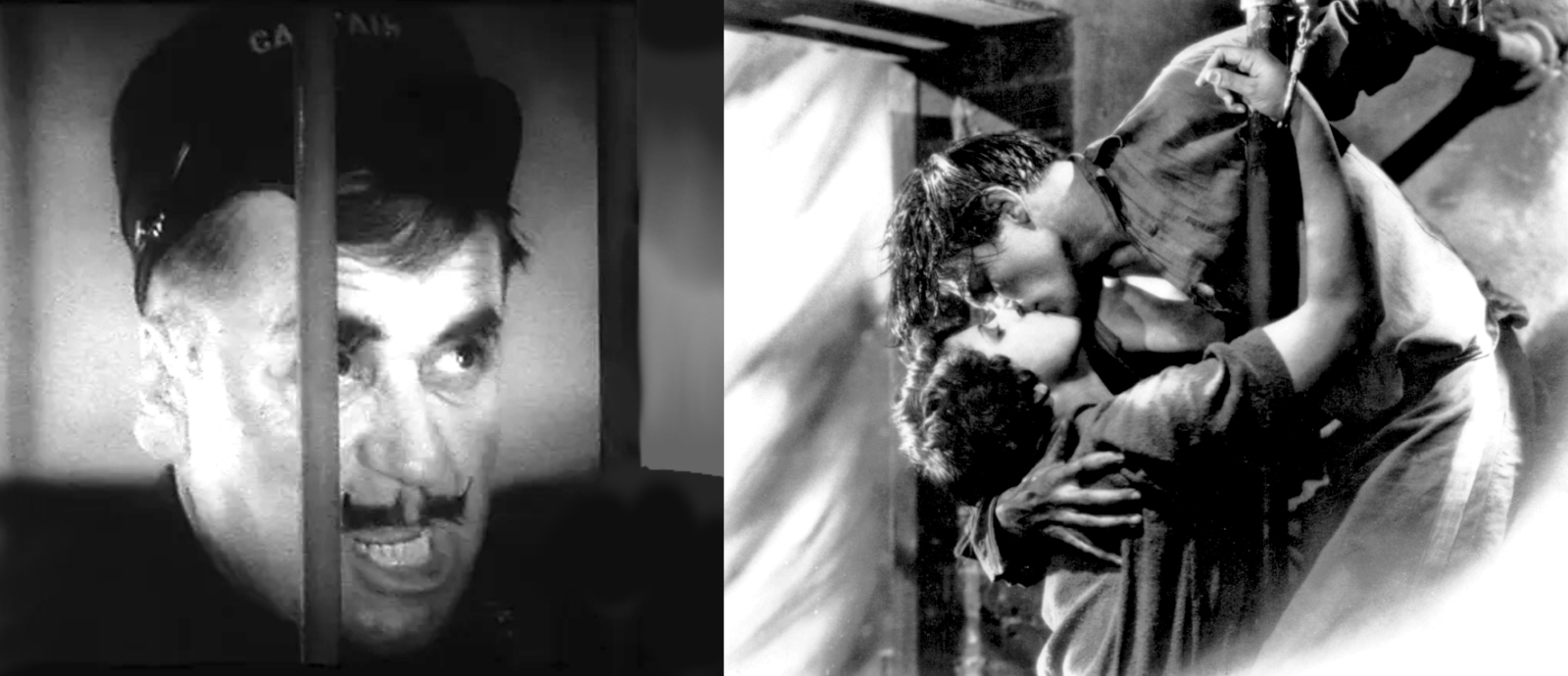
Singled out as troublemakers, Bob and Judy are sent to a reformatory along with Sam Johnson (Eddie Quillan), a joker friend of Bob who was also caught in the riot. The reformatory is a giant construction with a big fence that separates women’s and men’s units. The guards are harsh, especially the brutal Block Warden (Noah Beery). Judy makes no friends when her atheism becomes known, but to her surprise, the Christian girl Mame (Marie Provost) sticks up for her against the matrons. They become friends, although Mame forms a crush on Bob as well. Seeing Bob and Judy trying to kiss through the chain-link fence, the Block Warden throws an electric switch, and burns both of their hands. Bob revolts, stealing a bakery wagon and crashing out with Judy hidden in the back. They spend a romantic night in a barn before their recapture. They are both in solitary cells when a fire breaks out. Bob must defy the flames to reach Judy, only to discover that she is handcuffed to a pipe in her cell. The Block Warden has the only keys …
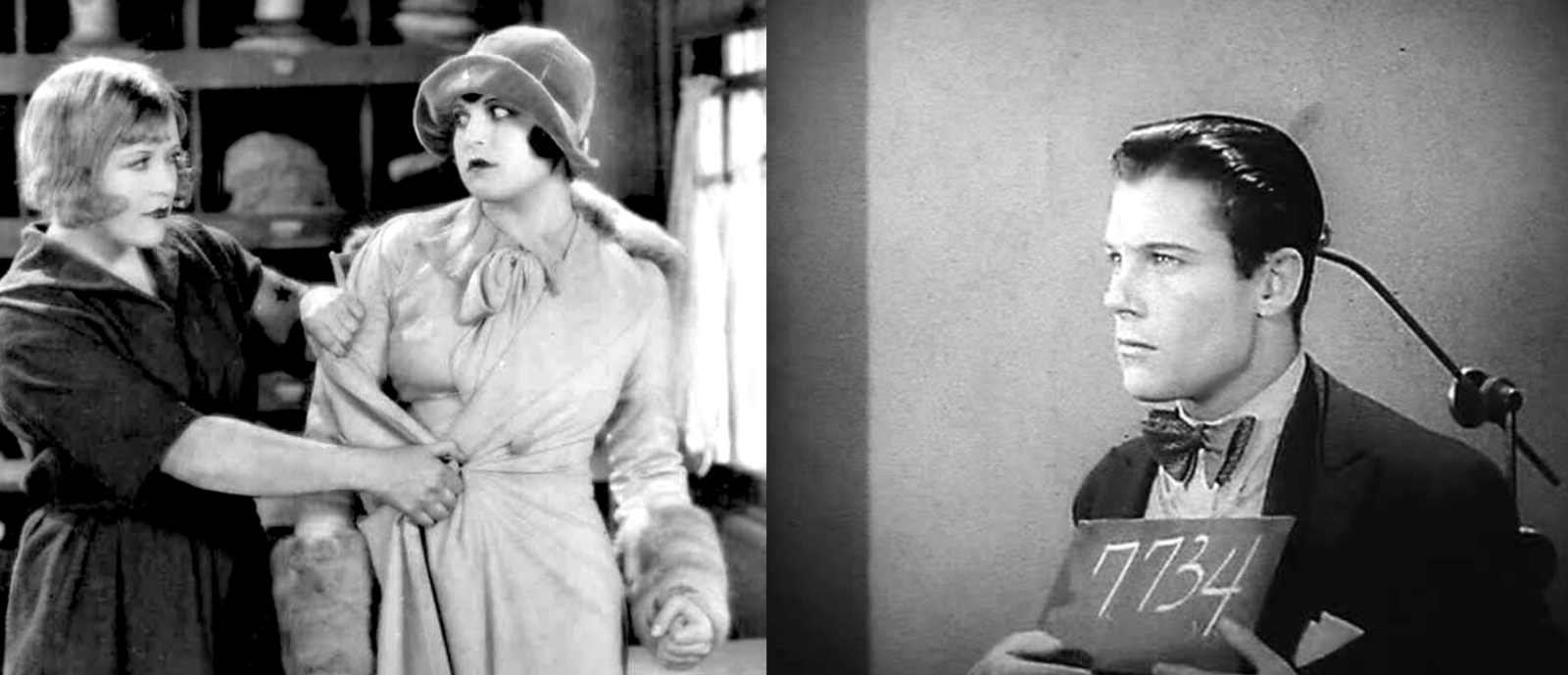
The disc copy calls DeMille the cinema’s greatest showman and moralizer, even though the ‘moral’ content of his films was often appalling. The Godless Girl comes down heavy on one side of its ‘important issue,’ and even then cheats on the details. Appealing to the mob that railed against the ‘Godless’ aspects of the recent Scopes ‘monkey trial’, scenarist Jeanie Macpherson distorts the issue, inventing a self-styled, aggressively offensive atheist. Reckless campus big shot Judy Craig gets her kicks by leading her Godless Society meetings with lame attacks on Christian churches. The Society’s oath is ‘Kill the Bible’ without any argument why.
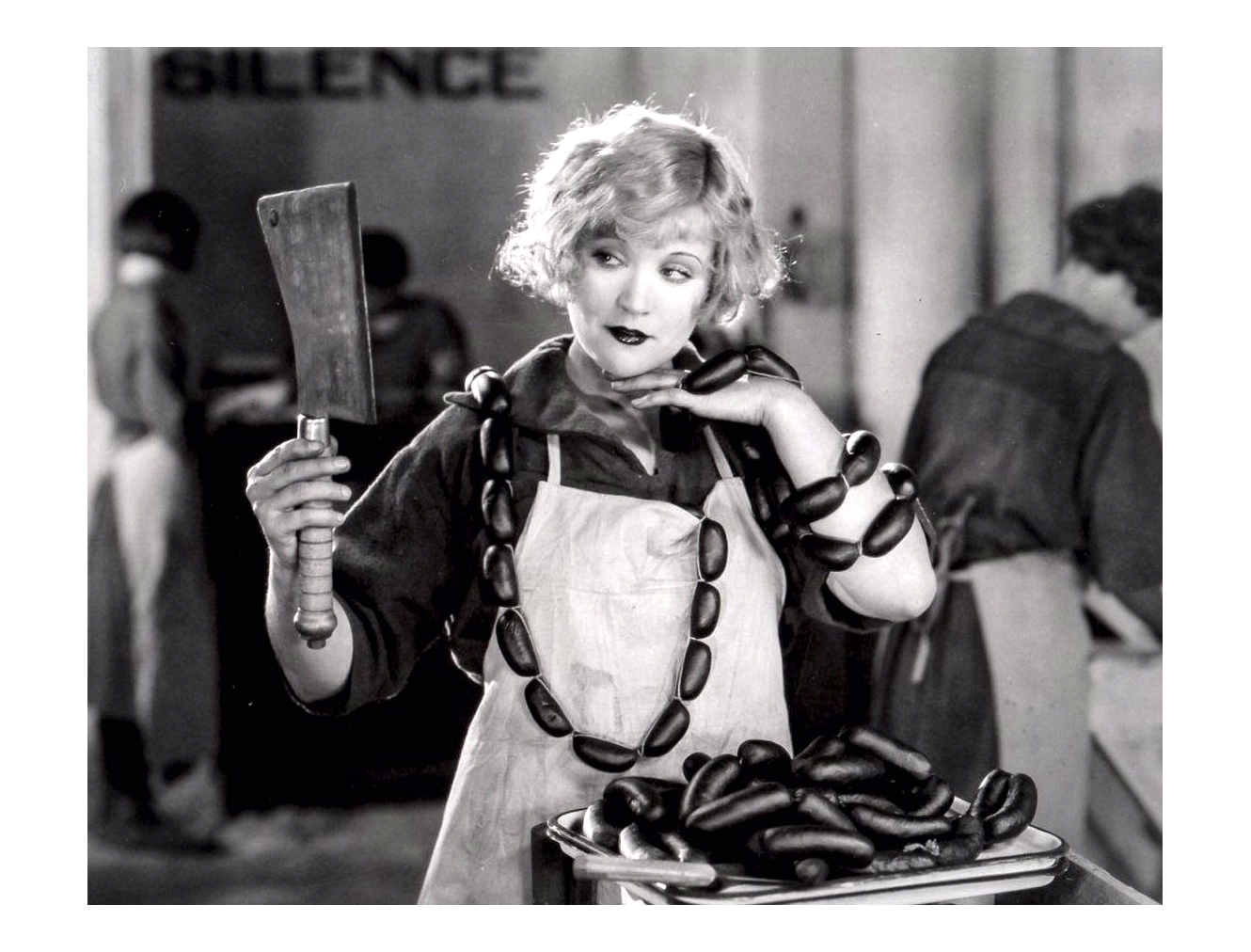
Eddie Quillan’s comic relief character Sam is sworn in to the Society by placing his hand on the head of a monkey. Darwinism is thus equated with atheism in a mocking ritual akin to Devil Worship. Both Sam and unnamed riot victim are mainly interested in Judy’s charismatic appeal and the social fun she offers. The cute riot victim girl is one of the few players who looks young enough to be a High School student. She is first seen stuffing student lockers with Judy’s flyers, the ones with the slogan ‘Kill the Bible.’ The students in the Society apparently believe something about atheism, but we’re not told what. The film doesn’t endorse Bob’s anti-atheist mob, yet it celebrates its spirit. Cecil B. DeMille gravitates toward self-righteous mob action: vigilantism.
The riot victim is given a prolonged death scene, to allow Judy to express remorse. She realizes that something has gone too far. At the point of death, the victim immediately voices her concern for the hereafter; a cop reassures her that ‘He’ will be waiting on the other side.
Once in the reformatory, Judy slowly converts away from her beliefs, mainly because Mame is nice to her and because she has the hots for Bob. Never mind that Bob instigated the riot, and then clubs a man to escape from the reformatory. Bob is Cecil B.’s hero in this ‘moralistic’ story, yet he elects to leave a man to burn to death in the concluding fire. The tainted Judy insists that he do the right thing.
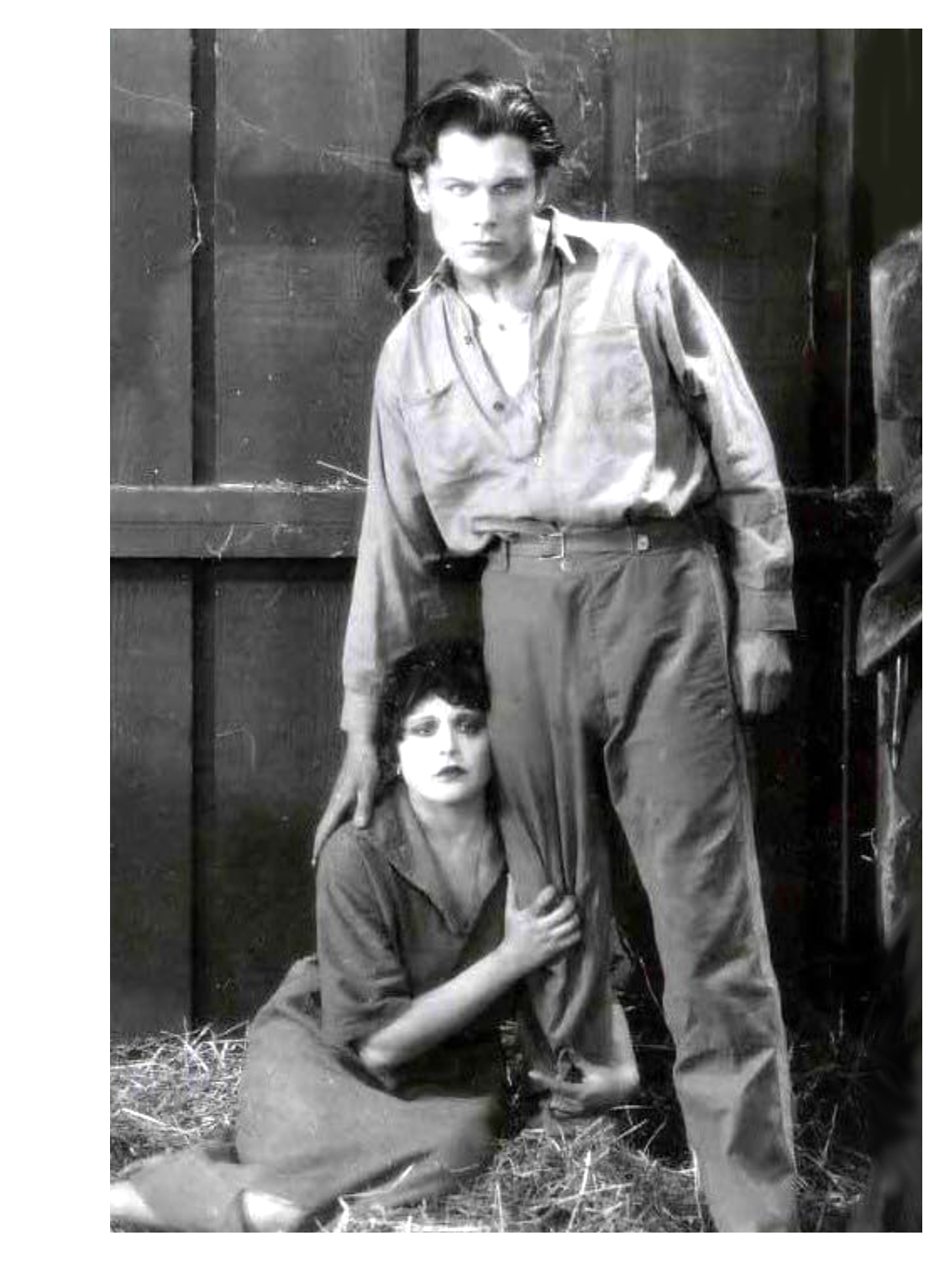
DeMille skips the trial, and no parents appear. But he doesn’t miss opportunities to exploit the prison setup. An extended ‘water torture’ scene shows Bob hit by a fire hose, with an emphasis on his shirtless torso; the sadistic aspect reminds us of the later Sign of the Cross. The religious symbolism hits a low at the electrified fence — burned from the chain-links, Bob and Judy’s hands display prominent ‘X’s, literal stigmata. You’d think audiences would resent DeMille’s cavalier leverage of religious symbols.
The escapees end up not in church but in total privacy for a night together in a barn. The tease is preceded by Judy’s nude bath in the brook, observed from a discreet distance by Bob. A more creative visual gimmick comes when the sweethearts alter the number tags on their shirts. Turned upside down, he makes his say ‘HELL.’ She makes hers read, ‘LOVE.’ The scene makes a good contrast with the ‘Hate – Love’ preacher’s demonstration in The Night of the Hunter.
There’s no denying DeMille’s fine direction in The Godless Girl. The storytelling is nimble and the performances are well managed. We recognize Judy as a provocative firebrand and Bob as an impulsive fellow prone to rash action. Sam and Mame are agreeable second bananas, supportive of their respective best friends.
The staging and cinematography reminds us how talking pictures interrupted a storytelling style that, when done well, needed few inter-titles. The camera finds excellent angles and moves in a way that doesn’t bring attention to itself. A bravura exception is made for the stairwell riot, where the camera ascends in an elevator to follow three floors of action. We presume that art director Mitchell Leisen did a lot of the designing of scenes. The crush of battling students is truly impressive, especially on that staircase. The fire sequence gives us numerous shots in which large flaming timbers crash down in close proximity to the actors. One exterior showing the collapse of a building is a terrific visual effect … or maybe it’s real. A crowd of onlookers barely escapes.
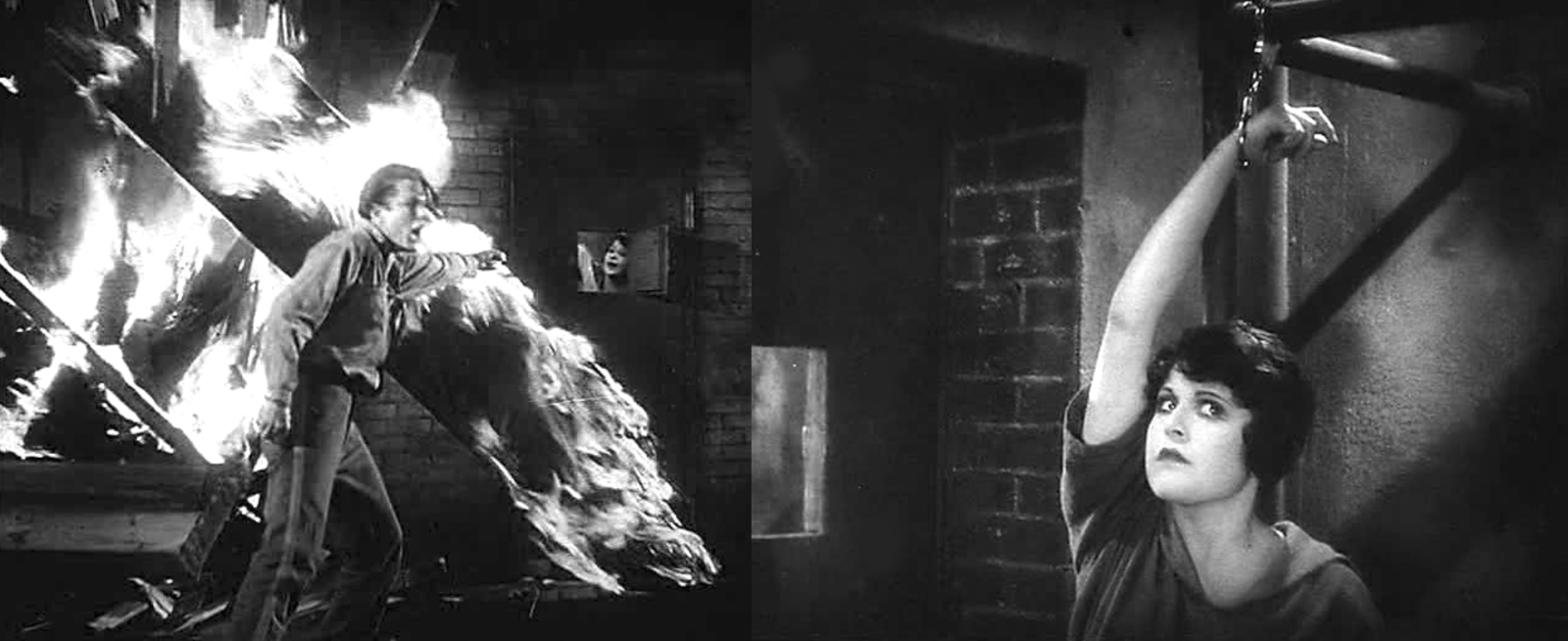
To what degree was DeMille influenced by Fritz Lang’s Metropolis? The story begins with a secret outlaw society, that publicizes a meeting by circulating flyers. The regimentation in the reformatory sees lines of prisoners marching in exaggerated lock-step, just like the downtrodden workers in Lang’s film. DeMille uses big crowds as architectural blocks, as did Lang. The big fire sequence looks real, especially all those crumbling sets, where the falling timbers look out of control. Chained in their cells when the fire breaks out, Bob and Judy are set up as potential Christian martyrs, to be burnt at the stake; Metropolis abounds with Christian imagery as well.
Top-billed leading lady Lina Basquette was a former child star. She’s very appealing, but Marie Provost was a much bigger name as a silent actress. Bright-faced Eddie Quillan had the longest career, with notable roles in Mutiny on the Bounty and The Grapes of Wrath. Handsome George Duryea changed his name to Tom Keene and mostly made westerns; he ended up with a role in Ed Wood’s Plan 9 from Outer Space.


The Kino Classics / Photoplay Blu-ray of The Godless Girl is a flawless encoding of this perfectly preserved picture. Even the inter-titles are special. When a dying woman wonders if she’ll go to heaven, the accompanying inter-title employs an animated beam of heavenly light.
The show is given a full orchestral score composed and conducted by Carl Davis, who worked with Photoplay’s Kevin Brownlow on many projects. It’s a grand accompaniment.
A big asset to the disc is the audio commentary by the knowledgeable film historian Anthony Slide. We learn that Slide interviewed Lina Basquette twice over the years, so it’s hard to imagine a more qualified authority. His detailed knowledge of the era is matched by his reasoned assessment of Cecil B. DeMille’s legacy. He also delivers a compact, even-handed overview of atheism in the United States.
The commentary scoffs at Cecil B. DeMille’s bogus story premise, that American schools are under assault by subversive ‘atheist clubs.’ Slide wonders why these obviously well-to-do kids are put on trial at all. Their parents would surely hire lawyers on their behalf. The main person responsible should be Bob Hathaway, who incited a rowdy mob against a peaceful gathering. DeMille has manufactured a conflict that he can sell to the rubes.
Slide is also in good humor. After telling us that the actor Noah Beery entered show biz as a singer, he sings a verse from Beery’s ‘whipping song’ in the outrageous talkie musical Golden Dawn made a couple of years later.
We think The Godless Girl is a good choice to introduce a modern audience to silent film technique. The acting is excellent, the production is spectacular and the subject matter is ripe for discussion (or outrage). This writer falls into the anti-DeMille camp, ultimately. His 1933 This Day And Age comes from the same morally irresponsible viewpoint. In it, a group of similarly pampered high school students take the law into their own hands, as a mob. As outright vigilantes, they arrest and torture a gangster over a pit of rats. This time around, DeMille’s endorsement of mob action looks and plays like something from fascist Germany.
Reviewed by Glenn Erickson

The Godless Girl
Blu-ray rates:
Movie: Good
Video: Excellent
Sound: Excellent 2.0 stereo and 5.1 surround tracks
Supplements:
Audio Commentary by Film Historian Anthony Slide.
Deaf and Hearing Impaired Friendly? YES; Subtitles: English (feature only)
Packaging: One Blu-ray in Keep case
Reviewed: January 17, 2026
(7459god)
Visit CineSavant’s Main Column Page
Glenn Erickson answers most reader mail: cinesavant@gmail.com

Text © Copyright 2026 Glenn Erickson
About Glenn Erickson

Glenn Erickson left a small town for UCLA film school, where his spooky student movie about a haunted window landed him a job on the CLOSE ENCOUNTERS effects crew. He’s a writer and a film editor experienced in features, TV commercials, Cannon movie trailers, special montages and disc docus. But he’s most proud of finding the lost ending for a famous film noir, that few people knew was missing. Glenn is grateful for Trailers From Hell’s generous offer of a guest reviewing haven for CineSavant.
The shot of the girl falling down the stairwell is still jaw dropping and one of the most realistic VFX shots I have ever seen. When I saw the film at the Silent Movie years ago, the audience gasped at that shot.
I disagree, Glenn: “The Ten Commandments” (1956) is still great filmmaking. Overblown, yes…but still a grand time!
I could not disagree more, other than Yul Brynner’s work, it is a heavy-handed bore defined by Charlton Heston.
Agree to disagree. And I like Heston’s performance. Oh well…