
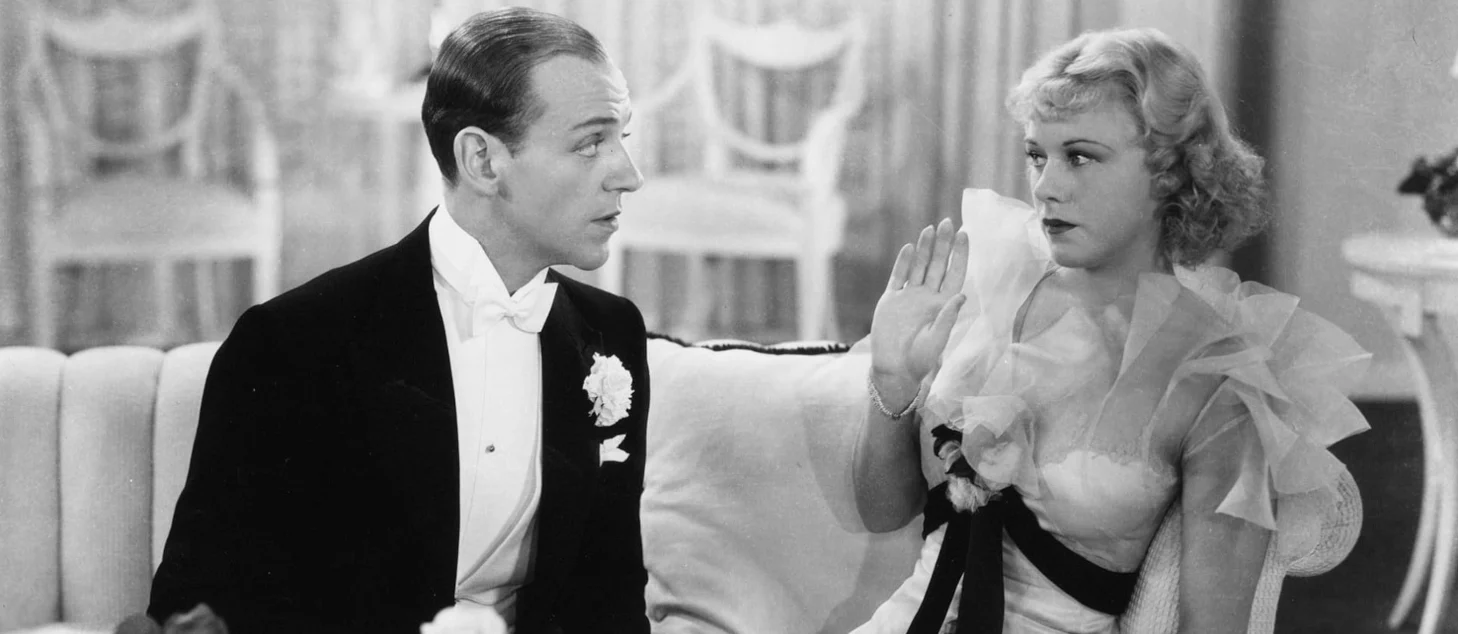

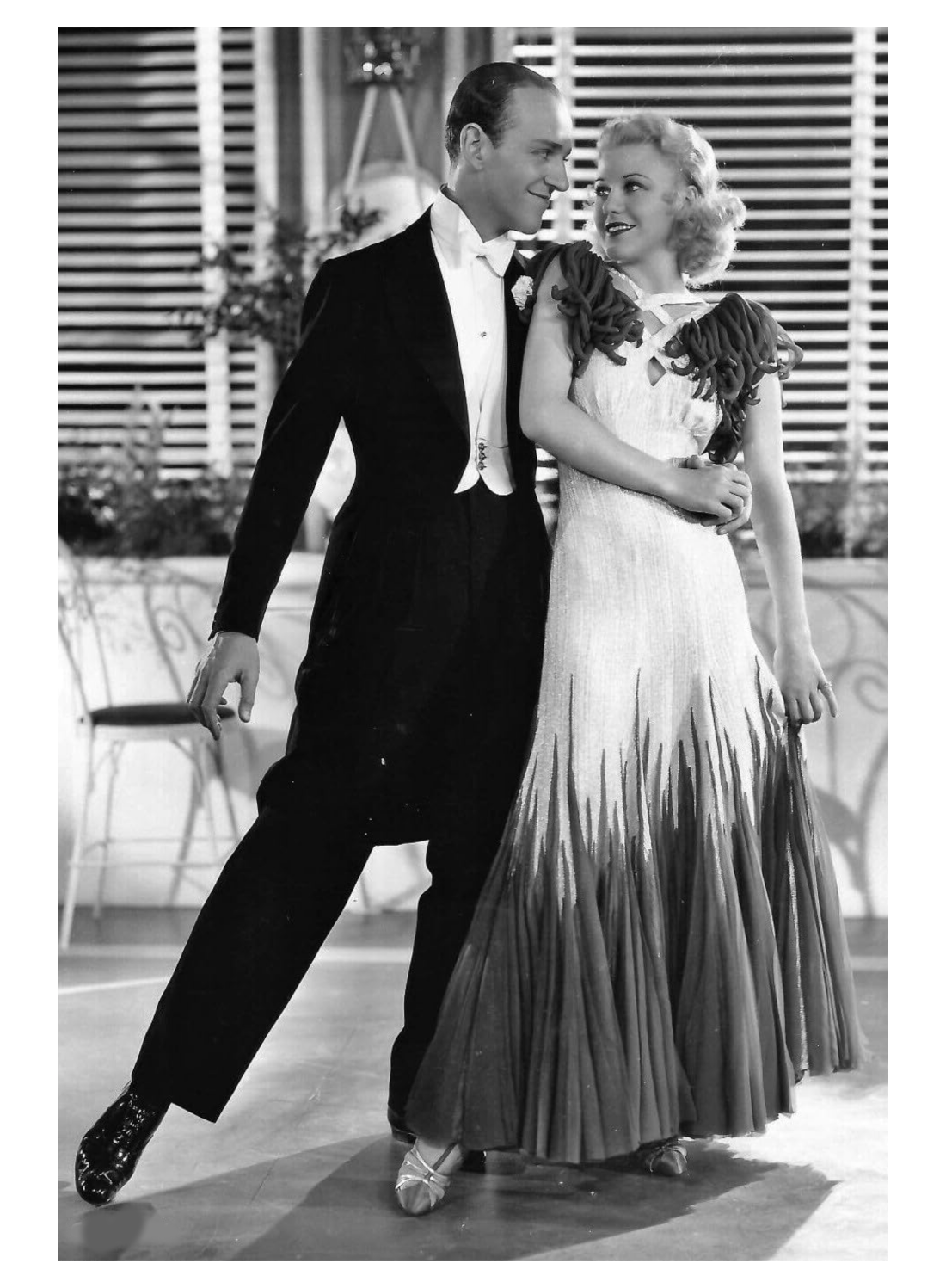
It’s old news that the dancing-singing-acting team of Fred Astaire and Ginger Rogers was the pinnacle of 1930s Hollywood romanticism … and as movies become less magical, their accomplishment seems all the more miraculous. The duo made their debut as a dancing team in Flying Down to Rio, all but stealing the movie away from its billed stars. RKO hadn’t had too many big hits, and their series of pictures gave the ‘little studio of quality’ a massive boost. Astaire and Rogers set a new 
standard for Hollywood glamour. He was a Broadway star known for dancing with his sister Adele. She was only being given supporting roles at Warners, but made a splash anyway. In Gold Diggers of 1933 Ginger introduced the iconic pop song “We’re in the Money”, singing in Pig Latin and wearing a giant coin for a costume.
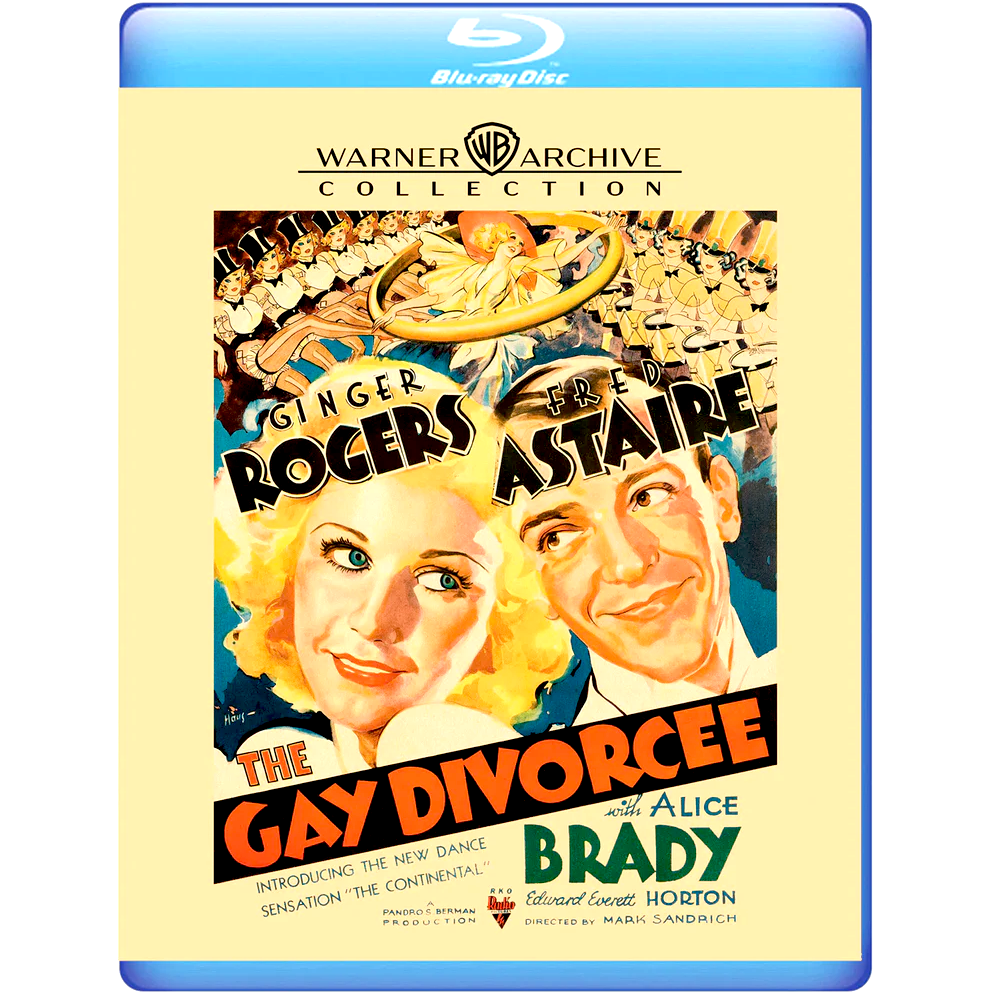
RKO didn’t hesitate to launch Astaire and Rogers in a musical of their own — a picture with music, singing and dance, but also a strong romantic thread. 1934’s The Gay Divorcee invents the basic Astaire-Rogers vehicle. Three writers drafted a screenplay from a musical adapted by two other writers. Professional dancer Guy Holden (Fred) and divorce-seeker Mimi Glossop (Ginger) are given an ideal meet-cute: she catches her dress in a steamer trunk and he rips it when he tries to pull it free.
Each lead is given a comedy sidekick complete with funny name: Edward Everett Horton excels as the ditzy attorney Egbert Fitzgerald, aka ‘Pinky.’ He’s allowed to run the family company for a couple of weeks, under strict orders not to do anything. Alice Brady is Mimi’s even ditzier Aunt Hortense Ditherwell. She’s a total scatterbrain, given some of the best jokes. A terrible flirt, Hortense loves to marry so she can get divorced again. She giggles at Pinky for ‘playing with dolls’ yet pursues him anyway.

The Gay Divorcee takes place in Hollywood’s version of the international set, those financially secure, accomplished and carefree people that can take an ocean liner to Europe on a whim. Depression audiences largely rejected naturalism and social comment — but ate up stories with swells in top hats and beautiful women in evening gowns and lingerie. The fantasy offers pure romantic escapism, shying away from political references (just one joke about union work). Fred and Ginger’s dancing was, and still is, the Hollywood equivalent of a super-power. Talented, glamorous and charming, they were like Gods come down from the sky.
The storyline comes with a plot hook that — don’t be surprised — hangs on a crazy Big Misunderstanding. Mimi and Guy don’t realize that they’re each one friend away from knowing each other. Mimi needs a divorce from William Austin’s stubborn cad, so Pinky sets her up with a professional ‘co-respondent’ Rodolfo Tonetti (Erik Rhodes). The (Code-enforced) gag is that Rodolfo is actually a sweet family man whose métier is pretending to be an adulterer as an aid to divorce cases. Mimi has been avoiding Guy because a) she’s still married and b) it’s fun to frustrate him. Thanks to some crossed messages, just as Mimi starts to warm up to Guy, she gets the idea that he is the professional divorce operative hired by Pinky. The three-way confusion begins.
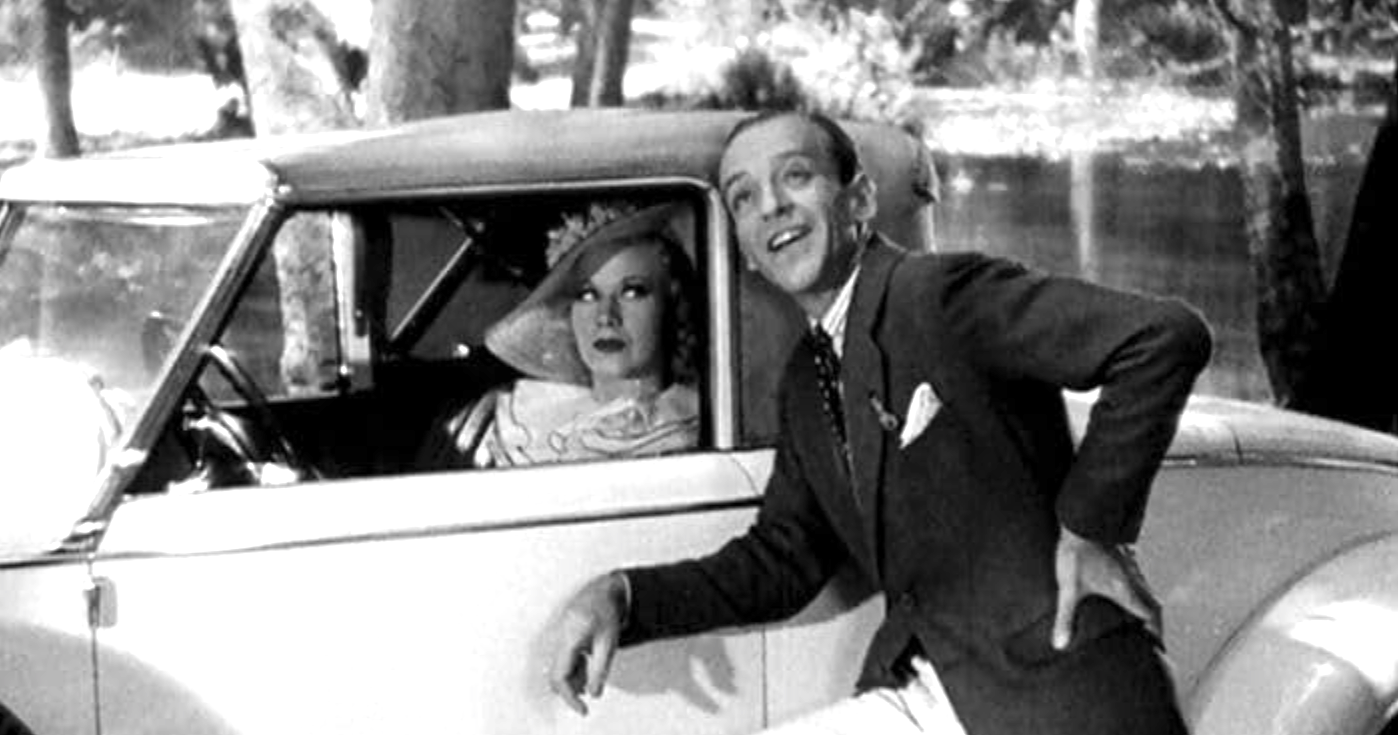
The Big Misunderstanding is not drawn out to the very end, a flaw indulged by too many Doris Day movies. Partway into Act III, the fun moves on to extended relationship humor, when both Guy and Rodolfo struggle to help Mimi win her divorce and keep her sanity.

Astaire and Rogers’ chemical charm is immediately evident. Each has a novelty number followed by Guy’s lovesick pursuit, which of course is broken off just before Mimi becomes interested. Triggering the serious romance is Cole Porter’s signature tune, the timeless Night and Day. Ginger and Fred both sing; Astaire never got enough credit for his sweet, sincere singing voice. After crooning that song, an oath of unbreakable love, Guy has Mimi in a trance.
Astaire and Rogers’ musicals would debut more than one romantic standard. The Gay Divorcee won an Oscar for best song, but the winning tune wasn’t Night and Day, which originated with the earlier musical. The ‘big’ musical dance number at the beach resort is The Continental, a nearly seven-minute set piece almost twice as long as Flying Down to Rio’s The Carioca. It’s broken up into several sections. Mimi and Guy use a trick with a paper doll to keep Rodolfo busy while they slip downstairs to make musical history. The happy couple take turns singing, and then turn the vocal spotlight over to two additional singers. Erik Rhodes had played the role of Rodolfo on stage and has a great voice; he returned for a second A&R musical, Top Hat. Singer-actress Lillian Miles puts plenty of enthusiasm into a fourth vocal. This standout appearance was apparently the peak of her film career.

The Continental expands into a mass dance number. RKO’s Van Nest Polglase designed a multi-leveled Art Deco hotel set that includes a balcony with Mimi’s room, and a half-acre of shimmering dance space. Over sixty dancers take to the floor, making moves that copy Busby Berkeley’s drill team gyrations. Unlike Berkeley’s triumphs over at Warners, these dance chorus formations don’t develop or evolve: choreographer Hermes Pan just connects them with dissolves. Precise editing joins mass dancing activity that could have been performed to a metronome.
Yet The Gay Divorcee does seem more advanced than the Busby Berkeley extravaganzas, which emphasized design spectacle for its own sake. Audiences might ooh and aah at Berkeley’s geometric drill patterns, but Fred & Ginger’s winning romance was more fulfilling.
The dialogue here is a total delight. We wonder how much new material was added to the ‘book’ of the stage musical. The characters are defined with witty dialogue and jokes that haven’t dated. There are few topical references and no race-oriented slurs, at a time when any Hollywood screenplay could come out with patter like, “That’s mighty white of ya!” Astaire and Rogers are cute, funny and thoroughly sentimental under their sophisticated jokes about divorce. They wear evening clothes that verge on Utopian fantasy. We’re behind them all the way. The chemistry is in every step of their dancing. If these stars didn’t get along in private life, we don’t want to hear about it.

Edward Everett Horton and Alice Brady provide plenty of laughs. Her Hortense Ditherwell has more memory problems than Gracie Allen, but that doesn’t stop her from flirting with every man she sees. Horton retains his dignity despite the constant humiliations. He proves he’s a good sport in his musical dance number Let’s K-nock K-nees, making the most of an awkward bathing suit. His dance partner and vocalist for the novelty piece is none other than Betty Grable. She’s 17 years old; her star breakthrough wouldn’t come for another 6 years.
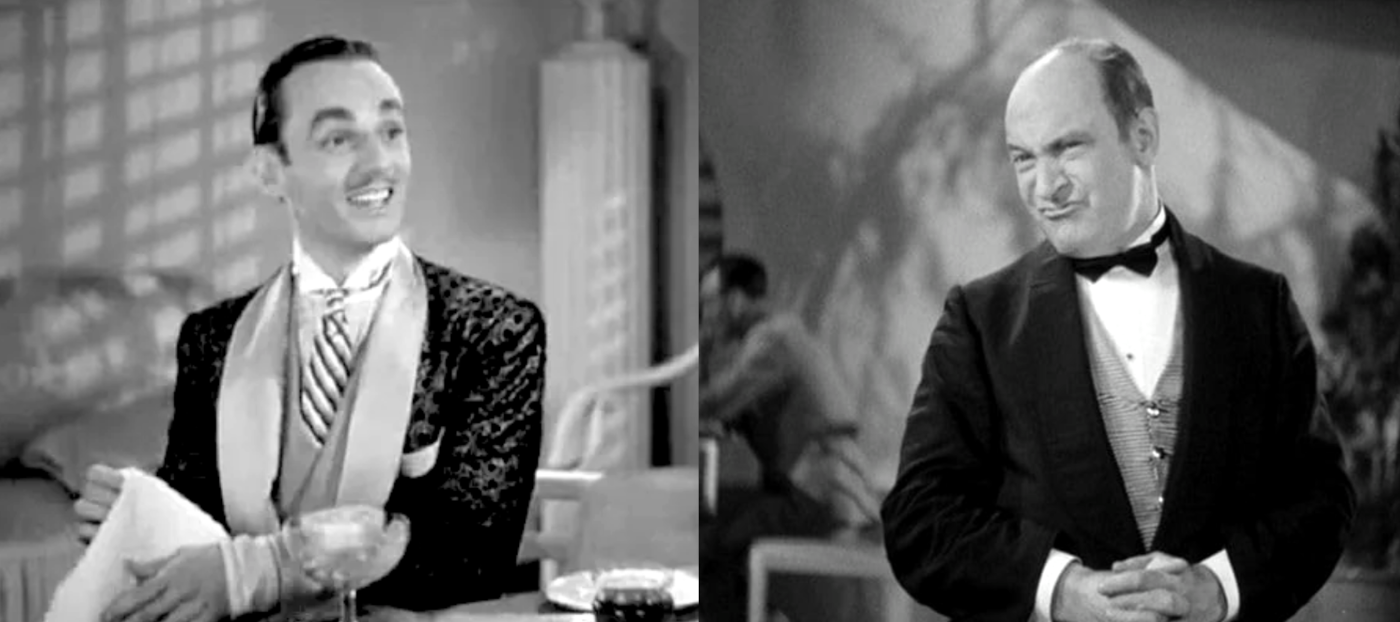
Both Eric Blore’s infinitely accommodating waiter and Erik Rhodes’s not-a-gigolo are afforded ‘special’ moments as well. A phone call home suggests that Rodolfo is being cuckolded, and he’s the only one that doesn’t know. Instead of being the butt of jokes, their characters are afforded a full measure of respect, something that makes the show all the more endearing.
I haven’t received my disc yet but I’m impatient. Decades ago I saw tattered prints of this film several times, so I’m longing to see it it in good condition.
Those movies were nothing but depictions of happy-go-lucky rich people. They must’ve made Universal’s monster movies all the more fun to watch.