
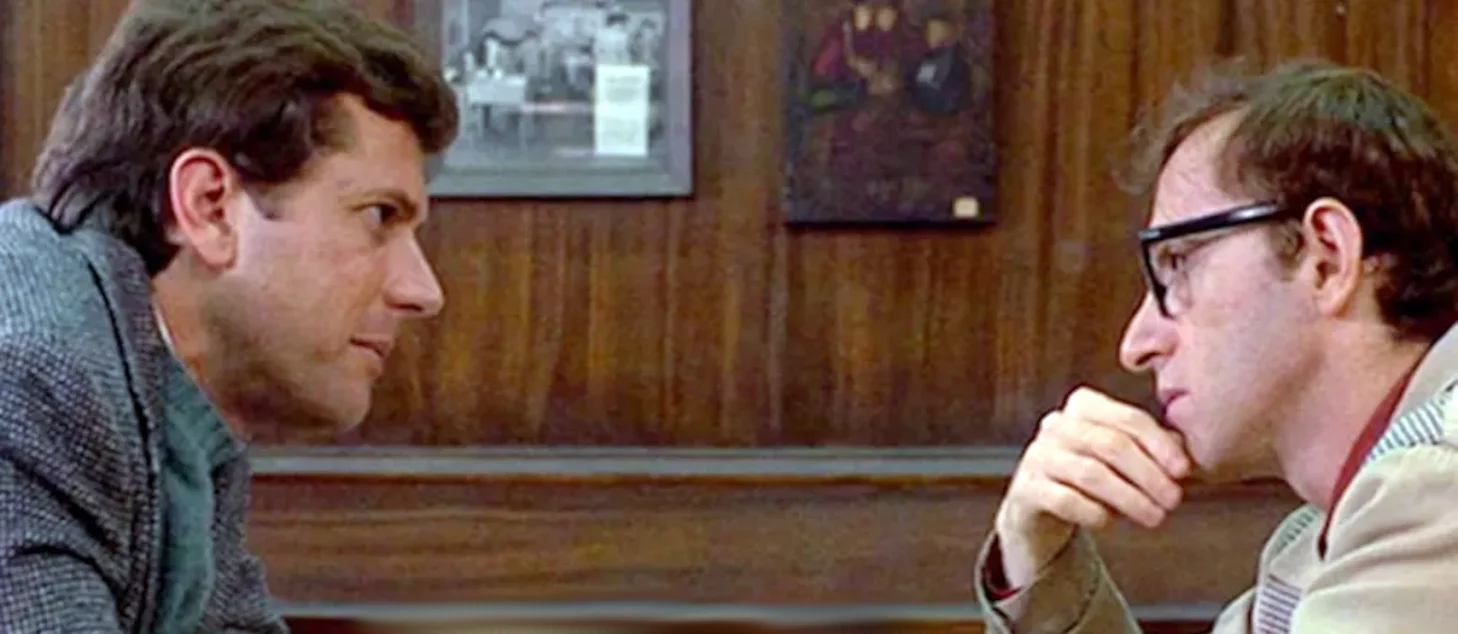
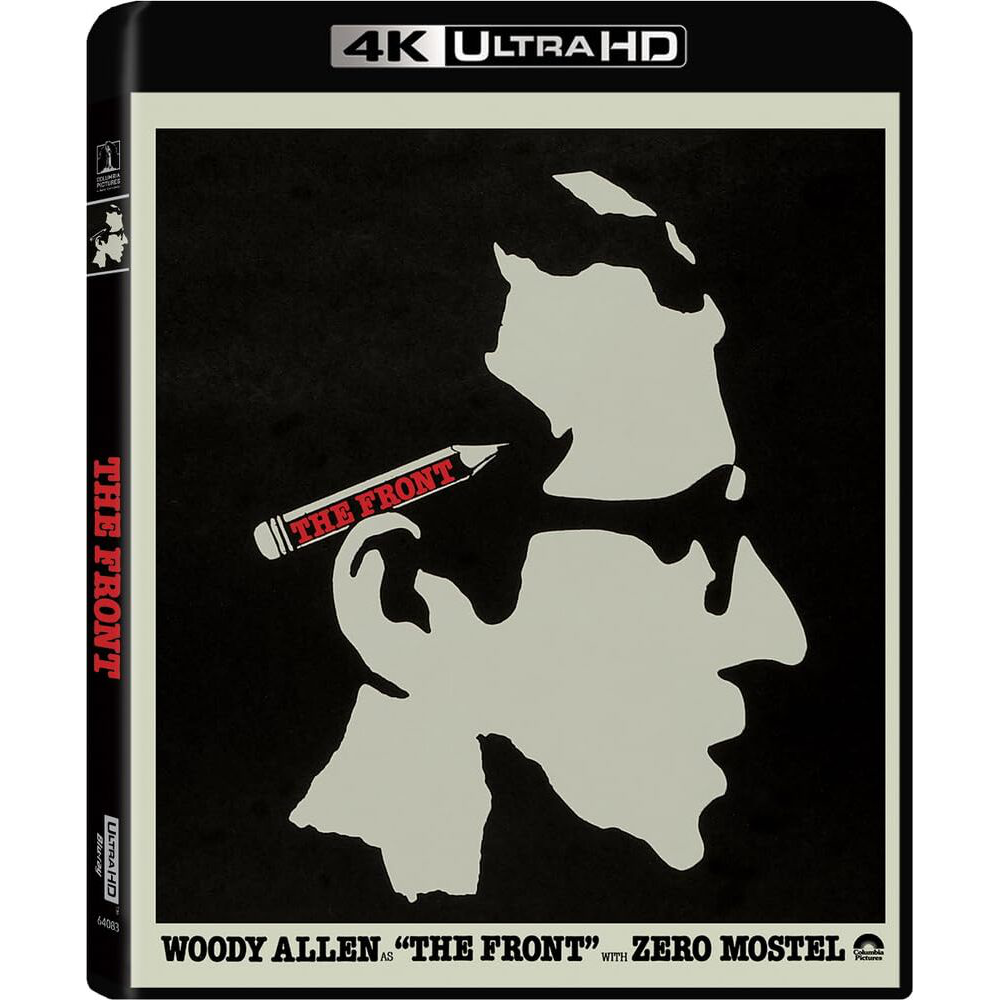

It’s curious — I was watching an episode of the streaming show Hacks the other day, and its leading lady shot off a quick chop to the Woody Allen legacy, saying ‘sheesh, who has anything to do with Woody Allen any more?’ It was the character talking, and the line may have been intended to show how shallow the new Hollywood types can be. But even taking that into consideration, I’m heard so much negativity about Allen in the last few years that I believe a lot of people parrot a guilty verdict on him just to avoid trouble in conversations.
Good old Hollywood really could be like a pack of Lylah Clare dogs. (Slightly arcane reference, that.) It’s relevant to say that because 50 years ago Woody went ‘on the record’ in the best movie so far about Hollywood’s blacklisting era. The Front is probably the only fully successful show about that troubled time. An Honorable Mention goes to Irwin Winkler’s Guilty by Suspicion, with Robert De Niro.
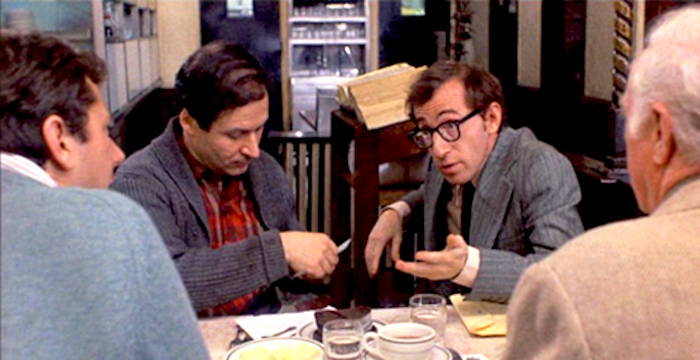
The movie is not at all a documentary, and in fact softens the facts a bit. Back in 1976, some critics voiced their displeasure that Martin Ritt and Walter Bernstein’s The Front wasn’t more aggressive and accusatory about the harm done by the Blacklist, which many Americans still claim was a righteous defense against Soviet subversion. We instead compare The Front to the older Sidney Poitier movies, that had an uphill battle simply trying to get America to accept the idea of a black man starring in a movie. Audiences were never inclined to flock to movies that preached politics, but the presence of Woody Allen made the difference. The non-threatening, mildly humorous The Front wisely sets up the absurdity of the witch hunts and allows viewers to become curious on their own. For interested parties, it’s a short step from this entertainment to the docu Point of Order, to actor Robert Vaughn’s book Only Victims and to the moving, damning truth to be found in interview-driven works like Tender Comrades.
Most of what’s written about the Blacklist era concerns big stars, writers and producers, like the Hollywood Ten. But thousands of law-abiding citizens in all walks of life also saw their lives ruined. Teachers and civil servants were dismissed with no way to appeal their ‘invisible Blacklisting.’ A single denunciation could cause most anyone to lose their entire livelihood. In the resulting climate of fear, who would defend a schoolteacher who once supported a politically unpopular cause?
Nowhere was the bite of the Blacklist stronger than in the new profit center of New York television, where so much money was being made that nobody wanted to rock the boat. Just like witch-finders of olde, Red-hunters helped the networks purge their ranks of undesirables, on the basis of old affiliations, hearsay and innuendo. Deprived of his career for years, screenwriter Walter Bernstein packs The Front with autobiographical detail, including his own ulcers. It’s all true. In a major subplot, actor-comedian Zero Mostel recreates real incidents that happened to him personally.
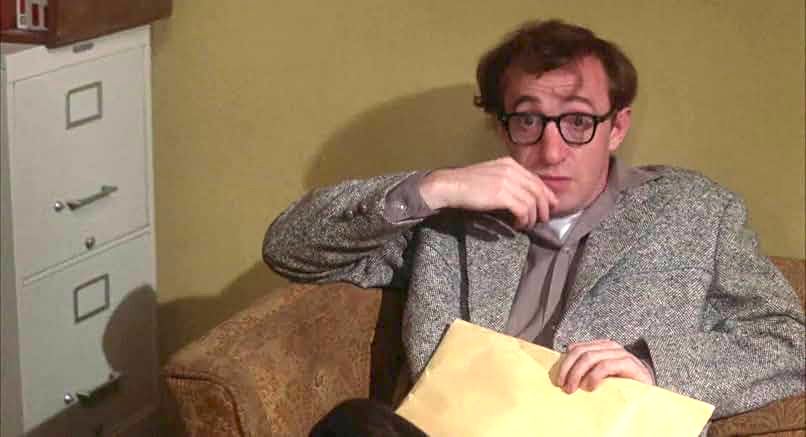
Deli cashier and bookmaker Howard Prince (Woody Allen) is approached by his old friend Al Miller (Michael Murphy), a successful TV writer who suddenly cannot get a job because of his political affiliations. The deal is simple: will Howard put his name on Al’s scripts so they can be sold to the networks? All he need do is pretend to be a writer and attend a meeting or two. Howard at first offers to help Al for free, but Al insists that he accept ten percent of the writing fees. Howard enjoys becoming Al’s ‘front.’ The money is good, and his faked status as a writer attracts a girlfriend in production assistant Florence Barrett (Andrea Marcovicci). To get out from under his bookmaking debts, Howard begins fronting for Al’s friends Herb Delaney and William Phelps (Lloyd Gough & David Margulies) as well. He dresses better and moves into a better apartment … and begins to get the foolish notion that he’s part of the creative process.
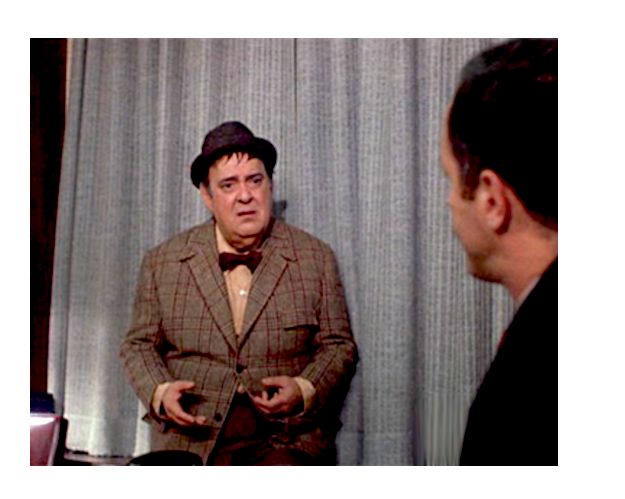
Howard becomes aware of the grave injustice of what is happening only when his new friend is blacklisted. Comic performer Hecky Brown (Zero Mostel) doesn’t understand politics — he only remembers that he subscribed to The Daily Worker and went to some ‘communist’ gatherings to please a girl he was chasing. Hecky can’t change his face or hire a front. He can find no way to squirm out from under the implacable, pitiless Red-hunters of the ‘Freedom Information Service.’ Just as Howard is trying to help, detectives connect him to the three blacklisted writers … and the witch hunt turns on him as well.
The Front is always amusing, yet Walter Bernstein’s script grows darker as Howard Prince develops a conscience about what’s going on around him. With dollar signs in his eyes, he isn’t a beacon of sensitivity to his friends’ strange plight — he thoughtlessly critiques their work, adding insult to injury. Things become sticky when the show’s producer (Herschel Bernardi) shoves Howard into a room to do a quick rewrite. Like the girl in Rumpelstiltskin tasked to spin a pile of straw into gold, he suddenly realizes that writing ain’t easy, that his unlucky friends have a special talent.
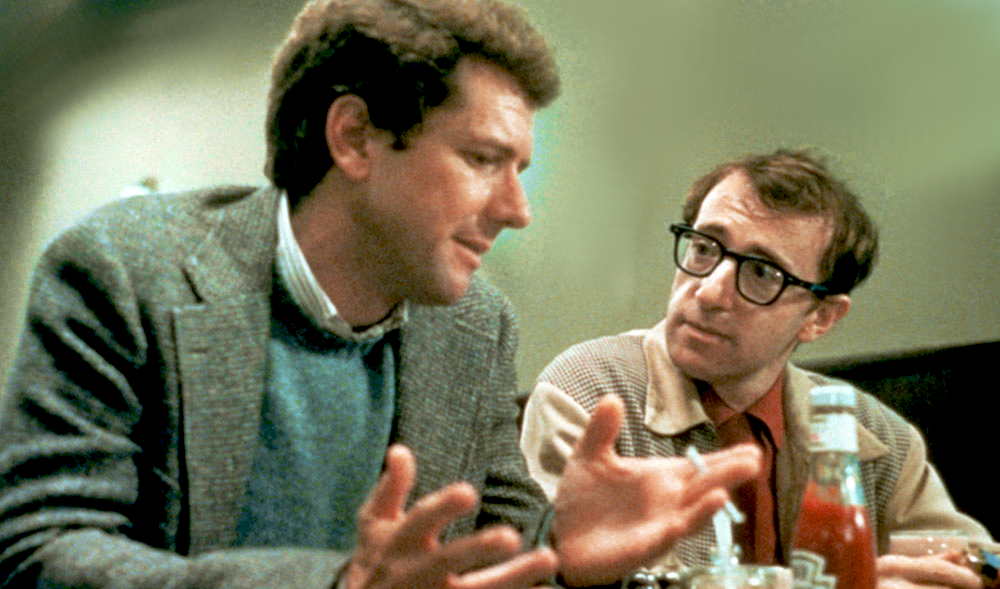
The Front might be difficult to watch if it were told in a gritty NYC style like that found in Alexander Mackendrick’s Sweet Smell of Success. We can easily imagine a shark like Tony Curtis’ Sidney Falco playing his friends’ predicament for all it is worth. The writers would be turning out shallow, complacent pap for TV dramas, while engaged in a grim existential struggle.
The writers’ situation is precarious. Al Miller is so affected that he winds up in the hospital with an ulcer. At the TV studio, professional cowardice is the order of the day. Florence is disgusted when her superiors want to appease the witch hunters at any cost. Once the hex is in against Hecky Brown, he becomes persona non grata. The socially-oriented Hecky wilts inside when former associates and employers suddenly turn their heads away at his approach. It’s as if the popular performer no longer exists.
Zero Mostel’s performance puts average Supporting Oscar nominees to shame — it’s both brilliant and heartbreaking. The Borscht Belt comedian adds a touch of nuttiness to the movie, while illuminating the tragic aspect of the Blacklist. The Hecky Brown character is based partly on Mostel’s own experience, especially a real incident when he performed in the Catskills. Sensing Hecky’s desperation, a sleazy resort proprietor cheats him of half his fee. The balance of Hecky’s story is borrowed from that of actor Philip Loeb, who was labeled as a communist for his union activities, and unceremoniously dropped from the cast of his enormously popular TV show, The Goldbergs. The whole story is told in the documentary Yoo Hoo, Mrs. Goldberg.
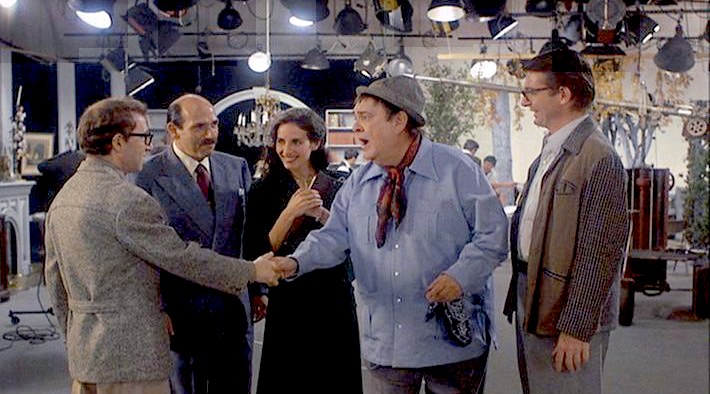
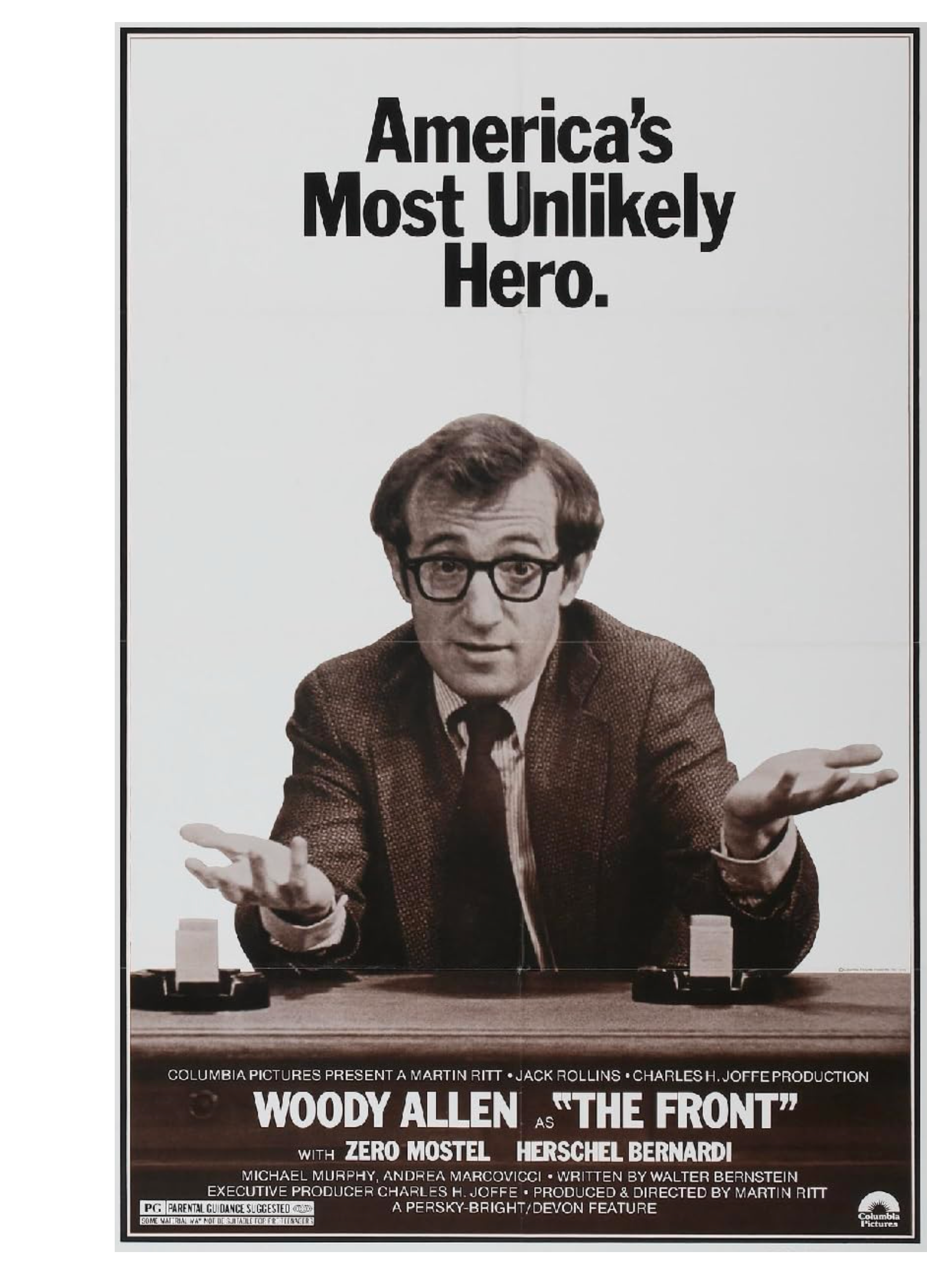
Immersed in his own films, Woody Allen took this acting-only assignment because he believed in the subject matter and respected the filmmakers. It was our first opportunity to see Woody in non-clown mode, in a serious role. This may be his only screen character that isn’t undercut with comic detachment. Howard Prince grows from a position of willful ignorance to taking a stand for common decency and loyalty to his friends. The only righteous path is to resist the Congressional committee, the Freedom Information Service and all their corrupt minions.
It’s telling that The Front lands right between Allen’s comedy Love and Death and his breakout seriocomic hit Annie Hall. Martin Ritt’s no-frills direction resembles Woody’s own later style. The immediate difference is that Martin Ritt’s editor frequently overhangs dialogue and audio across scene transitions. The screenplay establishes the 1953 context with a montage of newsreel footage — Marilyn Monroe, Joe McCarthy, the atomic spies the Rosenbergs — set off against Frank Sinatra’s vocal of Young at Heart. The conclusion with Howard a hero in handcuffs gives the show a needed uplift, even though few if any Blacklist victims experienced anything so positive. Commentator Julie Kirgo related the positive finish to the Sinatra song: “Fairy tales can come true.”
The movie marks the feature debut of actress Andrea Marcovicci, who was nominated for a Best Acting Debut Golden Globe. Viewers already conscious of the Blacklist get their valentine in the end credits, where several actors and creatives are listed by name and the year they were blacklisted: Martin Ritt, Zero Mostel, Herschel Bernardi, Lloyd Gough, Joshua Shelley. Actor Lloyd Gough had the distinction of being blacklisted just after filming a major role in a big Technicolor western for RKO. Howard Hughes promptly had Gough’s name and character removed from the film’s onscreen cast and credits list.
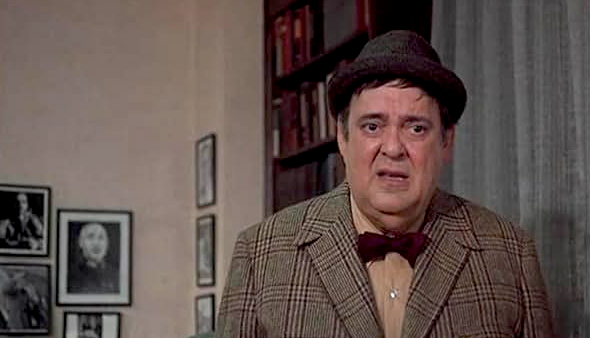
I’ve had this movie on DVD for many years, in my Woody Allen library. I vividly remember seeing this in a real movie theater upon first release, and crying buckets when Zero Mostel’s Hecky Brown cheerfully takes his hotel room, tips the bellman, and quietly steps out of the window. Thank you for highlighting this essential film.
For me still the best movie on the topic. I sadly never heard about this dark period of American history in (German) school, but first learned about it through music (Latin Quarter’s “Modern Times”) & films like this one. Howard’s final response is one my favorite moments of cinema.
Thanks, Glenn, for another great review!
Awww.
I remember seeing this when it came out and as I recall, this and ALL THE PRESIDENT’S MEN were the first PG movies to have the “F” word in it yet not get an “R” rating.