

Network — 4K
Easily the most prescient picture of the 1970s, Paddy Chayefsky’s warning of broadcast horrors to come couldn’t be more relevant to today’s news media communication morass. Corporate values turn a venerated TV news institution into an infotainment sewer, years before the advent of brain-snatching Reality TV. The satire is hilariously spot-on with its targeting of greed, hypocrisy and old-fashioned Yankee venality. Everybody deserved Oscars: William Holden, Peter Finch, Ned Beatty, Beatrice Straight and the much-missed Robert Duvall. Only Faye Dunaway survives! Satire may be dead, but Chayefsky’s ‘window shout’ classic keeps yelling at top volume.

Network
4K Ultra HD + Blu-ray
The Criterion Collection 1300
1976 / Color / 1:85 widescreen / 121 min. / available through The Criterion Collection / Street Date February 24, 2026 / 39.95
Starring: Faye Dunaway, William Holden, Peter Finch, Robert Duvall, Ned Beatty, Beatrice Straight, Marlene Warfield, Conchata Ferrell, Wesley Addy, William Prince, Darryl Hickman, Ken Kercheval, Lane Smith..
Cinematography: Owen Roizman
Production Designer: Philip Rosenberg
Film Editor: Alan Heim
Costume Design: Theoni V. Aldredge
Music Composer: Elliot Lawrence
Written by Paddy Chayefsky
Produced by Howard Gottfried
Directed by Sidney Lumet
 When we first saw this show in 1976, we were blown away by the clarity of Paddy Chayefsky’s satirical argument. Thank God that it is only a futuristic fantasy, we thought. The destruction of TV news could never happen as pictured.
Ulp … TV news reality has gone beyond the abuses seen in Network … this alarm bell of a movie now stands as cultural evidence of ‘how we got here.’
The wickedly funny Network challenges a brace of top actors to work at their full potential. That it lost the 1977 Best Picture Oscar to Sylvester Stallone in Rocky is a truly depressing thought. It’s ironic that Paddy Chayefsky’s liberal jeremiad about the madness of TV culture laments the rise of an audience of know-nothing Pod People — the exact same audience pandered to by the likes of the sentimental boxing story Rocky. Absarootly.
Written and directed by men intimate with Television since its infancy, Network was nominated for most everything on the Academy’s menu. Chayefsky and three actors took home Oscars. The show was so incisive and clever, many audiences were convinced that it was dead serious. Whenever a discussion gets rolling about debased reality shows and ‘news’ shows that allow unqualified kooks to influence national politics, Network is likely to be mentioned. Chayefsky’s wild fantasy of insultingly stupid, morally indefensible programming have come true — or have been surpassed.
Paddy Chayefsky takes possessory credit for his radical vision, which represents some of his best work. His writing was always exhilarating, even when he chose to argue both sides of an issue (The Americanization of Emily) or when he propped up a fruity Sci-fi premise with reams of mad doctor jargon (Altered States). Structure-wise, Network uses the same pattern as Chayefsky’s The Americanization of Emily and The Hospital. All three present a dysfunctional institution that is shattered by an aging madman obsessed with crazy ideas.
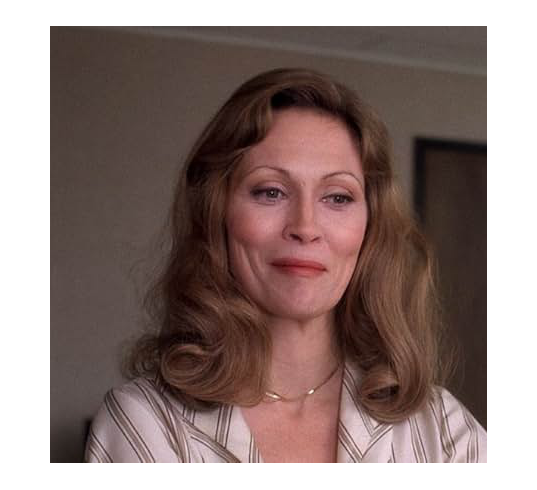
The silver-haired Howard Beale (Peter Finch) may be at the end of his honored career as the anchorman of the UBS news broadcast. The network is running dead last and big changes are expected now that a faceless corporation has bought a controlling stake. Howard snaps under the strain and announces that he will kill himself on the show, a broadcasting taboo that results in his instant dismissal. But the ambitious new director of programming Diana Christensen (Faye Dunaway) sees an opportunity to revive UBS. She sees the mentally ill — but charismatic! — Beale as a potential ratings magnet, if he can mobilize viewer discontent and rage at the ills of modern society. Corporate hatchet man Frank Hackett (Robert Duvall) is appalled until Diana convinces him that the only way to get his career out of the toilet is to join her in taking the risk.
Beale returns to the air and galvanizes the public with sermons demanding that the ills of America be fixed, and damn quick. But the UBS News Division loses its journalistic autonomy to Diana’s entertainment-minded programming ideas. She promotes Howard Beale as a new kind of TV prophet, and turns the nightly news broadcast into an insipid variety show. She also stretches the First Amendment protection of the Free Press to create The Mao-Tse Tung Hour, a show produced by communist zealot Laureen Hobbs (Marlene Warfield). UBS will pay the “Ecumenical Liberation Army” to film genuine acts of political violence, so they can be broadcast as audience-grabbing entertainment.
News producer Max Schumacher (William Holden) is Beale’s old buddy from TV’s Golden Age. He wants to protect the clearly deranged Howard but is himself fired in one of Frank Hackett’s boardroom power plays. Max falls into an affair with the ice-cold ratings maven Diane and leaves his wife Louise (Beatrice Straight). Meanwhile, UBS becomes the number one network. Diane and Frank have unlimited power to turn news broadcasting into a freak show. The only thing that will stop the madness is if Howard Beale’s ratings drop.
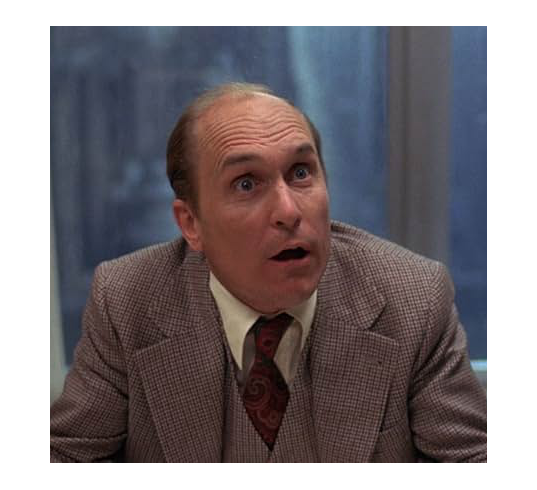
By 1976 Hollywood was still considered a director’s game, which made it refreshing to see writer Paddy Chayefsky make the young film-student geniuses look like kids playing in a sandbox. Chayefsky can become strident and even hysterical, and the picture may have one too many instances of grandstanding author’s oratory. But most of Network is inspired satire fueled by a genuine sense of outrage. Howard Beale’s nutcase prophecies and howls of protest get our collective backs up. It’s believable that all of America might readily shout his “mad as hell” mantra from their windows.
But the script goes beyond Howard’s whining, to identify and skewer what Chayefsky thinks is the engine of society’s decline — the corporate takeover of all human existence. Information is power, and Chayefsky preaches that control of the information we receive will alter the shape of our world. That much has already come to pass. The nation’s few surviving newspapers are no longer politically independent; under corporate control they bend with the political winds. TV news was once the domain of a small cadre of New York video journalists, but in Network real journalism is discounted because it doesn’t serve the corporate owners’ key function, which is to make money.
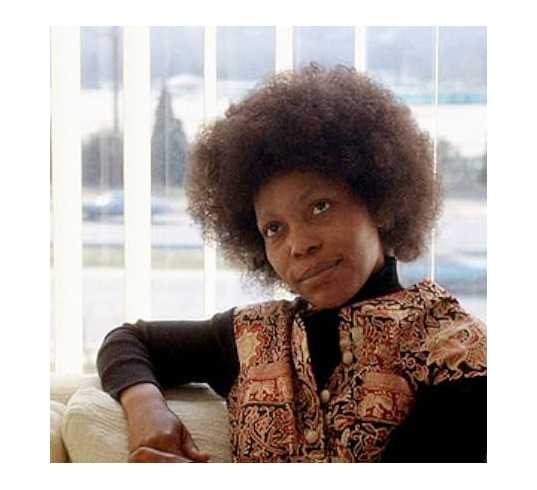
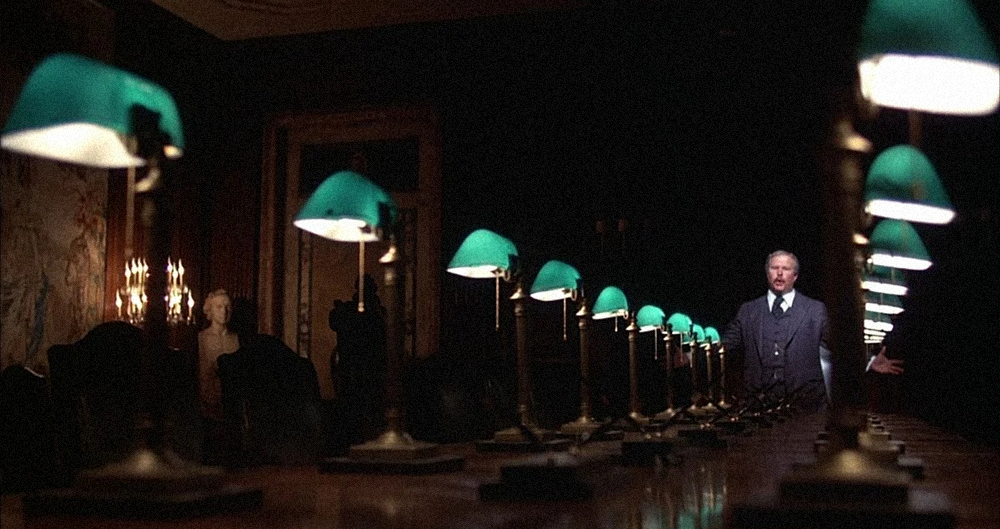
Even Howard Beale bows before Arthur Jensen, the ultimate God of the boardroom (Ned Beatty). Beale learns the truth: there are no more nations or governments or even individual lives. All real power and authority is economic, and the world’s economies are managed by constellations of corporations. Depending on one’s paranoia quotient, this is either the natural course of business or a cosmic conspiracy. Arthur Jensen’s booming voice of authority describes a future that casts individual citizens as passive cogs in a grand scheme that takes care of their material needs and keeps them amused — anesthetized — through cheap entertainment. Don Siegel’s eerie Invasion of the Body Snatchers alluded to a paranoid fear of outside forces that threaten dehumanization. Network tells us that giving you a number and takin’ ‘way your name is a natural result of the evolution of big economics.
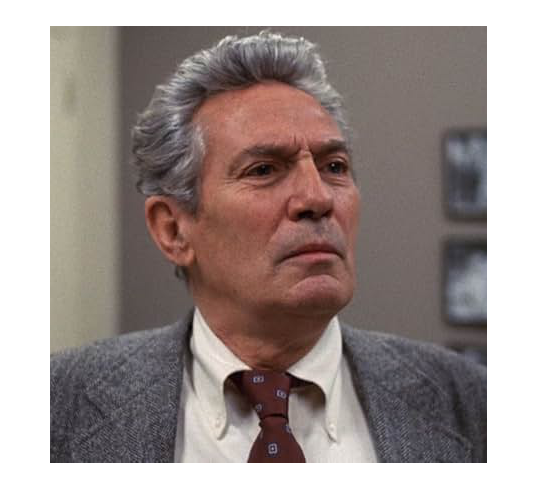
Back on the comedic level, Network contains some of Paddy Chayefsky’s funniest writing. As if expelling a life’s worth of anger at the TV industry, Chayefsky hurls mud in every direction. The blasé control room teams don’t even notice that Howard Beale has said he is going to kill himself. The executives in authority think of little else besides covering their tails. Duvall’s Hackett is a grim creep who loves to use his power to crush creative personnel. Diana flaunts her ‘new woman’ status, leveraging her sexual attractiveness as part of her no-prisoners plan to succeed. Everything for these people is winning. They display their faults proudly, as if ruthlessness and venality were desirable qualities.
When journalistic ethics prove to be a serious career impediment, the News Division’s old veterans retreat into reveries of better days. Lily-livered division chief Nelson Chaney (Wesley Addy) is shocked by the changes in programming but hasn’t the guts to risk his miserable high-paying job. White-haired president Ed Ruddy (William Prince) walks the halls with the confidence that comes from total denial. William Holden’s Max carries on a mirthful drinking relationship with his old buddy Howard. He values loyalty as his strongest suit, but betrays his own values. Fundamentally insecure, Max mistreats his wife Louise and chases after the reptilian Diana.
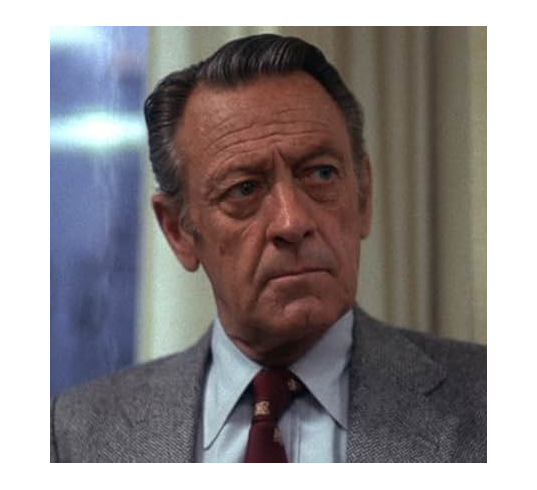
Peter Finch’s Howard Beale represents Chayefsky’s spirit of anarchy, disguised as a washed-up TV veteran with a gift for communicating to his audience. Beale is a whacked-out Walter Cronkite, the wise grandfather who suddenly advises that we start burning everything in sight. The audience for Network hadn’t been shaken up in this comedic fashion since Kubrick and Southern’s Dr. Strangelove. We loved Peter Finch’s Howard Beale, and were saddened when the actor passed away, before learning that he had been nominated for Best Actor.
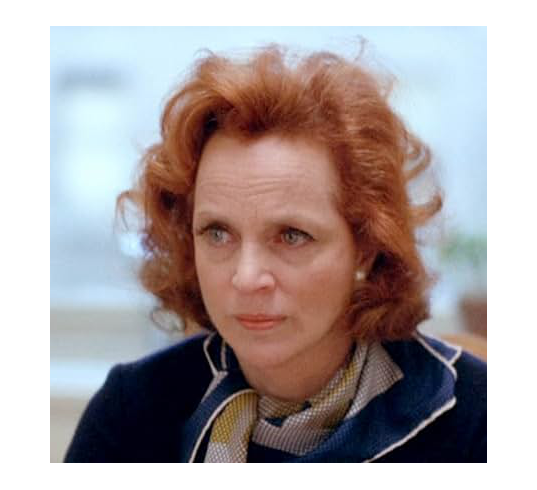
Every actor in the show shines, with William Holden and Peter Finch glowing more brightly than ever. Holden in particular had been underused in the latter part of his career. To see him once again performing at this level is truly inspiring.
Network reveals a softer side in its final act. The drama circles back to Holden’s Max Schumacher, providing yet another an all-time showstopper scene for Beatrice Straight’s amazing Winter Passion protest. → But Chayefsky and director Sidney Lumet do not fully engage us in the anxieties of TV’s Golden Age dinosaurs in their waning years. Chayefsky was still going strong, and director Sidney Lumet was barely past the halfway point in his long career.
We do notice that some cutting seems to have occurred. When Black Power firebrand Laureen Hobbs abruptly disappears, we wonder if the ELA’s Great Ahmed Kahn (Arthur Burghardt) has had her killed. The terrorist was a natural negotiator; maybe he wanted to cut out the middle-woman and deal directly with network maven Diana.
The filmmakers claimed that they hadn’t made a satire, but Network is a Black Comedy all the way. It remains wickedly funny no matter what awful, impossible things occur. It’s doubly funny (or scary) now that its unthinkable TV show concepts have been surpassed by today’s reality programming: shows about murders, executions, etc.. Chayefsky is lucky in that his lampooning of the Symbionese Liberation Army and Patty Hearst hasn’t been rendered uncomfortable by history — those terrorist outlaws are still fair game. We know that Chayefsky and Lumet have succeeded when the corporate decision to commit cold-blooded murder seems perfectly acceptable in context. Henrik Ibsen would have approved — the victim is an Enemy of the People Corporation.

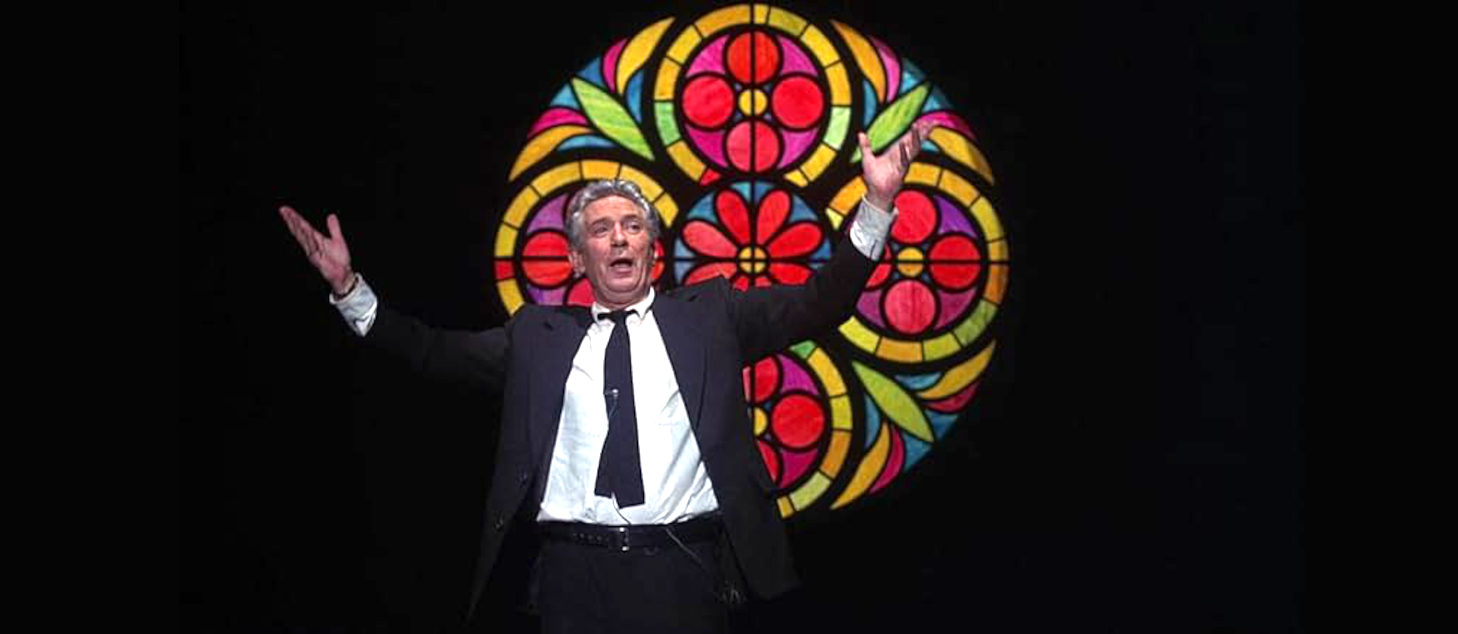
The Criterion Collection’s 4K Ultra HD + Blu-ray of Network is a new 4K digital restoration and remastering for a film which has often come off as a little ‘blah’ on video. This is Owen Roizman’s only film with Sidney Lumet, but it hews with the director’s patchy, raw look for street scenes and interiors in full light — Prince of the City, Dog Day Afternoon. Some TV showings felt like 16mm, and even the newer Blu-rays looked a little raw. The new scan frankly makes the picture look better than I remember seeing it in 1976. The grain is way down, and the colors are more attractive, even subtle. The higher contrast range puts a sparkle on the UBS celebrations, with Faye Dunaway in her fancy dress.
Criterion’s disc producer relies on the good extras of an earlier WB disc edition from 2006 — Sidney Lumet’s solo commentary, and a multi-part Laurent Bouzereau making-of documentary. We pick up a lot of the spirit of New York television, which Lumet and Chayefsky helped establish. The docu was done at a time when home video companies were breaking long-form extras into short pieces, to avoid pay issues … it’s not a free-standing video production, just a little video ‘appendage.’
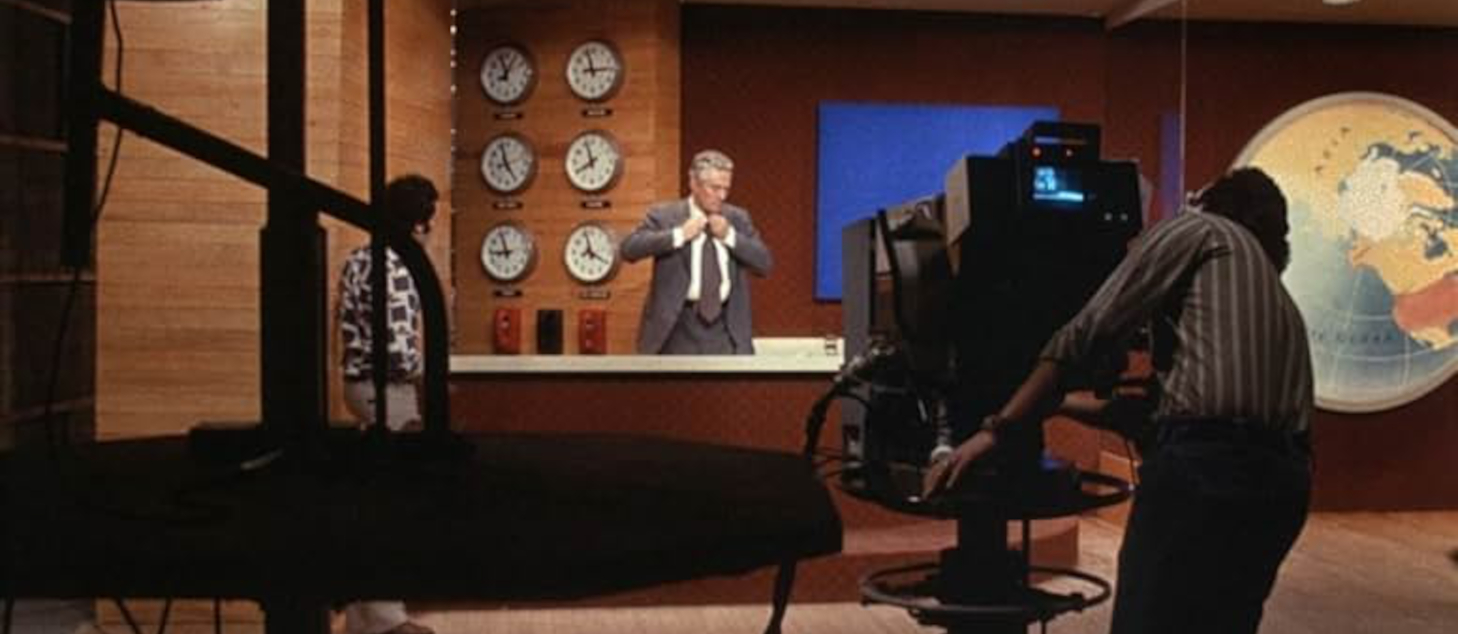
The commendable new extra is Matthew Miele’s 2025 feature documentary about author Paddy Chayefsky. It uses its 90 full minutes to look very carefully through the writer’s TV years and feature filmography, with some interesting clips. The interviews include Bryan Cranston and James L. Brooks; Miele has found a couple of vintage TV interviews with Chayefsky, who sometimes appears to be cultivating a ‘great writer’ image.
A note on an incorrect Network observation I made a long time ago: that apparently is not the young Tim Robbins as a killer in the final scene.
A more obscure note on the scene in the darkened boardroom, with Arthur Jensen lecturing Howard Beale on the prime order of the universe: Jensen first closes a curtain at the end of a long table …. and it always feels like a riff on Horror of Dracula, a movie in which another evil being needs darkness to perform his dirty work.
Reviewed by Glenn Erickson

Network
4K Ultra HD + Blu-ray rates:
Movie: Excellent
Video: Excellent
Sound: Excellent
Supplements:
Audio commentary with Sidney Lumet
Feature-length documentary Paddy Chayefsky: Collector of Words by Matthew Miele (2025)
Six-part documentary The Making of Network by Laurent Bouzereau (2006)
Trailer
Insert essay by New York Times columnist Jamelle Bouie.
Deaf and Hearing-impaired Friendly? YES; Subtitles: English (feature only)
Packaging: One 4K Ultra HD + Blu-ray in Keep case
Reviewed: February 21, 2026
(7476netw)
Visit CineSavant’s Main Column Page
Glenn Erickson answers most reader mail: cinesavant@gmail.com

Text © Copyright 2026 Glenn Erickson
About Glenn Erickson

Glenn Erickson left a small town for UCLA film school, where his spooky student movie about a haunted window landed him a job on the CLOSE ENCOUNTERS effects crew. He’s a writer and a film editor experienced in features, TV commercials, Cannon movie trailers, special montages and disc docus. But he’s most proud of finding the lost ending for a famous film noir, that few people knew was missing. Glenn is grateful for Trailers From Hell’s generous offer of a guest reviewing haven for CineSavant.
Keith Olbermann often talks about how the movie looked improbable when it got released, but now looks like a documentary.