


This all-star comedy show proves that downtrodden Depression-era America still had a sense of humor. Also kooky comedians, celebrity fads and satirical spoofery. Hollywood turned to flashy musical variety shows the moment sound came in; I need to find 1930’s Paramount on Parade again to see Helen Kane clog-dance … did I hallucinate that she could swing her feet and clop herself on the head? The craziness didn’t stop there … the pre-Code era saw Hollywood’s studios trying anything to get starving audiences into theaters — crime, horror and risqué musical comedy fare.
International House gathers Paramount’s star comics in a grab-bag of music and talent, with a side order of girlie-show glamour. The ‘zany’ story peg is the fantastic invention of Dr. Wong (Edmund Breese), that can pull in radio broadcasts from anywhere in the world … with a video image as well. To see a demonstration, business representatives converge on Wu-Hu, China, and its luxury hotel ‘International House.’ Among the competing bidders is the Russian General Nicholas Petronovich (Bela Lugosi), an unreasonable zealot who vows to let nobody else walk away with the coveted invention.
Is it Wu-hu, or “Woo Hoo?”
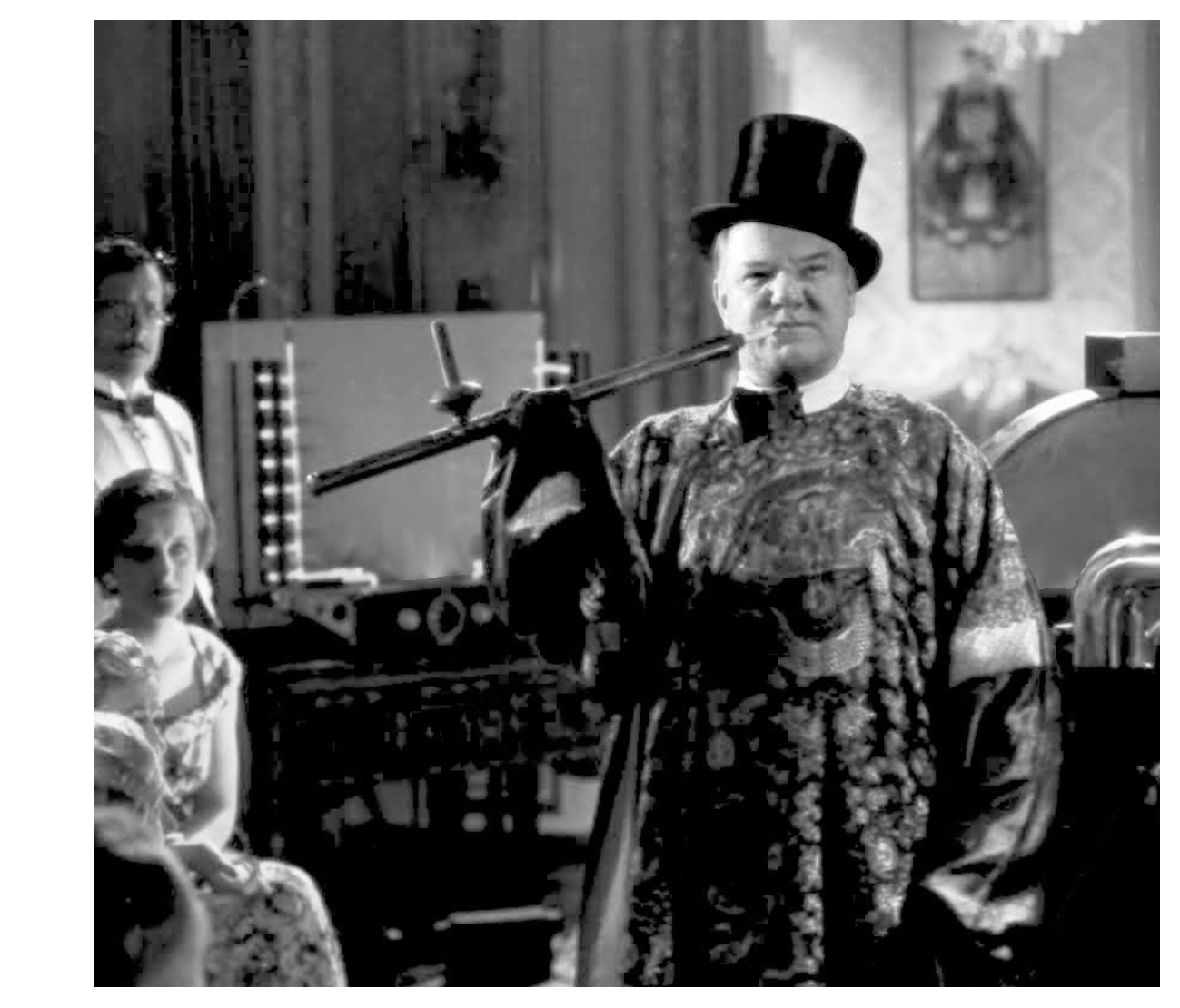
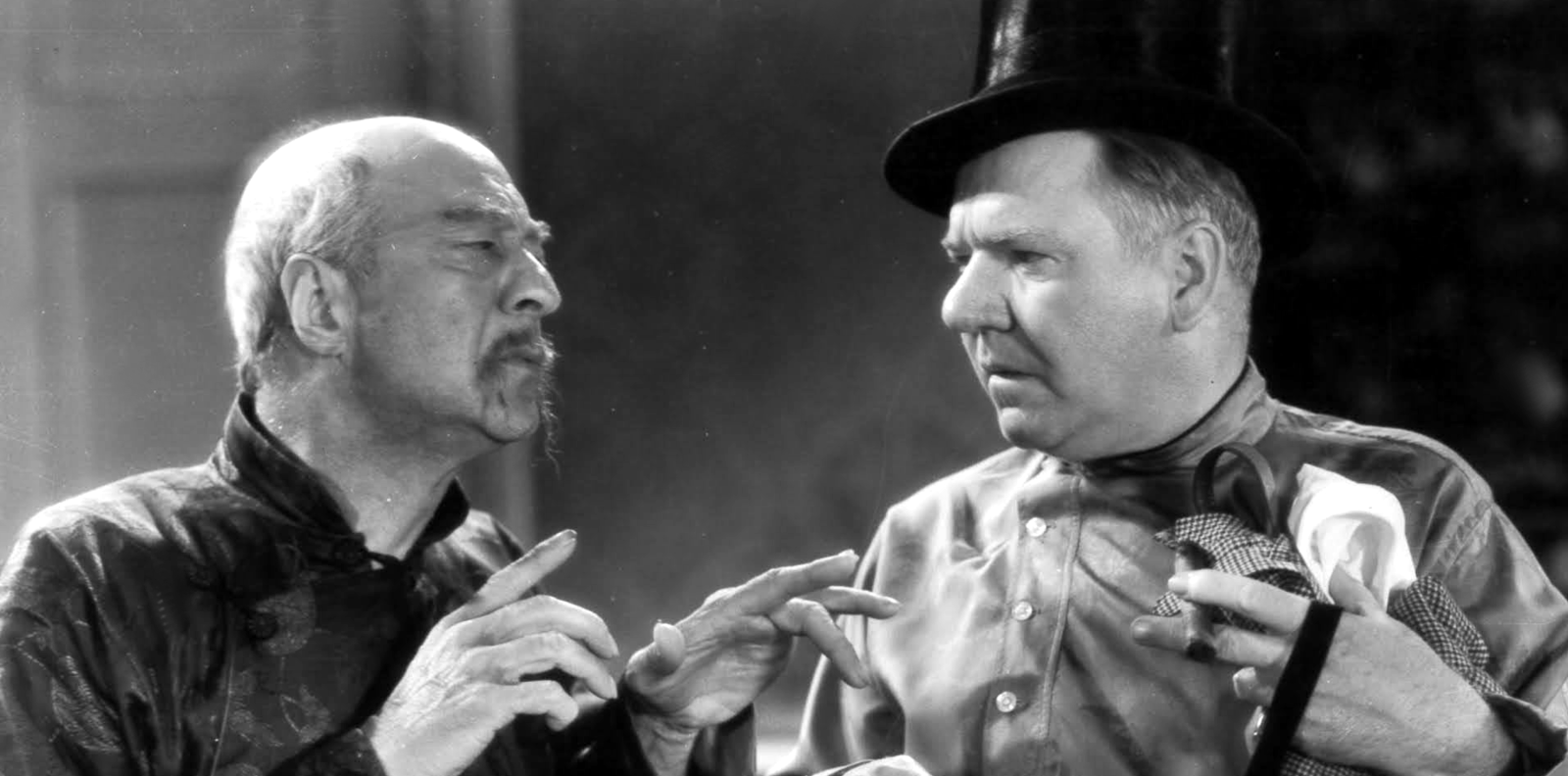
The proceedings are interrupted by Professor Henry Quail (W.C. Fields). Circling the world in his autogyro, the crazy alcoholic mistakes Wu-Hu for Kansas City, Missouri. He enters by landing his daffy plane in the middle of the Hotel’s rooftop garden restaurant, much to the concern of the Hotel Manager (Franklin Pangborn). Quail barges off his plane, insults the other guests and monopolizes the booze; he gags when he accidentally takes a sip of water. Dr. Wong mistakes Quail for the American bidder for the invention. Quail moves into the hotel, puffing on an opium pipe in between drinks. His autogyro carries a tiny clown car, which Quail proceeds to drive through the halls of the hotel.
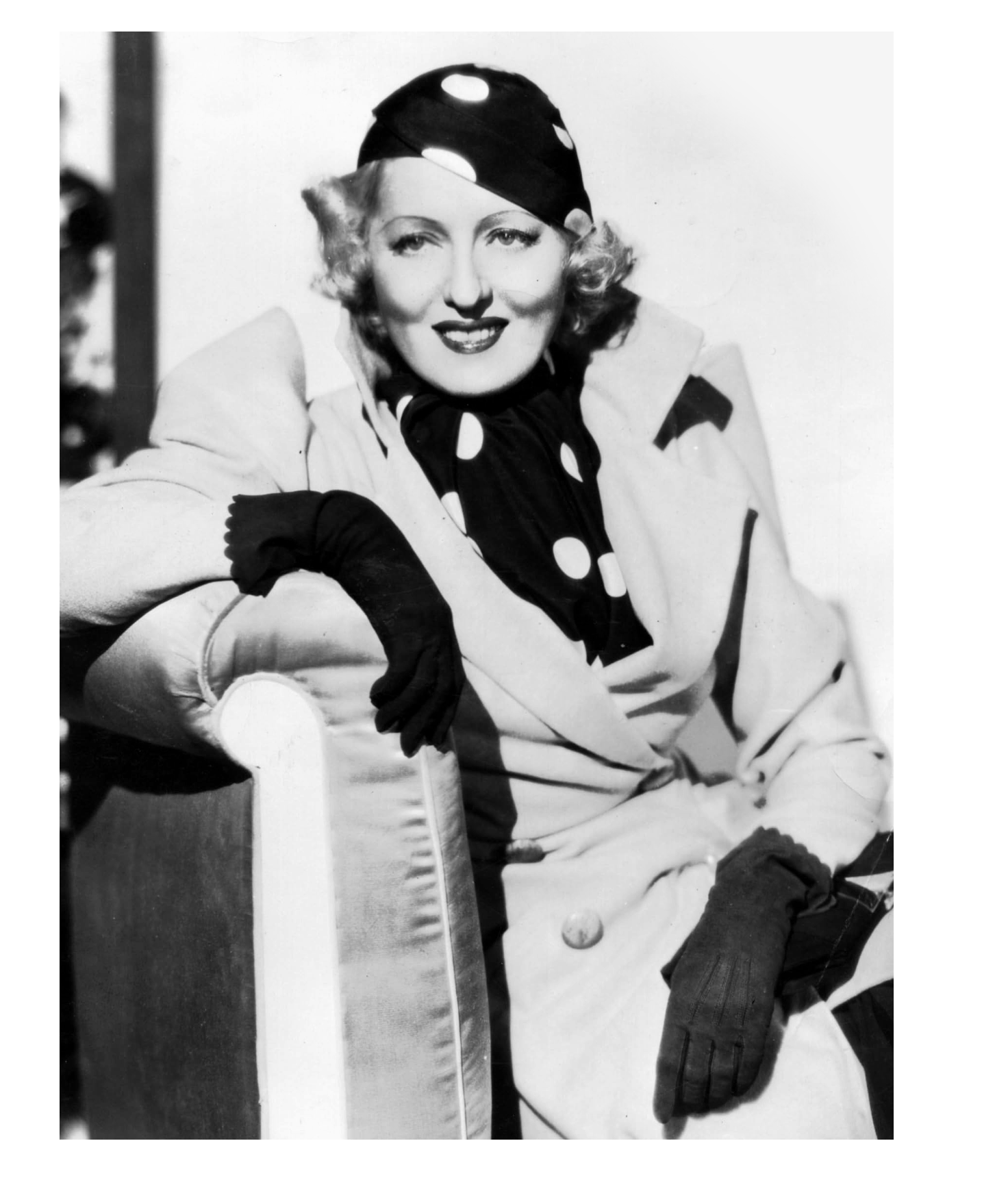
Off the desert comes the American Electric Company’s real designated bidder, Tommy Nash (Stuart Erwin). Flustered and confused, Tommy has become separated from his fiancée Carol (Sari Maritza) due to humiliating attacks of children’s maladies — measles, the chicken pox. His fellow traveler is the seductive playgirl Peggy Hopkins Joyce … played by the real-life New York playgirl Peggy Hopkins Joyce, who has been allotted top billing. ←
A celebrity ‘famous for being famous,’ Joyce was married six times and claimed to be engaged fifty times. She manages to deliver dialogue lines, but her main function is to stride about in lingerie, and help W.C. Fields put across some choice lewd jokes about pussies and losing one’s ass in the stock market. She loses her skirt in one scene, and in another ends up in bed with Professor Quail.
Tommy Nash’s association with Peggy gets him in hot water with his girlfriend Carol. Worse, General Petronovich turns out to be Peggy’s ex — and thinks she’s still his property. The hot-headed Russian wants poor Tommy dead.
Providing flawless, hilarious standup material are George Burns and Gracie Allen, huge stars that by now are likely unfamiliar to younger viewers. George feeds straight lines to the ditzy Gracie, who in her endearing voice comes back with absurd zingers. The joke is that George can’t penetrate Gracie’s screwy logic, and simply decides to accept her version of reality.
“If he trades you dimes for nickels, he says watermelons are pickles,
You know you’re talking to that Reefer Man!”
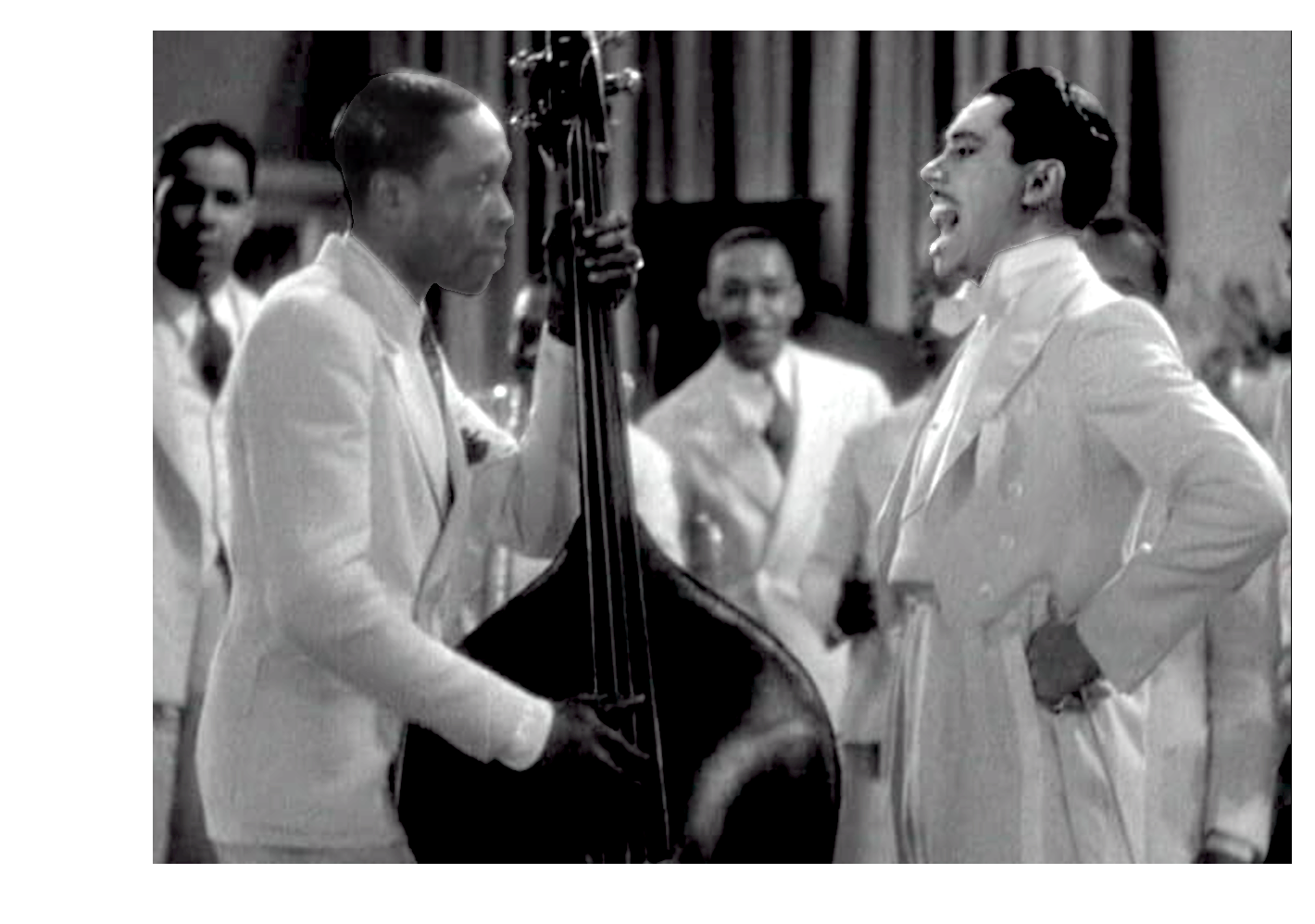
Wong’s video device malfunctions, pulling in random performances from around the world. That halfway lame idea ends up being an ideal springboard, for the acts we see include some true mind blowers. The showstopper is Cab Calloway and his band, → a phenomenon kept alive by Calloway’s retirement-age victory lap appearance in John Landis’s The Blues Brothers, almost five decades later. A much thinner Cab goes nuts with his band-leading dance gyrations, wildly throwing his long hair around. Even more amazing, the song performed is ‘Reefer Man’, with direct lyrics about getting high and flying into the sky. What could typical conservatives in 1933 Iowa have thought of this? My guess is that many deemed it dangerous jazz music performed by degenerates that are also black. Black drug fiends starring in a movie? What’s the world coming to?
Huge star Rudy Vallee was America’s ideal crooner in the late ’20s. His dopey look was part of his heartthrob appeal; the serenade song ‘Good Night Sweetheart’ comes from a time when college boys would sing below windows … or so we are told. There’s an inside joke to Vallee’s number, in that he often sang through a megaphone. He later proved a fine comedy performer for Preston Sturges. His movie legacy is secure in Sturges’ classic The Palm Beach Story and David Swift’s Broadway adaptation How to Succeed in Business Without Really Trying.
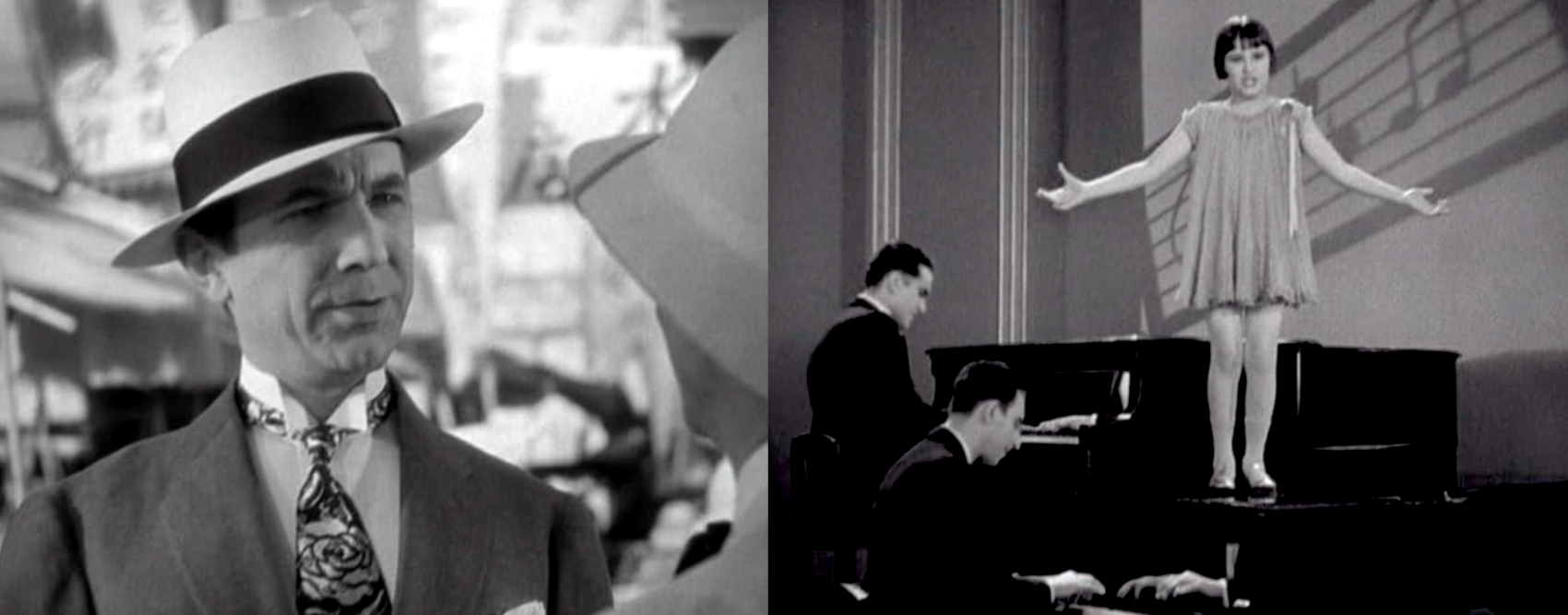
Other guest talent will be known only to rabid fans of old movies. Baby Rose Marie is a chubby little 9 year-old; her gimmick is that she sings saucy jazz lyrics like a speakeasy chantoosie. For a minute we think she’s an adult Little Person. The shock is that Baby Rose Marie grew up, survived show biz and became the well-known Rose Marie, a featured co-star on The Dick Van Dyke Show from the 1960s.
“Stoopnocracy is Peachy”
Truly obscure are Col. Stoopnagle & Budd, a genuine radio comedy team. They may be the only arcane reference in International House that doesn’t pay off, as their on-screen patter is somewhat impenetrable to us strangers in the next century. The ‘Stoopnocracy’ quote is a recognition buzz phrase known to fans of their radio act. We used to explain them as an older version of Bob and Ray, but only senior citizens remember the great Bob and Ray, too. One has to be a dedicated fan to have heard of the radio-based stars Wheeler and Woolsey and Olson and Johnson. The late, great Mike Schlesinger surely liked them all.
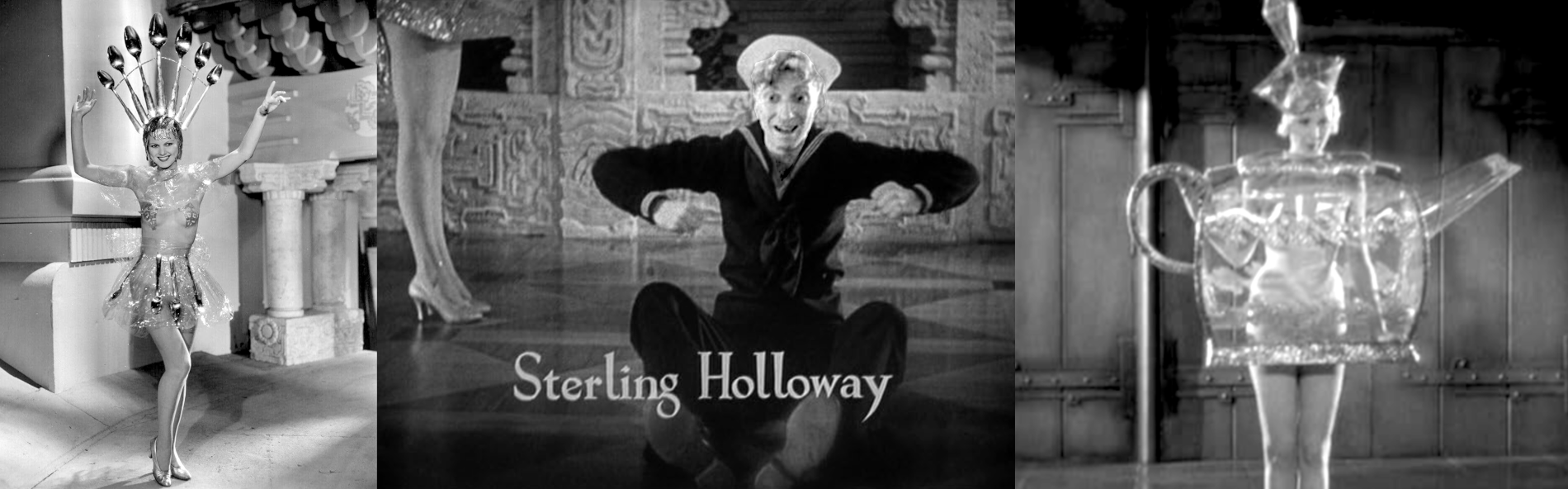
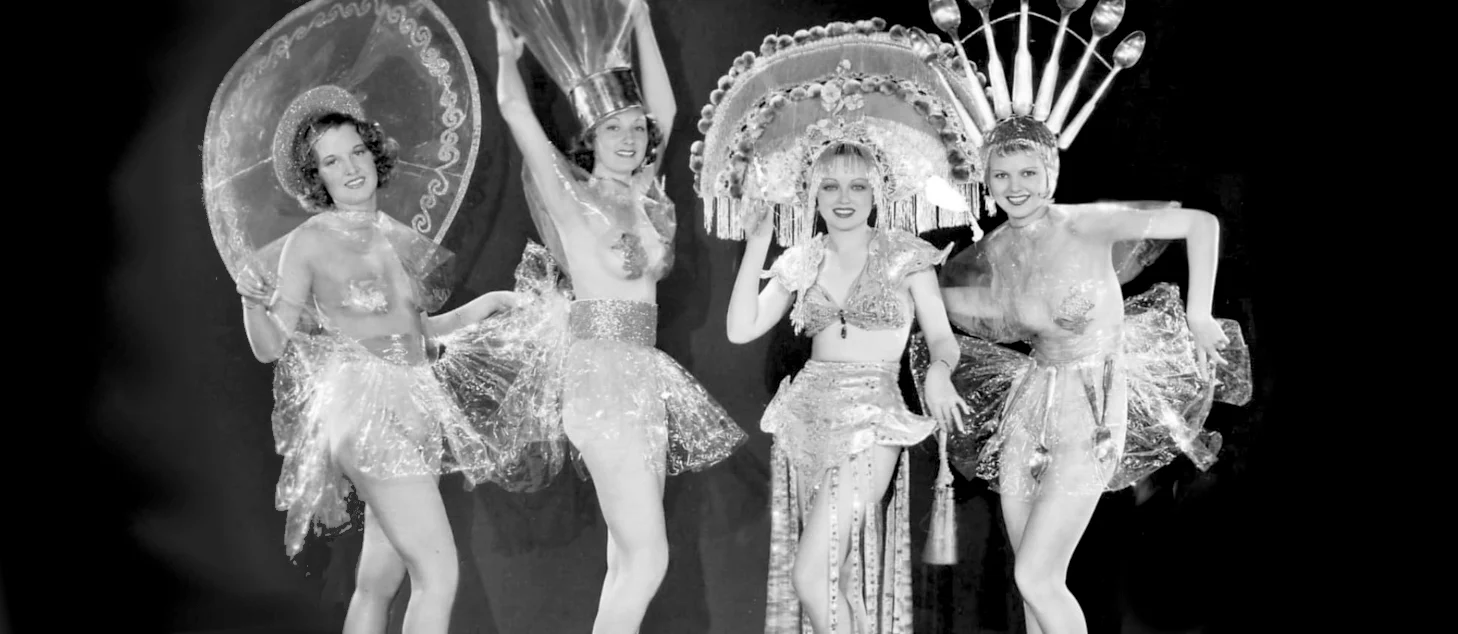
The show delivers a shock or a laugh every few seconds, and some truly weird highlights. Franklin Pangborn introduces a musical number for the rooftop garden, a song by Leo Robin and Ralph Rainger called ‘She Was a China Tea-cup and He Was Just a Mug.’ Favorite supporting actor Sterling Holloway dances in a sailor suit, trying to attract a ‘Chinee Doll’ (Lona Andre). Parading about are several semi-nude showgirls dressed as kitchen cups and utensils, including a big transparent Teapot. It’s not exactly Hollywood’s apex of Good Taste. Hollywood had no shortage of dream girls seeking any opportunity to be singled out on film. The un-billed human Teapot is played by showgirl Gwen Zetter, a Swedish beauty born as Gunhild Ingrid Zettergren.
The number may be dumb and taste-challenged, but the song is cute and Holloway is innocent … it’s charming. Near the beginning, a cutaway to the rooftop audience singles out a Chinese woman in a man’s tuxedo, leaning provocatively against a wall. Is that a holdover from Sternberg & Dietrich’s Morocco, where Dietrich performs dressed as a man, and kisses a woman? I don’t recall a glut of casual lesbian references in pre-Code movies, but the subtleties have to be pretty obvious for this reviewer to catch on.
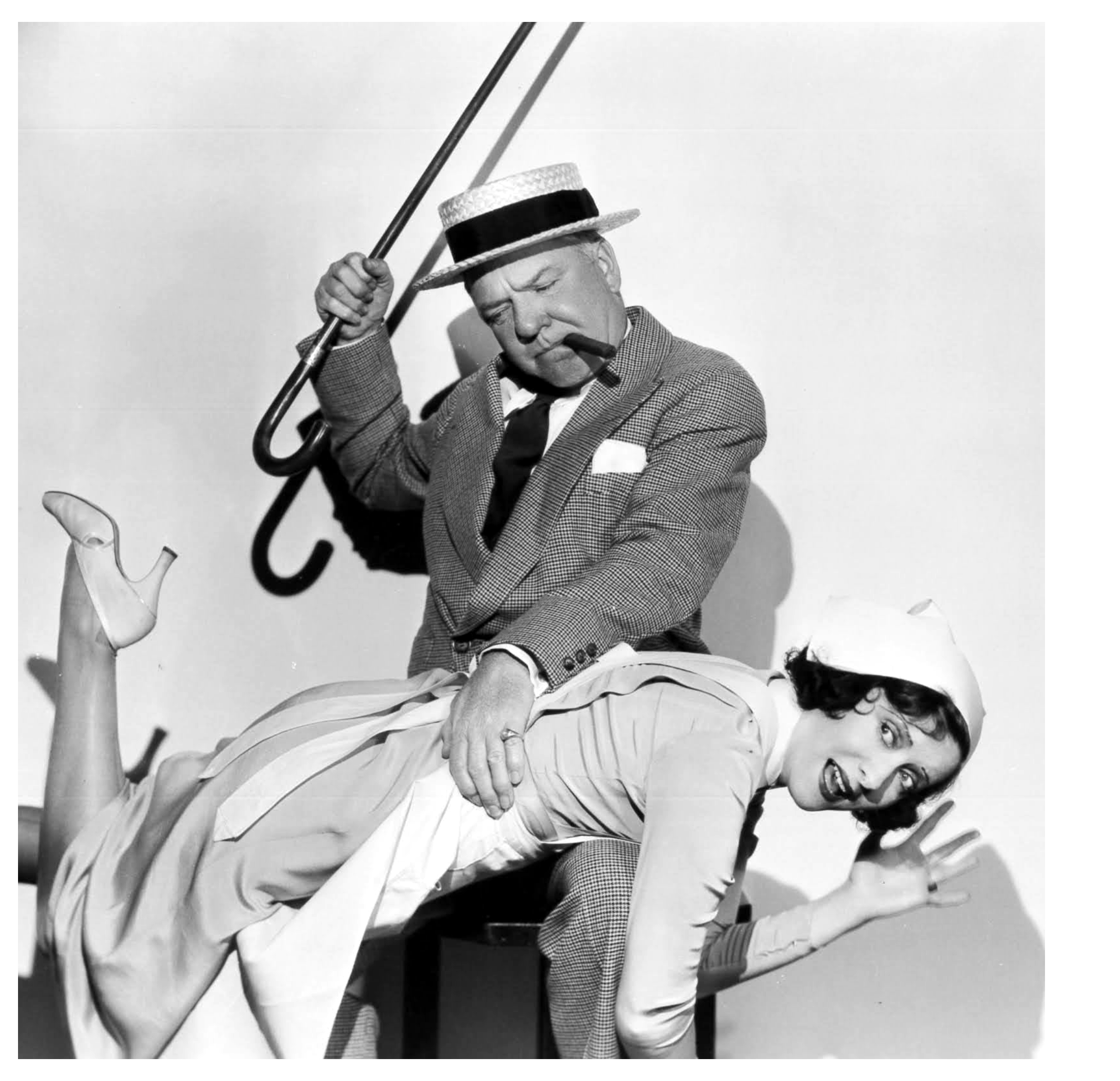
“Here we are, my ravishing little pineapple. That
wiggle of yours is becoming marvelous.”
Will Hays’ Production Code office objected to a number of the film’s jokes, but correspondence shows the studio execs simply dismissing the complaints point by point. Until the ax fell for Code enforcement, the censors didn’t have the last word in disputes. The notes indicate that Paramount may have submitted some sanitized film reels for Code approval. One Hays representative became angry because the version he saw had Fields use the word ‘cat,’ not ‘pussy.’
International House received its Code Seal, but when it came up for reissue in 1935, the newly-empowered censors ordered so many deletions that the studio opted to shelve the movie. That it wasn’t reissued is a good thing — had it been approved ‘after cuts,’ the version that survives today might be chopped to bits. As it is, sometimes it’s hard to believe what we’re hearing.
In a running gag, the inventor Dr. Wong is upset because he can’t tune his radio-TV to what he really wants to see — a six-day bicycle race. To lock out competing bidders, General Petronovich uses his clout to get the hotel quarantined, but only succeeds in locking himself out. Seeing Tommy and Peggy Hopkins Joyce together inside, Petronovich swears to kill the American. The finale is a chase to the roof, with Quail, Hopkins, Tommy, Carol and a litter of kittens all in the tiny clown car.
The AFI reports that the film’s success solidified W.C. Fields’ star position at Paramount. Long before the internet, an outtake from the set of International House was shown on news programs and excerpted in documentaries. The 1933 Long Beach Earthquake occurred during shooting, and the footage shows Fields calming the crew, as might a vaudevillian telling an audience not to panic in a fire. Much later, director Edward Sutherland divulged that the quake had indeed struck while filming was in progress, but that the clip was restaged later. We’d rather print the legend and pretend that it was the real thing.
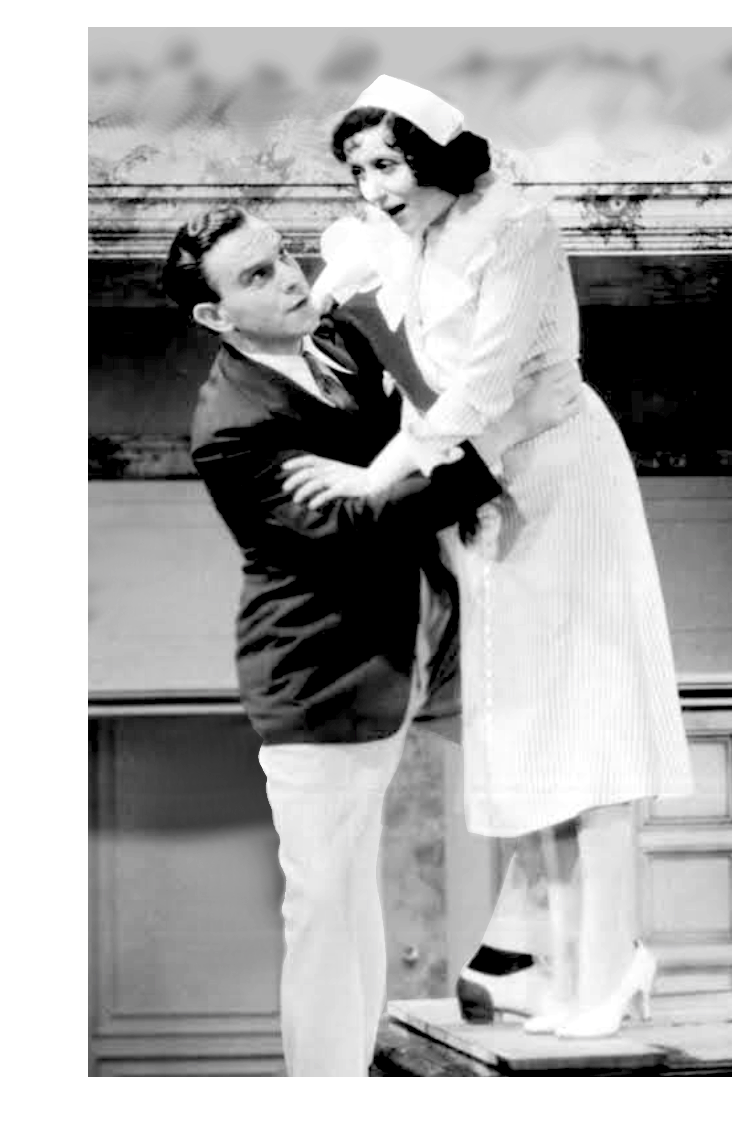
My favorite scene has to be where George and Franklin Pangborn take turns feeding straight lines to Gracie.