
Carlos Saura’s Flamenco Trilogy is a thrilling set of movies for dance fans, fans of Spanish culture and musical fans looking for something different. Knowledgeable dance critics and film reviewers don’t share much of an overlap, but the two art forms mix very well. Saura approaches each show as a different problem to solve, and to each applies a different mode of stylization. They are a solid affirmation of film as an excellent recording medium for dance.
The trilogy is a collaboration between Spain’s most revered Franco-era director Carlos Saura (Cría cuervos) and Antonio Gades, Spain’s top flamenco dancer and the artistic director of its national ballet. Instead of envisioning a story in which flamenco could appear, or simply recording performances, for their first film together Saura and Gades invented a new approach. Blood Wedding plays as a dress rehearsal of Gades’ ballet version of Federico García Lorca’s play.
This is simply The Arts at their best. Were it not for this filmic collaboration, Americans would have known of Antonio Gades only from afar. His only ‘Hollywood’ appearance was a brief performance, indifferently filmed, for the 1964 Fox film The Pleasure Seekers.
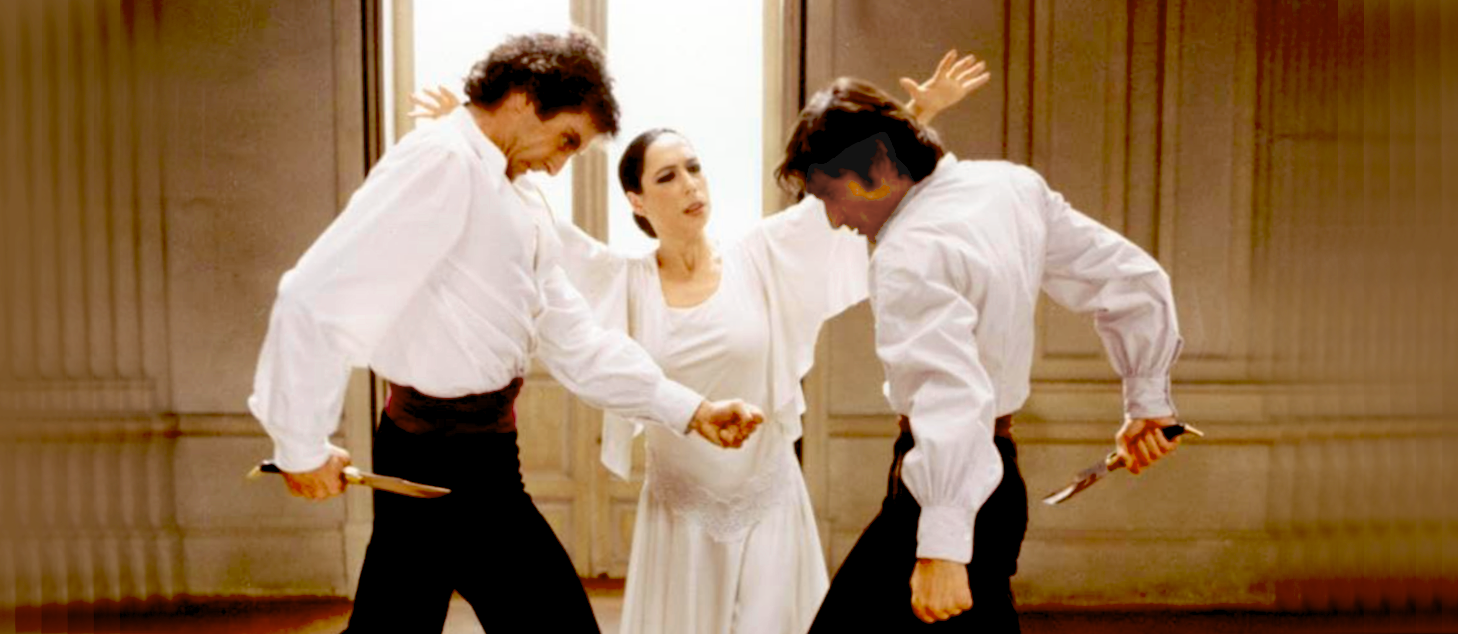
Blood Wedding
1981 / 1:33 / 71 min. / Bodas de sangre
Starring: Antonio Gades, Cristina Hoyos, Juan Antonio Jiménez, Carmen Villena, Pilar Cárdenas.
Cinematography: Teo Escamilla
Set Decorator: Rafael Palmero
Film Editor: Pablo G. del Amo
Composer: Emilio de Diego
Written by Carlos Saura, Antonio Gades, Alfredo Mañas from the play by Federico García Lorca
Produced by Emiliano Piedra
Choreography: Antonio Gades
Directed by Carlos Saura
Criterion’s excellent liner notes tell us that Saura and Gades decided to shoot Blood Wedding as if it were a dress rehearsal. The entire movie takes place in the dressing rooms and the rehearsal hall. Nobody is introduced by name and no backstage dramas arise. The dancers prepare like professionals, retrieving makeup kits and costumes from locked storage. The musicians tune their instruments. Gades takes the group through some warm-ups and then has them get into full costume for the rehearsal:
“I’m not stopping for anything this time.”
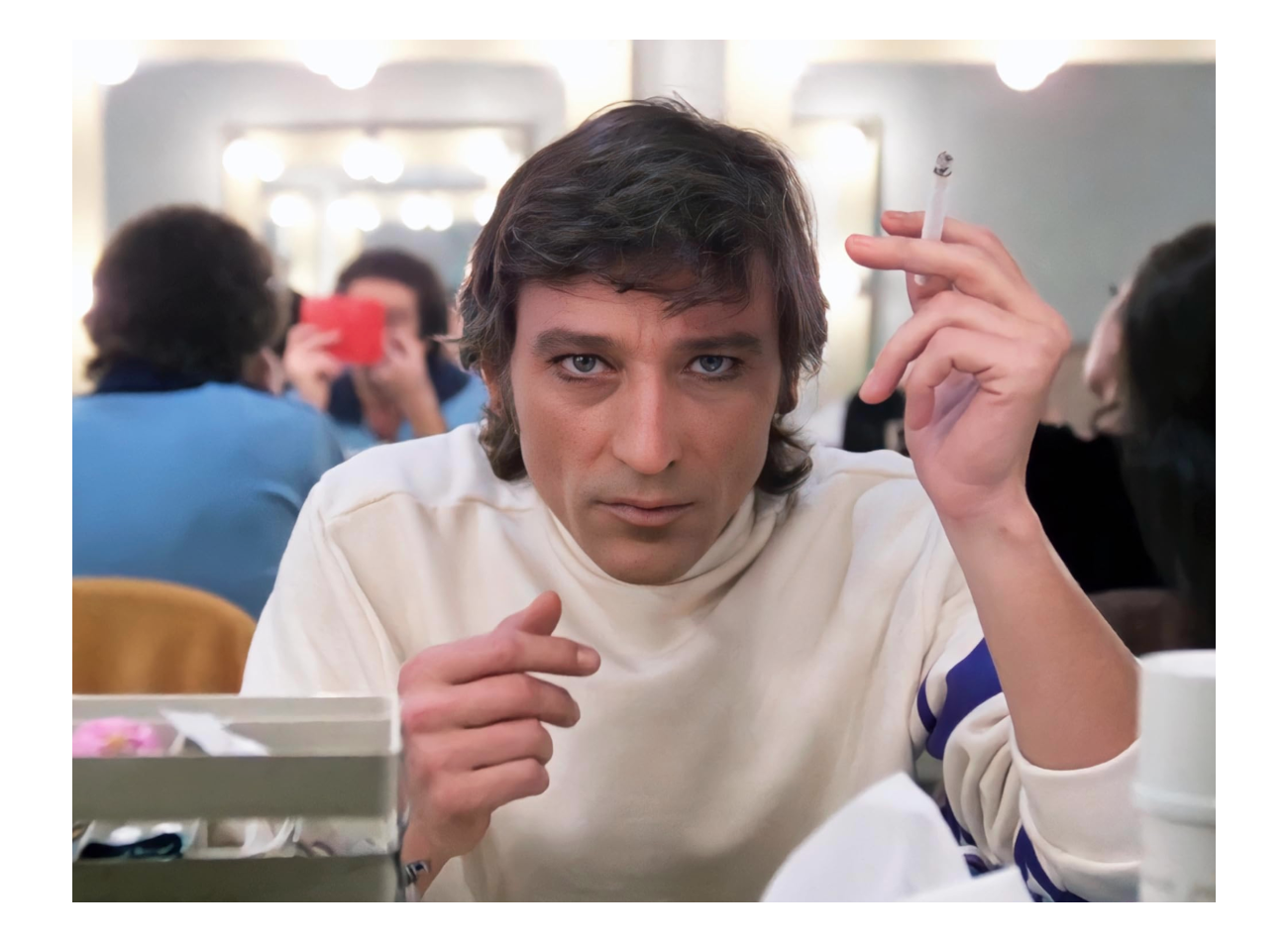
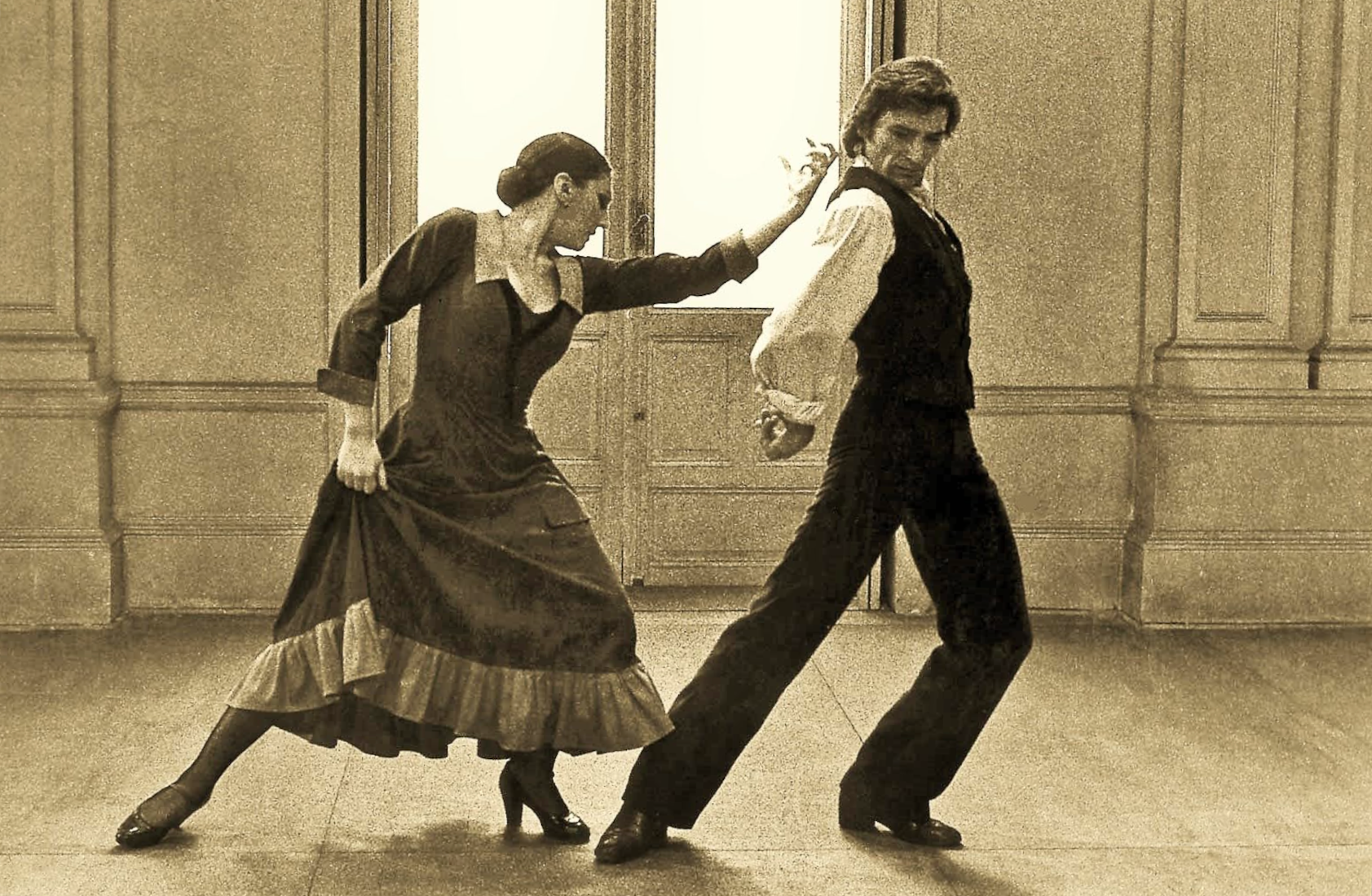
When the ‘show’ starts we’re aware of dancers waiting off to the sides, visible on camera instead of hidden in the wings of the stage. Saura stays wide on most dance moves. The drama of the Lorca story is communicated solely in dance terms. A groom’s mother prepares him for his wedding, but the bride is secretly in love with another. The bride flees her own wedding party and the groom gives chase. The conclusion is a knife fight between her husband and her lover. The dances use the expressive gestures and motions of cabaret flamenco, choreographed for single dancers, pairs and groups. The mother’s pride in her son is heartwarming, but the savage cultural edge shows when she dispatches him to retrieve his bride … personally handing him his knife.
Antonio Gades is the main male flamenco dancer and plays the bride-stealer; he must be thirty pounds lighter than his opposite number but the flamenco moves ‘puff him up’ like a rooster. The men in flamenco ballet are hyper-masculine; in this world the word macho is a female compliment referring to a bull-like sexual power. In the basic flamenco duet the man 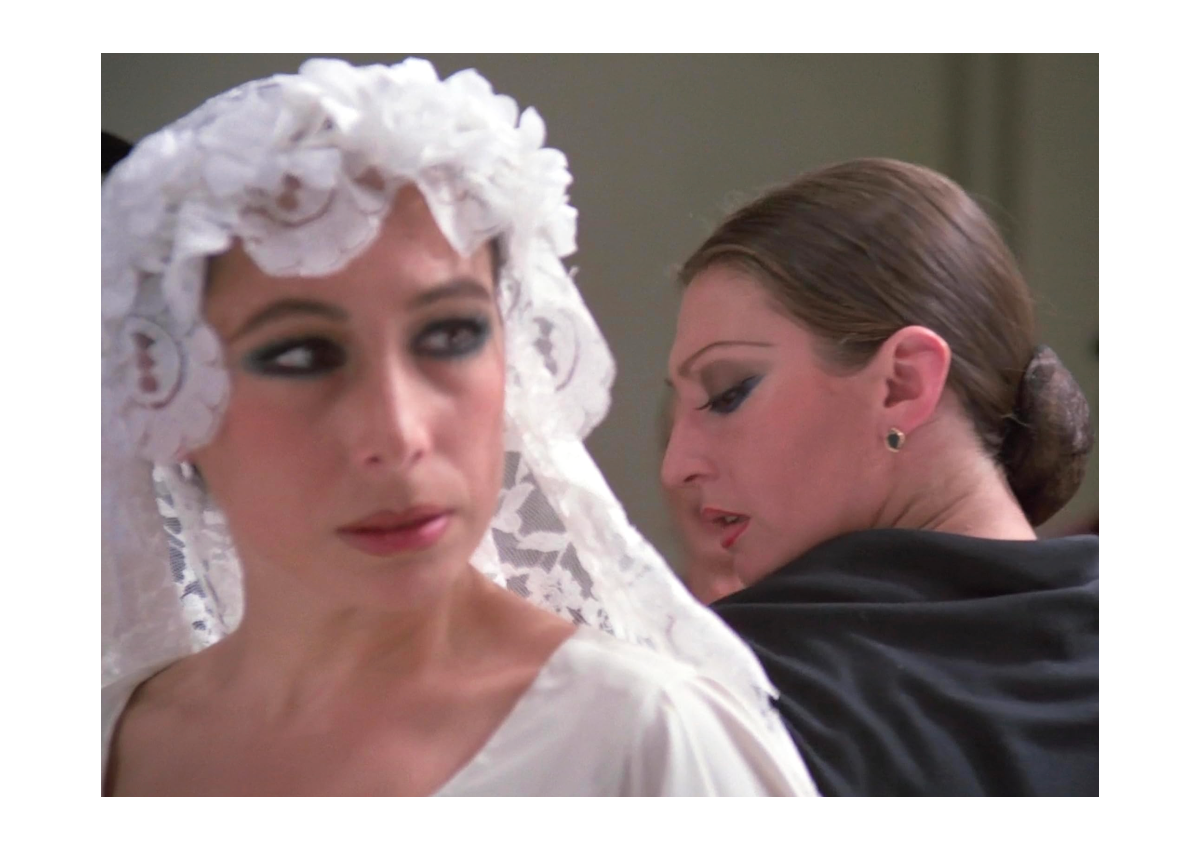
expresses desire and sensitivity but also a hardness, a pride borne of deep Spanish roots. When Gades narrows his eyes, he personifies a cultural tradition.
Gades’ opposite number is the lead dancer Cristina Hoyos, ← a strikingly handsome woman possessed of a steely gaze that could peel paint. Enjoy her beaming face when she smiles and laughs at the makeup tables, because except for a fleeting few moments in the rehearsal, she’s miserable, frightened or angry. Hoyos becomes a vision of desire when she dances, and Blood Wedding’s best scenes are hers. Although the foot-tapping part of flamenco is what we most remember from cabaret performances, Gades’ choreography expresses pride, desire, shame and fear through broad gestures and those amazingly suggestive twisting hand movements. Our impression is that whenever Spanish dance is called ‘earthy’ it’s really a polite euphemism for sex.
Blood Wedding is pared down to just what’s necessary to launch the ballet; once it gets going we forget about the rehearsal-room surroundings and stay rooted to the story of desire, jealousy and death in the Roma culture. Those concepts are a big part of all three shows in the trilogy.
Carmen
1983 / 1:66 widescreen / 101 min.
Starring: Antonio Gades, Cristina Hoyos, Laura del Sol, Paco de Lucía, Marisol, Juan Antonio Jiménez, José Yepes, Sebastián Moreno, Pepa Flores (Marisol), María Magdalena.
Cinematography: Teo Escamilla
Production Designer: Félix Murcia
Costume Design: Teresa Nieto
Film Editors: Pedro del Rey, Mercedes Alted
Composers: Georges Bizet, Manuel Penella, Paco Cepero
Written by Carlos Saura, Antonio Gades, from the novella by Prosper Mérimée
Produced by Emiliano Piedra, Carlos Saura
Choreography: Antonio Gades, Carlos Saura
Directed by Carlos Saura
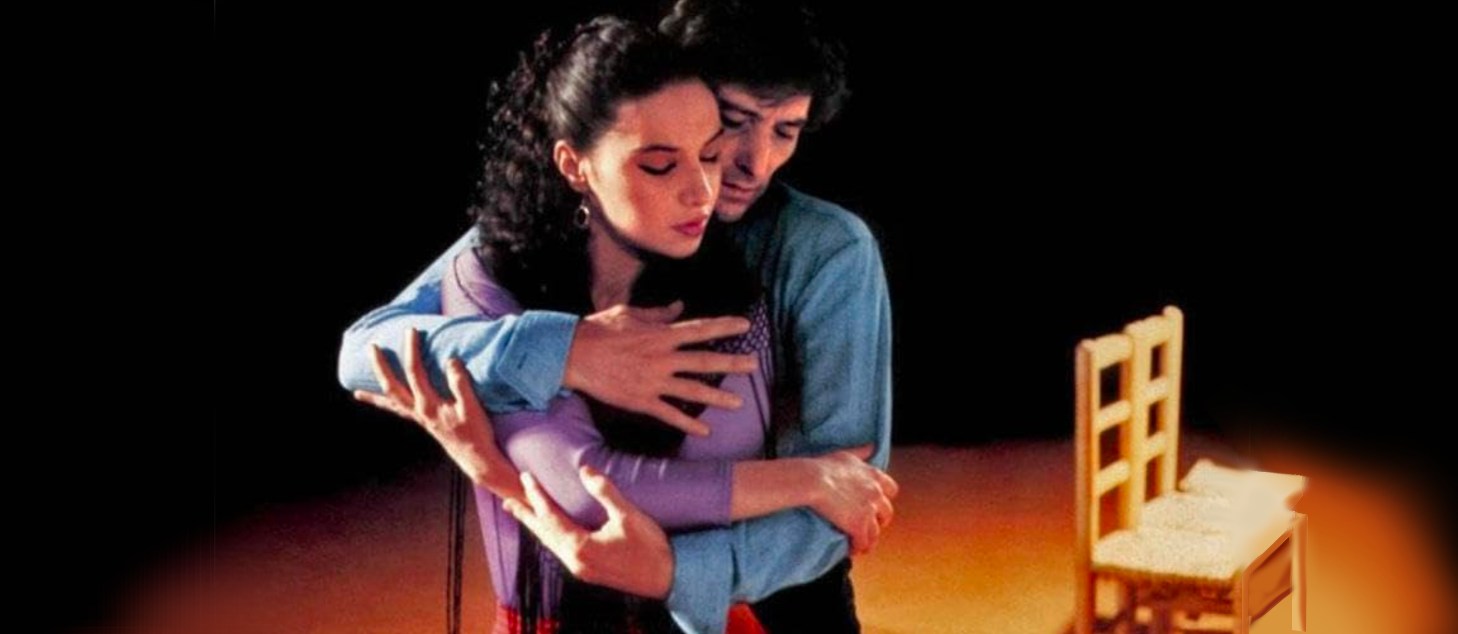
1985’s Carmen is the best known of the three films. Saura and Gades expand their canvas to take in a more realistic approach, although much of the film still plays out in a (fancier) rehearsal hall. Gades’ flamenco ballet director works his corps hard while searching for the perfect Carmen for his new adaptation of the Bizet opera — Flamenco dancing set to the classic music score. Handling the translation to flamenco guitar are the star musicians Paco de Lucía, Regina Resnik and Mario del Monaco, although big sections of dance are performed to a standard recording of the opera in French. The show opens with a sharp 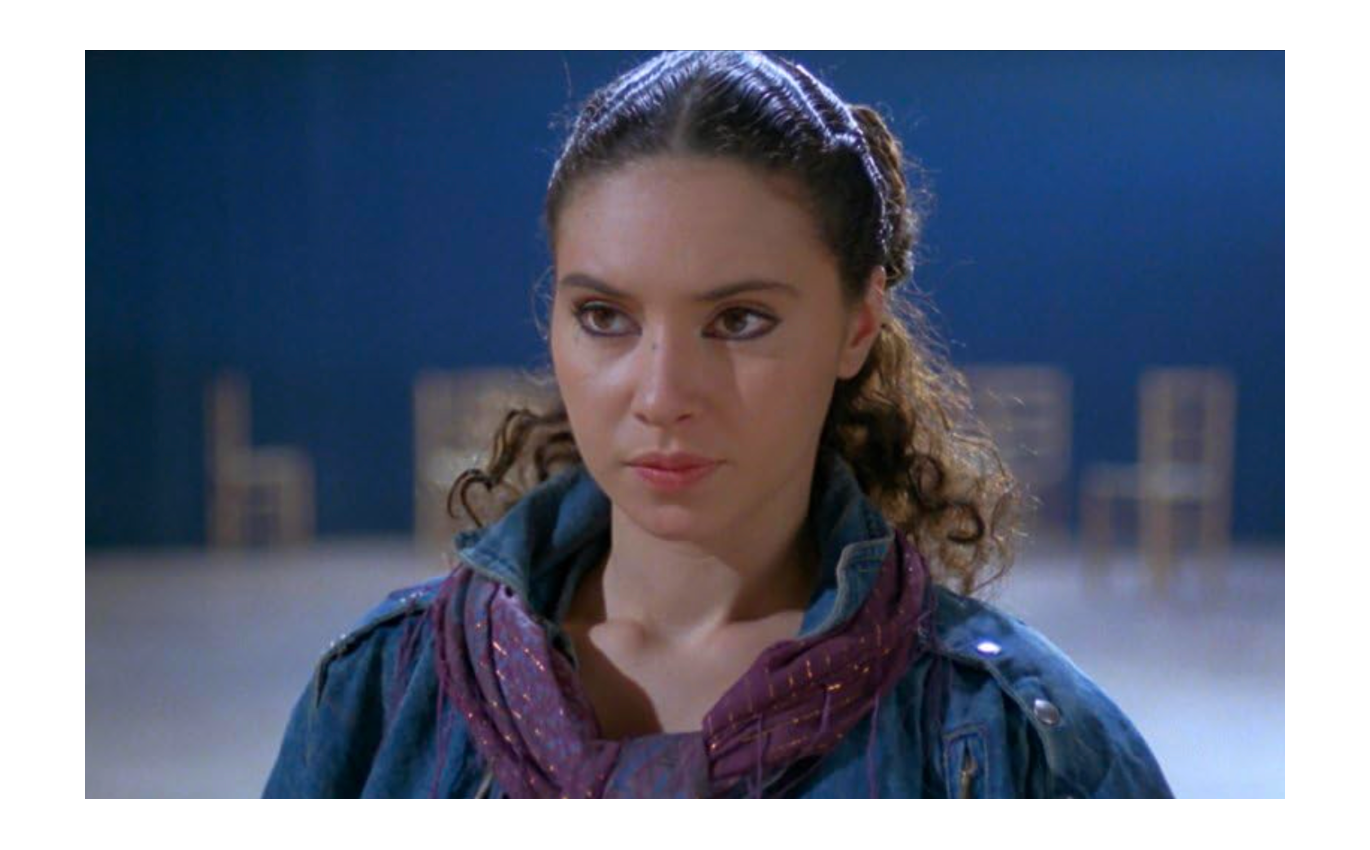 rehearsal sequence in which Gades and his musicians search for a meeting ground between the contrasting rhythms of the orchestra version and de Lucía’s guitar. With the performing presence of Marisol (as Pepa Flores), we get a stirring sampling of pure cante hondo singing, the hoarse-voiced wail of emotion that sounds midway between a Hebrew chant and a Moorish call to prayer:
♫ “… Deja de llorar, no llores más …” ♬
Cristina Hoyos is told to her face that she’s the best dancer, but she just isn’t Antonio’s vision of Carmen. He finds his Carmen in a Madrid flamenco school. She’s the beauty Laura del Sol, and she embodies all the qualities of the original in the French opera — enticing, uncontrollable, dangerous. Antonio inspires Carmen to great dancing but also loses his soul to his obsession for her, and we all know how stories like that turn out. From the moment Gades meets Carmen, backstage reality and the classic tale of the seductress become romantically confused.
Laura Del Sol has been a busy actress for 45 years; viewers may already know her from the terrific Spain-set 1984 English crime thriller The Hit, opposite Terence Stamp, John Hurt and Tim Roth.
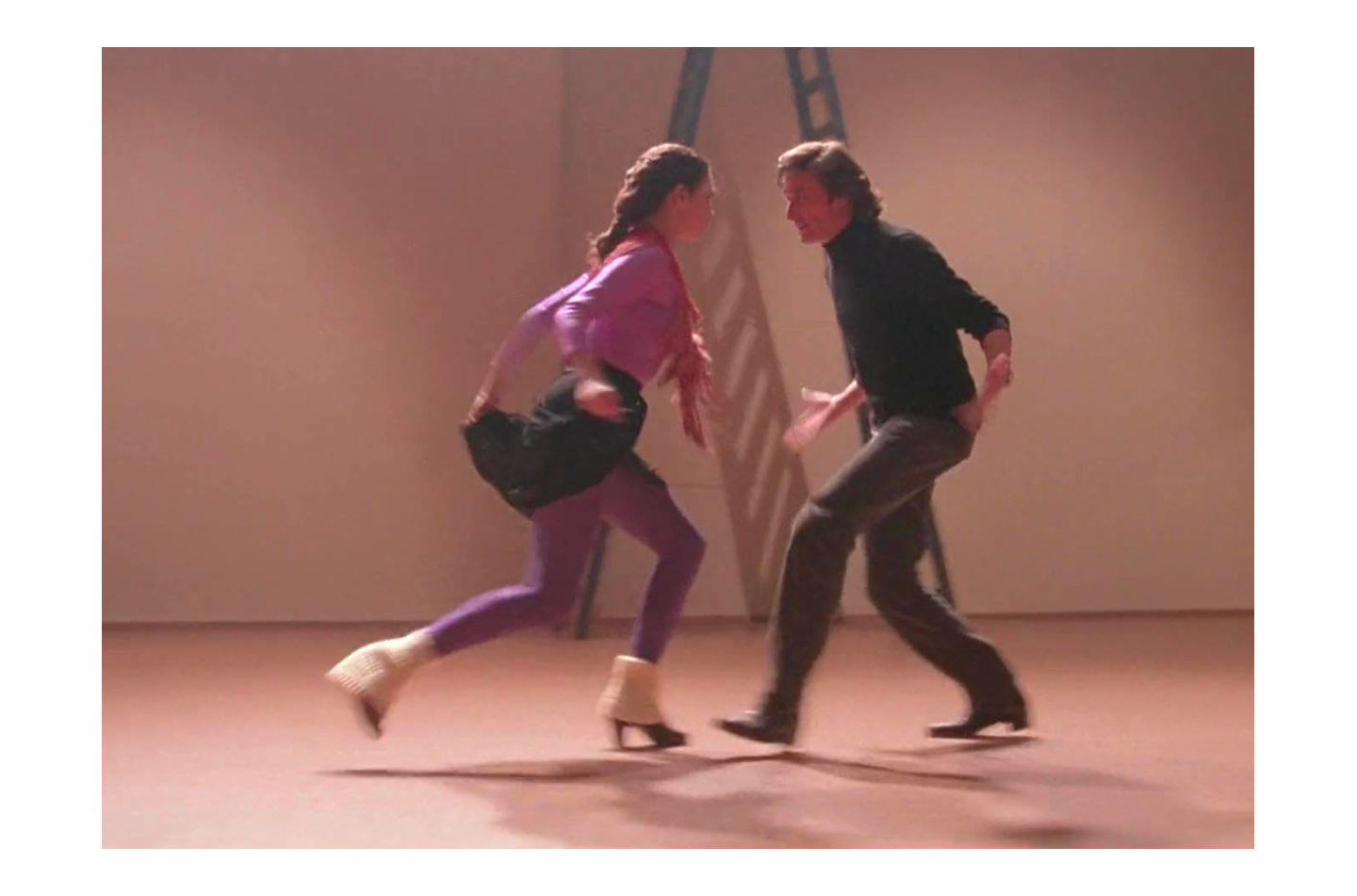
The dancing is mesmerizing because we participate in the rehearsal process. The Madrid dance teacher tells her students that the flamenco dancer must try to slip into a trance-like form that’s as much an attitude as a physical stance. Antonio shouts at his dancers like a drill instructor, urging them to put force behind their movements.
Cristina and the ‘upstart’ Carmen start a fight in the tobacco factory (just rehearsal chairs and tables), which becomes a mass number with the women’s dance chorus. The thrilling scene benefits from Saura’s swiftly moving camera. The emotional highlight is placed at the end of the second act. Antonio and Carmen rehearse on their own for the seduction scene by dancing to the original opera score. The third act billboards many other flamenco artists while moving to a finish we all know is coming. Those oversized folding knives should be engraved with a warning: “To be kept out of the hands of volatile, short-tempered Spanish males.”
El amor brujo
1986 / 1:85 widescreen / 103 min. / Bewitching Love, Love, The Magician
Starring: Antonio Gades, Cristina Hoyos, Laura del Sol, Juan Antonio Jiménez, Emma Penella, La Polaca, Gómez de Jerez, Enrique Ortega, Diego Pantoja, Giovana, Mari Campano, Candy Roman.
Cinematography: Teo Escamilla
Production Designer, Costumes: Gerardo Vera
Costume Design: Gerardo Vera
Film Editor: Pedro del Rey
Written by Antonio Gades, Carlos Saura
From the ballet by Manuel de Falla, from the libretto by María de la O Lejárraga García
Produced by Emiliano Piedra
Choreography: Antonio Gades, Carlos Saura
Directed by Carlos Saura
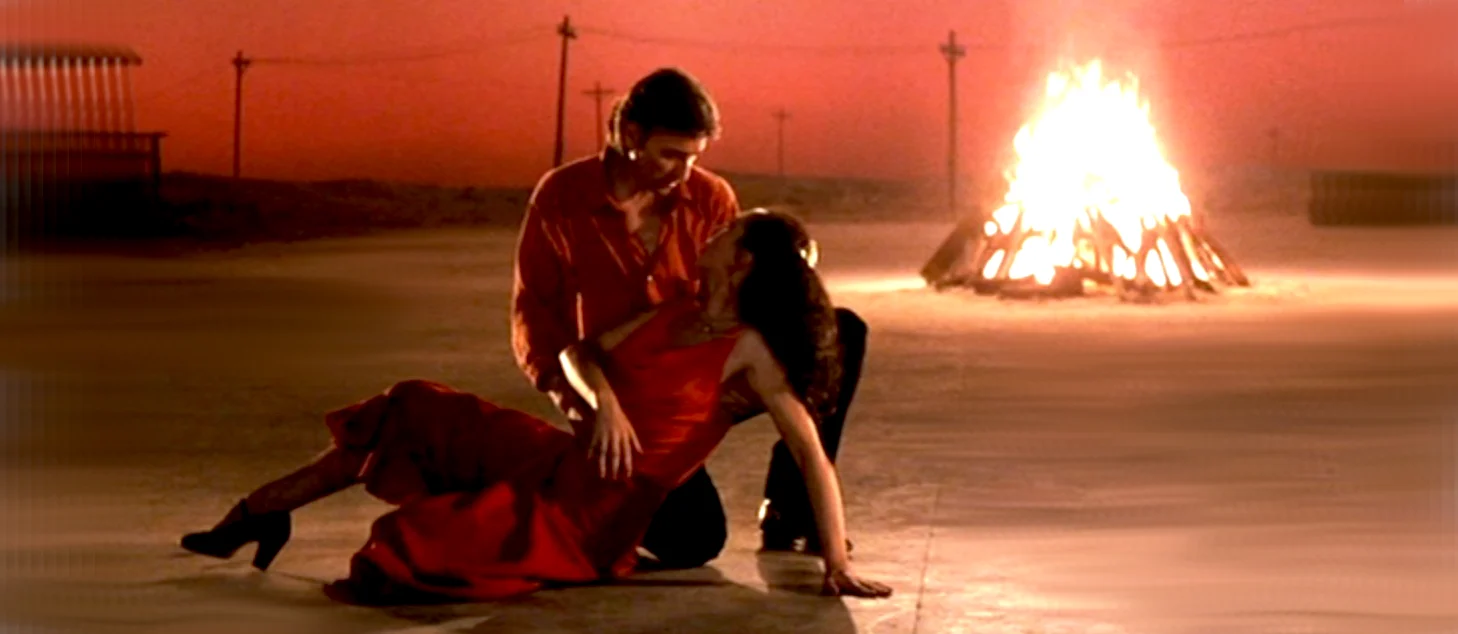
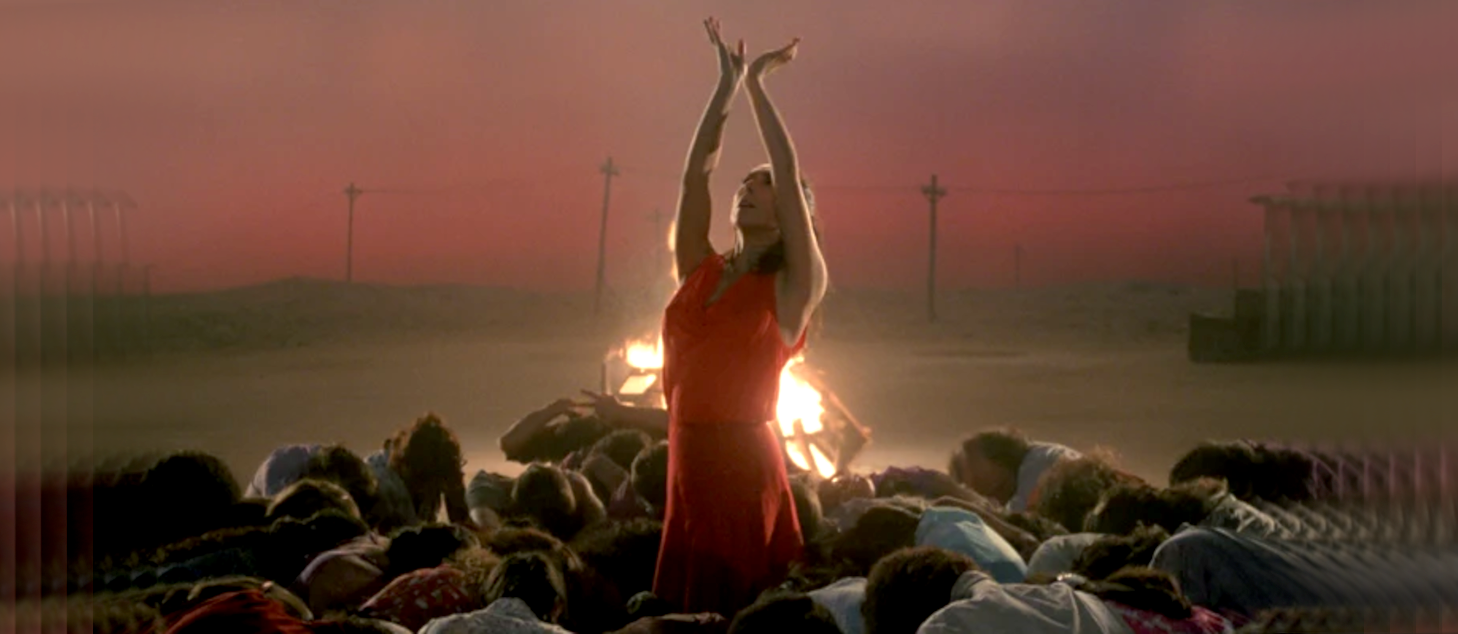
El amor brujo is the most elaborate of the three shows. The ballet by composer Manuel de Falla takes place on a stylized slum set lit as if for a Vicente Minnelli movie — all strong contrasts dominated by red. Director Saura flaunts the artificiality of the setting by panning from a stage door past flats and unused equipment before moving into his story. The small children Candela and José are promised in marriage by their fathers, but by the time they are of age another boy Carmelo (Gades) is heartbroken because he loves Candela (Hoyos) as well. Carmelo swallows his pain, even when José (Juan Antonio Jiménez, the groom in Blood Wedding) immediately takes a lover, sultry dancer Lucía (Laura del Sol otra vez).
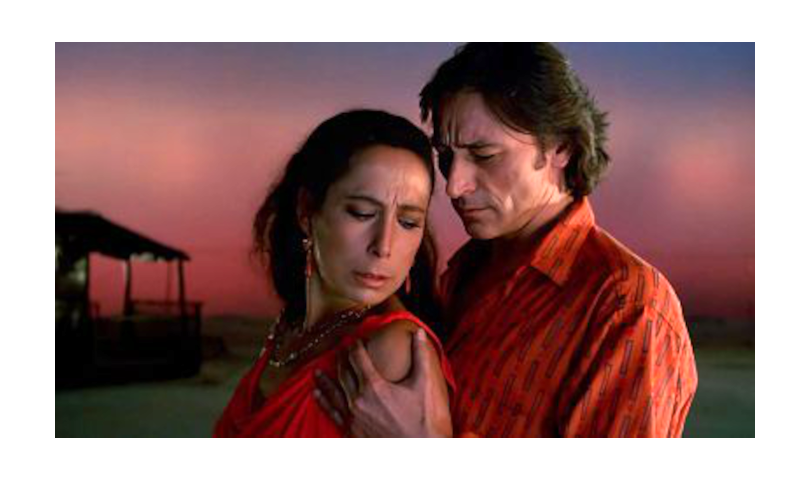
José is killed in a knife fight and bystander Carmelo is unjustly sent to prison for four years. He returns hoping to find Candela waiting for him, only to learn that she has gone mad: every night at midnight she walks to where José died and dances with his ghost. Carmelo’s aged aunt advises him on how to break the curse of the unfaithful ghost.
El amor brujo is a worthy tale of love, madness and the supernatural, and Saura and Gades’ heavily stylized settings emphasize the fantastic element. The ten year-old Carmelo morphs into the adult Carmelo behind the titles. Antonio Gades maintains the same soul-sick look on his face whether contemplating his carpenter’s shack or wishing Candela good luck in her marriage. The lighting on the shack encampment changes moods quickly — with the addition of some slightly overexposed daylight, it resembles a real exterior. But the cycloramic background changes color more frequently than does the painted backdrop in the Japanese Kwaidan. Candela and José’s wedding takes place under skies that change from purple to red from moment to moment.
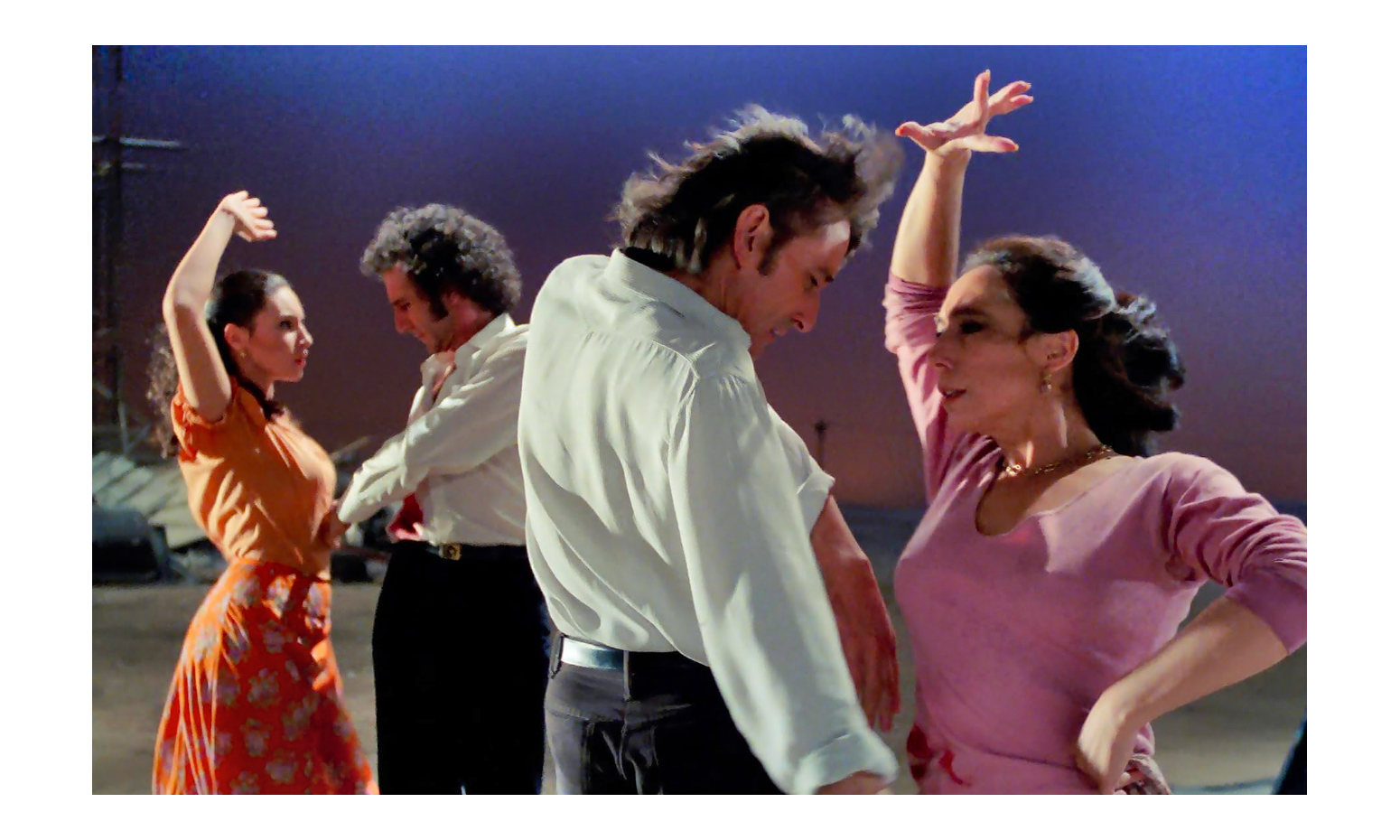
Rising at midnight, Candela puts on the old bloody dress to trance-walk to her rendezvous with the bloody ghost. How can Carmelo woo a madwoman away from a phantom? The resolution comes with some witchy strategy, through Candela learning the true nature of her ‘perfect’ husband.
It’s not all love a morbid love ballet with the dead. The overall tone is lightened by one very lusty musical number. While hanging laundry the collected wives give a virgin bride-to-be a sound teasing over her coming wedding night, complete with knowing explanations of ‘little birdies’ and ‘warm nests.’
El amor brujo resolves the trilogy on a perfect note, creating its own universe of music and dance. The ending underscores the old witch’s wise counsel: “My son, the happiness of some always comes at the expense of others.” Cristina de Hoyos gets to play a sympathetic romantic lead this time, and is nothing less than wonderful.