
Here’s a Cold War U.S. versus the Russkies saga that doesn’t offend anybody — it’s got Tom Clancy’s disdain for limp diplomacy, but its heroes are humanists looking for a solution without bloodshed. The cat & mouse sub hunt finds plenty of good guys and a few schemers among the officers and politicians. Ever read about the World War III scenarios reportedly averted by Russian naval personnel Stanislav Petrov and Vasily Arkhipov, that refused to fire nuclear weapons? Their kind are on both sides.
The hugely enjoyable The Hunt for Red October introduced many audiences to the advanced submarine service along with a new kind of miliary espionage. The fall of the Berlin Wall made the film’s heated Cold War deadlock more than a little obsolete, so the show begins with a message stating that the events of the story took place before the Gorbachev glasnost thaw. (A clue to exactly when is a London billboard advertising the musical play Evita.) After forty years of hate directed against ruthless Soviet aggressors, audiences felt relieved by Sean Connery’s charismatic Lithuanian sea captain.
The gruff Scot heads a cast of pros, including the up-and-coming Alex Baldwin as the first screen incarnation of Tom Clancy’s handsome special agent Jack Ryan. He begins as a researcher with special insights about the enemy: his knowledge of the Lithuanian Sea Captain remind us of the German military historian in Patton, who has an in-depth understanding of the maverick American General.
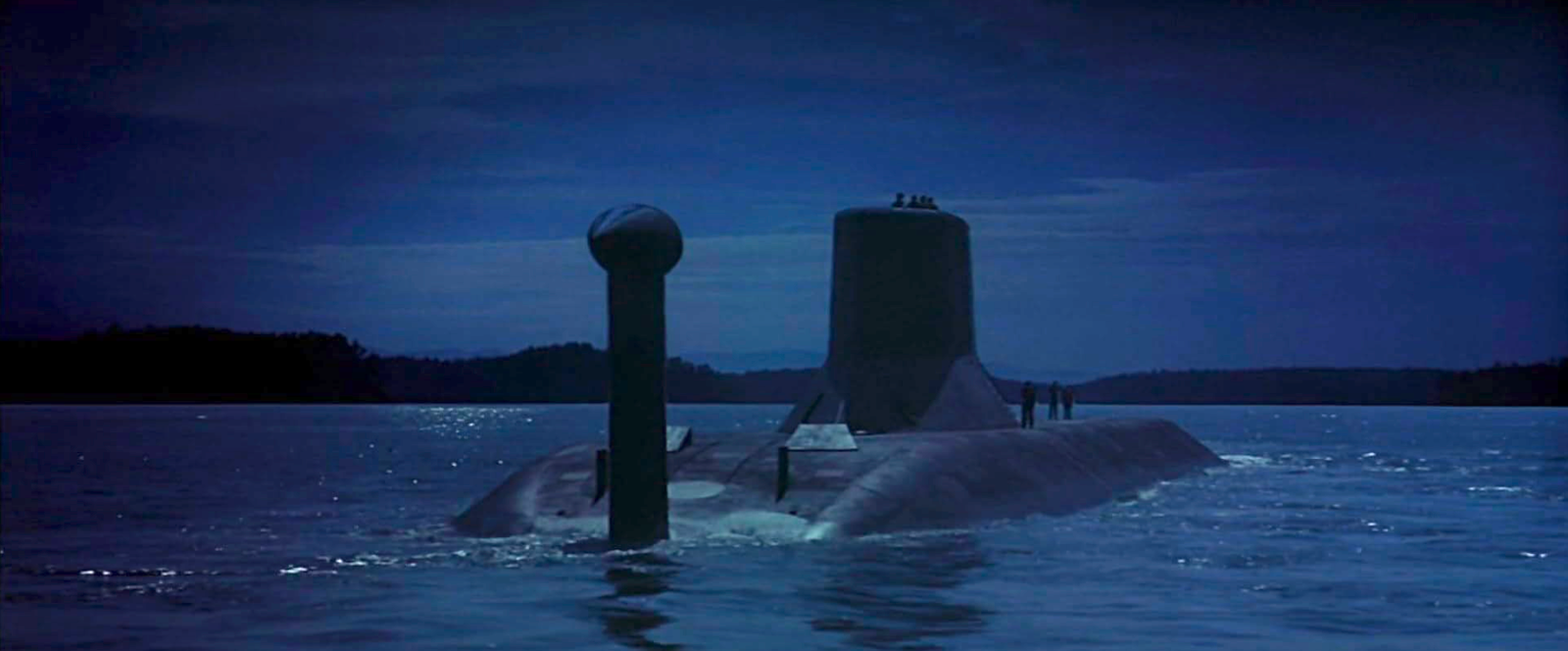
Straight from his mega-hit Die Hard, director John McTiernan enlivens the high-tech details of submarine warfare without slacking off on the murder thriller aspect or the diplomatic chicanery on both sides. The jump to 4K brings out Jan de Bont’s sharp cinematography, and flatters the film’s visual effects, that use both traditional and early CGI techniques.
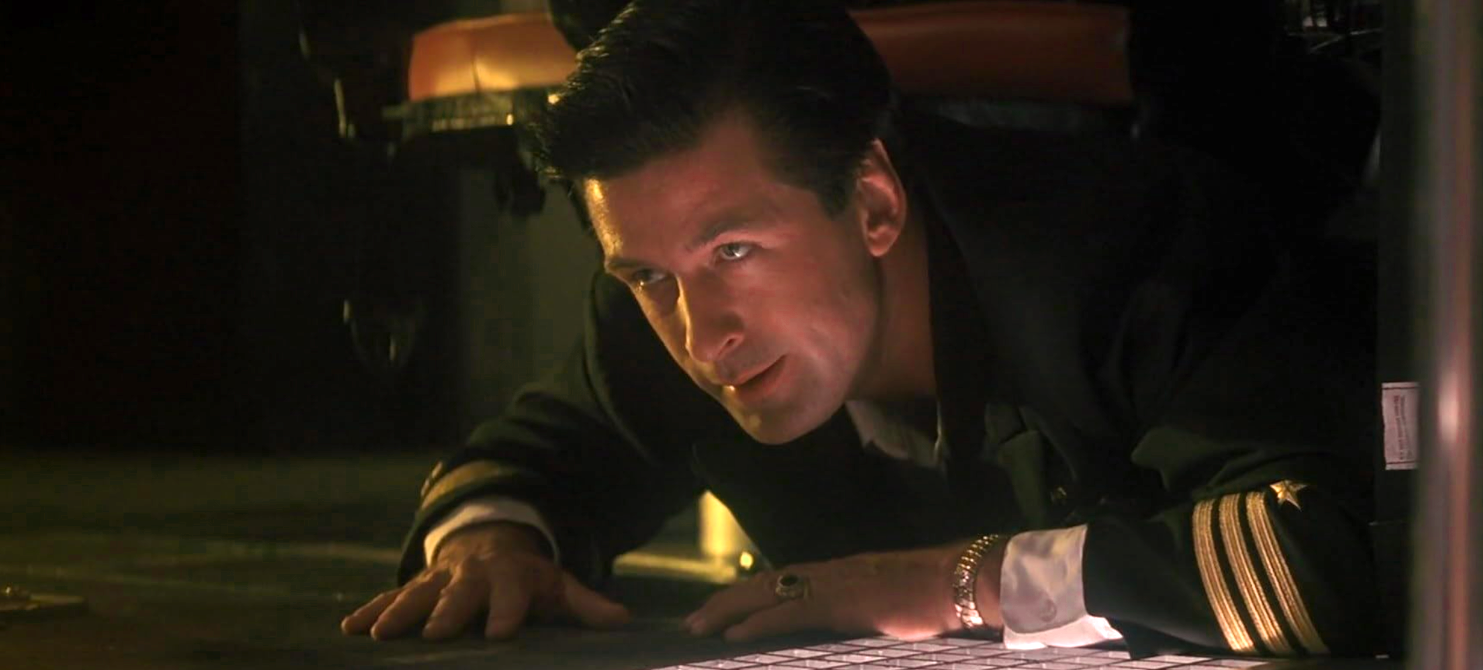
With the help of CIA specialist Skip Tyler (Jeffrey Jones), Naval intelligence analyst Jack Ryan (Alec Baldwin) brings an alarming technical advancement in Soviet submarining to the attention of Admiral James Greer (James Earl Jones). Far away in arctic waters, the new invention is making its debut. Senior Soviet sub skipper Captain Marko Ramius (Sean Connery) sets sail in Red October, a new craft equipped with a silent ‘caterpillar drive’ propulsion system. U.S. security strategist Dr. Jeffrey Pelt (Richard Jordan) is alarmed when the Red October disappears from all detection systems. The tension doubles when the entire Russian navy seems to be trying to find the sub as well: it is feared that Ramius may be trying to start WW3 on his own.
(According to the incredibly reliable Wikipedia, ‘caterpillar drive’ is not science fiction but a real thing called magneto-hydrodynamic propulsion. It’s meant to work like a jet, only underwater … and is also described as noisier than a normal sub turbine.)
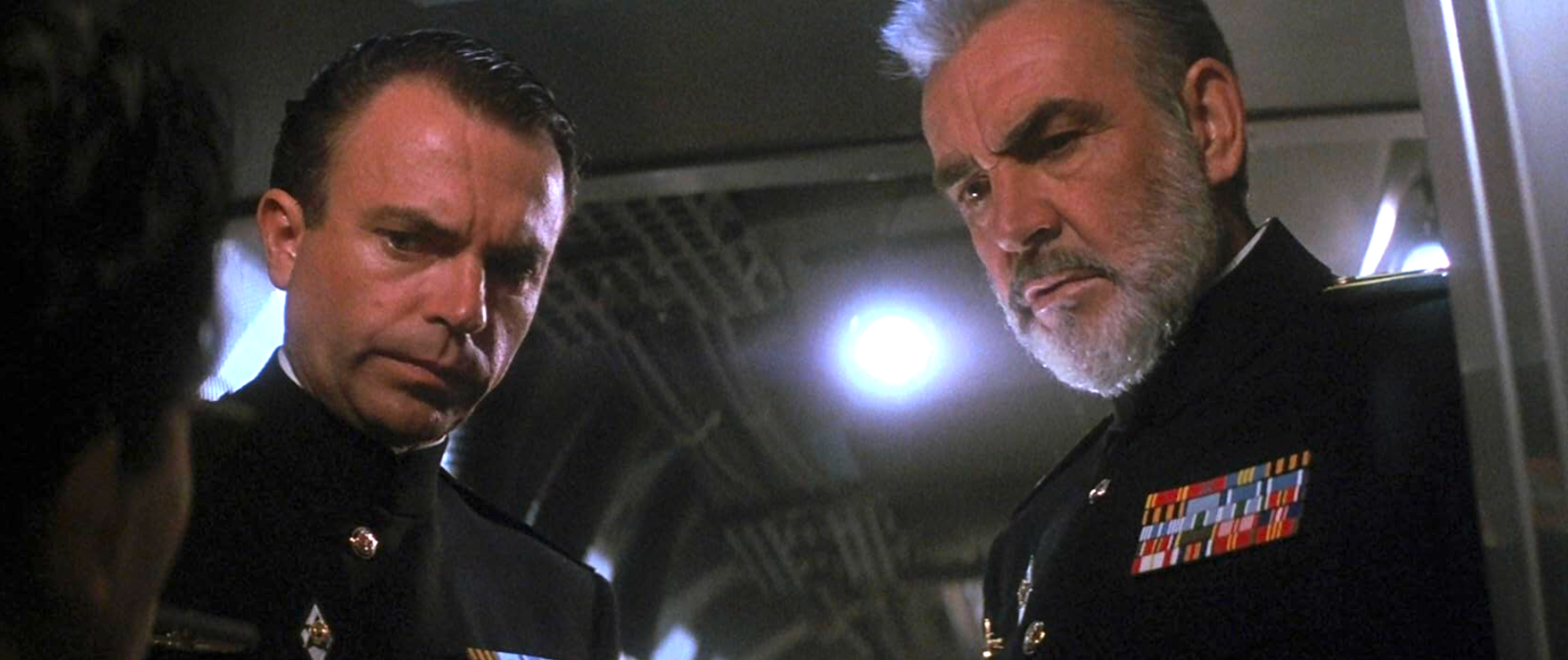
The junior-ranking Ryan proposes another theory based on his knowledge of Ramius: that the sub commander Ramius wants to defect, and bring the Red October with him. Ryan is dispatched to a U.S. sub captained by Commander Bart Mancuso (Scott Glenn), whose sonar expert Seaman Jones (Courtney B. Vance) is tracking a subtle audio trail left by the stealth craft. Meanwhile, on board the Red October, Captain Ramius and his first officer Vasily Borodin (Sam Neill) are keeping their real plans secret from their crew …
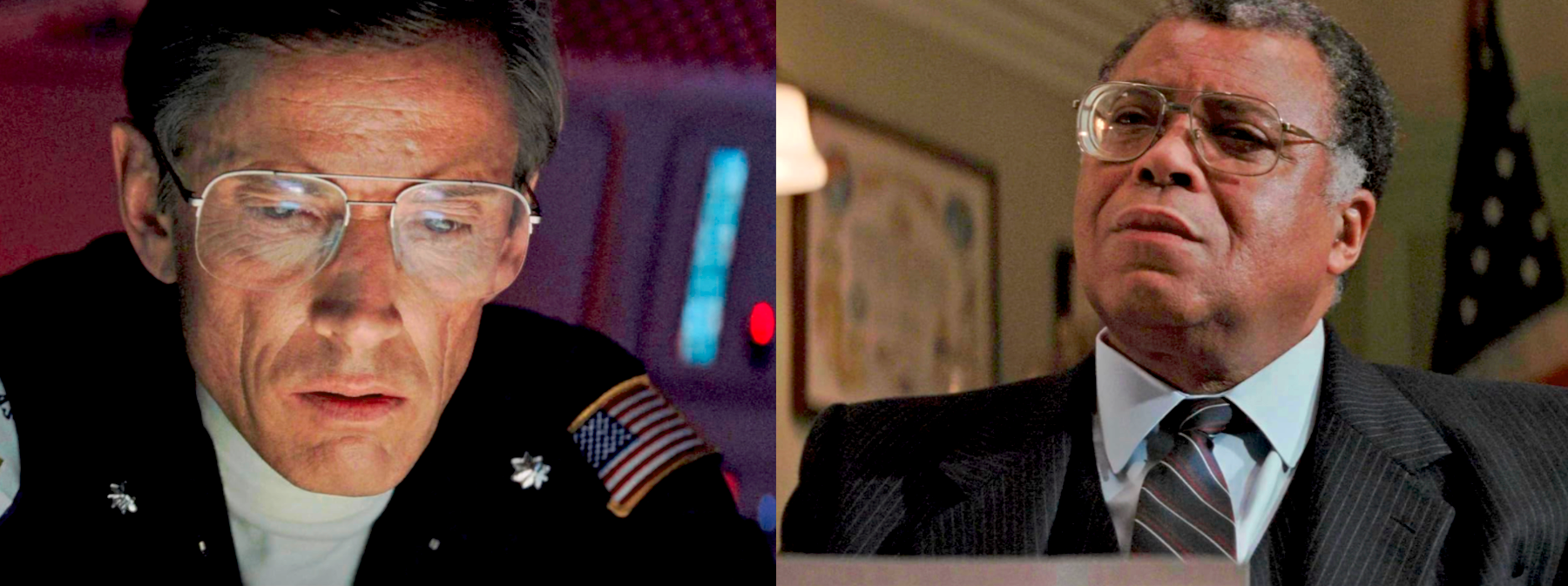
The Hunt for Red October remains a high point in the progress of military action fantasies. The well-paced, fairly plausible story is peppered with interesting personalities. The relative newcomer Alec Baldwin shines as a candidate for serious movie stardom — his analyst turned super-spy is the dream of every cubicle dweller eager to ‘get out in the field.’ The hardware on view is impressive as well; Navy cooperation permitted seagoing scenes with real aircraft and surface vessels. The enormous Russian submarine is represented by excellent model work, and effective if somewhat cartoonish underwater scenes.
The all-male cast presents an exciting array of action men, of both the gung-ho and cool customer variety. Desk man Alec Baldwin looks appropriately out of place, gasping for air on the floor of Scott Glenn’s attack submarine, trying to explain his sudden arrival. Scott Glenn assays his standard hard-nosed professional, leavened with a refreshingly open mind. CIA boss James Earl Jones is a jolly spymaster and Richard Jordan a sly negotiator. The show represents our intelligence agencies as competent, creative and cooperative — the only part of the tale we have a hard time buying.
America hates subtitles …
Modern movies sometimes find creative ways to bridge the language barrier. October’s Russians begin speaking in Russian, and then change to English. Actor Peter Firth carries the transition: he says the first half of a speech in English as the camera zooms in … and when it zooms back, both he and Sean Connery have switched to English. It works. It’s a less-confusing refinement of John Huston’s language-switch trick way back in The Kremlin Letter. In that show, several conversations began in Russian or Polish, and segue’d to English. It’s as if we viewers suddenly understand the new langugage. Later on in Red October, when the U.S. and Russian seamen meet face to face, the language barriers are up again for a few seconds. Confusion is avoided, but we do wonder if we’re hearing English-English, or Russian-English.
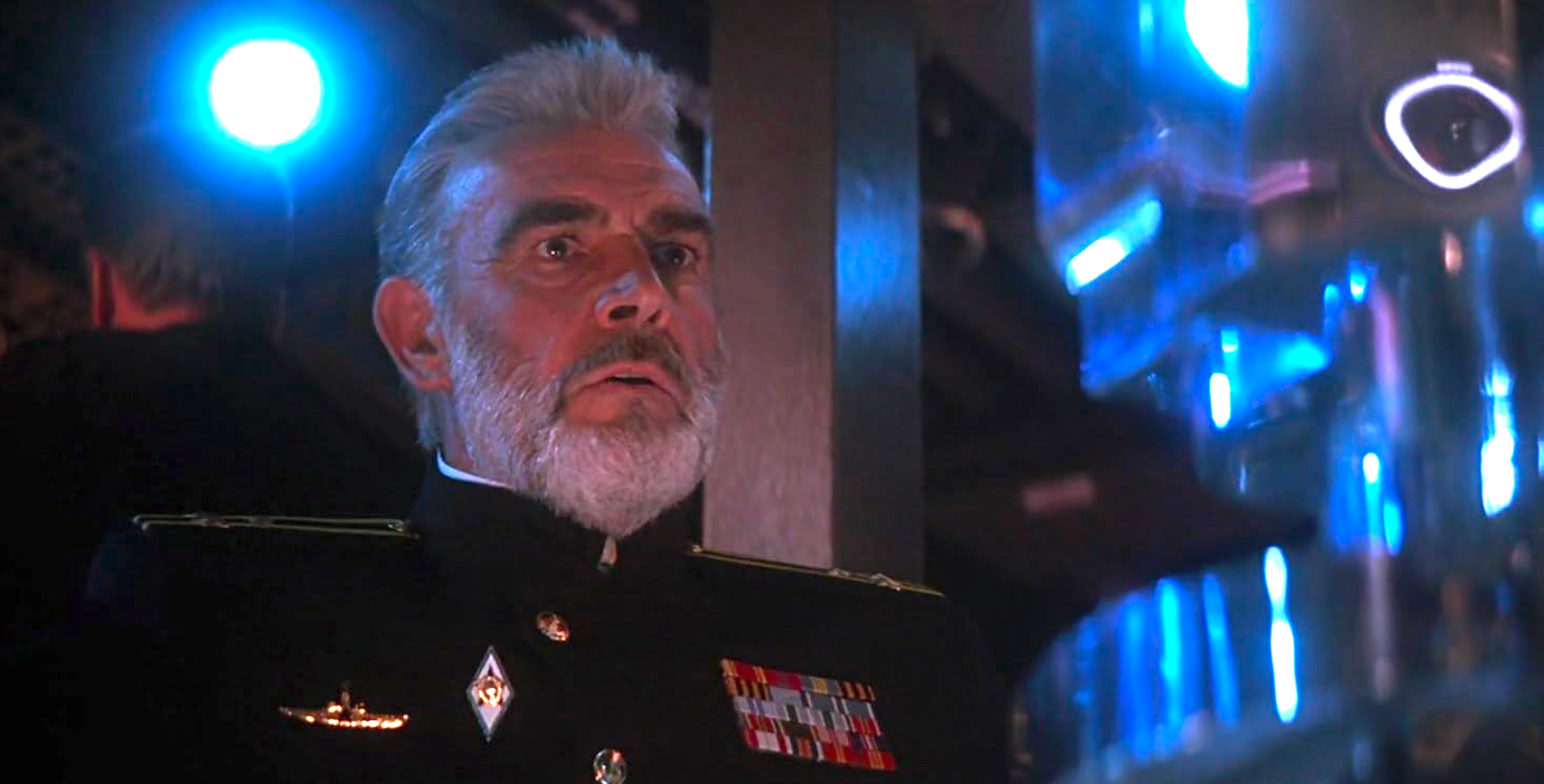
… but we love principled idealists, as long as they’re on the other side.
The script stays true to Tom Clancy’s vision of Russians — they’re a polished pack of Cold War clichés. Captain Ramius is the epitome of a good Russkie: he’s turning traitor to his country on pacifist principles. Ramius’s second-in-command Captain Borodin (Sam Neill of Until the End of the World) is charming and soulful. Like all good comrades, Borodin daydreams of living in Montana and driving a pickup truck. Doctor Petrov (Tim Curry of Rocky Horror Picture Show) is easily maneuvered by Ramius to help provide a clever cover for the mutineeers’ defection. The ship’s commie idealogue Ivan Putin (!! Peter Firth of Lifeforce) makes an early exit, but not before he reveals his total hypocrisy.
Further down the evolutionary chain is Captain Tupolev (Stellan Skarsgård of Sentimental Value), a sub commander ordered to sink the Red October. Tupolev is presented as a hissable villain, the human equivalent of an attack dog. Yes, it’s only decent that Captain Ramius should steal his own submarine and sneak it off to the Americans. If more Soviets were better Americans, the world would have far fewer problems.
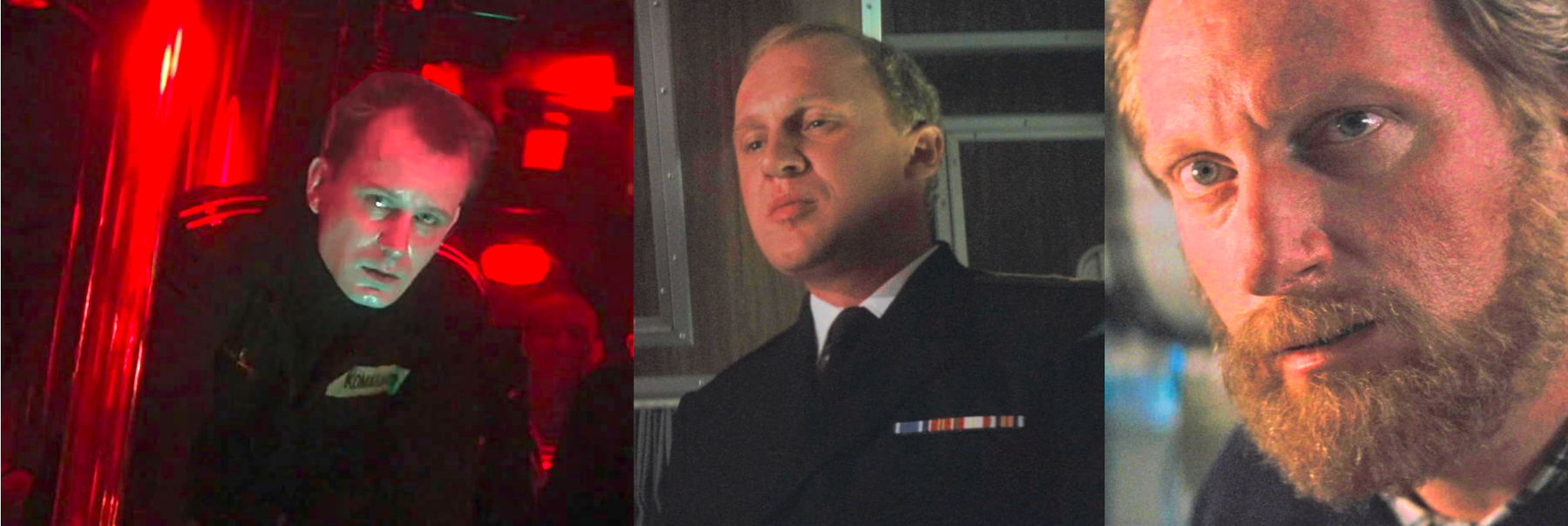
This movie genre worships weapons and military might, with the proviso that ‘all the good stuff’ should belong to the U.S. of A.. Yet it’s far less hawkish than Clint Eastwood’s Firefox. The dozen or so main players are given great characterizations, even ex- presidential candidate Fred Thompson as an Admiral. The Pentagon politicos disapprove of the stealth submarine with the sematic argument that it is a ‘first-strike weapon’ and therefore against ‘the rule book.’ Ramius agrees, which is one reason he defects.
Politically, The Hunt for Red October is a feel-good pacifier, a cheerful militarist fairy tale. Thanks to inherent American initiative, courage and derring-do, we naturally make the doofus Commies look like … doofus Commies. As a movie experience, it’s great fun and superior to most of the shows in its class. Two hours with Sean Connery is always time well spent.
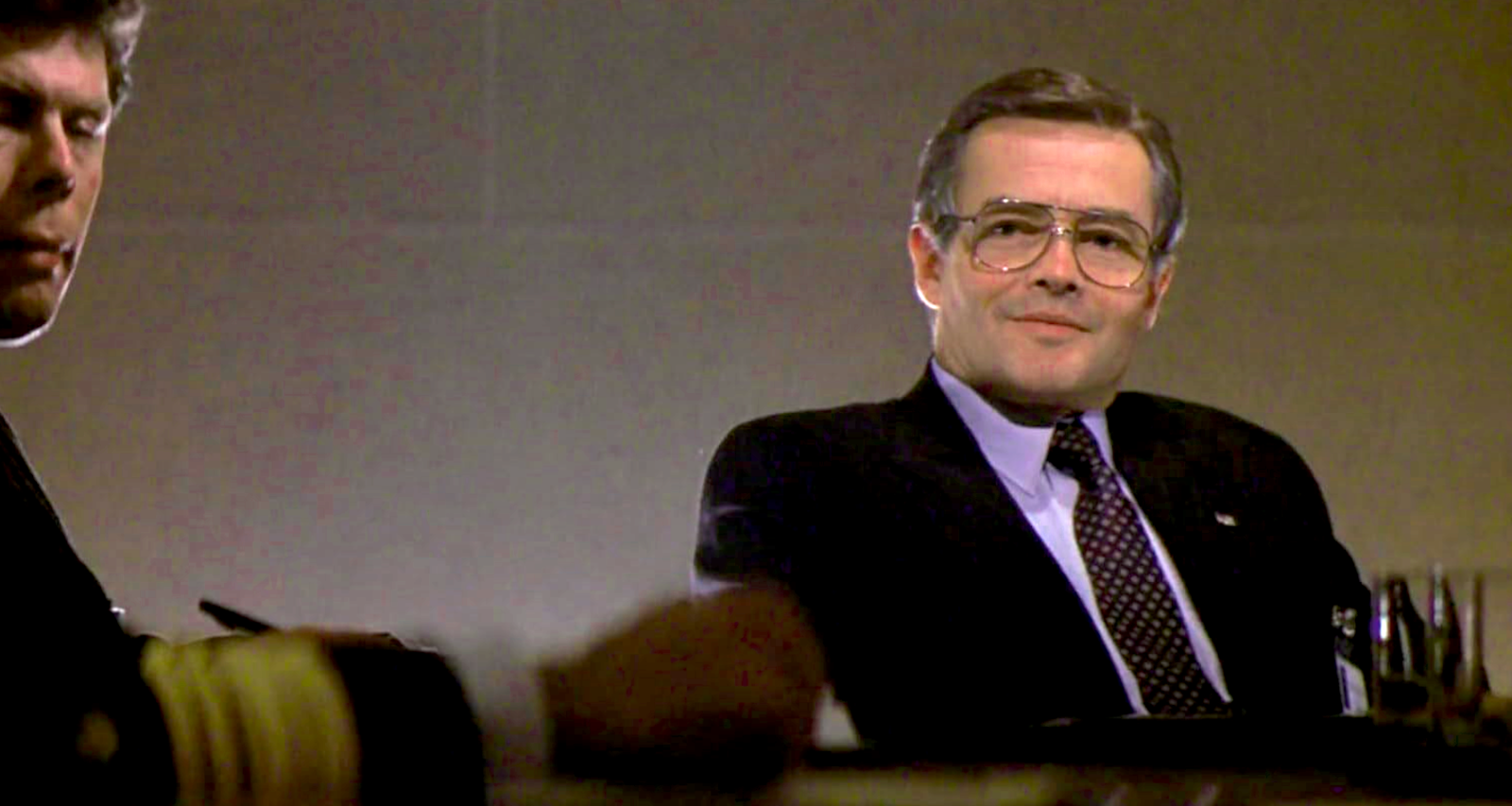
We sure like the supporting cast. The presence of favorite Richard Jordan reminds us that he died much too soon. His character in in David Lynch’s Dune should have had his own chapter instead of just 90 seconds’ screen time. If planetary justice prevails, some enterprising disc company will revive Victor Nunez’s A Flash of Green, a 1984 winner with Jordan, Ed Harris and Blair Brown. It hasn’t been seen much since the 1980s.
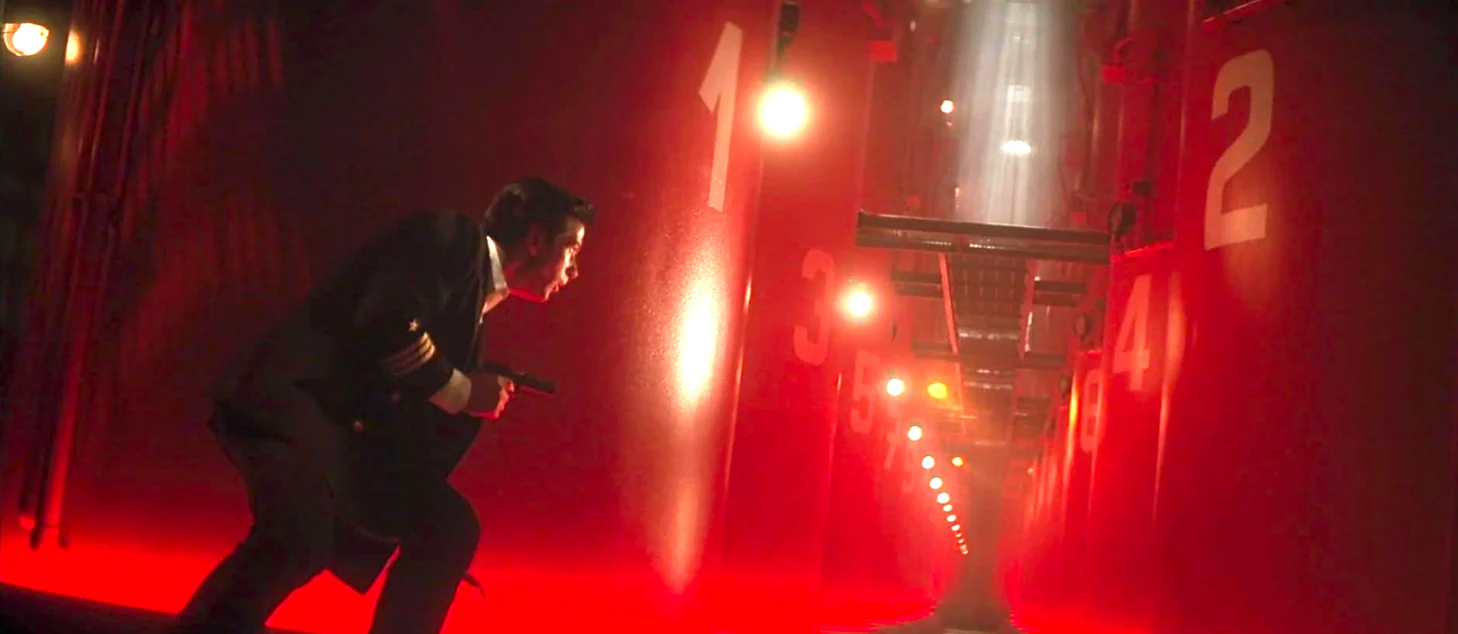
Suspenseful underwater maneuvers show Ramius’ superior naval skill, and Jack Ryan gets his big action scene going one-on-one in a shootout in the Red October’s reactor room. Ramius warns Ryan to be careful with the gunplay — some things in a reactor room are best not hit by bullets. The advice ‘Don’t puncture the cooling system’ is right up there with ‘don’t cross the streams.’

I haven’t seen another Cold War movie nearly as engaging and compelling as The Hunt for Red October. Every step of the adventure is exciting, and when the action logic becomes strained, we’re carried along by the conviction of the actors. We particularly like the scene of Ryan’s transfer to Scott Glenn’s submarine, by helicopter in the middle of a storm … we fully understand the danger of the situation.
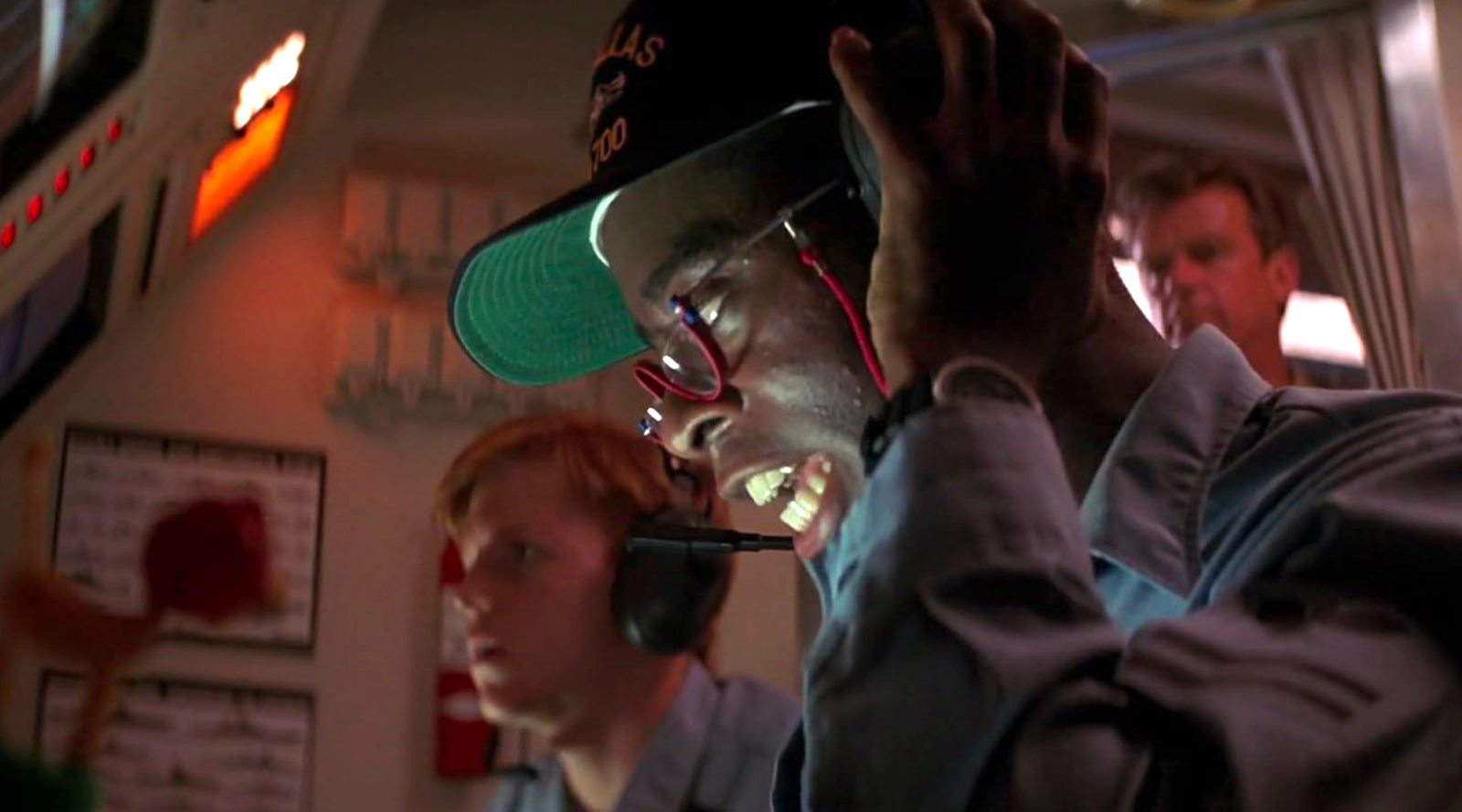
The movie was always a sure winner. McTiernan even generates excitement out of scenes with men standing around listening to sonar ‘signatures.’ Actor Courtney B. Vance is excellent as the Navy’s sonar expert, nailing a basically thankless role. As a tech whiz kid who impresses the audience, he’s Red October’s version of the colorful computer hacker-thief Theo (Clarence Gilyard Jr.) in McTiernan’s Die Hard. Jack Ryan’s insecurity on a normal passenger jet is likewise ported over from Die Hard … New York cop Bruce Willis shares the same discomfort.
When we first reviewed Red October my ignorance of the concept of Passive Sonar was pointed out by knowledgeable readers like John Paul Henry. Valuable contact Avie Hearn took the time to write a note, giving me a good dumbed-down explanation. From August 05, 2008:
Glenn: You may wish to add this to your The Hunt for Red October review notes:
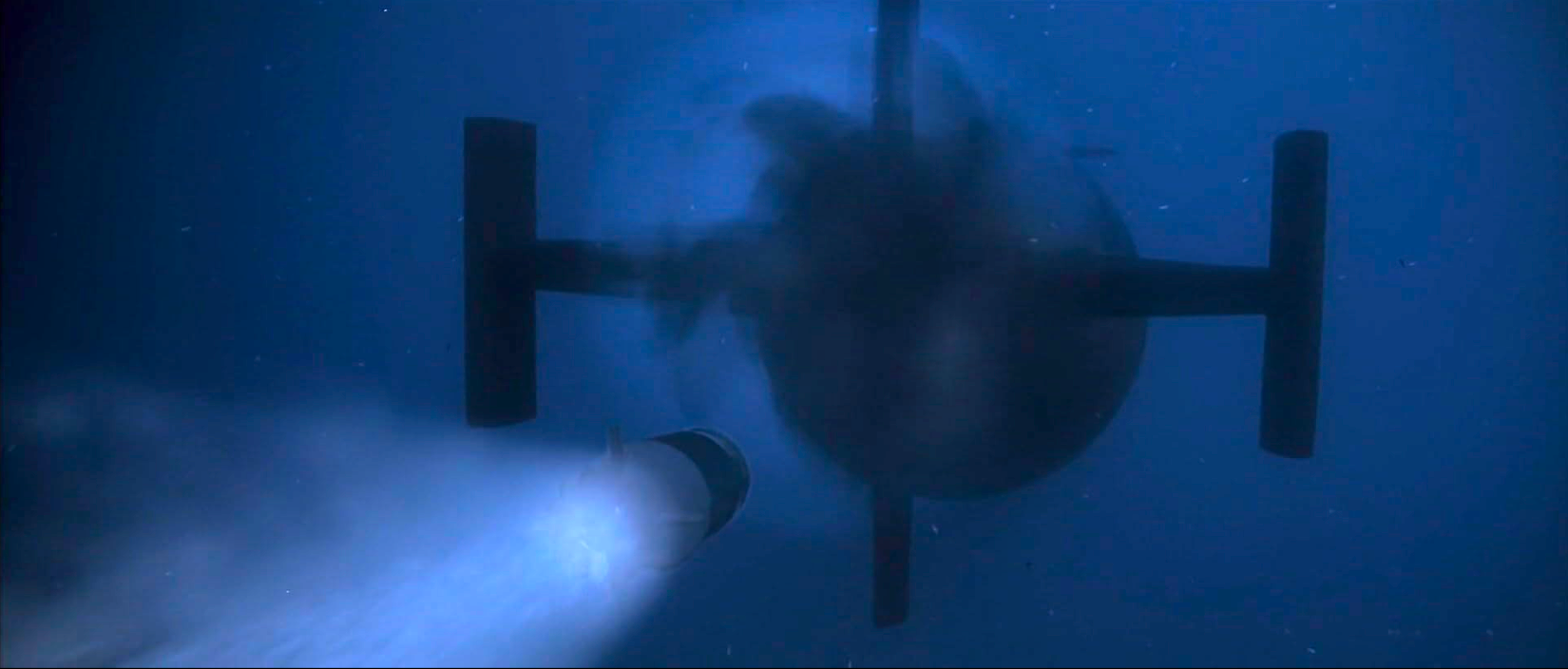
Submarines listen for the sounds of other subs via hydrophones, which are entirely passive. Astute viewers of the film may recall some of the characters’ use of the word ‘cavitation,’ which refers to, literally, a cavity or hole left in the water as a large submerged object passes through it. This creates a continual and distinct sound as this cavity collapses and fills with water after the boat’s passing. Standard screws or ‘caterpillar drive,’ there would still be cavitation, allowing an enemy to know of the boat’s presence.
There is also the matter of the distinctive sound created by a submarines screws (propellers). For many years U.S. submarines had a tactical advantage because the Soviets didn’t possess milling equipment sophisticated enough to produce screws as efficient at cutting through the water as U.S. subs. The more efficient the screw, the less sound it makes for an enemy’s hydrophones to pick up. In the 1980s the U.S. government applied sanctions to Japan’s Toshiba Corp. for having sold exactly that kind of milling equipment to the USSR, even though U.S.-Japanese military-trade treaties expressly forbade them to. As a result, Soviet subs got a great deal quieter, and U.S. craft had that much more trouble finding them.
All good and patriotic Americans may now wish to junk their Toshiba TVs and other audio-video gear and replace them with Sonys. — Avie
Just curious but is it worth buying again? I have the last 4k release from the Jack Ryan box set released in 2018. I would get it again if there is a dramatic jump in quality.
I tried to be kind about it, but made it clear that there was no indication that the Red October master was new or different in any way.
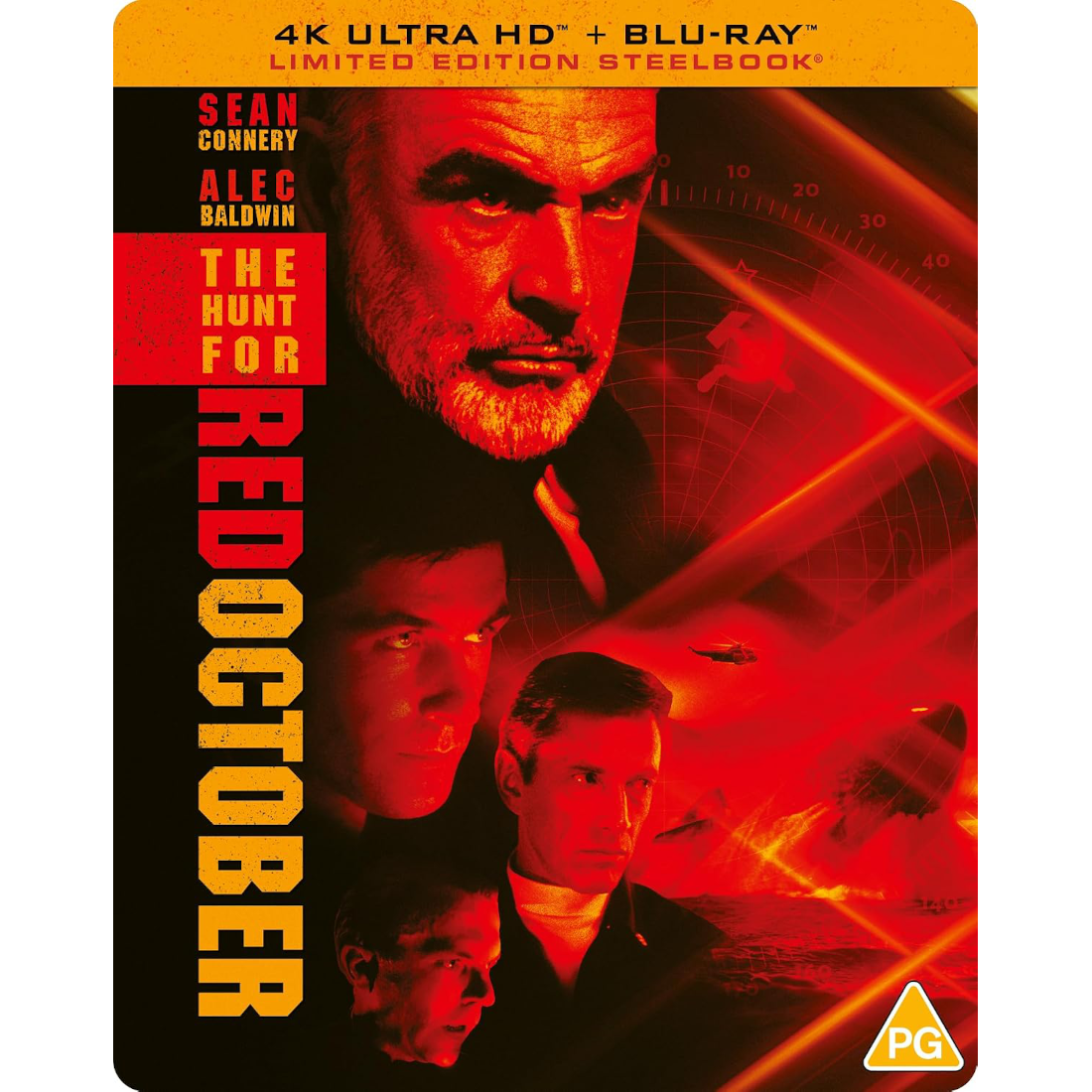
Ok thanks. I value your opinion. I might get it anyway. I love the packaging on this release (Steelbook). Just shows how insane a collector I am. LOL. Keep up the good reviews!
Don’t do it. Buy your wife some flowers.
My one problem with the movie: the Russian translation of the title at the beginning was off.