
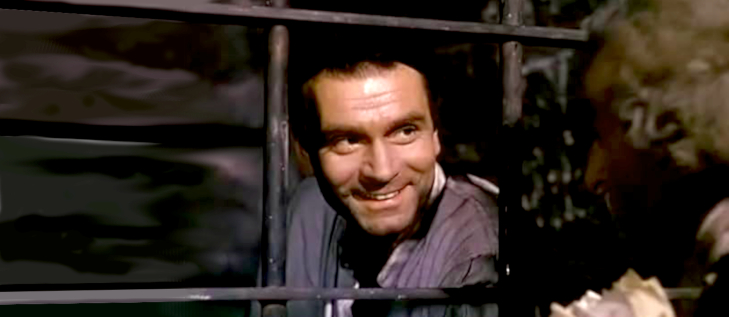
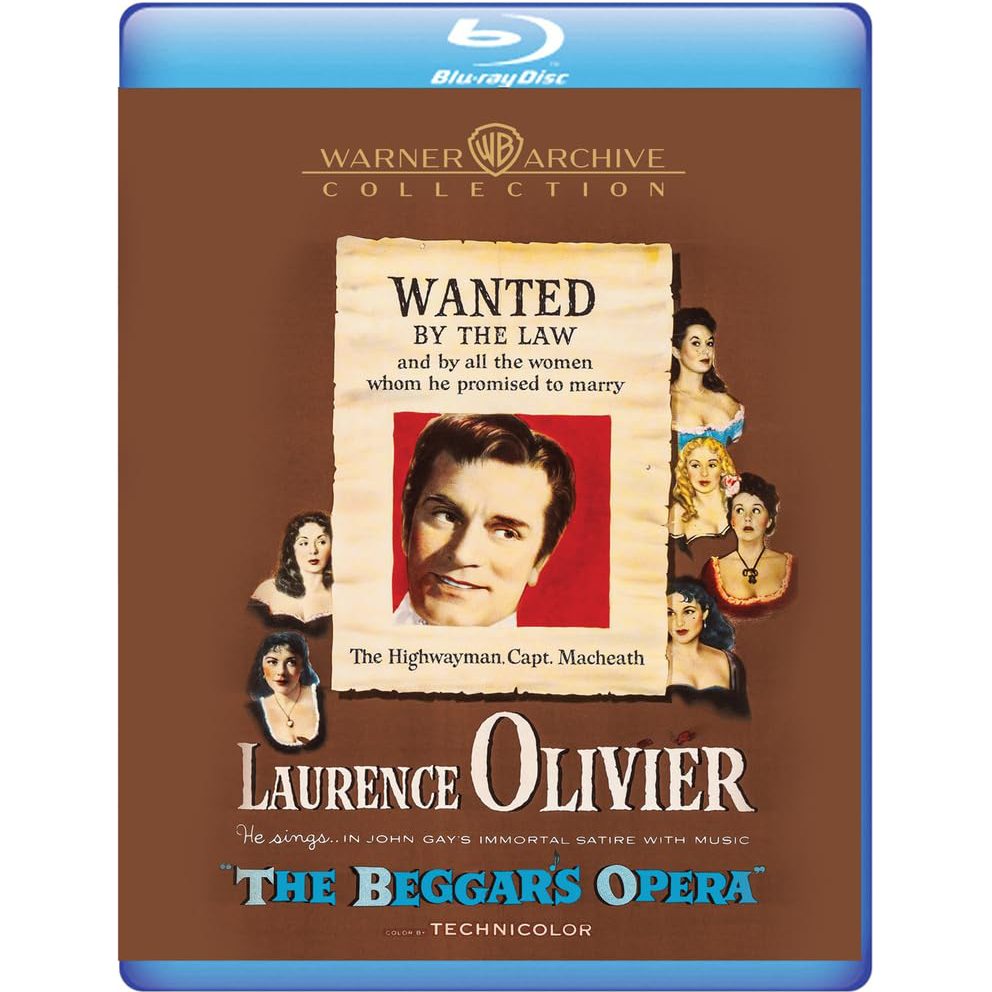

The original source for this unusual English musical is so old, that the famed satirist Jonathan Swift had a hand in its genesis … half a century before the American revolution.
This is a great movie that needed a major restoration to find its audience. We were intrigued by a 2009 DVD, but it fell far short of the mark — with no English subtitles, trying to understand the stylized dialogue and lyrics defeated us entirely. The new Warner Archive Blu-ray remedies that problem with a sparkling digital remaster that allows us to get into The Beggar’s Opera for the first time. The movie is worth some special attention. It’s witty satirical comedy, pre- Tom Jones, about London in the Georgian Era. We’re told that the original John Gay ‘ballad opera’ was first performed in 1728, almost 300 years ago. Some of the songs were takeoffs on popular tunes of the time, given provocative new lyrics.
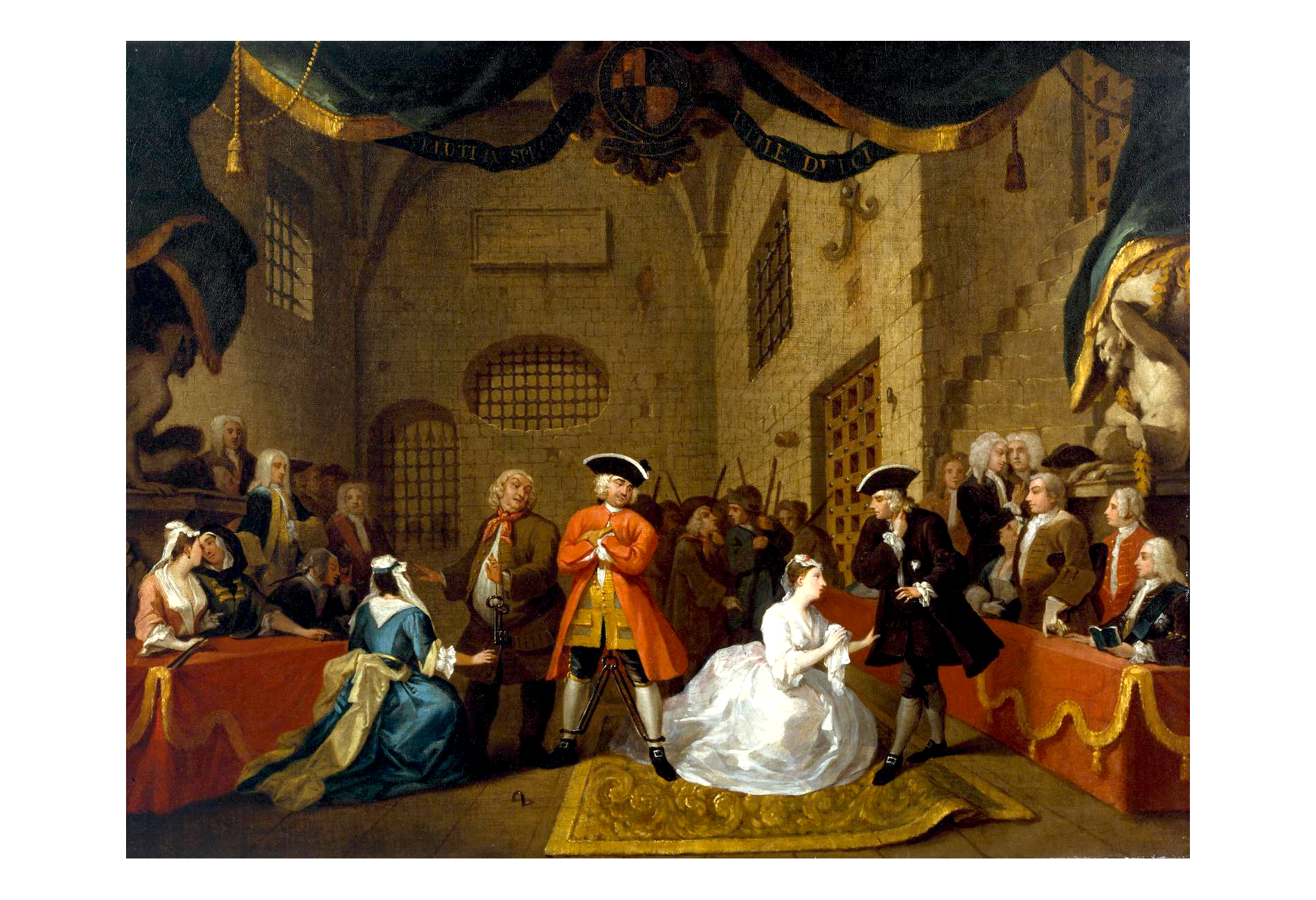
The opera’s popularity can be gauged by the fact that the celebrated artist William Hogarth commemorated it in a famous painting. → We’re told that this kind of comedy-satire spoofery was common in Georgian England. The The Beggar’s Opera is almost the only such play still revived today.
The tale of Macheath has been adapted and transformed over the centuries. Kurt Weill’s German Weimar-era transposition of The Beggar’s Opera entitled The ThreePenny Opera is a German classic; it changes Macheath into ‘Mackie Messer,’ and the criminal context is bloodier and more ruthless. In 1959, Mackie Messer’s song became the pop hit by Bobby Darin, Mack the Knife with new lyrics by Marc Blitzstein. The song pays respectful homage Macheath / Mackie’s gallery of women, adding the name of a legendary performer from Weill’s original Berlin production:
“Now, Jenny Diver, ho, ho, yeah, Suky Tawdrey
Ooh, Miss Lotte Lenya, and old Lucy Lockit Brown
Oh, the line forms on the right, babe
Now that Mackie’s back in town.”
In Laurence Olivier’s lavish Technicolor musical adaptation, Macheath is less of a cutthroat and more of a ladies’ man. In the very first scene he robs a carriage on the road, stealing a passionate kiss along with a jewel. The joke is that Captain Macheath so charms the womenfolk, that they’re blind to his deviousness. The even bigger joke is that the affections of two ladies for the Captain is so great, they forget to be jealous of one another.
John Gay’s 1728 opera was written as a wicked spoof of Italian operettas. It’s a refined farce with crooks, corrupt officials and happy prostitutes, a snapshot of a very lively city. We’re told that the movie was a resounding flop when new, which makes us wonder why. Perhaps England of 1953 just wasn’t interested in delicate spoofery in period dress. Perhaps semi-satires about dashing highwaymen were Old Hat, because the Gainsborough thrillers of the 1940s had exhausted interest in the genre.
Fans likely to appreciate The Beggar’s Opera are those looking for something different. We were impressed by the cleverness and wit of the lyrics and the taste of bawdy humor from a time far removed from here and now. That principle also worked with the musical Oh, What a Lovely War!, a recreation of mordant song parodies from World War One. Old entertainments are often more impressive than what passes for quality today.
Laurence Olivier’s Technicolor The Beggar’s Opera is most often mentioned as a postscript behind Weill and Pabst’s The ThreePenny Opera. The first film directing effort of theater great Peter Brook ( Lord of the Flies, Marat/Sade), the 1953 movie is not revolutionary cinema on the order of Powell & Pressburger, but it is consistently lively, funny and truly unique.

Denis Cannan and Christopher Fry’s screenplay adapts a tale that had already been reinterpreted dozens of times for the stage. The music consists of popular ballads, many of them on the bawdy side. The dramatis personae center around ‘established’ street rackets. A married couple also operate a den of thieves and a bordello, an upscale matron maintains a fancy gambling salon, and a prison official has made bribery into an art form. The poor are no less corrupt, but are much more likely to be punished for their offenses. The female denizens of a house of prostitution put up an impressive façade of decency.
At the center of the intrigues is the romanticized highwayman MacHeath, a smiling knave in a red coat. If he has murderous secrets in his background, this telling of his story doesn’t cover them. MacHeath robs the rich with polite manners, while stealing kisses from their appreciative ladies.
Laurence Olivier’s Captain Macheath has his gallant rogue act down pat — but only in the play-within-the-play. The ‘real’ Macheath is first seen in a dank Newgate prison, awaiting a dawn execution. Feeling miserable and very un-gallant, he listens to an opera composed by another inmate, the Beggar of the title (Hugh Griffith). The opera is an idealized gloss on MacHeath’s notorious adventures. He frolics happily with the beautiful Polly Peachum (Dorothy Tutin), to whom he is secretly married. Polly’s crooked parents (George Devine & Mary Clare) are the ringleaders of a petty crime enterprise. When they find out that Macheath is their son-in-law, they decide that turning him in for the price on his head is a great idea; their only fear is that the Captain may have other ‘wives’ that will want a piece of the reward.
Father Peachum connives to lay a trap with the master of Newgate Prison, Mr. Lockit (Stanley Holloway of My Fair Lady). After several failed attempts, the bandit Macheath is captured via a betrayal by the prostitutes Suky Tawdrey (Sandra Dorne) and Jenny Diver (Yvonne Furneaux, six years before The Mummy).
Locked away, Captain MacHeath renews his romance with Lockit’s luscious daughter Lucy (Daphne Anderson), using a promise of marriage to motivate her to bring him the jailer’s master key. A visit from Polly throws a wrench in that plan — neither woman knows about the other. When MacHeath does get free, he fails to head for the hills with Lucy, and instead ducks into the a swank gambling salon of the crafty Mrs. Trapes (Athene Seyler, playing a very different role than her sweet mother in Jacques Tourneur’s Night of the Demon). Unfortunately, Trapes is also a crony of Mr. Lockit, and the law closes in again.
Back in the present in Newgate, MacHeath cares little about being immortalized in the Beggar’s play … how will he escape his execution in the morning?
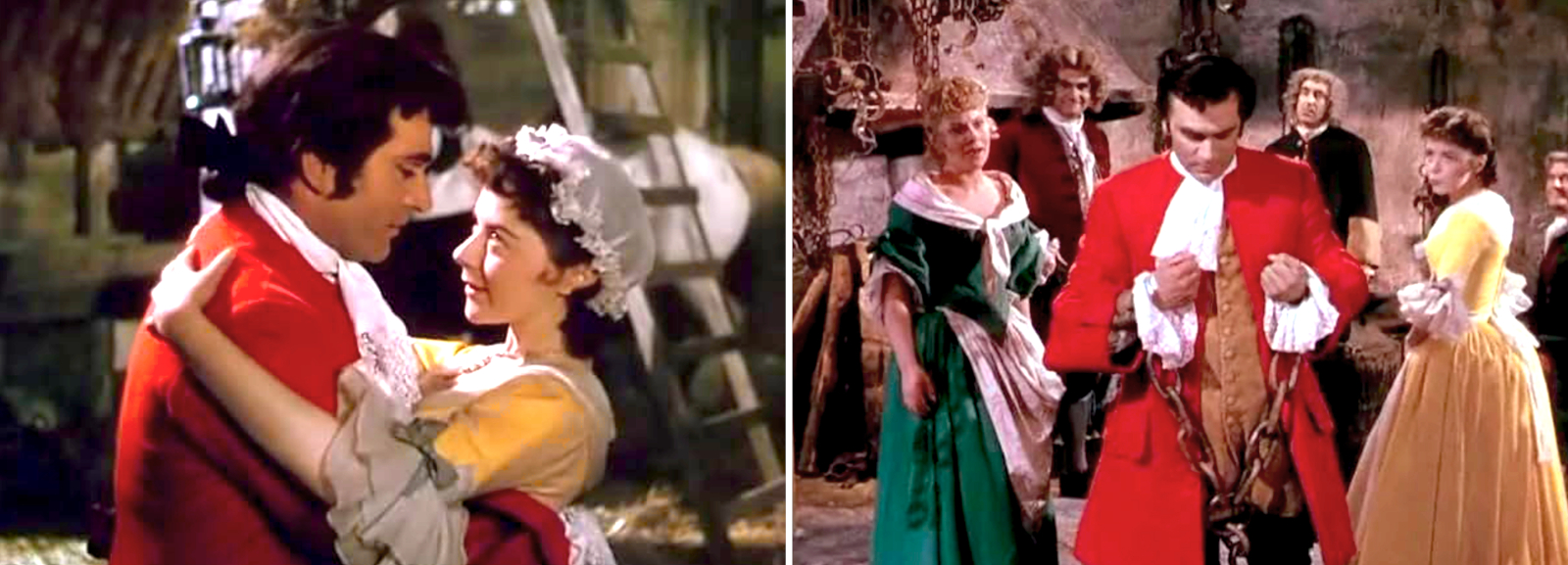
The Beggar’s Opera has color, fun characters, witty dialogue and beautiful women. Although most of the music vocals are dubbed, Olivier and Holloway sing for themselves and sound just fine. The songs are delivered in grand style and fit the characters well. MacHeath sings about the impossibility of confining his amorous talents to just one woman, while Jenny and Lucy’s songs express their romantic illusions. MacHeath is more than willing to take advantage of them. Meanwhile, no matter where MacHeath turns, Peachum and Lockit keep showing up with more constables carrying pistols in each hand. Crook and jailer sing to congratulate each other for their profitable partnership — in one impressive scene they serve and consume a meal, while singing.
Macheath romances Polly in a hayloft, with song lyrics that sound trite but suggest his bawdy intentions:
“I would love you all the day / every night would kiss and play.”And there’s plenty of self-aware spoofery in the lyrics for one of Macheath’s escapes:
“My heart is so free / I rode like the bee / The morning is waiting and eager!”Unlike Tom Jones, there are no asides to the audience, no moments where self-parody takes over. The schemers Peachum and Lockit, and Mrs. Trapes gleefully acknowledge their selfish intentions, but not directly to the audience. One ‘Pirandello’ moment might pop through when Peachum and his thugs surround Macheath in the barn. Instead of charging in, they politely wait for the highwayman to finish the last stanza of his love song.
Everybody sings to tell us exactly how they feel. Macheath reflectively admits to himself that he gets into trouble ‘because he just likes the sex.’ The character names have built-in jokes, starting with a jailer called Lockit. Polly Peachum is a peach of a girl, and perhaps Lucy Lockit is being advised to maintain her chastity? Are the names Denny Diver and Sukey Tawdrey descriptive of sex acts? The other good-time women are given provocative-sounding names as well: Dolly Trull, Molly Brazen, Betty Doxey. The bawdy period setting seems to excuse exclamations that would never fly in a modern crime movie, ‘lusty’ dialogue like “Kiss me you slut!”
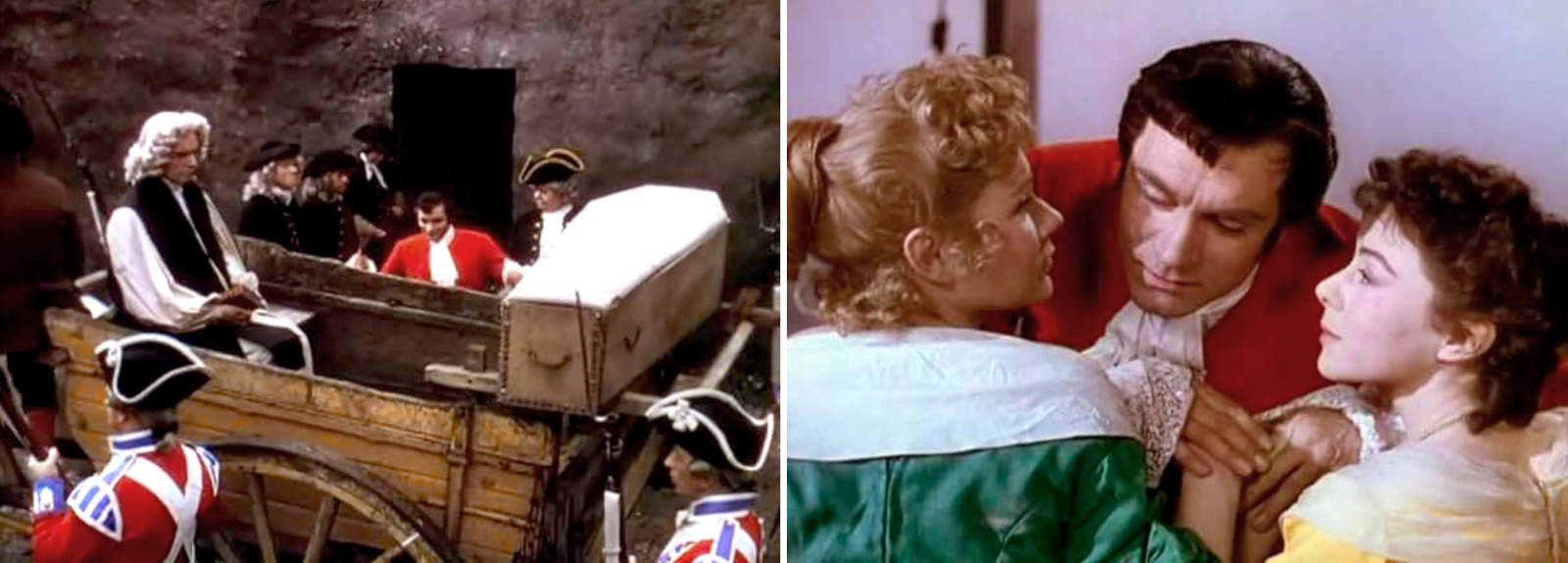
The grimy dungeon where Macheath awaits excecution forms a strong contrast with the Beggar’s bright and fancy musical version of his life. In the Beggar’s fanciful retelling, Macheath bribes the corrupt jailer Lockit, so he can wear lighter iron manacles. Macheath rides to the gallows in a tumbril, sitting on his own coffin. ↑ A huge crowd of admirers cheer and throw confetti, he’s so beloved. Women leap into his arms for a kiss. He’s already sung a ditty about ‘the Tyburn tree.’ That must explain the name of an English production company that made horror films — Tyburn was London’s primary public gallows site for centuries.
The Macheath / Polly / Lucy triangle comes close to a ménage à trois — he’s married to one and all but married to the other. Each is so gone on him that they take turns kissing him. The vibrant performances suggest a really attractive 18th-century threesome.
Director Brook’s active blocking keeps the film frame in motion, with help from the rich Technicolor cinematography of Guy Green. We’re told that the film’s two or three action scenes are filmic additions; they work well in context. The vibrant costume design is from the same period as the later Tom Jones.
Laurence Olivier appears to be having a fine time playing a randy Errol Flynn- type rogue. All that’s lacking is Flynn’s effortless ease. As in most of Olivier’s films, the acting process is right up front. What we see is pretty marvelous — but we can see the ‘work’ in it.
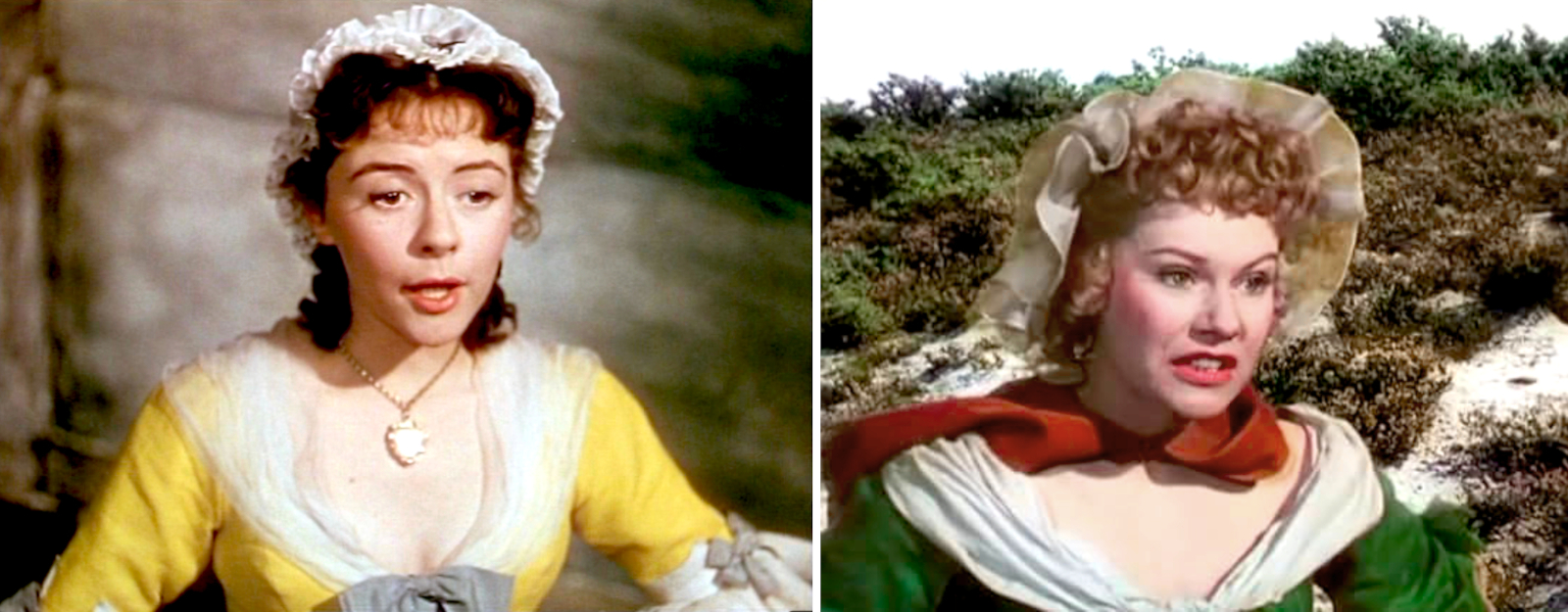
Dorothy Tutin (The Importance of Being Earnest) is delightful as Polly Peachum; she’s 23 but looks 16. Her romantic cluelessness forms a strong contrast with the brassy enthusiasm of Lucy Lockit. Daphne Anderson did good work in several well-remembered pictures — Hobson’s Choice, A Kid for Two Farthings. Lucy is a feisty firebrand, yet is equally susceptible to MacHeath’s empty promises. In one of the funniest scenes, Macheath attempts to rob the Lockits on the road. He is rebuffed by Lucy’s whirlwind of scorn, accusing him of seducing and dishonoring her.
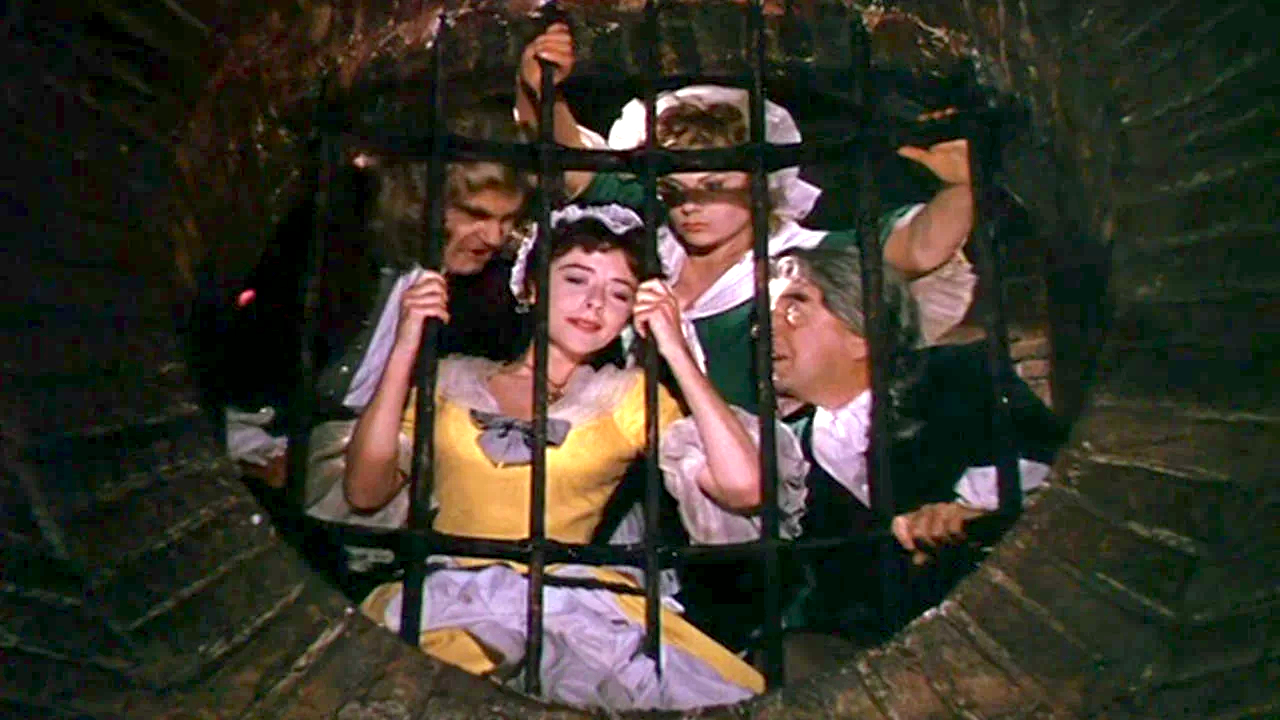
Getting much less screen time (sadly) are the more openly seductive villainesses Jenny Diver and Sukey Tawdrey. They share one scene with several other seducers laying a trap for Macheath. Jenny and Sukey are unlike Lucy and Polly — they know they’re poison. This was Yvonne Furneaux’s first Technicolor film. She brings her faraway stare, the one that makes her look so dreamily exotic.
It’s true enough that a modern audience needs some preparation to appreciate The Beggar’s Opera. It tries to evoke the vulgar jollity of a comedy opera that was a hit 20 years before England colonized India. There’s a lot to appreciate and enjoy in this beautifully staged comedy/action musical — the conniving, guilty denizens of olde London relish their ‘merrie’ songs. Even old Athene Seyler works up a bawdy sense of humor. Good musicals don’t grow on trees — this one is worth checking out.
when it was shown on ABC circuit it got pulled, a friend at the time was a projectionist and the called it “The Buggers Opera”
Great review Glenn!!! A fan of the 1931 film(Criterion Collection). Wish for a Blu Ray of that one. I have the Lottie Lenya recordings related to the original Berlin stage musical prior to the film being made. Her husband, Kurt Weill, wrote the music(1900-1950). A trunk loaded with unpublished Weill music was fund in a New Jersey warehouse a few years back. Heard no more about it.
Just completed a Sale order with CCVideo and left it off. Drat!!! Next time for sure.
Best
Ken/Australia
The Canadian playwright/performance artist Robert LaPage created his own ‘Busker’s Opera’ using the Beggar’s Opera as a source of inspiration and characters:
https://www.epidemic.net/en/art/lepage/proj/buskers_opera.html
This was part of the ongoing repertory at the old Thalia in NYC in the ‘50s- they showed it almost monthly. Bet the print looked good.