


Although the indispensable Video Watchdog eventually satisfied this fan’s curiosity for unusual Italo horror, it was Phil Hardy’s Horror Encyclopedia that first introduced us to dozens of oddly-titled Italian gialli and slasher films of the 1970s. They were of course unavailable in the United States. James Ursini took me to my first fantasy convention in 1990, for a personal appearance by Barbara Steele. Also present were a couple of convention vendors selling hundreds of these ‘unseeable’ foreign films. They were presumably bootlegged from Italian originals. Whatever was wanted, they probably had it. The letterboxed images were indistinct and the subtitles unreliable, and at $20 a pop, they weren’t cheap.
I didn’t have that kind of money but plenty of diehard fans were keen to see things like Nella streta morsa del ragno at any cost. The handwritten titles were intriguing. What the heck was “La casa delle finestre che ridono”?. The Hardy book called it “one of the masterpieces of the genre, a film to rival Mario Bava’s Operazione Paura.”
The reviewers for the Hardy film encyclopedias tended to favor Italian films. We didn’t mind their exaggerated praise for Italo fantasy, even when we disagreed. Who else was writing about these interesting pictures?
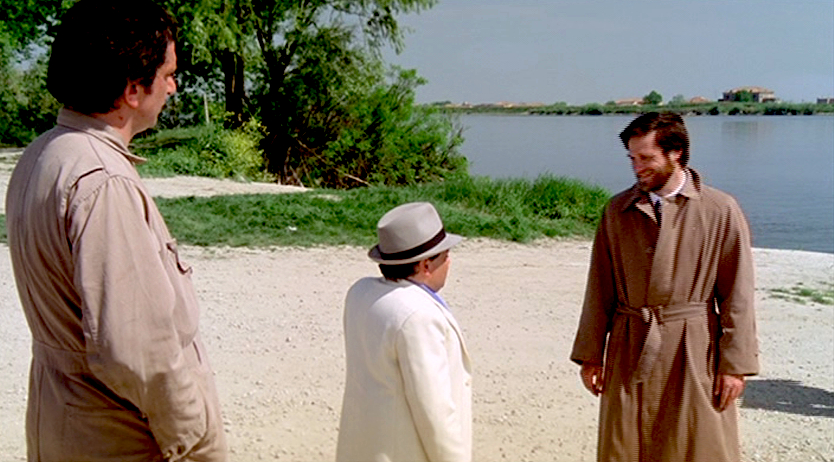
Thirty-five years later (cough) The House With Laughing Windows shows up in a 4K encoding so vivid, it likely improves on the original theatrical presentation. As is becoming the norm with so many horror classics, new remasters are sourcing original elements, as if rights holders suddenly decided that cooperating with video companies can be profitable.
This is one attractive picture, with some nice views of the Italian countryside, a marshy area said to be near Bologna. The filmmaker Pupi Avati is best known for a 1983 film called Zeder, that received a release here under the un-promising title Revenge of the Dead. This earlier horror effort may not have been screened in America at all.
The House with Laughing Windows relocates Italo horror to evoke an ‘isolated’ dread in a countryside corner where unpleasant WW2 memories haven’t faded. It goes against the ’70s slasher/giallo trend by keeping the most horrible violence off-screen, and stylizing the horrors it does show. Director Pupi Avati concentrates on a grim, creeping sense of loss, an inertia of the soul. The unhurried anti-giallo generates slow suspense and pays off with some effective twists. Some viewers will find it too slow. It’s not a breathless thriller but a descent into a state of unease, that leaves some key questions unanswered.
What kind of mystery thriller decides that past crimes are beyond understanding?
Art specialist Stefano (Lino Capolicchio) comes to a rural Italian village to restore a macabre painting of Saint Sebastian in an old church. He meets a selection of locals both friendly and hostile. The mayor (Bob Tonelli) wants the notorious painting as a tourist attraction; he’s also enlisted a biologist to see if the marshes might be made better for fishing. Stefano is fascinated by the painting but has difficulty learning the history of its artist; the locals are even quieter about him than they are about the awful war crimes back in WW2. He stays at the town’s one inn, and almost immediately sleeps with the local schoolteacher (Vanna Busoni). But he falls in love with the replacement teacher, Francesca (Francesca Marciano).
Asked to vacate his room, Stefano allows the dull-witted handyman Lidio (Pietro Brabilla) to show him to a crumbling house reportedly once owned by two sisters of the artist. A questionable death slows down Stefano’s casual inquiry, but he eventually discovers that the artist and his sisters were depraved sadists that tortured and murdered people as ‘inspiration’ for his paintings. The local priest and police official aren’t much help; the one key piece of evidence he found is accidentally lost. Who to trust becomes a key issue, as Stefano realizes an individual, or perhaps a conspiracy, is closing in to keep him from discovering more.
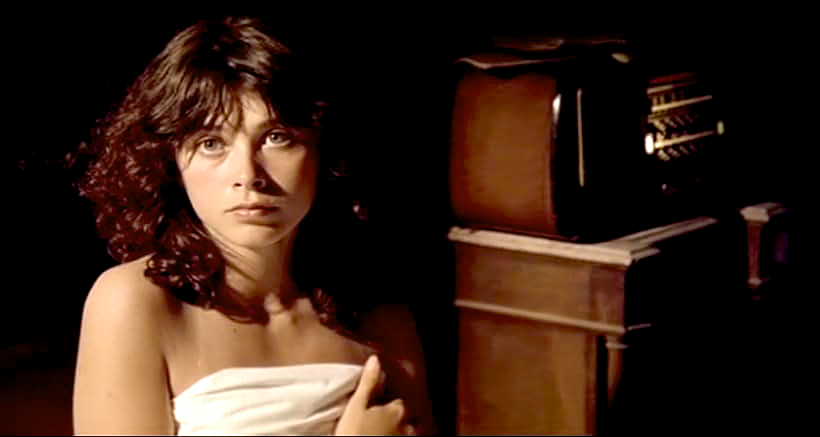
Italo horror films of the ’70s could be slick and beautiful, but a great many took exploitative advantage of the recent dropping of restrictions on nudity and adult subject matter. Sergio Martino’s Torso (I corpi presentano tracce di violenza carnale) alternates travelogue images of Perugia with scenes of nude models being slain, encouraging us to identify with the killer’s glee. Pupi Avati’s film brings a different approach to a theme of horrible cruelty in the recent past. It might turn off many audiences as well, with its stylized opening. Shackled to a meat hook, a male victim suffers repeated knife stabs from two robed attackers.
The bulk of the picture follows Stefano’s inquiries with less knee-jerk sadism and more general intelligence. The likable Stefano does not come on to Francesca when he first sees her on the ferryboat. The first schoolteacher is sexually forward, but not a 20-something lingerie model. When Stefano sleeps with her, it’s not a titillating scene for the grindhouse market.

Stefano must be a very calm fellow, as he ignores several anonymous telephone warnings. The disturbing title sequence tells us that something nasty is afoot, but no easily-read clues suggest which townspeople might be sinister conspirators. There is only one restaurant in town. The owner’s dotty wife has a collection of macabre paintings by the same artist who did the mural in the church. One is of a naked woman, but with the male artist’s own face. The biologist wants to tell Stefano about some strange happenings, but he may be suffering from the effects of a nervous breakdown. A priest offers a quick history of the church, including its wartime use by the German SS. But he gives few details and sidesteps Stefano’s followup questions.
The old, bedridden woman Stefano finds in his rented house asks him a lot of questions. The innocent-looking Francesca seeks out the relatively passive Stefano for companionship, leading to suspicion there as well. Add to that the tourism-minded mayor and the priest’s slow-witted helper Lidio, and Stefano is in the middle of a very insecure situation. The closest he gets to someone willing to talk is Poppi (Andrea Matteuzzi), an alcoholic chauffeur who shares some disturbing gossip about the artist and his sisters.
Stefano is no TV detective; his inquiries slack off and lose momentum. When the police chief dismisses his reasoning that a ‘suicide’ may have been pushed from a window, Stefano just drops the issue. He finds out that the lady running the Inn lied to him about having to vacate his room, and doesn’t follow up on that either. But most of Stefano’s behaviors are refreshingly believable. He remains passive and takes a wait & see attitude.
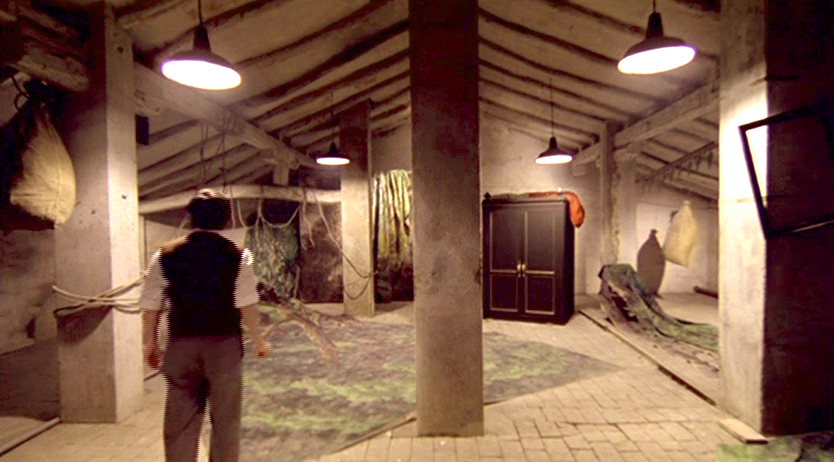
The movie is in no rush, which may also frustrate some viewers. Except for the one unexplained suicide, the usual suspense triggers are absent. What keeps us watching is Pupi Avati’s assured direction. The camera is allowed to linger just long enough on scenes to suggest possible malice. Shots alternate between telephoto medium close-ups — we’re hardly aware of the zooms — and carefully arranged master shots in confined rooms, with a slightly wide-angle lens. A somewhat more intense horror combo of odd rooms and odd people against a sinister art background was seen in 1973’s Messiah of Evil.
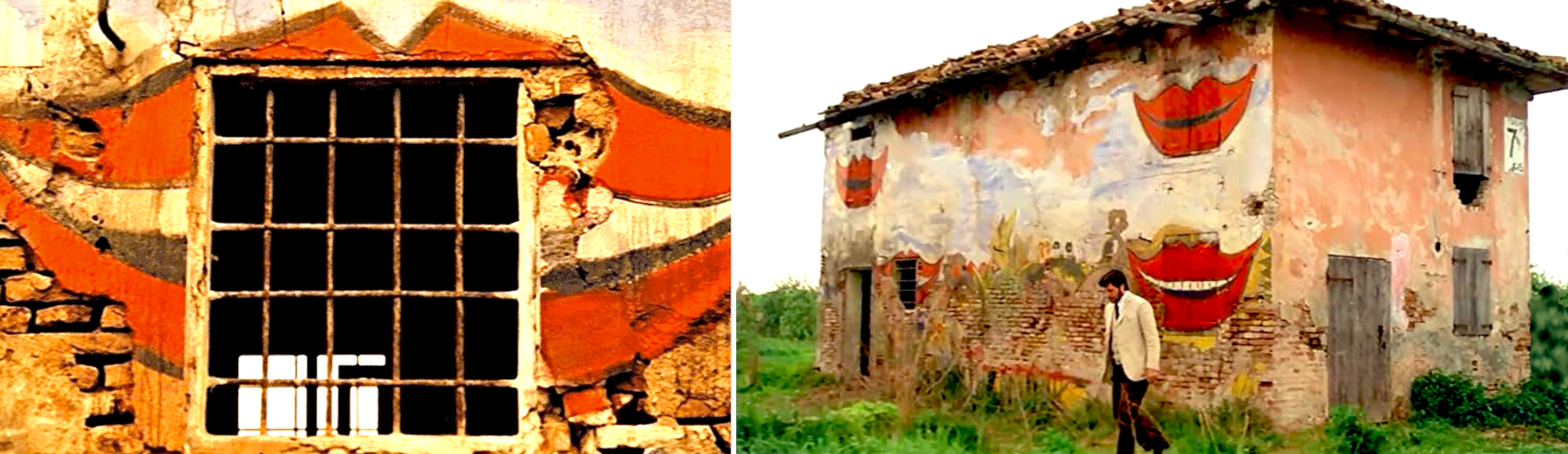
And then there’s the actual ‘house with the laughing windows,’ which isn’t the Inn or the rickety house Stefano moves into but another building painted in an odd way. Smiling female lips with red lipstick lips cover the rustic windows. The structure is otherwise a derelict, with peeling paint and fallen plaster. It suggests that the real menace in the past wasn’t exactly the mad painter, but …. — no spoilers.
The mad artist made use of an old German wire recorder left behind by the German SS troops. A recording on it presents a feverish voice that chants a litany about ‘blood and color.’ Stefano decides that it is the artist’s ghost-voice from the past, a Gothic holdover; it gives Stefano doubts about everything. Is the old woman upstairs really paralyzed? Is the grinning Lidio as harmless as he looks? Why does the chauffeur Poppi volunteer information about murders and pits full of victims? Poppi uncovers bones just below the surface — are they from WW2 or have they something to do with the mad artist’s ravings? Who destroys the painting in the church, right after Stefano has restored it?
So many unanswered questions make us think that Pupi Avati’s intent is to generate a numbing anxiety. One character’s announcement that he’s cleared the marshes of eels feels suspicious … and then later on in the movie, the priest hooks one while fishing.
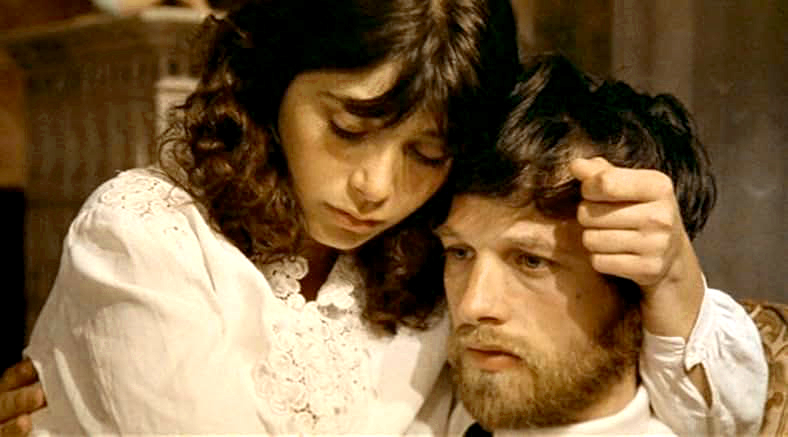
Stefano maintains an even strain, yet he earns a ‘D’ for horror film common sense. He doesn’t secure important evidence, notify anybody back in the city, or even take safeguards to protect Francesca. But the show does unfold an interesting, perplexing mystery. Some questions are answered, in a requisite violent ending.
As Stefano, popular actor Lino Capolicchio has a dignity and intelligence that many Giallo heroes lack – he’s no pushover, nor is he easily spooked. Francesca Marciano is an interesting beauty about whom we care the minute she walks onscreen. Besides her acting career (Pasqualino Settebellezze), Ms. Marciano also wrote and directed films.
The show did reasonably well, which says something good about Italian audiences — the Avatis go easy on the exploitative elements and rely on pure storytelling to keep viewers interested. When typical horror situations do arise, Avati mostly shows us their aftermath. We are left to imagine most of the terror and suffering.
Here’s Eli Roth on The House with the Laughing Windows:
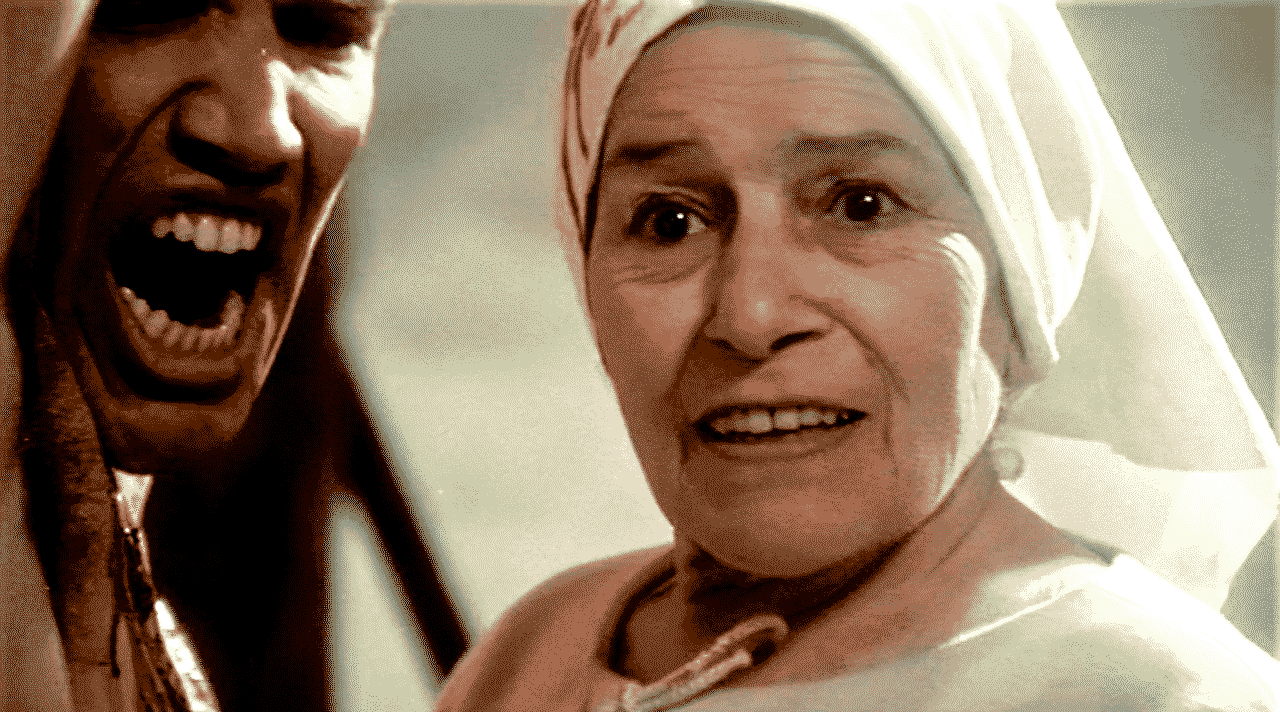
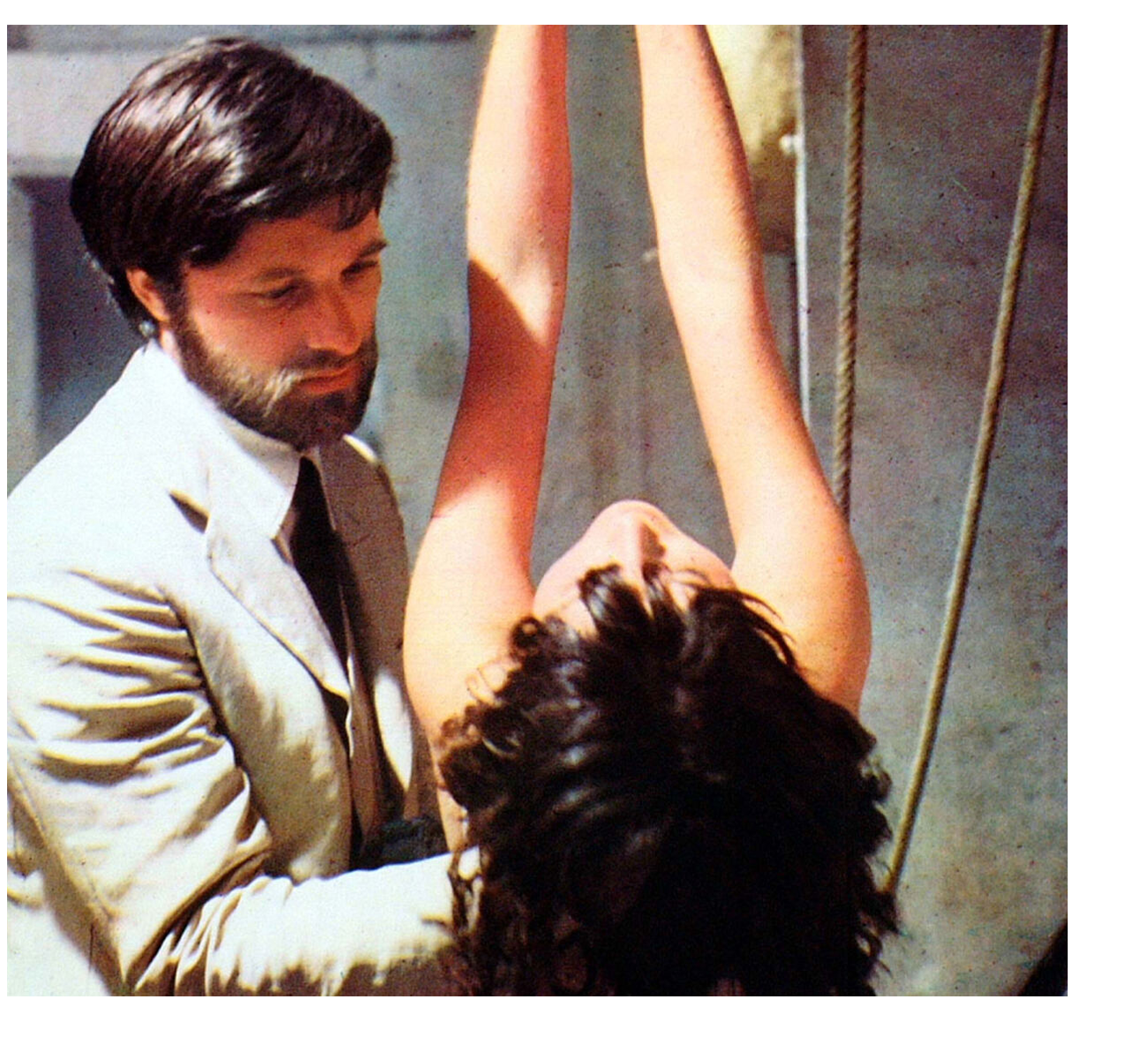
I finally watched this movie last night, and while I admit I’m way late in the “Pupi Avati fandom”, I found this movie to be so underwhelming that I can’t see what’s so special about it. Its got good performances and excellent atmosphere, so that’s a plus. So what’s the problem? The answer: the script! It plays like a first draft in need of a heavy rewrite. Say what you will about Bava or Argento or Fulci, or even their second running cousins Lenzi, Martino and Bava Jr. (i.e., Lamberto), even when their films have inconsistent plots and convenient resolutions, the movies still flow naturally and the big “reveals” in the third act of their films are usually memorable. With Avati’s film, it really has no idea what it is: is it a giallo thriller…or a supernatural ghost story of sorts…or a weird conspiratorial cover up story??? Some would claim all three, but…well, its neither. And, while the first and second acts are slow to the point where nothing much really happens, when we get to the third act it picks up momentum enough to keep your attention. Despite that, everything that happens beforehand is left unexplained or tossed aside as if it means nothing, as if Avati really didn’t want to pay any attention to certain story elements that happened previous that should line up…or, at least, hang together like any other fractured giallo! And the ending is no big whoop either. As much as I like Avati’s later film “Zeder”, which takes the zombie genre and gives it a nice spin, “The House With the Laughing Windows” is a so-so time waster that is all art-pretension style and so very, very, very little substance. It’s certainly not terrible…but it’s certainly not all that memorable either.
“The House with Laughing Windows” is scary as hell but also somehow beautiful. The plot holes and contrivances that are a convention of horror and giallos are present, but they’re easy to ignore because it’s all so involving. And Lino Capollicchio is the rare actor who makes decency interesting. Hes’s a perfect leading man for this show. The extras help to explain how all the weirdness is a metaphor for the corrupting effects of fascism on communities — something Pupi Avati and his brother grew up with in the 1930’s-40’s. It’s basically a giallo/horror/political conspiracy mash-up that concentrates on mood and atmosphere.