
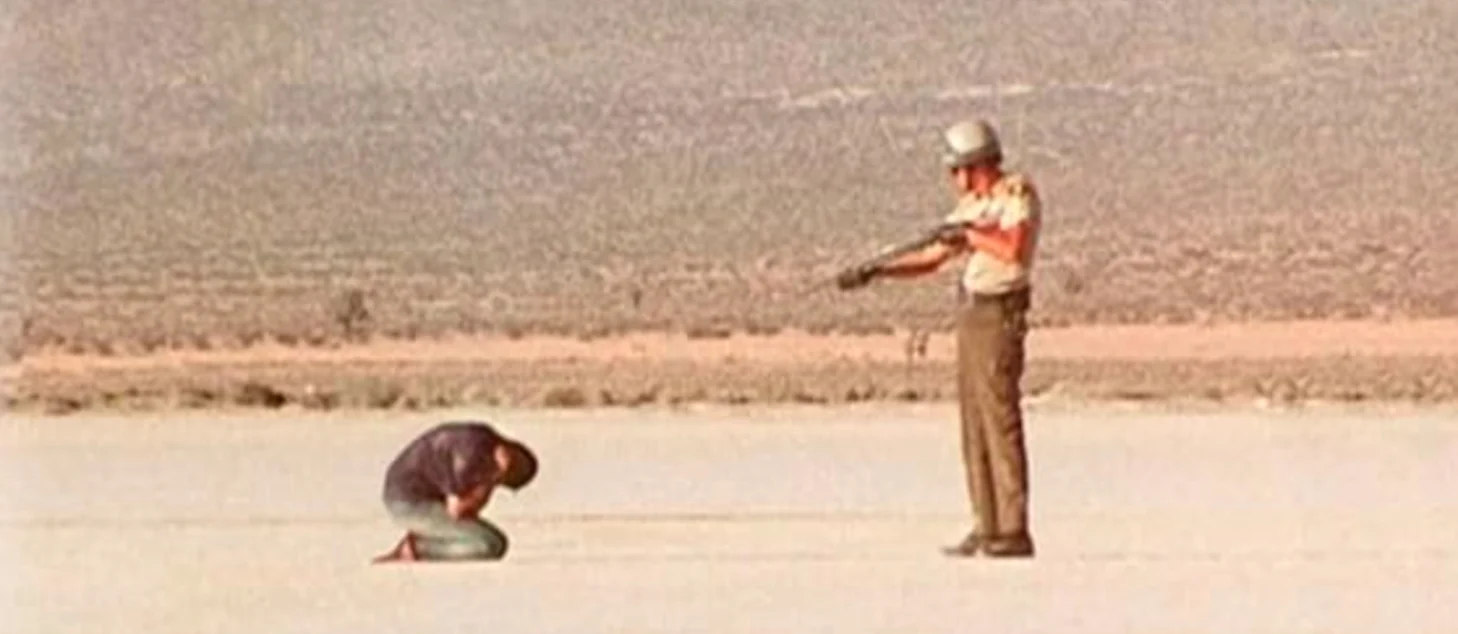
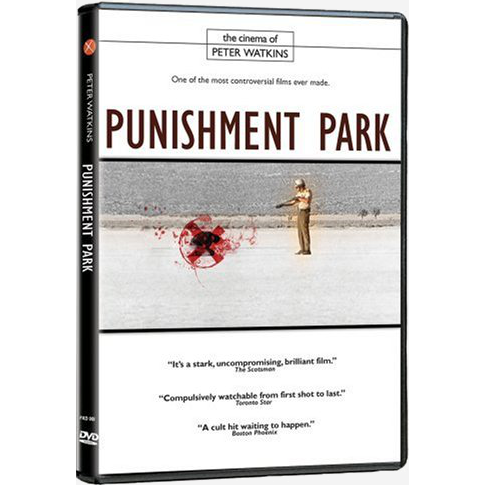
Sci-fi fantasy has a nagging habit of becoming reality, even political Sci-fi fantasy. Back in 1970, some regarded a wave of anti-war, anti-Nixon violence as a call to revolution. English filmmaker Peter Watkins responded with Punishment Park, a pseudo-documentary that underscores the existence of the McCarran Internal Security Act, a 1950 statute that became law despite a veto by Harry Truman. The law has never been put to use. Punishment Park imagines that its implementation would lead to gross abuse by self-styled patriotic zealots.
Watkins’ film also predicts a culture warped by media distortion — the political circus becomes a literal ‘reality show.’
The firebrand filmmaker Peter Watkins made history in the 1960s with British television documentaries that challenged what the staid BBC would broadcast. Watkins’ Culloden was an account of a famous historical battle from the point of view of common soldiers, imagining what they would have said if a modern news camera were trained on them. The fanciful tactic had been made famous by You Are There, an award-winning 1950s TV show hosted by Walter Cronkite. As if covering the news, TV reporters documented famous historical events like The Alamo, the execution of Joan of Arc, and Benjamin Franklin’s kite experiment.
Watkins’ next BBC production The War Game became a political bombshell. a chillingly realistic pseudo-doc about the effect of a nuclear attack on England. Its aim was to show the futility of civil defense measures and the idiocy of rhetoric about manageable atomic conflict. It had wrenching, taboo-defying images: buckets of wedding rings from radiation victims, English policeman arming themselves to execute looters. The BBC refused to air the film because it was ‘too disturbing.’
Our PBS public television showed the controversial The War Game when the BBC would not. Watkins’ next productions didn’t find an audience. He won distribution by Universal for his political fantasy Privilege, about a rock star so popular that he becomes a religious figure. It may have inspired American-International’s exploitative political fantasy Wild in the Streets, in which a rock star runs for President. Both movies predict the rise of entertainment celebrities becoming ‘unqualified’ political powers.
Watkins then went militant with a Swedish production called The Gladiators. To settle regional disputes, the United Nations conducts ‘war games’ in which selected elite soldiers from each side fight to the death in a restricted combat zone. Again predicting Reality TV, news cameras turn the conflict into a television show seen world-wide. The movie is clever and convincing, but lacks a strong storyline. I don’t remember it receiving wide distribution; we saw it at a special UCLA screening in 1971. An American distributor showed it in Ackerman Union, perhaps to gauge student interest.
A radical leap forward.
Punishment Park saw itself as a direct reaction to a perceived repressive swing in America, when the Nixon administration vowed to crack down student dissent in the name of the Silent Majority. By 1971 we’d seen the brutal police attacks on protesters in Chicago, the murders of Black Panther leaders and the shooting of Kent State students by the National Guard. Watkins wanted a project that would express the political mess in confrontational terms. He found it in reactionary editorials encouraging the President to utilize old laws still on the books, that would allow the suspension of Civil Rights. It didn’t take much imagination to whip up a paranoid fantasy.
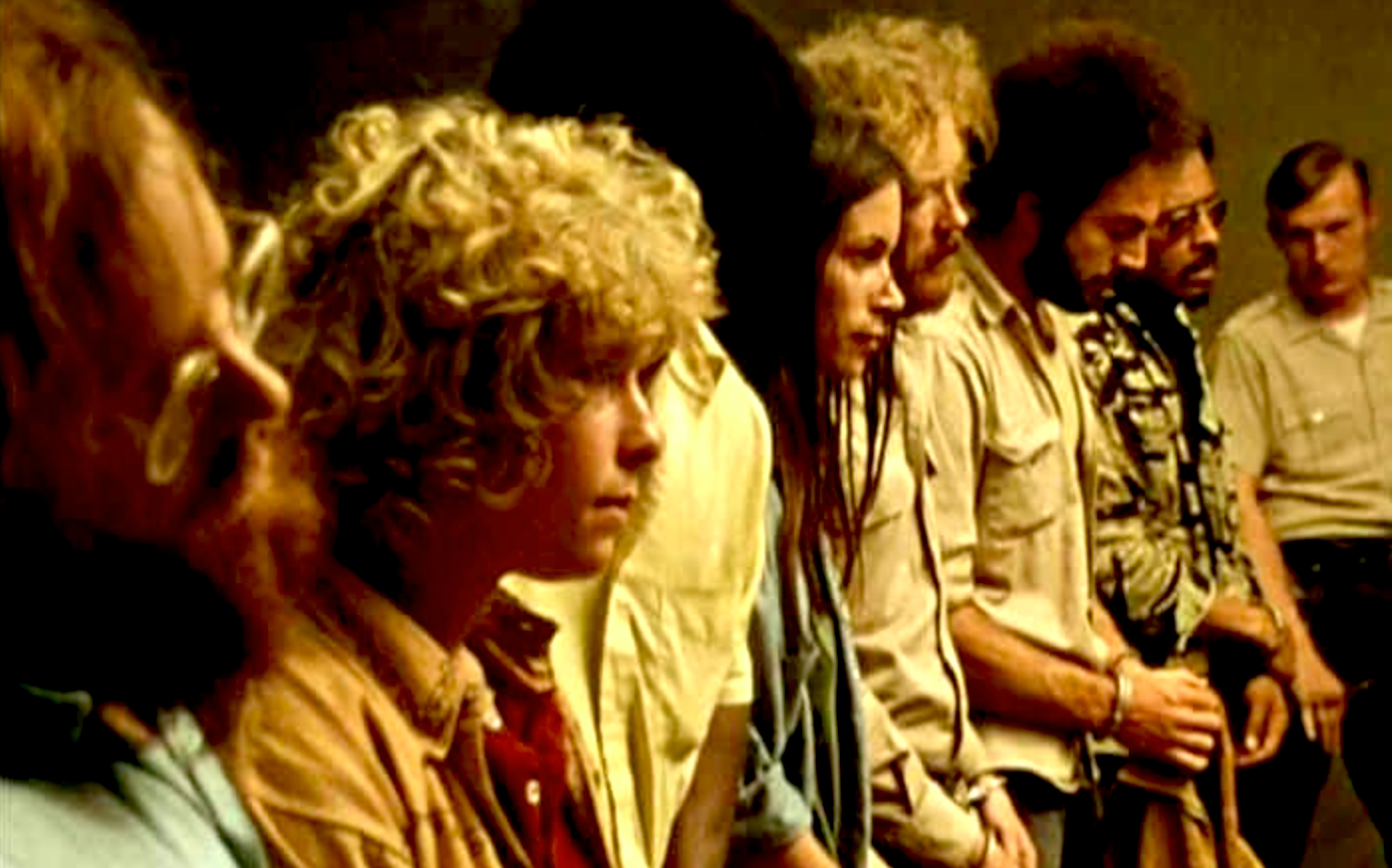
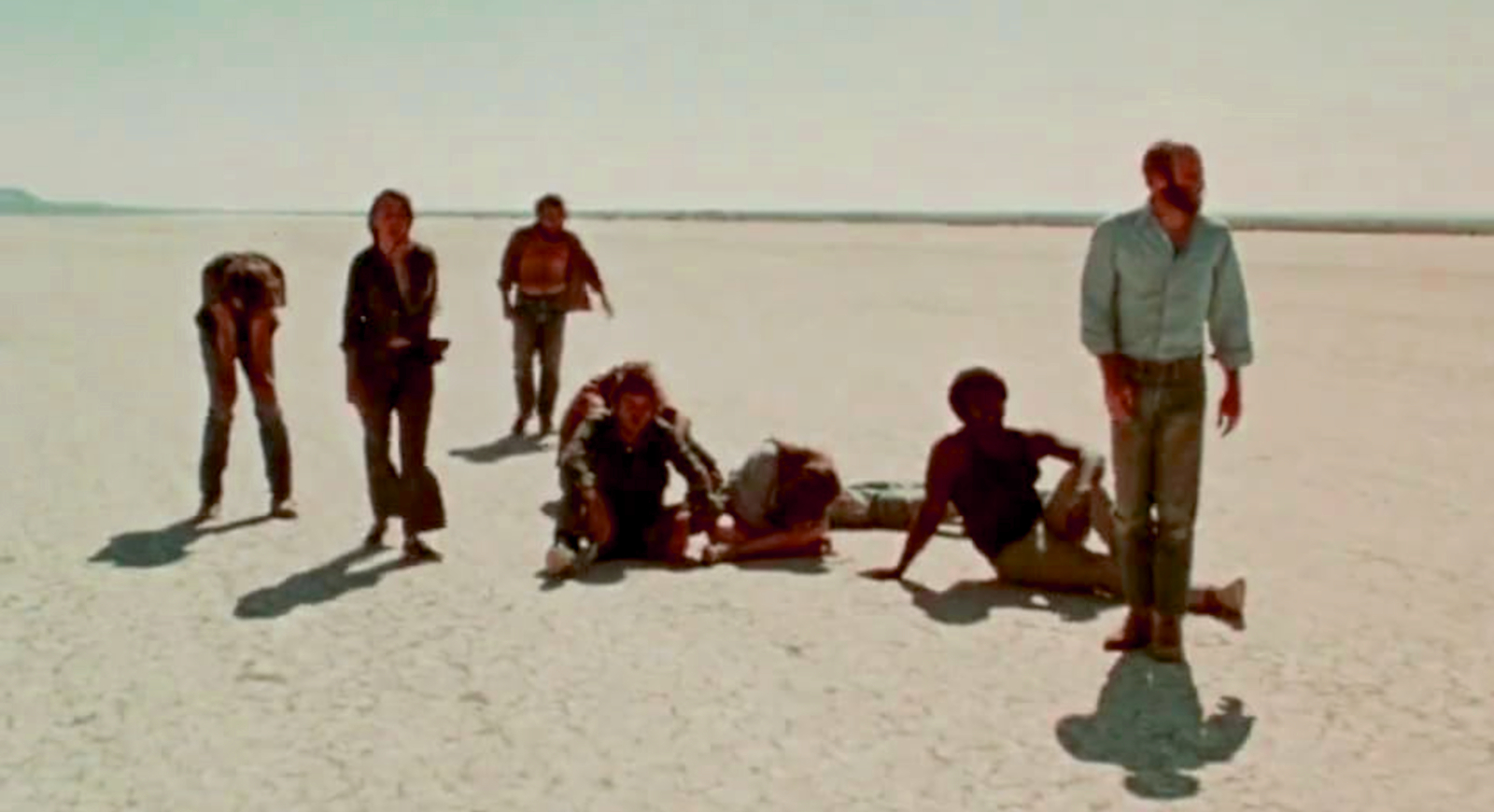
The setup is not at all subtle. With resistance to the Vietnam War increasing, President Nixon activates provisions in the 1950 McCarran act. Detention centers are set up to receive undesirables deemed a threat to national security. In California’s Mojave Desert, over-zealous enforcers go a step further: dissidents are summarily convicted and given the choice of long prison terms or a 3-day ordeal in ‘Punishment Park.’ Intercut with interrogations of belligerent, sullen detainees, a TV crew films a group of Punishment park ‘volunteers’ embarking on a 53-mile hike across a desert where daytime temperatures soar over 100 degrees. The detainees include draft evaders, protesters, political activists and a couple who attended a poetry reading. The vague rules give them three days to reach a flag while avoiding capture by law officers and National Guardsmen in training. Some of the detainees believe that the ‘game’ is simply a pretext for murder.
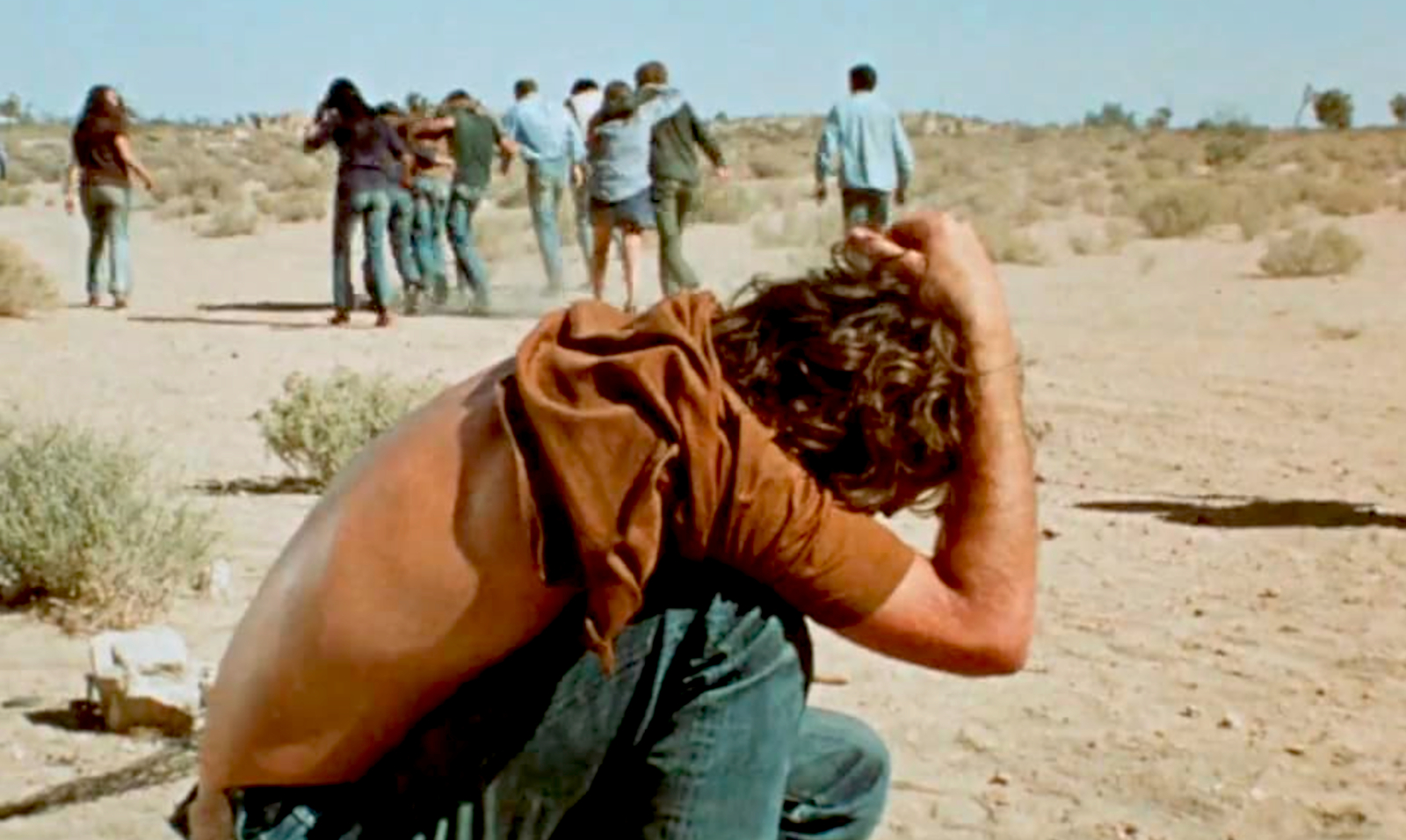
Punishment Park doesn’t bother to form a ‘reasonable’ liberal argument. It’s an angry scream of a movie that makes most modern activist films seem like soft soap. An old Cold War law legitimizes the formation of political concentration camps. Watkins connects the dots to imagine what a political death camp, California-style, might be like.
The premise is a paranoid adaptation of Richard Connell’s oft-told short horror story The Most Dangerous Game. Staffed by right-wing appointees, the Punishment Park tribunal creates a semblance of legal process. We see the young policemen and National Guardsmen being over-prepared for the use of deadly force against people presumed to be Enemies of the nation. The ugly irony is that the film’s exaggerated extrapolations soon became a reality in two South American countries.
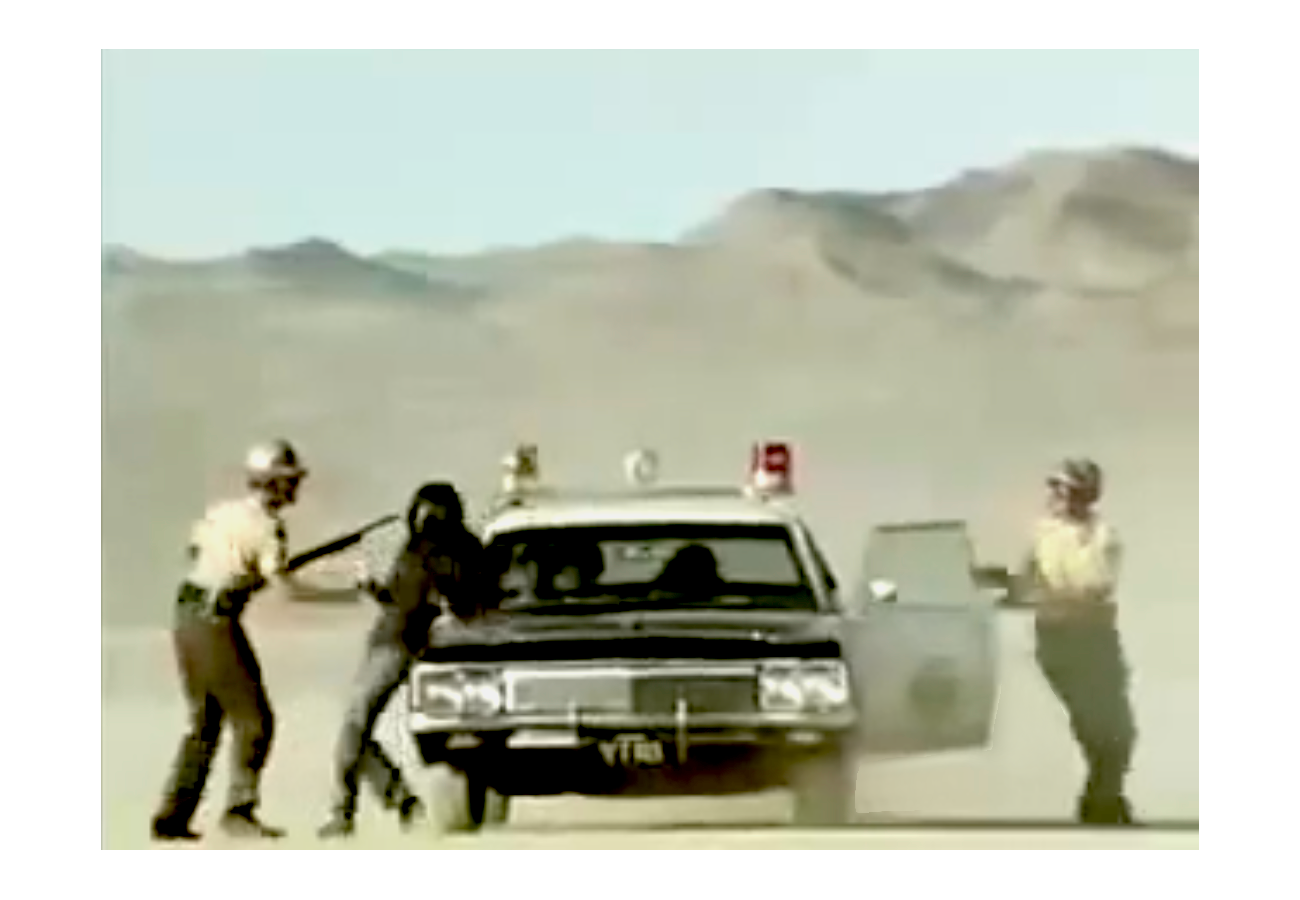
Already deeply stressed, the prisoners are given a two-hour head start. They are not told what the police will do to apprehend them, beyond a vague statement that forceful resistance will be met with force. The armed police make it clear that the Punishment Park Run has no rules, that the detainees are all foxes in a hunt.
Important point: the hunters don’t care what the news camera covers.
Just as in his earlier pseudo-documentaries, Watkins’ handheld camera adds to the sense of ‘reality’ in the desert chase. The images we see represent the filmed record of a foreign television crew. The police and soldiers pay little attention to the film crew. Do they know something the news people don’t know?
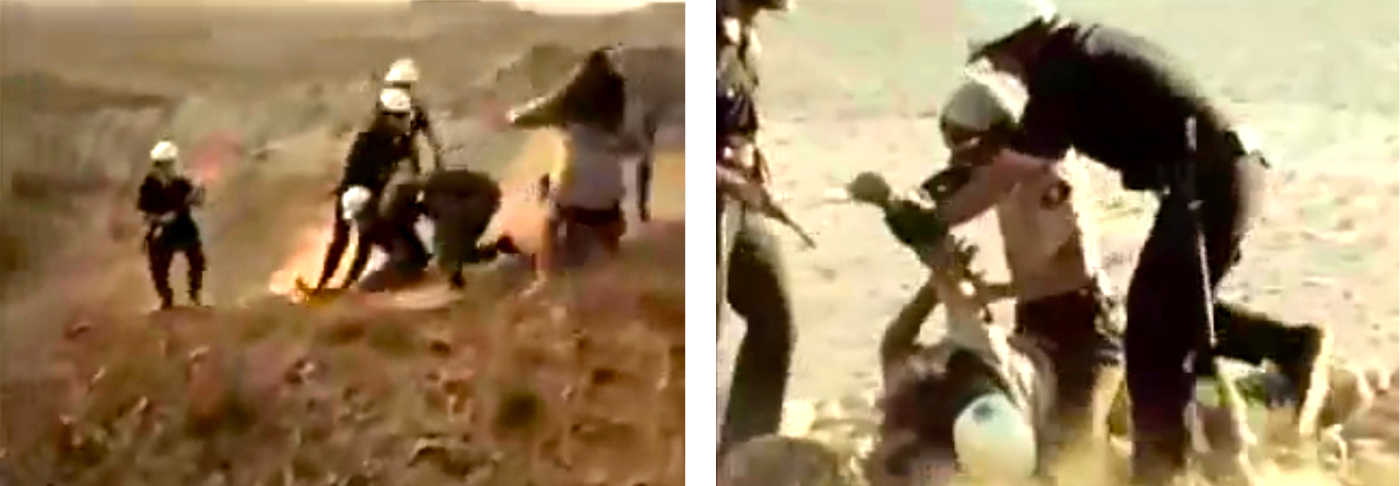
Things go very bad almost immediately. Several of the more cynical and rebellious dissenters refuse to play the game. They hang back, murder the first pursuing officer and take his weapons. The outraged police immediately decide that deadly force will be used. But did the hunters ever plan to follow ‘rules?’ They cheat from the beginning, with a lie that water will be provided at the halfway point. We have to assume that nobody is expected to survive. Punishment Park eliminates dissidents, and trains lawmen to be as merciless as SS Nazis.
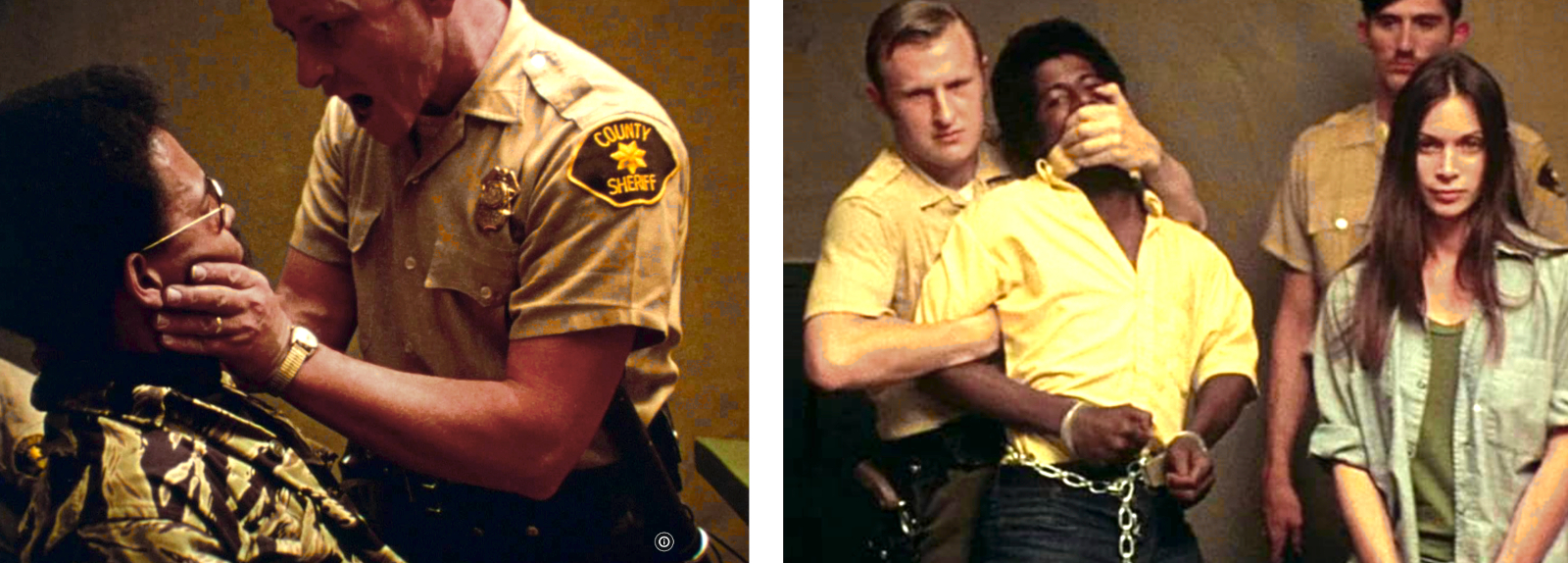
The desert action is believable but the strongest material is back in the trial tent where the next group is being interrogated. Watkins’ first plan was to make a movie about the trial of the Chicago Seven, and the same kind of confrontational rhetoric is used here. The judges accuse and condemn each defendant of basically being what they are, unhappy malcontents. Some dissenters openly defy the tribunal with obscenities and counter-threats, and are beaten and gagged. Women defendants are judged as anti-American for being defiant, unrepentant, and foul-mouthed.
As the outcomes are pre-ordained, the trials are a sham. On their refreshment break, the judges voice their pride in saving the country from these destructive elements. They insist that their own children back home are ‘under control,’ and have nothing in common with the radical detainees. One female tribunal panelist is eager to see them all sent to ‘The Park.’ The very name is meant to instill fear, like ‘Alligator Alcatraz.’
Is Punishment Park credible? It seemed a little overwrought in 1971, when checks and balances were in place to curb Presidential excesses. We never thought the country was in danger from a leftist revolution, or from a right-wing power grab as postulated in the book and film of Seven Days in May. Watkins pushes his metaphor just far enough to raise hackles and expose raw nerves. His film is neither fair nor open-minded — it’s meant to agitate.
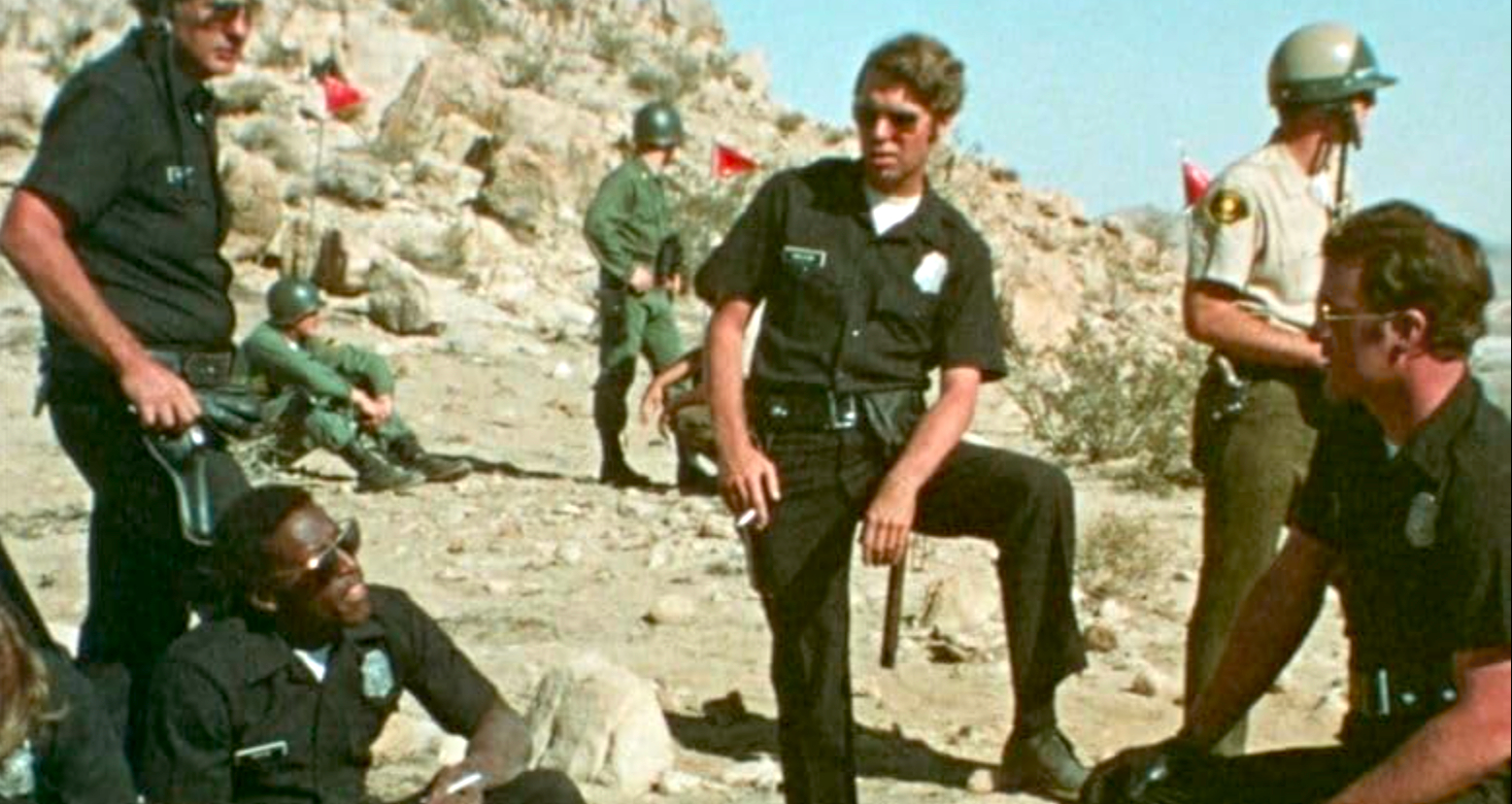
Watkins claimed that his cast of non-professionals included some that fully supported the rhetoric of their characters, on both sides of the ideological divide. Much of the ‘script’ was improvised. One police commander seems all too authentic when he demonstrates the lethal utility of pistols and shotguns. He proudly voices his eagerness to mete out justice to the enemies of his country.
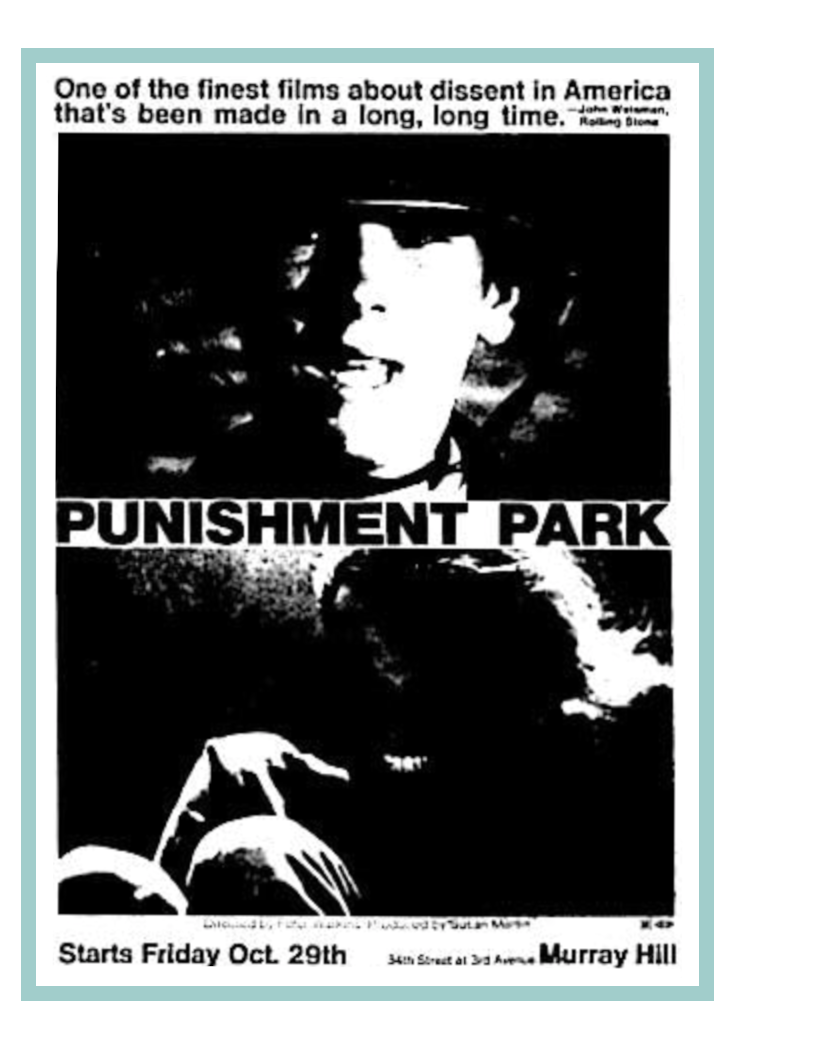
Punishment Park remained a counterculture obscurity. As with The Gladiators, New York bookings did not lead to a wider release, after which it was screened only infrequently at film festivals and film studies classes. The Hardy Encyclopedia of Science Fiction called it “the most successful of Watkins’ interrogations of the present through reconstructions of the future,” and “a powerful and despairing, if occasionally muddled, indictment of the possibilities of repression in America.” I learned about Peter Watkins only through film journals. I don’t remember any screenings of Punishment Park before its 2005 debut on DVD. Yes, it is obviously more relevant now than ever before, even if it refuses to be ‘Fair and Balanced.’
This writer has always favored liberal politics in movies, especially in pictures that communicated an honest outrage — They Won’t Forget, Try and Get Me!, Lost Boundaries, Strange Victory. A few years ago, a respected genre critic summarily dismissed Costa-Gavras’ “Z” as an incompetent thriller of little interest. That movie changed a lot of hearts and minds for the better, which makes it far more important than most. We still believe that it’s a good thing when a brave picture dares to say something worthwhile.
Watkins’s film may be the most important (and prescient) film of the 1970s. Available for a long time on an excellent blu ray by Eureka! Masters of Cinema series (that unfortunately now goes for $344 on Amazon). Switch the time-line to 2026 America and Watkins’s vision seems to be playing out in Minneapolis and other places where Trump’s ICE minions are operating. That Brit sure had his pulse on America’s right-wing machinations from the Silent Majority to Guantanamo to Trump 2.0!
Thanks for bringing this film back into the present which sadly resembles it more each day! I discovered Peter Watkins through late night screenings of CULLODEN and THE WAR GAME on a regional German TV channel as a teenager & for fifteen years couldn’t find anybody to talk about them because nobody else seemed to know about these films.
They left a huge impression on me, first on an emotional level, but later (thanks to VHS!) also because of their high level of storytelling craft (on what must have been a pretty low budget). I think in a more just world everybody who knows the films of, say, Lester or Godard should also know of Peter Watkins.
Apart from PUNISHMENT PARK also definitely worth seeing are his film on Edvard Munch and his last work, LA COMMUNE.
By the way: as the Eureka disc of PUNISHMENT PARK seems to very expensive if one can find it, there also are German DVDs & Blu-Rays of the film (with English sound & lots of bonus stuff) under the title STRAFPARK which are apparently region free according to the OFDB site.
Please keep up the great work, Glenn, big fan here!