
Support Trailers From Hell with a donation to help us reduce ads and keep creating the content you love! Donate Now
Trailers
From Hell.com

La tête contre les murs

by Glenn Erickson Jun 20, 2026

Head Against the Wall.  Georges Franju’s first feature adapts a novel protesting the French system of mental health asylums — and breathes poetry into every scene, with images that evoke more than what meets the eye. Young star (and screenwriter) Jean-Pierre Mocky is a spoiled punk locked away by a vengeful father. There’s no appeal: doctor Paul Meurisse’s human approach is overridden by that of doctor Pierre Brasseur, who revels in his power as a jailer. It’s a strong directorial debut, with standout performances from Anouk Aimée and Charles Aznavour, plus the remarkable first screen appearance of the legendary Edith Scob.


La tête contre les murs
Blu-ray
US Radiance Films
1959 / B&W / 1:37 Academy / 95 min. / Street Date June 22, 2026 / Head Against the Wall / Available from Diabolik DVD / 27.99
Starring: Pierre Brasseur, Paul Meurisse, Jean-Pierre Mocky, Anouk Aimée, Charles Aznavour, Jean Galland, Jean Ozenne, Thomy Bourdelle, Edith Scob.
Cinematography: Eugen Schüfftan
Production Designer: Louis Le Barbenchon
Film Editor: Suzanne Sandberg
Composer: Maurice Jarre
from the novel by Hervé Bazin
Adapted by Jean-Pierre Mocky dialogues by Jean-Charles Pichon
Produced by Jérôme Goulven
Directed by
Georges Franju

Radiance’s sparkling presentation of Georges Franju’s first film clears up its mysteries with a couple of choice extras. In 1958 Franju was a well-known director of short subjects, most of which mixed reality with the fantastic-surreal. Franju’s shocking The Blood of Beasts gained immortality simply by showing viewers where their food came from, while demonstrating that cruel assembly line butchery is a human routine. Franju’s Hôtel de Invalides contrasts a war memorial and Napoleon’s tomb with the poor treatment of war veterans. Biographical shorts celebrate George Méliès’ magic, and show Madame Curie doing the research that would seal her doom. Franju’s short  La première nuit is a magical, romantic trip into the Paris Metro, a surreal masterpiece that uses no outright fantastic images.
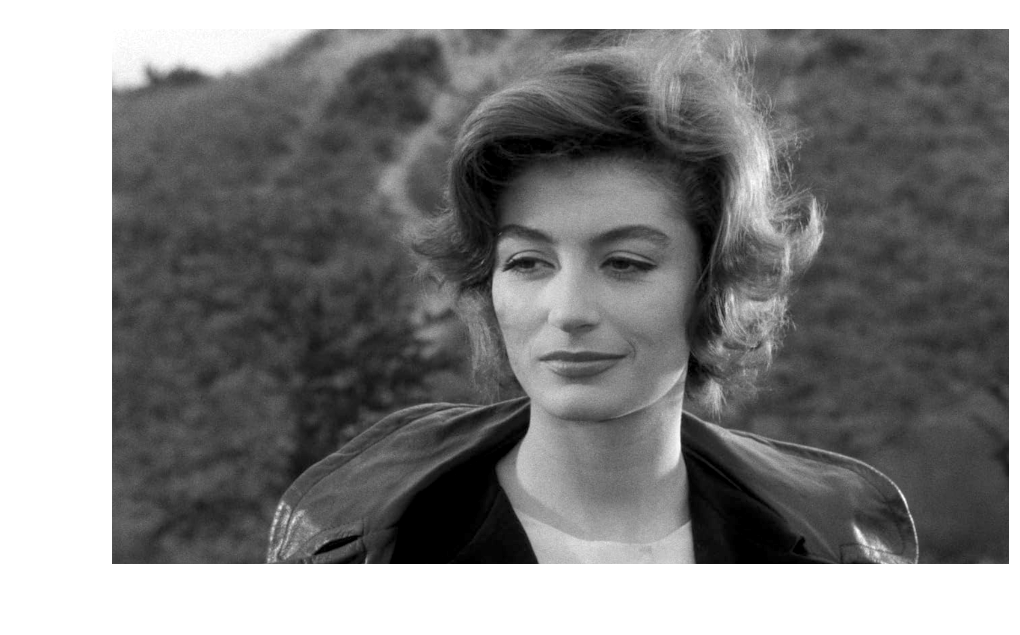
Franju was part of the Old Guard when he directed his first feature, which made him the ideological enemy of the New Wave. La tête contre les murs (Head Against the Wall) was initiated and co-written by its main actor, Jean-Pierre Mocky, who wanted very much to direct. The producers instead looked for a name director. Mocky says that he cast the film, which if true means that he helped Franju find the perfect actors for his next show,  Les yeux sans visage. So much in La tête contre les murs prefigures Franju’s personal ‘filmscape’ that we wonder if Mocky is correct in his claim.
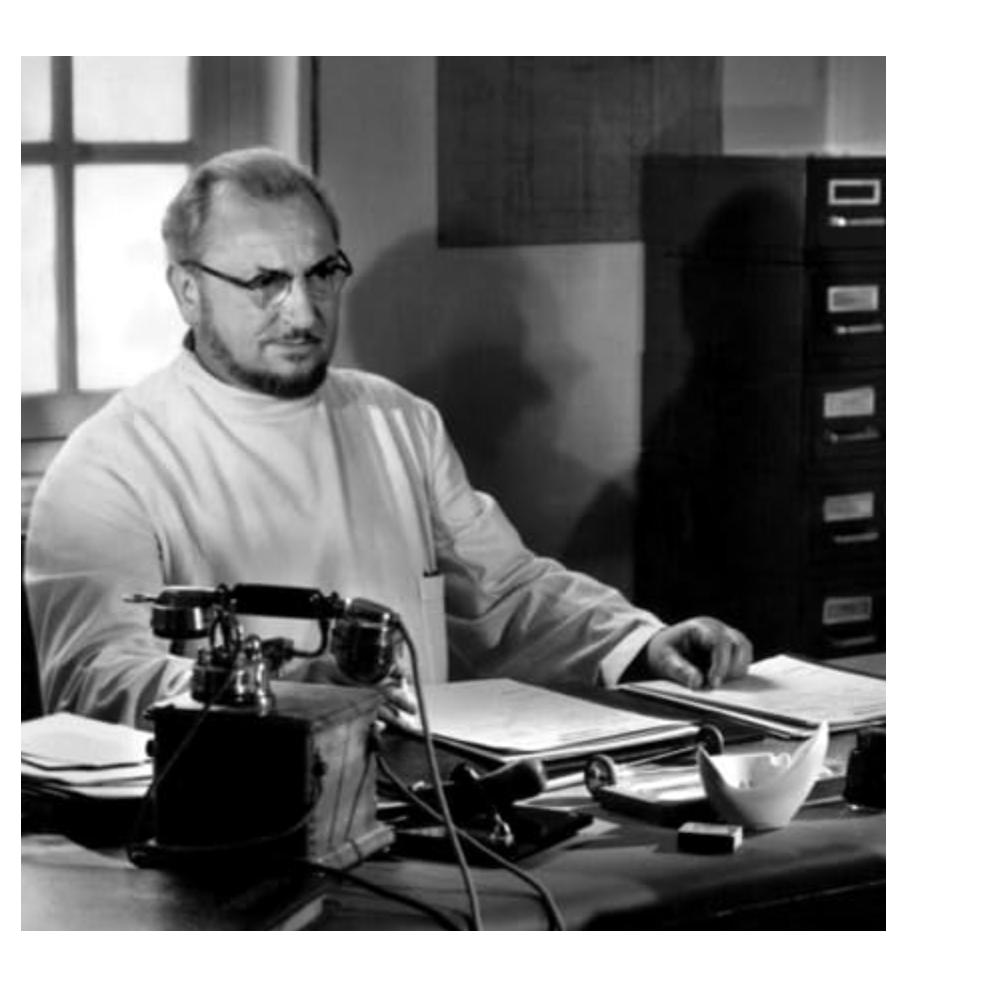
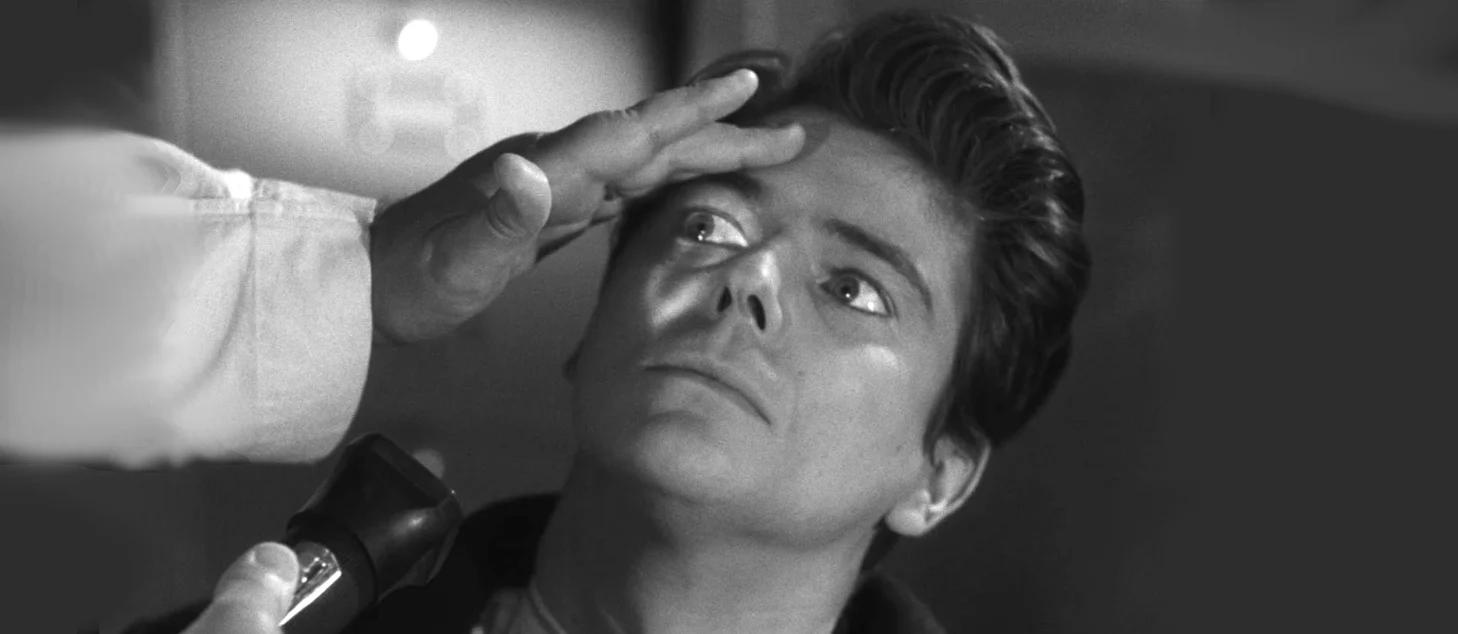
We’d expect La tête to be an ‘exposé’ on the order of Hollywood’s  The Snake Pit. Franju instead delivers a low-key slice of unpleasant reality. Rich kid François Gérane (Jean-Pierre Mocky) has rebelled against his wealthy father. He’s into motocross racing and hangs out with a decadent party crowd. When his friends will no longer give him money to pay his irresponsible gambling debts, he breaks into his father’s chateau to steal some cash. Out of pure malice, he also burns some important legal documents.

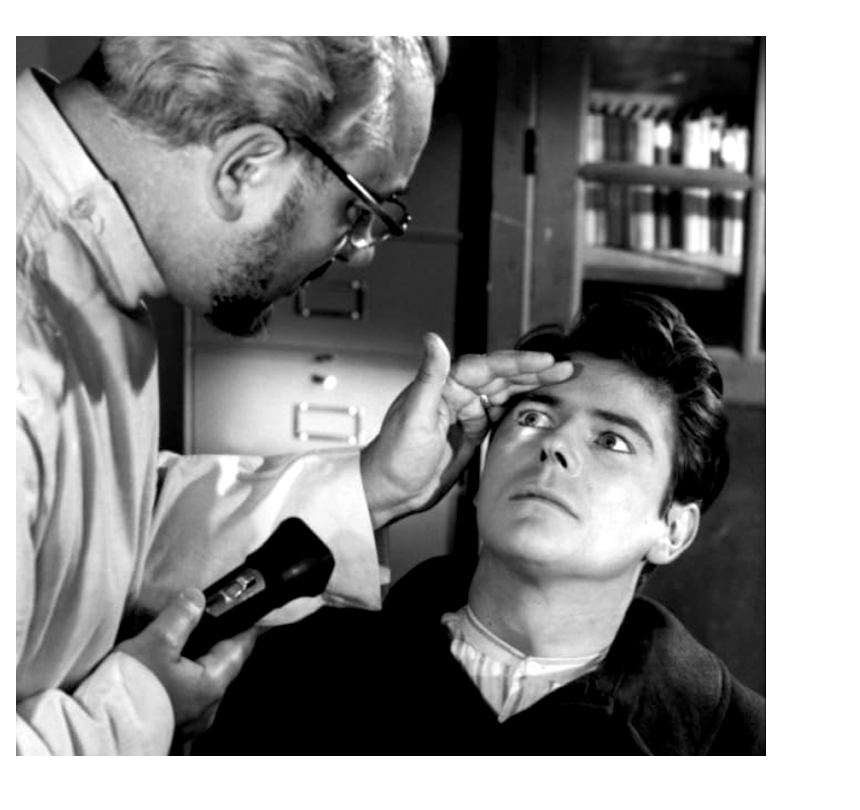
François soon finds himself a new resident of a private asylum in the country. Most of the patients have serious disorders, but his father (Jean Galland) clearly had punishment in mind. The scary part is that the imperious director Dr. Varmont (Pierre Brasseur) sees himself as a caretaker, not a healer. Some of his patients may be dangerous — one runs wild with a saw he has taken from a workman — but most are not. Valmont mentions an incident in which a furloughed asylum patient murdered several people. As far as the doctor is concerned, François is a potential arsonist, and therefore will remain a permanent resident.
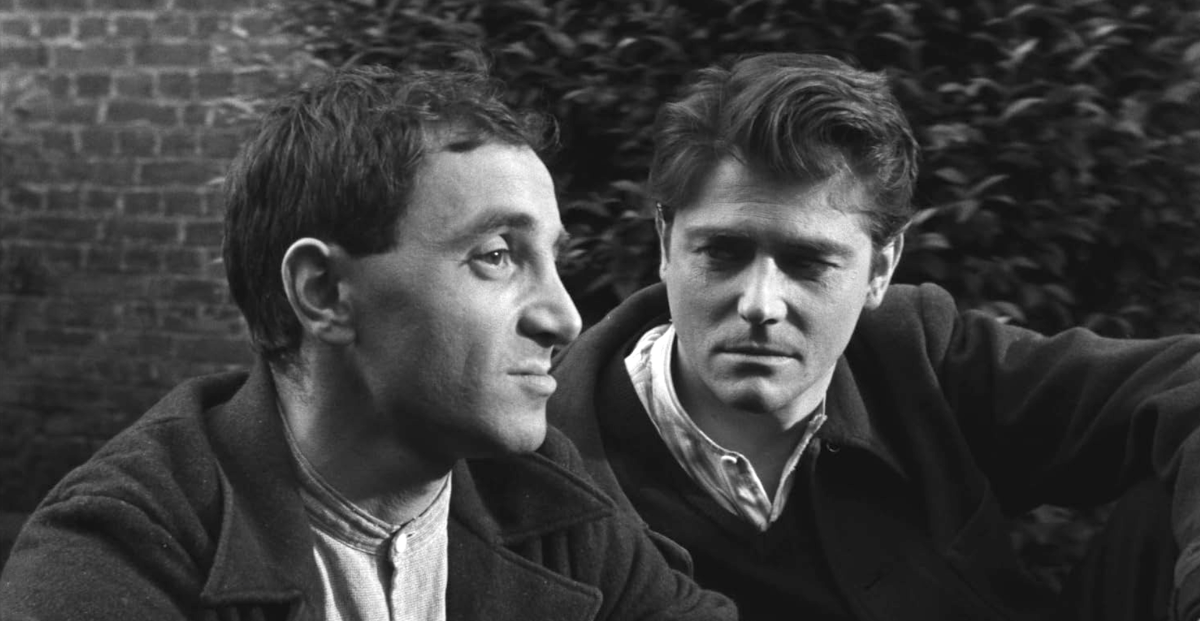
 

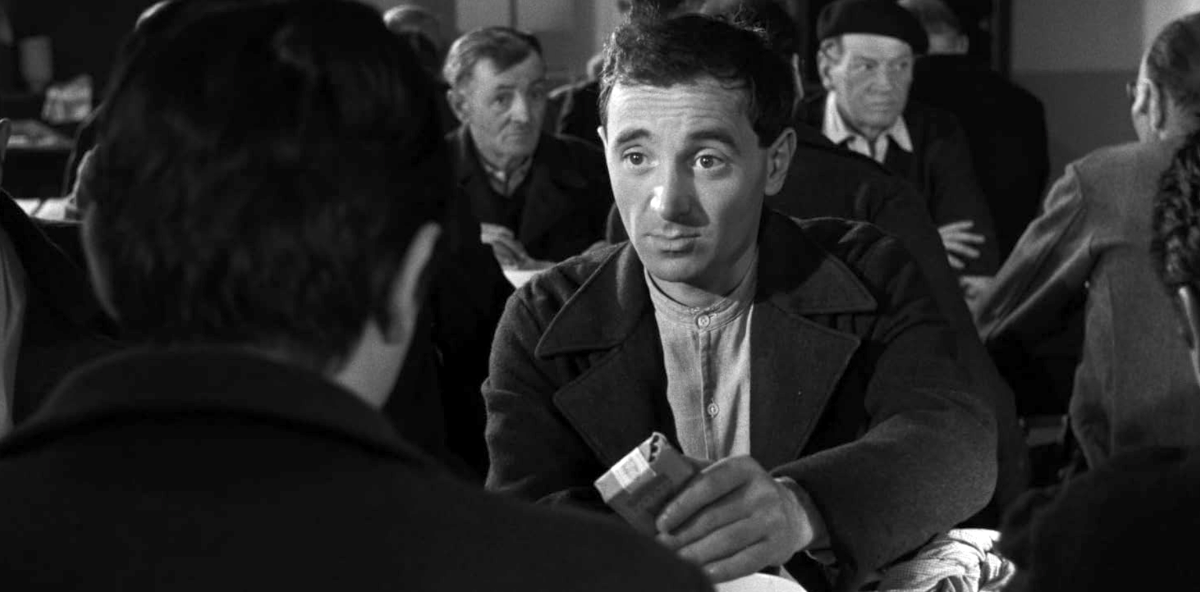
The inmates are mostly a sorry, harmless lot. The most soulful is the sad-faced Hurtevent (pop singer Charles Aznavour), whose only offense is that he suffers from unsightly epileptic seizures. Hurtevant interests François in trying to effect a transfer to the clinic’s other director, Dr. Emery (Paul Meurisse). Emery’s humanist approach is completely different. Hurtevant and François also plot to escape together.
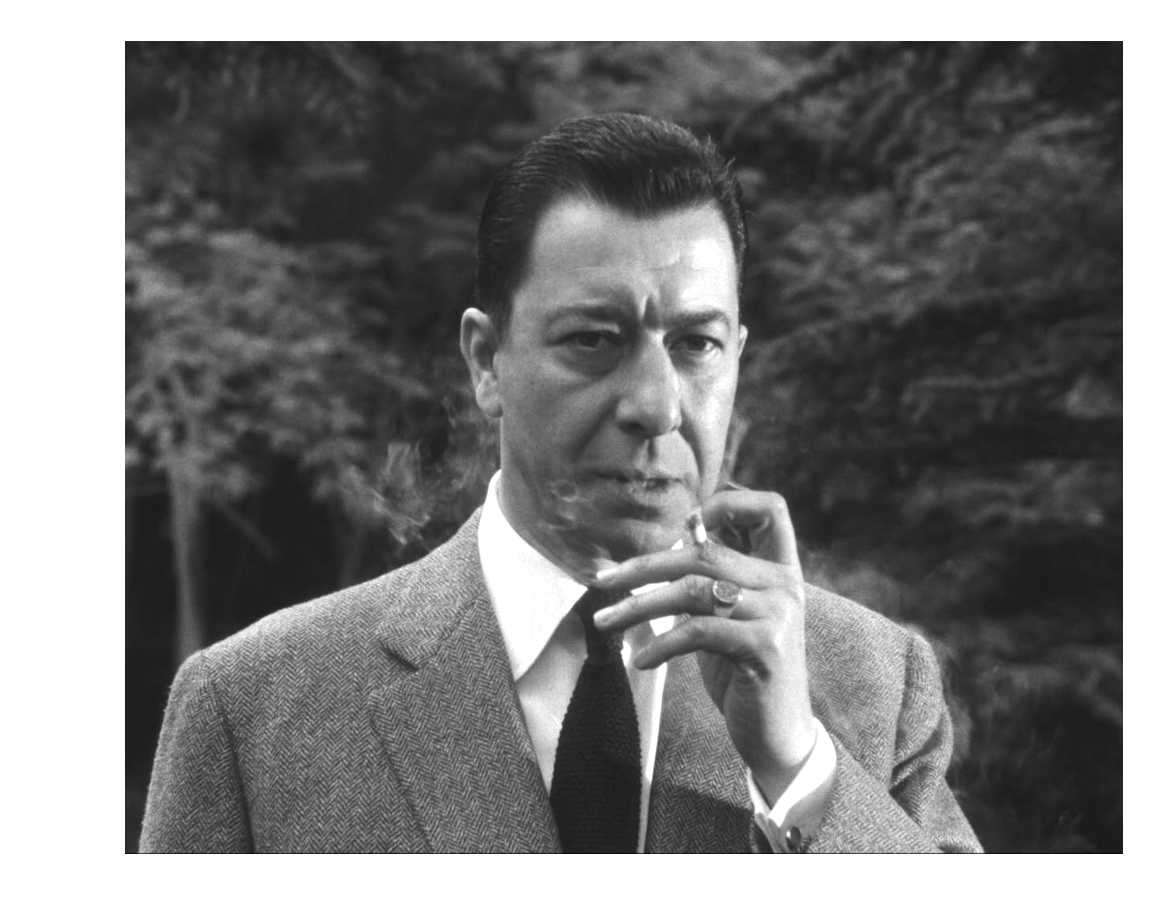
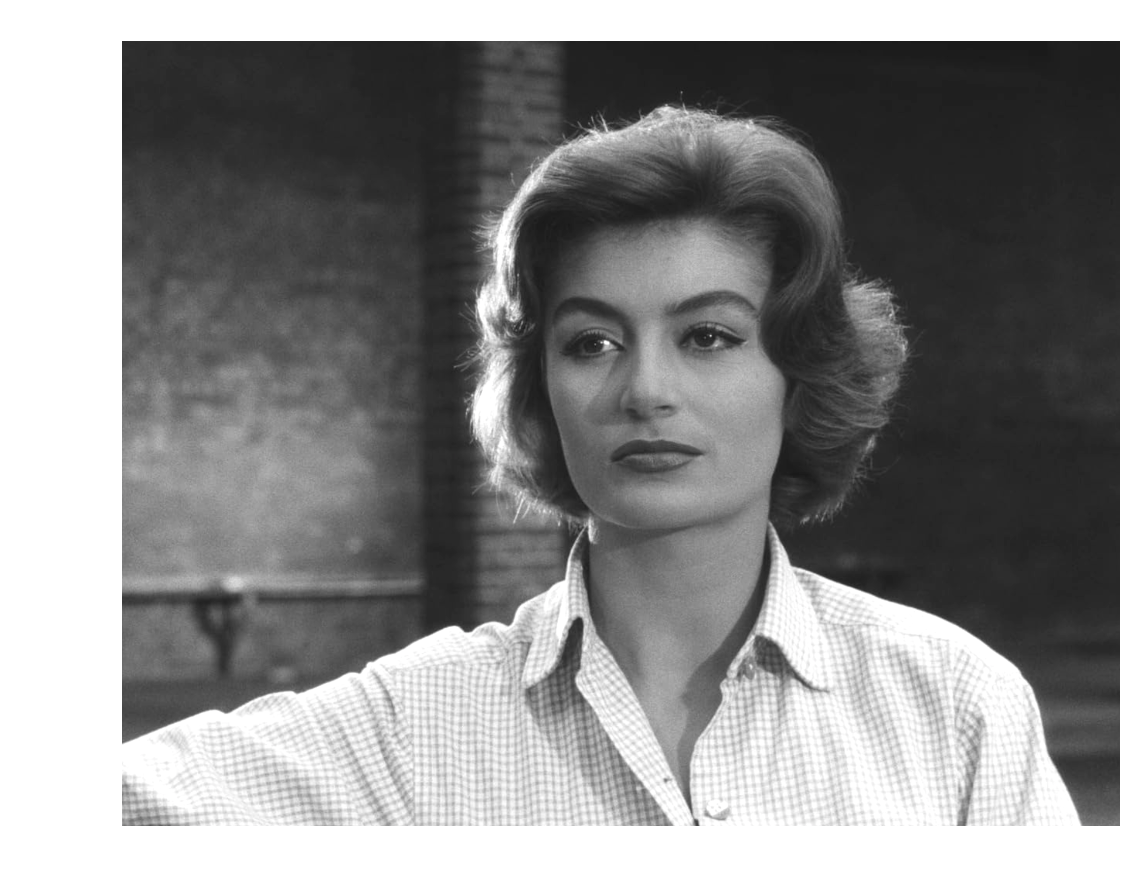
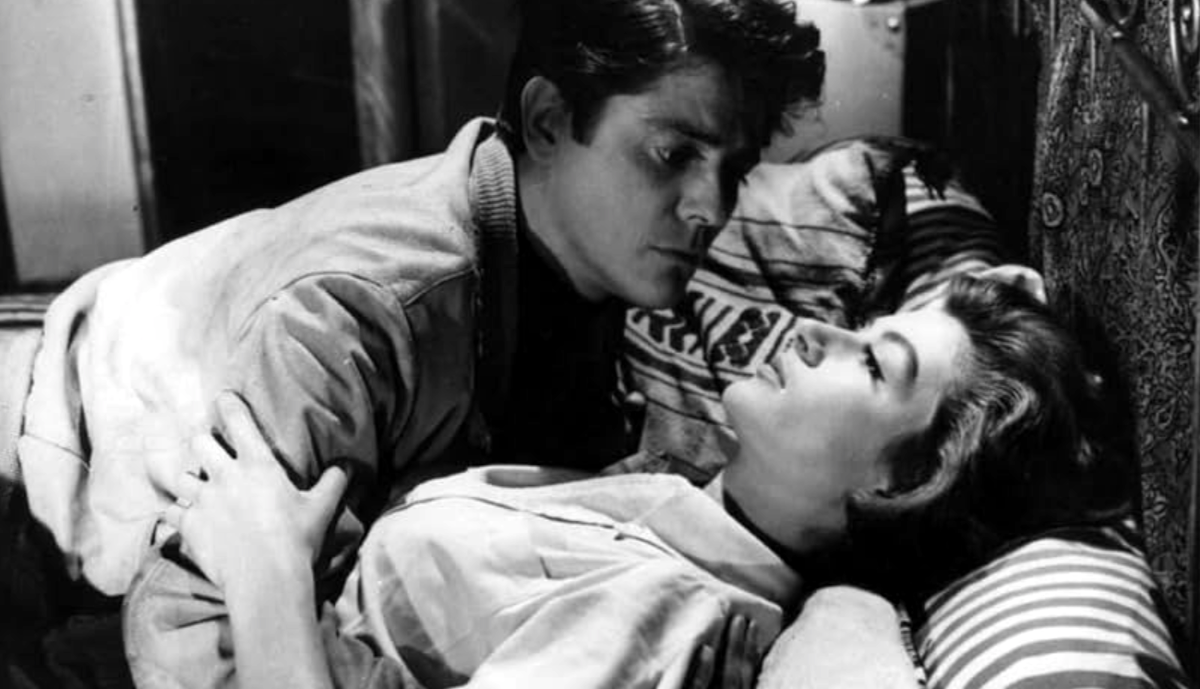
François’ main motivation is Stéphanie (Anouk Aimée), a woman he met the day before he was committed, and who is his only visitor at the asylum. He wants out but has few options. Stéphanie encourages him to make peace with his father. But a meeting goes poorly, with the father convinced that François is beyond redemption.

Escape attempts follow, which confirm for Dr. Varmont that François is a threat to society. The stress makes Hurtevant suffer a seizure, which further demoralizes the sad, inoffensive man. François then connects with another inmate who has a fairly good idea for an escape. In his brief bid for freedom François gets a job at a gambling parlor, The world outside seems changed: the hypnotized, twitching gamblers look just as unhealthy as the worst asylum cases.

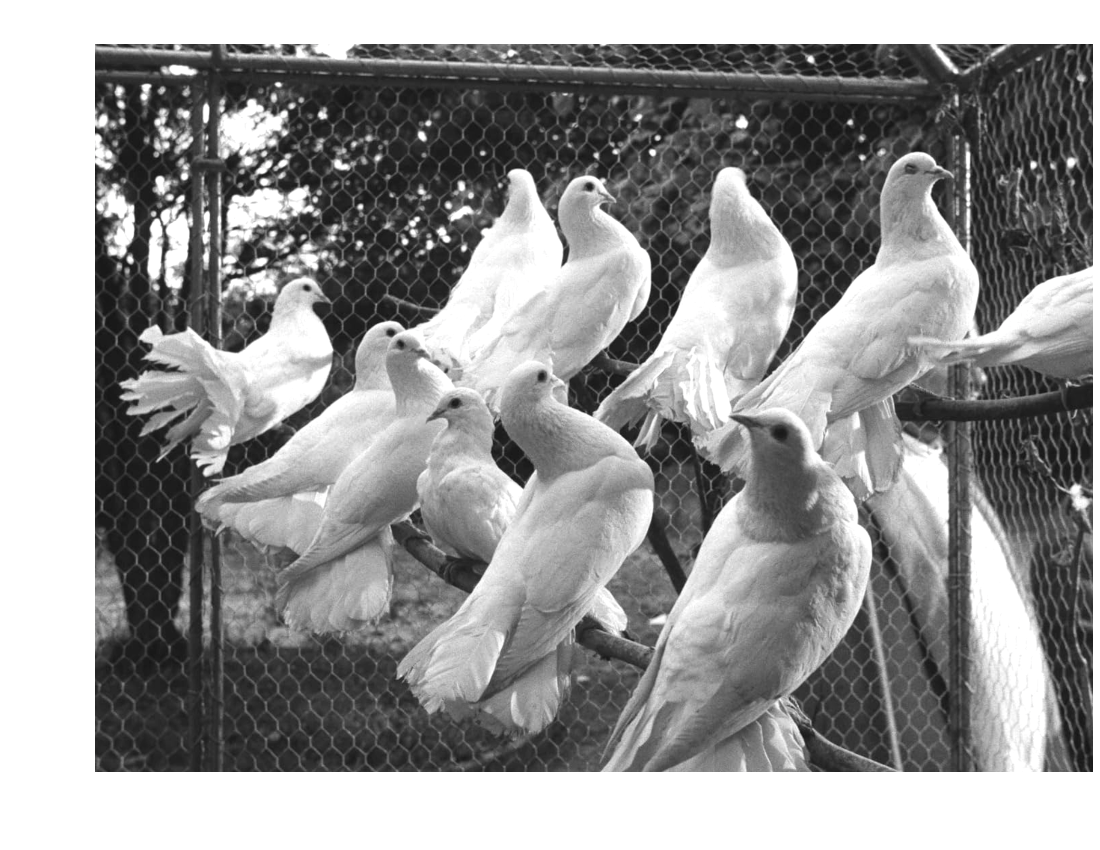
La tête contre les murs is not as strong as George Franju’s later Eyes without a Face or  Judex but it bears the essence of the director’s style and personality. The quiet countryside often looks ominous, and several scenes feature doves — Dr. Emery’s patients care for a large cage of the birds. Dr. Varmont feels very much like a warm-up for Pierre Brasseur’s monstrous Dr. Genessier — they share a hubris and hauteur borne of privilege and presumed superiority. Dr. Varmont is of course more of an everyday monster … flaunting his power over those around him, tormenting individuals with impunity.
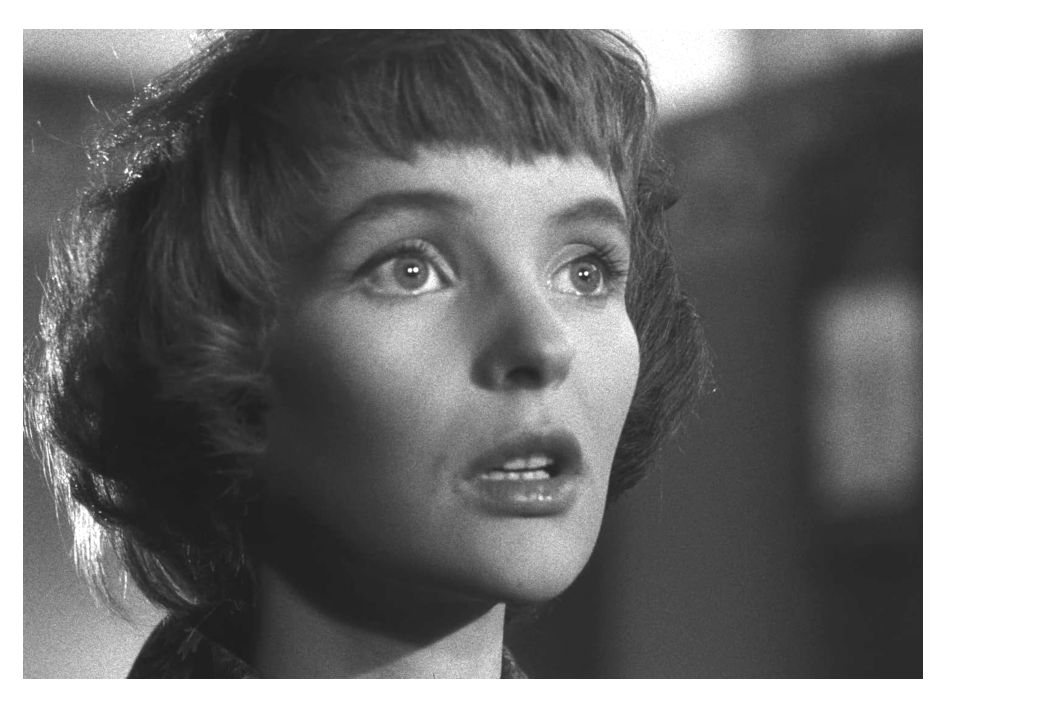
Of special note is the brief presence of Edith Scob, who sings during a church service. It’s just 4 or 5 angles on the actress as she stares and sings, inter-cut with the faces of other patients. Later interviews with George Franju state that he found Ms. Scob to be a magic presence — she would become a stand-out in all of his major features.

La tête contre les murs certainly works as a drama. But our identification with François Gérane is not particularly strong. He begins as an unpromising delinquent full of hate for his father, the death of his mother being a point of dispute. He’s already a petty criminal. We assume that his rich & connected father had François committed without trial, with the burning of some papers inflated to brand him as a dangerous arsonist.

Anouk Aimée’s Stéphanie cannot help but be an appealing presence, but we don’t share her commitment to François. She’s the sister of one of his creditors, and connects with him after a single (rather obnoxious) conversation and one motorcycle ride. Stéphanie berates François for almost running down a kid with his bike. It seems to be a given that the most interesting ‘girls’ can’t resist disaffected, selfish jerks.
There’s plenty of credibility in the central performance but also a lack of charm. For us the magic is kept aloft by the eccentric, lyrical music score by composer Maurice Jarre, whose first credit for Franju was back in 1952. A discordant main theme gives way to a typical elegant Jarre waltz to accompany Anouk Aimée’s Stepahnie.

We’re told that dramas criticizing civil institutions were not a big audience draw in France.La tête contre les murs was well-received by critics and commentators for its depiction of a questionable mental health system. But audiences reportedly didn’t go for it in a big way. The IMDB suggests that it was never officially released in the U.S.. We of course learned of it in critic Raymond Durgnat’s Franju book. For twenty years, that thin volume was one of the few sources in English that offered anything about the fascinating Georges Franju.


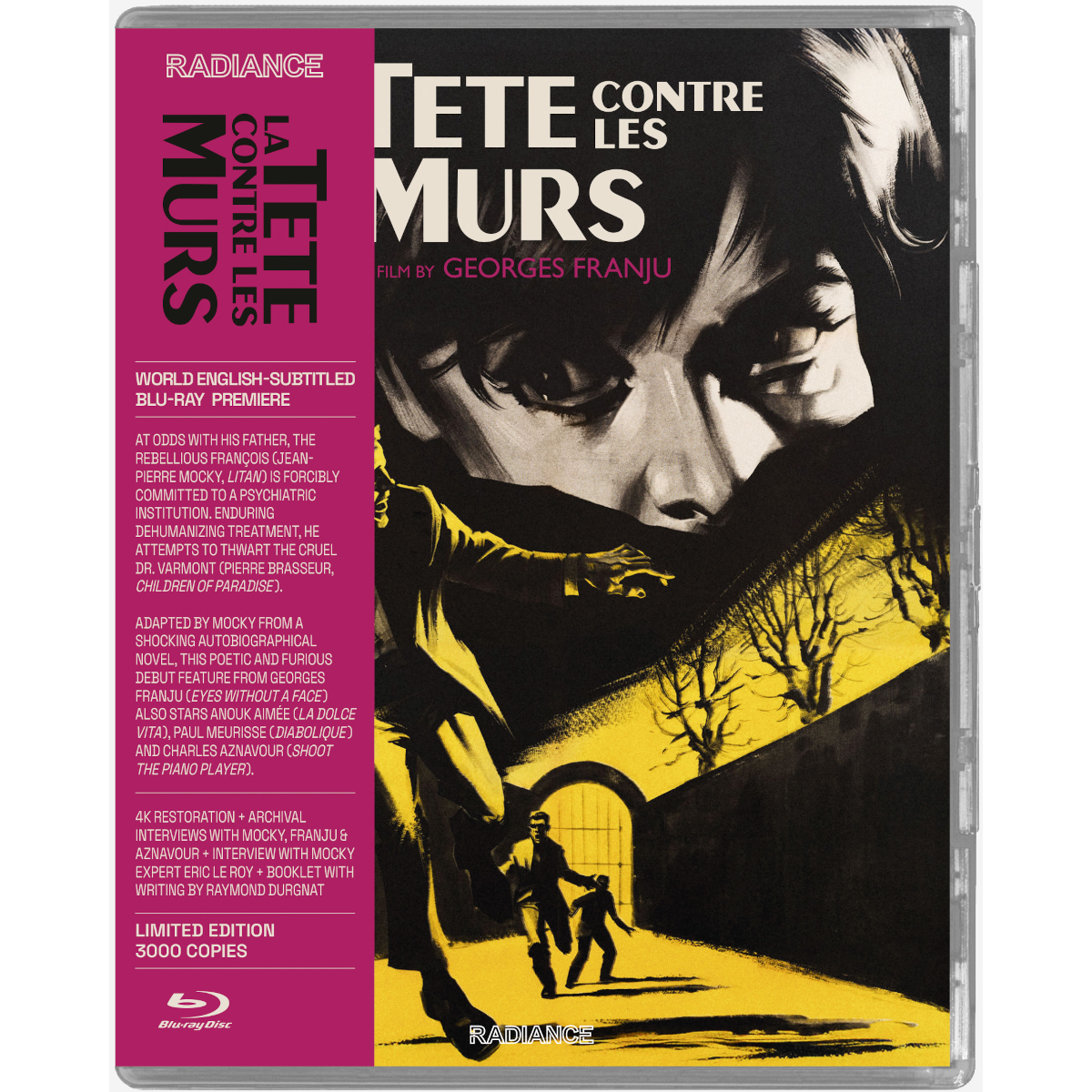
US Radiance Films’ Blu-ray of La tête contre les murs is a real beauty. A 4K restoration by Éclair Classics was supervised by Jean-Pierre Mocky’s company. The actor did become a successful and prolific director, and he later bought the picture outright.

The Region-Free encoding is flawless. It is presented in the 1:37 aspect ratio, which the IMDB reports as correct. The credit blocks probably indicate 1:37, but the prevalance of loose compositions (lots of dead space at the bottom of the frame) convinces me that 1:66 might have been the intended format. No matter, the images look great.

The audio track is very clean and true as well, making La tête a concert for fans of Maurice Jarre.

This is a Radiance disc but some of the extras content was created by the present rights holder. Franju gave so few film interviews that any coverage of him is rare, which made us rush to see a TV piece from 1958. It’s okay but not that revealing. We’ve only seen one interview where Franju even looked relaxed — it was taken in an airport, talking about a documentary film festival.

A 2008 interview with the late Jean-Pierre Mocky is quite good, even if he seems eager to cast La tête as his film and not really Franju’s. Besides writing and preparing to direct it himself, Mocky claims to have hired the entire cast. Mocky may have directed the motorcycle scene and the early party on the houseboat. Making François into a James Dean-like rebel in a leather jacket doesn’t seem the height of insightful characterization.


Things only get out of control in a 25-minute analysis of the movie by Eric Le Roy, a Mocky associate who worked on some of his films. Le Roy spends his time arguing that La tête is Mocky’s film, with reasoning and examples that become redundant after a few minutes. We aren’t card-carrying auteurists but we do recognize authorial marks in the movies of film artists. La tête contre les murs may not be first-tier Franju but we recognize and feel the director’s cinematic presence throughout.

Raymond Durgnat assures us that Mocky is no flake. He praised his films, saying only that they are very different from Franju’s.

The extras tell us that Franju filmed in a real asylum. It was so depressing that some of the filmmakers had strong emotional reactions. Ms. Aimée is said to have broken down in tears, a dramatic reaction that La tête could have used. Franju himself reportedly felt depressed. Le Roy hints at a drinking problem (???) and is quick to say that Franju bowed out to take a rest during the shoot, and that Jean-Pierre directed for a couple of days.

As this is a U.S. Radiance release, we did receive the disc with its 28-page insert booklet containing the entire La tête contre les murs chapter from Durgnat’s 1967 Franju book. Durgnat doesn’t go easy on the film, and he even questions its value as a protest document. At one point Durgnat quotes an actual case in which a young man was committed/incarcerated for being a deranged violent threat … when his actual offense boiled down to smashing a teacup and stamping his foot in anger. Having rich, powerful and spiteful relative can have drawbacks.

I think I’ve now seen all of Franju’s major features in good presentations. He only made a handful. The one that I need to see again is Thomas L’imposteur … it was 40 years ago, I didn’t follow the story and got lost somewhere in the middle.

I was lucky to see Franju’s Thérese Desqueyroux in a special FILMEX screening and it was sensationally good (and definitely widescreen). Both it and Thomas L’imposteur star Emmanuele Riva; Thérese also has a very good role for Edith Scob. A few years back we were able to review Arrow Academy’s Blu-ray of Franju’s  Spotlight on a Murderer (Pleins feux sur l’assassin). It’s a smart murder mystery from Boileau-Narcegac that has everything going for it … Pierre Brasseur, Marianne Koch, Jean-Louis Trintignant, Dany Saval, music by Maurice Jarre … yet it seems less a Franju creation than does La tête contre les murs.

Franju fans will be all over this disc release … and probably pre-ordered it a long time ago. I checked, Radiance USA seems to rely on Diabolik DVD to distribute their product over here. Ordering from the UK will get one the same All-region item, but with UK censorship markings on the cover. And how good that Radiance didn’t use the translated English language title.

Reviewed by Glenn Erickson


La tête contre les murs
Blu-ray rates:
Movie: Excellent
Video: Excellent
Sound: Excellent
Interview extras:
— with screenwriter and star Jean-Pierre Mocky (2008, 10 mins)
— with Georges Franju and Charles Aznavour (1958)
— with Jean-Pierre Mocky’s assistant and friend Eric Le Roy (2023, 25 mins)
Illustrated insert booklet (28 pages) with an excerpt from Raymond Durgnat’s book Franju (1967).
Deaf and Hearing-impaired Friendly? YES; Subtitles: English (feature only)
Packaging: One Blu-ray in Keep case
Reviewed:
June 18, 2026
(7532murs)
CINESAVANT

Visit CineSavant’s Main Column Page
Glenn Erickson answers most reader mail:
cinesavant@gmail.com

Text © Copyright 2026 Glenn Erickson

About Glenn Erickson

Screen Shot 2015-08-24 at 6.51.08 PM

Glenn Erickson left a small town for UCLA film school, where his spooky student movie about a haunted window landed him a job on the CLOSE ENCOUNTERS effects crew. He’s a writer and a film editor experienced in features, TV commercials, Cannon movie trailers, special montages and disc docus. But he’s most proud of finding the lost ending for a famous film noir, that few people knew was missing. Glenn is grateful for Trailers From Hell’s generous offer of a guest reviewing haven for CineSavant.

5 1 vote
Article Rating
Subscribe
Notify of
guest
0 Comments
0
Would love your thoughts, please comment.x
()
x