
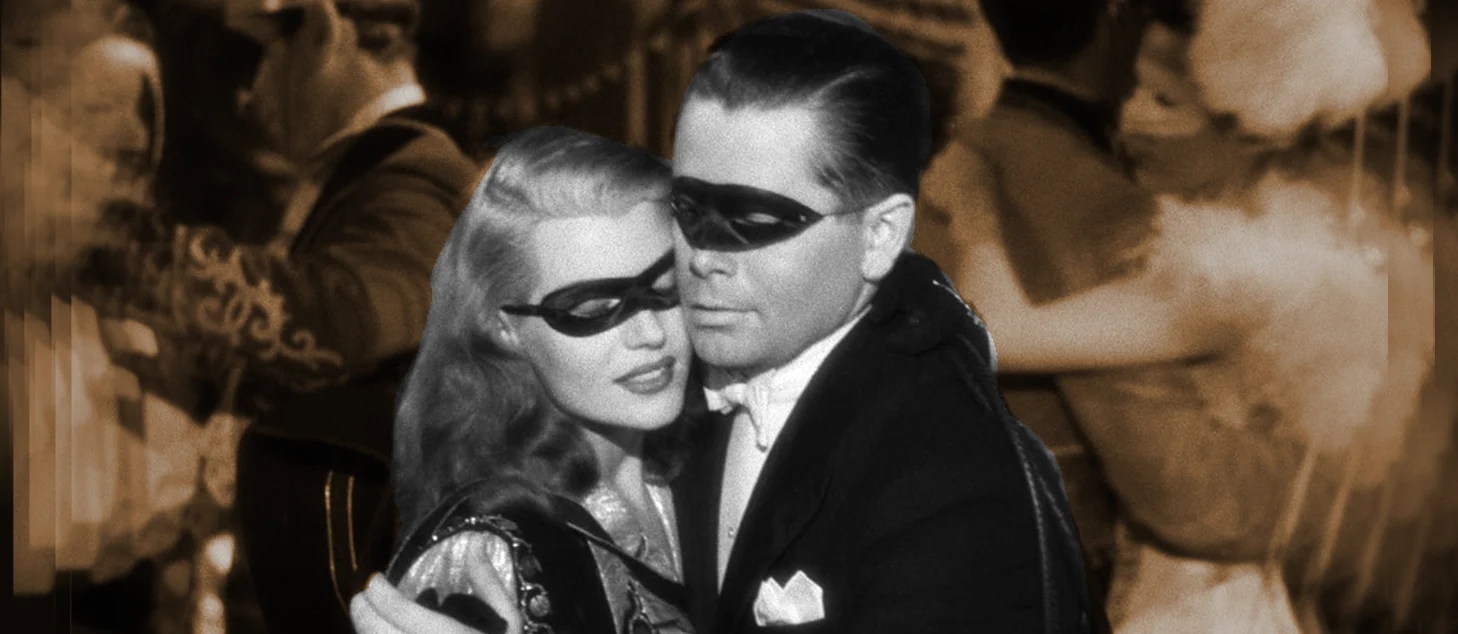

The beauty of film school in the 1970s was constantly being exposed to fantastic ‘new’ films, sprung on us by some professor or the UCLA Archive itself. Melnitz Hall was a place of grand discoveries, with studio prints in excellent condition. In 1972, most of the films now considered film noir classics were borderline obscure. We saw things like Island of Lost Souls (a nitrate pre-Code) or even The Fly (CinemaScope, stereophonic sound) and knew we were privvy to special moviegoing experiences.
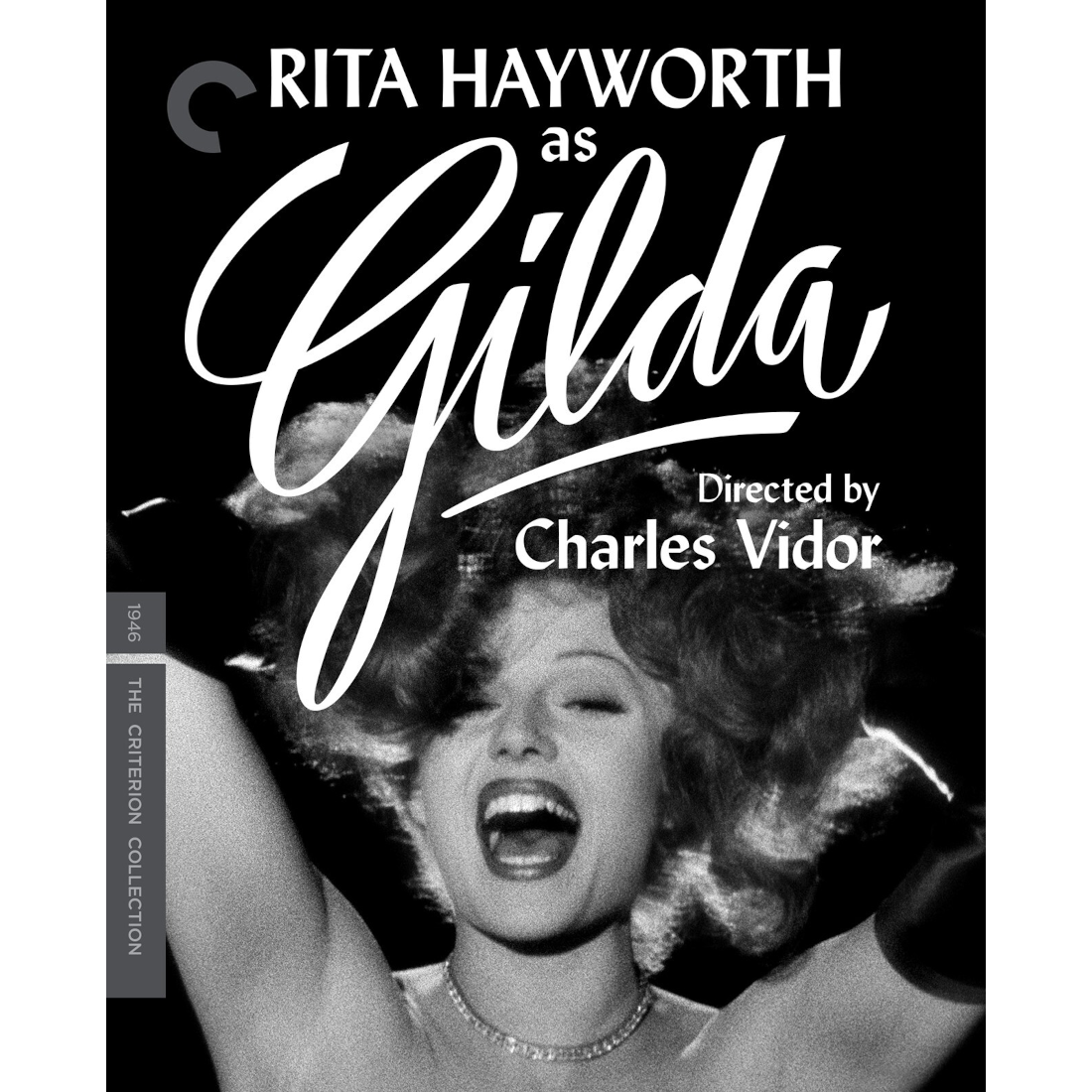
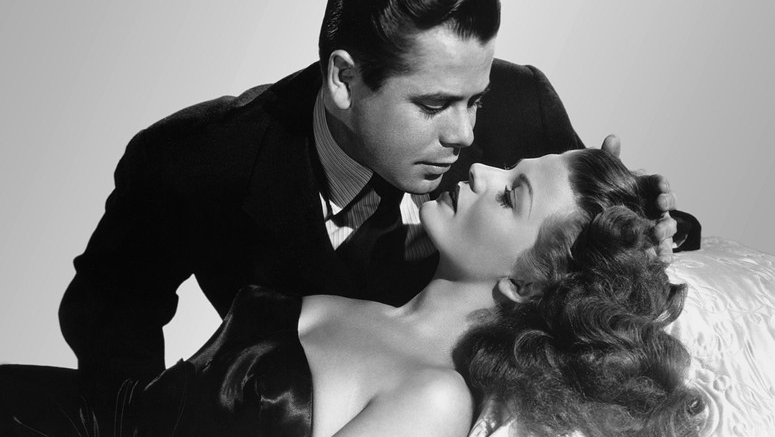
Charles Vidor’s Gilda was definitely one of these game-changing experiences. It’s hard to know where to begin. The movie transcends the noir category, scoring big as an erotic romance and a mystery thriller with a touch of political paranoia. The screen heats up with the on-screen chemistry of stars Rita Hayworth and the relative newcomer Glenn Ford. Gilda had a smart producer, Virginia Van Upp, and powerful input from cameraman Rudolph Maté. It was a sensation in 1946, when filmmakers back from the war made bold artistic statements — The Best Years of Our Lives, It’s a Wonderful Life, The Killers.
Screenwriter Marion Parsonnet had contributed to Rita Hayworth’s Cover Girl and Jo Eisinger’s name appears on several noir greats. American drifter and gambling cheat Johnny Farrell (Glenn Ford) cleans up in a card game on the dangerous La Boca docks of Buenos Aires. He’s befriended by the imperious and intimidating Ballin Mundson (George Macready), who needs an ally for crooked business. Ballin hires Johnny to run his fancy nightclub & casino, but hides his backroom dealings to establish a shady ‘tungsten cartel.’ Johnny excels at managing the casino, until his boss returns from the interior with the irrepressible bombshell Gilda (Rita Hayworth) — his new wife.
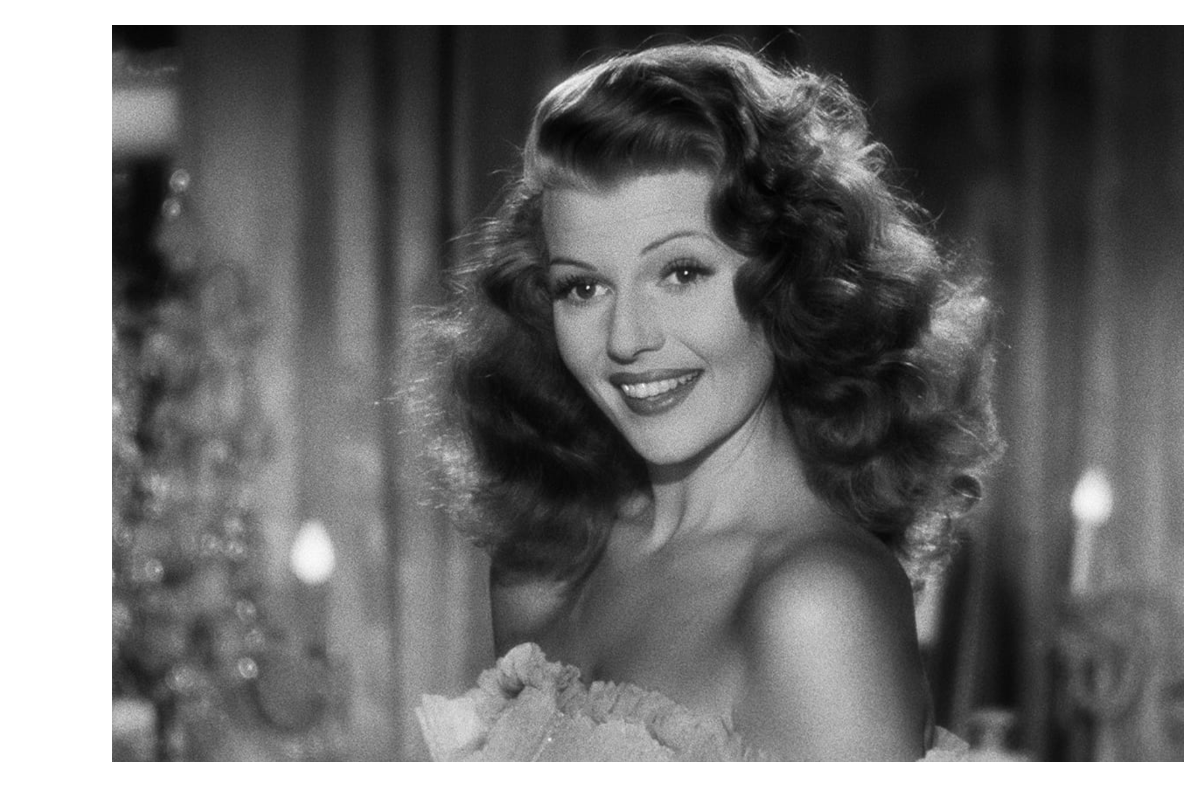
I was true to one man once, and look what happened.
The problem is that Gilda was once Mrs. Farrell. They keep that face under wraps, but Gilda wastes no time goading Johnny over his new status as her husband’s ‘errand boy.’ The arrangement promises big trouble when Johnny is asked to look after Gilda while Ballin is away conducting his hidden business. Gilda wastes no time throwing herself at every man in sight, to send the message that she’s available to all but Johnny. He smoulders and suffers but plays hard and unmoved by Gilda’s provocations. Their mutual love/hate is going to have violent effects — especially when and if Ballin finds out.
Gilda pretty much covers all bets for a romantic thriller. The setting is a fabled Latin American city packed with shady profiteers and Americans attracted by easy money and loose morals. The casino is one of those fancy noir enclaves where Ballin can observe from a god-like perch, using shuttered windows and hidden microphones. Ballin also conducts his illegal business there. He pays his associates with rigged wins at the roulette table.
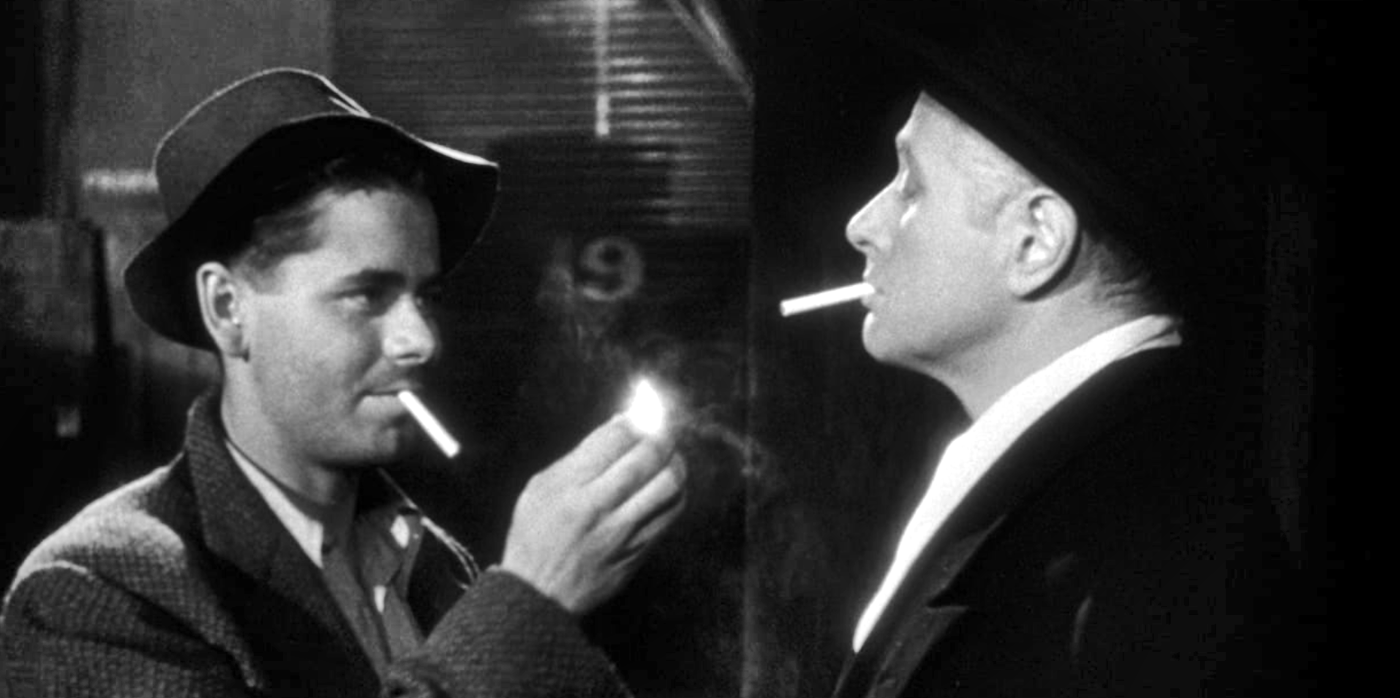
None of the key relationships is on the level. Ballin Mundson is a control freak who rarely bats an eye. His befriending of Johnny on the docks resembles a gay pickup — the conversation frequently turns to his ‘other’ friend, a cane that hides a deadly lance. Ballin comes off as a poised intellectual with many secrets to hide. He has married as if collecting some kind of trophy. Gilda knows how to manage any man, but in their intimate moments Ballin hovers over her like a dark statue, like Dracula.
Young Glenn Ford possessed a natural ease on camera that, along with his looks all but guaranteed his stardom. He wouldn’t solidify his acting style for a few more years — Johnny Farrell’s wolf-like grin would soon be dropped from Ford’s repertoire of screen faces. A tough-guy hero, Johnny places profit over romance. He likes working for Ballin, a deal disrupted by the arrival of Gilda. Johnny’s inner mania soon begins to show. He denies his fixation on Gilda yet his every expression betrays his resentment. Gilda knows just how to torment him.
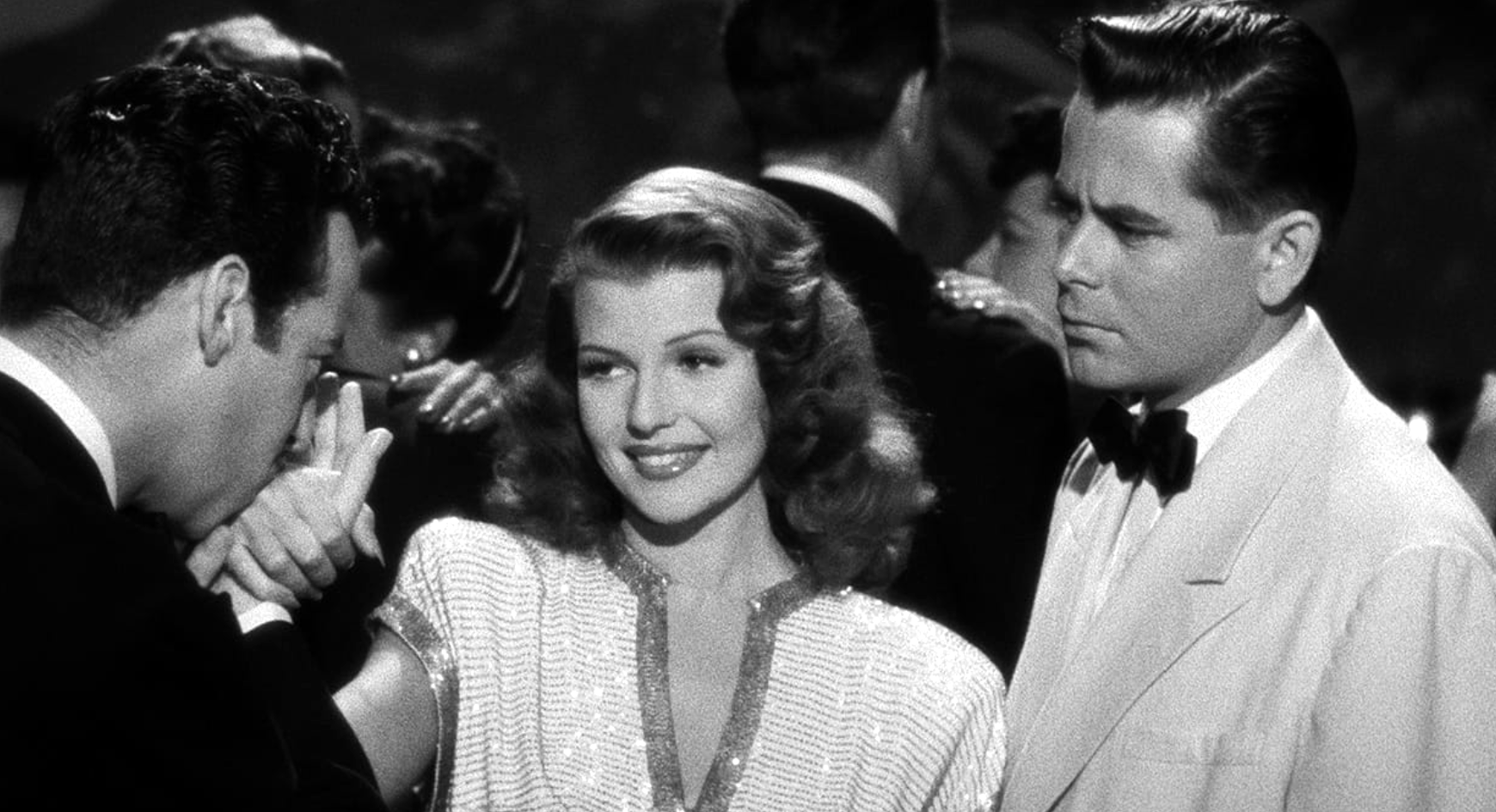
The provocative head-turner Gilda is a focus of desire for most any man who gets as much as a brief glimpse of her. Rita Hayworth would later be quoted as saying that the men in her life were always expecting her to ‘be’ Gilda, a sad statement from someone we might assume would have little difficulty finding a good mate. Although the script states that she has not been sleeping around, Gilda entices any tall stranger who can dance, the dependably slimy Gerald Mohr being a notable example. Johnny boils inside and grits his teeth, pretending not to care. Thwarted desire makes for very good drama, and it’s quite a spectacle watching Gilda tie Johnny into jealous, furious knots.
The film’s alignment of actor personalities to roles is utterly original. George Macready’s Ballin Mundson is too perverse to be a predictable villain, while Glenn Ford is too neurotic to be a reassuring hero. Rita Hayworth is amazing. Columbia fashioned the whole movie around her, yet Hayworth’s channeling of this Ultimate Woman is unlike anything she did before. It’s too bad that little the actress did afterward approached the complexity of her Gilda; movie work must have become boring. Even Hayworth’s husband Orson Welles had to frame her as yet another cold fish femme fatale, in The Lady from Shanghai.
The male film critic establishment was charmed
by Gilda’s celebration of old-school heterosexual lust.
Rita Hayworth’s alter ego is a screen goddess beyond the dreams of ordinary men, yet she has an unfulfilled capacity for honest love. No wonder that a Pakistani prince sought her out. Her worldwide appeal was referenced in a wickedly funny dialogue line in John Huston/ Truman Capote’s Beat the Devil: adventurer Humphrey Bogart has been arrested for smuggling in North Africa. It looks like he’s going to rot in jail until his Arab captor politely asks,
“Do you really think you could get me an introduction to Rita Hayworth?”
Bogie knows he’s home free:
“Oh, I should think so…”
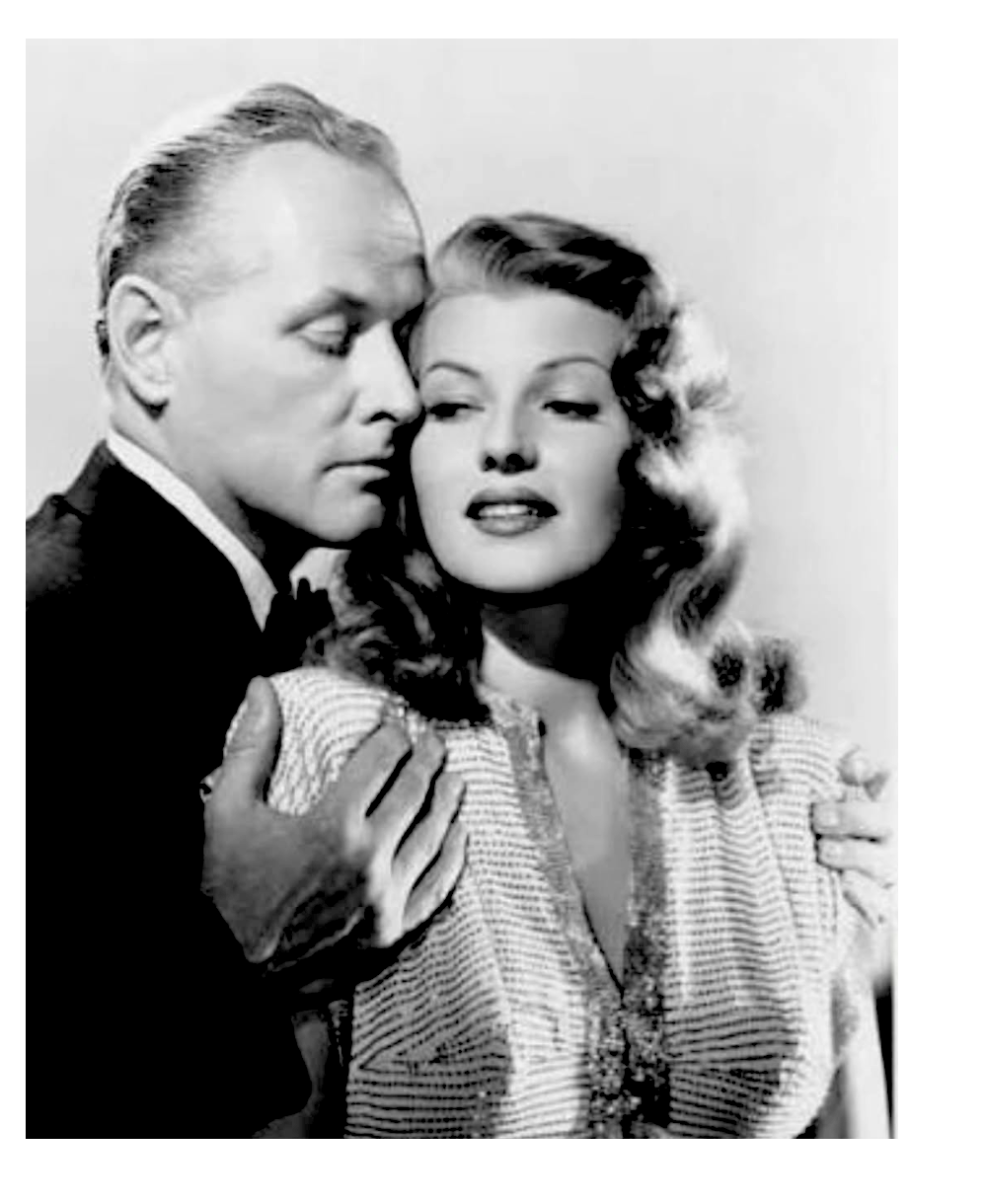
The nature of Ballin Mundson’s associates (Ludwig Donath among them) suggests a conspiratorial arrangement with ex-Nazis. This material doesn’t date the movie as much as RKO’s Cornered or Hitchcock’s Notorious, both of which seemingly want to alert the public to the persistence of fascist evil. Very soon, Hollywood scripts about postwar conspiracies would be rewritten to replace Nazis with communists. Gilda is one of those immediate post-victory films that accepts the idea that opportunism and greed cut across ideological lines.
The show revolves around the hypnotic aura of Gilda, but Charles Vidor’s ultra-smooth direction has other graces as well. Gilda takes place in an exotic Never Never Land of Latin music and nightclubs, where hoods wear dinner jackets and women rise and dress just in time for evening cocktails. For just one scene, the locale shifts to a nightclub in Montevideo, across el Río de la Plata, for Gilda’s stunning performance of ‘Amado Mio.’ In a beautifully designed exterior sequence, Ballin flees in a small plane over a wide, pale ocean, a special effect scene of remarkable clarity.
When Ballin is away on business the love-hate relationship really heats up, walking close to the edge of what was acceptable under the Production Code. Johnny’s pride and Gilda’s spite come to a head, funneling their perverse attraction into a psychological war.
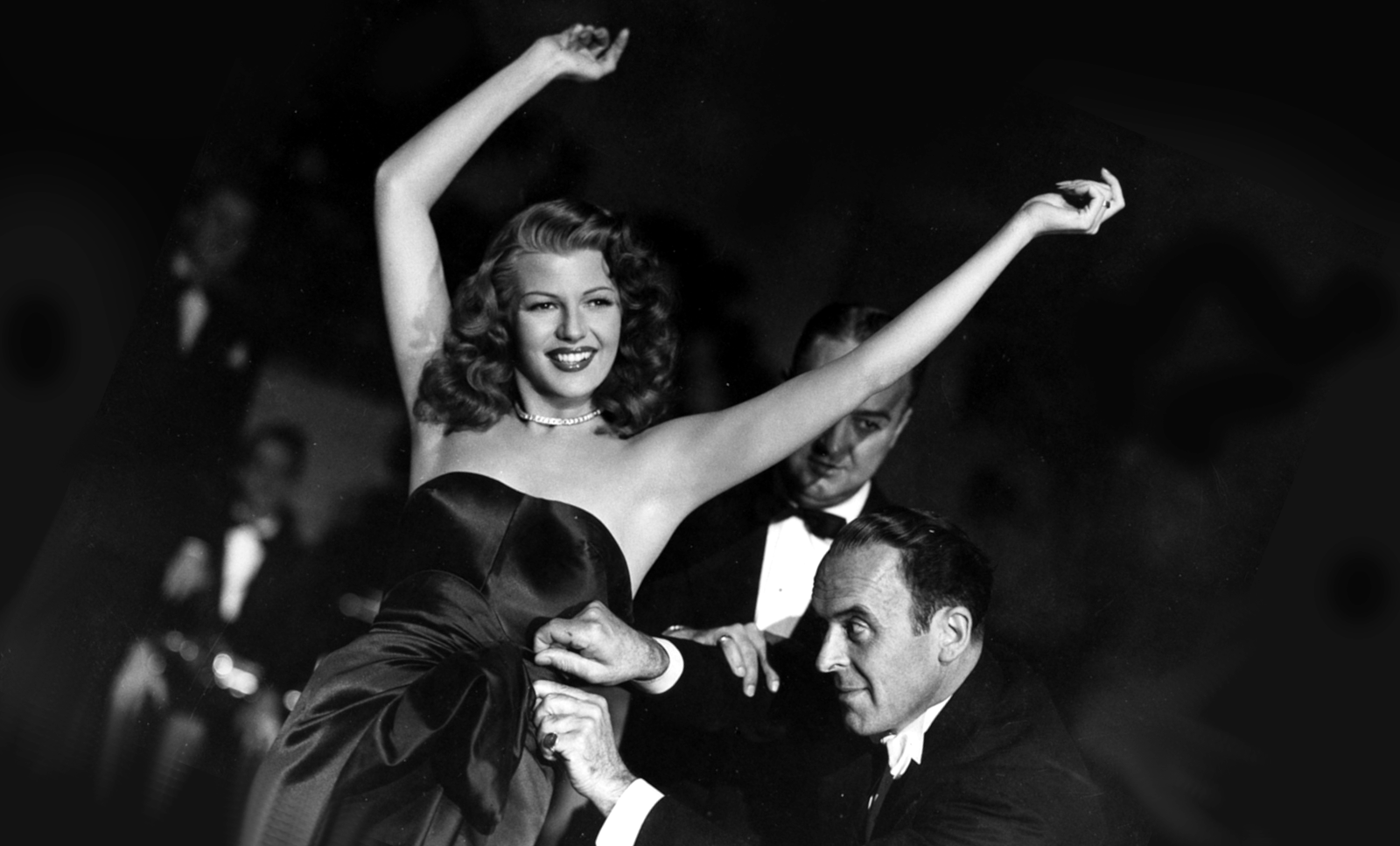
The unavoidable topic is the scene, Rita Hayworth’s showcase song “Put the Blame on Mame,” an improvised striptease performed to humiliate and torment Glenn Ford’s character. It’s nothing less than astonishing. Few cinematic sirens generated as much direct sex appeal. Jean Louis designed a specially fitted dress with no back and little front, that would stay put no matter how Hayworth moved. Gilda can twist, bow, dip and wave her arms with total abandon.
The dance becomes the culmination of Gilda and Johnny’s atomic sex war. She claims victory when Johnny loses his cool and explodes in anger. Our reaction is to wonder where the censors were when this scene went down. The emotional fireworks feel unconstrained by the Production Code.
The show has a terrific music track. Composer Hugo Friedhofer manages a rich Argentine flavor, weaving tangos in and out of the underscore. Songwriters Allan Roberts and Doris Fisher provide the two showcase tunes. ‘Amado Mio’ is one of Hayworth’s best solo dances. Although it feels like an older standard, ‘Put the Blame on Mame’ was written for this show. The saucy ballad allows Gilda to revel in sheer sexual power. The only cinema siren’s song that’s more iconic is Marlene Dietrich’s ‘Falling in Love Again’ from the similarly delirious The Blue Angel. Dietrich has the edge because Hayworth’s singing is dubbed by the vocal artist Anita Ellis. Her velvety voice is an excellent match; we’re told that Columbia publicity let reviewers assume that Rita sang for herself.
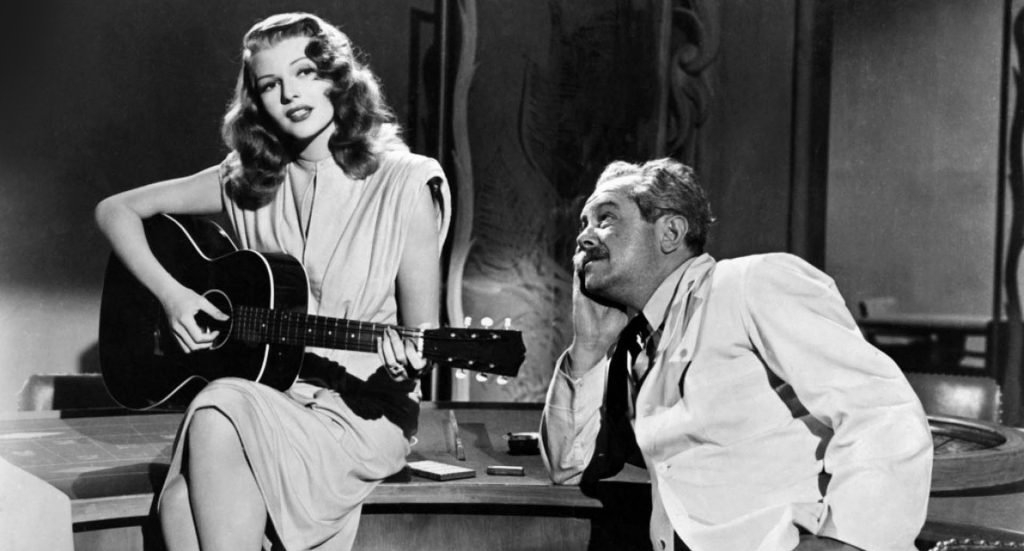
“Peasant!”
Seldom mentioned are two beautifully measured supporting performances. Unsung character actor Steven Geray is amusing as Uncle Pio, a casino lackey who serves as Johnny’s conscience. No matter how well Johnny is doing, Uncle Pio still spits and calls him a ‘peasant.’ Johnny is furious yet can’t seem to fire Pio — does he know too much? Even more effective is the great actor Joseph Calleia as Obregon, a familiar fixture at the casino whose exact function isn’t immediately known. Calleia was typecast as a dependable bad guy, often more charismatic than the heroes. He actually played a wide range of characters, and Obregon is one of his best. Gilda hasn’t a single stereotyped South American, a Hollywood rarity.
The film has a clean look, with editing that emphasizes the telling expressions that flash across the characters’ faces, all but letting us read their thoughts. George Macready never asks us to feel sympathy for Ballin Mundson, and neither does Johnny Farrell feel the need to step up and perform heroic acts. The final confrontation is impeccably blocked and edited, the kind of assembly that Orson Welles or Alfred Hitchcock would applaud.
The #1 pinup queen of World War II was Fox star Betty Grable. I remember once asking critic Robert Porfirio why anybody made a fuss over Grable, when the war’s #2 pinup Rita Hayworth was far more alluring and twice as soulful. Robert theorized that Grable was more popular because most of our soldiers were kids barely out of their teens. Their dreams were about the ‘accessible’ Girl Next Door. The peaches ‘n’ cream Grable embodied that appeal, while dream girl Hayworth was more of an unattainable, idealized mirage. Were most glamorous movie stars prisoners of their screen personalities?
I really like the film, but as someone from Buenos Aires, I’ve always found the way the city is portrayed in it kind of funny.
For example, when Gilda asks Johnny to go swimming in the Río de la Plata, it feels strange to me, because the river has been contaminated for so long that I can’t really imagine them doing that. But of course, the setting works much more like Casablanca in Michael Curtiz’s film — a kind of neverland that probably doesn’t remotely reflect the real place.
And, by the way, there wasn’t a single Argentine actor in the entire cast. Not even among the extras or bit players.
Hi Axel. I finally got to go to Buenos Aires a while back … fantastic place. If the movie made it look like a city of gamblers and criminals, maybe it helped keep Americans away, which might be a good thing. Got to connect with a fellow at MALBEC, which was great; want to go back some day.