
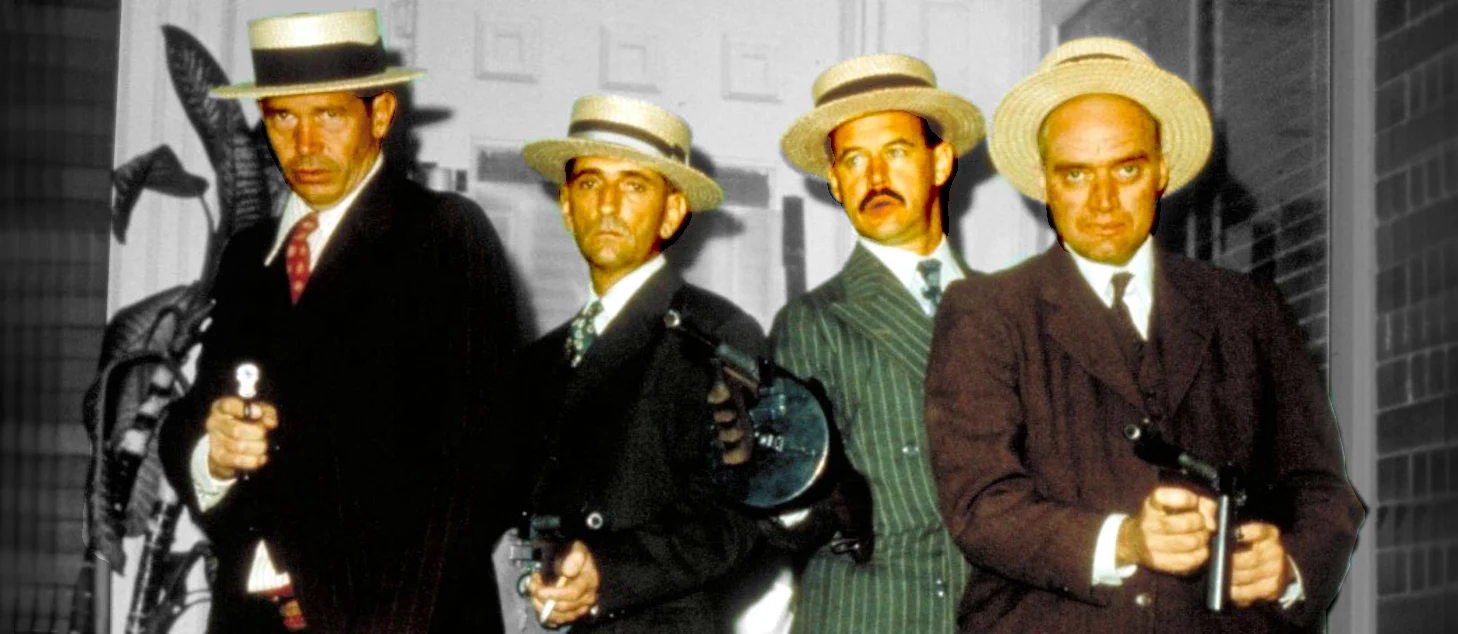
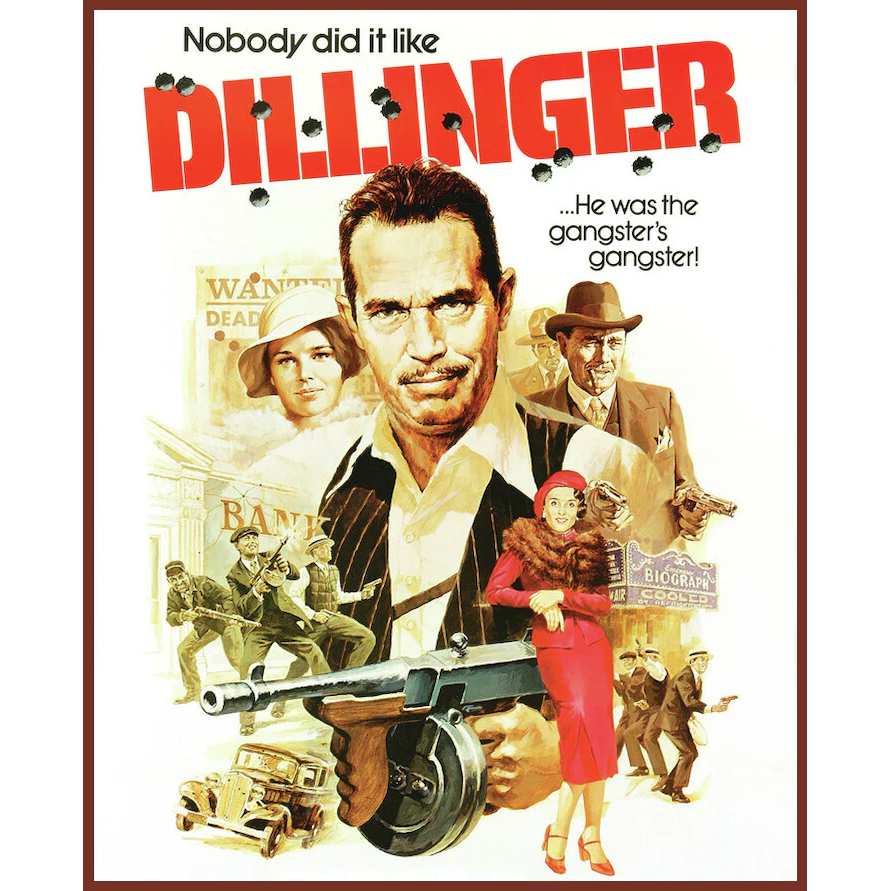

Fans of gangster movies that love guns will love this A.I.P. production, the first feature film directed by the high-profile talent John Milius.
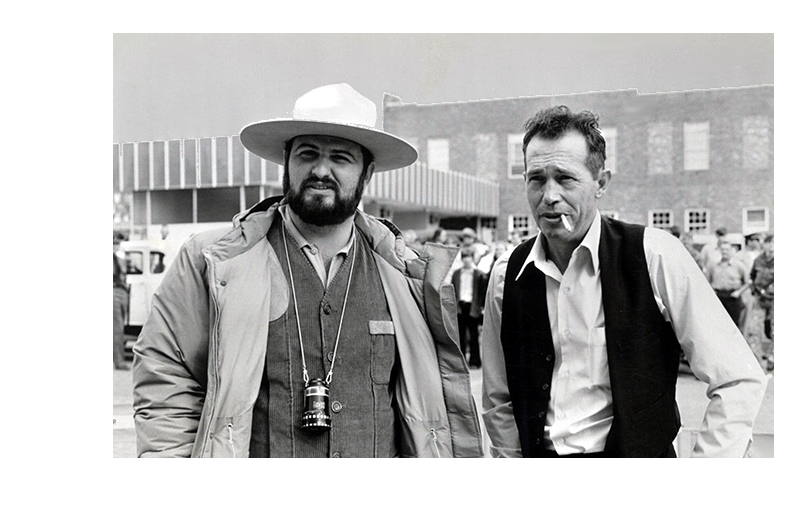
We first learned about John Milius in a dentist’s office. An article in either Time or Newsweek profiled the screenwriter turned director, who proudly proclaimed that he was gun crazy. Milius had it in his contract that any weapons purchased for his new movie Dillinger would become his personal property. Milius had become one of the hottest screenwriters in town, with pictures in release or production by directors John Huston and Sydney Pollack. And now he was peppering the screen with gunpowder for his biopic of everyone’s favorite rural bandit of the Depression.
Dillinger looked cheap in 1973 because its general style — newspaper montages etc. reminded us of Roger Corman’s Ma Barker tale Bloody Mama. But both of those movies now seem like gems atop the heap of violent ’70s exploitation. Whereas the Shelley Winters movie cut corners at every turn, Milius delivered a surplus of macho mayhem: no two scenes go by without someone brandishing a gun or using one to pump somebody full of lead. Milius decreed that his favorite filmmaker was John Ford, but his main strategy was to out-Peckinpah Sam Peckinpah. His stars are graduates of the Sam P. stock company. More on the homage game played by film-school directors a little later on.
Milius’s script is refreshingly light on psychological motivation. It plays fast and loose with history but takes the trouble to feature some of Dillinger’s lesser-known criminal colleagues, making their association seem more loyal than it was. The name bandits are arranged the way kids would collect baseball cards. 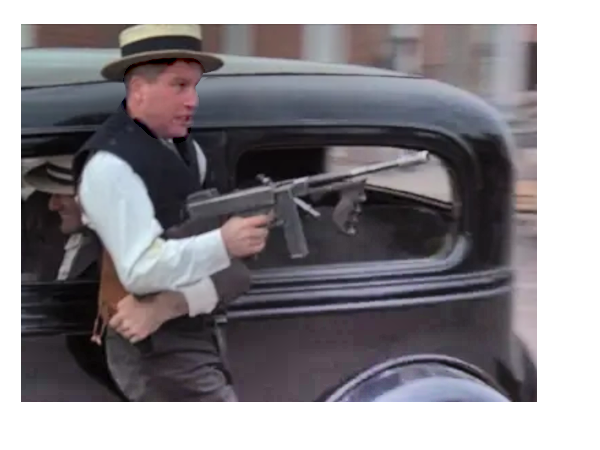
Brutal thug John Dillinger (Warren Oates) sees himself as the criminal equivalent of a movie star. He and his cohorts Homer Van Meter (Harry Dean Stanton), Harry Pierpont (Geoffrey Lewis), Charles Mackley (John P. Ryan) and Eddie Martin (John Martino) cut a bloody swath from Minnesota to Texas. Harry’s wife tags along, while John takes Billie Frechette (Michelle Philips of the Mamas and the Papas) as his moll. He just snatches her up, against her will.
John and his crew rob banks, break out of jails, and form a ‘super-gang’ with the addition of black convict Reed Youngblood (Frank McRae) and name outlaws Pretty Boy Floyd (Steve Kanaly) and Baby Face Nelson (Richard Dreyfuss of American Graffiti). ↖ Meanwhile, the showboat F.B.I. agent Melvin Purvis (Ben Johnson) captures or kills one sad sack criminal after another, like Machine Gun Kelly, who calls him a ‘G-Man.’ The somewhat deranged but genuinely fearless Dillinger personally accosts Purvis more than once, and they square off as adversaries. The super-gang is forced to split up after the siege at Little Bohemia. Purvis hunts down the survivors, backed by his lieutenant Samuel Cowley (Roy Jenson).
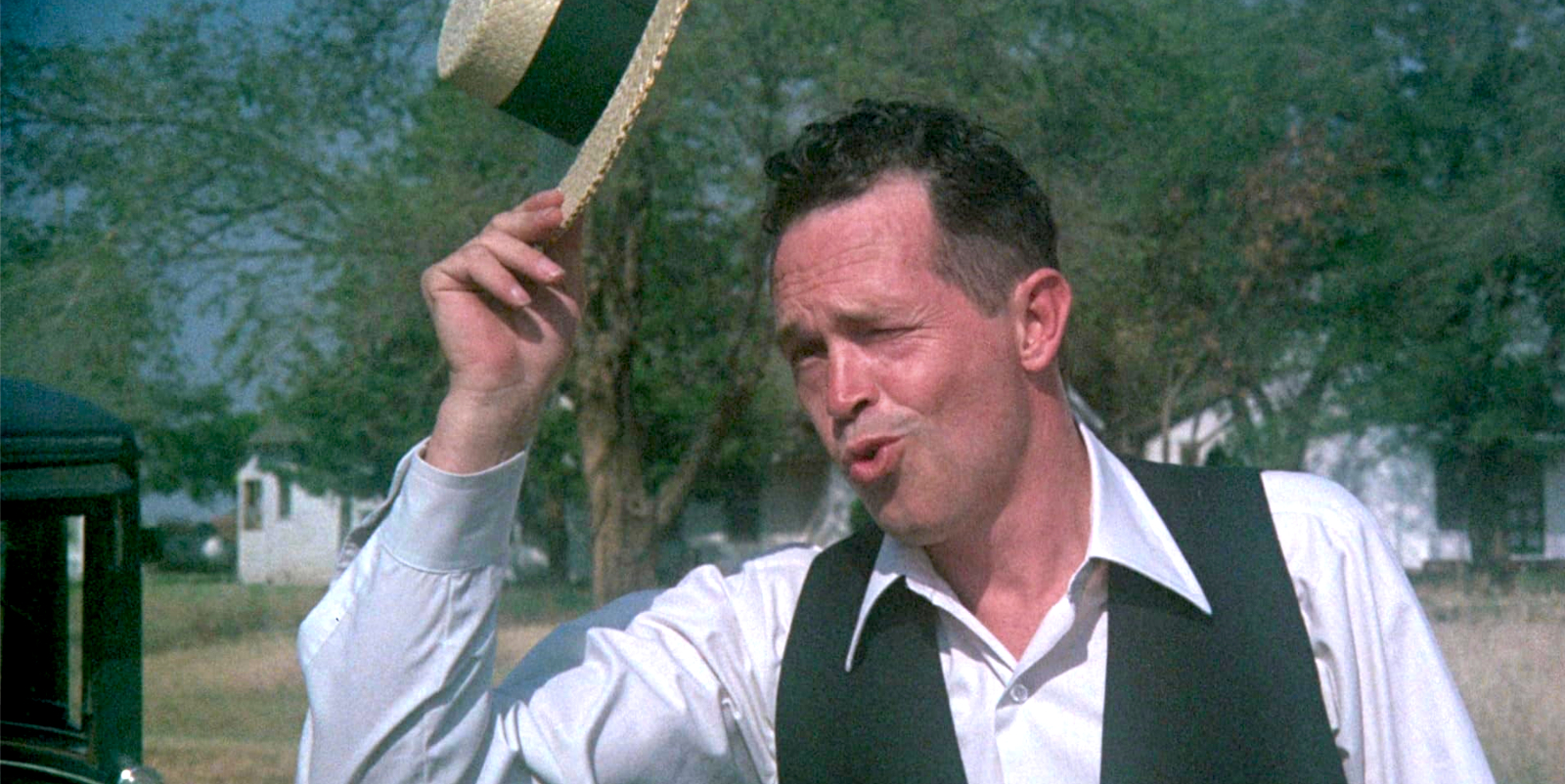
Despite his lack of overt romantic qualities, the rough-hewn, experienced actor Warren Oates was for a few weeks put forward to be the new Bogart — was this his only really successful starring role? The fine cast selected by A.I.P. executive Gordon and his appointed producer Buzz Feitshans include 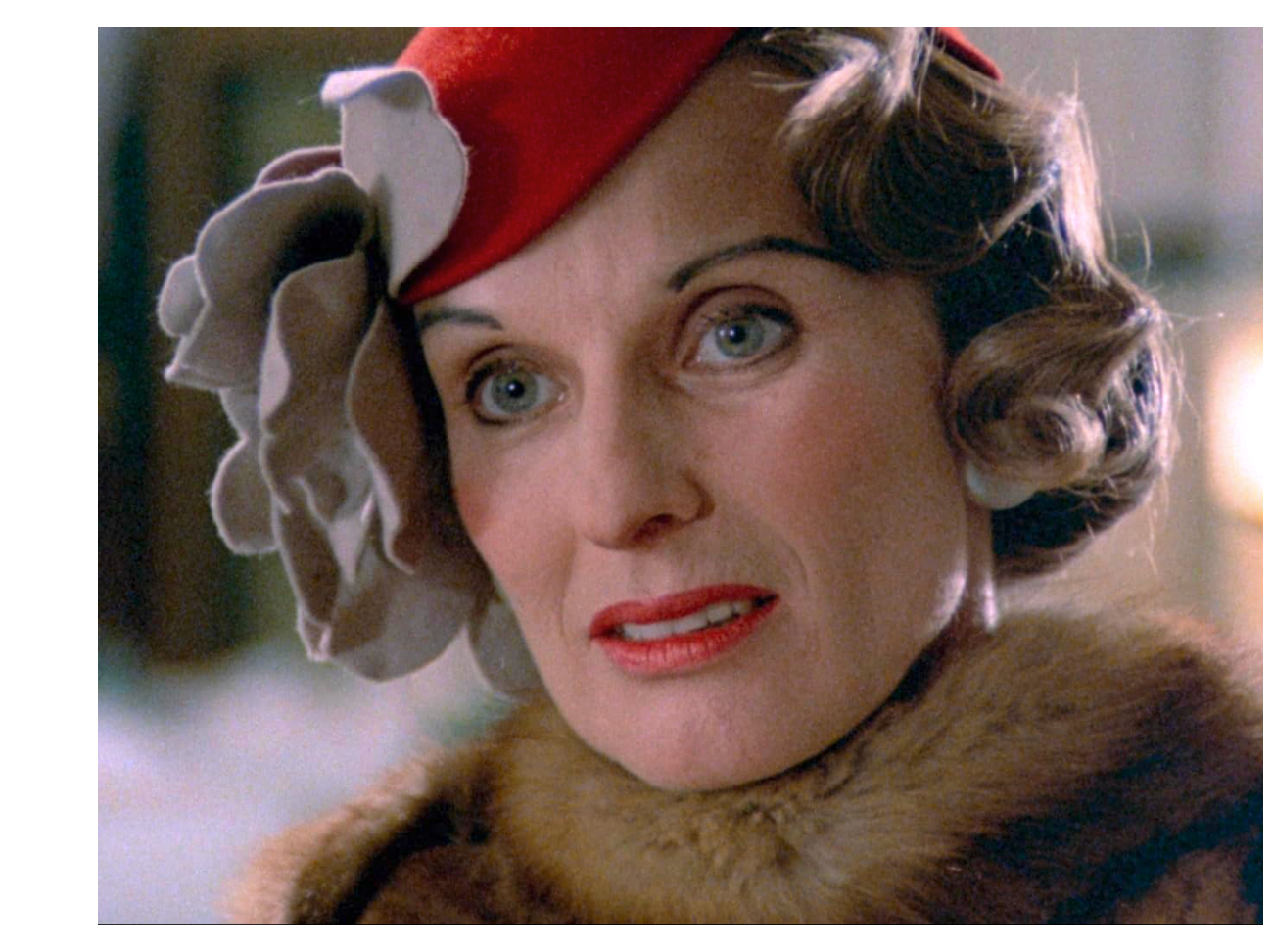
Cloris Leachman and the baby-faced Richard Dreyfuss, who hams his way through the role of Baby Face Nelson. The core of John Milius’ stock company is already here, what with the charismatic Steve Kanaly, thuggish Roy Jenson and the eccentric Geoffrey Lewis, all of whom will come back for the director’s The Wind and The Lion.
Warren Oates and Frank McRae would have featured roles in 1941, which Milius co-wrote and produced. Oates and Ben Johnson were already associated as the Gorch Brothers in The Wild Bunch, a film that Milius would restage as often as Brian De Palma raided the filmography of Alfred Hitchcock. And then there’s John P. Ryan, another solid performer. Ryan tended to be blasted into next Tuesday in movie after movie, notably Arthur Penn’s The Missouri Breaks.
“Things ain’t workin’ out for me today.”
It’s a great bunch. Finally being discovered as a hipster icon, Harry Dean Stanton is hilarious as a sad sack thief despairing over his own bad luck. Geoffrey Lewis makes amusing gestures at domestic normality, with his wife checking his appearance prior to a bank holdup. Is the casting of Richard Dreyfuss as Baby Face Nelson good or bad? Dreyfuss can’t hold a straight face in some scenes. Nelson guns down some kids on a sidewalk out of sheer malice; Dreyfus’s snarl belongs in a High School play. He’s entertaining, but Mickey Rooney still owns that role.
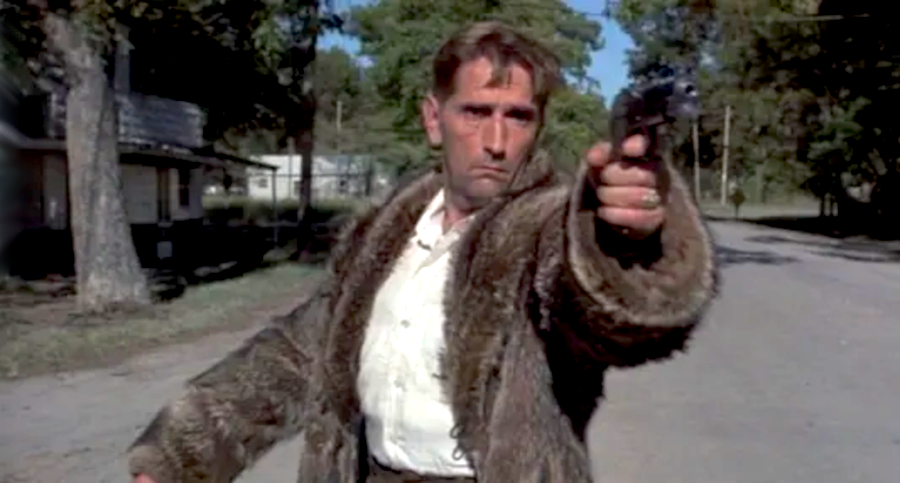
As for Warren Oates, he’s a little uneven mainly due to the script’s indecisiveness — is Dillinger a heroic figure or a charming madman? Milius’s strategy is to give Dillinger speeches where he talks about his own image. Maybe the bandit was a sensitive soul fascinated by his own noble outlaw myth … but his crude actions say different.
Milius’ attitude toward race is expressed by making the film’s black bandit into a partly comic character. Frank McRae’s Reed Youngblood behaves like a giant ‘Baby Huey’ take on a ’40s black stereotype. Milius would take the same approach with McRae in ‘1941,’ apparently with the idea that reviving non-PC rade attitudes was automatically funny. Even when MacRae is given a sober moment, Milius invents the business of having Geoffrey Lewis hand him a fried chicken drumstick. At least there are no scenes with watermelons.
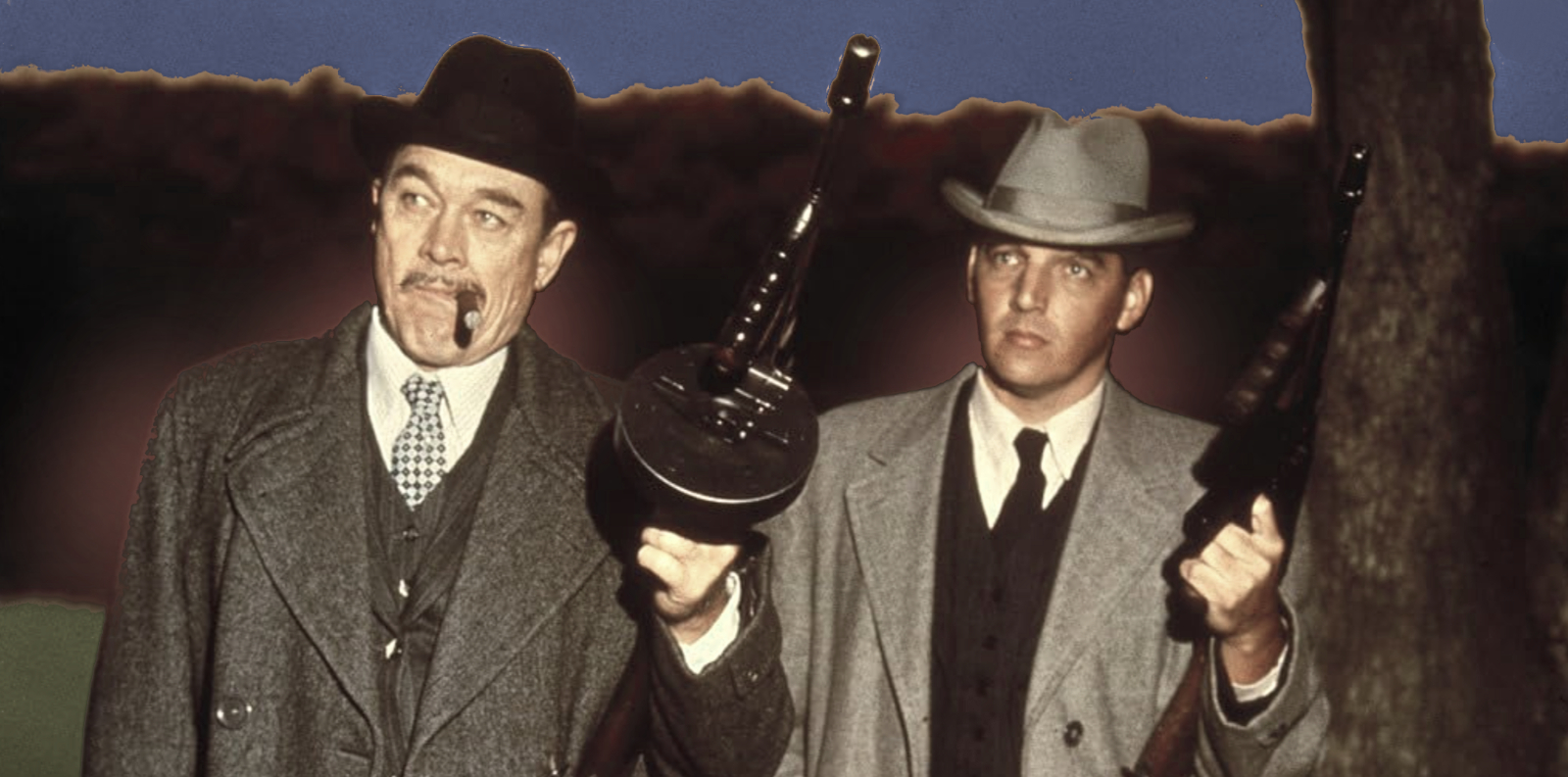
Raymond Durgnat once wrote that Sam Peckinpah’s admiration for his Wild Bunchoutlaws verged on mythomania. We defend Peckinpah’s sentiments, but John Milius nominates his bandits as mythological giants, the effort rings hollow. The nice thing is that aping John Ford gives Dillinger the pacing of a classic movie: Milius isn’t afraid to slow things down and hold on wide compositions. The bad aspect is that we keep recognizing setups from How Green Was My Valley, The Grapes of Wrath and The Searchers. The most copied Ford film here is My Darling Clementine. When Peckinpah quoted Ford he usually included an ironic point of view, and he didn’t copy compositions outright.
Of his generation of film student directors, Milius is almost as blatant a copycat as Brian De Palma. It’s not a bad ploy for a tyro director. Tasked to invent his own style, Milius gets things a little distorted. Ben Johnson is visualized as an iconic knight figure. He undergoes a preparation ritual for his gunfight confrontations, almost like Lee Marvin’s Kid Sheleen in Cat Ballou.
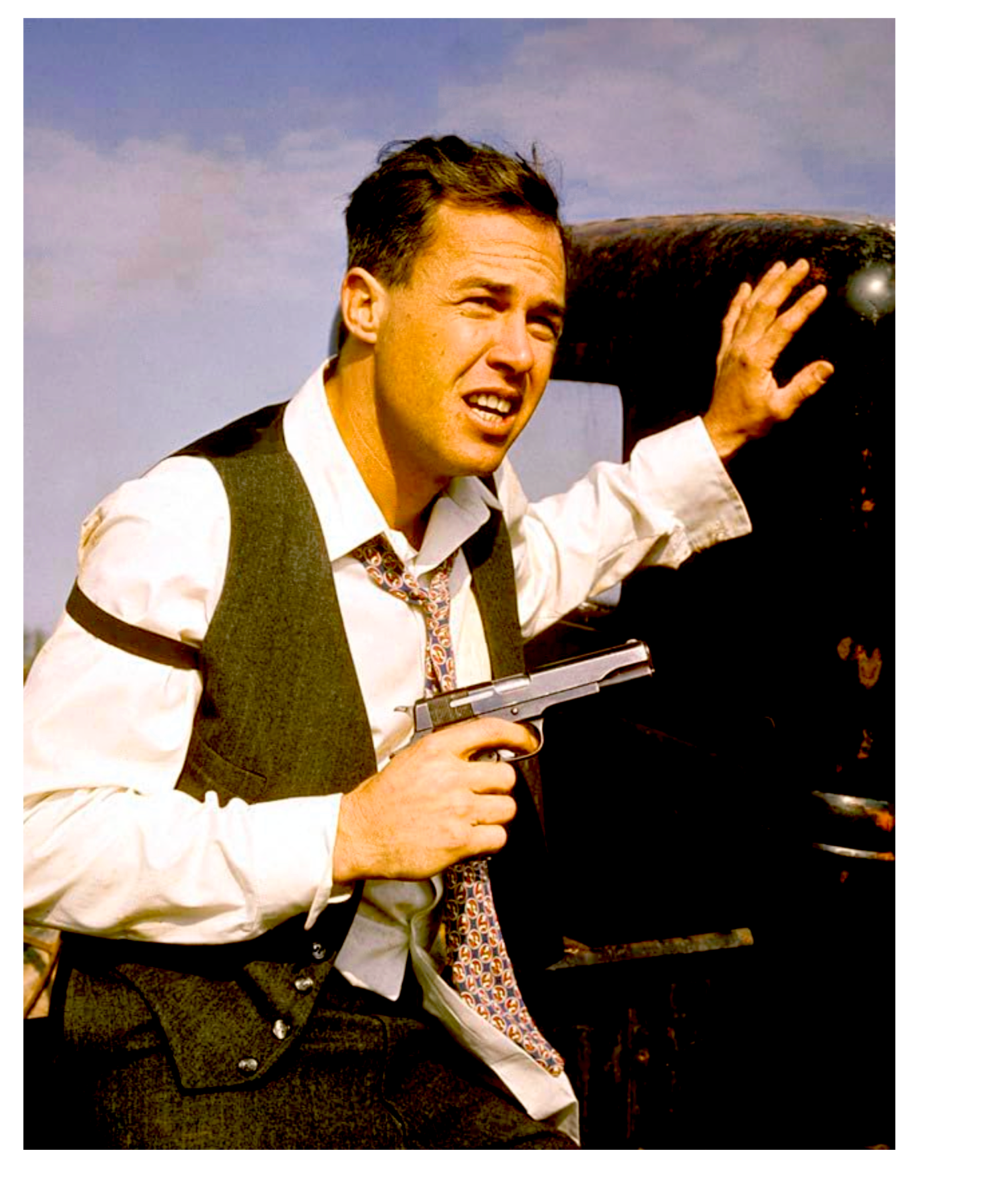
Ben Johnson’s consistent performance supports and undercuts this aggrandizement of the Melvin Purvis character. When Purvis tries to lecture a street kid, he gets his feelings hurt. The kid doesn’t idolize G-Men, and instead wants to be a gangster!
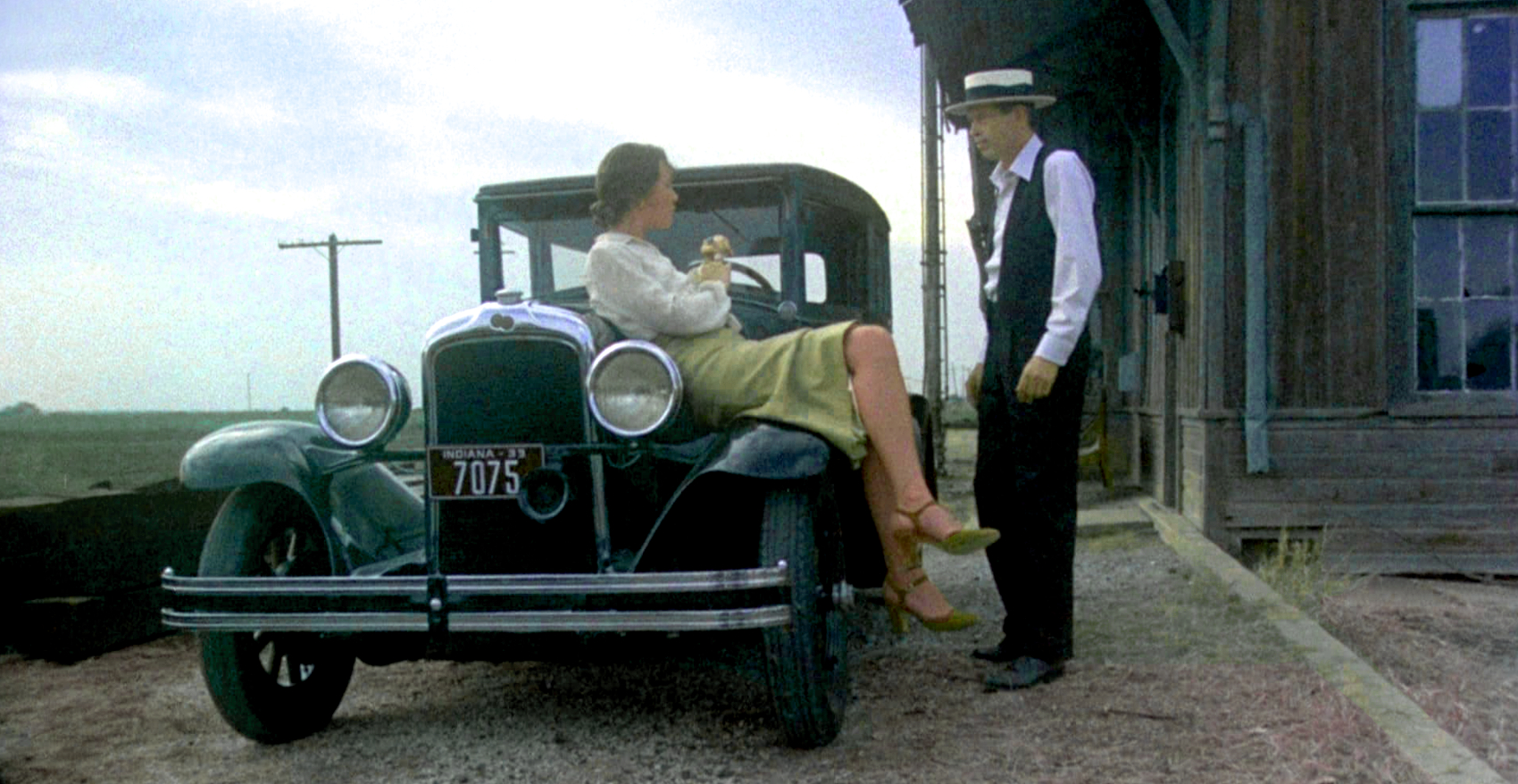
← John Milius scores another good sentimental character moment. Steve Kanaly’s Pretty Boy Floyd has an aura of corn-fed innocence. When cornered, he thanks an old couple for a piece of pie, apologizes for being a sinner, and starts a-runnin’. No Miranda Rights here: Purvis’s agents essentially execute bandits on sight. For its lack of pretension, the one scene with Kanaly and the farm couple betters Bonnie and Clyde’s claim that homeless Oakies identifed with rural bandits as anti-Banker folk heroes.
By manufacturing a mythical clash of titans Milius at least gives his film a structure. The show offers a simple perspective of crooks versus cops, juiced with plenty of gunfire. But it has little to do with historical reality. J. Edgar Hoover used glamorous newspaper publicity to grow and consolidate the power of the F.B.I. Relatively minor rural bandits became ‘Public Enemies’ and federal agents were made into fearless G-Men, like characters in a comic strip. The crimefighting public relations blitz drew attention from nation’s real crime problem, the organized underworld in the cities. Hoover’s Bureau all but pretended that the Mafia was a myth.

Actually, Dillinger tells much the same story as Warners’ old “G-Men”, a fluff job for J. Edgar Hoover that glamorized an enforcement agent and portrayed real-life gangsters only in action scenes.
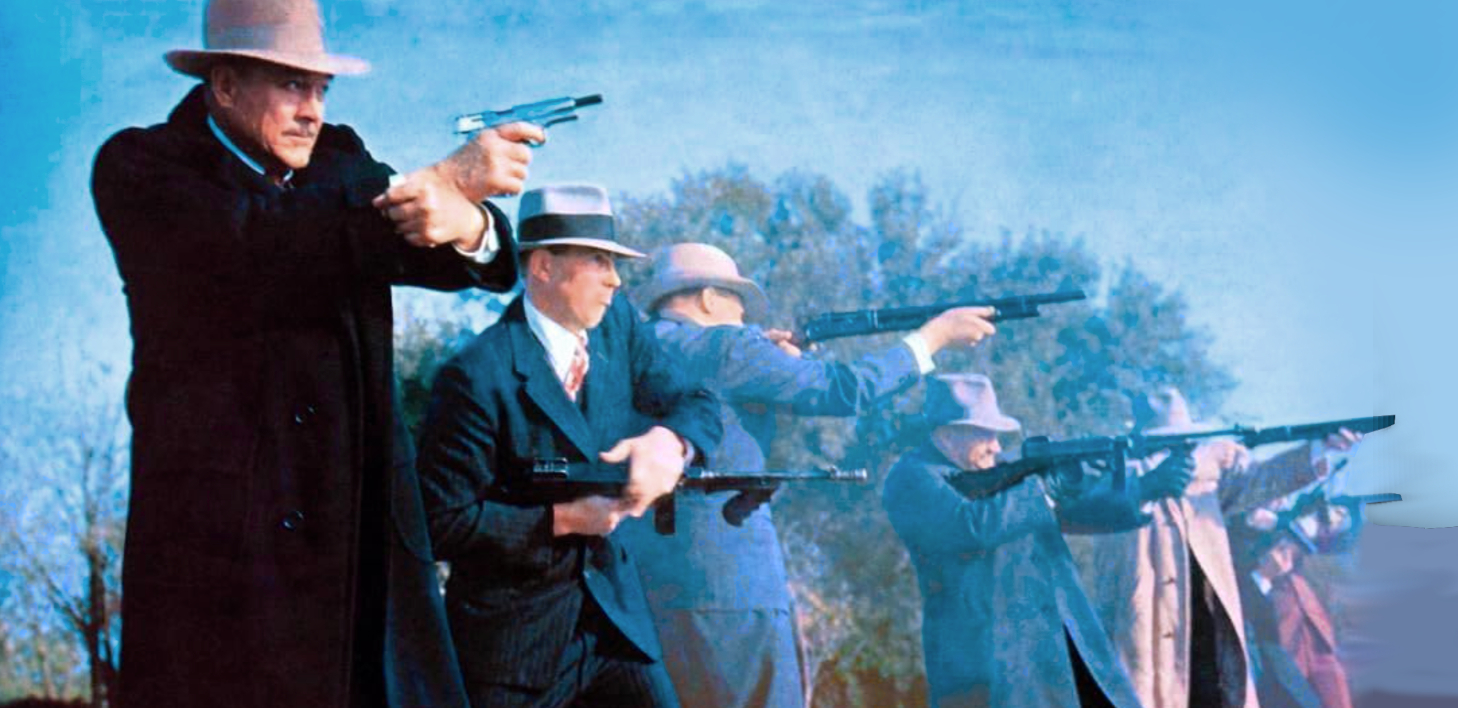
There’s no denying that Dillinger really hops when the guns start shooting. As inaccurate as it may be, Baby Face Nelson’s violent machine-gun shootout with a G-Man approaches the best of Peckinpah’s shoot ‘n’ splatter set pieces. The gun battles do go on twice as long as they need to, focusing too lovingly on recoils and bullet hits. When in doubt, Milius falls back on gun worship, and there’s far too much of it. If a gun is fired, it’s always screen center, lovingly depicted.
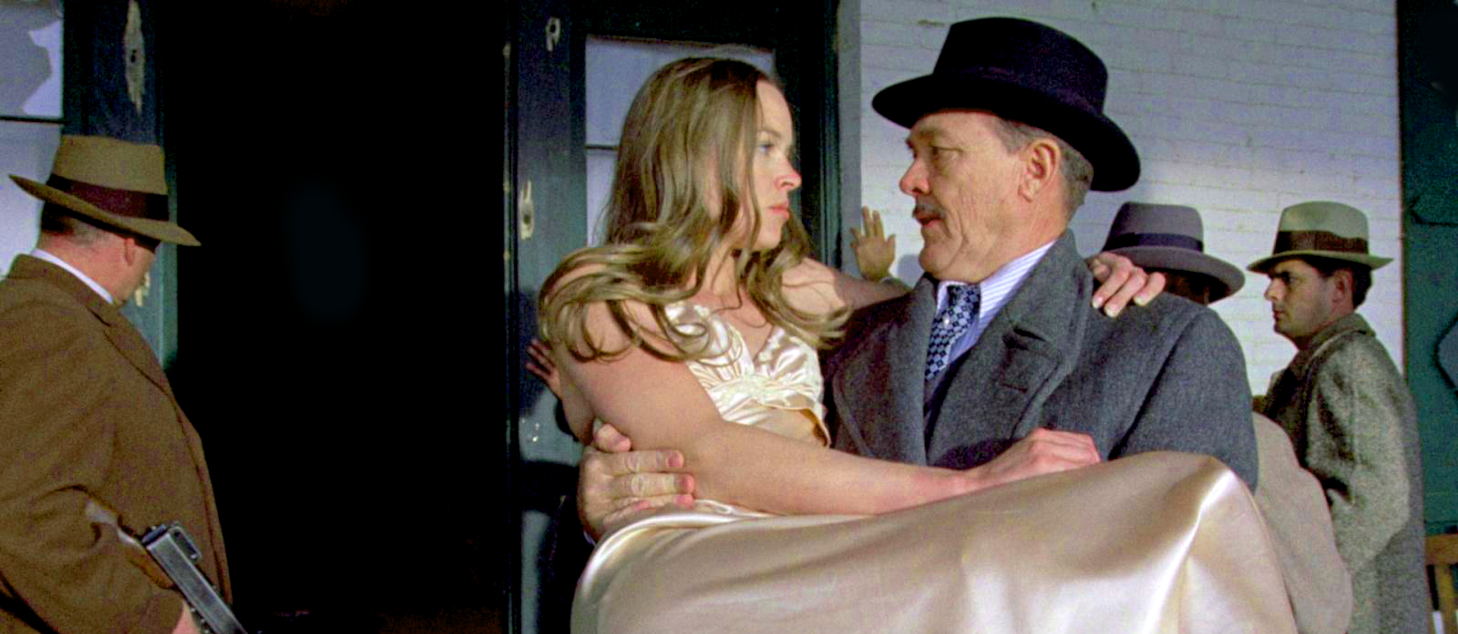
Every shooting victim is ogled pre-, during and post- obliteration. A bank guard’s hand twitches behind his back as he expires, copying Gene Hackman’s Buck Barrow in Bonnie and Clyde. Our main protagonists seem bulletproof until Milius decides their time is up. They then bite the dust in as graphic a manner as possible. Some scream as they crumple to the ground, one tumbles off a high bridges and another is blasted all at once by a dozen farmers. We almost expect to see big clean holes bored through their bodies, a la the cartoons’ Yosemite Sam. Remember the National Recovery Act seal (NRA) carried by many movies during the Great Depression? Milius could have used the same graphic to display an endorsement from the National Rifle Association.
A few scenes look as if the actors are using live ammo, as when Harry Dean Stanton shoots a gumball machine. I saw effects whiz A.D. Flowers at work, and to do an effect like this, his men would shoot ball bearings from a custom air rifle. Who’s to say that a shot at that glass gumball globe wouldn’t bounce back and hurt a cast member?
The production gets excellent coverage of its Midwestern locations, which had remained roughly unchanged since the 1930s. A.I.P. also doesn’t go cheap on the vintage automobiles and costumes, which look just fine. Dillinger thrills and entertains, but strays about 400 too many gunshots into the overkill zone. When the smoke clears, we’ve sure had our fill of extended shootout battles.
Action fans loved the movie, which is what mattered. Milius would proceed straight from this picture to The Wind and The Lion, a gigantic imitation of Lawrence of Arabia with beautifully sustained old-school battle scenes and a more satisfying selection of Wild Bunch references. Milius fares better celebrating glamorized colonial militarism than he does trying to make the F.B.I. look good in this movie.
I saw it in 1973. Only seeing it later did I realise what a great cast who all get their moment. I love this film. A top 10 gangster movie for me
A grand comment.
I saw the film in 1973 many times at Totowa Cinema when it opened. Love the Barry De Vorzon score, the look of the film and its the perfect double feature with Roger Corman’s, The St Valentines Day Massacre. We’re in the money was the title song theatrically. When I purchased the MGM DVD long ago, they obviously did not want to pay for the rights to WB (for We’re In The Money), so the title song during the credits was the theme that played when Pretty Boy Floyd was running in the field from the FBI and gunned down. The new transfer has been corrected to reflect the theatrical version.
“Baby Huey” — I LOVE it.
John Dillinger came to everyone’s attention again in 2009 when Michael Mann released a movie about him starring Johnny Depp, but my mom said this movie is the good one.
I understand that the reason why the movie changed the ending was because the director wanted to emphasize that it was Melvin Purvis’s goal.
As for Frank McRae, I liked the scene in 1941 where flour gets dumped on him while soot gets dumped on John Candy, and McRae tells Candy “Get in the back of the bus!” (reminding the audience which era it took place in)
I witnessed that entire shoot … I should write more of it up!
meaningless violence and nonsense plot,blustering provocateur
The Lady In Red is a better 30s heistmaster movie