
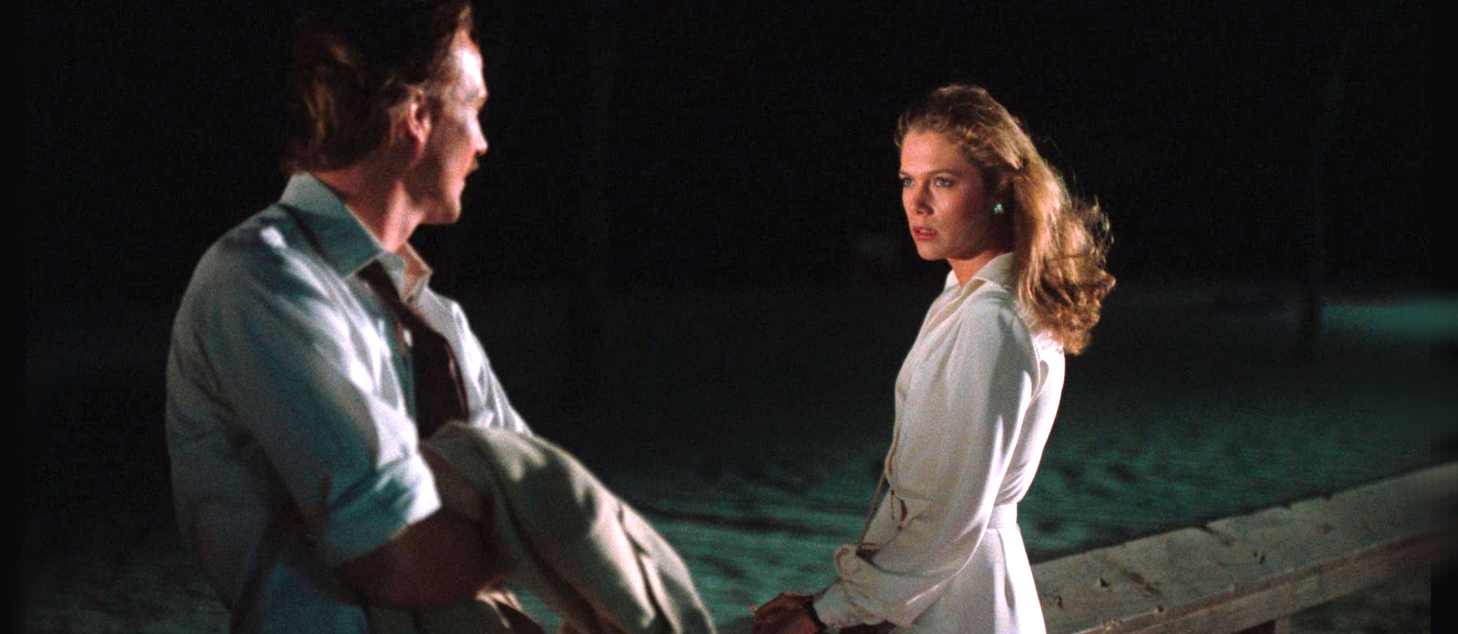
Body Heat — 4K
A shining 4K encoding underscores the heat in Lawrence Kasdan’s ode to cold-blooded murder, committed in the name of sex and greed … and just maybe, love. William Hurt and Kathleen Turner became overnight stars in some of the hottest scenes ever to hit mainstream theaters; Richard Kline’s steamy images and John Barry’s seductive music sealed the deal. Kasdan’s film also brought the notion of film noir to mainstream attention. Soon thereafter came the new term ‘Neo-noir.’ The show also introduced most audiences to Ted Danson and Mickey Rourke.
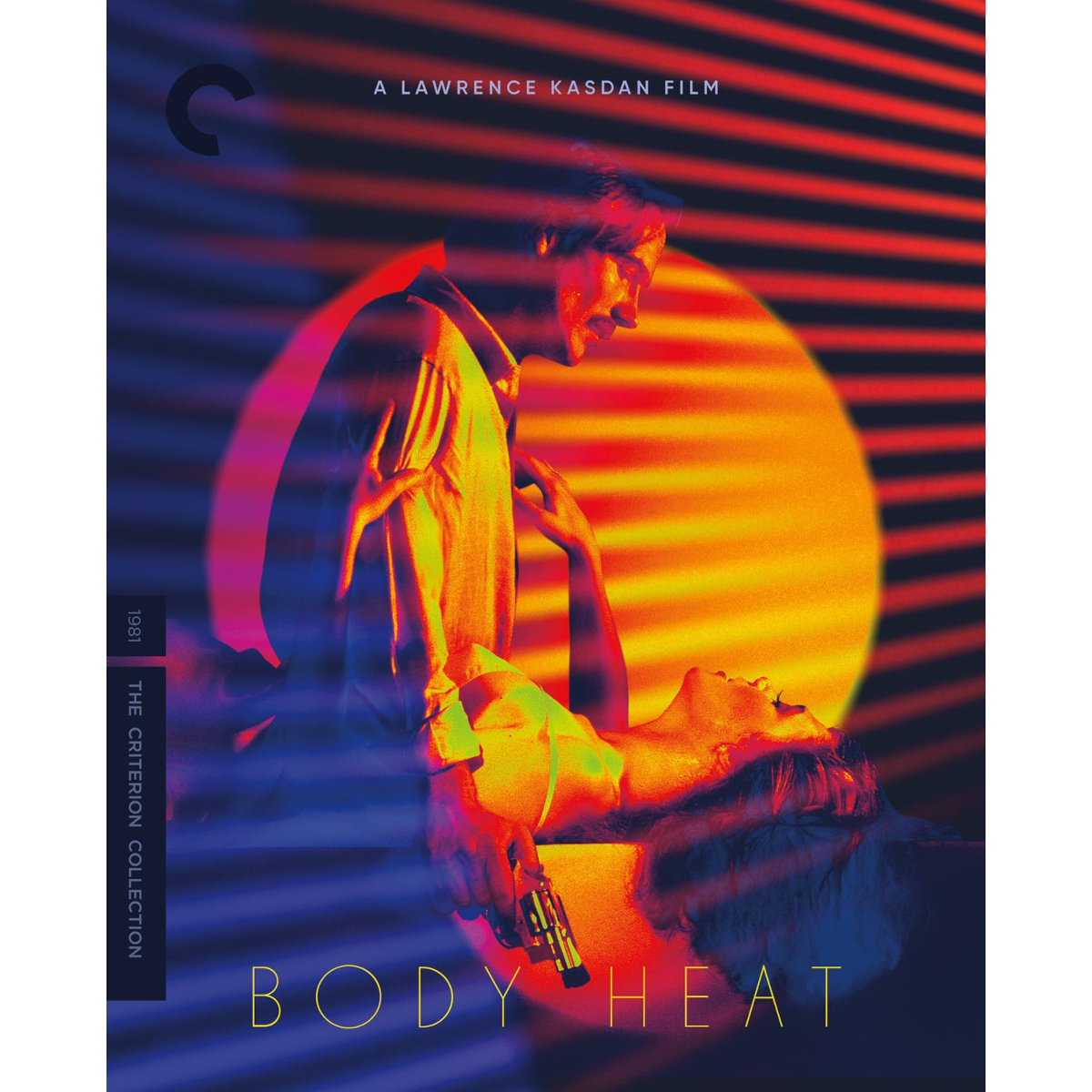
Body Heat
4K Ultra HD + Blu-ray
The Criterion Collection 1308
1981 / Color / 1:85 widescreen / 113 min. / available through The Criterion Collection / Street Date Nay 19, 2026 / 49.95
Starring: William Hurt, Kathleen Turner, Richard Crenna, Ted Danson, J.A. Preston, Mickey Rourke, Kim Zimmer, Jane Hallaren, Lanna Saunders, Carola McGuinness, Michael Ryan, Larry Marko, Deborah Lucchesi.
Cinematography: Richard H. Kline
Production Designer: Bill Kenney
Film Editor: Carol Littleton
Costume Design: Renié
Music Composer: John Barry
Produced by Fred T. Gallo
Written and Directed by Lawrence Kasdan
 Film students in the 1970s were made conscious of the notion of Film Noir. One had either heard the term or had not, and it became a code word for those imagining themselves part of a cinema in-crowd. But pretty much everyone was taken by surprise by the introduction of a new trend, which came to be called Neo-noir.
By 1980 Lawrence Kasdan was already a trusted collaborator of George Lucas, having written both The Empire Strikes Back and Raiders of the Lost Ark. Lucas helped Kasdan jump to directing, for a full-on attempt to revive the classic noir style — mood, context and hardboiled dialogue. Body Heat is arguably the first self-conscious Neo Noir. The Long Goodbye, Chinatown, Night Moves and Taxi Driver had paid nostalgic and stylistic homage to the noir world, but Kasdan’s aim was a full revival, modernized yet still focused on the old concerns. Too often described as a spin on Double Indemnity, Body Heat is more detailed in structure and more pessimistic about human nature. The noir hero for the Reagan years is less like the cocksure Walter Niles and more like the self-defeating Al Roberts of Edgar Ulmer’s Detour.
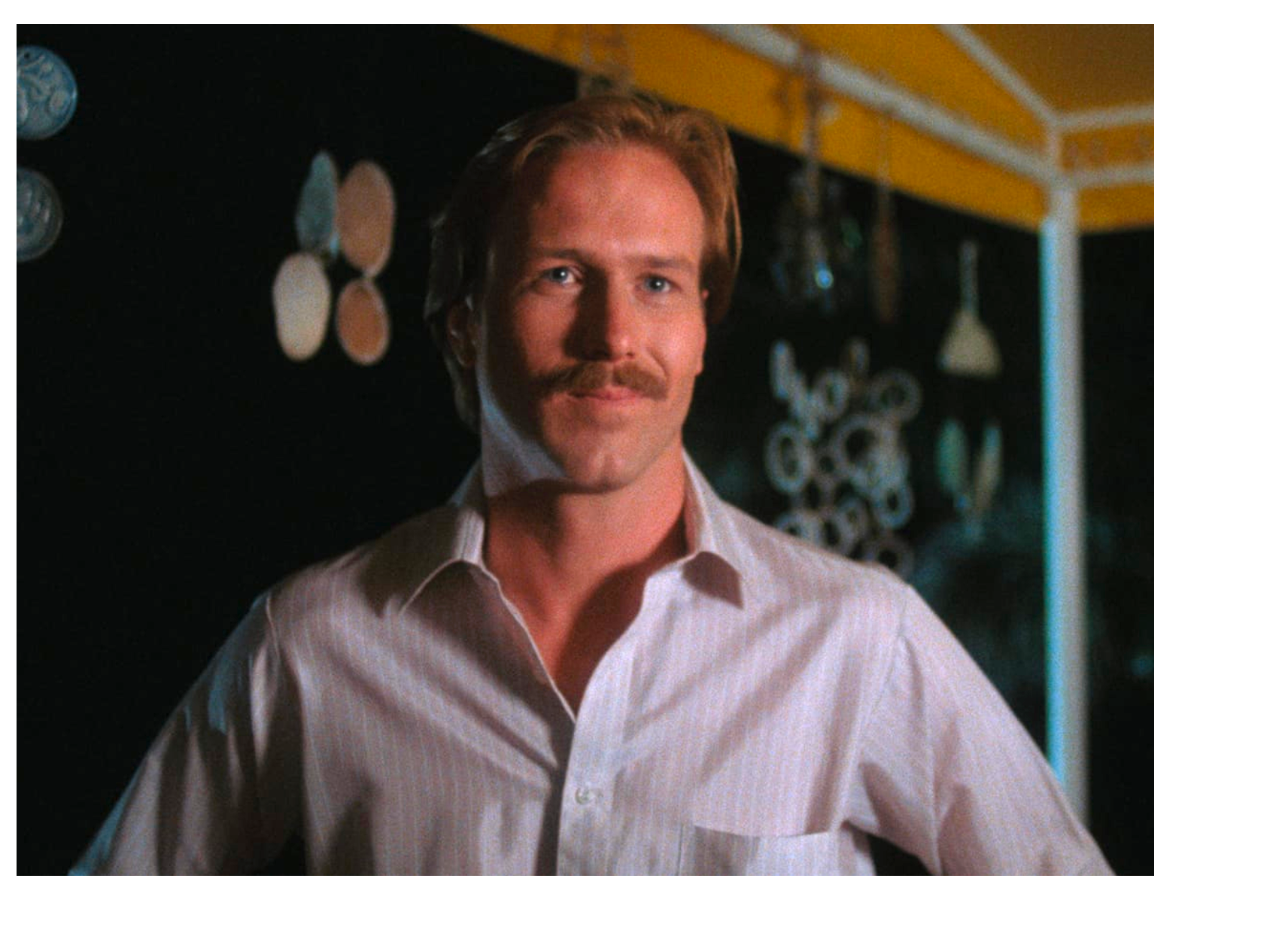
When Body Heat became a big hit, it launched a directing career for Kasdan and made stars of its leading actors. Several supporting actors received major career boosts as well. The tale of Ned and Matty still feels modern. It looks and plays better than ever, after decades of ‘neo-noir’ wannabes.
The weather report for southern Florida is hot and steamy, with a chance of lax morals. After losing a particularly embarrassing case to this friend D.A. Peter Lowenstein (Ted Danson), lackadaisical attorney Ned Racine (William Hurt) soothes his ego by leaping into a torrid adulterous romance. His partner is the sultry Matty Walker (Kathleen Turner), a looker who has no difficulty picking. him up in a bar. When Matty and Ned think about the future, all ideas lead to the same course of action — murdering Matty’s obnoxious, but rich, lawyer husband Edmund (Richard Crenna). But how can they pull it off? Both Peter and Ned’s other friend detective friend Oscar Grace (J.A. Preston) are intimately aware of Ned’s reckless behavior where women are concerned. He’s the kind of nice-guy slacker that normally gets away with nothing.
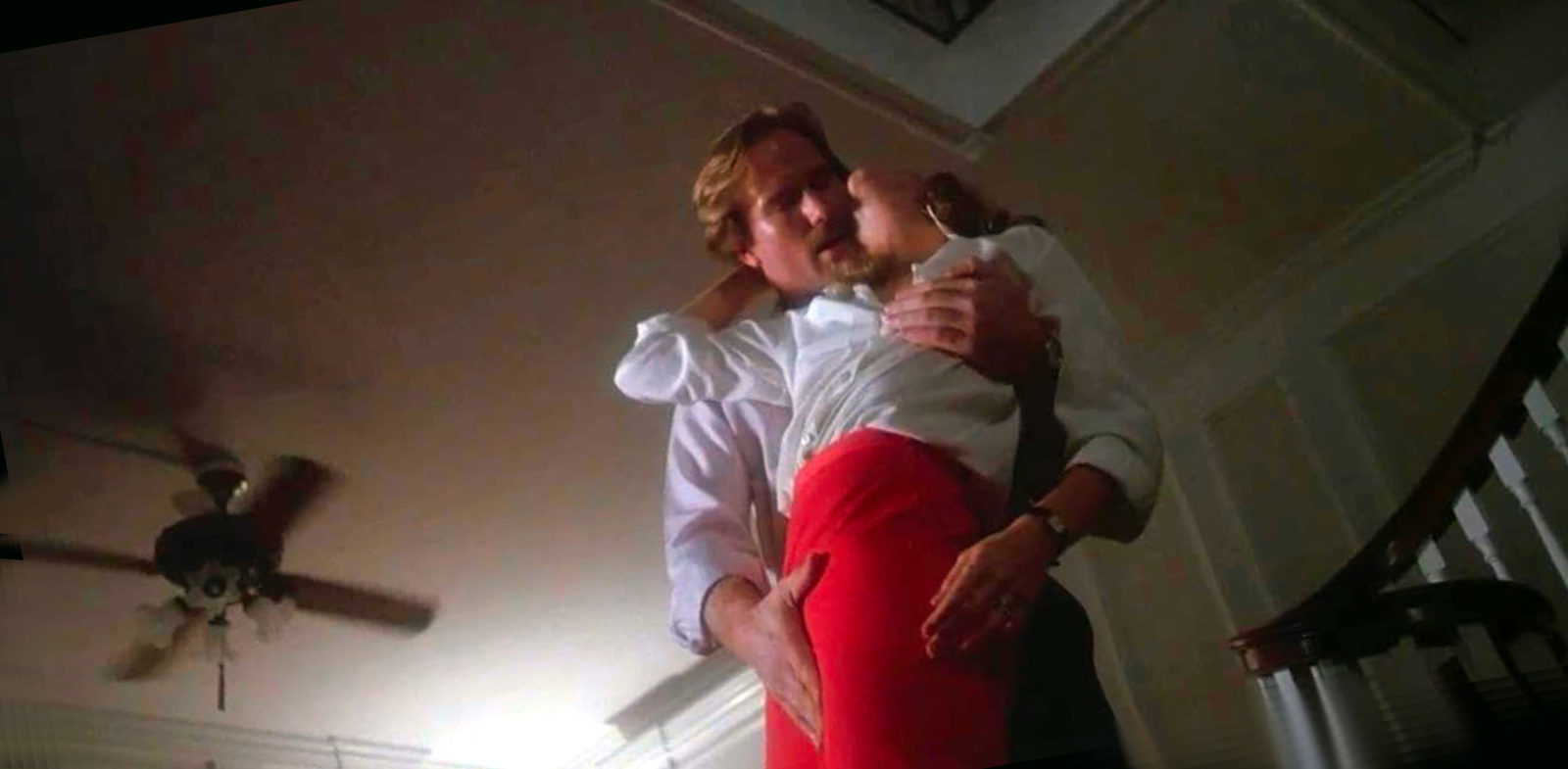
Body Heat was the film to see in the summer of 1981. The two-page rave review in Time Magazine was so positive, you’d think the critic had been paid off. But the movie generates a powerful noir charge, while delivering on its promise of elegant soft-core sex thrills. Richard Kline’s prowling camera and John Barry’s sinuous music emphasizes a tempting ‘tropical’ state of mind; director Kasdan’s script is a tour-de-force of sexy encounters and anxious suspense. The visuals strike a balance between filmic precision and doubtful effects … isn’t that clown a little too on-the-nose? We knew the film would end badly for somebody, perhaps everybody. But Kasdan’s clever plot complications outshine those of most of classic-era noir. Viewers not on their toes may need two viewings to fully grok the surprising finale. Could somebody really get away with such a thing?
The basic story structure does resemble that of Billy Wilder and Raymond Chandler’s Double Indemnity, substituting an incompetent attorney for a hotshot insurance salesman. Ned Racine is not a cynic like Fred MacMurray’s Walter Neff, but he is woefully incapable of recognizing when he’s out of his league. Ned’s disposition is reasonably optimistic — only in the later stages does he compare with Detour’s pathetic loser Al Roberts. Through most of the picture he’s a better fit with Robert Mitchum’s Jeff Markham of Out of the Past. Both males are so hooked on a sexual high that nothing else seems real. Matty clearly has Ned’s number when she tells him, “Well, some men, once they get a whiff of it, they trail you like a hound.” Ned isn’t sufficiently cold-blooded to deal with a truly ruthless female opponent.
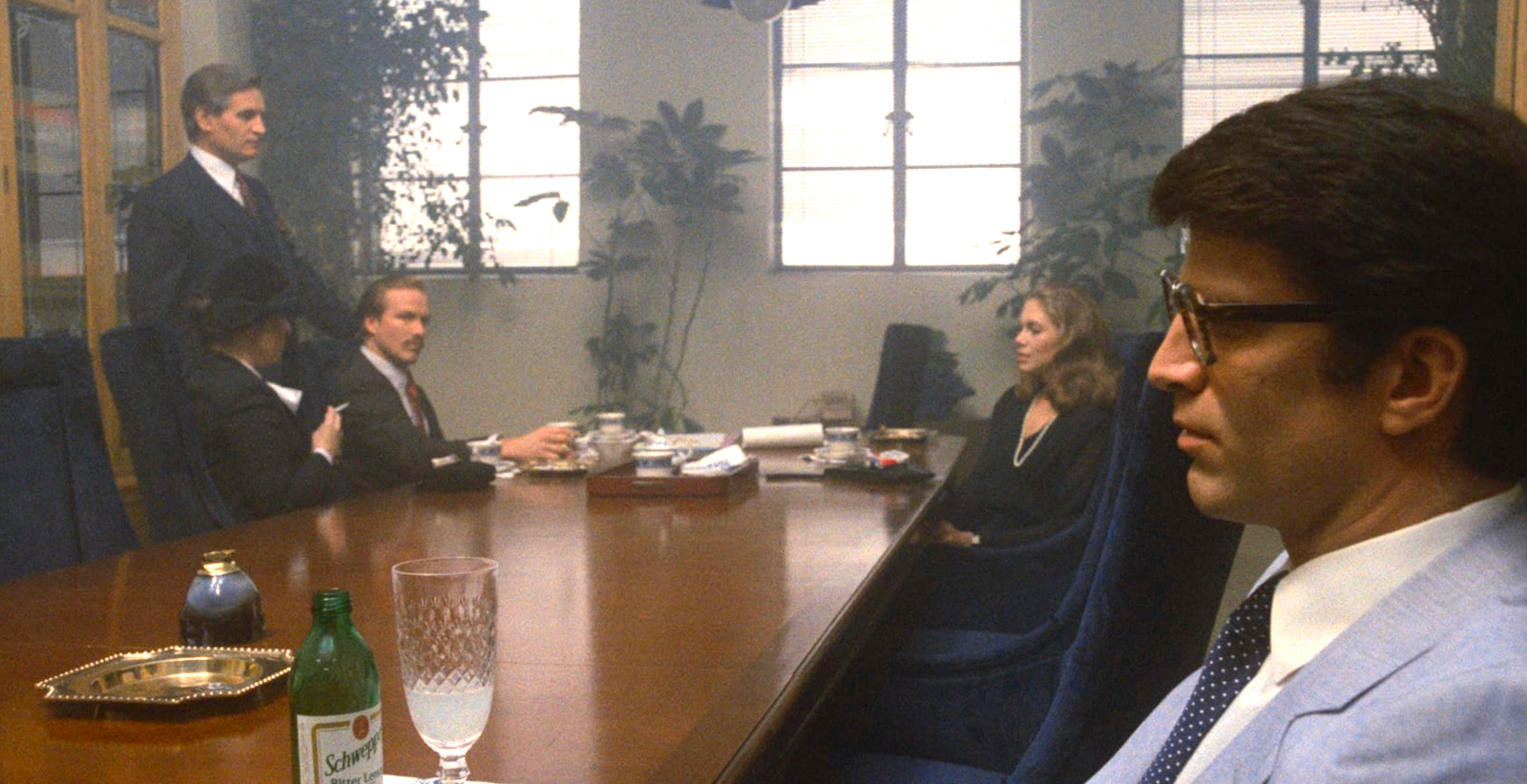
Kasdan gets away with his neo-hardboiled dialogue by making it funny, and even letting his characters in on the joke. Ned and Matty know that they’re trying to talk tough, and that their courtship is a game … for quite some time they mask the seriousness of their relationship with their own erotic fantasies. They seem to know only two modes of behavior, passion and murder.
Ned is tall and handsome, but the only place Ned flexes his … masculinity, is in the bedroom. Sitting face-to-face across a restaurant table with Edmund, Matty’s aggressive husband, he becomes an insecure lummox. Seeing how Matty treats her husband over dinner, one would think Ned might wonder what would keep her from such dishonesty with him, as well. The answer is obvious — he’s addicted to the amazing sex.
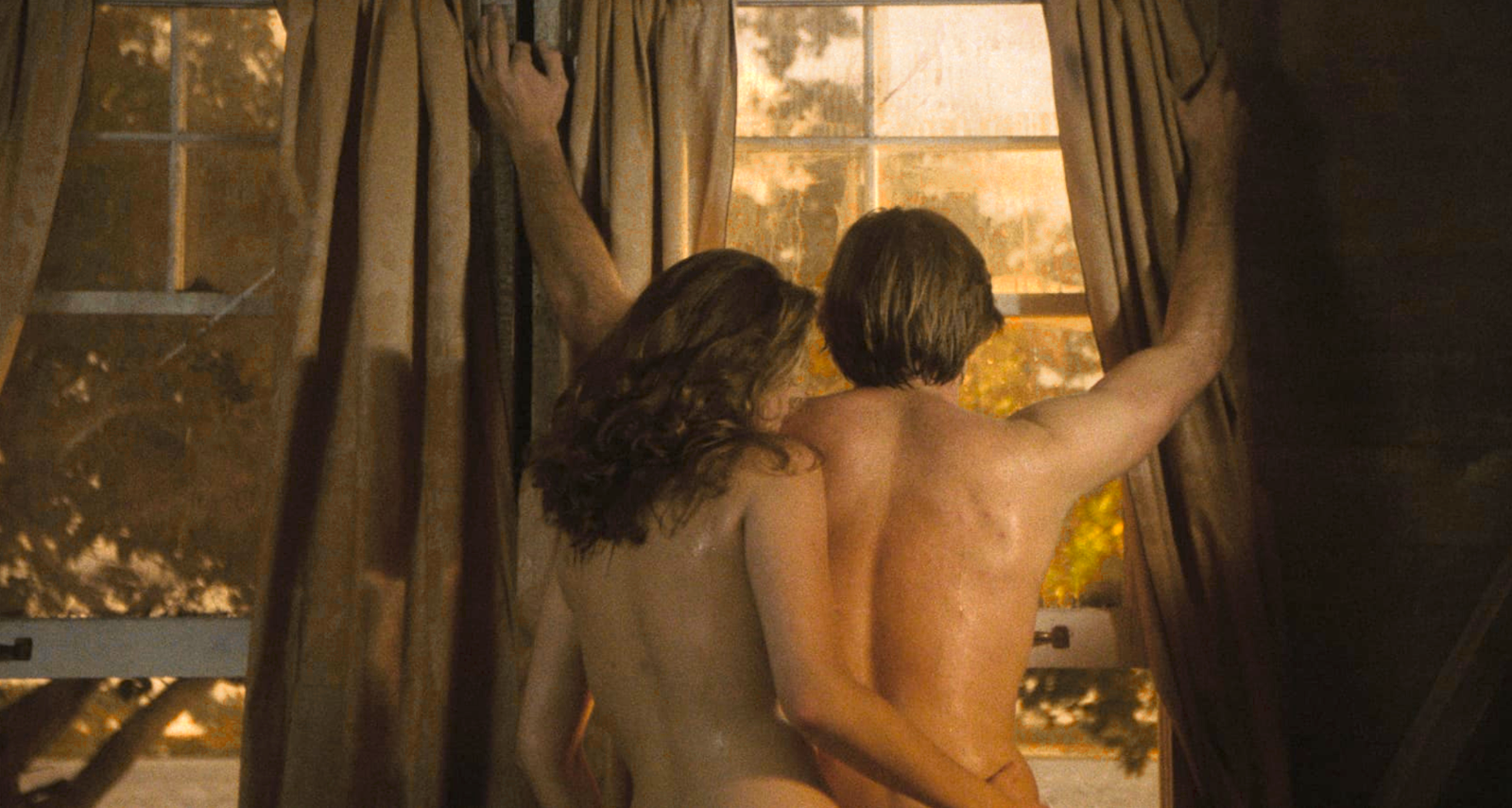
Kasdan dishes up the expected schemes and intrigues, yet Body Heat scores high for discretion and finesse. The visuals show us that the noir style goes beyond Venetian blinds, ceiling fans and billowing curtains. The images sell the heat of the summer, making us acutely aware of the actors’ moist skin and eyes. Ray Bradbury wrote some good poetic dialogue about high temperatures leading to murder in the Sci-Fi film It Came from Outer Space; it just remains talk. Kasdan makes us feel the heat through speech, visuals and the music score too.
Body Heat lets us hope that Ned will survive simply because his lawman friends think he’s too lovable and dumb to commit something as outrageous as a murder. His inability to hide anything shields him from suspicion. Ted Danson’s D.A. Lowenstein and J.A. Preston’s cop Oscar poke fun at their friend, yet are sincerely concerned for him. They know Ned’s capacity for screwing up all too well, and intuit that he’s heading toward trouble. But they don’t expect anything as drastic as murder.
Kasdan uses Danson’s ability to tap dance (a writer’s affectation that felt very fresh in ’81)
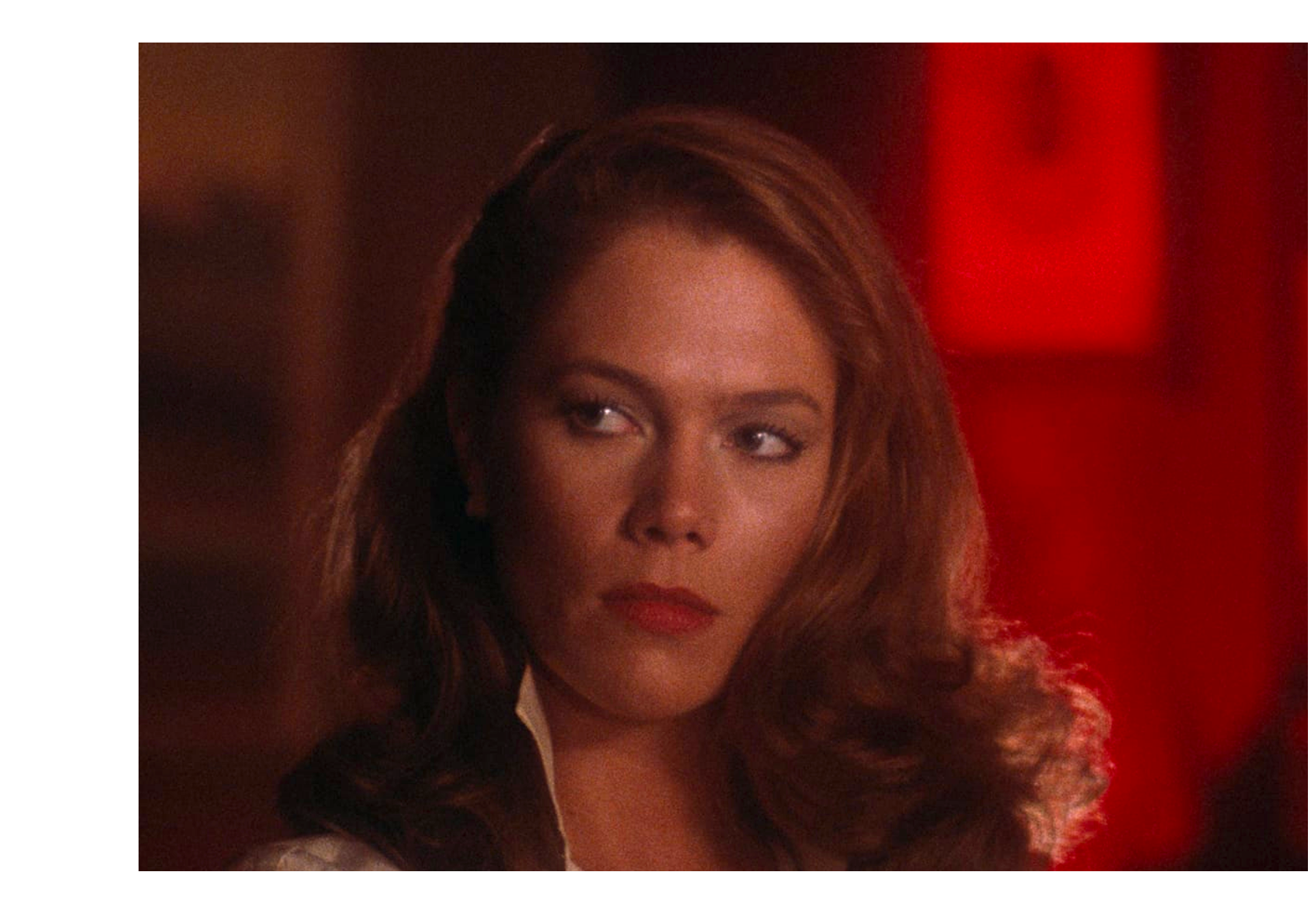
When not depicted as inherently evil, classic Film Noir femme fatales killed for love and to satisfy some basic urge to destroy; they seemed to be taking revenge on the world for putting arbitrary limits on female power. Body Heat reverses Billy Wilder’s rationale for murder by motivating Matty with a desire for independence and financial security. The 1980s world of ‘greed is good’ is knocking on the door. Matty achieves her goal but at a high price. She does away with an old friend, loses what may be the love of her life and kisses her original identity goodbye. Or do any of those losses bother her in the least?
This is the movie in which both Ted Danson and Mickey Rourke first got real career traction (by my memory). Two years before, I first met Mr. Rourke on the set of ‘1941’, when he was agonizing about being stuck on Spielberg’s film and unable to rush to Montana for a role in Michael Cimino’s Heaven’s Gate. John Candy had fun ribbing Mickey for moping around in misery. Both of those pictures were stigmatized as failures, but Body Heat gave Rourke an excellent showcase.
Rarely singled out but worthy of special credit is the lively waitress Stella, played by Jane Hallaren, the star of John Sayles’ Lianna. Her café scenes are mainly there to dispense exposition between Ned and his buddies in law enforcement. Ms. Hallaren provides the extra juice that makes the breakfast scenes fresh and alive. The help of these capable players allows Kasdan to keep his story from feeling too pre-determined, too schematic. The most successful is Ted Danson’s tap dance on a pier: the wisecracking DA has a secret life as a closet Fred Astaire. The diversion is good shorthand to deepen Danson’s ‘utility’ character, and the moment is a break from Body Heat’s rising wave of tension. It may be a writer’s affectation, but it felt very fresh in ’81.

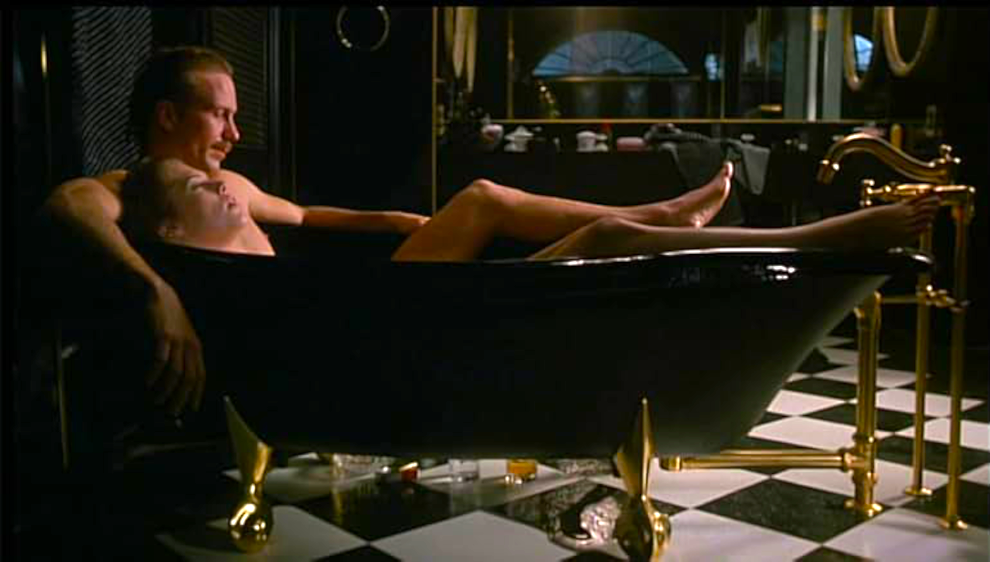
The Criterion Collection’s 4K Ultra HD + Blu-ray of Body Heat is a new 4K digital restoration, supervised by its director and editor. The show is a thing of beauty. Older video versions always looked good, but 4K allows the image to be darker and still read properly, as was intended in theaters. Some of the richest images play in half-light; old cable TV versions brightened everything. That John Barry music score did half the job of selling the movie. The endlessly seductive saxophone never gets old.
Criterion disc producer Valeria Rotello uses images of Matty’s wind chimes in the menus and elsewhere, making us think of movies by the Japanese director Ozu. New extras are balanced against the old. In his new interview Lawrence Kasdan talks about loving movies in his West Virginia hometown, but becoming serious about moviemaking after moving to Michigan. Does that account for his interesting accent? He soon racked up promising writing awards.
Carol Littleton comes off as an editor to admire in her new interview with Bobbie O’Steen, focusing on her long-term collaboration with Kasdan. Many film scenes are played with the original script text on screen, for comparison.
Rotello has good sense to retain the older Laurent Bouzereau disc documentary, which was split into short parts to dodge tax rules for ‘new productions.’ The editor was Brad Grossman. The docu pulls in most of the main creatives, with Kathleen Turner and the late William Hurt remembering their commitment to the project and going through most of the big stories in detail. The ‘summer heat’ movie was filmed during an unusually cold Florida winter, and skill and fortitude were required to make the actors seem to swelter, when in actuality they’re freezing. Ms. Turner recalls holding ice in her mouth before takes to keep her frosty breath from showing.
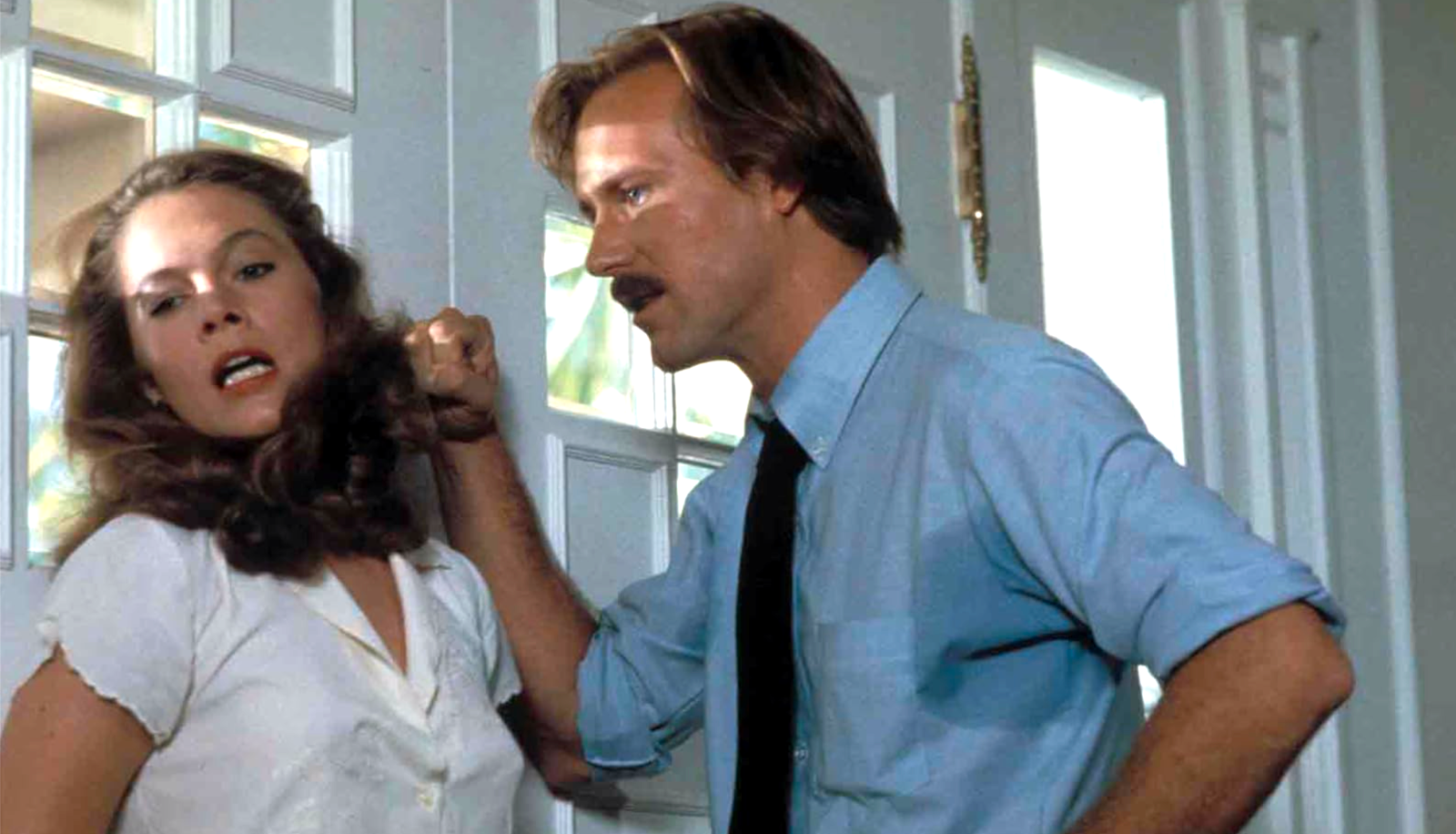
Hurt and Turner talk openly about the sex scenes, which are as hot as could be without full frontal nudity and actual copulation. It was a testy situation and one that Hurt (a very committed actor) made sure was respected by the crew. Body Heat wasn’t pre-sold by leaking hot gossip from the set; when the film took the country by surprise the reaction was more of a gasped, “they can do that?” Sexual foreplay is really on the screen, and in this case it adds a meaningful level to the movie.
Kasdan talks about his good fortune but was also secure in the knowledge that he had written a terrific script. When a producer more or less ordered him to get rid of William Hurt’s moustache, Kasdan stuck by his guns and had the actor keep it. Talk about an auspicious directorial debut …
I hadn’t seen the ten minutes of deleted scenes before; they’re here in full HD quality, looking more like finalized excerpts. None are klunker moments. They were likely removed for pace and timing, and maybe to cut down a surfeit of sexy scenes. In one Matty uses reverse psychology to get Ned to focus on the crime … it’s good, but ultimately not necessary.
Reviewed by Glenn Erickson

Body Heat
4K Ultra HD + Blu-ray rates:
Movie: Excellent
Video: Excellent
Sound: Excellent + alternate 5.1 surround DTS-HD Master Audio soundtrack
Supplements:
New interview with Lawrence Kasdan
New conversation between editor Carol Littleton and film historian Bobbie O’Steen
Archival programs featuring Kasdan & Littleton, plus William Hurt, Kathleen Turner, Ted Danson, cinematographer Richard H. Kline and composer John Barry
Deleted scenes
Trailer
Insert essay by author Megan Abbott.
Deaf and Hearing-impaired Friendly? YES; Subtitles: English (feature only)
Packaging: One 4K Ultra HD + Blu-ray in Keep case
Reviewed: May 10, 2026
(7514heat)
Visit CineSavant’s Main Column Page
Glenn Erickson answers most reader mail: cinesavant@gmail.com

Text © Copyright 2026 Glenn Erickson
About Glenn Erickson

Glenn Erickson left a small town for UCLA film school, where his spooky student movie about a haunted window landed him a job on the CLOSE ENCOUNTERS effects crew. He’s a writer and a film editor experienced in features, TV commercials, Cannon movie trailers, special montages and disc docus. But he’s most proud of finding the lost ending for a famous film noir, that few people knew was missing. Glenn is grateful for Trailers From Hell’s generous offer of a guest reviewing haven for CineSavant.
If I remember correctly Kasdan told in the bonus material of “The Big Chill” (or the one of this film) that he had final cut on his debut as long as he stuck to a certain length, and after delivering his cut he was a few minutes over. So he was forced to take something out so the film would not lose some of the possible theatre showings each day. Which is (one of the reasons) why on “The Big Chill” he was very strict about keeping the planned durations of scenes to avoid a similar situation (keeping all the several story lines properly balanced probably was another).
Thanks for another fine review! Didn’t know the moustache story & love it. Gives Hurt’s character just the right amount of sleaze. 🙂 The movie also makes for a great double feature with Kasdan’s later “The Accidental Tourist”, where our hot couple’s chemistry has cooled off quite a bit. The real big chill.
“Ray Bradbury wrote some good poetic dialogue about high temperatures leading to murder in the Sci-Fi film It Came from Outer Space; it just remains talk.”
It becomes more than talk in Bradbury’s script for Shopping for Death, an episode of Alfred Hitchcock Presents, with Jo Van Fleet, Robert H. Harris and John Qualen. Van Fleet is stunning, and Harris is very very good.
thanks Alan, I’ll look for that episode…
Was Kathleen Turner the textbook definition of steamy in that movie or what?
I thought that the scene of her in the bathtub made her look like a cross between Grace Kelly and Elizabeth Montgomery.