
Tea and Sympathy
Quick, adapt this hit Broadway play for the screen! But remember the guidelines — you can’t directly say what the play is about or use certain words to describe its subject. In fact, you’ll need to eliminate direct references to the play’s strongest statement. The ‘tamed’ film adaption of Robert Anderson’s play gets the glossy MGM treatment, retaining its stage stars Deborah Kerr, Leif Erickson and John Kerr. We were pleasantly surprised that the story still works, despite dated aspects and the inability to, you know, speak its own name. Edward Andrews is also very good, as is the unheralded young actress Norma Crane. So we’ve decided to ‘Be Kind.’
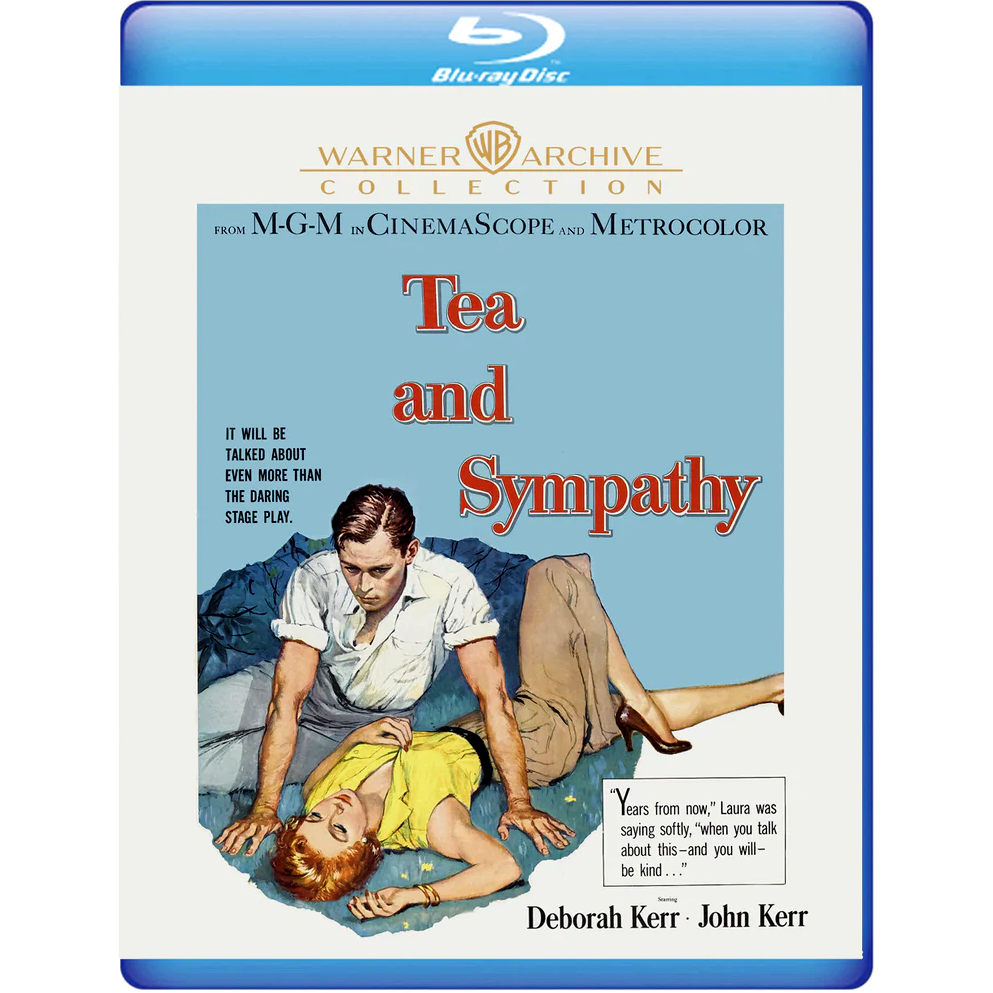
Tea and Sympathy
Blu-ray
Warner Archive Collection
1956 / Color / 2:35 widescreen / 122 min. / Street Date March 31, 2026 / Available at MovieZyng / 24.98
Starring: Deborah Kerr, John Kerr, Leif Erickson, Edward Andrews, Darryl Hickman, Norma Crane, Dean Jones, Jacqueline deWit, Tom Laughlin, Ralph Votrian, Steven Terrell, Kip King, Jimmy Hayes, Richard Tyler, Don Burnett, Mary Ann Hokanson.
Cinematography: John Alton
Art Directors: Edward Carfagno, William A. Horning
Film Editor: Ferris Webster
Music Composer: Adolph Deutsch
Screenplay by Robert Anderson from his play
Produced by Pandro S. Berman
Directed by Vincente Minnelli
 Tea and Sympathy is exactly the kind of Broadway success that Hollywood would by necessity put through the wringer, squeezing out much of its daring content. Playwright Robert Anderson’s text clashed with the Production Code, which had strict ideas about the depiction of adultery, and a policy banning homosexuality from theater screens. The 1953 play became a 1956 movie only after a couple of years of wrangling. Anderson fought for the integrity of his work — but he also wanted the $400,000 fee. From Broadway came Deborah Kerr (her first stage success), and young John Kerr, no relation. Also retained was actor Leif Erickson, whose role was the most changed. Tea and Sympathy dances around its subject and mutes Anderson’s main thematic wrinkle, the one part of the story that qualifies as ‘something important to say.’
Tea and Sympathy is sincere and well-intentioned. Its subject matter is not dated, but many of the particulars are. In form it falls into the genre of Academic Drama, like Terence Rattigan’s The Browning Version. That’s a valid discussion point, because in many ways college life is being pushed in a less progressive, less tolerant direction. The sexual repression is still there, and the brutal elements of male psychology are even more toxic. The ’50s had sex and alcohol; add drugs and political extremism and school today must be, as they say, a challenge.
MGM’s original trailer tiptoes around the source play as if apologizing in advance to the audience; the movie is sold as if it were bad-tasting medicine that’s good for you. The last thing the Production Code would allow was the use of the word homosexual, let alone an open discussion. Instead of the usual words, we hear phrases such as ‘not normal’ and ‘not like the other guys.’
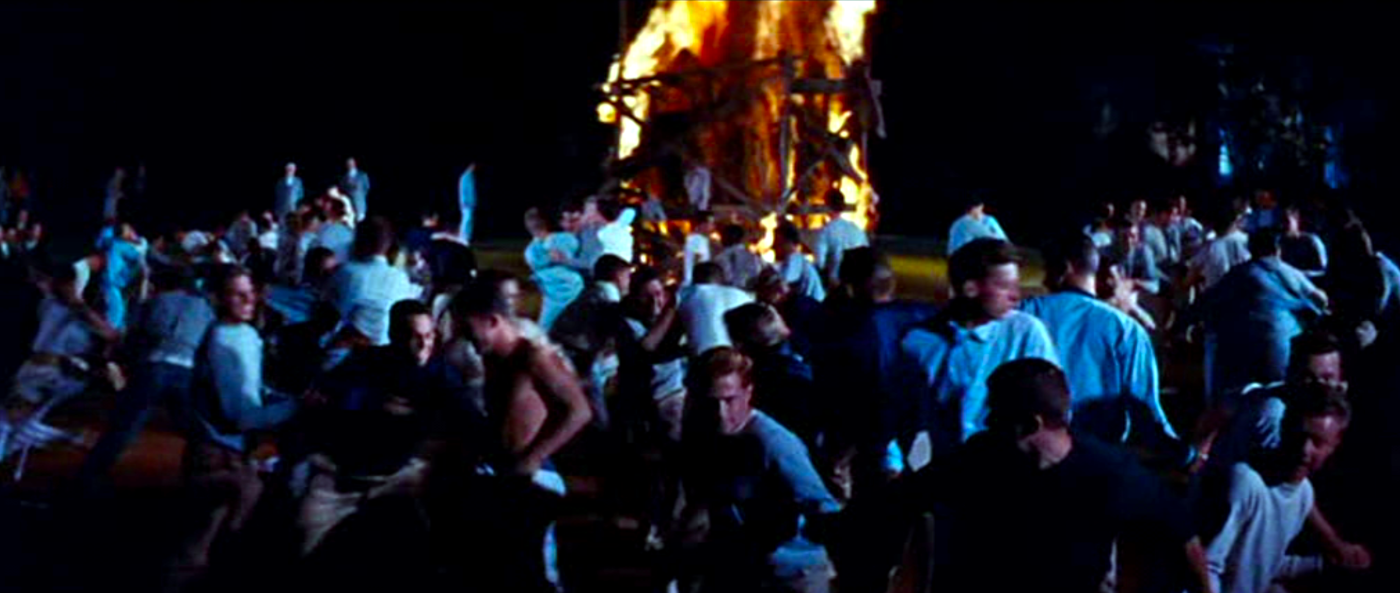
Chilton prep is a private high school for future male Ivy Leaguers. Young Tom Robinson Lee (John Kerr) is getting the worst of the collective male aggression in a group of 18 year-olds all trying hard to be athletic he-men. Tom plays a good game of tennis, but otherwise is a loner who reads poetry, studies music and sings. He still wants to be a folk singer, whereas his father has sent him to Chilton so Bill can ‘make a man of him.’ Not helping is teacher and dorm headmaster Bill Reynolds (Leif Erickson). When not playing, joking and roughhousing with his students, Bill waxes nostalgic about old times with their fathers, his former school pals.
Bill’s wife Laura (Deborah Kerr) sees Tom suffering under the group rejection and intolerance — all of it tacitly endorsed by Bill Reynolds. Tom is presumed ‘different’ because he doesn’t swear, boast of sex with girls, or express himself through male-on-male aggression. It doesn’t help that he’s volunteered to play the role of a woman in the school play. Someone writes the words ‘Sister Boy’ on door of his room. Tom’s roommate Al (Darryl Hickman) even tries to coach him about fitting in with the guys, but Tom’s loner attitude is too far developed. Tom ends up victimized in a ritualized bit of mild hazing.
Tom is also presented as an accomplished tennis player. This feels wrong, as an athletic skill ought to earn respect in the fraternal pecking order. Was he a tennis whiz in the play, or did MGM add the tennis business with the idea that it would make Tom less gay? Tom’s father Herb (Edward Andrews) attends a match. Tom is winning but all Herb can see is that the other boys despise him. He is already writing off his son as an unmanly freak.
Tom is publicly called out for being caught demonstrating his sewing skill on the beach, to Laura and two other faculty wives. One of the ladies quips that Tom will make some woman a good wife. The joke reveals that women reinforce the rules as well … the hive is alert for behavior that doesn’t conform. Bill does not object. The whole point of Chilton seems to be to weed out square pegs. Tom’s father Herb is a product of the moronic old boys’ club — he’d be happy to hear that Tom raped a girl. All Herb and Bill really care about are masculine appearances, flying the caveman flag.
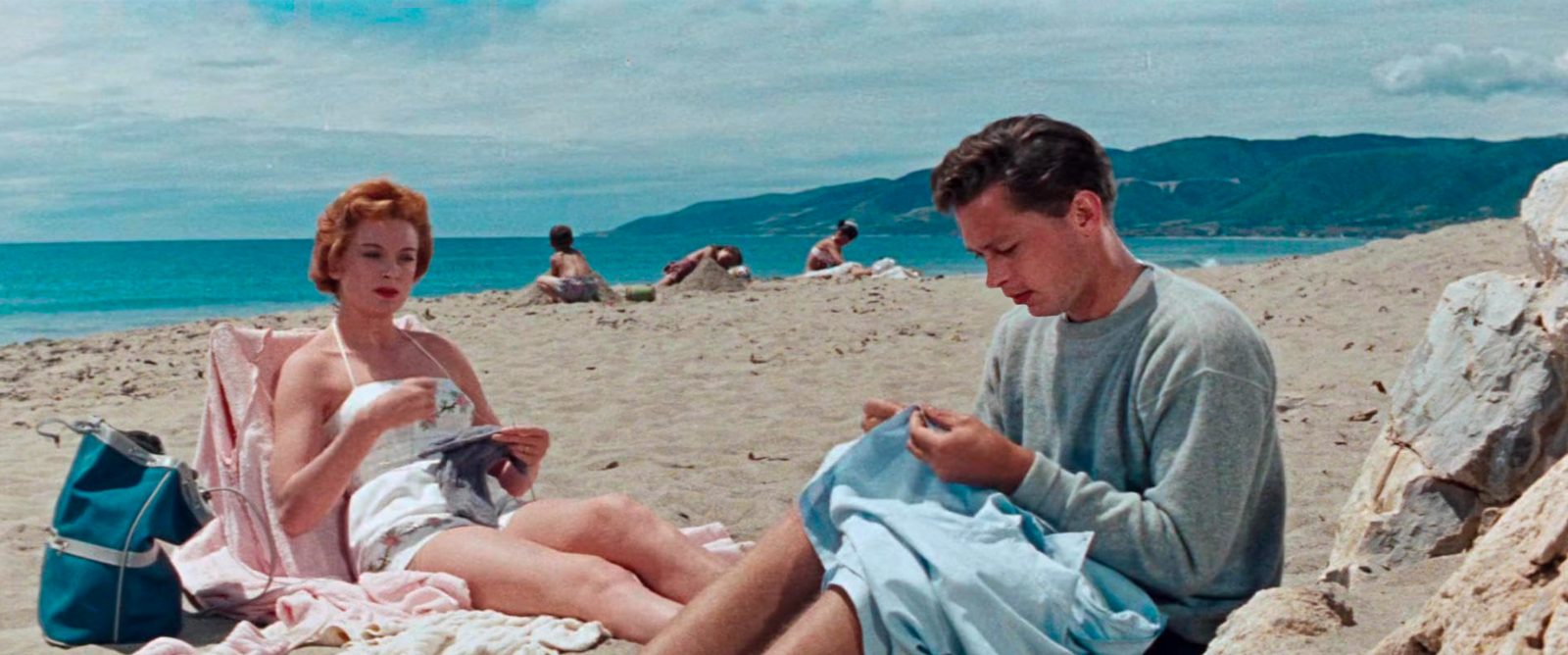
Laura wants to advise and help Tom, but can’t do much while Bill and Herb bark orders at him, tell him to get a haircut, etc.. Bill does not welcome Laura’s interference. Bill clearly has an underlying grudge. When Laura mentions her first husband, lost in the war, he gets a murderous look in his eye. He resents Laura’s mothering of Tom, which comes off as jealousy; he violently tears up a book Tom has gifted Laura.
In Bill’s view, Laura’s job as the dorm housemother is to be a hostess but stay out of the boys’ personal lives. When one has troubles, she’s supposed to offer ‘tea and sympathy,’ nothing more. Laura offers more — but not validation and reassurance: she also sees the need to make Tom Be Like the Other Guys. She points him toward group activities, and socializing with girls … and then determines to help Tom confirm his hetero sexual status.
Laura’s mothering only makes Tom fixate on her more. Roommate Al gives Tom the idea to prove he’s A Man by spending a wild night with Ellie Martin (Norma Crane), the waitress at the soda shop called ‘The Joint.’ That goes disastrously wrong.
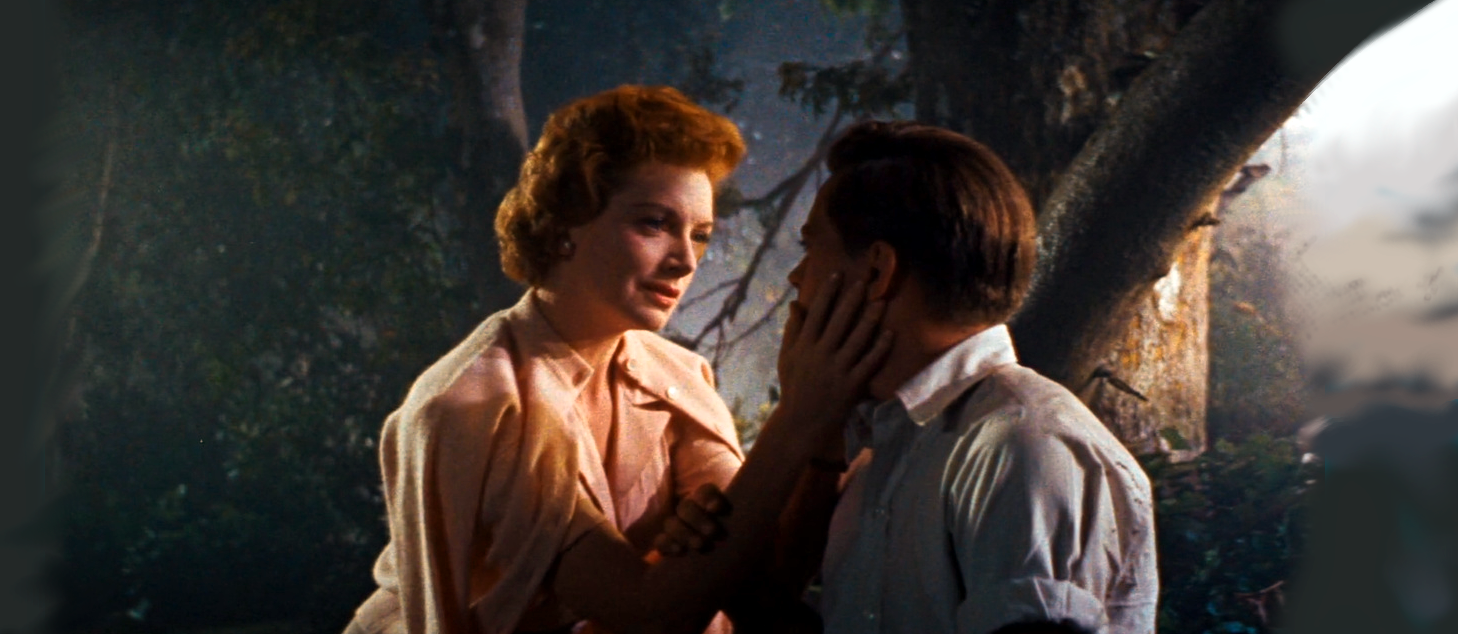
Stage plays of course resolve thorny problems through dialogue, shaped and stylized by the playwright. The first thing a screen adapter would do is look for ways to strip out as much of the wall-to-wall gab as possible. Deborah Kerr’s great acting makes a lot of her dialogue feel redundant. The movie eventually sets up the situation we’ve been primed to see, the one on the poster: Laura will ‘help’ Tom through sex.

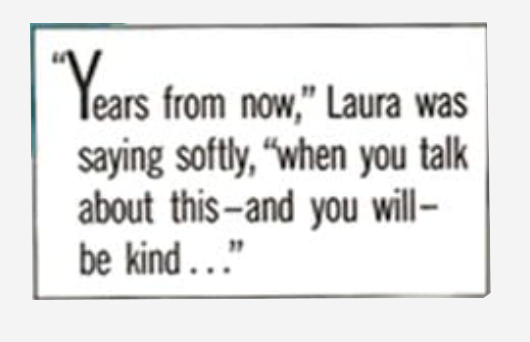
This apparently has nothing to do with all those confused / misguided / criminal schoolteachers that sleep with their underaged students, resulting in big scandals and maybe prison terms. The one dialogue line remembered from Tea and Sympathy is Laura’s appeal for Tom’s understanding:
I’ve heard the line revived as a punch line in more than one sitcom … people recognize it as a goofy ‘movie line’ without knowing its source.
The AFI’s research tells us that the pre-production battle with the Hollywood censors made some big changes to Robert Anderson’s Tea and Sympathy. In the play it looks like Tom will be dropping out of school, to what fate who can say? To ‘resolve’ the offense of adultery and implied homosexuality, the movie adds a bookend flashback structure. The movie’s idea of closure is that Tom, ten years later, is happily married and also a noted author. Laura has been punished for her terrible act by losing her marriage and being exiled to some far-off limbo.
Bill is a miserable old jerk, but he’s saved a box of Laura’s correspondence, so he can give them to the now famous Tom. Tom learns the truth of Laura’s feelings through a letter she never mailed. The movie now conforms to The Code. The proper outcome for adulterers is that the guy writes up his experience for fame and success, and the woman gets a one-way ticket to Palookaville. At least Laura didn’t have to jump into a volcano.
The AFI reports that the adaptation made an even bigger change. The play’s Bill Reynolds is jealous of Tom’s closeness to Laura, but it is also implied that he persecutes Tom because he fears the same ‘unmanly tendencies’ in himself. Bill may be working out his ‘unnatural energies’ by spending his days in sports with all those boys that make him so happy.
As Count Von Krolock said, “This alters everything.” It explains why Leif Erickson’s Bill looks so angry all the time … he’s fighting his own character, and his wife isn’t helping him feel more manly. Actor Erickson did lots of good supporting work in quality films, but he may now be most known for his ‘possessed zombie dad’ in Invaders from Mars. The moment his face goes angry in this movie, all we see is Killer Dad. We expect Bill to warn Laura to ‘stop reading those trashy comic books.’
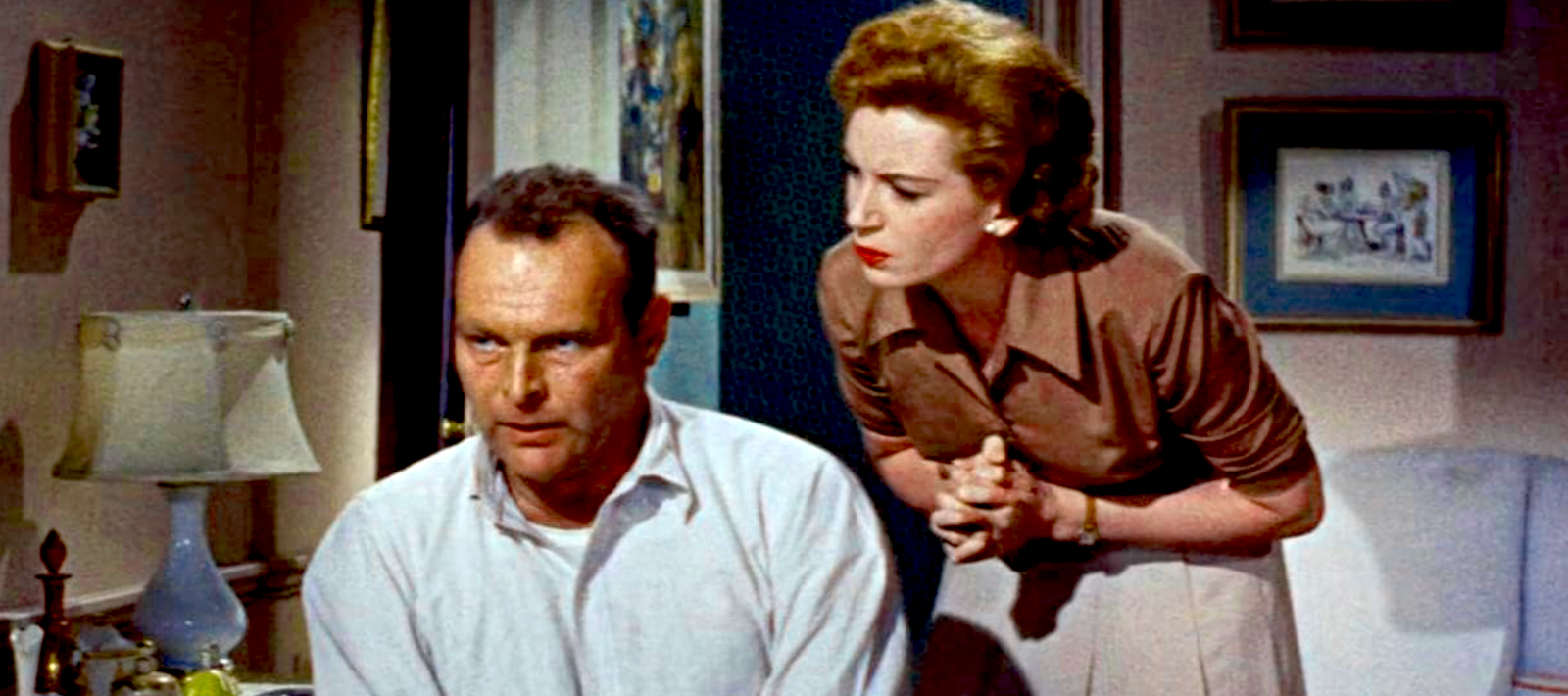
We’re impressed that playwright Anderson would suggest that exaggerated male competition — the overly aggressive sports competition, the hazing, the boasts of non-existent sex experience — can be anxiety over one’s sex identity. It’s as good a theory as any; liberals pretty much consider it gospel. The Production Code would never let Tea and Sympathy state those ideas directly, yet the evidence is all in place. We’re daring! And in good taste! And 90% neutered!
In the play, Laura and Tom become lovers in a dorm room (God bless dorm rooms). Minnelli moves the setting to a ‘sylvan glade.’ On this first viewing we weren’t fully sure how Laura would have known where to look for Tom, and we’re not sure what he’s even doing out there. But the Garden of Eden greenery bestows a visual blessing on the couple. Laura’s motivation comes off as unselfish. What’s in it for her?
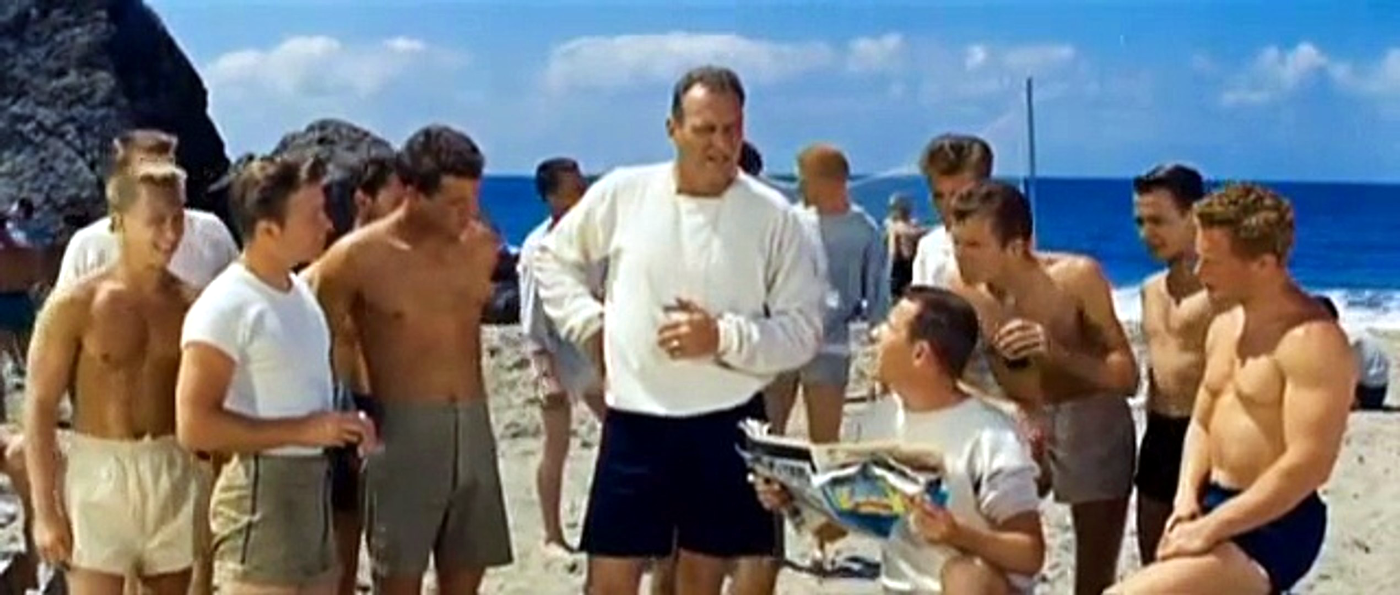
MGM’s champion of good taste Vincente Minnelli plays everything straight. The school grounds are almost all filmed on the back lot, and the majority of the picture plays out in a few rooms in the dormitory. The company went to Zuma Beach for the seaside episode — we can see Malibu beyond, with hardly a sign of development in the hills.
Minnelli blocks the actors nicely enough. The leads are all good, John Kerr especially; he was introduced the year before in Minnelli’s The Cobweb. The show has the benefit of cinematographer John Alton, the former legendary noir cameraman who by this time was filming high-key color for MGM. His interior lighting is still careful to find source motivation for everything. Finally seen in good quality video, we note that Minnelli & Alton try some color tricks with the cyclorama backdrops behind the interior/exterior set for the dormitory garden … I wonder if a Minnelli theorist will associate this with some psychological motive.
One effective Minnelli touch is the neon sign for ‘The Joint’ where Ellie works. It’s bright red, and Laura can see it from her apartment! ↓ When Laura braves the rain to visit Ellie the symbolic red sign throws an accent glow to the set. It might as well read ‘Sex – Ellie – Here.’
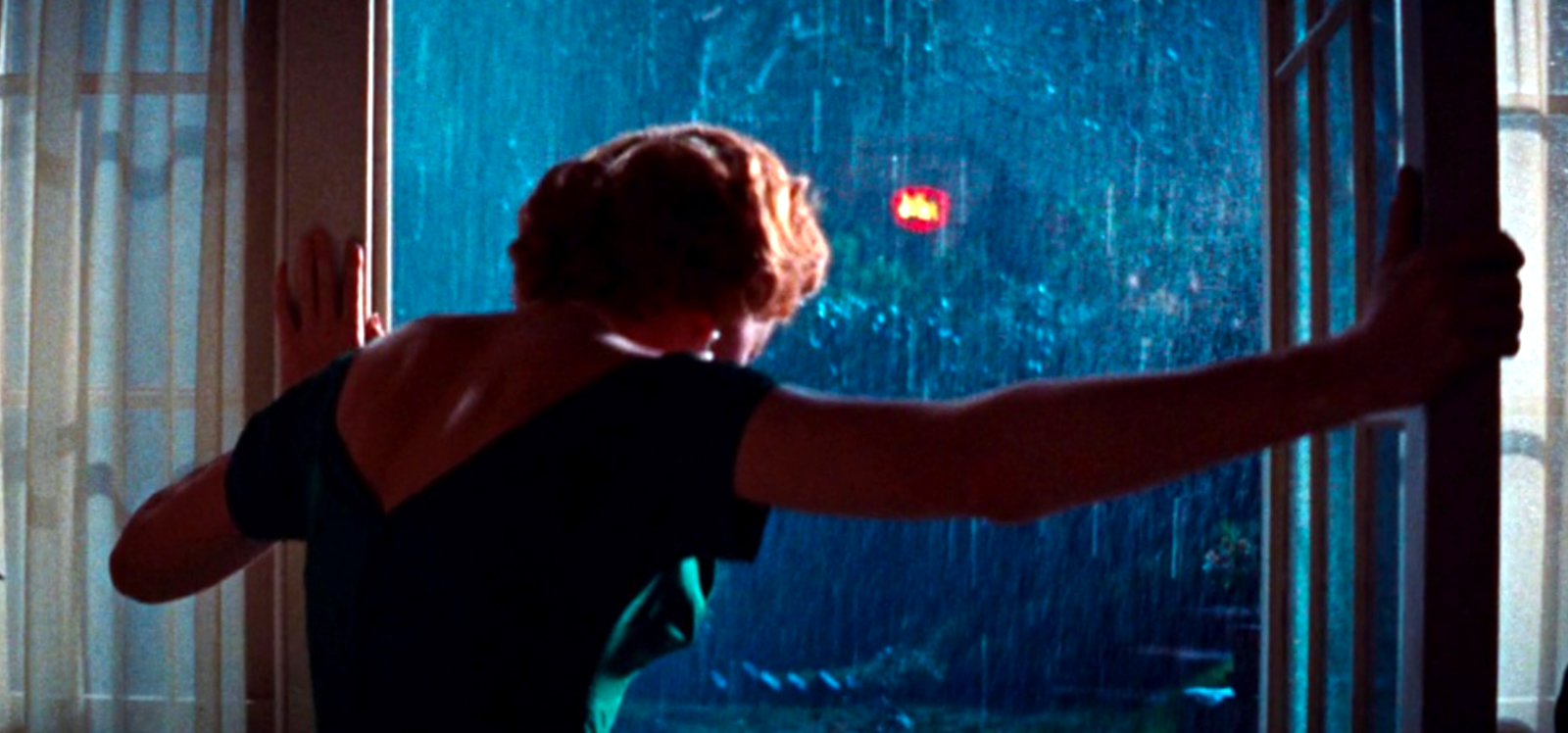
Norma Crane’s Ellie Martin character is the freshest thing in the movie, the only person not living in a behavior strait-jacket. ↘ Ellie comes off as a natural. The scene allows Deborah Kerr to communicate better too, because she can just ‘be there’ and behave, without words doing the heavy lifting.
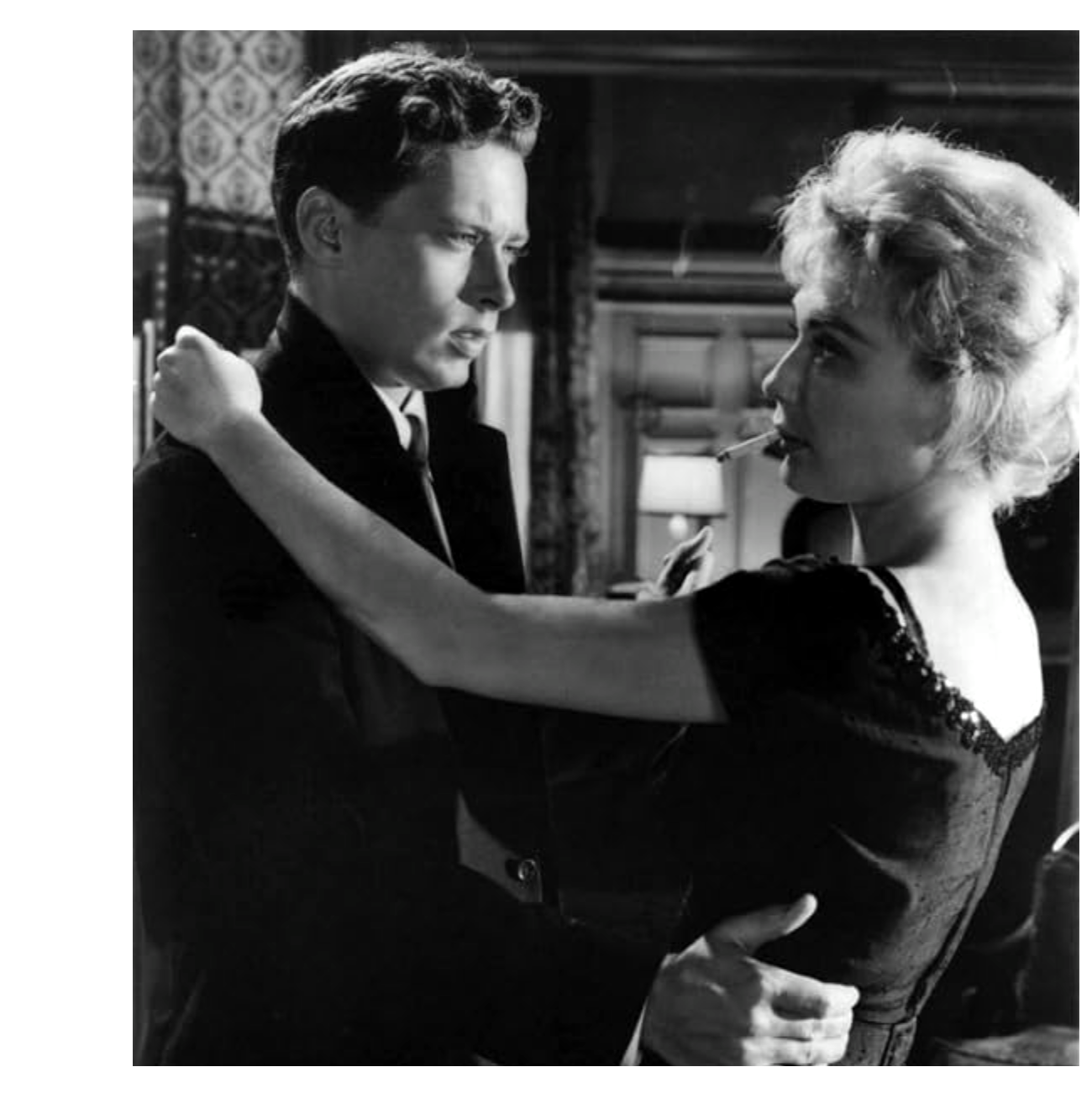
Laura gives Ellie a flower, another big slice of symbolism. It’s if she’s placing it on the pillow where Tom will lose his virginity, wishing she could be the one to take it from him. A few more hints, and Laura Reynolds might begin to resemble Deborah Kerr’s neurotic Miss Giddens from Jack Clayton’s The Innocents. Is Laura another frustrated female projecting her personal sexual issues onto the personality of an underage boy?
Actress Norma Crane worked almost exclusively in TV; the big exceptions were this movie and the role of Goldie in the 1971 super-production Fiddler on the Roof. After seeing this little part she suddenly looms large with us. In a perfect world there would be a 1956 movie about two young women, starring Norma Crane opposite the equally expressive, underseen Lois Smith from East of Eden. That would be something.
Nowadays we look at all the male cavorting on the beach and roughousing in the dorm, and think ‘homoerotic subtext.’ But in the ’50s most of America was ignorant of marginalized lifestyles. The movie disapproves of this dominant Testoster-ocracy. On their own, adult men relate to women like little boys, and in a group they’re a pack of hound dogs.
Looking at it all from the stage play’s point of view, the boys are being conditioned to enter this fraternity of fearful clods. They want women as replacement mommies and prefer the company of other men to maintain an illusion of masculinity. Millions of women had surely arrived at that conclusion on their own. I guess the American stage could hint at that view, but ’50s movies sure didn’t.

Future star Dean Jones can be seen in several group setups. A young Tom Laughlin is the most visible and vocal of the dorm rats; he’s of course the future Billy Jack. Compared to Leif Erickson’s ‘big’ acting, Edward Andrews is particularly good as Tom’s weak, painfully conformist father.
Just when one is convinced that maybe the film does’t qualify for Camp status, there comes the scene where Tom tries to return Al’s tie, by holding it out, symbolically. Minnelli can’t have known that the blocking is identical to a setup in Edward D. Wood’s Glen and Glenda, with Ed in drag, holding out an angora sweater.
There’s even something funny about the title art — behind the words ‘Tea and Sympathy’ we see a literal silver tea set. Does it symbolize that the movie will avoid its own subject? Is ‘tea and sympathy’ something like today’s catchphrase ‘thoughts and prayers’ — limp words that really mean “Can’t do a thing for you, but I’m properly concerned?”


The Warner Archive Collection Blu-ray of Tea and Sympathy happily remasters a picture that never looked quite right on video. It was a notorious disaster in Pan-scan, as any attempt to make it fit an old TV screen cut off a character or two. ↓ It’s a Metrocolor (Eastmancolor) show, and good color values have been pulled from the negative. (Don’t judge by the random web images seen here.) The MGM backlot looks the same as ever, and that beach scene sure pops.
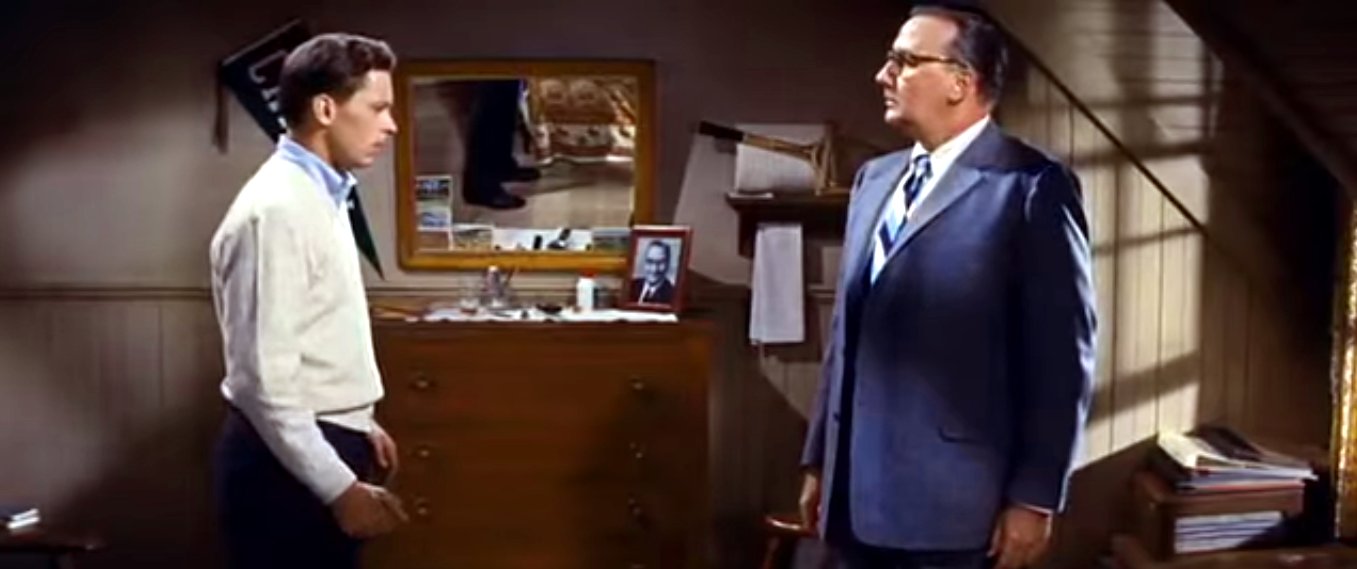
Camera ace John Alton helps make the CinemaScope images avoid ‘field anomalies.’ No shots of CinemaScope Mumps jumped out at us, and I only noticed one pan where the edges waffled a bit. We’re told that soon after the debut of the Panavision lens, some movies contractually obligated to credit CinemaScope quietly used Panavision lenses. At an AMIA lecture, we were told that by 1961 Bausch & Lomb had brought their CinemaScope lenses up to comparable quality. In the interim the competetion had won over the industry.
MGM adds the (practically apologetic) original trailer, plus a Tom & Jerry CinemaScope cartoon, Down Beat Bear. We’re glad they didn’t choose a cartoon where Tom dresses in drag …
We read that some old reviewers had to tiptoe around then-unprintable aspects of Tea and Sympathy. I don’t think the show is now much of a Camp riot experience, like, say, the same year’s The Bad Seed. The soap opera content aside, the depiction of the male society is on the right track. Given the politics of 2026, today’s ‘Male Mob’ reality can be much uglier. It’s certainly a big part of today’s politics.
Reviewed by Glenn Erickson

Tea and Sympathy
Blu-ray rates:
Movie: Very Good despite in some ways very Dated
Video: Excellent
Sound: Excellent
Supplements:
Tom & Jerry cartoon Down Beat Bear
Trailer.
Deaf and Hearing-impaired Friendly? YES; Subtitles: English (feature only)
Packaging: One Blu-ray in Keep case
Reviewed: April 1, 2026
(7491tea)
Visit CineSavant’s Main Column Page
Glenn Erickson answers most reader mail: cinesavant@gmail.com

Text © Copyright 2026 Glenn Erickson
About Glenn Erickson

Glenn Erickson left a small town for UCLA film school, where his spooky student movie about a haunted window landed him a job on the CLOSE ENCOUNTERS effects crew. He’s a writer and a film editor experienced in features, TV commercials, Cannon movie trailers, special montages and disc docus. But he’s most proud of finding the lost ending for a famous film noir, that few people knew was missing. Glenn is grateful for Trailers From Hell’s generous offer of a guest reviewing haven for CineSavant.
This was not Deborah’s first stage success. She received glowing praise for her performance as Ellie Dunn in the West End production of Heartbreak House, with Robert Donat and Dame Edith Evans (1943).
Thanks Kerry — much appreciated — !
Her first American stage success.
Also in the mid-’50s, Edward Andrews again played the father of a seemingly troubled pupil in The Frightened Moment, an atypical Esther Williams movie.
Great review. I remember reading someplace that Anthony Perkins was the understudy for the lead role on Broadway. Anyway, someone saw the show one night with Perkins as the lead and is quoted as saying that the future Norman Bates was unforgettable. Too bad Tony didn’t do the movie, especially with someone rather tellingly named Norma Crane in the cast.