
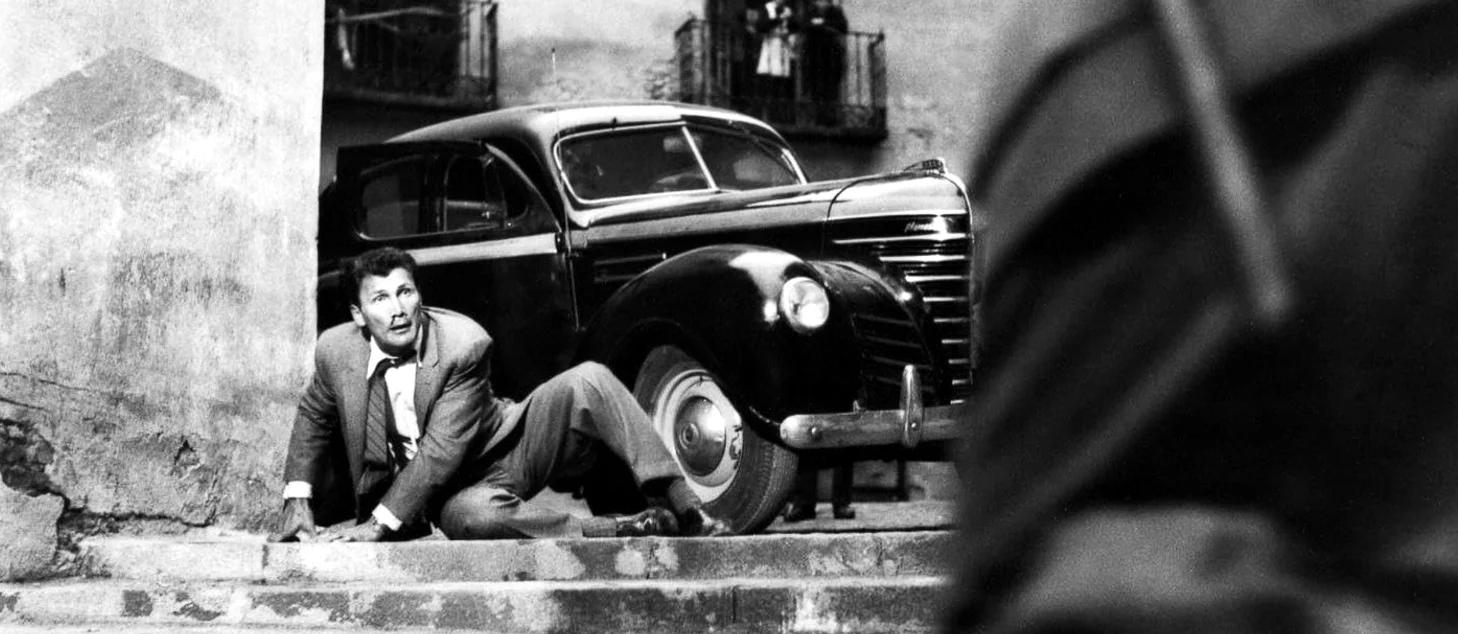
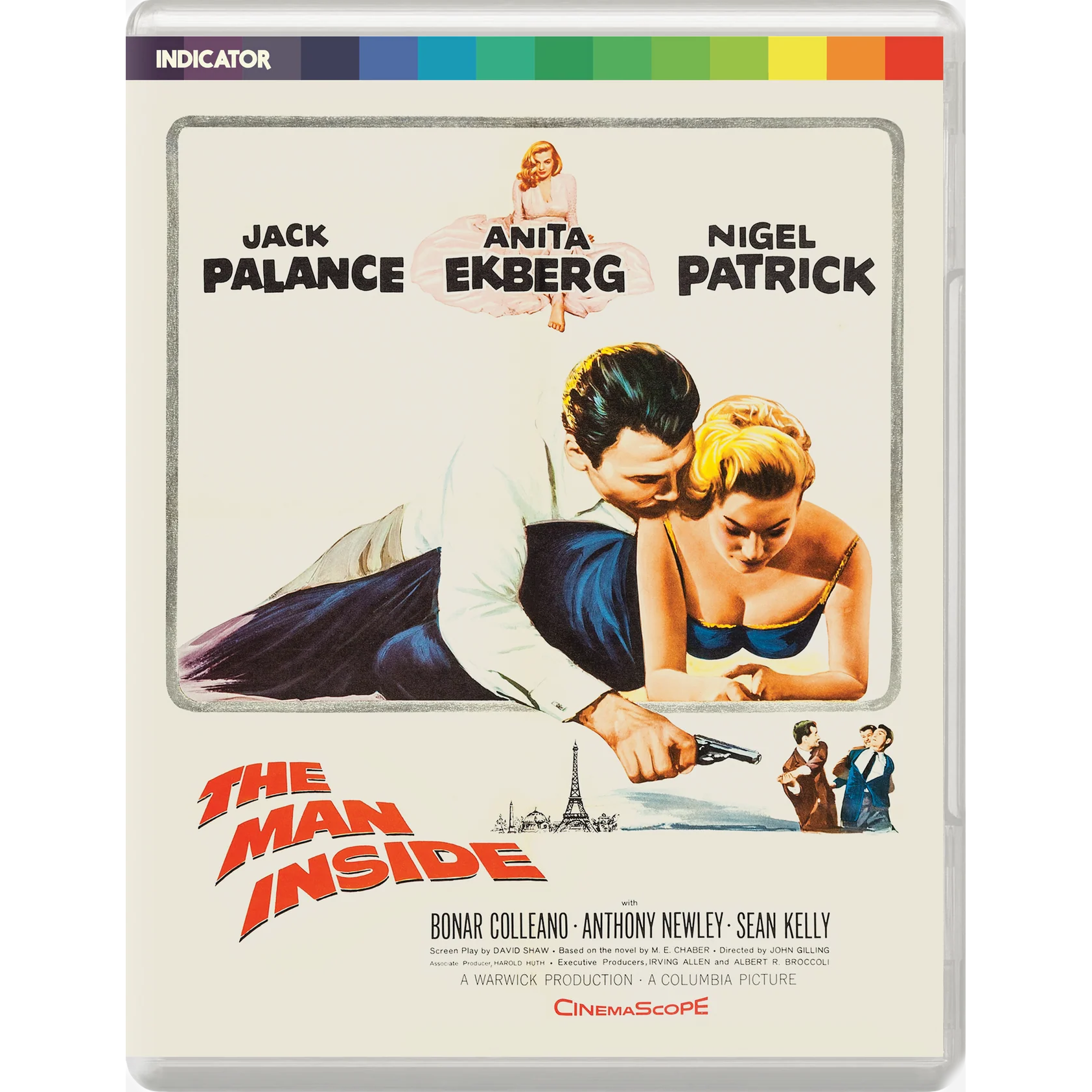

The breakup of the studio monopolies gave some independent producers an edge in the 1950s. In need of movie product for their distribution pipelines, the big studios contracted with outside providers. Early opportunists Irving Allen and Albert R. Broccoli had the contacts and the business expertise, plus the smarts to relocate to London. It wasn’t long before their Warwick Film Productions won a contract with Columbia Pictures to provide ‘A’ product. The Brits were happy to see production for their studios and more work for their talent. Dozens of English companies tried to secure an American distribution deal, and few won them. Warwick did what Lippert and Hammer had combined to do, on a slightly elevated basis — they made easily marketed war movies and suspense thrillers, pairing European talent with at least one American marquee name — Alan Ladd, José Ferrer, Victor Mature. That was a cut above Lippert’s Dane Clark, Howard Duff and George Brent.
As is explained in Vic Pratt’s video essay, Warwick Films wasn’t after industry awards or critical accolades, just reliable box office fare. Their shows are budget affairs, yet some were filmed in color and many in CinemaScope, to look better than B – level program filler. Broccoli and Allen gave actress Anita Ekberg a career boost, along with a young Anthony Newley. Future Hammer director John Gilling was closely associated with Warwick; they took a flyer on his wild science fiction project The Gamma People.
The Warwick scoreboard has no triumphs, however. Their The Cockleshell Heroes is one of the worst WW2 thrillers ever. Pickup Alley is a shapeless international crime tale, structured like a travelogue. Other shows tried to mix pop music, petty crime and comic relief. Warwick finally crashed with The Trials of Oscar Wilde, a quality picture that didn’t find an audience. Irving Allen and Cubby Broccoli went their separate ways.
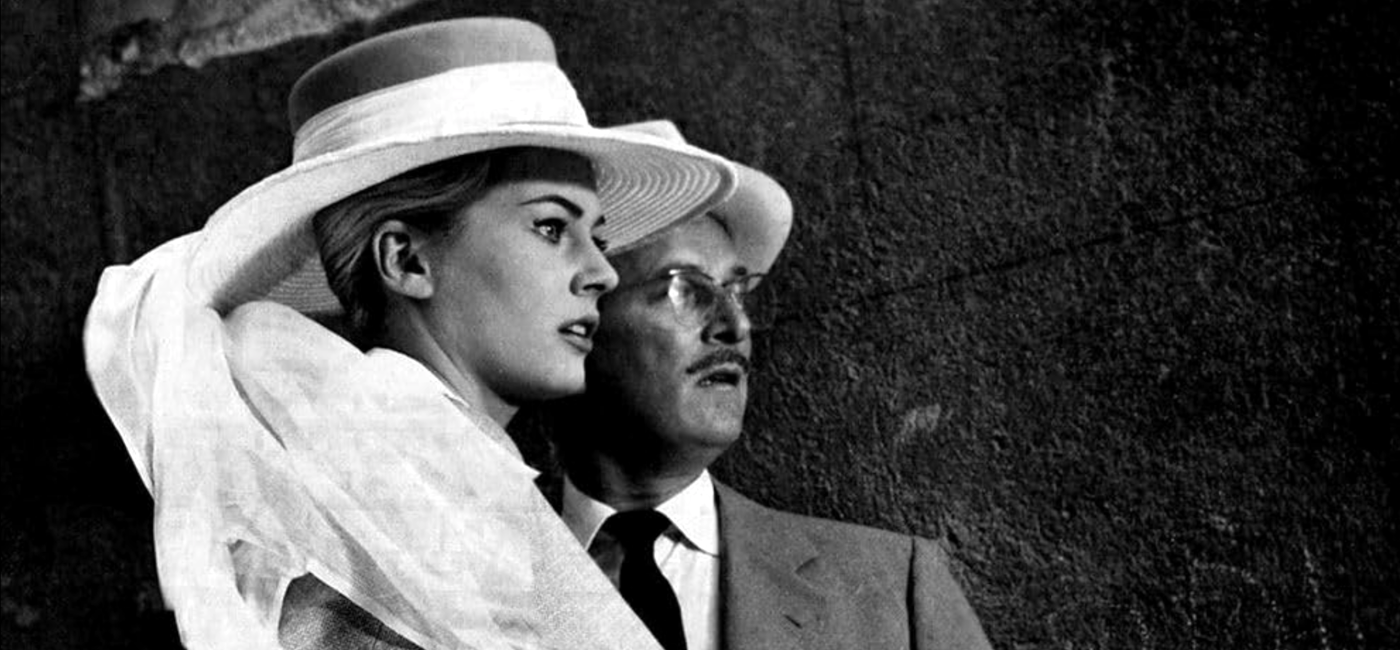
Broccoli of course was soon co-producing the James Bond movies with Harry Saltzman. Two Warwick movies feel like precursors to that 007 franchise. Their bigger-budget Fire Down Below does a terrible disservice to its stars Robert Mitchum, Rita Hayworth and Jack Lemmon, but it has the setting, the calypso music and several supporting actors featured in Dr. No. A year later, Warwick’s The Man Inside takes on an international crime manhunt that mixes violent murders and escapist thrills, with jazzy music telling us it’s all in fun. As with many Warwick pictures, the initial cast was replaced with more realistic names. John Mills and Gina Lollobrigida were first announced, but the final leads became Jack Palance and Anita Ekberg. Palance was most noted for playing murderous criminals; this show looks like an attempt to lighten his image.

The chase spans four countries. In New York, jewel company accountant Sam Carter (Nigel Patrick of Raintree County) flips his lid over a fabulous diamond called the Tyrahanna Blue. He steals it right from the company office, killing an elevator operator during his sloppy exit. Insurance executive Sidney James puts his best agent on the case, Milo March from Dallas (Jack Palance). In a New York tenement, March makes contact with Trudie Hall (Anita Ekberg), who appears to be Carter’s girlfriend. Hired killers Rizzo and Lomer (Sean Kelly & Bonar Colleano) blow up March’s car, but he escapes and Trudie slips away.
An obscure clue in a painting of Don Quixote takes March to Lisbon, where he finds that Carter has taken the name Sanson Carrasco, and murdered a forger (Eric Pohlman of Mogambo) also after the diamond. March also reconnects with Trudie, who claims that the diamond is rightfully hers, as it was stolen during the Nazi era in Austria.
The story moves to Madrid, Paris and eventually to a boat train to London. March and Trudie continue to flirt, even though she’s also aiding Carrasco / Carter and pointing guns at March now and then. Along the way, March finds an ally in Ernesto, a Spanish cabdriver (Anthony Newley). Ernest puts a few fast one over on the gangsters Rizzo and Lomer.
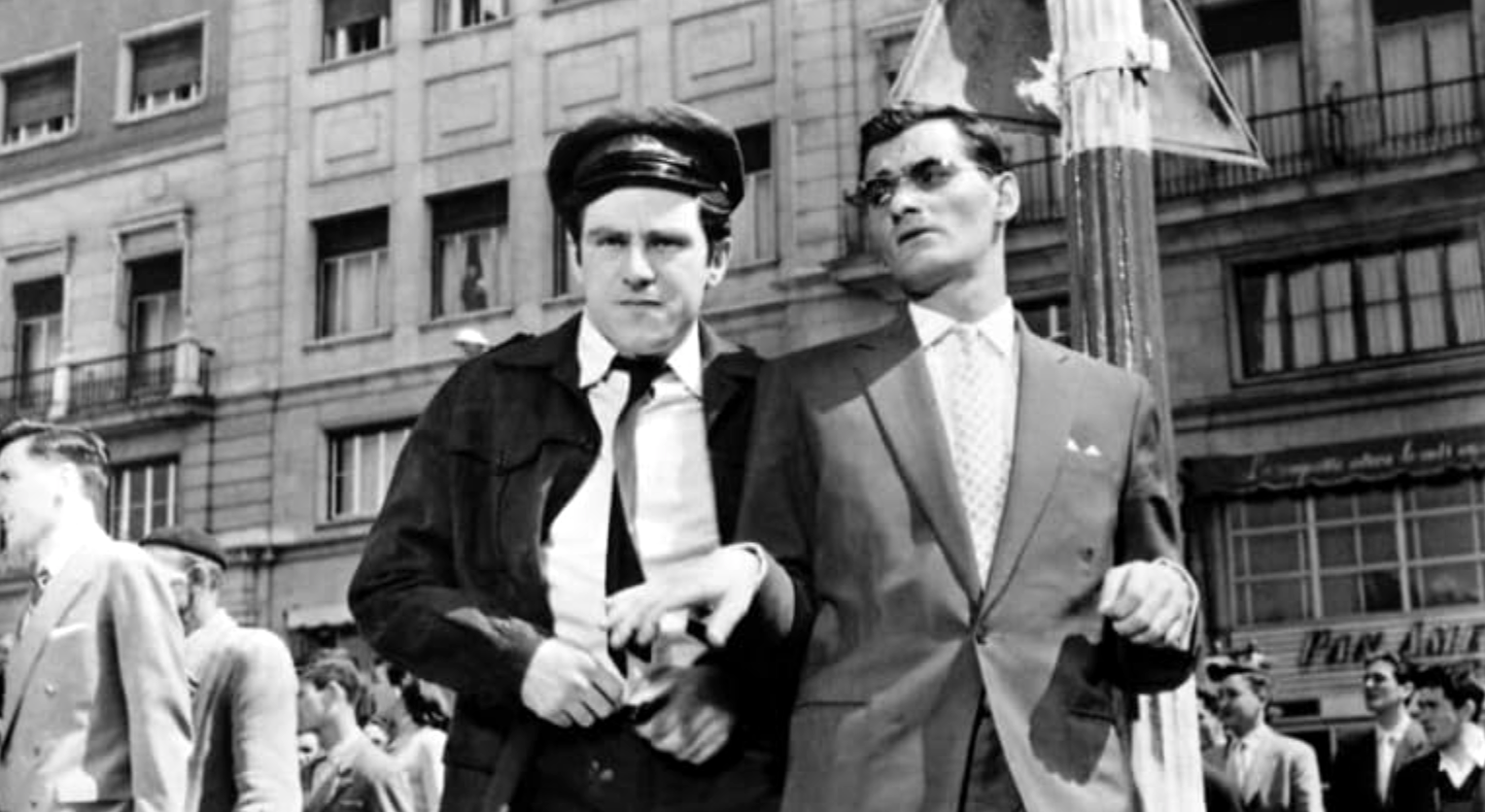
We can see that the movie is trying hard to soften a hardboiled crime tale. Various supporting actors are killed, but the tone stays on the light side. Jack Palance moves fast and is okay in fight scenes, but he doesn’t behave like an action hero. Trudie’s motivation, loyalty and honesty are supposed to be a mystery, yet we can sense that she’ll be redeemed by her attraction to Milo and forgiven/exonerated before the fade-out, just in time for a kiss.
The audio commentators tell us that in the original book, the cat & mouse game between the jewel thief and the insurance agent was much more serious. Our crazy mixed-up jewel thief Sam Carter isn’t well-explained. The very good actor Nigel Patrick had top credits ( Pandora and the Flying Dutchman, The Sound Barrier, The Browning Version) and had just had a major supporting role in MGM’s 70mm epic Raintree County; Warwick thought so much of Patrick that they let him direct one of their pictures, How to Murder a Rich Uncle.
The film’s Sam Carter is a genteel madman obsessed with possessing the Tyrahanna Blue. He doesn’t seem all that crazy over Trudie, and he has no problem shooting people dead. Key scenes involve March interacting with Sam Carter on the sly, supposedly with Trudie’s collusion. It’s a similar situation to Alan Bates’s insurance man tracking Laurence Harvey, a man who has faked his death, in Carol Reed’s The Running Man.
The IMDB tells us that writer-producer Richard Maibaum has an uncredited hand in the development of the script. Maibaum would become an essential part of the launch of 007 four years later, so we look at The Inside Man for clues to the genesis of Broccoli and Harry Saltzman’s Bond Series. The movie appears to be searching for a sure-fire thriller formula, with uneven portions of violence, sex, music and light comedy.
Warwick was after escapist entertainment, without heavy duty messages. The only hint of an underlying theme is the repeated statement that every man has a ‘man inside’ who is dishonest, a thief. A character or two wonders out loud if Milo March will be tempted by the fabulous Tyrhanna Blue stone. Frankly, the diamond isn’t given a big-enough buildup. Why is it on display in an ordinary mercantile office? Jules Dassin’s Topkapi knew how to make a piece of prop jewelry seem ‘fabulous.’
It’s interesting to see Jack Palance play a character who doesn’t have ‘an edge,’ who isn’t always at the verge of a violent act. Even when playing heroes, Jack Palance tends to look hostile and threatening; he knows he can’t be Cary Grant but he does his best to be friendly and agreeable. We enjoy seeing Palance turn on the charm, but have to admit that he’s far more effective as a frightening maniac. Don’t miss his psychotic ‘celebrity’ gladiator in Richard Fleischer’s underrated Bible spectacle Barabbas.
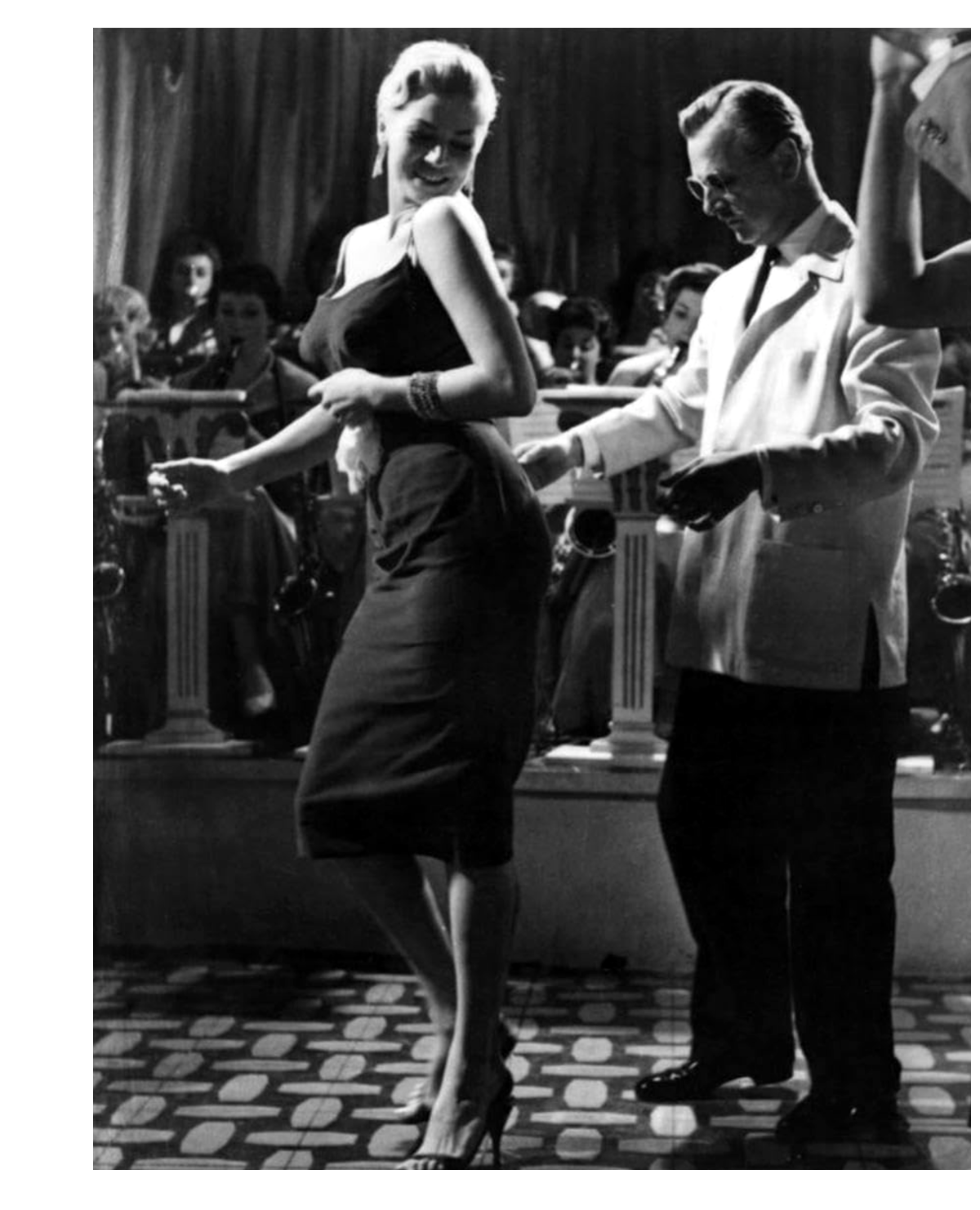
Anita Ekberg has two or three looks in her repertoire, but Gilling’s good direction makes her look as if she might be hiding reserves of feeling somewhere. English genre films exploited the figures of actresses like Diana Dors even more than we did Jayne Mansfield; Ms. Ekberg is simply appreciated for what she is.
English films had restrictive hiring measures, which is why the same actors pop up when someone is needed to play an American. Sidney James and Bonar Colleano are present, only William Sylvester is missing. The ‘international’ aspect of the film is something of a cheat as well. Nigel Patrick apparently went to New York, to stroll down an avenue behind the titles. But the New York apartment street was filmed in England. We’re told that ‘Portugal’ was cheated in Madrid. With Englishmen Eric Pohlman and Donald Pleasance as Portuguese and Anthony Newly playing a Madrid cabbie, the international flavor is obtained at a budget cost.

We can’t fault John Gilling’s direction, as the blocking and camera movement are fluid and interesting at all times. Nicolas Roeg was the camera operator. The conclusion on the boat train works up some tension, and pays off with a fight or two. Palance tangles with one of the gangsters in a train compartment, but there’s no comparison with 007’s battle royale in From Russia with Love. After all the dodging about in Madrid and Paris, the fate of the Tyrhanna Blue is settled fairly quickly and quietly.
The movie is listed as CinemaScope but the image quality is such that we think another lens system was actually used — the depth of focus is more like that of a European lens. Columbia may have had to credit CinemaScope because of a contractual obligation. Lens and process credits can be misleading. The year before, MGM’s Elvis film Jailhouse Rock carried a CinemaScope logo, yet it was actually filmed flat and converted to anamorphic widescreen. A year later, Columbia would be crediting its anamorphic Hammer imports as ‘Hammerscope’ or ‘Megascope.’

Heck, Jack Palance could look hostile and threatening at a film festival!
Looking at some scenes from THE MAN INSIDE, I think you were on the right track about the film being shot spherical and converted to anamorphic 2.35; in the railway station and train scenes there are no signs of anamorphic origination.
European anamorphic lenses did not differ in depth-of-field from U.S. lenses. For a given focal length and f-stop (e.g. 50mm at f5.6) DOF is absolutely the same, no matter which anamorphic system is used.
That’s why DOF tables like in the A.S.C. Manual work out for any anamorphic lens.
However, there are different looks between anamorphic brands regarding the rendition of out-of-focus objects (same goes for spherical lenses).
But to me it seems that in many European films of the 1950s lower lighting levels were used, probably for budget reasons. U.S. productions from the mid-50s to mid-sixties seem to have been shot at f5.6 to 8 where European cinematographers were shooting at wider f-stops like f4, thereby reducing the depth of field visibly.
Very informative, thank you !
The book, of course, is quite different from the film; notably, the adorable Anita Ekberg character is not such a nice lady in the book version. Written by my father, Kendell Foster Crossen, under the pen name M.E. Chaber, the novel was reissued by Steeger Books along with other titles in the Milo March series.
https://steegerbooks.com/shop/milo-march-3-the-man-inside/
Is there a way to look at a picture of Jack Palance and not hear one of his lines from City Slickers?
I bet that he could’ve whipped my ass even on the day he died.